
What Is a Notary Public? Complete Guide to Roles, Requirements & General Knowledge
What is a notary public? Learn who appoints them, how to become one, notary stamps, seals, and where to find free notary services. ✅
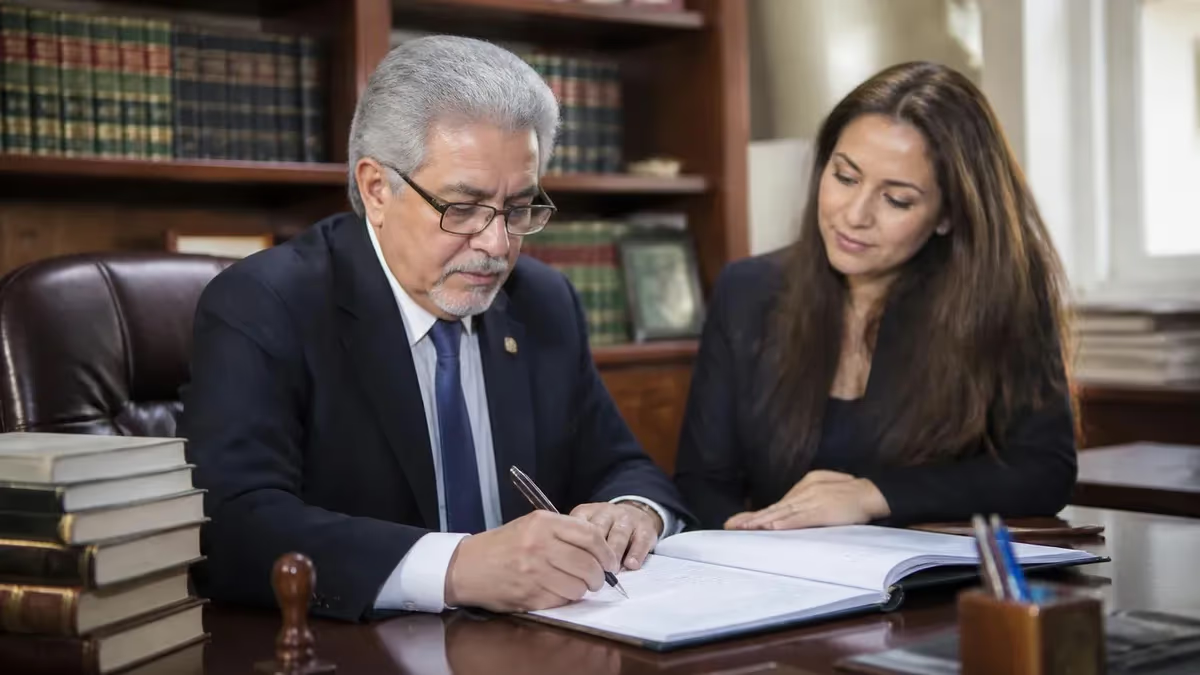
What is a notary public? A notary public is an official appointed by a state government authority — in most U.S. states, this is the Secretary of State, though in some states the governor plays a role in the commissioning process. Notaries serve as impartial witnesses to the signing of important documents, helping to prevent fraud and ensure that signers are who they claim to be. Whether you are signing a real estate deed, a power of attorney, or a loan document, a notary's seal and signature add a critical layer of legal credibility to the transaction.
Understanding whether a notary public is appointed by the governor or another state official depends entirely on which state you live in. In states like California and Texas, the Secretary of State commissions notaries after applicants complete required training and pass a background check. In other states such as Maine and Mississippi, the governor formally appoints notaries. Regardless of the appointing authority, every notary must meet specific eligibility requirements set by state law, making the role both accessible and highly regulated.
The concept of a notary public stretches back centuries. In ancient Rome, scribes known as notarii recorded legal proceedings and drafted official documents. Modern American notaries inherit this tradition, acting as trusted public servants who authenticate signatures, administer oaths, and certify copies of documents. While the role may seem simple on the surface, notaries carry significant legal responsibility: a negligent or fraudulent notarization can expose a notary to civil liability and even criminal charges in serious cases.
Many people search for a notario publico — the Spanish term for notary public — especially in communities where Spanish is the primary language. It is worth noting an important distinction: in Latin American countries, a notario publico holds far greater legal authority than a U.S. notary, often acting as a licensed attorney. In the United States, a notary public is a ministerial officer, not a legal advisor. Consumers should never confuse the two roles, as doing so can lead to legal misunderstandings and potential fraud.
Notary services are available in a surprisingly wide range of locations. Banks such as Bank of America routinely offer notary services to account holders, and many credit unions do the same. Libraries, UPS stores, law offices, real estate agencies, and insurance firms all frequently employ or retain notaries. For those seeking free options, public libraries and certain community centers provide free notary public services near you, making notarization accessible regardless of income. You can also find a chase bank notary public resource guide to locate convenient services in your area.
The notary public exam is a key milestone for aspiring notaries in many states. Passing this exam demonstrates that a candidate understands state-specific notary laws, proper notarization procedures, and ethical obligations. Exam formats vary by state — some are multiple-choice tests administered online, while others are proctored in person. This guide will walk you through everything you need to know about what notaries do, how they are appointed, the tools they use such as the notary public stamp and seal, and how to pursue this rewarding credential yourself.
Whether you are a consumer trying to understand notary services or a prospective notary preparing for your exam, this comprehensive resource covers the full landscape of general notary public knowledge. By the end, you will understand the legal framework governing notaries, the typical duties they perform, the costs involved, and the best study strategies to pass your notary public exam with confidence on the first attempt.
Notary Public by the Numbers

How Notaries Are Appointed: State-by-State Overview
In the majority of U.S. states — including California, Texas, Florida, and New York — the Secretary of State commissions notaries after reviewing applications, background checks, and in some cases exam scores. This is the most common appointing authority in the country.
A smaller number of states, including Maine, Mississippi, and parts of New England, require the governor to formally appoint notaries. Candidates still apply through the Secretary of State's office in many cases, but the commission is signed by the governor.
In certain states, notary commissions are handled at the county level through the county clerk or a local court. Applicants submit their forms locally, and the commission is recorded at the county level rather than at the state capitol.
A few states require legislative confirmation for notary commissions, adding a formal governmental review step. This process is rare and typically reserved for states with older constitutional frameworks that predate modern administrative structures.
How to become a notary public is one of the most searched questions among people interested in this career path, and the good news is that the process is more accessible than most people expect. The requirements differ from state to state, but most share a common framework: you must be at least 18 years old, a legal resident of the state where you are applying, and free of felony convictions. Some states also require that you read and write English, though several states now accommodate bilingual notaries to serve diverse communities.
The first step in most states is completing a state-approved notary education course. These courses range from a few hours to multiple days depending on the state's requirements. California, for example, mandates a six-hour approved course and a passing score on the state's notary public exam before an application can be submitted. Other states like Texas do not require a pre-qualifying exam but do require completion of an education course and submission of a bond. Understanding your specific state's pathway is essential before you invest time and money in preparation.
After completing your education requirements, you will need to submit a formal application to the appropriate state authority — typically the Secretary of State's office. This application usually includes personal information, proof of residency, and a fee that can range from $20 to $120 depending on your state. Many states also require a background check, fingerprinting, or both. The background check is designed to ensure that notaries are trustworthy public officials, and any criminal history on your record may disqualify you or require additional review.
Once your application is approved, most states require you to obtain a notary bond — a type of surety bond that protects the public against financial harm caused by a notary's errors or misconduct. Bond amounts vary widely, from $500 in some states to $15,000 or more in others. The cost of obtaining this bond is usually quite modest — often between $30 and $75 for a four-year term — and many insurance companies and notary associations offer them. You then file your bond with the appropriate state or county authority, which officially activates your commission.
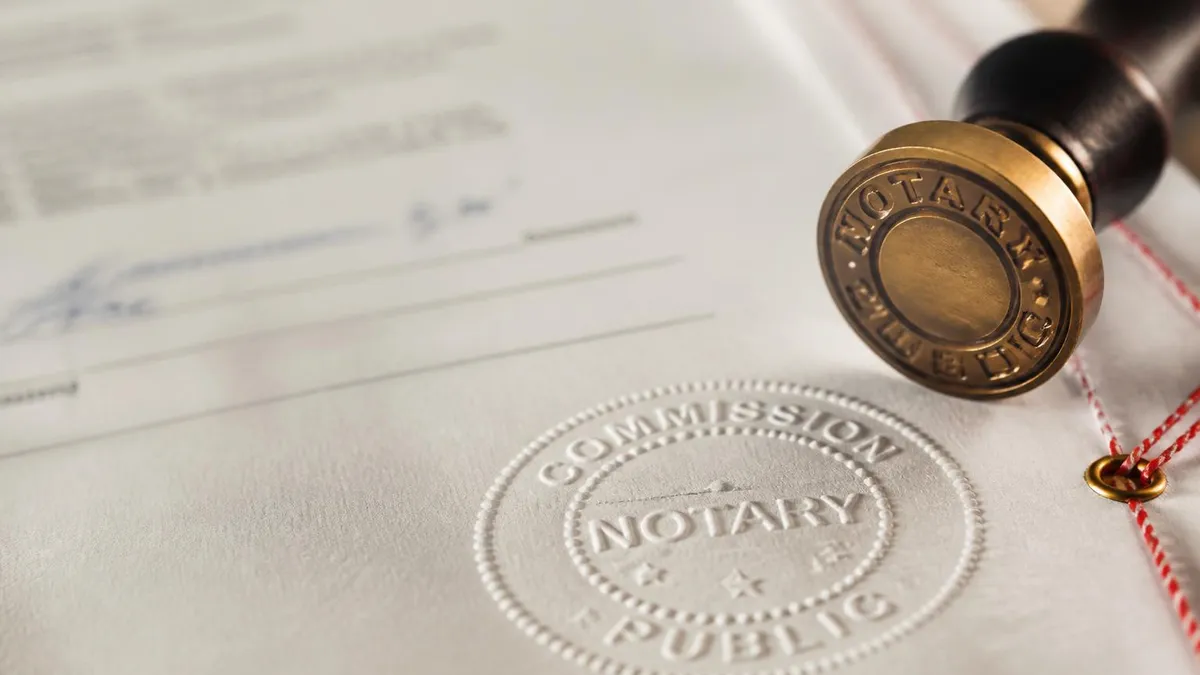
With your commission in hand, you will need to purchase your official notary public stamp and notary public seal before you can begin performing notarizations. These tools are the physical embodiment of your authority as a notary. Your stamp or seal must contain specific information required by state law, such as your name, commission number, the state, and your commission expiration date. Purchasing from a reputable supplier ensures your stamp or seal meets all legal specifications — using a non-compliant seal can invalidate notarizations and expose you to liability.
Many aspiring notaries explore opportunities to work in fields that regularly require notarization. If you are considering notary public jobs, you will find demand across real estate, banking, law, healthcare, and government sectors. Mobile notaries who travel to clients' locations are increasingly popular, especially for real estate closings and hospital signings. Loan signing agents — a specialized subset of notaries — can earn $75 to $200 per loan signing appointment, making this one of the most lucrative pathways in the notary profession for those willing to invest in additional training.
Renewing your commission is an ongoing obligation. Most states issue notary commissions for four-year terms, after which you must reapply and, in some cases, pass the exam again. States like California require that renewing notaries retake the approved education course and exam for every new commission period. Keeping track of your expiration date is critical — performing notarizations after your commission expires is illegal and can expose you to serious legal consequences, including fines and misdemeanor charges in some jurisdictions.
Notary Public Stamp, Seal & Official Tools Explained
The notary public stamp is an inked rubber stamp that a notary affixes to documents to indicate that a notarization has taken place. Most states require that the stamp include the notary's full legal name, the state of commission, the commission number, and the expiration date of the commission. Some states also require the county of commission to appear on the stamp. The stamp must produce a clear, legible impression that will remain visible on the document for the life of the record.
Notary stamps come in several formats, including traditional hand stamps, self-inking stamps, and pre-inked stamps. Self-inking and pre-inked models are popular because they produce consistently sharp impressions without a separate ink pad. The color of the ink matters in some states — California, for example, requires notary stamps to use only purple ink to reduce the risk of fraudulent photocopies being mistaken for originals. Always verify your state's color and format requirements before ordering your official stamp.
Pros and Cons of Becoming a Notary Public
- +Low barrier to entry — most states require minimal education and modest application fees
- +Flexible side income — mobile notaries can set their own hours and client base
- +High demand in real estate, banking, healthcare, and legal sectors
- +Loan signing agents can earn $75–$200 per appointment with additional training
- +Commission enhances professional credentials across many careers
- +Remote online notarization (RON) allows you to notarize documents from home
- −Commission fees, bond costs, and supply purchases add up to several hundred dollars upfront
- −Legal liability for errors, omissions, or fraud — even unintentional mistakes can be costly
- −Commission must be renewed every 4 years, often requiring re-education or re-examination
- −State laws vary dramatically, making multi-state practice complicated or impossible
- −Fee caps in many states limit per-signature income to $10–$15 regardless of document complexity
- −Background check disqualifications can bar applicants with certain criminal histories
Pros and Cons at a Glance
| Pros | Cons |
|---|---|
| Low barrier to entry — most states require minimal education and modest application fees | Commission fees, bond costs, and supply purchases add up to several hundred dollars upfront |
| Flexible side income — mobile notaries can set their own hours and client base | Legal liability for errors, omissions, or fraud — even unintentional mistakes can be costly |
| High demand in real estate, banking, healthcare, and legal sectors | State laws vary dramatically, making multi-state practice complicated or impossible |
| Commission enhances professional credentials across many careers | Background check disqualifications can bar applicants with certain criminal histories |
Notary Public Duties Checklist: What Every Notary Must Know
- ✓Verify the signer's identity using government-issued photo identification before every notarization
- ✓Confirm that the signer is physically present at the time of notarization (unless performing RON)
- ✓Determine that the signer is willing and acting of their own free will — never notarize under duress
- ✓Ensure the signer appears mentally competent and understands the document they are signing
- ✓Complete all required journal entries before or immediately after each notarial act
- ✓Apply the official notary public stamp or seal correctly and legibly on every notarized document
- ✓Administer oaths or affirmations when required for jurats, affidavits, and sworn statements
- ✓Refuse to notarize documents with blank spaces that could be fraudulently completed later
- ✓Decline to notarize documents in which you have a personal or financial interest
- ✓Keep your notary seal, stamp, and journal secure and inaccessible to unauthorized persons
The Golden Rule of Notarization
The single most important duty of any notary public is verifying the identity of the signer. Accepting expired, altered, or non-government-issued identification is one of the leading causes of notary disciplinary actions in the U.S. Always require a current, government-issued photo ID — driver's license, passport, or state ID card — and record the ID type, number, and expiration date in your journal for every single notarization without exception.
Finding free or low-cost notary services near you is easier than most people realize, and the options have expanded significantly in recent years. The most commonly overlooked source of free notary public services is the public library. Thousands of public library branches across the United States offer free notarizations to cardholders and community members as a public service. These sessions are typically available a few days per week during library operating hours and may require an appointment — calling ahead is always advisable to confirm availability and any documentation you need to bring.
Banks are another excellent source for notary services, especially if you are already a customer. Major national banks such as Bank of America, Wells Fargo, Chase, and Citibank typically offer free notarization to account holders at most branch locations. The service is usually available during standard banking hours, and you will need to bring the document to be notarized along with valid photo identification. Some banks limit the types of documents they will notarize or the number of signatures per visit, so calling your local branch first is a smart move.
Credit unions are another consistently strong option for free notary public near me searches. Because credit unions are member-owned cooperative institutions, they routinely offer notary services as a member benefit at no charge. If you belong to a federal or state-chartered credit union, there is a good chance your branch employs a commissioned notary. This service is especially valuable for members in rural areas who may not have convenient access to other notary sources such as law offices or real estate agencies.
For those who need notarization outside of regular business hours or for complex transactions, a mobile notary can travel to your home, office, hospital, or any mutually agreed-upon location. Mobile notaries do charge a travel fee in addition to the per-signature fee, but for real estate closings, estate documents, or situations involving immobile individuals, the convenience is well worth the cost. Many mobile notaries are available evenings and weekends, making them the most flexible option for people with demanding schedules or urgent document needs.
Remote Online Notarization (RON) has emerged as a significant option since its widespread adoption following the COVID-19 pandemic. RON allows a signer and notary to connect via a secure video conferencing platform, with the notary verifying identity through knowledge-based authentication questions and government ID scanning. The notary then applies a digital stamp and electronic signature to the document. Currently, more than 40 states have enacted RON legislation, and the number continues to grow. For those exploring how to become a notary public in california or other states with strong RON frameworks, this pathway opens significant professional and income opportunities.
The UPS Store and other shipping and business services centers are convenient options for walk-in notarizations without an appointment. While UPS Store notarizations are not free — typically $5 to $15 per signature — they offer extended hours, including evenings and weekends, and locations in many neighborhoods that may not have a bank or library nearby. AAA clubs, insurance agencies, law firms, hospitals, and tax preparation offices are other commonly overlooked sources for notary services that can often accommodate urgent or same-day needs.
When searching for free notary public near me, your state's Secretary of State website is an underutilized resource. Many state government websites maintain searchable directories of commissioned notaries, which can help you identify nearby professionals who may offer free or discounted services. Some states have also developed mobile notary finder apps and online booking platforms that make it easier than ever to schedule a notarization at a time and place that works for you, sometimes within hours of your initial request.

In Latino communities across the United States, fraudulent operators sometimes advertise legal services under the title 'notario publico,' implying the same authority held by Latin American notaries who are also licensed attorneys. A U.S. notary public is NOT a lawyer and cannot provide legal advice, prepare immigration forms, or represent clients before government agencies. Accepting such services from an unlicensed 'notario' can result in rejected immigration applications, financial loss, and serious legal consequences. Always verify credentials and consult a licensed immigration attorney for legal matters.
Preparing for the notary public exam requires a focused study strategy that addresses both the legal framework of notarization in your state and the practical skills needed to perform notarial acts correctly. The exam format varies significantly by state. California's notary exam, for example, consists of 45 multiple-choice questions and must be completed within one hour.
A passing score of 70% or higher is required. The exam covers California notary law, proper identification of signers, certificate wording for acknowledgments and jurats, journal requirements, and prohibited acts. Understanding the specific content areas weighted most heavily in your state's exam is the first step toward an efficient study plan.
One of the most effective study strategies for the notary public exam is to work through practice questions from multiple angles. Rather than simply memorizing answers, focus on understanding the underlying principle behind each rule — why notaries must verify identity, why blanks cannot be left in documents, why personal interest disqualifies a notary from performing a specific notarization. This conceptual understanding will help you answer novel questions that might be phrased differently from how you studied them, and it will serve you much better in real-world practice than rote memorization ever could.
Pay special attention to the distinctions between the two most common notarial acts: acknowledgments and jurats. An acknowledgment is used when a signer acknowledges to the notary that they freely and voluntarily signed a document — the signer does not have to sign in the notary's presence, but must appear before the notary and acknowledge the signature.
A jurat, by contrast, requires the signer to sign the document in the notary's presence and swear or affirm under oath that the contents of the document are true. Confusing these two acts on the exam — or in practice — is a common and serious error that the exam specifically tests.
State-specific notary handbooks are your primary study resource, and they are typically available as free PDF downloads from your Secretary of State's website. Read the handbook cover to cover at least twice before your exam. Highlight provisions that seem unusual, complex, or that deal with situations you might not encounter in daily life — these are precisely the areas exam writers tend to focus on. Make flashcards for key definitions, fee maximums, identification requirements, and the steps required for different types of notarial acts to reinforce your retention of critical details.
If you are pursuing a notary commission in a state that does not require a formal exam, you may still benefit from structured preparation. The same legal knowledge that would help you pass an exam also helps you perform notarizations correctly and avoid the liability pitfalls that trip up many inexperienced notaries. Many notary associations — including the National Notary Association (NNA) — offer online courses, webinars, and practice exams that are valuable whether or not your state mandates a formal test. Investing in quality preparation pays dividends throughout your entire commission term.
For those interested in becoming a loan signing agent — a highly specialized and lucrative subset of notary work — additional training beyond the standard notary commission is essential. Loan signing agents must understand complex mortgage documents, lender instructions, and title company requirements. The NNA's Notary Signing Agent certification and background screening are the industry standard, accepted by most title companies and signing services. This additional credential can dramatically increase your earning potential and open doors to a consistent volume of work that general notary services alone may not provide.
If you plan to pursue your commission in multiple states or want to understand how remote online notarization fits into your professional development, exploring additional resources is highly recommended. Learning about public notary near me free resources and state-by-state training requirements can help you map out a career pathway that maximizes your marketability and income potential across different markets and document types.
Mastering the practical day-to-day skills of a notary public goes well beyond passing the exam and obtaining your commission. One of the most important habits to develop early is maintaining a careful, up-to-date notary journal. Every notarization should be entered promptly, with all required fields completed before you leave the appointment. A journal that is incomplete, illegible, or contains missing entries can undermine your ability to defend yourself if a notarization is ever challenged in court or by a regulatory authority. Treat your journal as you would a legal document — because in many states, it is one.
Another key practical skill is recognizing and declining problematic notarization requests. Not every document presented to a notary should be notarized. If a signer cannot produce acceptable identification, appears to be under duress, seems mentally incompetent, or is asking you to notarize a document that you know to be false or fraudulent, you have both the right and the obligation to refuse.
State laws provide notaries with immunity when they refuse in good faith, but they also expose notaries to liability if they proceed with a notarization when warning signs were present. Developing sound judgment about when to say no is one of the most valuable skills you can build.
Time management is a practical consideration that many new notaries underestimate. For mobile notaries and loan signing agents, each appointment involves travel time, document review, the notarization itself, and post-appointment tasks such as returning documents, scanning completed packages, and updating your scheduling system. Block adequate time for each appointment and build buffer time between back-to-back sessions. Rushing a notarization increases the risk of errors — missed signatures, incomplete certificates, or omitted journal entries — that can require costly and time-consuming corrections or, in worst cases, legally invalid documents.
Building a strong professional network is another powerful strategy for growing a notary practice. Introduce yourself to local real estate agents, title company representatives, loan officers, estate planning attorneys, and hospital social workers — all of whom regularly need reliable notary services. Joining your local chamber of commerce, the National Notary Association, or state-level notary associations gives you access to referral networks, continuing education resources, and updates on changing state laws that could affect your practice. A single strong referral relationship with a busy real estate office can generate dozens of signing appointments per month.
Pricing your services correctly is both a business decision and a legal one. Most states cap the fees a notary can charge per signature — in California, the maximum is $15 per notarized signature; in Texas, it is $6 per acknowledgment. However, mobile notaries can charge separately for travel fees, which are not regulated in most states.
Loan signing agents typically negotiate flat fees per appointment that include both the notary fee and travel compensation. Research your state's fee schedule carefully and build a pricing structure that is transparent to clients, competitive in your market, and profitable enough to sustain your practice over the long term.
Staying current with changes to notary law is an ongoing responsibility that does not end when you receive your commission. State legislatures regularly amend notary statutes — particularly in response to the rapid expansion of remote online notarization, electronic signatures, and cross-border document authentication. Subscribe to updates from your Secretary of State's office, follow the NNA's newsletter, and attend at least one notary education event per year to ensure that your practice remains legally compliant. Ignorance of a recent legal change is not a defense against disciplinary action or liability in most jurisdictions.
Finally, remember that the notary public role carries a public trust that extends beyond any single transaction. Every time you affix your seal to a document, you are certifying to the world that the signer appeared before you, was identified, and voluntarily executed the document. Courts, government agencies, financial institutions, and foreign authorities rely on your certification as an assurance of authenticity. Approaching each notarization with care, professionalism, and strict adherence to the law protects not only your clients and yourself, but also the integrity of the entire system of document authentication that notaries have upheld for centuries.
Sample Notary Public Exam Practice Questions
Try these questions from our free Notary Public Exam practice tests. The correct answer and an explanation follow each question.
What is a 'notary public commission' and what authority does it confer?
- A. A certification of excellence from a professional association
- B. A state-issued appointment that grants authority to perform specific notarial acts within the state
- C. A federal license to notarize documents for use in foreign countries
- D. A business license for operating a notary service
Answer: B. A state-issued appointment that grants authority to perform specific notarial acts within the state
A notary public commission is an official state appointment that grants the holder legal authority to perform specified notarial acts within the geographic boundaries of the issuing state.
A notary public is presented with a document in a language they cannot read. What should they do?
- A. Notarize it anyway since the signer appears to understand it
- B. Refuse to notarize unless the document is translated or they can communicate with the signer
- C. Ask a bystander to translate and then proceed
- D. Notarize only the signature page since that is in English
Answer: B. Refuse to notarize unless the document is translated or they can communicate with the signer
A notary must be able to communicate directly with the signer to confirm identity and willingness, which requires a shared language or qualified interpreter.
A notary's seal impression accidentally overlaps the signer's signature on the document. What should the notary do?
- A. Re-stamp the seal in a clear area near the certificate wording so the impression is fully legible
- B. Leave it as-is because the overlap does not affect validity
- C. Ask the signer to re-sign in a different location and then re-stamp
- D. Void the document and require an entirely new one to be prepared
Answer: A. Re-stamp the seal in a clear area near the certificate wording so the impression is fully legible
The seal must be legible and fully readable; if the first impression is obscured, the notary should place a clear impression in an appropriate area of the certificate.
What should a notary do immediately upon discovering their notary seal has been stolen?
- A. Purchase a replacement seal and continue notarizing
- B. Notify the state commissioning authority and report the theft to law enforcement
- C. Wait to see if the seal is returned before taking action
- D. Notify only their employer
Answer: B. Notify the state commissioning authority and report the theft to law enforcement
A stolen seal must be reported to the commissioning authority immediately to prevent its fraudulent use. Law enforcement should also be notified so the theft is on record.
Notary Public Questions and Answers

Public Library Notary: Where to Find Free Notary Services Near You

Notary Public Training: Complete 2026 Guide to Requirements, Certification & Exam Prep

Remote Notary Public: The Complete Guide to Online Notarization in 2026

How to Become a Notary Public: Complete State-by-State Training Guide

NC Notary Public Course: Complete Training Guide for North Carolina
About the Author

Notary Public Law Expert & State Notary Exam Specialist
Georgetown University Law CenterAttorney Sarah Williams is a licensed attorney and National Notary Association (NNA) certified notary with a Juris Doctor from Georgetown University Law Center. She has 13 years of experience in notarial law, document authentication, and real estate closings. Sarah coaches candidates through state notary public examinations, notary signing agent certification, and loan signing agent training programs.