
NFPA 70E Certification: Complete Training Guide, Requirements, and Exam Prep
🧠 Complete guide to NFPA 70E certification: requirements, training steps, exam prep tips, and costs for electrical safety professionals.

Earning your nfpa 70e certification is one of the most strategically valuable steps an electrical worker, safety manager, or industrial maintenance professional can take in today's compliance-driven workplace. NFPA 70E, formally titled the Standard for Electrical Safety in the Workplace, establishes the requirements that protect workers from arc flash, arc blast, and electrical shock hazards — hazards that collectively cause hundreds of fatalities and thousands of serious injuries every year in the United States. Understanding and demonstrating competency in this standard signals to employers, OSHA inspectors, and insurance carriers alike that you take electrical safety seriously.
The standard is published by the National Fire Protection Association and is updated on a three-year revision cycle, with the most recent edition released in 2024. OSHA does not directly adopt NFPA 70E as a federal regulation, but OSHA 29 CFR 1910.332 and 1910.333 reference equivalent electrical safety training requirements, and OSHA compliance officers routinely cite NFPA 70E as evidence of industry consensus when investigating electrical incidents. This means that organizations following NFPA 70E are well-positioned to demonstrate good-faith OSHA compliance during audits and enforcement actions.
Workers covered by NFPA 70E span a wide range of industries: commercial construction, manufacturing plants, utilities, data centers, hospitals, and petrochemical facilities all have electrically qualified workers who must demonstrate periodic competency in arc flash safety, lockout/tagout procedures, energized electrical work permits, and personal protective equipment selection. The standard uses the term "qualified worker" to describe anyone permitted to work on or near exposed energized electrical conductors and circuit parts, and it mandates that qualification be verified through both documented training and demonstrated skills.
Many employers implement NFPA 70E training through a formal certification program administered by third-party organizations such as the NFPA itself, the National Joint Apprenticeship and Training Committee (NJATC), or accredited continuing education providers. These programs typically culminate in a written assessment that tests knowledge of incident energy analysis, arc flash boundaries, PPE categories, safe work practices, and risk assessment methodology. Certification holders often earn premium pay and are preferentially selected for supervisory and safety-critical roles.
The business case for NFPA 70E certification extends well beyond individual career advancement. According to industry estimates, a single severe arc flash incident can cost an employer between $1 million and $15 million when medical expenses, litigation, equipment replacement, production downtime, and regulatory fines are combined. Certified workers are far more likely to recognize hazardous conditions, follow correct lockout/tagout sequences, select appropriate PPE, and refuse unsafe work orders — all behaviors that translate directly into reduced incident rates and lower total cost of workplace accidents for the organization.
This comprehensive training guide walks you through everything you need to know about NFPA 70E certification: who needs it, what the training covers, how assessments are structured, how much it costs, how to prepare effectively, and how to maintain your credential once you earn it. Whether you are an apprentice electrician preparing for your first certification, a safety director building a compliant electrical safety program, or an experienced journeyman looking to formalize your knowledge, this article provides the roadmap you need to succeed.
By the time you finish reading, you will have a clear understanding of the scope and structure of NFPA 70E, the steps required to become certified, the key technical topics tested in assessments, and the study strategies that give candidates the best chance of passing on their first attempt. Practical examples, real cost data, and a curated study schedule are all included to make your preparation as efficient and effective as possible.
NFPA 70E Certification by the Numbers
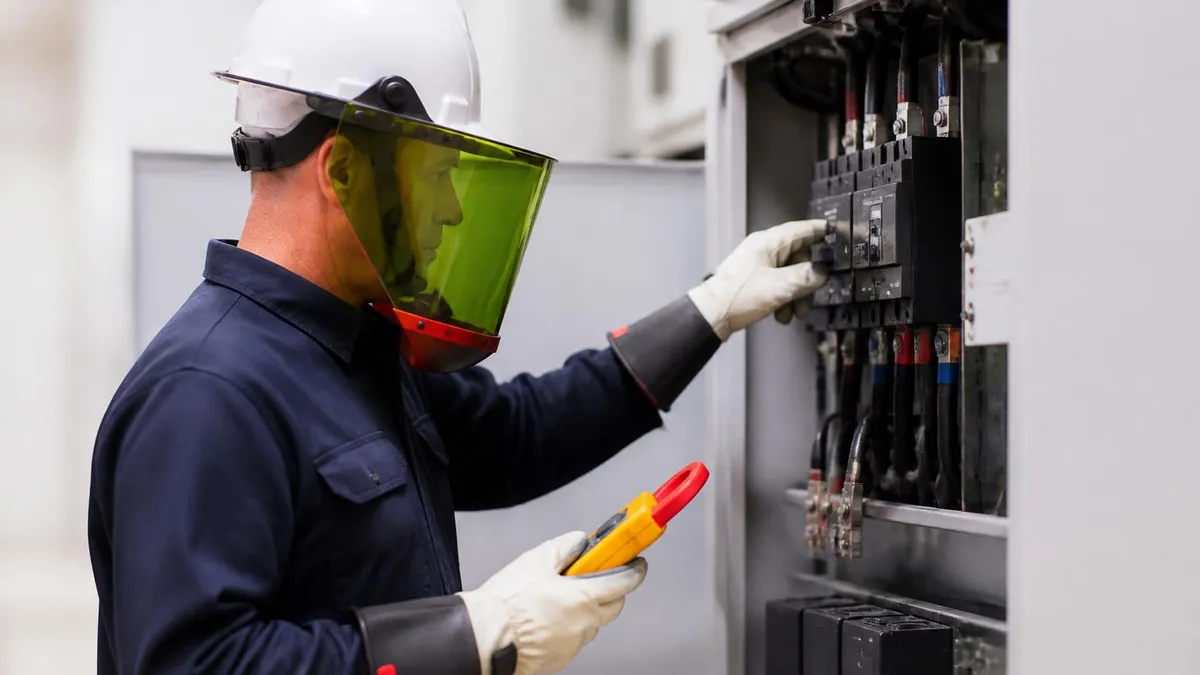
NFPA 70E Certification Study Schedule
- ▸Read NFPA 70E Article 100 (definitions) and Article 110 (general requirements)
- ▸Study the hierarchy of risk controls and how it applies to electrical work
- ▸Review OSHA 1910.332–1910.335 cross-references to understand regulatory context
- ▸Take a baseline practice quiz to identify knowledge gaps
- ▸Study Article 130: Work Involving Electrical Hazards in detail
- ▸Learn arc flash boundary calculations and the four PPE categories
- ▸Review IEEE 1584 incident energy analysis methodology at a conceptual level
- ▸Practice identifying PPE requirements for sample work scenarios
- ▸Master the energized electrical work permit requirements from Article 130.2
- ▸Study lockout/tagout sequencing and OSHA 1910.147 interaction with NFPA 70E
- ▸Review requirements for electrically safe work conditions (ESWC)
- ▸Complete at least two full-length practice assessments under timed conditions
- ▸Study Articles 225–245 covering specific equipment types (switchgear, motors, batteries)
- ▸Review safety-related maintenance requirements in Article 200
- ▸Focus on any topics where practice test scores remain below 75%
- ▸Take a final simulated full-length exam the day before your assessment
Understanding what NFPA 70E training actually covers is essential before you invest time and money in a certification program. The standard is organized into four major parts — Safety-Related Work Practices, Safety-Related Maintenance Requirements, Safety Requirements for Special Equipment, and Installation Safety Requirements — plus a comprehensive set of informative annexes. Most certification programs focus primarily on Part 1 and Part 2, since these sections govern the day-to-day decisions that qualified workers must make in the field and are the areas most heavily tested in formal assessments.
Part 1, which spans Articles 100 through 150, begins with critical definitions that form the conceptual vocabulary of the entire standard. Terms like "arc flash hazard," "arc flash boundary," "electrically safe work condition," "qualified person," and "limited approach boundary" must be understood precisely, not just colloquially. Assessment questions frequently test candidates on the technical distinctions between these terms — for example, knowing the difference between the limited approach boundary, the restricted approach boundary, and the arc flash boundary, and understanding that each is calculated through a different methodology with different consequences for PPE selection.
Article 110 lays out the general requirements for electrical safety programs, mandating that employers establish, document, and implement a formal program that governs all work on or near energized electrical equipment. This article is particularly important for safety managers and supervisors pursuing certification, as it describes program elements including employee training records, regular auditing, incident investigation procedures, and the use of single-line diagrams and arc flash studies to characterize the hazards at each piece of equipment. Candidates frequently encounter questions that test whether they understand employer versus employee responsibilities under the standard.
Article 130 is the most heavily weighted section in virtually every NFPA 70E assessment. It covers the conditions under which energized electrical work is permitted (and the strict conditions under which it must be justified), the process for conducting a risk assessment, the selection of arc-rated PPE based on either incident energy analysis or the PPE category method, and the specific requirements for an energized electrical work permit. Understanding the hierarchy of controls as applied to electrical safety — elimination, substitution, engineering controls, awareness, and PPE in that order — is critical for both the exam and real-world application.
PPE selection is one of the most practical and heavily tested topics in the entire curriculum. NFPA 70E's 2024 edition provides PPE category tables in Table 130.7(C)(15)(a) and related tables that specify minimum arc ratings for gloves, face shields, arc-rated clothing, and other equipment based on the type of task being performed and the nominal voltage involved. Candidates must be able to navigate these tables accurately and understand when the table method is permissible versus when an incident energy analysis is required (for example, when equipment has not been properly maintained or when working conditions fall outside the table parameters).
Safety-related maintenance requirements in Articles 200 through 210 address a topic that is often underemphasized in field training but appears regularly on certification assessments: the principle that poorly maintained electrical equipment presents elevated arc flash risk even when all other safety precautions are followed correctly. Candidates learn that circuit breakers must be tested and maintained per manufacturer specifications, that dust and corrosion inside enclosures can dramatically increase arc flash incident energy, and that maintenance gaps must be documented and communicated to qualified workers through updated arc flash labels and work permits.
The informative annexes of NFPA 70E are not enforceable requirements, but they contain extremely useful guidance that frequently appears in exam scenarios. Annex D provides detailed guidance on incident energy calculations, Annex F covers risk assessment procedure, and Annex I covers job briefing and planning checklists. Many certification providers walk candidates through these annexes in detail precisely because they translate the standard's requirements into practical, step-by-step guidance that helps workers make correct decisions under real-world time pressure and workplace complexity.
NFPA Practice Test Questions
Prepare for the NFPA - National Fire Protection Association exam with our free practice test modules. Each quiz covers key topics to help you pass on your first try.
NFPA Life Safety
NFPA Exam Questions covering Life Safety. Master NFPA Test concepts for certification prep.
NFPA 10 Portable Fire Extinguishers
NFPA Mock Exam on NFPA 10 Portable Fire Extinguishers. NFPA Study Guide questions to pass on your first try.
NFPA 13 Sprinkler Systems
NFPA Test Prep for NFPA 13 Sprinkler Systems. Practice NFPA Quiz questions and boost your score.
NFPA 1 Fire Code General Requirements
NFPA Questions and Answers on NFPA 1 Fire Code General Requirements. Free NFPA practice for exam readiness.
NFPA 25 Water-Based Fire Protection Inspec...
NFPA Mock Test covering NFPA 25 Water-Based Fire Protection Inspection. Online NFPA Test practice with instant feedback.
NFPA 70E Certification Providers, Formats, and Renewal
Several accredited organizations offer formal NFPA 70E certification programs in the United States. The NFPA itself offers online and in-person training seminars that conclude with a certificate of completion, though it is important to note that NFPA certificates document training completion rather than representing a nationally accredited professional credential. For a recognized third-party credential, organizations such as the National Safety Council (NSC), JADE Learning, Electrical Training Alliance (formerly NJATC), and various state-approved continuing education providers offer programs that include proctored assessments and issue formal certificates upon passing.
When selecting a provider, candidates should verify that the curriculum is based on the most current edition of NFPA 70E (2024 as of this writing), that instructors hold relevant industry credentials such as a licensed master electrician or Certified Safety Professional (CSP) designation, and that the program is eligible for continuing education units (CEUs) that apply toward professional engineering licenses, OSHA 30-hour cards, or other credentials the candidate already holds. Employer-sponsored programs from large industrial companies and utilities often provide the most rigorous training because they supplement the standard curriculum with site-specific hazard analyses and equipment-specific procedures.

NFPA 70E Certification: Benefits vs. Challenges
- +Significantly improves personal safety by building deep knowledge of arc flash hazards and correct PPE selection
- +Strengthens an employer's OSHA compliance posture and reduces regulatory exposure during inspections
- +Commands premium pay in manufacturing, utilities, and industrial maintenance roles — often $3–$8 per hour more than uncertified peers
- +Provides a portable, nationally recognized credential that transfers across employers and industries
- +Reduces organizational liability by demonstrating documented worker competency in the event of an incident investigation
- +Qualifies holders for supervisory, safety officer, and compliance roles that require demonstrated electrical safety expertise
- −No single universally recognized credential exists — provider quality and employer acceptance vary significantly
- −Training and examination costs ($300–$800) can be a barrier for individual workers paying out of pocket
- −Three-year renewal cycle creates ongoing costs and requires staying current with each new edition of the standard
- −Certification does not substitute for hands-on electrical experience — newly certified workers still need supervised field time
- −Some employers do not reimburse certification costs, placing the financial burden entirely on the individual worker
- −The standard's technical depth requires sustained study, and candidates with limited electrical background may struggle with arc flash calculation concepts
NFPA 70E Certification Pre-Exam Checklist
- ✓Obtain and read the current edition of NFPA 70E (2024) — do not study from an outdated edition
- ✓Confirm your chosen certification provider uses the 2024 edition as the basis for their curriculum and exam
- ✓Complete all required classroom or online training hours before scheduling your assessment
- ✓Score consistently above 75% on practice assessments across all major topic areas before your exam date
- ✓Memorize the four PPE categories and their minimum arc ratings as listed in Table 130.7(C)(15)(a)
- ✓Be able to explain the three approach boundaries (limited, restricted, and arc flash) and how each is determined
- ✓Understand the six required elements of an energized electrical work permit under Article 130.2
- ✓Review the employer and employee responsibility distinctions in Article 110.1 and 110.2
- ✓Study the lockout/tagout sequence in Article 120 and its relationship to OSHA 1910.147
- ✓Bring valid government-issued photo ID and your training completion documentation to the exam site
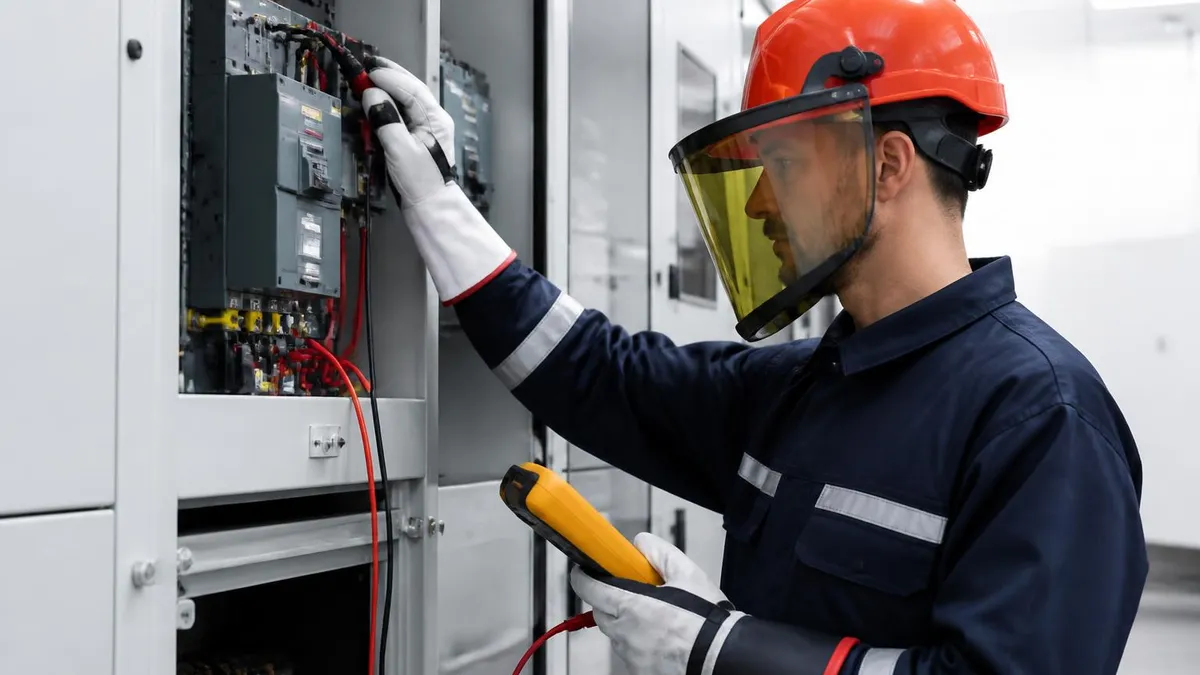
The PPE Category Method vs. Incident Energy Analysis — Know the Difference
One of the most commonly missed topics on NFPA 70E assessments is the distinction between the two permitted methods for selecting arc-rated PPE. The PPE category method uses standardized tables and is only valid when the equipment has been properly installed and maintained under engineering supervision. Incident energy analysis, conducted by a licensed engineer using IEEE 1584, is required when those conditions are not met. Knowing when each method is appropriate — and why — is worth several exam points and is directly relevant to real-world safe work practice.
The financial dimensions of NFPA 70E certification matter to both individual workers and the organizations that employ them, and understanding the full cost picture helps candidates and safety managers make well-informed investment decisions. At the individual level, direct costs for a comprehensive NFPA 70E training and certification program typically range from $300 to $800 when combining course fees, examination fees, and study materials. Employer-sponsored group training sessions frequently reduce per-person costs to $150–$250 by negotiating volume pricing with training providers, making organization-wide certification much more economical than individual enrollment.
The salary impact of holding an NFPA 70E certification is measurable and consistent across industry surveys. According to data from the Bureau of Labor Statistics and industry compensation databases, electricians and industrial maintenance technicians who hold recognized electrical safety certifications earn 8–15% more than uncertified peers performing similar work.
In absolute terms, this translates to approximately $3,000–$7,000 in additional annual income for the average journeyman electrician, meaning the certification pays for itself within weeks of being awarded. For safety managers and compliance officers, the salary premium is often higher because NFPA 70E certification serves as a differentiating qualification in a competitive job market.
From an organizational perspective, the return on investment calculation for NFPA 70E training is extraordinarily favorable. Liberty Mutual's Workplace Safety Index consistently finds that electrical injuries are among the costliest categories of workplace incidents, with direct costs averaging $48,000 per incident.
When indirect costs — supervisor time, investigation expenses, productivity losses, equipment repair, reputational damage, and regulatory penalties — are included, the true cost of a single arc flash incident routinely exceeds $150,000 and can reach into the millions for severe burns and fatalities. A comprehensive NFPA 70E training program for a crew of 20 workers costs less than $15,000, making it one of the highest-ROI safety investments available to industrial employers.
Insurance carriers have begun incorporating electrical safety program quality — including NFPA 70E certification rates among workers — into their premium calculations for general liability and workers' compensation policies. Organizations that can demonstrate high certification rates, documented training records, current arc flash studies, and compliant electrical safety programs may qualify for meaningful premium reductions that further offset the cost of training. Some large industrial insurers now require proof of NFPA 70E training as a condition of coverage for facilities with significant electrical infrastructure, making certification not just an economic benefit but a contractual necessity.
There are also significant costs associated with not pursuing NFPA 70E certification. OSHA citations for electrical safety violations under 29 CFR 1910.303 through 1910.335 carry penalties ranging from $1,303 per serious violation to $156,259 per willful or repeated violation as of 2024. Following an arc flash fatality or catastrophic injury, OSHA can and does impose maximum penalties and issue public press releases that damage an organization's reputation with customers, partners, and prospective employees. The combination of financial, legal, and reputational exposure makes the cost of compliance look modest by comparison.
For individual workers paying out of pocket, there are several strategies to reduce certification costs. Many community colleges and vocational schools offer NFPA 70E training at reduced rates through workforce development grants or continuing education subsidies. IBEW and other union apprenticeship programs frequently include NFPA 70E training as part of the standard apprenticeship curriculum at no additional charge to apprentices.
Veterans pursuing careers in the electrical trades may be eligible for GI Bill benefits that cover NFPA 70E training costs. And some states provide employer tax incentives for workforce safety training that indirectly subsidize the cost for both the employer and the employee.
Finally, it is worth noting that the cost of study materials has decreased substantially with the availability of online practice platforms, free regulatory resources, and video-based instruction. A motivated candidate with access to the current NFPA 70E standard — available for purchase at approximately $100 in print or $65 for the online edition — and a quality practice test platform can build sufficient knowledge to pass a certification assessment with four to six weeks of consistent self-directed study, minimizing the need for expensive in-person classroom training.
This approach is particularly viable for experienced electricians who already have a strong practical foundation in electrical safety and need primarily to formalize and document their existing knowledge.
NFPA 70E is updated every three years, and certification exams are based on a specific edition. Always confirm with your provider which edition their curriculum and assessment are based on before purchasing study materials or enrolling. Using outdated study guides (for example, a 2018 or 2021 edition textbook when your exam is based on the 2024 edition) can result in learning superseded requirements for PPE tables, boundary calculations, and permit procedures — directly costing you exam points on topics where the standard has changed.
Maintaining your NFPA 70E certification over the course of a career requires more than simply showing up for a renewal class every three years. The most effective certified workers treat NFPA 70E not as a box to check but as a living framework they continuously integrate into their daily work practices. This section explores the practical strategies that experienced electrical safety professionals use to stay current, avoid common compliance pitfalls, and get maximum career value from their certification over the long term.
The first and most important maintenance strategy is reading the NFPA 70E revision notices and Technical Committee reports whenever a new edition is released. The NFPA makes the revision history publicly available, and understanding why specific changes were made — what incidents, research findings, or regulatory developments prompted a revision — gives certified workers a much deeper understanding of the standard's intent than simply memorizing the updated text. Workers who understand the why behind NFPA 70E requirements are far better equipped to apply them correctly in novel situations that don't fit neatly into any specific article or table.
Participation in internal safety committees and electrical safety program audits is another powerful way to deepen and maintain NFPA 70E competency. Certified workers who volunteer to review arc flash studies, evaluate new equipment purchases for compliance implications, or help develop site-specific safe work practices gain practical experience applying the standard in complex, real-world contexts. This type of active engagement with the standard's requirements reinforces knowledge far more effectively than passive review of training materials and demonstrates visible commitment to safety culture that is noticed by management and colleagues alike.
Professional networking with other NFPA 70E certified workers — through local NFPA chapter meetings, IEEE Power Engineering Society events, the American Society of Safety Professionals (ASSP), or online forums dedicated to electrical safety — provides access to a community of practitioners who share insights about compliance challenges, emerging best practices, and interpretations of ambiguous standard requirements. The NFPA itself operates a technical questions service that allows practitioners to submit questions about the standard to the technical committee — though responses represent staff interpretations rather than official committee positions, they are extremely useful for resolving gray areas in practice.
Keeping meticulous training records is an administrative responsibility that certified workers and their employers sometimes underestimate. NFPA 70E Article 110.6(D) requires that training records include the content of the training, the date of each training session, and the names of the workers trained. These records must be maintained for the duration of each worker's employment plus any applicable regulatory retention period. In the event of an OSHA inspection triggered by an incident, the ability to produce complete and accurate training records for all qualified workers is often the difference between a citation and a clean inspection outcome.
Career-minded workers should also consider stacking NFPA 70E certification with complementary credentials to maximize market value. Common combinations include NFPA 70E plus the Certified Safety Professional (CSP) credential from the Board of Certified Safety Professionals, NFPA 70E plus a licensed master electrician or electrical inspector credential, and NFPA 70E plus OSHA 30-hour construction or general industry outreach training. Each combination positions the holder for a distinct set of high-value roles: the CSP combination targets corporate safety management, the master electrician combination targets contractor and project management roles, and the OSHA 30 combination targets site safety supervision in construction environments.
One practical maintenance tip that experienced certification holders frequently share is to build a personal reference binder or digital folder containing the most commonly referenced tables, definitions, and checklists from NFPA 70E. Many workers laminate the PPE category table, the limited/restricted approach boundary table, and the energized electrical work permit template and keep them in their field kit for quick reference.
While certified workers are expected to have strong knowledge of the standard, having accurate reference materials at hand — especially in the first year after certification when all the details are still being internalized — prevents costly errors and reinforces correct habits through repeated use.
Preparing effectively for your NFPA 70E certification assessment requires a strategic approach that goes beyond simply reading the standard from cover to cover. The most successful candidates combine structured content review with active recall practice, application-focused problem solving, and realistic simulated testing — and they allocate study time proportionally based on how heavily each topic area is weighted on the actual assessment rather than how interested they happen to be in each subject.
Begin your preparation by obtaining a personal copy of the current NFPA 70E standard and marking it up as you read — highlighting key definitions, bracketing critical tables, and writing margin notes that translate regulatory language into plain-English summaries. The act of annotation forces active engagement with the text and creates a personally customized reference document that will serve you both during study and after certification.
Pay special attention to the scope statements at the beginning of each article, which define what the article does and does not cover, since scope questions are a common source of incorrect answers among candidates who have read the text but not absorbed its structural logic.
Practice tests are the single most effective study tool available to NFPA 70E certification candidates, and they should be integrated into your preparation from the very beginning rather than saved for the final week. Taking an early baseline practice test before you have studied extensively serves a critical diagnostic purpose: it reveals which topic areas represent your largest knowledge gaps and allows you to prioritize your study time where it will have the greatest impact on your score.
Research in cognitive science consistently shows that testing — even failed testing — accelerates learning faster than re-reading the same material multiple times, a phenomenon known as the testing effect or retrieval practice benefit.
When reviewing practice test questions that you answered incorrectly, resist the urge to simply read the correct answer and move on. Instead, locate the relevant section of the actual NFPA 70E standard, read the full context surrounding the tested requirement, and write a brief note in your own words explaining why the correct answer is correct and why each distractor is wrong. This deeper processing of incorrect answers converts passive recognition into active understanding and dramatically reduces the likelihood of making the same error again on the actual assessment.
Time management during the actual exam deserves deliberate practice during your preparation phase. Many candidates who know the material well still underperform because they spend too long on difficult questions and run out of time before completing the assessment.
Practice answering questions at a pace that allocates roughly 60–90 seconds per question, flag questions you are uncertain about for review, and complete the full assessment before returning to flagged questions. This strategy ensures you capture all the easy points before investing extra time in challenging questions, maximizing your total score regardless of how difficult the flagged questions ultimately prove to be.
Group study sessions with colleagues who are also pursuing NFPA 70E certification can dramatically accelerate learning for topics that are conceptually complex, such as arc flash boundary calculations and incident energy analysis methodology. Explaining a concept clearly to a peer requires a deeper level of understanding than simply recognizing a correct answer on a multiple-choice question — the act of teaching is itself a powerful learning technique. If you find yourself unable to explain a requirement clearly and correctly to a study partner, that is a reliable signal that you need to revisit the source material before your assessment date.
In the final 48 hours before your assessment, shift from intensive new learning to consolidation and confidence-building. Review your annotated standard, work through your personal notes on high-weight topic areas, and take one final timed practice assessment to confirm your readiness.
Avoid introducing new study materials or trying to memorize large amounts of new content in this window, as cognitive overload in the pre-exam period can impair performance on material you have already learned. Get adequate sleep the night before your exam — sleep plays a critical role in memory consolidation, and fatigue measurably degrades both recall speed and reasoning accuracy on the day of the assessment.
NFPA Questions and Answers

NFPA 24: Complete Guide to the Standard for Private Fire Service Mains and Their Appurtenances

NFPA 704 Diamond: Complete Guide to Hazard Identification Ratings

NFPA 1582: Complete Guide to the Standard on Medical Requirements for Firefighters

NFPA 1001 Explained: Firefighter Professional Qualifications Standard Guide

NFPA 13 Requirements: Complete Guide to Sprinkler System Design, Installation, and Draft Curtains
About the Author

Certified Safety Professional & OSHA Compliance Expert
Indiana University of Pennsylvania Safety SciencesDr. William Foster holds a PhD in Safety Science from Indiana University of Pennsylvania and is a Certified Safety Professional (CSP) and Certified Hazardous Materials Manager. With 20 years of occupational health and safety management experience across construction, manufacturing, and chemical industries, he coaches safety professionals through OSHA certification, CSP, CHST, and safety management licensing programs.
Join the Discussion
Connect with other students preparing for this exam. Share tips, ask questions, and get advice from people who have been there.
View discussion (8 replies)