
NFPA 241: Complete Guide to the Standard for Safeguarding Construction, Alteration, and Demolition Operations
Complete guide to NFPA 241 — ❓ fire safety requirements for construction, alteration, and demolition sites. Key provisions, compliance tips, and practice...
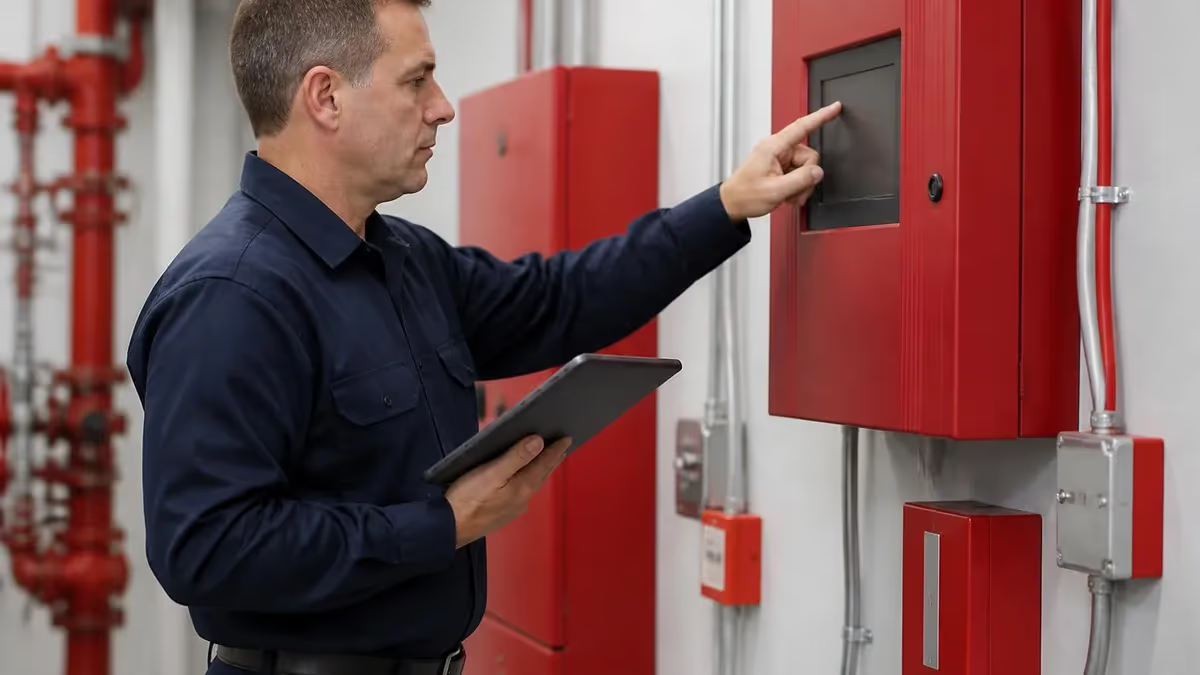
NFPA 241 is the National Fire Protection Association's standard dedicated to safeguarding construction, alteration, and demolition operations from the unique fire hazards that arise when buildings are in a transitional state. Unlike completed structures with fully installed suppression systems and compartmentalized fire barriers, construction sites present a dangerous combination of exposed structural members, temporary power, flammable materials, and incomplete or disabled fire protection systems. Understanding NFPA 241 is essential for fire marshals, general contractors, safety officers, and anyone responsible for life safety on an active job site. Practice with the free NFPA - National Fire Protection Association practice test on PracticeTestGeeks (100+ questions with answer explanations).
The standard was first developed in response to a series of devastating fires on construction projects throughout the twentieth century that caused significant property losses and claimed worker lives. Over successive revision cycles, NFPA 241 has expanded to address not only traditional wood-frame residential construction but also large-scale commercial projects, high-rise alterations, and complex demolition operations. Each edition incorporates lessons learned from major fire incidents and reflects advances in temporary fire protection technology, making it one of the most practically focused documents in the NFPA catalog.
One of the central challenges addressed by NFPA 241 is the fact that permanent fire protection systems — automatic sprinklers, standpipes, fire alarm systems — may be partially installed, temporarily impaired, or completely absent during active construction phases. The standard responds to this gap by requiring equivalent interim protection measures, including temporary standpipes, portable fire extinguishers, fire watch personnel, and carefully maintained means of egress. These provisions create a layered safety approach that bridges the gap between no protection and full code-compliant protection.
Contractors and project owners sometimes treat construction-phase fire safety as a secondary concern compared to structural progress and schedule milestones. NFPA 241 firmly rejects that prioritization by establishing enforceable requirements that must be implemented before and during active work. Many jurisdictions adopt NFPA 241 by reference within their building and fire codes, meaning compliance is not merely best practice — it carries the full weight of legal obligation. Inspectors from the authority having jurisdiction (AHJ) routinely conduct site visits specifically to verify NFPA 241 compliance.
The scope of NFPA 241 extends to alteration projects, which are among the most hazardous categories of construction work. When an existing occupied building undergoes renovation, fire barriers may be breached, suppression system zones may be isolated, and new ignition sources are introduced while the building continues to shelter occupants or stored contents. The standard's requirements for impairment management, hot work permits, and temporary partitioning are especially critical in these mixed-occupancy scenarios where the risk to life is highest.
Demolition operations present a distinct set of hazards covered by NFPA 241. As a structure is systematically dismantled, fire suppression infrastructure is removed progressively, creating increasing vulnerability at each stage. Flammable debris accumulates rapidly, and demolition equipment frequently generates sparks and heat. The standard requires that contractors develop a fire protection program that anticipates these phased hazards and maintains adequate protection through every stage of the demolition sequence, right up to the point where the last structural element is removed.
For professionals preparing for certification exams or seeking to deepen their working knowledge of construction-phase fire safety, a solid command of nfpa 241 requirements is indispensable. The provisions covered in this guide — from fire protection programs and hot work controls to temporary systems and impairment procedures — form the foundation of responsible project management on any construction, alteration, or demolition site in the United States.
Free NFPA - National Fire Protection Association Study Tools
Interactive NFPA - National Fire Protection Association resources on PracticeTestGeeks, free to start:
- Free NFPA Life Safety Questions and Answers — 11 questions with instant scoring and answer explanations
- NFPA - National Fire Protection Association flashcards — review key terms and concepts card by card
- NFPA - National Fire Protection Association study guide — topic-by-topic overview of what the exam covers
- NFPA - National Fire Protection Association cheat sheet — one-page printable summary for last-minute review
NFPA 241 by the Numbers
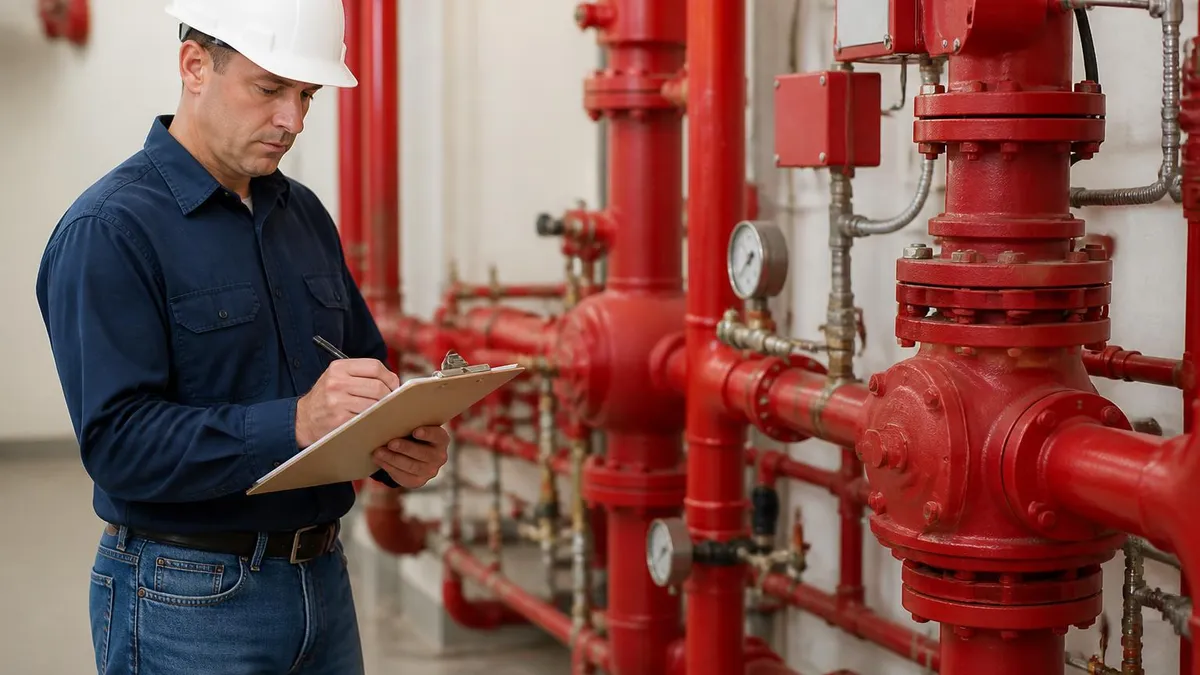
Core Scope and Application of NFPA 241
Applies from the moment ground is broken through certificate of occupancy issuance. Covers wood-frame, steel, concrete, and mixed-construction projects of all sizes. Addresses the entire lifecycle of construction-phase fire risk from site preparation to final inspection.
Governs fire safety when existing buildings undergo modification. Particularly critical when occupied portions adjoin the work zone. Requires temporary barriers, impairment management, and continuous occupant protection throughout the alteration process.
Addresses the phased removal of structures. As fire protection systems are dismantled, NFPA 241 requires equivalent interim measures. Debris management, hot work controls, and worker egress are central compliance elements for demolition contractors.
Enables local fire officials to enforce and interpret NFPA 241 requirements on a project-by-project basis. The AHJ may impose additional requirements beyond the standard's minimums when local conditions — such as high-wind exposure or water supply limitations — warrant.
Mandates a written, site-specific fire protection program before work begins. The program must identify responsibilities, describe interim protective measures, establish inspection protocols, and be updated as project conditions change throughout the construction cycle.
The written fire protection program is the cornerstone requirement of NFPA 241 and must be established before any construction, alteration, or demolition activity begins. This program is not a boilerplate document — it must be tailored to the specific site, addressing the unique hazards presented by the project's size, occupancy type, construction methods, geographic location, and available water supply. The responsible person, typically the general contractor or project owner's designated representative, is required to develop, implement, and continuously update the program throughout the project's duration.
NFPA 241 specifies that the fire protection program must designate a fire prevention program superintendent who is authorized to enforce the program's requirements on-site. This individual must have direct lines of communication with the AHJ and with the building's fire alarm monitoring provider when an alarm system is present. The superintendent is responsible for conducting regular inspections, ensuring that all contractors and subcontractors are trained in fire prevention procedures, and maintaining records of all fire-related incidents, near-misses, and impairments throughout the project.
A key element of the fire protection program is the impairment management procedure. Whenever a fire protection system — sprinkler, standpipe, or fire alarm — must be taken out of service, even briefly, NFPA 241 requires that specific compensatory measures be implemented. These measures typically include increased fire watch patrols in the affected area, notification to the AHJ and monitoring station, posting of warning signs, and limitation of hot work and other ignition-source activities until the system is restored. The impairment must be formally closed out and documented once the system returns to service.
Temporary construction-phase standpipes are one of the most operationally significant requirements in NFPA 241 for multi-story projects. As a building rises above the reach of ground-level fire department apparatus, the standard requires installation of a Class I or Class III standpipe system that extends progressively with the building's height. This temporary standpipe must be connected to an approved water supply capable of supporting fire department operations, and it must be maintained in a charged, ready condition at all times during working hours and whenever combustible materials are present.
Portable fire extinguishers are required throughout the construction site at prescribed travel distances. NFPA 241 requires at minimum 2-A:20-B:C rated extinguishers on each floor and work level, with no point on the floor more than 100 feet from the nearest unit. Extinguishers must be inspected monthly and maintained in accordance with NFPA 10. Areas where flammable liquids are stored or used require additional extinguisher coverage with appropriate ratings for Class B fires, and workers must be trained in the proper use of extinguishers as part of the on-site safety orientation.
Access and egress management is another critical chapter in NFPA 241. Fire department access roads and gates must remain clear of construction materials and equipment at all times. The standard requires that at least two means of egress be maintained from every work area, and that these egress routes be clearly marked, adequately lit, and free of obstructions. Temporary stairways must be installed before upper floors are occupied by workers, and they must meet dimensional and load-bearing requirements sufficient for emergency evacuation. These egress provisions are frequently cited during AHJ inspections as common deficiencies.
Storage of flammable and combustible materials on construction sites is tightly regulated under NFPA 241. The standard limits the quantity of flammable liquids that may be stored in any single fire area, requires approved safety containers for storage and dispensing, and mandates separation distances between fuel storage areas and ignition sources.
Temporary fuel storage tanks used for construction equipment must comply with applicable NFPA standards for aboveground storage, and spill containment provisions must be in place. Combustible construction debris must be removed from the structure regularly — typically daily — to prevent accumulation that would improve fire load beyond manageable levels.
Hot Work, Temporary Systems, and Impairment Controls
Hot work — any operation producing sparks, flames, or heat above 400°F — is one of the leading causes of construction fires, and NFPA 241 requires a formal permit system before any such work begins. The permit must identify the specific location, duration, responsible supervisor, type of equipment used, and the fire watch arrangement. A pre-work inspection must confirm that combustible materials have been cleared 35 feet in all directions, openings in floors and walls are covered, and a fire extinguisher is immediately accessible at the work location.
After hot work is completed, a fire watch must remain in place for a minimum of four hours in the immediate work area. NFPA 241 further requires that the area be re-inspected at 30-minute intervals during this fire watch period and again at the 4-hour mark. If smoldering is detected at any point, the fire watch extends until all materials are confirmed cool. Records of all hot work permits must be retained and made available to the AHJ upon request, serving as both a compliance record and a reference for post-incident investigation if a fire does occur.

Benefits and Challenges of Implementing NFPA 241
- +Dramatically reduces the risk of total project loss from a single fire event on construction sites
- +Provides a clear, enforceable framework that helps contractors demonstrate due diligence to insurers
- +Hot work permit requirements alone have been shown to reduce ignition incidents by over 50 percent on managed sites
- +Temporary standpipe and suppression requirements allow fire departments to effectively combat fires at height before permanent systems are installed
- +Written fire protection programs improve coordination between general contractors, subcontractors, and the AHJ throughout complex projects
- +Regular inspection and debris removal requirements create daily housekeeping discipline that reduces fuel load across the entire site
- −Initial setup of a written fire protection program requires significant time and expertise, especially for smaller contractors unfamiliar with NFPA standards
- −Temporary standpipe systems represent a material cost that is not always budgeted in early project estimates, creating disputes between owners and contractors
- −Fire watch requirements following hot work extend labor hours beyond the productive work period, adding cost that can incentivize non-compliance on price-pressured projects
- −Frequent AHJ interpretations of NFPA 241 provisions vary by jurisdiction, making multi-site compliance management complex for national contractors
- −Rapidly changing site conditions on large projects can make maintaining current fire protection programs labor-intensive and administratively burdensome
- −Demolition contractors often face compressed schedules that conflict with the phased fire protection requirements, creating pressure to shortcut compliance
Pros and Cons at a Glance
| Pros | Cons |
|---|---|
| Dramatically reduces the risk of total project loss from a single fire event on construction sites | Initial setup of a written fire protection program requires significant time and expertise, especially for smaller contractors unfamiliar with NFPA standards |
| Provides a clear, enforceable framework that helps contractors demonstrate due diligence to insurers | Temporary standpipe systems represent a material cost that is not always budgeted in early project estimates, creating disputes between owners and contractors |
| Temporary standpipe and suppression requirements allow fire departments to effectively combat fires at height before permanent systems are installed | Fire watch requirements following hot work extend labor hours beyond the productive work period, adding cost that can incentivize non-compliance on price-pressured projects |
| Written fire protection programs improve coordination between general contractors, subcontractors, and the AHJ throughout complex projects | Rapidly changing site conditions on large projects can make maintaining current fire protection programs labor-intensive and administratively burdensome |
| Regular inspection and debris removal requirements create daily housekeeping discipline that reduces fuel load across the entire site | Demolition contractors often face compressed schedules that conflict with the phased fire protection requirements, creating pressure to shortcut compliance |
NFPA 241 Construction Site Compliance Checklist
- ✓Develop and document a written fire protection program before any site work begins
- ✓Designate a qualified fire prevention program superintendent with enforcement authority
- ✓Notify the AHJ and obtain required permits before commencing hot work operations
- ✓Maintain a minimum 4-hour fire watch after all hot work with documented 30-minute inspections
- ✓Install and maintain temporary standpipe systems extending with each completed floor above grade
- ✓Place 2-A:20-B:C fire extinguishers so no point on any floor is more than 100 feet from a unit
- ✓Implement formal impairment procedures for any fire protection system taken out of service
- ✓Remove combustible construction debris from the structure at least once per working day
- ✓Keep all fire department access roads and gates clear of materials, equipment, and vehicles
- ✓Maintain at least two marked, unobstructed means of egress from every active work area
The 4-Hour Fire Watch Rule Prevents the Majority of Post-Hot-Work Fires
Studies of construction fire incidents show that a significant percentage of post-hot-work fires ignite more than 60 minutes after work stops — often in concealed spaces where smoldering combustibles are not immediately visible. NFPA 241's mandatory 4-hour fire watch with 30-minute re-inspections is specifically calibrated to catch these delayed ignitions before they develop into uncontrolled fires. Skipping or shortening this fire watch is one of the most dangerous and commonly cited compliance failures on active construction sites.
Common NFPA 241 violations documented by AHJs during construction site inspections fall into several recurring categories that contractors should proactively address. The most frequently cited deficiency is the absence of a written fire protection program — many smaller contractors assume the standard applies only to large commercial projects, but NFPA 241 applies to all construction operations regardless of project size or budget. Inspectors arriving at a site without a documented program in place will typically issue an immediate stop-work order until the deficiency is corrected.
Improper hot work permitting is the second most common violation category. Inspectors routinely find welding, cutting, and grinding operations in progress without any permit documentation visible at the work location. Even when a contractor has a general hot work program in place, failure to issue a location-specific permit for each individual hot work operation constitutes a violation. The permit must be physically posted at the work site — not filed in an office trailer — and must reflect the current day's operations. Retroactive permits issued after the fact are not compliant and may result in referral for administrative penalties.
Extinguisher placement violations are among the easiest deficiencies for inspectors to identify and among the most preventable. On large floor plates, a single extinguisher placed near the elevator core may leave workers in far corners of the floor more than 100 feet away from protection. As construction progresses and work areas shift, extinguisher locations must be updated continuously rather than left in the positions established at project startup. Monthly inspection tags must be current, and extinguishers must show no signs of damage, discharge, or blocked access.
Temporary standpipe deficiencies on high-rise construction projects represent some of the most serious safety failures that inspectors encounter. Common issues include failure to extend the system as the building rises, inadequate water supply connections that cannot deliver required flow and pressure, closed or locked valves that prevent fire department access, and missing hose connections at intermediate floors.
On one notable inspection sequence in a major metropolitan area, investigators found a 12-story building under construction with a standpipe that had not been extended above the fourth floor — an 8-story gap in vertical fire protection that left the upper floors entirely dependent on apparatus-mounted ladder streams.
Debris accumulation violations reflect a broader culture problem on some construction sites where housekeeping is treated as a lower priority than production. NFPA 241 requires daily removal of combustible debris from within the structure, but inspectors frequently encounter multi-day accumulations of wood framing scraps, packaging materials, insulation offcuts, and construction wrap products piled against structural members. These accumulations dramatically increase fire load and spread rate, and they often block egress routes as a secondary consequence. Enforcement actions for debris violations have become increasingly aggressive in jurisdictions that have experienced significant construction fires.
Enforcement mechanisms available to the AHJ under NFPA 241 and applicable state or local codes range from administrative notices and compliance timelines to immediate stop-work orders and criminal referrals for egregious or repeat violations. Many jurisdictions have moved toward a tiered penalty structure that escalates fines for each recurring violation of the same provision, creating strong financial incentives for contractors to achieve and maintain compliance rather than treating fines as a cost of doing business. Insurance underwriters also monitor NFPA 241 compliance records and may adjust premiums or coverage terms based on documented enforcement history.
Post-incident investigations involving construction fires almost invariably examine the project's NFPA 241 compliance record as a central element of the inquiry. When a fire occurs and investigators find missing permits, absent fire watches, or inadequate temporary protection, these deficiencies create significant civil liability exposure for contractors, project owners, and the responsible superintendent. Courts in multiple jurisdictions have awarded substantial damages in construction fire cases where plaintiffs demonstrated that NFPA 241 violations contributed directly to the fire's ignition, spread, or the delay in suppression response.

Many states and municipalities that adopt NFPA 241 by reference also enact local amendments that impose more stringent requirements than the base standard. Before assuming the 2018 edition's provisions represent the maximum local obligation, always verify the specific adopted edition and any local amendments with the AHJ. California, New York, Illinois, and Texas are among the states with notable construction fire safety amendments that go beyond federal minimums.
Preparing effectively for certification exams and professional assessments that include NFPA 241 content requires a structured approach that goes beyond passive reading of the standard. Candidates should begin by obtaining the current edition of NFPA 241 directly from the NFPA's official catalog and reading it in its entirety at least once before focusing on specific chapters. The standard is organized logically by topic, and a complete first read provides the mental framework necessary to understand how individual provisions relate to the overall fire protection system required on construction sites.
Chapter-by-chapter annotation is a proven study technique for NFPA standards. As you read each chapter, mark provisions that differ significantly from your existing field experience or that involve specific numerical values — distances, flow rates, pressure requirements, time limits. These quantitative provisions are heavily tested on professional examinations because they require memorization rather than conceptual understanding. Flashcard systems, whether physical or digital, are particularly effective for retaining specific values like the 100-foot maximum travel distance to extinguishers or the 4-hour fire watch minimum following hot work operations.
Scenario-based practice questions are indispensable for mastering NFPA 241 exam content. The most challenging exam questions present realistic site conditions and ask candidates to identify the correct NFPA 241 response — whether that involves ordering an impairment shutdown, issuing a hot work permit, requiring additional extinguisher placement, or mandating debris removal. These scenario questions test not just memorization of the standard's text but the ability to apply its requirements in the context of actual construction site conditions where multiple provisions may be relevant simultaneously.
Study groups organized around specific NFPA standards provide significant learning advantages over solo study. When preparing for NFPA 241 content, group members can assign different chapters to present to the group, debate the application of specific provisions to hypothetical scenarios, and quiz each other on quantitative requirements. Experienced fire inspectors and construction safety professionals in the group can share enforcement experiences that illuminate how provisions are applied in practice, bridging the gap between the standard's text and its real-world application during AHJ inspections.
Cross-referencing NFPA 241 with related standards strengthens both exam performance and field competence. NFPA 241 directly references NFPA 10 for portable fire extinguisher requirements, NFPA 13 for sprinkler system design, NFPA 14 for standpipe requirements, and NFPA 72 for fire alarm systems. Understanding the provisions of these referenced standards — particularly NFPA 10's inspection, testing, and maintenance requirements and NFPA 13's rules for system impairment — is often necessary to answer exam questions that require knowledge of how NFPA 241 integrates with the broader NFPA family of standards applicable to construction projects.
Reviewing documented fire incident reports from NFPA research publications provides invaluable context for understanding why specific NFPA 241 provisions exist. The NFPA's Fire Analysis and Research Division publishes detailed reports on significant fire incidents, including construction fires, that trace how specific code deficiencies contributed to fire outcomes. Reading even a handful of these case studies makes abstract code requirements concrete and memorable, and it often reveals the real-world consequences that motivated specific provisions — a powerful study tool for candidates seeking to understand the standard at a deeper level than simple memorization.
Practice tests remain the single most reliable predictor of exam readiness. Candidates who consistently score above 80 percent on representative practice question sets demonstrate both content mastery and the test-taking familiarity necessary to manage time effectively during the actual examination.
When reviewing practice test results, pay particular attention to the specific NFPA 241 chapters and section numbers cited in answer explanations — these references allow you to return directly to the standard's text to reinforce understanding of any provision you answered incorrectly. This targeted review cycle, repeated over several weeks of preparation, builds the comprehensive command of NFPA 241 that examinations require.
Building a practical daily study routine is the most effective way to master NFPA 241 content without burning out before exam day. Most successful candidates allocate 45 to 60 minutes of focused study per day over a 6 to 8 week period, rather than attempting to compress preparation into a few intense weekend sessions. Daily exposure to the standard's provisions builds long-term retention through spaced repetition, which consistently outperforms cramming on retention tests conducted weeks after studying ends. Start each session by briefly reviewing the previous session's material before moving to new content.
Creating a personal reference sheet summarizing NFPA 241's key numerical requirements is a study accelerator that pays dividends throughout the preparation period. This single-page reference — covering travel distances, flow rates, pressure requirements, impairment procedures, fire watch durations, and storage quantity limits — becomes a rapid review tool in the days immediately before the examination. The act of creating the reference sheet itself reinforces memory by requiring you to synthesize the standard's quantitative provisions into a compact, organized format that reveals connections between related requirements.
Site visit opportunities provide experiential learning that no amount of reading can fully replicate. If your professional role allows access to active construction sites, approach each visit as a NFPA 241 application exercise. Mentally identify temporary standpipe connections, locate fire extinguishers and measure their approximate coverage areas, observe whether hot work operations have visible permits, and note whether debris management practices align with the standard's daily removal requirement. These observations transform abstract code provisions into visual memories tied to specific locations and conditions, dramatically improving recall during examination questions.
Understanding the organizational logic of NFPA 241 helps candidates navigate the standard quickly during open-book portions of examinations. The standard opens with administration and definitions, progresses to the fire protection program requirements, then moves through construction-specific provisions before addressing alteration and demolition as distinct chapters. Knowing which chapter covers which topic category allows efficient look-up of specific provisions without wasting examination time scanning the entire document. Tab your copy of the standard by chapter before the examination and write brief content summaries on each tab for rapid navigation.
Networking with fire inspectors who actively enforce NFPA 241 provides insights that no study guide can fully capture. AHJ inspectors see the full spectrum of NFPA 241 compliance and violation patterns daily, and many are willing to discuss common deficiencies and enforcement interpretation challenges with certification candidates. Professional organizations such as the International Association of Fire Inspectors and state fire marshal associations provide forums where candidates can connect with experienced enforcement professionals. These conversations often reveal the specific provisions that inspectors focus on most closely, which aligns directly with the provisions most likely to appear on certification examinations.
Mock site inspections conducted with study partners simulate the real-world application environment that makes NFPA 241 knowledge valuable in practice. One participant acts as the AHJ inspector while another plays the role of the contractor's fire prevention superintendent. Using a checklist derived from NFPA 241's key requirements, the inspector role-player asks questions about the site's fire protection program, hot work controls, temporary systems status, and impairment records. This active learning format forces candidates to articulate their understanding of NFPA 241 requirements out loud — a form of retrieval practice that consistently produces better long-term retention than re-reading the standard's text.
On examination day, candidates should approach NFPA 241 questions systematically by identifying the specific site condition described in the question, determining which chapter of the standard governs that condition, and then selecting the answer choice that most precisely reflects the standard's stated requirement.
Avoid selecting answers based on field experience or intuition when they conflict with the standard's explicit text — examinations test knowledge of what NFPA 241 requires, not what seems reasonable based on general safety principles. When uncertain, eliminate obviously incorrect answers first and focus on the provision most directly responsive to the specific hazard described in the question stem.
Sample NFPA - National Fire Protection Association Practice Questions
Try these questions from our free NFPA - National Fire Protection Association practice tests. The correct answer and an explanation follow each question.
Under NFPA 72, what is the maximum allowable sound level for a public mode audible alarm signal in a sleeping area?
- A. 55 dB(A)
- B. 70 dB(A)
- C. 75 dB(A)
- D. 110 dB(A)
Answer: C. 75 dB(A)
NFPA 72 requires that public mode audible alarms produce a sound level of at least 75 dB(A) at the pillow in sleeping areas.
Under NFPA 10, which extinguishing agent requires a 12-year hydrostatic test for its cylinder?
- A. CO2 (high pressure)
- B. Stored-pressure dry chemical
- C. Water mist (stainless steel)
- D. Wet chemical
Answer: A. CO2 (high pressure)
NFPA 10 requires CO2 extinguisher cylinders, as high-pressure vessels, to undergo hydrostatic testing every 5 years.
Which NFPA 704 health rating indicates exposure could cause death?
- A. 2
- B. 3
- C. 4
- D. 1
Answer: C. 4
A health rating of 4 indicates that very short exposure could cause death or major residual injury, even with emergency responder protective equipment.
A flammability rating of 4 in NFPA 704 describes a material that:
- A. Will not burn under any conditions
- B. Burns readily at ambient conditions with a flash point below 73°F (22.8°C)
- C. Ignites only after prolonged exposure to heat
- D. Requires an oxidizer to ignite
Answer: B. Burns readily at ambient conditions with a flash point below 73°F (22.8°C)
A flammability rating of 4 indicates materials that rapidly vaporize at normal temperatures, with a flash point below 73°F and a boiling point below 100°F.
Take the full NFPA - National Fire Protection Association practice test
NFPA Questions and Answers
NFPA 1021: Complete Guide to the Standard for Fire Officer Professional Qualifications
NFPA 921 Explained: The Complete Guide to the Guide for Fire and Explosion Investigations

NFPA 24: Complete Guide to the Standard for Private Fire Service Mains and Their Appurtenances
NFPA 1971: Complete Guide to the Standard on Protective Ensembles for Structural and Proximity Fire Fighting

NFPA 704 Diamond: Complete Guide to Hazard Identification Ratings
How this page was made: written with AI tools and published by Nathan Beja, founder of Practice Test Geeks, who is responsible for its content. We have not yet matched this exam's facts to an official source, so confirm fees, dates and rules with the exam body. Not reviewed by a subject-matter expert. Editorial policy