
NDT Certification Houston: Complete Training Guide & Requirements for 2026 September
NDT certification Houston — find accredited programs, costs, timelines & exam tips. 🎯 Complete 2026 September guide for aspiring NDT technicians.

If you are serious about launching a high-paying technical career in the energy, petrochemical, or aerospace industries, ndt certification houston is one of the most valuable credentials you can pursue in 2026. Houston is home to the largest concentration of refineries, pipelines, and offshore platforms in the United States, which means the local demand for qualified NDT technicians consistently outpaces national averages. Earning your certification here positions you at the center of one of the world's most active industrial hubs, giving you immediate access to employers who are actively hiring.
Non-Destructive Testing, or NDT, is the science of inspecting materials, components, and welds for flaws without damaging the part being examined. Technicians use methods such as ultrasonic testing, radiographic testing, magnetic particle testing, and liquid penetrant testing to detect cracks, voids, and corrosion before they become catastrophic failures. In a city like Houston — where a single pipeline rupture or refinery explosion can cause hundreds of millions of dollars in losses — NDT professionals are truly the last line of defense against industrial disaster.
The certification pathway in Houston is governed by two primary bodies: the American Society for Nondestructive Testing (ASNT) and PCN (Personnel Certification in NDT). Most Houston employers accept ASNT SNT-TC-1A Level I, Level II, and Level III credentials, while larger multinational firms may also require ASNT Central Certification Program (ACCP) or ISO 9712 credentials. Understanding which standard your target employer recognizes is the very first step in planning your certification journey.
Houston's geographic and economic advantages make it uniquely attractive for NDT training. The city hosts several ASNT-accredited training centers, community colleges offering affordable pre-employment programs, and private schools with accelerated boot-camp formats that can take you from zero experience to Level II in as little as eight to twelve weeks. Whether you prefer classroom instruction, online hybrid learning, or hands-on lab work, you will find a format that fits your schedule and budget within the Greater Houston area.
Cost is always a concern for career-changers, but NDT certification in Houston is surprisingly accessible. Entry-level Level I programs typically run between $1,500 and $3,500 depending on the method and school. Many employers in the Houston Ship Channel corridor offer tuition reimbursement or direct-hire training agreements, effectively reducing your out-of-pocket expense to near zero. Some programs also qualify for workforce development grants administered through the Texas Workforce Commission, providing additional financial relief for eligible candidates.
The earning potential after certification is a major draw. Houston NDT technicians at the Level II stage earn median salaries between $58,000 and $78,000 per year, with overtime common in the refinery turnaround season — typically spring and fall. Level III certified inspectors and senior NDT engineers can command $90,000 to $130,000 annually, and independent contractors billing day rates often exceed those figures. The return on investment for a $2,000 to $4,000 training program is rarely matched in other technical trades.
This guide walks you through every aspect of the NDT certification process in Houston: from choosing the right method and training school, to understanding the ASNT exam structure, managing study time, and landing your first inspection job. Read on for a comprehensive, practical roadmap built specifically for the Houston market.
NDT Certification Houston by the Numbers

Your NDT Certification Roadmap in Houston
Choose Your NDT Method
Enroll in an Accredited Houston Program
Accumulate Required Work Hours
Pass the Written & Practical Exams
Receive Employer Certification Letter
Maintain & Upgrade Your Credentials
Understanding the ASNT SNT-TC-1A certification levels is essential before you invest a dollar in training. The framework defines three progressive levels: Level I, Level II, and Level III. At Level I, technicians can perform specific calibrations, record data, and conduct inspections under the direct supervision of a Level II or Level III. Employers in the Houston petrochemical corridor treat Level I as the entry door — you need it to get on-site, but most turnaround contracts require Level II workers who can operate independently and sign off on inspection reports.
Level II is the workhorse credential of the Houston NDT market. A Level II technician can set up and calibrate equipment, conduct and supervise tests, interpret and evaluate results, and prepare written reports. The practical implications in Houston are significant: refinery turnaround contracts often specify Level II as the minimum qualification for billing purposes, and staffing agencies routinely screen out Level I applicants for the highest-paying shift work. Targeting Level II certification from the outset — even if it takes a few more months — is the smarter financial decision for most candidates.
Level III is the top of the ASNT hierarchy. A Level III professional is responsible for establishing and approving written examination procedures, designating the examination methods to be used, and certifying the personnel who perform them. Houston has a particularly strong demand for Level III UT and RT specialists who can support engineering root-cause analysis in the event of an in-service failure.
Reaching Level III typically requires a minimum of three to five years of Level II experience, plus successful completion of the ASNT Level III written examinations — a challenging multi-hour test covering basic principles, specific methods, and materials science.
Beyond the ASNT framework, many Houston employers — particularly those working on offshore platforms or international contracts — require ASNT ACCP (American Certification for Certification Programs) credentials. ACCP differs from SNT-TC-1A in that it is administered by a central, independent body rather than by individual employers. This makes ACCP credentials more portable across companies and more widely recognized internationally. If you aspire to work for major EPC contractors like Bechtel, Fluor, or KBR on global projects, ACCP certification is worth the additional investment from the start of your career.
The radiographic testing pathway in Houston deserves special mention because of its additional regulatory requirements. RT technicians work with ionizing radiation sources — typically X-ray machines or gamma-ray sources such as Ir-192 or Se-75. Texas state law requires that all industrial radiographers be licensed by the Texas Department of State Health Services (TDSHS) under the Texas Radiation Control regulations.
You must pass a state-administered radiation safety exam and work under a licensed radiographer before you can operate independently. Factoring this extra step into your RT certification timeline is critical; the TDSHS licensing exam alone requires several weeks of preparation and a formal application process.
For technicians targeting the aerospace or defense sectors in the Houston area — including facilities near Ellington Field and the NASA Johnson Space Center corridor — the NAS 410 (now EN 4179) standard is the relevant framework rather than SNT-TC-1A. NAS 410 requires more rigorous eye examinations, stricter training hour minimums, and centralized qualification testing. Several Houston training centers offer NAS 410-compliant programs, and the credential is highly transferable to aerospace employers nationwide. If you are exploring opportunities with companies like Boeing, Lockheed Martin, or their subcontractors, NAS 410 training should be on your radar.
Renewal and recertification requirements differ by standard and employer, but the general rule is a five-year cycle with evidence of continued practice. Lapses in certification — whether due to a job gap or administrative oversight — require full retesting in most cases. Houston NDT professionals who maintain meticulous personal records of their work hours, exam scores, and continuing education credits avoid the costly and time-consuming process of starting over. Investing a few minutes each month in documentation discipline protects years of career development.
NDT Methods Most In Demand in Houston
Ultrasonic Testing is the single most requested NDT method on Houston job boards, driven by the enormous volume of pressure vessel, pipeline, and structural weld inspection work in the region. UT technicians use high-frequency sound waves to detect internal flaws, measure wall thickness, and characterize corrosion. Basic shear-wave and contact UT courses run four to five days, while advanced Phased Array UT (PAUT) and Time-of-Flight Diffraction (TOFD) programs can add two to four additional weeks of specialized training.
Houston employers pay a meaningful premium for PAUT-qualified technicians, with some contracts offering $10 to $20 per hour more than conventional UT rates. The investment in PAUT training — typically $1,500 to $3,000 on top of basic UT — pays back quickly in the field. The ASNT Level II UT written examination covers ultrasonic principles, instrumentation, calibration procedures, and weld discontinuity interpretation. Candidates who spend at least 60 hours on targeted practice questions before their exam date report significantly higher first-attempt pass rates than those who rely on class notes alone.

Pros and Cons of Pursuing NDT Certification in Houston
- +Massive local job market with 4,200+ annual NDT openings across refinery, pipeline, and offshore sectors
- +Multiple accredited training centers offering flexible schedules including evenings and weekends
- +Higher-than-national-average wages driven by refinery turnaround demand and energy sector density
- +Texas Workforce Commission grants and employer tuition reimbursement reduce out-of-pocket training costs
- +Diverse industry exposure — petrochemical, aerospace, shipbuilding, and construction all hire locally
- +Strong professional networking through ASNT Gulf Coast Section events and industry job fairs
- −Competitive applicant pool means strong practical skills and a clean safety record are non-negotiable minimums
- −RT certification requires separate Texas TDSHS radiation safety license, adding time and cost
- −Summer heat and high humidity make outdoor inspection work physically demanding during peak months
- −Refinery turnaround schedules create feast-or-famine income cycles for contract technicians
- −Some employer-issued SNT-TC-1A certifications are non-portable, requiring requalification when changing companies
- −Traffic and commute distances across the Houston metro add unpaid time to long inspection shifts
NDT Certification Houston: Complete Preparation Checklist
- ✓Research which NDT method is most in demand at your target employers before choosing a program.
- ✓Verify your chosen training center is ASNT SNT-TC-1A compliant and check for any TDSHS-approved RT courses.
- ✓Apply for Texas Workforce Commission workforce development funding before enrolling to avoid missing grant deadlines.
- ✓Request a copy of your employer's Written Practice document and study its qualification requirements thoroughly.
- ✓Log every training and work hour in a personal spreadsheet from day one — never rely on employer records alone.
- ✓Schedule an ASNT Level II eye examination well in advance, as some clinics require a two-week appointment lead time.
- ✓Complete at least three full-length practice written exams before your official qualification test date.
- ✓Arrange your hands-on practical examination with a qualified Level III examiner at least four weeks before your target date.
- ✓Obtain your TDSHS radiation safety license before starting any unsupervised RT field work.
- ✓Register with the ASNT Gulf Coast Section to access local job boards, networking events, and discounted study materials.
Turnaround Season Is Your Best Entry Window
Houston refineries run two major turnaround seasons — spring (February through April) and fall (September through November) — when thousands of temporary NDT positions open simultaneously. Timing your Level II certification to be completed six to eight weeks before a turnaround season dramatically increases your chances of landing a first contract, even without prior field experience. Many technicians secure their first paid work during a turnaround and convert it into a permanent offer.
The salary picture for certified NDT professionals in Houston is one of the strongest among skilled trades in Texas, and it continues to improve as the energy sector rebounds and expands into renewable infrastructure. According to Bureau of Labor Statistics data supplemented by Houston-area salary surveys conducted by staffing firms like Acuren and Team Industrial Services, the median annual salary for an NDT Level II technician in the Houston metropolitan area was approximately $68,000 in 2025. That figure climbs steeply with overtime, which is both common and expected during refinery turnaround seasons.
Breaking down salaries by method reveals meaningful differences that should inform your certification strategy. PT and MT Level II technicians tend to earn in the $52,000 to $65,000 range as full-time employees. UT Level II technicians, particularly those with Phased Array qualifications, earn $70,000 to $90,000 annually, with some specialized TOFD practitioners billing $500 to $700 per day on contract. RT Level II technicians occupy a similar premium band at $68,000 to $85,000, with additional earnings from shift differentials for overnight radiography work, which is standard practice for minimizing radiation exposure to other workers.
Level III professionals command the top of the salary scale. Houston-based NDT Level III specialists in UT or RT with five or more years of experience earn between $95,000 and $130,000 in salaried roles. Independent Level III consultants providing written procedure development, personnel qualification oversight, and engineering support charge $150 to $250 per hour in the current market. Building to Level III should be a deliberate long-term goal from the moment you begin your career, as the additional compensation and career flexibility it enables are substantial.
Beyond base salary, Houston NDT technicians benefit from a robust benefits environment at the major industrial contractors. Companies like Mistras Group, Olympus NDT (through its inspection services partners), and Bureau Veritas offer health insurance, 401(k) matching, paid training, and tool allowances. For contract technicians working through staffing agencies, day rates typically range from $350 to $650 depending on method and experience level, with premium rates during turnaround season when labor demand spikes sharply and the supply of available qualified technicians tightens.
Career progression in NDT is well-defined and meritocratic. Most technicians spend two to four years at Level II accumulating method experience and building a professional reputation before attempting Level III qualifications. During this period, actively cross-training in a second or third method significantly accelerates earning power. A UT/RT dual-qualified Level II technician in Houston is one of the most sought-after profiles on the local market, capable of covering multiple inspection roles on a single contract and therefore commanding higher billing rates and stronger job security than a single-method technician.
The long-term career outlook for NDT in Houston is excellent. The U.S. Bureau of Labor Statistics projects 6% growth in quality control and inspection occupations through 2032, but Houston-specific growth is expected to outpace that national average due to ongoing LNG export facility construction, aging refinery infrastructure requiring continuous monitoring, and the emerging wind energy sector off the Texas Gulf Coast. New offshore wind projects announced for the Gulf of Mexico represent an entirely new frontier for underwater NDT specialists, including those certified in underwater wet magnetic particle and eddy current testing techniques.
Entrepreneurial technicians also find Houston a fertile ground for starting their own NDT inspection businesses. Texas has no state-level licensing requirement for NDT firms (outside of the RT/TDSHS framework), making it relatively straightforward to establish a sole proprietorship or LLC once you have established client relationships and a track record. Several Houston-based NDT businesses have grown from a single Level II technician with a company truck into multi-million dollar inspection firms servicing the refinery and pipeline industries — an achievable path for motivated professionals who combine technical excellence with business development skills.

If you plan to pursue Radiographic Testing certification in Houston, you must obtain a Texas Department of State Health Services (TDSHS) Industrial Radiographer License before conducting any unsupervised RT work. Working without this license — even as a Level II on a private job site — violates Texas Radiation Control regulations and can result in civil penalties, suspension of your employer's radiation license, and permanent disqualification from state-licensed inspection work. Begin the TDSHS application process at least 60 days before your expected field start date.
Choosing the right training program in Houston is arguably the most important decision you will make on your NDT certification journey. The quality of your initial training directly affects your exam pass rate, the depth of your practical skills, and the first impression you make on potential employers. Houston has no shortage of training options, but they vary considerably in instructional quality, equipment resources, and industry connections. A bargain-priced online-only program that skips hands-on lab work will leave you technically unprepared for real field conditions, regardless of the certificate it issues.
The most respected full-service NDT training centers in the Houston area include institutions that partner directly with major refinery and pipeline contractors to design curricula aligned with real job requirements. Look for programs that provide access to actual calibration blocks, weld test specimens, and industry-standard equipment brands such as Olympus (UT), GE Sensing and Inspection, or Magnaflux (PT/MT). Hands-on practice with the same equipment you will use in the field is not a luxury — it is a critical part of exam preparation and early job performance.
Houston Community College and San Jacinto College both offer accredited NDT programs at significantly lower costs than private training centers, with tuition as low as $800 to $1,500 per method. These programs are excellent for candidates who have the time for a longer-format course (typically one to two semesters) and who qualify for financial aid. The community college route also provides the added benefit of transferable academic credits if you later pursue an associate or bachelor's degree in engineering technology — a combination that opens doors to senior inspection engineer and Level III roles more quickly than field experience alone.
Private accelerated programs typically cost more but compress training into one to three weeks per method, making them attractive for career-changers who cannot afford an extended income gap. Several Houston-area private schools also offer job placement assistance and maintain active relationships with industrial staffing agencies, giving graduates a meaningful head start in the hiring process. When evaluating a private program, ask for the school's first-attempt exam pass rate and the percentage of graduates who obtained employment within 90 days — reputable providers can answer both questions with documented data.
Online and hybrid programs have grown in availability since 2020, but they are best used as supplements rather than primary training for most NDT methods. The written knowledge component of PT, MT, and basic UT can be studied effectively online, but calibration technique, surface preparation, and flaw interpretation all require physical practice with real specimens and equipment. Programs that claim to fully certify you in hands-on NDT methods through online instruction alone should be viewed with skepticism, particularly if they plan to issue your Level II certificate without a practical examination component.
Employer-sponsored training is another excellent pathway that is particularly prevalent in Houston's energy sector. Companies like Turner Industries, Bechtel, and Wood Group periodically run direct-hire apprenticeship programs where new employees receive full NDT training, paid while they learn, in exchange for a post-certification employment commitment of one to two years. These programs eliminate upfront training costs entirely and guarantee employment upon successful certification. Monitor the careers pages of major Houston EPC and industrial maintenance contractors year-round, as these programs are sometimes advertised with short application windows tied to upcoming project starts.
Financial planning for your training investment should account for more than just tuition. Factor in study materials (typically $200 to $400 for ASNT handbooks and practice question banks), exam fees ($100 to $300 per method level), travel and accommodation if attending an intensive boot camp outside your immediate neighborhood, and the potential income gap during full-time training. Creating a comprehensive budget before you enroll helps you choose the program format that is genuinely sustainable rather than the one that looks cheapest on the surface but creates financial stress mid-course.
Passing your NDT written and practical examinations on the first attempt requires a structured study strategy, not just a review of class notes. The ASNT Level II written examination for most methods consists of two parts: a general examination covering principles applicable to all NDT methods, and a specific examination covering the technical details of your chosen method.
Both must be passed with a minimum score of 70%, and some employer written practices require 80% or higher before they will certify you. Knowing the specific passing threshold in your employer's written practice before you begin studying sets an unambiguous performance target.
The most effective study approach combines the ASNT Study Guide for your specific method with a robust bank of practice questions. The ASNT publishes official study guides for every Level II method, and purchasing the current edition is non-negotiable. These guides cover exactly the content domains tested on the general and specific written exams and are written in the same technical language you will encounter on test day. Supplement the ASNT study guide with third-party question banks — both to expose yourself to a wider variety of question formats and to identify knowledge gaps before the real exam.
Time management during the written examination is a skill that must be practiced, not assumed. ASNT Level II written exams are timed, and candidates who have not practiced working through questions at examination pace frequently run short of time on the specific exam, where calculation-heavy questions on beam angles, decibel loss, or material attenuation can slow you down if you are not fluent with the underlying math. Practice timed exam sessions — full-length, no pauses — at least twice in the two weeks before your actual test date to build the mental stamina and pacing discipline the exam requires.
For the practical examination, the single most important preparation step is to perform the required inspection sequence on representative test specimens until the procedure becomes automatic. Your examiner will evaluate your setup, calibration, scanning technique, and ability to correctly identify and evaluate the planted discontinuities in the test specimen. Technicians who hesitate during calibration or who misidentify a reflector type almost always fail the practical, regardless of how well they performed on the written portion. Practice under conditions that simulate the time pressure and equipment variability of the real examination environment.
Study groups are underutilized by Houston NDT candidates, despite the city's large pool of technicians studying for the same exams at any given time. The ASNT Gulf Coast Section holds regular meetings and sometimes organizes pre-exam study sessions open to members and candidates. Connecting with other students in your training cohort for weekly review sessions, shared flashcard decks, and mock practical sessions accelerates preparation in ways that solo study cannot match. Teaching a concept to a peer is one of the most powerful ways to identify and correct your own misunderstandings before they appear as wrong answers on exam day.
The night before and morning of your examination have a measurable impact on performance. Sleep deprivation of even two hours reduces working memory and cognitive processing speed — exactly the faculties most demanded by a timed technical exam. Plan your schedule to allow seven to eight hours of sleep, a high-protein breakfast, and arrival at the testing location at least 30 minutes early. Rushing to an exam or arriving flustered creates anxiety that undermines even well-prepared candidates. Treat exam day logistics with the same seriousness as the content preparation.
After you pass and receive your certification, the work of career management begins. Update your resume immediately with your method, level, and the ASNT standard your certification follows. Create a LinkedIn profile or update your existing one to include NDT certifications, relevant keywords like phased array, TDSHS license, and weld inspection, and a brief description of your inspection experience. Houston NDT hiring managers and staffing agency recruiters actively use LinkedIn to identify candidates, and a complete, keyword-rich profile dramatically increases the volume of inbound opportunities you receive without active job searching.
NDT Questions and Answers

NDT Training: Complete Guide to Non-Destructive Testing Certification Courses in 2026
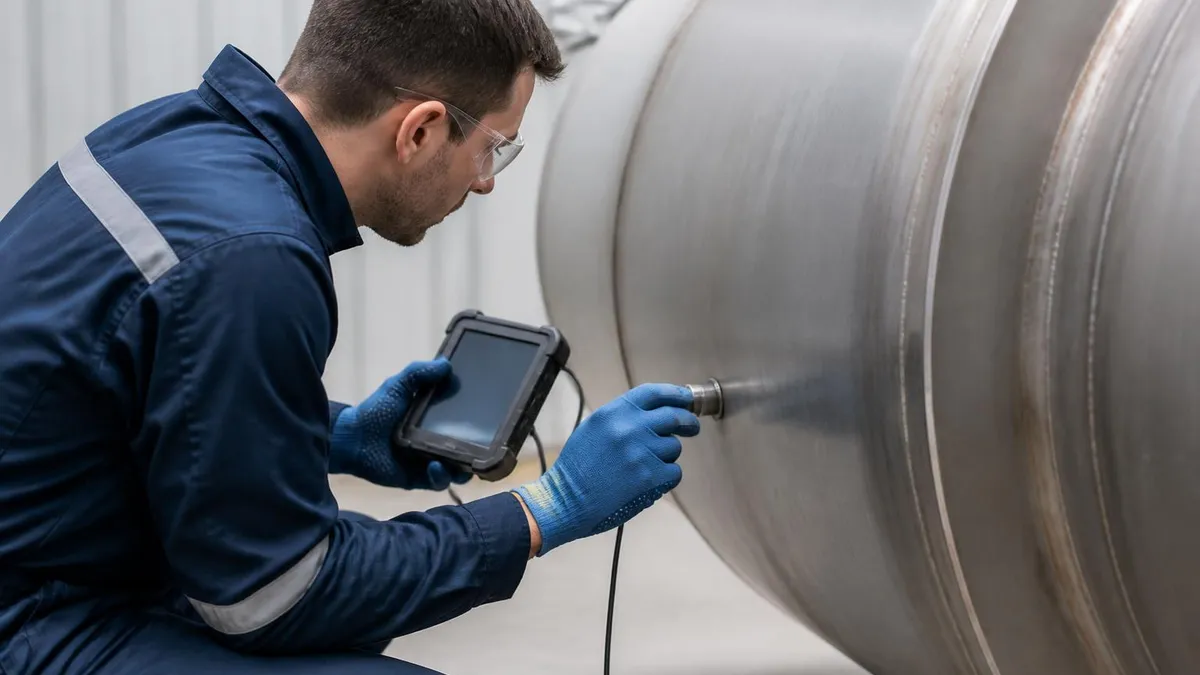
What Is NDT? A Complete Guide to Non-Destructive Testing in 2026
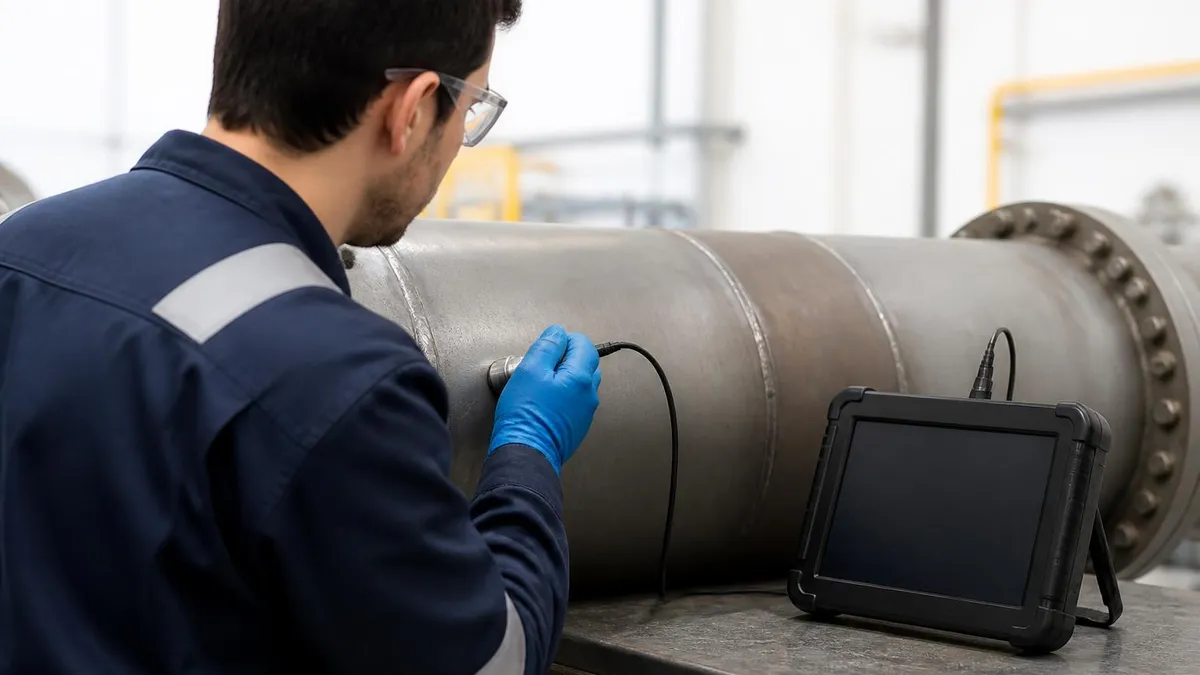
Indeed NDT Jobs: Complete Guide to Finding Non-Destructive Testing Careers in 2026

Crane NDT Inspection: Complete Guide to Non-Destructive Testing for Lifting Equipment

NDT Job Scope: Complete Guide to Non-Destructive Testing Career Opportunities in 2026
About the Author

Educational Psychologist & Academic Test Preparation Expert
Columbia University Teachers CollegeDr. Lisa Patel holds a Doctorate in Education from Columbia University Teachers College and has spent 17 years researching standardized test design and academic assessment. She has developed preparation programs for SAT, ACT, GRE, LSAT, UCAT, and numerous professional licensing exams, helping students of all backgrounds achieve their target scores.