
NCCCO Certified Rigger Practice Test Guide: Exams, Costs, Salary and Study Plan
🎯 Learn how the NCCCO certified rigger path works, from exam format and costs to crane operator salary, plus free practice tests and a study plan.
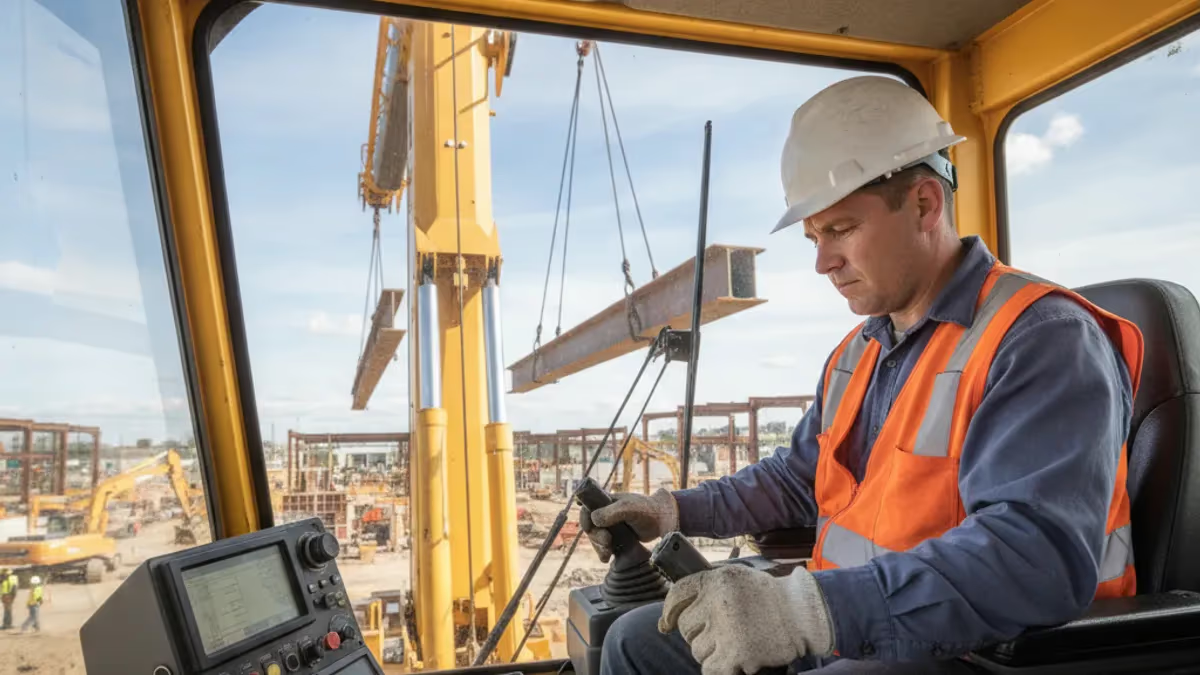
If you are researching the nccco certified rigger path, you are probably at a career crossroads. You want a trade job that pays well, does not demand a four-year degree, and carries real responsibility. Rigging sits at the center of nearly every lift on a construction site, shipyard, or industrial plant. Before a crane operator moves a load, someone must choose the slings, estimate the weight, and attach it safely. That person is the rigger.
The credential comes from the National Commission for the Certification of Crane Operators, widely known as nccco. Founded in 1995 as an independent nonprofit, it developed written and practical exams that OSHA recognizes as one accepted way to meet the qualification rules in its crane standard, 29 CFR 1926 Subpart CC. Employers use that third-party card as simple proof that a worker has been tested by someone other than the company.
Many readers arrive here after looking at related careers such as crane operator, heavy equipment operator, or forklift operator. Those jobs share a safety-first culture, yet credentials work differently in each. Forklift certification, for example, is issued by the employer under OSHA rules, while rigger and crane cards come from a third party after you pass proctored exams. Understanding that difference early saves you money, time, and frustration once job postings start asking for cards.
This guide walks through the whole picture. You will see what the rigger levels cover, how the exams are structured, what a realistic study timeline looks like, and how the pay compares with other trade school jobs. We also connect the dots to adjacent credentials, including the forklift certification many warehouse workers earn first, so you can decide whether rigging is your next step or a long-term specialty worth building a career around.
A quick note on terminology prevents confusion. Rigger Level I covers basic rigging tasks such as inspecting hardware, choosing slings, and attaching common loads. Rigger Level II raises the bar to complex lifts, including unusual load shapes, multiple-crane picks, and critical lift planning. Each level has its own written and practical requirements, and both must be passed to earn the card. Always confirm current details in the official candidate handbook, because exam specifics are revised from time to time.
Practice matters because the written exam is not a vocabulary quiz. It asks you to read charts, apply sling angle math, recognize hitch types, and choose the correct response to a hazard. Candidates who only memorize definitions tend to stall on scenario questions. Candidates who drill realistic questions, study every wrong answer, and rehearse hand signals on a real or simulated rig usually walk into the testing room confident and walk out certified.
Expect honest numbers throughout this article. A card will not make you rich overnight, and it will not replace on-the-job experience. What it does is open doors, separate you from unqualified applicants, and place you on a pay ladder that leads toward lead rigger, signal person, or crane operator roles. If that sounds like the steady, hands-on future you want, keep reading and start building your plan today.
NCCCO Certified Rigger by the Numbers

What the NCCCO Certified Rigger Credential Covers
Entry-level credential covering sling selection, hardware inspection, basic hitches, load weight estimation, and hand signals. It suits workers who attach common loads under supervision and want a recognized card to prove baseline competence to employers.
Advanced credential for complex lifts, including unusual load shapes, center of gravity problems, multiple-crane picks, and critical lift planning. Employers rely on Level II riggers to lead crews and make judgment calls when conditions are not routine.
A computer-based multiple choice test covering rigging hardware, sling capacities, angles, hitches, inspection criteria, and safe work practices. Strong candidates practice with scenario questions rather than relying on memorized definitions or flashcards alone.
A hands-on evaluation at an accredited site where an examiner watches you inspect gear, rig a load, and use standard signals. Safe habits, such as checking capacities and keeping hands clear of pinch points, matter more than speed.
How NCCCO Certified Rigger Certification Works From Application to Card
The path to a card follows a predictable sequence. You choose a certification level, apply through the program, and schedule a written exam at an approved testing site. After passing, you complete the practical exam at an accredited practical site where an examiner watches you perform real rigging tasks. Both parts must be passed inside the program's time limits, so plan your schedule before you pay any fees. The nccco certification process rewards candidates who organize early.
Eligibility is refreshingly simple. Candidates must be at least 18 years old, comply with the program's substance abuse policy, and agree to its code of ethics. There is no formal education requirement and no minimum number of work hours for entry-level rigger cards, which makes the credential unusually accessible. That said, employers often prefer applicants who have completed a safety orientation course such as OSHA 10, because it shows you understand fall protection, struck-by hazards, and basic site rules.
The written exam is computer-based and multiple choice. Rigger questions concentrate on rigging hardware, sling types and capacities, load weight and center of gravity, sling angles, hitches, inspection criteria, and safe work practices. Expect to interpret charts, perform simple arithmetic, and identify which piece of equipment should be removed from service. Time is usually comfortable if you have studied, and careless reading is the most common reason capable candidates miss questions they actually understand.
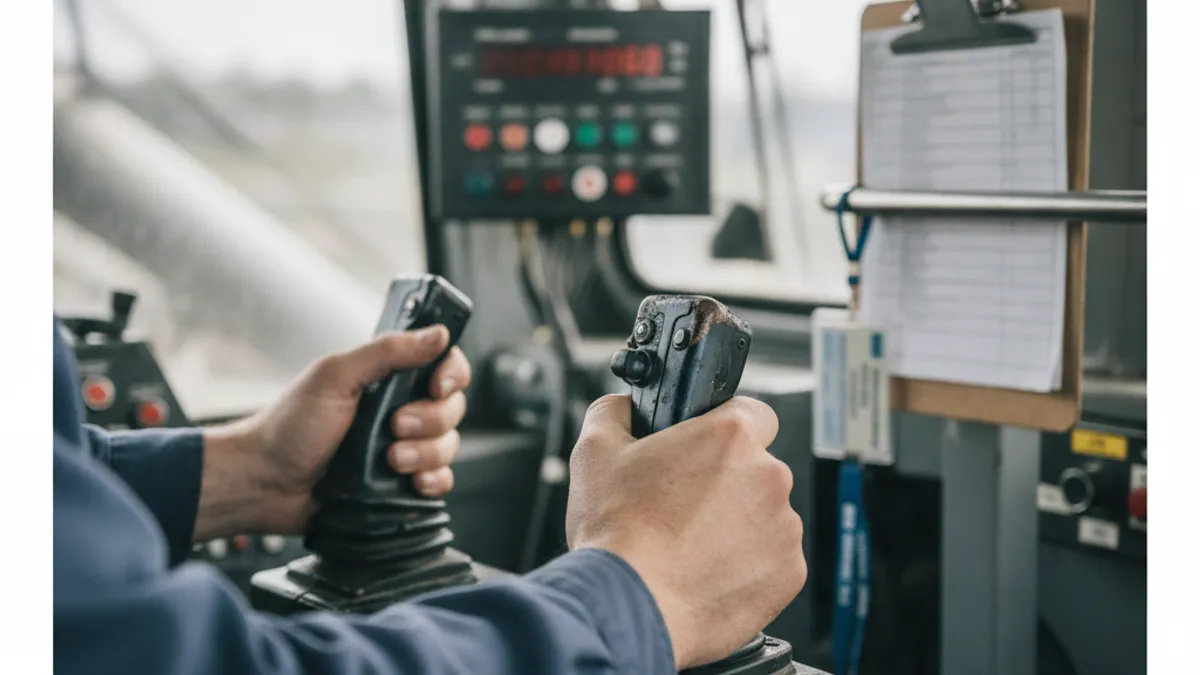
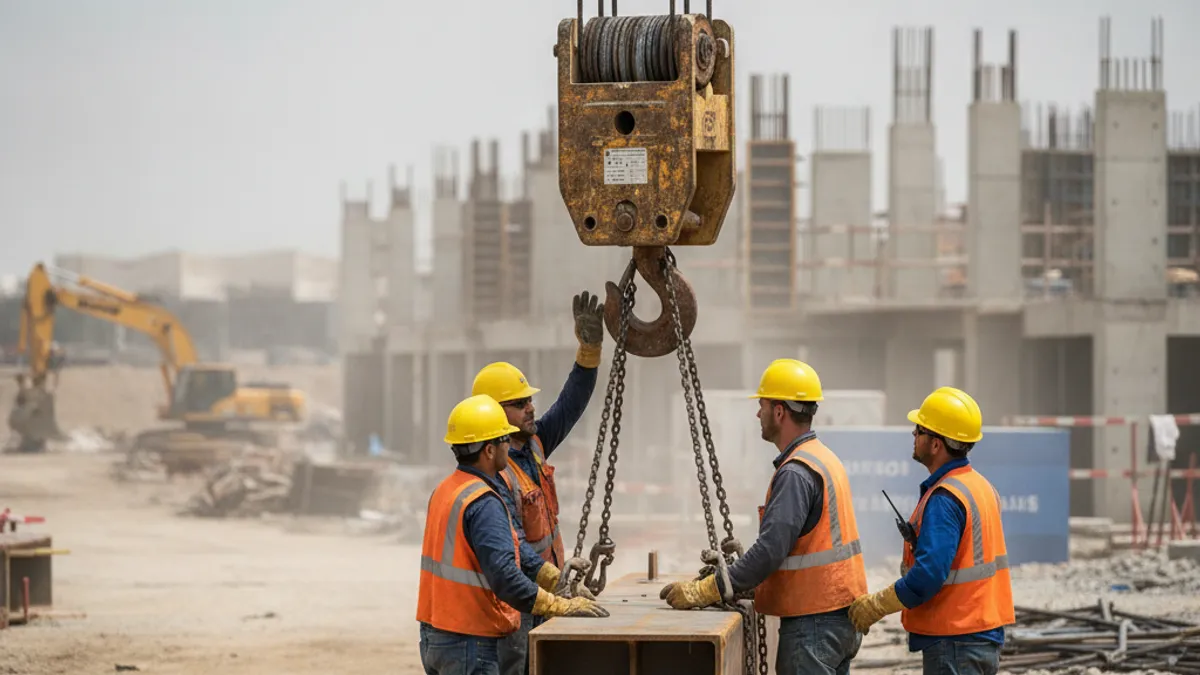
The practical exam is where hands-on skill shows. Examiners may ask you to inspect slings and shackles, rig a sample load with the proper hitch, attach a tag line, and communicate with standard hand signals. They look for safe habits more than speed. A candidate who calmly checks capacities, points out a damaged component, and keeps hands clear of pinch points will outscore someone who rushes through the task and skips the inspection steps entirely.
Understand the angle math before exam day. A sling's capacity drops as the angle between the sling leg and the horizontal gets smaller. A two-leg bridle hitch holds about 87 percent of its combined vertical rating at 60 degrees, but only 50 percent at 30 degrees. Candidates who internalize this relationship answer a surprising number of questions correctly without memorizing a separate table for every configuration they might see on the test.
After you pass both exams, the certification stays valid for five years. Recertification requires passing a written exam again before the card expires, and the program generally lets you apply ahead of the expiration date so there is no gap. Missing the window can force you to repeat more requirements, so put the date on your calendar the day your card arrives and set reminders at twelve months and six months out.
Keep your documentation organized. Save confirmation emails, receipts, test-site details, and your candidate ID in one folder. If an employer or OSHA inspector asks for proof of qualification, you will want a wallet card and a digital copy ready. Many contractors also verify cards through the program's online database, so make sure your name matches your government ID exactly to avoid verification delays on the job site or when you apply for a new position.
Forklift Certification vs Rigger vs Crane Operator Careers
Forklift certification is the most common entry point into industrial work, and it works differently from NCCCO cards. Under OSHA 1910.178, the employer must train forklift operators, evaluate them in the workplace, and re-evaluate at least every three years. There is no single national exam, so the certificate you receive is tied to that employer and the specific truck types you were trained on.
For forklift truck operators, this means portability is limited. A warehouse that accepts your certificate today may still require a short evaluation on its own equipment tomorrow. Many workers take an online classroom course and then complete the hands-on evaluation on site. Forklift operator wages are modest, but the skill is a reliable first credential and a bridge to higher-paying equipment roles.
Is Becoming an NCCCO Certified Rigger Worth It?
- +No college degree or prior experience is required to sit for entry-level rigger exams
- +The card is portable across employers and recognized nationwide
- +Certification supports higher hourly pay and faster promotion
- +Skills transfer to signal person, crane operator, and supervisor roles
- +Demand stays steady in construction, energy, and industrial maintenance
- +The credential is valid for five years before recertification
- −Exam and practical site fees add up before your first raise
- −Work can be seasonal and weather-dependent in some regions
- −The job is physically demanding and carries real injury risk
- −Practical exam sites may not be close to your home
- −Recertification requires re-testing and careful calendar management
- −Pay for entry-level riggers can start lower than skilled trades with longer apprenticeships
NCCCO Certified Rigger Exam Prep Checklist
- ✓Download the current official candidate handbook and read it fully.
- ✓Confirm you meet the age and policy requirements before applying.
- ✓Choose Rigger Level I or Level II based on your current experience.
- ✓Memorize sling angle effects and practice the capacity math by hand.
- ✓Learn every standard hand signal and rehearse them out loud.
- ✓Study hardware inspection and removal-from-service criteria.
- ✓Take timed practice tests and review each wrong answer.
- ✓Schedule the written exam only after scoring consistently above 80 percent.
- ✓Book your practical exam site early, since slots can fill quickly.
- ✓Complete a safety orientation course such as OSHA 10 to strengthen your resume.
Review wrong answers, not just scores
Candidates who write down why each missed question was wrong improve far faster than those who simply retake tests. After every practice session, sort mistakes into hardware, angles, hitches, signals, and hazards. Two or three weak categories usually explain most lost points, and fixing them is the quickest route to passing.
Crane Operator Salary and Career Growth for Certified Riggers
Money drives most career decisions, so here is an honest picture. According to U.S. Bureau of Labor Statistics data, crane and tower operators earn a median wage in the mid-$60,000s per year, and experienced union operators on large urban projects can exceed $90,000 once overtime is included. Riggers typically start lower, often between $20 and $30 per hour, but they gain pay quickly once they hold credentials. Treat these figures as ranges, because region and union status shift them considerably.
Why would a rigger card affect crane operator salary at all? Because rigging is a stepping stone. Many operators begin as laborers or oilers, learn rigging and signaling, and then train toward operator certification. Each credential you add shortens the distance to the cab. Employers promote people who already understand loads, because those people prevent the accidents that cost contractors money, schedule time, and in the worst cases, lives on the job site.
Compare adjacent careers fairly. A heavy equipment operator who runs excavators or dozers often earns in the high-$40,000s to low-$60,000s depending on region and union affiliation. A forklift operator typically earns less, commonly in the mid-$30,000s to low-$40,000s, though ports and specialty warehouses pay more. Rigging and crane work sit above both on average because the liability and technical knowledge are higher, and because qualified people are harder to find in many markets.
Trade school jobs generally come in two flavors: programs that teach you skills before you work, and apprenticeships that pay you while you learn. Union apprenticeships for operating engineers, ironworkers, and riggers can run three to four years, include paid on-the-job hours, and often cover certification costs. If you can get into one, you finish with credentials, experience, and minimal debt, a combination few college graduates can claim when they start their first full-time job.
Industries that hire certified riggers are broader than most people expect. Commercial construction, steel erection, wind energy, utilities, shipbuilding, manufacturing plants, film and stage production, and heavy hauling all need people who can attach loads correctly. Wind turbine work and industrial maintenance shutdowns can pay premium rates plus travel pay. That variety means you can chase higher wages, steadier work, or better schedules simply by moving between sectors as your goals change.
Career progression usually runs like this: laborer or apprentice, Rigger Level I, Rigger Level II or signal person, lead rigger or foreman, then crane operator, supervisor, or safety manager. At each step your hourly rate typically rises and your responsibility expands. Some riggers eventually open their own rigging and hauling companies. The common thread is that every rung rewards documented competence, which is exactly what a national credential provides when a hiring manager compares two similar candidates.
Be realistic about the downsides as well. Construction work is seasonal in some regions, physically demanding, and exposed to weather. Layoffs follow project completion, and travel can strain family life. Offsetting those risks, certification travels with you from employer to employer, so a layoff becomes a job search rather than a restart. People who build a reputation for safe, careful work tend to be recalled first and offered the best assignments on new projects.
Eligibility rules, exam content, and fees change over time. Always confirm current requirements in the official candidate handbook and with the program before scheduling, because outdated information can cost you an exam fee or force you to retake a section.
NCCCO Certification Costs, Free Training and Smart Budgeting
Budgeting early prevents surprises. The total cost of a rigger card includes the application and written exam fees, the practical exam fee charged by an accredited site, study materials, and possible travel. Fees vary by level and location, and they are revised periodically. For a detailed, current breakdown, review the nccco crane certification cost guide before you commit to a testing date or book hotel rooms.
Many employers pay for certification, especially when they are short on qualified riggers. Ask your supervisor or HR department before spending your own money. Some contractors reimburse fees after you pass, while others pay up front and require you to stay for a set period. Get the policy in writing, and ask whether study time is paid. A short conversation can save you several hundred dollars and show initiative to management.
Free and low-cost training exists if you know where to look. The Home Depot Foundation's Path to Pro program, for example, has offered free skilled trades training and job connections, and similar home depot free training opportunities appear periodically for people entering construction. Community colleges, workforce boards, and union apprenticeship programs also offer subsidized courses. Search your state's workforce agency website, since grants can cover tuition, books, and even exam fees for eligible adults.
A safety orientation course is one of the cheapest resume boosters available. The OSHA 10-hour construction card usually costs well under $100 online, takes about ten hours, and satisfies many site entry requirements. It covers fall hazards, electrical safety, struck-by dangers, and hazard communication. Riggers work around all of these, so the material reinforces what you will study for the exam and shows employers you take safety seriously from day one.
Plan for retesting costs without expecting to need them. Even strong candidates sometimes miss the passing score on the first attempt, and retake fees can be significant. Set aside a small buffer in your budget, and schedule your written exam only when practice scores are consistently high. Paying for a retake is far more expensive than spending an extra week reviewing, so patience is both a study strategy and a financial one.
Consider the return on investment. If a certified rigger earns even $3 more per hour than an uncertified laborer, that adds roughly $6,000 per year on a full-time schedule. Against total certification costs that may run a few hundred to a thousand dollars, the payback period can be a matter of months. Add faster promotion and better job security, and the credential usually pays for itself quickly.
Finally, think about timing. Schedule exams when your work calendar is light, since studying after twelve-hour shifts is inefficient. Spread study across four to six weeks, and put the practical exam within a few weeks of passing the written one so the material stays fresh. A realistic schedule, a written employer reimbursement policy, and a small buffer for retakes remove most of the financial and emotional stress from the process.
Final Prep Tips for Passing the Rigger Exams
Start with a diagnostic. Before you open a study guide, take one full practice test cold and record your score by topic. This reveals whether your weaknesses are in hardware, angles, hitches, signals, or hazards. Many candidates waste weeks rereading topics they already know. A diagnostic points your limited study hours at the categories that will actually cost you points on test day, which is the most efficient use of your time.
Build a four-week plan with specific daily tasks. In week one, cover hardware, slings, and inspection criteria. In week two, focus on load weight, center of gravity, and sling angles. Week three should address hitches, hand signals, and hazards such as power lines and wind. Use week four for timed practice tests and weak-area review. Thirty to sixty focused minutes a day beats an exhausting weekend cram session.
Practice the math until it is automatic. Calculate load weight from dimensions and material density, compute sling tension at different angles, and check results against rated capacities. Work problems on paper, not just in your head, and note the formulas you keep forgetting. When you can solve a sling angle question in under a minute without hesitating, you have the speed and confidence the written exam rewards.
Treat hand signals as a physical skill. Reading about them is not enough. Stand up, perform each signal, and say its meaning aloud. Ask a coworker or friend to call signals at random while you respond. Signals for hoist, lower, swing, boom up, boom down, stop, and emergency stop are tested regularly, and muscle memory prevents the blank moment that can happen under examiner observation.
Rehearse the practical exam with real gear if possible. Ask your employer or a training provider to let you handle shackles, slings, and hooks. Practice inspecting each piece out loud, naming what you check and why, as though an examiner were listening. Narrating your inspection builds the habit of doing it every time, and it helps you recover calmly if you forget a step during the actual evaluation.
Manage exam day deliberately. Sleep well, eat a real breakfast, and arrive early with proper identification. During the written test, read each question twice, eliminate clearly wrong answers, and flag uncertain items for review. Do not change answers without a concrete reason, since first instincts are often correct. If you see a question about removing equipment from service, remember that when in doubt, the safe answer is usually the right one.
Finally, keep learning after you pass. Certification is a floor, not a ceiling. Read incident reports, ask experienced riggers about close calls, and stay current on standards revisions. Pursue the next credential when you are ready, whether that is Level II, signal person, or operator certification. Riggers who keep learning become the ones supervisors trust with the toughest lifts, and that trust is what ultimately drives pay, safety, and long-term career satisfaction.
NCCCO Questions and Answers


About the Author

Certified Crane Operator & Skilled Trades Exam Specialist
Ferris State UniversityRobert Martinez is a Journeyman Ironworker, NCCCO-certified crane operator, and forklift trainer with a Bachelor of Science in Construction Technology from Ferris State University. He has 21 years of ironworking, rigging, and heavy equipment operation experience across high-rise and industrial construction sites. Robert prepares candidates for crane operator, rigger, forklift, and skilled trades certification examinations.
Join the Discussion
Connect with other students preparing for this exam. Share tips, ask questions, and get advice from people who have been there.
View discussion (8 replies)