
NCCCO Crane Practical Test: Complete Guide to Passing Your Hands-On Evaluation
Master the NCCCO crane practical test with expert tips, exam format breakdown, and free practice questions. Boost your crane operator salary today! 🏆

The NCCCO crane practical test is the hands-on component of your nccco certification journey, and it is widely regarded as the most demanding evaluation a heavy equipment operator will face in their career. Unlike a written exam you can cram for overnight, the practical test demands genuine skill, muscle memory, and an unwavering commitment to safe operating procedures.
Candidates who understand what is expected before they ever step into a crane cab walk away with certification — those who underestimate it often find themselves scheduling a costly retest. This guide breaks down every element of the exam so you can walk in prepared.
Forklift certification programs have long set the standard for hands-on skills assessment in the equipment operator world, but NCCCO's practical evaluation goes several steps further. Where forklift certification exams typically assess basic load handling over a short course, the NCCCO practical places you inside a real crane, managing live loads, responding to hand signals, and demonstrating precise load control under the watchful eye of an NCCCO-approved evaluator. The bar is high because the stakes are high — crane accidents cause more construction fatalities per incident than almost any other equipment failure on modern job sites.
Understanding the structure of the practical test before your exam date is not optional; it is essential. Candidates who have only studied the written material and skipped practical preparation consistently report feeling blindsided by the precision requirements and time constraints of the hands-on portion. Each task within the NCCCO practical is scored independently, and a poor performance on even one task can result in a failing score for the entire station. This guide details exactly what those tasks are, how they are scored, and what you can do in the weeks leading up to your test to maximize your performance.
A crane operator career represents one of the most financially rewarding paths available through trade school jobs and vocational programs. Median wages consistently outpace those of forklift truck operators and many other heavy equipment operator classifications, and experienced crane operators working in petrochemical, offshore, or nuclear environments can earn compensation packages well into six figures. Certification through NCCCO is the recognized standard that unlocks those opportunities — employers in virtually every major construction and industrial sector list NCCCO certification as either required or strongly preferred in every crane operator vacancy posting.
The practical test is offered alongside — but separate from — the written examination. Most candidates schedule both on the same day or within the same testing window, though the practical and written scores are recorded independently. You can pass one and fail the other, so preparation for both components must run in parallel.
Many candidates make the mistake of devoting the vast majority of their study time to the written exam and leaving only a day or two of hands-on practice before the practical evaluation. That approach is a path to a retest fee and another several months of waiting.
Safety orientation course principles form the philosophical backbone of everything the NCCCO practical evaluates. The exam is not simply a skills competition — it is a safety audit conducted in real time. Every task you perform is assessed not only for technical accuracy but for whether you followed established safe operating procedures at each step. Pre-operation inspection protocols, load chart consultation habits, communication practices with signal persons, and post-operation securing procedures are all part of the evaluation rubric. Even candidates with years of real-world crane experience discover gaps in their procedural compliance when they prepare rigorously for this exam.
This comprehensive guide will walk you through the practical exam format, the scoring criteria, the most common failure points, and a structured preparation strategy you can begin implementing today. Whether you are a first-time candidate coming out of a trade school program or an experienced operator seeking to formalize your credentials, the information here will give you a clear picture of what NCCCO expects and exactly how to deliver it.
NCCCO Crane Practical Test by the Numbers
Key Facts at a Glance
| Item | Value | Details |
|---|---|---|
| Practical Exam Duration | 3–4 hrs | Varies by crane type |
| Recommended Prep Time | 12 wks | For first-time candidates |
| Certification Validity | 5-yr | Renewal required every 5 years |

NCCCO Practical Exam Format & Task Breakdown
| Section | Questions | Time | Weight | Notes |
|---|---|---|---|---|
| Pre-Operation Inspection | 1 | 20 min | Pass/Fail | Must identify all critical defects |
| Load Chart & Rigging | 1 | 15 min | Pass/Fail | Correct chart selection and calculations |
| Basic Load Control (Precision Tasks) | 2 | 60 min | Scored | Timed obstacle course with point deductions |
| Signal Person Communication | 1 | 20 min | Pass/Fail | ASME B30.3 hand signals required |
| Post-Operation & Shutdown | 1 | 15 min | Pass/Fail | Full securing and documentation procedure |
| Total | 6 | 3–4 hours | 100% |
The NCCCO practical exam scoring system operates on a combination of pass/fail gates and point-based deductions, and understanding the distinction between those two scoring modes is critical to building an effective preparation strategy. Certain tasks — particularly the pre-operation inspection and load chart verification — are absolute pass/fail requirements.
If you miss a critical defect during the pre-op inspection or make a calculation error that results in an overload condition on the load chart, you fail that station regardless of how brilliantly you perform the precision load control tasks that follow. These gates exist because a single error in those areas on a real job site could result in catastrophic equipment failure.
The precision load control tasks use a point-deduction system where you begin with a perfect score and lose points for each error, contact, or procedural violation. Common deductions include touching an obstacle with the load or hook block (typically 10 points per contact), exceeding the time limit for a task (5 points per 15 seconds over), failing to follow the correct sequence of operations, and neglecting to check load charts before executing a lift.
The passing threshold for the scored portion varies by crane type but generally requires retaining at least 70 percent of your starting points across all precision tasks combined.
One of the most underappreciated aspects of the NCCCO practical is the communication evaluation. Candidates are expected to correctly interpret and respond to the full library of standard hand signals as defined in ASME B30.3. The evaluator or a designated signal person will give commands using hand signals only — no verbal communication is permitted during these sequences. Candidates who have only worked in environments where verbal radio communication was the norm consistently struggle with this portion. Dedicating at least two to three practice sessions specifically to hand signal recognition and response is not optional for most candidates.
If you want to know how much do crane operators make after achieving NCCCO certification, the answer depends heavily on which crane type endorsement you earn and where you work geographically. Operators certified on mobile cranes in the Gulf Coast petrochemical corridor routinely earn $85,000 to $110,000 annually, while tower crane operators on high-rise projects in major metropolitan markets frequently exceed those figures with overtime. The NCCCO practical exam is the gatekeeping event that separates operators who can access those compensation levels from those who cannot.
Scoring variability between crane type endorsements is real and significant. The mobile crane practical, for example, includes tasks that require precise boom angle and radius management while interpreting load charts that change dramatically as boom angle changes. The tower crane practical emphasizes precise positioning at height and coordination with a signal person located hundreds of feet below.
The overhead crane practical focuses on load positioning accuracy in confined industrial spaces. Your preparation should be laser-focused on the specific endorsement you are testing for — generic crane operating practice that does not mirror your target endorsement's task requirements will leave you underprepared.
Evaluators are not adversaries, but they are not there to coach you through the exam either. They observe silently and record deductions without commentary. Many candidates find this silence disconcerting because on the job there is always a foreman or signal person providing feedback. During the practical exam, you must operate with complete self-reliance, trusting your training and your preparation rather than looking for external cues. Experienced candidates recommend doing at least several practice sessions in a similar silent-observer format so that the absence of feedback does not break your concentration on exam day.
Post-operation procedures are among the most frequently skipped elements in practice sessions because candidates feel the hard work is done once the last precision task is complete. This is a costly mistake. The post-operation station requires you to correctly secure the crane, document any deficiencies observed during operation, return all controls to their neutral or off positions in the correct sequence, and complete the required paperwork accurately.
Evaluators note that a meaningful percentage of candidates who perform well on the precision tasks lose their passing status by rushing through or skipping steps in the post-operation procedure. Treat every station with equal discipline.
Crane Operator Preparation Strategies by Crane Type
Mobile crane candidates face the most complex load chart requirements of any NCCCO endorsement. Your preparation must include extensive practice reading and applying the specific load charts for the crane model you will be evaluated on, because chart formats vary significantly between manufacturers. Practice converting between radius, boom angle, and load capacity values until the process is automatic, because during the exam you will be under time pressure and cannot afford to recalculate multiple times. Most testing facilities publish the crane model in advance — use that information to obtain the correct load charts and memorize their layout before exam day.
On the practical tasks themselves, mobile crane candidates should focus heavily on controlled lowering and landing precision, since tasks typically require setting a load within a small target zone with the load under constant positive control. Practice with a spotter who can give you honest feedback on load swing management, since uncontrolled swing is one of the most common point-deduction triggers. Wind conditions on the day of your exam can dramatically affect load behavior — understanding dynamic environmental effects and how to compensate with crane movements is essential knowledge for any serious candidate.
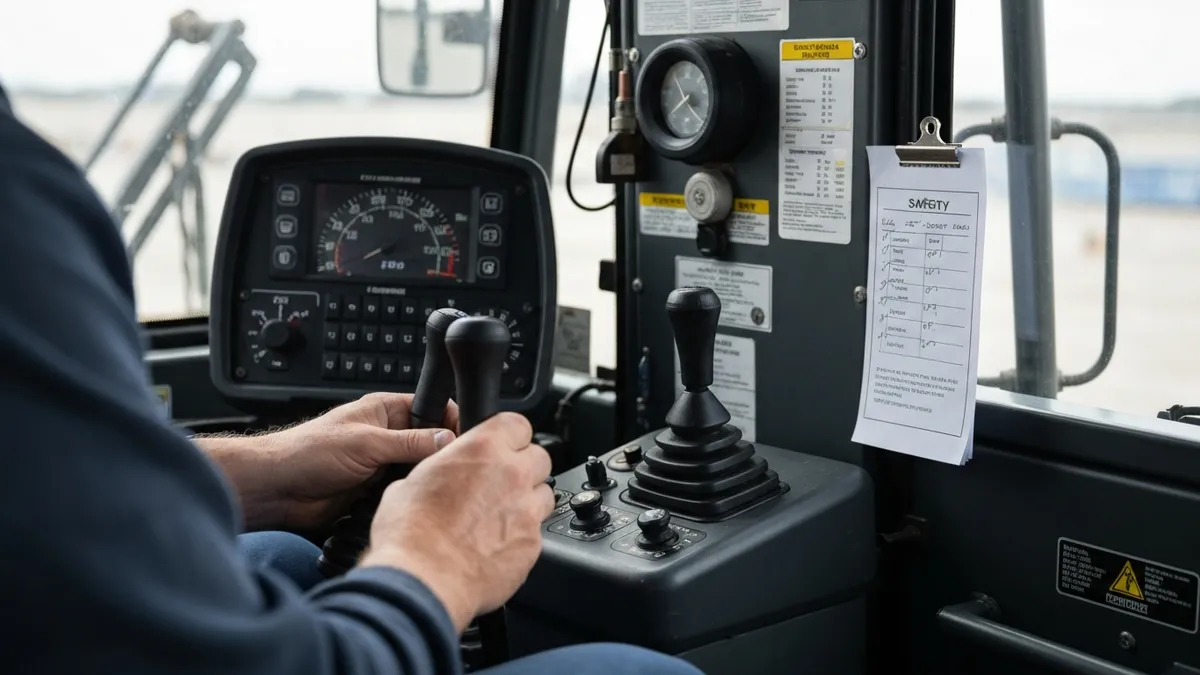
NCCCO Certification: Is the Practical Exam Worth the Effort?
- +Dramatically increases earning potential — certified operators earn 20–35% more than non-certified counterparts on average
- +Opens doors to federal, nuclear, petrochemical, and offshore projects that mandate NCCCO certification by contract
- +Demonstrates verified hands-on competency, not just book knowledge, which resonates with safety-conscious employers
- +Five-year certification validity means a single successful exam protects your career credentials for half a decade
- +NCCCO certification is portable across all 50 states and recognized by major project owners nationwide
- +Passing the practical builds genuine confidence in your operating skills and reinforces safe habits that protect you on the job
- −Testing fees can exceed $400–$600 when combined with written exam costs, plus travel to approved testing facilities
- −Requires access to a correctly configured crane and NCCCO-approved evaluator, which is not universally available in all regions
- −First-time pass rates hover around 54%, meaning nearly half of all candidates must pay retest fees and wait for another window
- −Practical preparation requires hands-on seat time that classroom or online study programs cannot fully replicate
- −Scheduling conflicts between written and practical exam windows can delay certification by weeks or months
- −Certification must be maintained through continuing education and renewal exams every five years, creating ongoing time and cost commitments
NCCCO Practical Exam Preparation Checklist
- ✓Confirm your exam crane model and obtain its actual manufacturer load charts at least four weeks before your test date
- ✓Complete a minimum of 20 hours of hands-on operating time on the specific crane type for your endorsement
- ✓Memorize all ASME B30.3 standard hand signals and practice responding to them without verbal cues
- ✓Run through the full pre-operation inspection checklist on your training crane until it takes under 20 minutes
- ✓Practice precision load placement tasks with a target zone of six inches or less to exceed the exam tolerance requirement
- ✓Perform at least three full timed dry runs of the complete practical exam sequence from pre-op through post-op shutdown
- ✓Study the scoring rubric for your specific crane type endorsement and identify which tasks carry the highest point value
- ✓Arrange for a silent observer during at least two practice sessions to simulate the evaluator-present exam environment
- ✓Review all load chart mathematics including radius determination, derating for boom extensions, and outrigger configuration effects
- ✓Confirm your exam registration details, facility location, required documentation, and equipment availability at least one week before your scheduled date
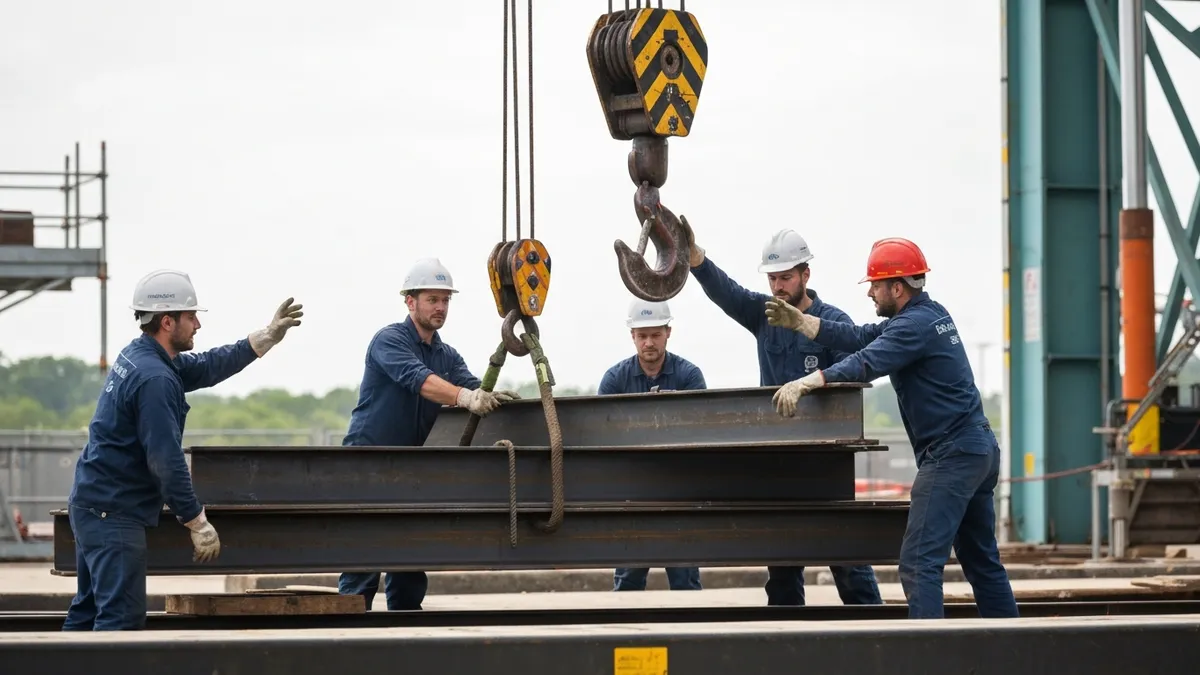
Procedure Compliance Outweighs Raw Skill
NCCCO evaluators consistently report that candidates with fewer total hours of operating experience but rigorous procedural discipline outperform high-hour operators who skip steps. Following every inspection, communication, and shutdown procedure exactly as specified — even when it feels slow — is what separates first-time passers from repeat testers. Treat every procedural step as a scored item, because on exam day, it is.
The most common failure point in the NCCCO crane practical test is not poor load control — it is inadequate pre-operation inspection technique. Candidates who rush through the inspection or treat it as a formality rather than a genuine safety check fail to identify deliberately introduced defects that NCCCO evaluators include in the test equipment configuration.
These planted defects are realistic: worn wire rope with broken outer wires, hydraulic hoses with visible chafing, limit switches that have been temporarily disabled, or outrigger pads that are missing from the equipment staging area. Candidates who know what to look for and systematically work through the inspection checklist catch these items. Those who rely on casual visual scanning miss them.
Load swing management is the second most common failure trigger in the precision task stations. Every crane generates pendulum motion in its load when the operator makes abrupt control inputs or when environmental factors like wind act on a suspended load. The evaluator's scoring sheet has a specific deduction for uncontrolled load swing, and it is triggered whenever the load moves laterally more than a defined amount without corrective operator action.
The solution is not to move more slowly across the board — it is to learn the specific technique of anticipatory control input that neutralizes swing before it develops. This skill is almost impossible to learn from a textbook and must be developed through practice.
Time management during the practical exam is a skill that candidates consistently underestimate until they experience their first timed station. Each precision task has a defined time limit, and exceeding it results in automatic point deductions at a rate that can quickly erode a passing score.
Many candidates spend too long on early tasks trying to achieve perfection, then find themselves rushing through later tasks where the cumulative time pressure causes errors. The optimal strategy is to target a completion time that is approximately 80 percent of the time limit for each task, leaving a buffer for minor corrections without accumulating time penalty deductions.
Environmental conditions on your exam day will affect crane performance in ways that your training sessions may not have prepared you for. Wind is the most significant variable — even a 15 mph wind can cause substantial load swing on a long hoist line, dramatically increasing the difficulty of precision placement tasks.
NCCCO evaluators do not adjust scoring criteria for wind conditions unless the wind exceeds established safety thresholds that would require suspending operations entirely. If your exam day is windy, you are expected to manage it. Candidates who have practiced specifically in varied weather conditions have a significant advantage over those who always trained in ideal conditions.
Documentation errors during the post-operation station represent a surprisingly large source of exam failures. At the conclusion of the practical tasks, candidates are typically required to complete an inspection report or daily log entry documenting the condition of the equipment, any deficiencies observed, and the loads lifted during the evaluation. Evaluators check these forms for accuracy, completeness, and adherence to the required format. Candidates who are accustomed to informal or verbal-only reporting on their job sites find this formal documentation requirement unfamiliar. Practicing the documentation process as a routine part of every training session eliminates this failure point entirely.
The role of the signal person in your practical exam deserves specific attention during your preparation. NCCCO requires that communication between a crane operator and a signal person follow the ASME B30.3 standard without deviation. On a real job site, informal communication shortcuts develop over time between operators and experienced riggers — a slight wave, a verbal shorthand, a custom gesture that the crew has adopted.
None of those shortcuts are acceptable during the NCCCO practical. If the signal person gives you a non-standard signal or you cannot clearly see and interpret the signal being given, the correct response is to stop all crane movement and request clarification. Continuing to operate without a clear signal is itself a scored violation.
Candidates who research the crane operator salary potential available after NCCCO certification often find that the investment of time and money in thorough exam preparation pays back within the first year of certified employment.
The differential between a certified operator's hourly rate and a non-certified operator on the same job site frequently exceeds five to eight dollars per hour, and in union environments that differential is often codified in the collective bargaining agreement. Over a full working year, that premium represents $10,000 to $16,000 in additional earnings — a compelling return on the investment of a few hundred dollars in fees and a few weeks of dedicated preparation.
Candidates who fail the NCCCO practical exam must wait a minimum of 30 days before scheduling a retest, and the full practical examination fee applies again upon retesting. There is no partial credit carry-over from a failed attempt. If you fail the practical while passing the written exam, your written passing status is held for one year — after that window, both components must be retaken. Schedule your exam only when your preparation is genuinely complete, not when the date is merely convenient.
Understanding the cost structure of NCCCO certification is essential for planning your path from preparation to employed certified operator. The written examination fees for most crane type endorsements range from $200 to $350 depending on the specific credential. The practical examination fees are separate and typically range from $250 to $400.
Candidates pursuing multiple endorsements — for example, both mobile crane and service truck crane certifications — must pay examination fees for each endorsement independently. When you add preparation costs including training materials, hands-on operator time, and travel to testing facilities, the total investment for a first-time candidate frequently falls between $800 and $1,500.
The certification application process requires candidates to document their experience, education, and medical fitness before they are even eligible to test. NCCCO requires that practical exam candidates demonstrate a minimum number of operating hours on the crane type for which they are testing. These hour requirements vary by endorsement but typically fall in the range of 500 to 1,000 hours of documented crane operating experience.
Candidates coming directly from trade school programs that include crane operation training can often count program hours toward this requirement, but the documentation must be provided through an employer verification form or training program records — self-reported hours without supporting documentation are not accepted.
Medical fitness requirements for NCCCO certification are more rigorous than many candidates expect. NCCCO follows the guidelines established by the American National Standards Institute (ANSI) for physical qualifications for crane operators, which include vision standards (with or without correction), hearing standards, and fitness to perform the physical demands of crane operation.
A medical examination by a qualified physician and a completed medical form signed by that physician must be submitted with your application. Certain medical conditions can result in temporary or permanent ineligibility, though NCCCO does maintain an appeals process for candidates whose conditions are controlled and do not affect safe operation.
If you are researching every available crane operator vacancy in your region, you will quickly notice that NCCCO certification requirements appear in job listings across industries that might surprise a newcomer to the field. Power generation facilities, paper mills, automotive manufacturing plants, shipyards, bridge construction contractors, and offshore platform operators all list NCCCO certification as a standard credential requirement. The breadth of industries that rely on NCCCO certification reflects the universal recognition of the program as the definitive competency standard for crane operators across all industrial sectors in the United States.
Home depot free training programs and similar employer-sponsored introductory programs can provide a foundation for equipment operator careers, but they do not substitute for NCCCO certification when it comes to crane operation. Employer-sponsored training programs are typically designed to meet internal safety requirements and OSHA compliance standards for light-duty equipment, not the specialized technical competency requirements for crane operation. Candidates who have completed employer-sponsored safety orientation course programs will find that NCCCO preparation requires a significant additional investment of study and hands-on practice beyond what those programs provide.
Renewal requirements for NCCCO certification add an ongoing element to the commitment that candidates should factor into their long-term career planning. Every five years, certified operators must demonstrate continuing competency through a renewal examination process that includes both written and practical components.
The renewal exams are generally considered less intensive than the initial certification exams, but they require genuine preparation — particularly if your daily job does not regularly expose you to all of the crane types and procedures covered in the exam. Building a habit of annual refresher study from the first year of certification ensures that renewal preparation never becomes an emergency.
The network of NCCCO-approved practical examiners and testing facilities has expanded significantly over the past decade, making the credential more accessible geographically than it was even five years ago. Regional testing events organized through local chapters of the Associated General Contractors, Operating Engineers union training programs, and independent crane training schools bring testing opportunities to areas that previously required long-distance travel to reach an approved facility.
NCCCO's website maintains a current directory of approved examiners and scheduled testing events — checking that directory early in your preparation process allows you to select a test date that gives you adequate preparation time without unnecessarily extending your timeline to certification.
Many readers pair this guide with the nccco practice test to check their readiness before exam day.
Your final weeks of preparation before the NCCCO crane practical test should follow a structured tapering approach rather than an escalating push of increasingly intense practice. Many candidates make the mistake of trying to cram maximum seat time into the days immediately before their exam, which leads to physical fatigue, muscle tension, and degraded fine motor control — exactly the opposite of what precision crane operation requires. A more effective approach is to reach peak preparation intensity approximately two weeks before the exam, then gradually reduce the volume of practice while maintaining the quality and procedural discipline of each session.
Mental rehearsal is a preparation technique that experienced crane operators and professional athletes alike use to improve performance under evaluation conditions. Spend 15 to 20 minutes each day in the week before your exam walking through the complete practical sequence in your mind, visualizing each inspection item, each control input, each load placement, and each communication exchange exactly as it should unfold. Research in sports psychology and operator training consistently shows that high-quality mental rehearsal activates the same neural pathways as physical practice, reinforcing procedural memory without the physical wear of additional seat time.
Sleep quality in the final week before your practical exam has a measurable impact on fine motor performance, spatial judgment, and stress response — all of which are directly relevant to crane operation quality. Candidates who sacrifice sleep to get additional study or practice time in the final days before their exam consistently perform below their training baseline.
Prioritize seven to eight hours of sleep each night in the week leading up to your exam, avoid significant alcohol consumption during this period, and plan your exam day logistics including travel time and morning routine so that you arrive at the testing facility calm, well-rested, and early.
Nutrition and hydration on exam day affect concentration and fine motor control more than most candidates appreciate. A practical exam that runs three to four hours is a physically and mentally demanding endurance event. Arrive having eaten a balanced meal that provides sustained energy without causing sluggishness. Bring water and a light snack for any breaks between stations. Caffeine can sharpen focus for some candidates but can increase hand tremor and anxiety for others — know your own response to caffeine and make your exam-day decision accordingly rather than experimenting with something new on the day of your evaluation.
Gear and personal protective equipment requirements for the NCCCO practical exam must be confirmed with your testing facility in advance. Most facilities require a hard hat, safety vest, work boots with steel toes, and safety glasses as minimum PPE for the testing area. Some facilities have additional requirements based on their site safety protocols.
Arriving without required PPE is grounds for exclusion from the exam without a fee refund, so confirm these requirements in writing when you register. Wearing unfamiliar PPE during an exam can also be distracting — make sure you practice wearing your exam gear during at least some of your preparation sessions.
The evaluator will brief you on the specific task sequence and any facility-specific safety rules at the beginning of your practical exam. Listen to this briefing with complete attention and do not hesitate to ask clarifying questions if anything is unclear. The evaluator is not permitted to coach you during the exam tasks themselves, but the pre-exam briefing is your opportunity to confirm your understanding of what is expected.
Candidates who listen carefully and ask smart clarifying questions at this stage demonstrate professional competence from the very first moment of their evaluation — and evaluators notice that professionalism throughout the exam that follows.
After your practical exam is complete, results are typically available within two to four weeks through the NCCCO online portal. If you pass, your certification wallet card and formal documentation will be issued shortly thereafter. If you do not pass, NCCCO provides a score report that identifies which stations you passed and which you did not, giving you specific information for targeting your retest preparation.
Use that feedback deliberately — candidates who analyze their failure report carefully and design their retest preparation around their specific weak points pass on their second attempt at much higher rates than those who simply repeat the same general preparation that produced the first attempt.
Sample NCCCO (National Commission for the Certification of Crane Operators) Practice Questions
Try these questions from our free NCCCO (National Commission for the Certification of Crane Operators) practice tests. The correct answer and an explanation follow each question.
In the NCCCO certification process, what must a candidate successfully complete before being eligible to take the practical examination?
- A. Submit documented proof of 1,000 hours of crane operating experience
- B. Pass the required written examination(s)
- C. Obtain a letter of endorsement from a licensed crane dealer
- D. Complete an OSHA 30-hour construction safety course
Answer: B. Pass the required written examination(s)
Candidates must pass the required written examinations (core and applicable specialty) before they are permitted to schedule and sit for the practical examination. The written exams serve as a knowledge gateway to the hands-on skills assessment.
What is the purpose of the NCCCO's Practical Examination for crane operators?
- A. To test only theoretical knowledge of crane safety
- B. To demonstrate hands-on ability to safely operate a specific crane type
- C. To evaluate the operator's ability to read load charts only
- D. To certify the crane equipment itself
Answer: B. To demonstrate hands-on ability to safely operate a specific crane type
The NCCCO practical exam assesses the candidate's actual ability to safely operate a crane under observed conditions.
Which document must an NCCCO certified crane operator carry while operating a crane?
- A. Their original application form
- B. Their wallet card or a copy of their certificate
- C. A letter from their employer confirming certification
- D. Their state driver's license only
Answer: B. Their wallet card or a copy of their certificate
NCCCO certified operators must have their wallet card or certificate copy available for inspection when operating a crane.
An NCCCO practical exam candidate arrives without the required photo ID. What occurs?
- A. The examiner may vouch for the candidate's identity
- B. The candidate is not permitted to test and must reschedule
- C. The candidate can test but results are held pending ID verification
- D. The employer can submit ID documentation afterward
Answer: B. The candidate is not permitted to test and must reschedule
Candidates who fail to present valid government-issued photo ID on exam day are denied entry and must reschedule, forfeiting their exam fee.
Take the full NCCCO (National Commission for the Certification of Crane Operators) practice test
NCCCO Questions and Answers
About the Author

Certified Crane Operator & Skilled Trades Exam Specialist
Ferris State UniversityRobert Martinez is a Journeyman Ironworker, NCCCO-certified crane operator, and forklift trainer with a Bachelor of Science in Construction Technology from Ferris State University. He has 21 years of ironworking, rigging, and heavy equipment operation experience across high-rise and industrial construction sites. Robert prepares candidates for crane operator, rigger, forklift, and skilled trades certification examinations.
Join the Discussion
Connect with other students preparing for this exam. Share tips, ask questions, and get advice from people who have been there.
View discussion (8 replies)