
Crane Operator Certification 2026 September — NCCCO Exam Guide & Requirements
Pass your nccco practice test exam. Practice questions with detailed 🟢 answer explanations for the 2026 September exam. Start scoring higher today.

What Is NCCCO?
The National Commission for the Certification of Crane Operators (NCCCO) is the primary national certification body for mobile crane and overhead crane operators in the United States. Established in 1995, NCCCO develops and administers psychometrically validated written and practical exams that set the industry standard for crane operator competency.
NCCCO certification is recognized by employers, contractors, and regulators across every major construction market. Whether you operate a lattice boom crawler on a highway project or a tower crane on a high-rise, NCCCO credentials signal that you have demonstrated measurable knowledge and hands-on skill under standardized testing conditions.
To start building your knowledge before exam day, take an NCCCO practice test to benchmark where you stand across all core subject areas.

OSHA 1926.1427 and Crane Operator Certification
OSHA's crane and derrick standard at 29 CFR 1926.1427 requires that crane operators working in construction be certified by an accredited testing organization, qualified through an audited employer program, or licensed by a state or municipality. NCCCO is one of the most widely recognized accredited certification bodies under this standard.
Employers on OSHA-covered job sites cannot simply put an untested worker in a crane cab. Certification or an equivalent qualification pathway is mandatory. NCCCO's independent, third-party model satisfies the accreditation criteria set by the National Commission for Certifying Agencies (NCCA), making it the go-to credential for contractors seeking clear OSHA compliance.
Use the NCCCO complete study guide to cover all OSHA-related regulations tested on the written core exam.

NCCCO Exam Format
NCCCO certification involves three distinct exam components. Understanding what each covers helps you allocate study time efficiently.
Written Core Exam
The core exam tests knowledge that applies to all crane types: load charts, rigging fundamentals, hand signals, site safety, OSHA regulations, and basic crane components. It consists of 100+ multiple-choice questions. A strong performance on the core exam reflects broad operational awareness regardless of which crane type module you pursue.
Drill your knowledge of load charts, components, and regulations with the NCCCO crane components test to sharpen the specific skills tested in the written portion.
Written Specialty Exam
Each crane type (LBC, LBT, TSS, TLL, AC, TH, TS) has a dedicated specialty written exam. These exams go deeper into the mechanical characteristics, operating limitations, and inspection requirements specific to that crane class. Candidates must pass the specialty written exam before scheduling the practical.
Practical Exam
Conducted at NCCCO-approved test sites by certified examiners, the practical exam evaluates real crane operation. Candidates are scored on pre-operation inspection, setup, load handling precision, and compliance with safety protocols. Practical exams are offered at fixed testing events across the country throughout the year.
Exam fees range from $150–$250 per written exam and $300–$400 for the practical exam, depending on the module and testing organization.
NCCCO Study Tips
What's the best study strategy for NCCCO?
Focus on weak areas first. Use practice tests to identify gaps, then study those topics intensively.
How far in advance should I start studying?
Most successful candidates begin 4-8 weeks before the exam. Create a structured study schedule.
Should I retake practice tests?
Yes! Take each practice test 2-3 times. Focus on understanding why answers are correct, not memorizing.
What should I do on exam day?
Arrive 30 min early, bring required ID, read questions carefully, flag difficult ones, and review before submitting.
- ✓Confirm you meet the minimum age requirement of 18 years
- ✓Register for the NCCCO written core exam and your chosen specialty module
- ✓Study load charts, rigging, OSHA regulations, and crane-type specifics using a structured study plan
- ✓Pass the written core exam and written specialty exam with a qualifying score
- ✓Schedule and complete the practical exam at an NCCCO-approved testing site
- ✓Receive your NCCCO wallet card and certificate — valid for 5 years from the date of practical exam
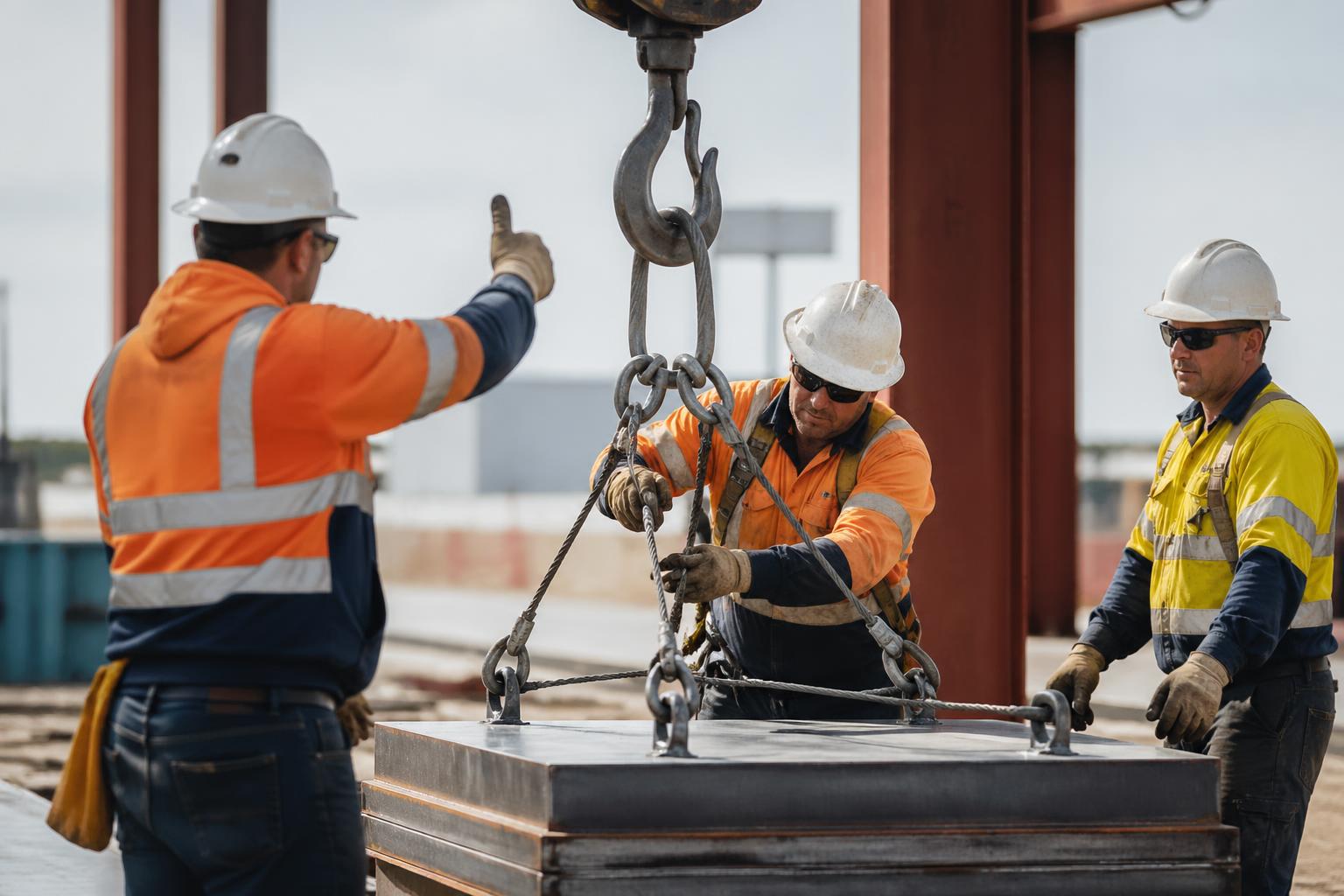
Study Resources and Exam Preparation
The NCCCO written exams are comprehensive and require structured preparation. Candidates who treat the process like a licensing exam — not just a workplace quiz — consistently perform better on their first attempt.
A well-structured crane operator study guide built around a 30-day timeline can cover all core and specialty topics without overwhelming candidates working full-time in the field. Breaking daily study into load chart drills, regulation review, and component identification keeps material manageable and retention high.
For candidates who want to understand the full career path from start to certification, the resource on how to become a crane operator covers training programs, union apprenticeships, and employer-sponsored pathways in detail.
Once you have a baseline understanding of the material, the most effective preparation strategy combines practice questions with video explanations. The NCCCO site safety practice test covers one of the highest-weight topic areas on the core written exam and is worth completing multiple times until you consistently score above 85%.
For targeted test-taking strategy and common exam traps, read the guide on how to pass the NCCCO exam, which breaks down question patterns, time management, and the most commonly missed load chart scenarios.
Crane Operator Salary
Compensation for crane operators varies significantly by experience level, crane type, geography, and union status. NCCCO certification is a direct driver of higher earnings because most high-paying employers and union contracts require it.
- Entry-level crane operators: $45,000–$60,000 per year
- Experienced NCCCO-certified operators: $60,000–$95,000 per year
- Union crane operators in major metro areas: $80,000–$130,000+ annually, including overtime and benefits packages
Tower crane operators working on high-rise projects in cities like New York, San Francisco, and Chicago frequently earn at the top of or above these ranges due to the specialized nature of the work and strong union density in urban construction markets.
For a comprehensive breakdown of earnings by crane type, region, and experience level, see the crane operator salary guide, which includes Bureau of Labor Statistics data and real-world market comparisons.
Crane Operators vs. Other Heavy Equipment Operators
Crane operators are a specialized subset of the broader heavy equipment operator category. While excavator operators, bulldozer operators, and grader operators require skill and certification (OSHA forklift training, equipment-specific qualifications), crane operators face the most rigorous third-party credentialing requirements due to the elevated life-safety risks of overhead lifting. NCCCO is the exclusive nationally recognized credential for this class of work.
Certification Renewal
NCCCO certifications are valid for 5 years. Renewal requires:
- Completion of 40 hours of continuing education in crane-related subjects
- A renewed practical exam demonstrating ongoing operating competency
- Submission of renewal application and fees prior to certification expiration
NCCCO sends renewal notices in advance of expiration. Allowing certification to lapse requires retesting from the beginning — including written core and specialty exams — so tracking your renewal window is essential for uninterrupted employment eligibility.
- +Validates your knowledge and skills objectively
- +Increases job market competitiveness
- +Provides structured learning goals
- +Networking opportunities with other certified professionals
- −Study materials can be expensive
- −Exam anxiety can affect performance
- −Requires dedicated preparation time
- −Retake fees apply if you don't pass
About the Author

Attorney & Bar Exam Preparation Specialist
Yale Law SchoolJames R. Hargrove is a practicing attorney and legal educator with a Juris Doctor from Yale Law School and an LLM in Constitutional Law. With over a decade of experience coaching bar exam candidates across multiple jurisdictions, he specializes in MBE strategy, state-specific essay preparation, and multistate performance test techniques.
Join the Discussion
Connect with other students preparing for this exam. Share tips, ask questions, and get advice from people who have been there.
View discussion (8 replies)