
How To Become A Crane Operator: Complete 2026 October Guide
Get ready for your How To Become A Crane Operator: certification. Practice questions with step-by-step answer explanations and instant scoring. 📚
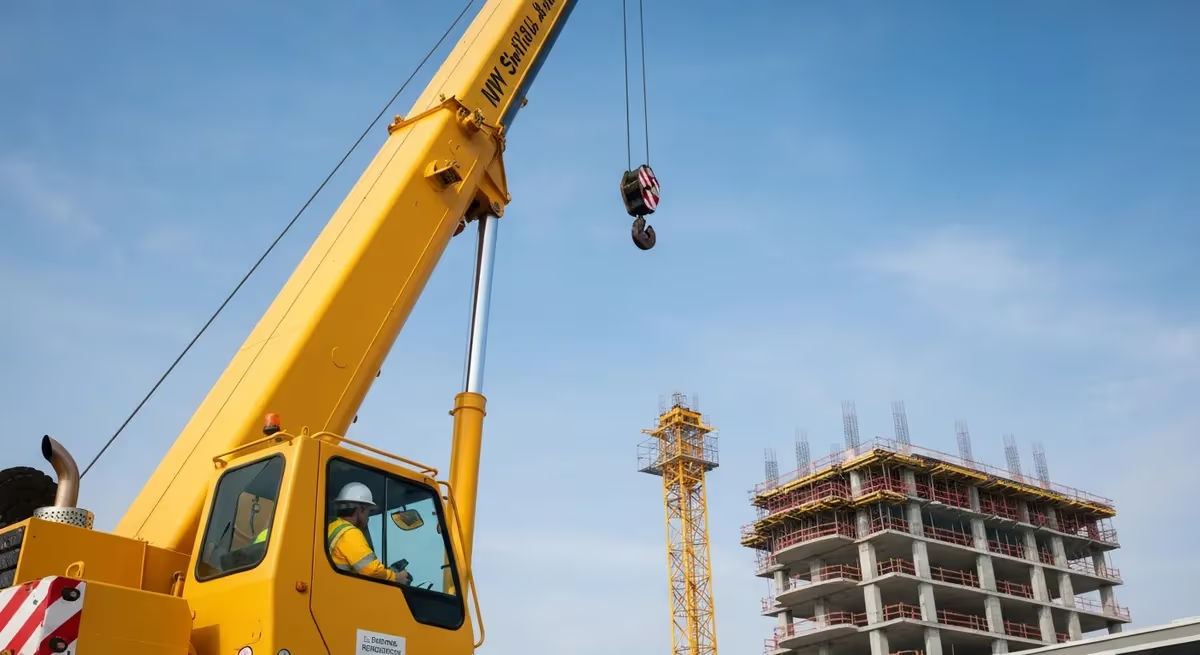
Becoming a crane operator requires a high school diploma, being at least 18 years old, and completing a formal apprenticeship or vocational training program. Candidates must then pass both written and practical exams to earn national certification from an accredited organization like the NCCCO, which is a standard requirement for employment.
How To Become A Crane Operator
Learning how to become a crane operator is the first step toward a rewarding career in a high-demand skilled trade. Crane operators are essential to modern construction, manufacturing, and shipping, responsible for safely and efficiently moving massive loads. The path requires a combination of specialized training, hands-on experience, and, most importantly, professional certification.
The journey of how to become a crane operator typically begins with foundational training. You can acquire this through a formal apprenticeship program with a union, such as the International Union of Operating Engineers (IUOE), or by attending a private vocational school specializing in heavy equipment operation. Regardless of the path you choose, the goal is the same: to gain the fundamental knowledge and practical skills necessary to handle complex machinery safely.
A critical component in this process is earning your NCCCO certification. The National Commission for the Certification of Crane Operators (CCO) provides the industry's most recognized and respected credentials. To become certified, you must pass both a written examination and a practical skills test. This certification is not just a piece of paper; it is a mandatory requirement on most job sites and in many states, proving your competence and commitment to safety. Preparing for the written portion is a crucial step, and using tools like our free NCCCO practice tests can make a significant difference in your success.
This guide will walk you through every stage, providing a clear roadmap for how to become a crane operator in 2026, from meeting the basic requirements to landing your first job.
Once certified in Montana, review our national notary practice test to compare state-specific duties with the general notarial principles that apply across all states.
Once certified in Louisiana, review our national notary practice test to compare state-specific duties with the general notarial principles applied across all states.
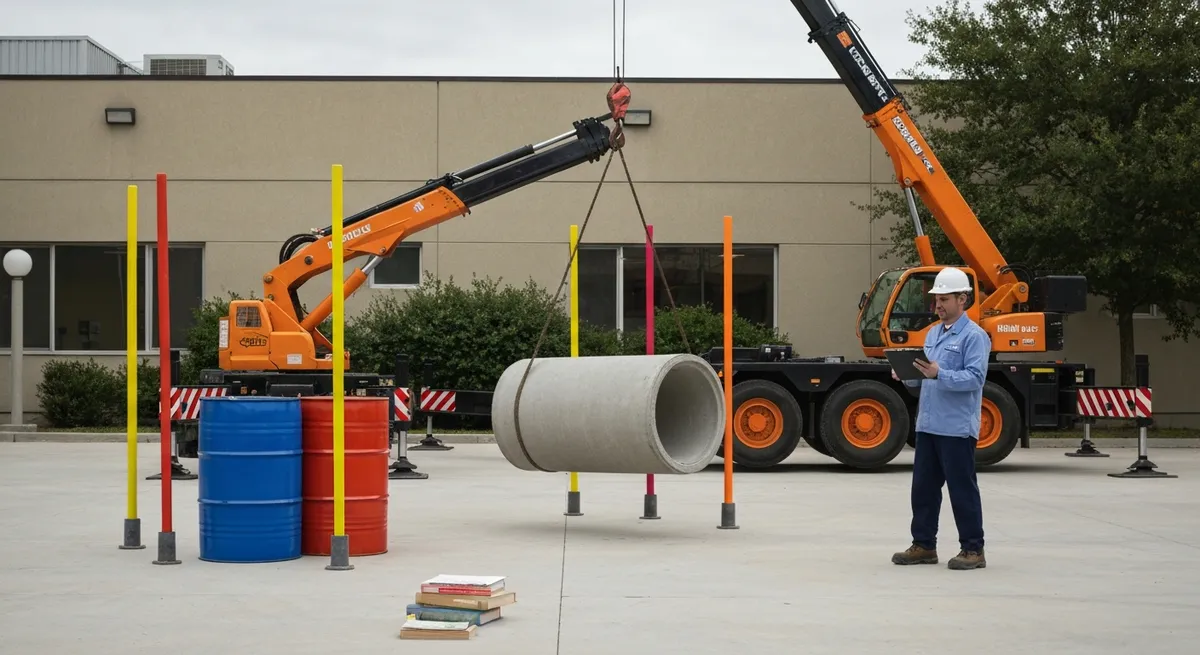
NCCCO Requirements and Preparation
What are the minimum age and physical requirements?: To be eligible for NCCCO certification, candidates must be at least 18 years old. They must also comply with the CCO Substance Abuse Policy and meet the physical qualifications outlined in the ASME B30 standard.
Is prior experience required for certification?: NCCCO does not require a specific amount of experience or training time. However, candidates must possess the necessary knowledge and skills to successfully pass both the written and practical examinations. Formal training is a highly recommended part of the process of how to become a crane operator.
What is the CCO Code of Ethics?: All candidates must read and agree to abide by the CCO Code of Ethics. This involves providing truthful information on applications, complying with all testing policies, and upholding the integrity of the certification program.
Understanding how to become a crane operator starts with a solid study plan. Begin by reviewing our FREE NCCCO Mobile Crane Assembly and Disassembly Questions and Answers, then download our free NCCCO practice test PDF to master the material.
Tips and Study Strategies
- ✓📚 Master the Core Exam: This is the foundation for all certifications. Focus on site conditions, operations, technical knowledge, and load charts.
- ✓🏗️ Study Your Specialty Exam: Whether it's for mobile, tower, or overhead cranes, dedicate significant time to the specific load charts and operational characteristics of your chosen equipment.
- ✓📊 Practice Load Charts Daily: A critical part of the written exam. Practice calculating gross capacity, understanding deductions, and determining net capacity until it becomes second nature.
- ✓📝 Take Timed Practice Tests: Simulate real exam conditions to improve your time management and identify weak areas. This is a key step in learning how to become a crane operator.
- ✓🕹️ Understand the Practical Exam Tasks: Familiarize yourself with the required skills, such as navigating the test course, following hand signals, and precise load placement.
- ✓📜 Review Key Standards: Study relevant OSHA 1926 Subpart CC and ASME B30 standards, as questions on regulations and safety protocols are common.
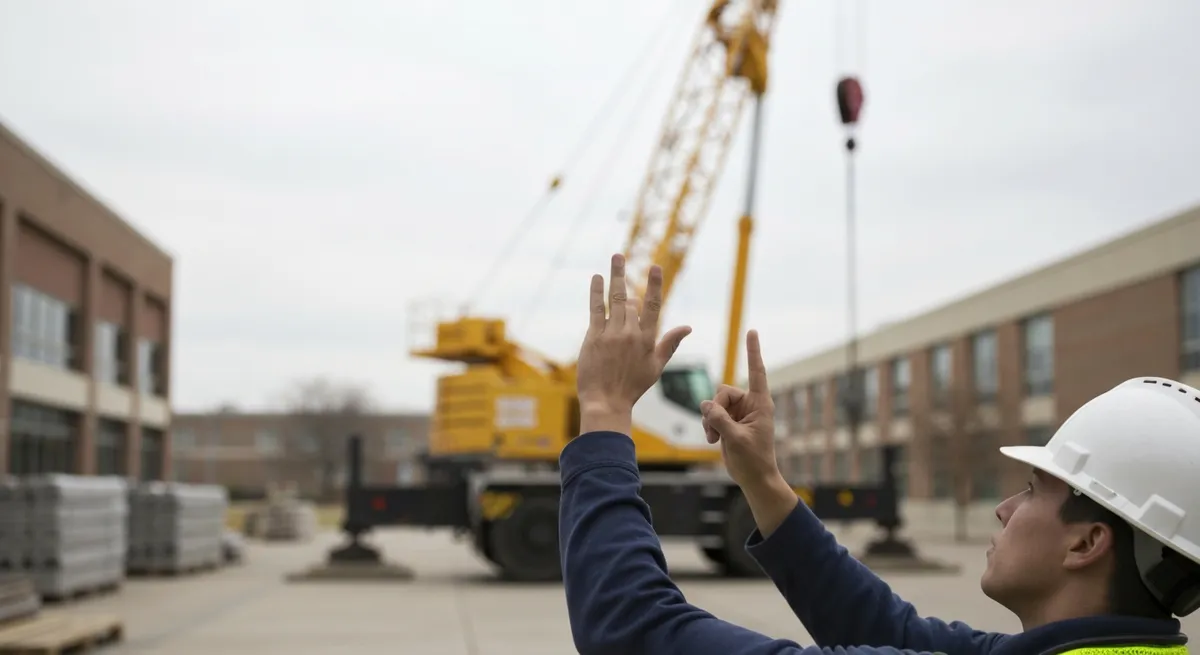
Understanding the career path is a key part of learning how to become a crane operator. With experience and additional NCCCO certifications, operators can significantly increase their earning potential and take on more specialized roles.
NCCCO Career and Salary Outlook
Rigger / Signalperson
The foundational step. Learn to inspect rigging, attach loads, and use hand signals to guide the operator, ensuring safety on the ground.
Certified Crane Operator
The primary goal. After training and passing NCCCO exams, you'll operate mobile, tower, or overhead cranes on various job sites.
Specialized Operator (e.g., Tower Crane)
Focus on specific, high-demand equipment like tower cranes for high-rise construction, often leading to higher pay and more complex projects.
Lift Director / Site Supervisor
Advance into a leadership role by planning complex lifts, managing teams of operators and riggers, and ensuring overall site safety and efficiency.
How To Pros and Cons
- +NCCCO certification is recognized across employers as evidence of verified competency, often required for specific roles
- +Certification provides a structured framework for professional knowledge that benefits daily work, not just the credential itself
- +Many certified professionals report salary increases of 10–20% compared to non-certified peers in the same role
- +Certification maintenance requirements create ongoing professional development that keeps knowledge current
- +The certification credential differentiates candidates in competitive hiring processes and promotion decisions
- −NCCCO certification fees can be substantial — exam costs, study materials, and renewal fees add up over a career
- −Certification requirements change over time; candidates who delay testing may face updated content requirements
- −Not all employers or markets equally value or require certification — the salary return varies significantly by geography and industry
- −Exam preparation requires significant time investment alongside existing work and personal responsibilities
- −Certification does not guarantee competency in practice — it validates knowledge at a point in time, not ongoing performance
Pros and Cons at a Glance
| Pros | Cons |
|---|---|
| NCCCO certification is recognized across employers as evidence of verified competency, often required for specific roles | NCCCO certification fees can be substantial — exam costs, study materials, and renewal fees add up over a career |
| Certification provides a structured framework for professional knowledge that benefits daily work, not just the credential itself | Certification requirements change over time; candidates who delay testing may face updated content requirements |
| Certification maintenance requirements create ongoing professional development that keeps knowledge current | Not all employers or markets equally value or require certification — the salary return varies significantly by geography and industry |
| The certification credential differentiates candidates in competitive hiring processes and promotion decisions | Exam preparation requires significant time investment alongside existing work and personal responsibilities |
Sample NCCCO (National Commission for the Certification of Crane Operators) Practice Questions
Try these questions from our free NCCCO (National Commission for the Certification of Crane Operators) practice tests. The correct answer and an explanation follow each question.
A critical lift plan has been completed and approved. On the day of the lift, the site superintendent directs the crane operator to begin the pick before the scheduled pre-lift meeting has been held. What is the correct action for the crane operator?
- A. Begin the lift if the lift director verbally confirms all conditions match the lift plan
- B. Proceed with the lift since the approved lift plan is the controlling document and the meeting is administrative
- C. Refuse to begin the lift; the pre-lift meeting is a required step that must occur before any critical lift begins
- D. Conduct a brief self-review of the lift plan and proceed if no discrepancies are found
Answer: C. Refuse to begin the lift; the pre-lift meeting is a required step that must occur before any critical lift begins
The pre-lift meeting is not an administrative formality — it is a required procedural step for critical lifts under ASME B30.5 and OSHA 1926.1431. All personnel involved must confirm roles, review the plan, and identify last-minute hazards before work begins. The crane operator has the authority and obligation to refuse to lift until this step is completed.
If a crane operator becomes aware that personnel are inside the swing radius of the crane during an active lift, the operator should:
- A. Sound the horn once and continue the lift carefully
- B. Immediately stop all crane movement and wait until the area is clear
- C. Slow the swing speed to a minimum and complete the pick
- D. Ask the signal person to wave them out while continuing the lift
Answer: B. Immediately stop all crane movement and wait until the area is clear
All crane movement must stop immediately when personnel are detected inside the swing radius until the area is confirmed clear.
A crane operator needs to reduce the working radius without changing the boom length or repositioning the crane. What must the operator do?
- A. Lower the boom angle
- B. Raise the boom angle
- C. Extend the auxiliary jib
- D. Add counterweight
Answer: B. Raise the boom angle
Raising the boom angle makes it more vertical, which reduces the horizontal distance (radius) from the center pin to the load. This is how operators fine-tune radius during a pick without moving the crane.
A crane operator receives conflicting hand signals from two different signalers during a critical lift. The operator should:
- A. Follow signals from the person closest to the load
- B. Follow the signal from the person with the most seniority
- C. Stop all movement immediately and do not resume until one designated signaler is identified
- D. Continue the lift using the last signal received
Answer: C. Stop all movement immediately and do not resume until one designated signaler is identified
ASME B30.5 and OSHA require that only one designated signaler direct crane operations; conflicting signals require an immediate stop.
Take the full NCCCO (National Commission for the Certification of Crane Operators) practice test
NCCCO Questions and Answers
More NCCCO - National Commission for the Certification of Crane Operators Resources
Ace Your Exam with NCCCO Practice Tests 2026
NCCCO Practice Test
NCCCO Site Safety Practice Test
NCCCO Crane Components Practice Tests
About the Author

Certified Crane Operator & Skilled Trades Exam Specialist
Ferris State UniversityRobert Martinez is a Journeyman Ironworker, NCCCO-certified crane operator, and forklift trainer with a Bachelor of Science in Construction Technology from Ferris State University. He has 21 years of ironworking, rigging, and heavy equipment operation experience across high-rise and industrial construction sites. Robert prepares candidates for crane operator, rigger, forklift, and skilled trades certification examinations.
Join the Discussion
Connect with other students preparing for this exam. Share tips, ask questions, and get advice from people who have been there.
View discussion (8 replies)