
NASM Certification: Cost, Exam Format, and How to Get Certified in 2026
Get your NASM certification in 2026. Learn about NASM-CPT exam format, certification cost, eligibility requirements, and how NASM compares to ACE and ISSA.
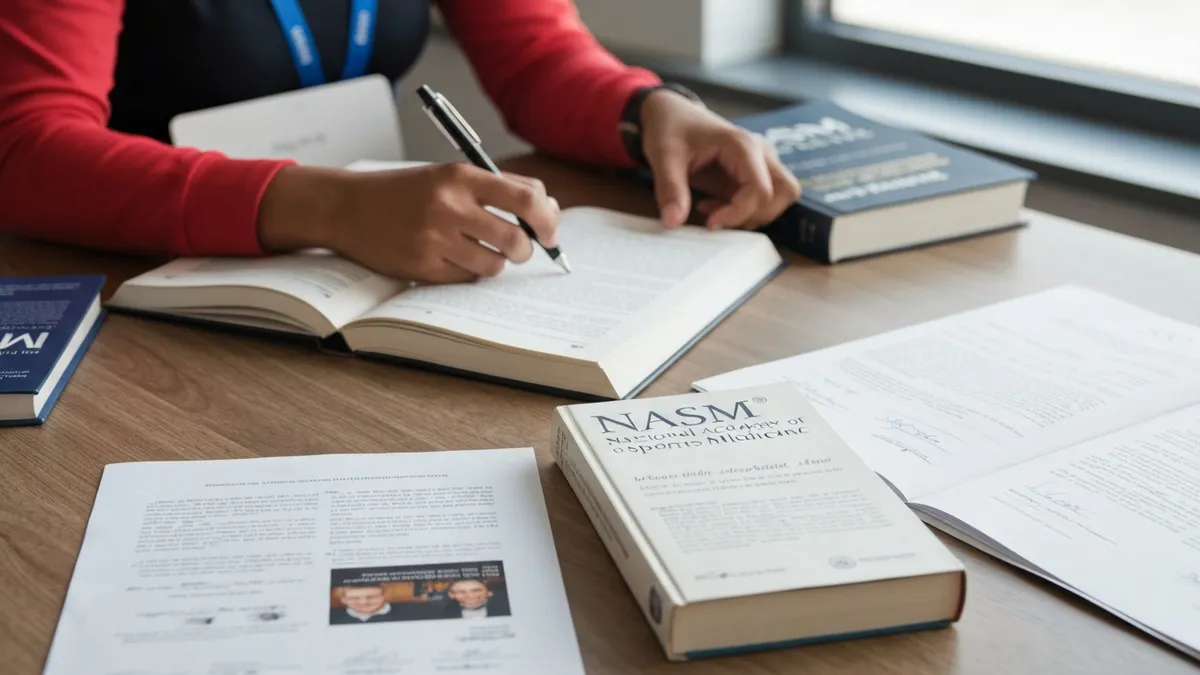
NASM certification is the most recognized personal training credential in the United States. More than 1.4 million fitness professionals hold the nasm certification -- and for good reason. The National Academy of Sports Medicine built its CPT (Certified Personal Trainer) program around the OPT model, an evidence-based training framework that no competing certification replicates at the same depth. If you're serious about a fitness career, this is the credential that opens the most doors at the most employers.
But here's what most guides won't tell you: the NASM personal trainer certification isn't just a test you pass and forget. It's the entry point into an ecosystem of specializations, renewal requirements, and career development pathways that will shape your professional trajectory for years. Understanding the full picture -- from nasm certification cost to exam format to long-term ROI -- matters more than just knowing how to register. Too many candidates focus on passing the exam without understanding what comes after.
This article covers everything you need to make an informed decision about pursuing NASM-CPT. You'll learn the exact exam format, what each package tier includes, how NASM stacks up against ACE and ISSA, and what certified trainers actually earn in different settings. Whether you're a career changer with zero fitness background or an experienced trainer adding a credential, the information here is practical, specific, and based on current 2026 data.
NASM Certification Quick Facts
The nasm personal trainer certification comes in three package tiers, and nasm certification cost varies significantly depending on which one you pick. The self-study package runs about $599 and includes the digital textbook, online study portal, practice exams, and one exam voucher. No live instruction. No retake insurance. It's bare bones -- but it's everything you need if you're a disciplined self-studier.
Guided study packages ($999-$1,299) add live virtual workshops, extended material access, and exam retake guarantees. The premium tier ($1,699) bundles in CEU credits, job placement assistance, and sometimes a second specialization. Here's the honest math: if you're confident you'll pass on the first try, the self-study package is the best value. If you've been out of school for years or anatomy terminology makes your eyes glaze over, the guided package's workshop access and retake safety net justify the premium.
Beyond the package price, budget for CPR/AED certification ($30-$60 if you don't already have one), potential retake fees ($199 per attempt), and the two-year renewal ($99 for members, $129 for non-members). The total first-cycle cost of NASM certification runs $630-$1,900 depending on your choices. That sounds steep until you do the ROI math -- which we'll get to.
The NASM certified personal trainer exam tests applied knowledge, not just memorization. You'll face 120 questions in two hours -- 100 scored and 20 unscored pilot items mixed in so you can't tell which are which. The nasm certification cost includes one exam attempt in every package. Passing requires 70% on the scored questions, though NASM uses scaled scoring rather than a raw percentage cutoff.
Six content domains make up the exam blueprint. Program design (21%) and exercise technique (22%) together account for nearly half the test. Assessment carries 18%. Basic and applied sciences take 17%. Client relations and behavioral coaching contribute 12%, and professional development rounds it out at 10%. The nasm personal training certification exam leans heavily on the OPT model -- expect 15-20% of questions to directly reference phase transitions, training variables, or exercise selections within specific OPT phases.
You can take the exam at a Pearson VUE testing center or through online proctoring from home. The NASM certified personal trainer credential arrives within a few days of passing. If you don't pass, there's a mandatory 7-day waiting period before retaking, and each additional attempt costs $199. About 30-35% of first-time candidates don't pass -- so the retake guarantee in guided packages has real actuarial value if you're not confident in your preparation level.
NASM Certification Exam Domains
Covers anatomy, exercise physiology, biomechanics, and nutrition fundamentals. You'll need to know muscle actions, energy systems, and how macronutrients fuel exercise. This domain tests foundational knowledge -- the building blocks everything else sits on. Focus on the kinetic chain, joint actions during common exercises, and basic nutrition counseling within scope of practice.
The nasm nutrition certification (CNC) is the most popular add-on after CPT, and for good reason. Clients ask nutrition questions constantly. Without a nutrition credential, you're limited to general wellness guidance -- no meal plans, no specific dietary protocols. The CNC gives you the scope to provide structured nutrition coaching alongside training, which lets you charge more per session and retain clients longer. Nasm certification personal trainer holders who add CNC report 20-40% higher per-session rates.
NASM's specialization ecosystem goes well beyond nutrition. The CES (Corrective Exercise Specialist) is the second most popular post-CPT credential. PES (Performance Enhancement Specialist) serves trainers working with athletes. Group Fitness Instructor, Senior Fitness, Behavioral Change, Golf Fitness, and MMA Conditioning specializations round out the catalog. Each requires an active CPT and carries its own exam and price point ($299-$699 depending on the credential).
The strategic question is sequencing. Most trainers benefit from CPT first, then CNC or CES within 12-18 months based on their client population. Bundle purchases at initial enrollment save 25-30% over buying credentials individually -- so if you already know you want a specialization, buying the premium bundle at CPT time is almost always the better financial move even though the upfront cost is higher.
NASM Certification Pathways
The flagship credential. Covers OPT model, assessment, program design, and exercise science. NCCA-accredited. Required or preferred at most commercial gym chains nationwide.
General nutrition coaching within fitness professional scope. Behavior change methodology plus macronutrient science. Frequently bundled with CPT at significant savings.
Movement dysfunction assessment and corrective programming. Strong demand in clinical fitness, post-rehab, and corporate wellness. Requires active CPT credential.
Athletic performance training covering speed, agility, plyometrics, and periodization. Popular among strength coaches and trainers working with competitive athletes.
NASM vs ISSA comes down to market positioning and employer acceptance. ISSA offers a more affordable certification ($549-$799) with a conversational study approach and fully online delivery. It's solid for trainers planning to work independently or build online coaching businesses. But walk into most commercial gym chains -- LA Fitness, Equinox, Life Time, Planet Fitness -- and NASM carries more weight. ISSA is gaining ground, but NASM's nasm certifications portfolio and employer network remain broader.
The nasm certified personal trainer credential also outperforms ISSA on clinical depth. NASM's OPT model, assessment-first methodology, and corrective exercise integration give certified trainers a systematic framework that ISSA's curriculum doesn't replicate. If you're targeting medical fitness, physical therapy clinic partnerships, or corporate wellness programs, NASM's clinical orientation gives you a tangible advantage in those hiring conversations.
That said, ISSA wins on flexibility and price. Their self-paced format has no enrollment deadlines. They frequently run buy-one-get-one promotions on certifications. And their textbook is genuinely easier to read for candidates without science backgrounds. If cost is your primary constraint and you're planning independent or online training, ISSA deserves serious consideration. But if employer acceptance at brick-and-mortar facilities matters to your career plan, NASM is the safer bet.
NASM Certification: Pros and Cons
- +Broadest employer acceptance at commercial gym chains across the U.S.
- +NCCA accreditation -- the gold standard for fitness certification credibility
- +OPT model provides a unique systematic training framework no competitor matches
- +Assessment-first methodology gives trainers a clinical edge in the market
- +Strong specialization ecosystem (CES, PES, CNC) for career growth
- +Online and in-person exam options with Pearson VUE testing centers
- −Higher cost than ISSA and some other competing certifications
- −Self-study package lacks instructor support or retake protection
- −Dense, science-heavy textbook can overwhelm candidates without science backgrounds
- −Two-year renewal with CEU requirements adds ongoing costs and effort
- −No practical hands-on exam component -- assessment is entirely multiple-choice
- −Specializations require active CPT, creating dependency on continuous renewal
The nasm certified personal trainer certificate arrives digitally within days of passing the exam. You'll get a certificate number, an active listing in NASM's trainer directory, and access to NASM's credential verification system that employers use to confirm your status. The certificate itself is straightforward -- what matters is the credential's active status in NASM's database, which is what employers actually check.
For candidates researching the nasm personal trainer certificate non proctored exam option: NASM did offer non-proctored testing during COVID-era accommodations, but current policy requires either in-person testing at Pearson VUE or live online proctoring with a webcam. The online proctored option provides home convenience while maintaining exam integrity. You'll need a quiet room, stable internet, a webcam, and a clear desk. The proctor monitors you in real-time throughout the two-hour exam window.
Keep your certificate documentation organized. You'll need your NASM credential number for employer verification, gym membership applications, liability insurance enrollment, and CEU tracking. NASM's online portal stores your certification history, but maintaining your own records -- certificate copy, exam score report, renewal receipts -- prevents administrative headaches if NASM's system has any data access issues during your employment verification process. Some employers require you to provide your credential number during the hiring process itself, so have it readily accessible before you start applying to training positions.
NASM Certification Preparation Checklist
Getting nasm certified takes most candidates 2-4 months of consistent study. NASM estimates 10-12 weeks for full-time studiers following their recommended plan. Part-time studiers working a day job and studying evenings should budget 3-6 months. The nasm certification price you paid covers material access for 6-12 months depending on your package tier, so there's no rush -- but momentum matters. Candidates who drag out their study timeline beyond six months show lower pass rates than those who maintain consistent weekly study schedules.
The nasm personal training certification exam rewards understanding over memorization. You won't just recall that the gluteus maximus is a hip extensor -- you'll interpret an overhead squat assessment where the client's knees cave inward and determine which muscles are overactive (adductors, TFL) versus underactive (gluteus medius, gluteus maximus). That kind of applied clinical reasoning is what makes the NASM exam significantly harder than it looks on paper and why practice exams are the single best preparation tool available.
Online study groups help enormously. Reddit's r/personaltraining, NASM-specific Facebook groups, and Discord study channels provide peer support, shared mnemonics, and explanations for tricky concepts. The OPT model phase transitions, assessment compensations, and acute variable prescriptions are the three topics where group study most frequently clarifies confusion that solo reading leaves unresolved.
What to Know Before Test Day
Bring government-issued photo ID to Pearson VUE. For online proctoring, test your webcam and internet connection the day before. Budget your two hours carefully -- that's about 1 minute per question with no review time. Flag difficult questions and return to them after completing the easier ones. The OPT model and assessment compensations are the highest-yield study areas for last-minute review.
The nasm certified personal trainer program produces trainers with stronger assessment skills than most competing certifications. That's not marketing -- it's a structural difference in how NASM builds its curriculum. Every client interaction starts with movement assessment. Every program design decision references assessment findings. That assessment-first approach means NASM-certified trainers can identify and address movement dysfunctions that trainers from less assessment-focused programs often miss entirely.
NASM fitness careers span a wider range of settings than most candidates expect. Commercial gyms are the obvious entry point, but NASM-certified trainers work in corporate wellness programs, physical therapy clinics (as exercise specialists), hospitals, fire departments, military fitness programs, luxury resorts, cruise ships, and professional sports organizations. The nasm fitness credential's NCCA accreditation opens doors in healthcare-adjacent settings that non-accredited certifications simply can't access.
Independent trainers with NASM certification command strong market positioning. Clients searching for trainers increasingly verify credentials, and NASM's brand recognition gives you an immediate trust advantage over trainers with lesser-known certifications. Combined with a specialization (CNC or CES), NASM-certified independent trainers in metro markets routinely charge $75-$150 per session and build six-figure practices within 2-3 years of certification. The credential pays for itself faster than almost any other professional certification on the market when you factor in the low barrier to entry and high demand for qualified trainers.
Your NASM certification expires after exactly two years. You need 2.0 CEUs (20 hours of continuing education) and the renewal fee ($99 members / $129 non-members) submitted before the deadline. Late renewal incurs additional fees and may require re-examination. Set a calendar reminder for 90 days before expiration to start accumulating CEUs if you haven't already.
The nasm group exercise certification (GFI) is a separate credential from CPT, designed for instructors leading group fitness classes rather than individual personal training sessions. It covers class design, cueing technique, music pacing, and modification strategies. How much is nasm certification for the GFI specifically? Packages run $299-$499 -- lower than CPT because the scope is narrower. If your goal is group instruction rather than individual training, the GFI is the right starting credential.
Understanding the full cost picture helps you avoid sticker shock. The initial package price is just the beginning. Add CPR/AED certification costs, potential retake fees, two-year renewal costs, CEU course expenses, and NASM membership fees ($99/year, which provides renewal discounts and CEU savings). Over a four-year period covering initial certification and first renewal, total NASM-CPT costs range from approximately $900 (self-study, no retake, member renewal) to $2,500+ (premium package, membership, CEU courses). That $900-$2,500 investment supports annual earnings of $25,000-$100,000+ depending on your market and business model.
Payment plans through Affirm and similar services are available at checkout. If you're financing, compare the interest cost against waiting for a promotional discount. A 0% APR promotional financing period makes immediate purchase at any price level smart. NASM rarely has zero active promotions -- Black Friday (35-40% off), January (25-30%), and mid-year sales (15-25%) provide regular discount windows throughout the year. Subscribe to NASM's email list before you're ready to buy so you catch the next promotion rather than hunting retroactively for expired coupon codes on aggregator sites.
NASM vs ACE is the comparison most candidates agonize over. Both are NCCA-accredited. Both are widely accepted by employers. Both cost roughly the same ($599-$1,299 for comparable packages). The real difference is philosophical. NASM builds everything around the OPT model and movement assessment. ACE emphasizes behavioral coaching and client-centered programming. What is nasm certification's biggest advantage over ACE? Systematic structure. The OPT model gives you a clear framework for every client -- assess, design, progress, reassess. ACE provides more flexibility but less structure.
In practice, the choice often comes down to your local market. If the gyms you want to work at list "NASM preferred" in their job postings -- and many commercial chains do -- that answers the question. If you're targeting community fitness, corporate wellness, or behavioral health integration, ACE's emphasis on coaching and behavior change may serve you better. Neither certification is objectively superior. They serve different philosophies with equal professional credibility.
For candidates considering NSCA-CPT or ACSM certifications: these serve different market segments. NSCA dominates strength and conditioning, especially in collegiate and athletic settings. ACSM excels in clinical exercise physiology and healthcare-adjacent roles. If your career target is a commercial gym floor, NASM or ACE is the right starting point. NSCA and ACSM make more sense as second credentials or for candidates with specific clinical or athletic performance career paths. The bottom line: pick the certification that matches where you actually want to work, not the one with the best marketing or the lowest price tag.
NASM Questions and Answers
About the Author
Attorney & Bar Exam Preparation Specialist
Yale Law SchoolJames R. Hargrove is a practicing attorney and legal educator with a Juris Doctor from Yale Law School and an LLM in Constitutional Law. With over a decade of experience coaching bar exam candidates across multiple jurisdictions, he specializes in MBE strategy, state-specific essay preparation, and multistate performance test techniques.