
Should I Be a Lawyer Quiz: Barrister Exam Guide & MBE Practice Test 2026 October
Take our should I be a lawyer quiz & master the barrister exam. Bar exam questions, MBE meaning, practice tests & pass rates. 🏆 Start free today.
If you have ever wondered whether you have what it takes to pass the barrister exam or survive the rigors of a legal career, you are not alone. Thousands of aspiring attorneys search for a should I be a lawyer quiz every month, hoping to benchmark their aptitude before committing years of study and tens of thousands of dollars to law school.
This guide covers everything you need — from understanding what the bar test actually measures to decoding the MBE meaning, exploring bar exam practice test strategies, and taking a hard-eyed look at how hard is the bar exam in reality.
The Multistate Bar Examination, commonly abbreviated as the MBE, is the standardized 200-question multiple-choice component administered by the National Conference of Bar Examiners (NCBE). It is one piece of the larger Uniform Bar Examination (UBE), which most US jurisdictions now accept. Understanding the MBE meaning is essential: it tests seven core subjects — Civil Procedure, Constitutional Law, Contracts, Criminal Law and Procedure, Evidence, Real Property, and Torts — across three hours of the morning session and three hours in the afternoon.
Many people confuse the terms "barrister exam" and "bar exam." In the United States the term is simply the bar exam, while "barrister" is a UK designation for a courtroom advocate who has passed the Bar Professional Training Course (BPTC) and been called to the Bar by one of the four Inns of Court. Despite the terminology differences, the underlying skills tested — logical reasoning, issue spotting, rule application, and persuasive writing — overlap considerably, making cross-system study strategies broadly applicable.
One frequently asked question is can you become a lawyer without going to law school. The answer surprises many: California, Vermont, Virginia, and Washington still permit "reading the law" apprenticeships, allowing candidates to sit for the bar without a Juris Doctor degree. Vermont recently tightened its rules, but California remains the most active pathway, accounting for the majority of non-JD bar applicants nationwide each year. If you pursue this route, bar examination sample questions and self-directed MBE prep become even more critical because you lack the structured curriculum of an ABA-accredited institution.
Supreme court bar exam results represent a unique credential entirely separate from state licensure. To practice before the United States Supreme Court, an attorney must already be admitted in a state for at least three years, be in good standing, and pay a $300 admission fee — there is no written exam. This is a common misconception that surfaces in search queries, and it is worth clarifying early: you cannot "take" the Supreme Court bar the way you take the MBE.
This article is structured to serve both the curious pre-law student running a "should I be a lawyer" self-assessment and the serious bar candidate who needs bar exam questions, timing strategies, and realistic pass-rate data. Whether you are weeks away from your first attempt or still deciding whether law is the right career path, the free practice tests linked throughout this page give you real MBE-style questions in a timed environment so you can calibrate your readiness before test day.
By the time you finish reading, you will have a clear picture of the exam's structure, the preparation timeline that works for most successful first-time takers, the costs involved, and the traits that distinguish lawyers who thrive from those who struggle. Use the table of contents below to jump to the section most relevant to your situation, and do not forget to bookmark the free bar exam practice test links — they are the fastest way to turn information into genuine exam-day confidence.
The Bar Exam by the Numbers

Bar Exam Format & Structure
| Section | Questions | Time | Weight | Notes |
|---|---|---|---|---|
| MBE Morning Session | 100 | 3 hrs | 50% | Multiple-choice; Civil Procedure, Contracts, Constitutional Law, Criminal Law |
| MBE Afternoon Session | 100 | 3 hrs | 50% | Multiple-choice; Evidence, Real Property, Torts |
| MEE (Multistate Essay Examination) | 6 | 3 hrs | Varies by state | 6 essay prompts, 30 min each |
| MPT (Multistate Performance Test) | 2 | 3 hrs | Varies by state | Lawyering skills tasks using a closed-universe file |
| Total | 200 | Two days (approx. 12 hours of testing) | 100% |
The MBE meaning extends beyond the acronym. Understanding what the Multistate Bar Examination actually tests — and why it is designed the way it is — helps you study smarter rather than harder. The NCBE develops each question to probe your ability to identify the legally relevant facts in a scenario, isolate the applicable rule of law, apply that rule to the facts, and select the answer that best reflects the correct legal outcome.
That four-step process mirrors what practicing attorneys do every day, which is why the exam has remained structurally stable for decades even as individual question formats have evolved.
Bar exam questions on the MBE follow a highly consistent pattern. Each question presents a short fact pattern — typically three to six sentences — followed by a call of the question ("what is the most likely outcome?" or "which argument is strongest?") and four answer choices.
Roughly half the wrong answers are plausible but subtly flawed, either because they apply the right rule to the wrong facts or because they state an accurate legal principle that simply does not answer the question asked. Recognizing these "attractive distractor" answers is a skill that separates candidates who score 140+ from those who hover around the passing threshold.
The OBE meaning — Order of the British Empire — occasionally confuses US bar candidates who encounter the abbreviation in legal credential discussions. In the US bar context, OBE is irrelevant; however, if you are researching comparative legal systems for a clerkship or international practice, understanding that the UK distinguishes between solicitors (who advise clients) and barristers (who argue in court) helps clarify why the barrister exam pathway differs so fundamentally from US licensure. American lawyers are licensed as attorneys-at-law and can both advise and argue, making the US system more unified than its UK counterpart.
One of the most searched questions in the bar exam space is can you take the bar without going to law school. Four states — California, Vermont, Virginia, and Washington — maintain "law reader" or apprenticeship programs that allow candidates to qualify for bar admission through supervised practice rather than an ABA-accredited JD.
California's Law Reader program requires four years of study under a licensed California attorney or judge, a minimum of 18 hours per week of supervised work, and passage of the First-Year Law Students' Examination (FYLSE) before the candidate can even apply to take the bar. The pass rate for FYLSE hovers around 20%, compared to roughly 54% for the MBE among first-time ABA graduates, illustrating the additional difficulty of the non-traditional path.
Bar examination sample questions released by the NCBE are the gold standard for practice. The NCBE publishes official practice materials for the MBE — including a 200-question practice exam with answer explanations — that reflect the current question difficulty distribution across all seven subjects. Candidates who work through the official practice exam and then supplement with third-party bar prep courses consistently report that official NCBE questions feel harder than most commercial alternatives, which means using official samples prevents overconfidence heading into test day.
The what is bar test question comes up constantly among pre-law students who hear the phrase but have never seen the actual exam. Simply put, the bar test is the licensing examination each US state or jurisdiction administers to determine whether a law school graduate (or qualified apprentice) has sufficient competence in professional responsibility and substantive law to practice law and represent clients.
Every state sets its own passing score — known as the cut score — though most UBE jurisdictions require a scaled score of 266 out of 400, with the MBE component scaled to a 200-point score and the written components scaled to another 200 points.
NextGen Bar considerations are reshaping how law students and recent graduates approach preparation. The NCBE's NextGen Bar Exam, scheduled for full implementation in 2026, consolidates testing into a single day, reduces the number of tested subjects, and adds integrated skills tasks that combine legal analysis with practical lawyering competencies. Candidates sitting in 2026 and beyond should verify whether their jurisdiction has adopted the NextGen format, because the study strategy, timing, and question distribution differ meaningfully from the legacy UBE. Free bar exam practice tests aligned to the NextGen blueprint are already available on PracticeTestGeeks and provide an invaluable early benchmark.
Bar Exam Questions: What to Expect by Subject
Constitutional Law MBE questions focus heavily on individual rights, the structure of government, and the limits of federal and state power. Roughly 25% of Constitutional Law questions involve First Amendment free speech and religion analysis, requiring you to distinguish between content-based and content-neutral restrictions, identify the correct level of scrutiny, and apply it accurately. Equal protection and substantive due process questions round out the majority of the remaining items, often presenting fact patterns involving legislative classifications based on race, gender, or fundamental rights.
Successful candidates know that the Supreme Court's standard-of-review framework is the skeleton key for nearly every Constitutional Law question. If a law burdens a suspect class or fundamental right, strict scrutiny applies and the government almost always loses. Intermediate scrutiny governs sex-based classifications. Rational basis — the most permissive standard — applies to economic and social welfare laws and almost always upholds the statute. Memorizing which classifications trigger which scrutiny, and practicing bar examination sample questions in this subject, will move your Constitutional Law sub-score noticeably within two to three weeks of focused review.

Is a Legal Career Right for You? Honest Pros and Cons
- +High earning potential — median attorney salary exceeds $130,000 nationally, with BigLaw partners earning $1M+
- +Intellectually stimulating work that requires continuous learning and adaptation to new legal developments
- +Diverse career paths spanning litigation, transactional work, public interest, government, and academia
- +Strong job security — legal services demand remains relatively stable even during economic downturns
- +Opportunity to make a meaningful social impact through pro bono work and public interest litigation
- +Transferable analytical and writing skills that are valuable across industries beyond traditional law practice
- −The bar exam is genuinely difficult — national pass rates hover around 54% for first-time ABA graduates
- −Law school is expensive — average JD debt exceeds $130,000 for private school graduates
- −Long working hours are common, especially in BigLaw where 60–80-hour weeks are standard for associates
- −High stress levels and significant mental health challenges — attorney burnout and depression rates are above average
- −The job market is competitive and highly credential-sensitive, with outcomes heavily influenced by law school ranking
- −The gap between law school theory and day-to-day legal practice can be jarring and discouraging for new lawyers
Lawyer Career Readiness Checklist
- ✓Take a timed MBE practice test to establish a baseline score before beginning structured study
- ✓Research your target jurisdiction's bar exam cut score and adoption status for the NextGen format
- ✓Build a 10-week study calendar that allocates subject-by-subject review time weighted by MBE question frequency
- ✓Complete at least 1,000 bar exam practice questions spread across all seven MBE subjects
- ✓Use official NCBE practice materials to calibrate difficulty — supplement with PracticeTestGeeks free tests
- ✓Practice under timed conditions (1.8 minutes per question) from week four onward to build exam stamina
- ✓Shadow a practicing attorney or complete a legal internship before committing to law school
- ✓Research law school rankings, employment outcomes, and scholarship opportunities at your target schools
- ✓Verify whether your state permits non-JD bar admission and whether that path aligns with your timeline
- ✓Review your diagnostic quiz results by subject and focus extra study time on your two weakest MBE areas
Candidates Who Practice 1,000+ Questions Pass at Nearly Twice the Rate
Bar prep research consistently shows that volume of practice questions — not hours spent re-reading outlines — is the single strongest predictor of MBE pass/fail outcomes. Candidates who complete 1,000 or more timed practice questions before test day pass at rates approaching 80%, compared to roughly 54% for the full first-time cohort. Start your free MBE practice tests now and build that question bank from day one.
How hard is the bar exam? The honest answer depends on several variables: your law school's academic rigor, the state you are testing in, whether you are sitting for the first time or retaking after a prior failure, and how many weeks of dedicated full-time preparation you invest. Nationally, approximately 54% of first-time takers from ABA-accredited schools pass on their first attempt. That figure drops to roughly 27% for repeat takers — a sobering statistic that underscores the importance of a structured, question-heavy prep strategy the first time through.
State-level pass rates vary dramatically. California has historically posted some of the lowest pass rates in the country — often below 40% for all takers — while states like Missouri and Nebraska consistently see first-time ABA graduate pass rates above 80%. The variation stems from differing cut scores, exam formats, and the composition of each state's test-taking pool. If your dream is to practice in California, treat your bar prep as a marathon event requiring at minimum 12 weeks of full-time study, not the 8-10 weeks that may suffice for a higher-pass-rate jurisdiction.
The what is bar test question often masks a deeper concern: will I be able to handle this level of difficulty? The cognitive load of the MBE is real. Sitting for three hours answering 100 multiple-choice questions in a row — each requiring fresh legal analysis — produces a kind of mental fatigue that is qualitatively different from law school exams. Exam-day stamina is a trainable skill, and the best way to build it is to simulate full 100-question sessions under timed conditions at least four or five times during your prep period, reviewing every wrong answer immediately afterward.
Bar examination sample questions from the NCBE show that difficulty is not evenly distributed across subjects. Evidence and Real Property questions tend to generate the most errors among test takers because both subjects involve complex rule systems with many exceptions. Torts, by contrast, is considered relatively accessible because the common-law rules are fewer and the fact patterns more intuitive. Civil Procedure has grown more technically demanding since its addition to the MBE in 2015, reflecting the increasing complexity of federal practice and the detail required by the Federal Rules.
First-time failures are not career-ending, but they are expensive and demoralizing. The average cost of retaking the bar exam — including application fees, bar prep materials, and the opportunity cost of additional study leave — runs between $3,000 and $8,000 depending on jurisdiction and prep course choice. More importantly, some legal employers view multiple bar failures negatively during the hiring process, particularly in competitive markets like New York and California. Passing on the first attempt is worth the extra weeks of preparation investment.
The OBE meaning in a different context — the UK Order of the British Empire — highlights how confusingly the acronym "OBE" travels across legal and non-legal discussions online. US bar candidates who encounter this term should be aware that in the bar exam context it typically appears as a distractor or a red herring in discussions about legal credentials. What matters for US practice is your state bar admission, your standing with your state's disciplinary authority, and — for federal practice — any court-specific admission requirements like those for the US Supreme Court or US Tax Court.
Ultimately, "how hard is the bar exam" is a question with a personal answer. Candidates who treat the bar like a graduate-level final exam — cramming in the final two weeks after a relaxed summer — routinely fail, while candidates who build consistent daily study habits over 10–12 weeks and complete thousands of practice questions pass at rates that exceed the national average by a substantial margin. The exam is difficult, but it is not designed to be impossible; it is designed to verify minimum legal competence, and minimum competence is achievable with the right preparation system.
The NCBE's NextGen Bar Exam began phased implementation in 2026, with some jurisdictions adopting the new single-day format while others continue with the legacy UBE. Before purchasing any bar prep course or scheduling your exam date, confirm your state's exact adoption timeline on the NCBE website. Study materials designed for the legacy MBE may not fully align with the NextGen subject distribution and integrated skills tasks, which could leave critical gaps in your preparation.
A well-designed bar exam practice test does more than give you questions to answer — it gives you data. Every practice session should generate a subject-level accuracy breakdown so you can see exactly where your knowledge is strongest and where it is weakest. If you are scoring 70% on Contracts but only 45% on Real Property, your next study week should be heavily weighted toward property rules rather than evenly distributed across all seven subjects. This data-driven approach to preparation is what separates candidates who improve rapidly from those who plateau at their baseline score.
Free MBE questions and answers available on PracticeTestGeeks are calibrated to match the difficulty distribution of official NCBE questions. Unlike some commercial platforms that offer "easy" questions to make users feel confident, the PracticeTestGeeks question bank includes a meaningful proportion of hard questions — those that require you to distinguish between two plausible answers using a subtle legal distinction. Working through these hard questions, reviewing the detailed explanations, and then attempting similar questions a week later to confirm retention is a proven three-step cycle that builds durable exam-day accuracy.
The bar exam practice test experience also helps you manage time pressure realistically. At 1.8 minutes per question, the MBE leaves almost no room for extended deliberation. Candidates who have practiced under strict timing conditions learn to recognize when they are overthinking an answer and need to commit to their best choice and move on. This metacognitive skill — knowing when you know enough — is impossible to develop by reading outlines and can only be built through repeated timed practice.
Bar examination sample questions in the MPT and MEE components of the full bar exam require a different kind of preparation. The Multistate Performance Test gives you a closed-universe file — cases, statutes, and facts — and asks you to produce a professional legal document such as a memo, brief, or client letter.
The skill tested is not legal knowledge per se but rather professional legal writing: organizing information logically, applying provided law to given facts, and writing in a register appropriate for the assigned audience. Candidates who practice MPT tasks under timed conditions consistently outperform those who skip this section entirely, even when their underlying writing skills are strong.
Jurisdiction-specific essay questions on the MEE test your ability to spot issues, state rules, apply facts, and conclude — the classic IRAC structure — across six essay prompts in three hours. Each prompt covers a different subject, and while some overlap with MBE subjects, others — like Conflict of Laws, Family Law, or Agency and Partnership — may not appear on the MBE at all. Your MEE prep must therefore extend beyond the seven MBE subjects to cover the full range of potential MEE topics published annually by the NCBE.
If you are still in the "should I be a lawyer" exploratory phase rather than active bar prep, the best first step is to take a diagnostic quiz that mirrors real bar exam questions. Seeing how you perform on actual MBE-style questions — before any formal study — gives you a concrete baseline and reveals whether legal reasoning comes naturally to you or will require significant skill-building.
Most aspiring lawyers are surprised to find that their first cold diagnostic score is lower than expected, not because they lack intelligence, but because MBE question design is specifically crafted to penalize casual reading and reward careful, systematic analysis.
For those exploring the non-traditional path, understanding can you become a lawyer without going to law school in full detail — including the specific state requirements, the FYLSE hurdle in California, and the practical networking challenges of entering the profession without a JD — is essential before committing to a multi-year apprenticeship. The bar exam is the same regardless of how you qualified to sit for it, so non-traditional candidates who invest heavily in bar exam practice tests and free MBE questions close the preparation gap that their non-JD pathway creates.
Practical bar exam preparation begins with a realistic audit of your available time. Most candidates have 8 to 14 weeks between law school graduation and their first bar exam date. Full-time candidates — those not working during bar prep — should target 40 to 50 hours of study per week, including question practice, outline review, and essay writing. Part-time candidates who must continue working should extend their prep window to at least 16 weeks and prioritize MBE question practice over passive review, since practice questions generate the deepest learning per study hour.
Choosing the right bar prep course matters, but it matters less than most candidates believe. The top commercial courses — Themis, Barbri, Kaplan, and Adaptibar — all cover the same substantive law. What differentiates them is interface design, question bank size, and adaptive technology that personalizes your study plan. Adaptibar, for example, uses spaced repetition and subject-level performance tracking to direct your study time automatically, which is particularly valuable for candidates who struggle with self-discipline. Free alternatives like PracticeTestGeeks supplement any commercial course by providing additional question exposure at no cost.
Spaced repetition is the most research-validated study technique for large-volume rule memorization. Instead of reviewing all Real Property rules once and moving on, spaced repetition schedules review sessions at increasing intervals — reviewing a difficult rule the next day, then three days later, then a week later — so that the rule transfers from short-term to long-term memory. Combined with active recall through practice questions, spaced repetition can reduce total study time while increasing retention, which is why the best bar prep systems incorporate it explicitly into their question scheduling algorithms.
Essay writing practice is the most commonly neglected component of bar preparation. Candidates who spend 90% of their prep time on MBE questions arrive on test day unprepared for the three-hour MEE session. A balanced approach dedicates at least 20% of total study time to writing timed essay responses, reading model answers from NCBE-published materials, and identifying the specific deficiencies — missing issues, under-developed rule statements, insufficient fact application — that prevent a response from earning full credit. One essay per day during the final four weeks of preparation is a reasonable minimum target.
Mental health and physical wellness during bar prep deserve explicit planning. The 10 to 14 weeks between law school graduation and the bar exam are among the most psychologically demanding periods many candidates will ever experience. Sleep deprivation, social isolation, financial stress, and the looming fear of failure combine to create an environment where anxiety disorders and depression can emerge or worsen.
Build deliberate rest days into your study calendar, maintain regular exercise — research shows aerobic activity improves both memory consolidation and test-day cognitive performance — and use the free diagnostic quizzes on PracticeTestGeeks as positive progress markers rather than sources of anxiety.
On exam day itself, the logistics matter as much as the knowledge. Know the location of your testing center and plan to arrive at least 45 minutes early. Bring only permitted materials — most jurisdictions allow digital scratch paper provided at the testing center, and some still use paper-and-pencil for the written components.
Eat a balanced breakfast with protein and complex carbohydrates; the six-hour MBE is a physical endurance event as much as a mental one. Between the morning and afternoon MBE sessions, avoid discussing questions with other candidates — there is nothing productive you can do about a question you already submitted, and second-guessing will only drain mental energy you need for the afternoon session.
Finally, remember that bar exam pass rates, while sobering, mean that the majority of well-prepared first-time takers from ABA schools do pass. The exam is hard, but it is passable with commitment, the right resources, and enough practice. Use the free bar exam practice tests on PracticeTestGeeks to build your confidence incrementally, week by week, until exam day feels like one more timed practice session — just one that happens to count.
Multistate Bar Questions and Answers


About the Author
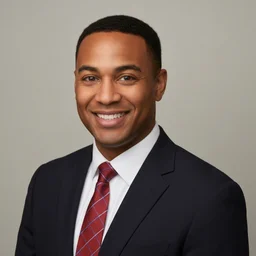
Attorney & Bar Exam Preparation Specialist
Yale Law SchoolJames R. Hargrove is a practicing attorney and legal educator with a Juris Doctor from Yale Law School and an LLM in Constitutional Law. With over a decade of experience coaching bar exam candidates across multiple jurisdictions, he specializes in MBE strategy, state-specific essay preparation, and multistate performance test techniques.