
Makeup Artist Resume: How to Build a Pro MUA CV That Gets Hired in 2026 September
Build a winning makeup artist resume with proven templates, 📝 skill keywords, portfolio tips, and salary data. Get hired faster as a pro MUA in 2026 September.
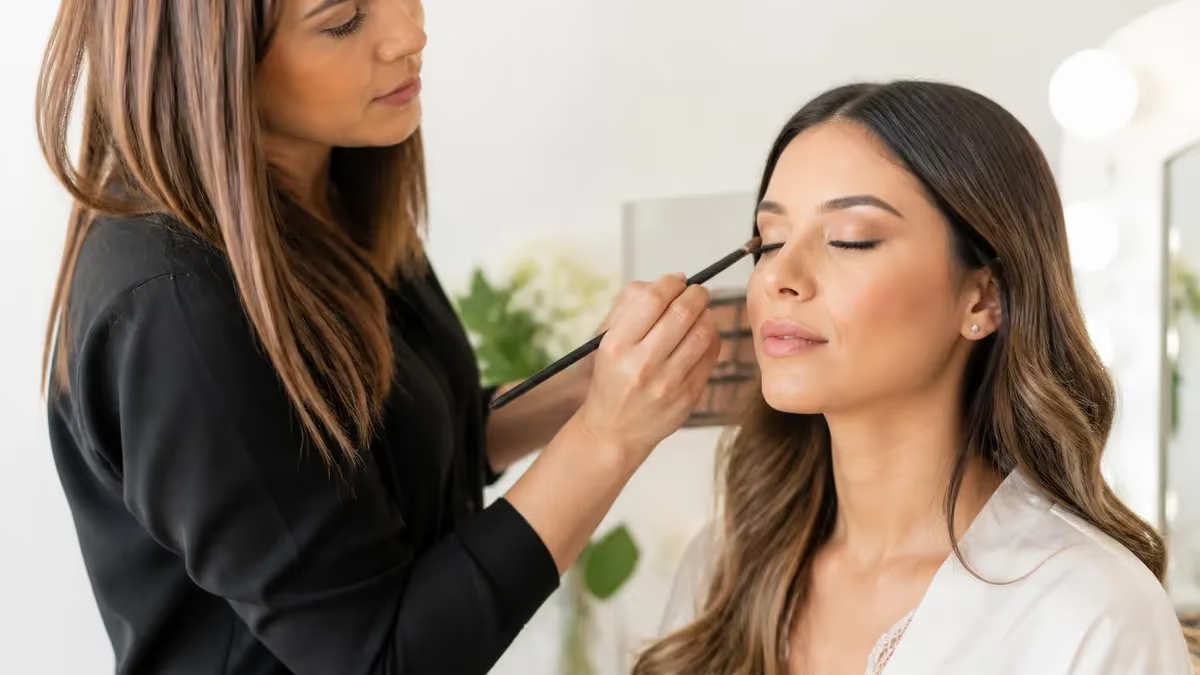
A strong makeup artist resume is the single document that decides whether a salon owner, film production coordinator, or bridal studio invites you for a trial. Unlike a generic beauty CV, a professional makeup artist resume blends measurable client results, certifications, sanitation credentials, and a curated portfolio link into one focused page. In 2026, hiring managers spend roughly six seconds scanning each application, so every line must earn its space. This guide walks you through structure, keywords, and real examples so your resume moves from the inbox to the callback pile.
The makeup industry has shifted dramatically since 2020. Hybrid roles now blend bridal, editorial, special effects, and content creation, which means a flat list of duties no longer signals competence. Recruiters want quantified outcomes: number of brides booked per season, average client retention, social engagement on tagged work, and product knowledge across specific brand lines. When clients search for a makeup artist near me, they often check LinkedIn and Indeed profiles, so the same resume content fuels both applications and discovery.
A great makeup artist resume also acts as a professional contract preview. It signals reliability through licensure, kit insurance, and consistent freelance history. Whether you are applying to a counter at Sephora, a film studio in Atlanta, or a destination wedding planner in Napa, the document must read like a brand. Your name, headshot link, certifications, and signature service should be visible above the fold, with achievements supporting your specialty rather than diluting it across every beauty trend.
Many new artists make the mistake of copying makeup artist resume templates from generic job boards. These templates omit industry-specific cues like airbrush proficiency, HD camera-ready techniques, prosthetic application, and skin-tone matching across Fitzpatrick scales. They also bury portfolio URLs at the bottom. A modern MUA resume reverses this hierarchy, placing visual evidence and quantifiable results near the top so reviewers can verify your work before reading a single bullet point.
This article covers every section of a hiring-ready resume: header, professional summary, core skills, certifications, work history, education, portfolio, and references. We include real word-count targets, ATS-friendly formatting rules, keyword lists pulled from current job postings, and three full sample resumes for entry-level, freelance bridal, and editorial artists. You will also find checklists for tailoring each application, common mistakes that trigger automatic rejection, and FAQ answers covering salary expectations and licensing requirements.
By the end, you will know exactly how to position your makeup artist resume whether you are pivoting from cosmetology school, transitioning from a counter job at Ulta, or scaling a freelance practice into agency representation. The advice draws from hiring patterns at Mac Cosmetics, NBC Universal, Bobbi Brown Studio, and independent bridal collectives across the United States. Print the checklist, open your current resume, and edit as you read.
Makeup Artist Resume by the Numbers

Core Resume Sections Every MUA Needs
Name, phone, professional email, city/region, portfolio URL, and Instagram handle. Avoid a home address. Add a single line stating your specialty, such as Bridal & Editorial MUA serving New York Tri-State.
Three to four sentences with years of experience, signature specialty, top achievement, and target role. Include the phrase from the job posting verbatim so applicant tracking systems flag your file as a match for review.
Twelve to sixteen bullet skills covering techniques, product lines, and software. Group by technique, brand mastery, and business skills like client consultation, kit sanitation, and Square POS or HoneyBook scheduling.
Reverse-chronological roles with quantified outcomes. Replace generic duties with metrics: brides booked per season, repeat client rate, ticket size, social reach on tagged content, and crew sizes managed on set.
List your cosmetology license, MUA program, and continuing education such as airbrush, lash extension, or special effects courses. Add expiration dates for bloodborne pathogens or sanitation credentials when applicable.
The professional summary is the most important paragraph on your makeup artist resume. It sits directly under your name and contact line and must answer three questions in under sixty words: who are you, what is your specialty, and what measurable result have you delivered? A weak summary says she is passionate about makeup. A strong summary says licensed MUA with seven years bridal and editorial experience, two hundred forty weddings booked since 2022, and published work in Brides magazine and Vogue Italia online.
Open with your years of experience and licensure status. Hiring managers want to know immediately whether you meet baseline state requirements. If you completed a formal program, mention the school or credential by name. Pair this with your specialty, such as bridal, editorial, theatrical, or counter retail. Specificity beats versatility on paper because recruiters are filling a defined seat, not searching for someone who does everything.
Next, include one quantified achievement. Numbers anchor credibility. Examples include increased average ticket size from one hundred twenty dollars to two hundred ten dollars, retained ninety percent of bridal trial clients, or managed glam for a fifty-person cast across a six-week production schedule. Avoid vague claims like dedicated and creative. Every recruiter has read those words a thousand times this month and they signal that you have nothing concrete to offer.
Close the summary by naming the role or environment you want. If you are applying to a high-end salon, mention salon collaboration. If the job is on a film set, mention continuity and HD-ready work. This mirroring technique helps both human readers and applicant tracking systems match your file to the open position. The phrase makeup artist and hair stylist combinations also rank well when employers cross-list duties.
Avoid first-person pronouns and clichés. Write in implied first person: licensed, certified, booked, trained. This convention is standard across U.S. resumes and keeps the document concise. Read your summary aloud. If it sounds like a yearbook bio rather than a professional pitch, rewrite it. Each sentence should pass the so-what test, meaning a hiring manager can immediately picture the value you add on day one of the role.
Finally, customize the summary for every application. Save a master version with three or four variant openers tailored to bridal, editorial, theatrical, and retail roles. Swap them in based on the posting. This five-minute edit dramatically improves callback rates because most candidates submit identical resumes for every job. A tailored summary signals attention to detail, which is exactly the trait makeup employers reward when they evaluate kit management and timeline reliability.
Length matters. Aim for forty to sixty words in the summary itself, written as a single dense paragraph rather than a bulleted list. Save bullets for the skills and experience sections below. The summary is your hook, and a hook needs flow. Once you nail this opening block, the rest of the resume becomes evidence supporting the promise you just made at the top of the page.

MUA Practice Test Questions
Prepare for the MUA - Makeup Artist exam with our free practice test modules. Each quiz covers key topics to help you pass on your first try.
MUA Makeup Artist MCQ
MUA Exam Questions covering Makeup Artist MCQ. Master MUA Test concepts for certification prep.
MUA Makeup Artist
Free MUA Practice Test featuring Makeup Artist. Improve your MUA Exam score with mock test prep.
MUA Professional Makeup Artist
MUA Mock Exam on Professional Makeup Artist. MUA Study Guide questions to pass on your first try.
MUA Bridal & Special Occasion Makeup
MUA Test Prep for Bridal & Special Occasion Makeup. Practice MUA Quiz questions and boost your score.
MUA Color Theory & Skin Tone Analysis
MUA Questions and Answers on Color Theory & Skin Tone Analysis. Free MUA practice for exam readiness.
MUA Product Knowledge & Cosmetic Ingredients
MUA Mock Test covering Product Knowledge & Cosmetic Ingredients. Online MUA Test practice with instant feedback.
Makeup Artist Skills Section: What to List
List specific techniques rather than generic terms. Strong entries include airbrush application, contouring across Fitzpatrick I-VI, false lash placement using individual and strip methods, color correction for camera, and HD foundation blending. Add prosthetic application or bald cap work if you have theatrical experience. These keywords match how casting directors and salon owners write postings, so mirroring their language improves ATS performance and reader recall during the six-second scan.
Group similar techniques together to show depth. Under bridal, list airbrush, traditional, soft glam, and natural-finish styles. Under editorial, list avant-garde, runway transitions, and continuity touch-ups. Including the phrase artist makeup artist alongside drag artist makeup signals you serve diverse client communities. Avoid padding the list with applying mascara, since basic tasks dilute the impression of expertise that justifies your hourly rate or salary requirement.
One-Page vs Two-Page Makeup Artist Resume
- +Forces sharper editing and only your strongest achievements survive the cut
- +Easier for recruiters to scan in the standard six-second review window
- +Matches modern ATS expectations across Indeed, LinkedIn, and Workday
- +Looks cleaner when printed for in-person trials or bridal consultations
- +Highlights signature specialty without diluting attention across every role
- +Reduces formatting errors that creep in with multi-page page breaks
- −Limits room for extensive editorial credits or film and television history
- −Forces compression of long freelance histories with many small bookings
- −Senior artists with twenty plus years may appear under-credentialed
- −Less space for testimonial quotes or detailed kit and product inventory
- −Awards, publications, and continuing education often get cut for space
- −Specialized credentials like prosthetics and SFX may be summarized too briefly
Makeup Artist Resume Polish Checklist
- ✓Save the file as FirstName-LastName-MUA-Resume.pdf for instant recruiter recognition
- ✓Use a single sans-serif font like Calibri, Lato, or Helvetica at ten to eleven point size
- ✓Confirm every email and phone link is clickable when the PDF is opened on mobile
- ✓Add a professional portfolio URL in the header that loads in under three seconds
- ✓Quantify at least five bullet points with numbers, percentages, or dollar amounts
- ✓Tailor the professional summary keyword phrase to the exact job posting language
- ✓Verify all certifications include the issuing body and current expiration dates
- ✓Remove personal pronouns and replace passive verbs with strong action openers
- ✓Run the document through Grammarly or LanguageTool to catch tense and spacing errors
- ✓Ask one peer in the industry to review for jargon accuracy before submitting
Mirror the job posting verbatim
Applicant tracking systems score your resume against the exact phrasing in the job description. If the posting says airbrush makeup application, do not write airbrushing. Copy phrases like bridal trial consultation, on-set continuity, and HD camera-ready directly into your skills and summary. This single habit can lift callback rates by thirty to fifty percent for filtered roles.
Three sample makeup artist resumes illustrate how structure changes across career stages. The first is an entry-level resume for a recent cosmetology graduate with limited paid bookings. The second is a freelance bridal specialist with five years of experience. The third is a senior editorial and film artist with union credits. Each example uses the same header and section order, but the achievements and emphasis shift dramatically based on the artist's portfolio depth and target market.
The entry-level resume leads with education and certification. The summary names the school, license number, and any sponsored brand training such as a Mac Pro membership. The skills section is robust because experience is thin. List every technique learned in school, every brand worked with during clinic hours, and any unpaid assistant work on photo shoots or community theater productions. Volunteer makeup at fashion shows counts and should be framed as production experience with crew size noted.
The freelance bridal resume centers on metrics. Lead with two hundred forty brides booked across four years, average ticket of seven hundred fifty dollars including trial and wedding day services, and a ninety-two percent repeat referral rate. List partnerships with named venues, planners, and photographers. Bridal recruiters at studios like Bobbi Brown Studio and Lasplash also want to see business systems: HoneyBook, contract management, and tax documentation. The portfolio URL must showcase real wedding morning work, not styled shoots only.
The senior editorial and film resume emphasizes credits over duties. List productions, directors, publications, and brand campaigns. Format this like an IMDb credit reel: title, role, year, and director or photographer when relevant. Skills shift toward continuity, character development, prosthetic application, and crew leadership. Reference checks at this level often include department heads and producers, so include three references with verified contact information or a line stating references available upon request from named productions.
For freelance artists curious how clients evaluate pricing, the lori anne allison makeup artist tier and other celebrity rates set the ceiling. Your resume should position you within a clear tier, whether that is community bridal, premium bridal, editorial, or celebrity client work. Mismatching tier and presentation costs interviews. A resume targeting six hundred dollar bridal trials should not list ten dollar lash applications in a strip mall salon as a recent role unless framed as early-career foundation.
Every sample resume should be tested against three job postings before being declared finished. Paste your resume and the job description into a free ATS scanner like Jobscan or Resume Worded. Aim for a match score above seventy-five percent. If the score is lower, adjust your skills list and summary to include missing keywords. Do not stuff irrelevant terms; instead, add only credentials and tools you actually possess. Honest keyword alignment outperforms gaming the system every time.
Finally, format consistency separates amateur from professional documents. Use the same date format throughout, the same bullet style, and identical spacing between sections. Avoid colored backgrounds or photographs embedded in the resume body unless applying to international markets where photos are expected. Save and submit as PDF unless the application portal specifically requests a Word document. PDFs preserve your formatting and prevent ATS systems from misreading creative layouts that include columns or text boxes.
Three mistakes cause automatic rejection: missing license number on state-regulated applications, expired bloodborne pathogens certification listed as current, and portfolio links that return a 404 error. Verify all three before every submission. Outdated portfolios signal that you are inactive in the industry, which is the fastest path to the no pile.
Your portfolio is the visual proof behind every claim on your resume, so the URL placement matters as much as the gallery itself. Add the link in three places: header contact block, professional summary close, and a dedicated portfolio line in the references section. Use a custom domain like yournamemua.com rather than a long Instagram handle. Custom domains signal investment and stay relevant even when social platforms change algorithms or get acquired by new ownership groups that change handle structures.
Curate the portfolio to match the job. Bridal recruiters want to see real wedding morning timelines, before and after consultations, and a range of skin tones and ages. Editorial recruiters want concept-driven shoots with credited photographers, stylists, and publications. Film recruiters want continuity stills, character transformations, and on-set behind-the-scenes shots. A single portfolio cannot serve every audience well, so build segmented galleries and share the relevant link in each application cover line.
References belong on a separate document, not stapled to the resume. List three to five professional references with name, title, company, email, and phone. Always ask permission before listing someone. Strong references include former salon managers, repeat bridal clients with permission to share contact details, photographers you assist regularly, and educators from your MUA program. Avoid family members and friends; recruiters detect these immediately and discount the entire reference block as filler when checking sources.
LinkedIn profile alignment is non-negotiable in 2026. Your resume and LinkedIn must show identical employment dates, job titles, and certifications. Recruiters cross-check both within minutes of receiving your application. Discrepancies, even unintentional ones like a forgotten freelance gap, trigger rejection because hiring managers assume the worst. Update LinkedIn the same day you update your resume, and use the same headshot across both platforms for instant brand recognition during the screening process.
Include social proof when ethical. A line under your portfolio link can read featured in The Knot, Brides Magazine, and Refinery29 with hyperlinks to each piece. Quote one client testimonial in your cover letter rather than the resume itself. Save reviews for the cover letter or portfolio site so the resume stays clean and scannable. Hiring managers reading dozens of resumes appreciate restraint, and a clutter-free document signals the same restraint you bring to client kit organization.
Continuing education deserves its own subsection when extensive. List courses from Make Up For Ever Academy, Cinema Makeup School, Westmore Academy, or QC Makeup Academy by date and credential earned. Online platforms count when from recognized providers; generic YouTube tutorials do not. Add bloodborne pathogens, CPR, and any state-specific sanitation renewals with dates. This block shows employers you treat your career as a profession requiring ongoing investment rather than a hobby supported by social media followers alone.
Finally, include a single line stating insurance status: covered by AIM Mutual or PPA professional liability insurance with current dates. Salons, venues, and production companies increasingly require proof of insurance before booking. Stating coverage upfront removes one objection during the hiring conversation and signals that you understand the legal infrastructure of professional makeup work. This single line often distinguishes hobbyist applicants from career professionals during final screening rounds.
Final preparation before submitting your makeup artist resume should focus on three rounds of editing. Round one is content: do all bullet points start with a strong action verb, are achievements quantified, and is your specialty unmistakable from the first ten seconds of reading? Round two is formatting: consistent spacing, identical bullet style, single font family throughout, and aligned dates on the right margin. Round three is technical: PDF saves correctly, hyperlinks function on mobile, and file name follows the convention recruiters expect.
Customize your file name for tracking. FirstName-LastName-MUA-Resume-CompanyName.pdf helps you organize your own submissions and signals attention to detail when recruiters see the file in their folder. Avoid generic names like Resume Final v3 or My Resume 2026. These names look unprofessional and get lost in recruiter inboxes. A clean file name is the first signal of organization, which is exactly the trait makeup employers test through kit inspections during in-person interviews.
Write a tailored cover letter under two hundred words. Open with the role and a specific reason you are applying to this studio or production. Reference one project, brand, or artist associated with the employer to prove research. Mid-paragraph, name one quantified achievement that matches the role requirements. Close with availability and a portfolio link. Cover letters are read more often than candidates think, especially for bridal and editorial roles where personality and communication style matter as much as technical skill.
Submit at strategic times. Tuesday through Thursday between eight and ten in the morning Eastern time produces the highest open rates for makeup industry job applications. Avoid Friday afternoons and weekends when inboxes fill quickly with weekend bookings inquiries. If the posting lists a hiring manager by name, search LinkedIn for shared connections and request a warm introduction. Direct referrals bypass the ATS filter entirely and move your resume to the top of the review pile within hours.
Track every application in a simple spreadsheet. Columns should include company, role, submission date, contact name, portfolio link sent, follow-up date, and outcome. This tracking reveals patterns: which job boards yield interviews, which resume version performs best, and which cover letter angles convert. Without tracking, you cannot improve. Top performing freelance artists treat resume submission as a measurable funnel, the same way they measure bridal trial conversion rates from inquiry to booking.
Follow up exactly once, one week after submission. A polite three-sentence email confirming interest and asking about next steps is appropriate. Multiple follow-ups appear desperate and damage your candidacy. If you receive no response after two weeks, move on but keep the contact in your tracker for future openings. Studios and production companies often remember polite, qualified applicants and reach out months later when new roles emerge or when a hire does not work out as expected.
Prepare for the interview the day you submit the resume. Memorize your top three achievements, prepare two questions about the studio's brand standards, and pack a mini portfolio book even if the meeting is virtual. Recruiters often invite immediate phone screens, and being ready signals professionalism. Your resume opens the door; your interview preparation, kit organization, and trial work close the deal. Treat every submission as the first step in a sales sequence rather than a single transaction with binary outcomes.
MUA Questions and Answers

About the Author
Licensed Cosmetologist & Beauty Licensing Exam Specialist
Paul Mitchell SchoolsMichelle Santos is a licensed cosmetologist with a Bachelor of Science in Esthetics and Salon Management from Paul Mitchell School. She has 16 years of salon industry experience and 8 years preparing students for state cosmetology board exams in theory, practical skills, and sanitation. She specializes in licensure preparation for cosmetologists, estheticians, and nail technicians.
Join the Discussion
Connect with other students preparing for this exam. Share tips, ask questions, and get advice from people who have been there.
View discussion (7 replies)