
Dedifferentiated Liposarcoma MRI: Pathology Findings, Imaging Features, and Diagnostic Pearls
Dedifferentiated liposarcoma MRI guide covering pathology findings, 🗨️ signal characteristics, imaging features, and key diagnostic pearls for radiologists.
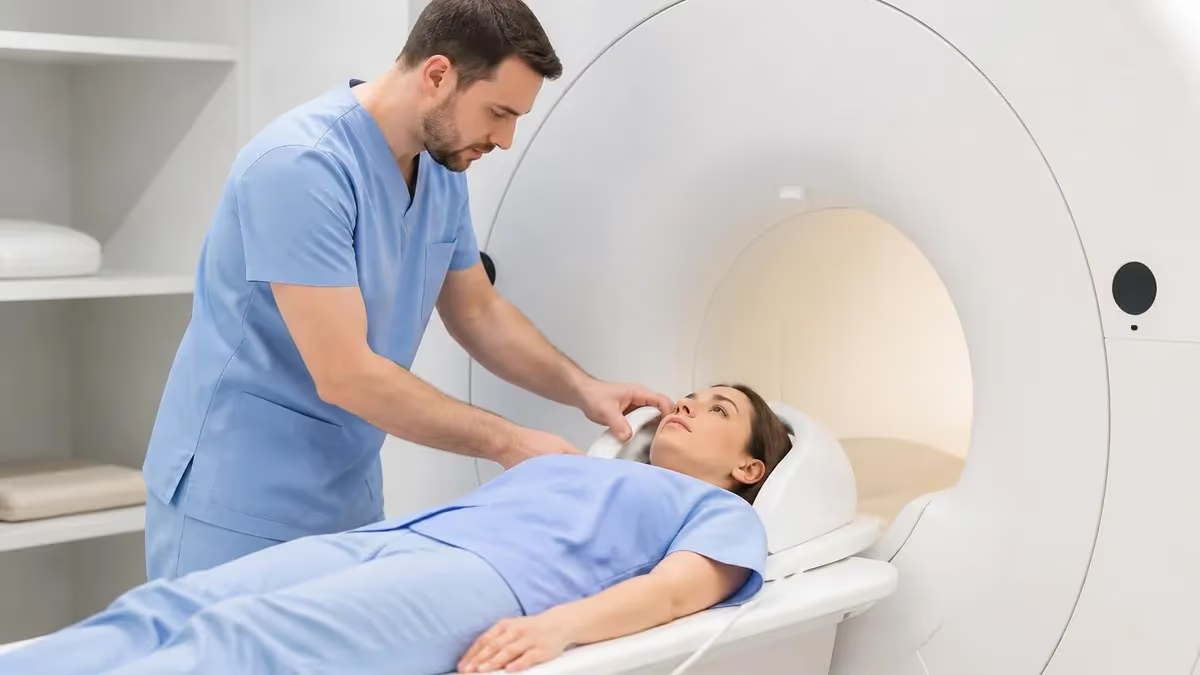
Dedifferentiated liposarcoma MRI evaluation sits at the intersection of soft-tissue oncology and advanced cross-sectional imaging, demanding both pattern recognition and a working knowledge of tumor biology. This high-grade malignancy almost always arises from a pre-existing well-differentiated liposarcoma (atypical lipomatous tumor), most commonly in the retroperitoneum, but also in the spermatic cord, mesentery, and deep soft tissues of the extremities. Radiologists who can correctly characterize the fatty and non-fatty components on MRI directly influence biopsy targeting, surgical planning, and prognosis discussions.
The classic MRI signature is a bulky lesion with two clearly different tissue populations: a mature-appearing adipose component that follows fat signal on every sequence, and an abruptly transitioning non-lipomatous nodule that is intermediate to low on T1, heterogeneously high on T2, and enhances avidly after gadolinium. That juxtaposition, often described as a fat-and-flesh tumor, is the most reliable imaging hallmark and is what separates dedifferentiated liposarcoma from benign lipomas, well-differentiated liposarcoma, and other retroperitoneal sarcomas on MR.
Pathology findings reinforce what MRI suggests. Dedifferentiated liposarcoma demonstrates MDM2 and CDK4 amplification on FISH, and histologically shows an abrupt transition from low-grade lipogenic tissue to a high-grade non-lipogenic sarcoma, which can resemble undifferentiated pleomorphic sarcoma, myxofibrosarcoma, or even heterologous elements such as osteosarcoma or rhabdomyosarcoma. Recognizing those tissue elements on imaging — calcified or ossified foci, myxoid pools, necrosis — is often the difference between a confident pre-operative diagnosis and a non-specific report.
This guide walks through the imaging-pathology correlation step by step. We cover the MRI protocol that maximizes lesion characterization, the signal intensity behavior across T1, T2, fat-suppressed, diffusion-weighted, and dynamic contrast-enhanced sequences, and the morphologic features that predict tumor grade and resectability. We also discuss high-yield differentials, the most common reporting pitfalls, and what every radiology trainee should memorize before stepping into a sarcoma multidisciplinary conference. To brush up on the basics of the modality itself, review our overview of What Is an MRI Test? How Magnetic Resonance Imaging Scans Diagnose Disease in 2026.
Beyond pure diagnosis, MRI plays an evolving role in surveillance after surgical resection, where local recurrence is common and can be subtle. Knowing where to look — along the psoas, around the kidney, against the diaphragmatic crus, deep to the iliac vessels — and how to compare interval studies on identical sequences is essential, because the non-lipomatous component frequently recurs without an associated fatty mass, mimicking benign post-operative change on poorly protocoled scans.
For technologists, fellows, and reporting radiologists, this article delivers a comprehensive, exam-ready framework: protocol, signal pearls, pathology correlation, differential diagnosis, surveillance strategy, and pitfalls. By the end, you should be able to look at a heterogeneous retroperitoneal mass and decide with confidence whether you are facing a dedifferentiated liposarcoma, a well-differentiated counterpart, or one of its mimics — and you should know what the pathology report is going to say before it lands.
The educational scope here aligns with the kinds of MRI pathology findings tested on ARRT advanced certification, ARMRIT registry exams, and sarcoma-focused fellowship curricula. Use the linked practice questions as a feedback loop: read a section, take a short quiz, and return to the prose to fill in gaps. That repeated retrieval is what converts passive reading into durable diagnostic skill.
Dedifferentiated Liposarcoma by the Numbers
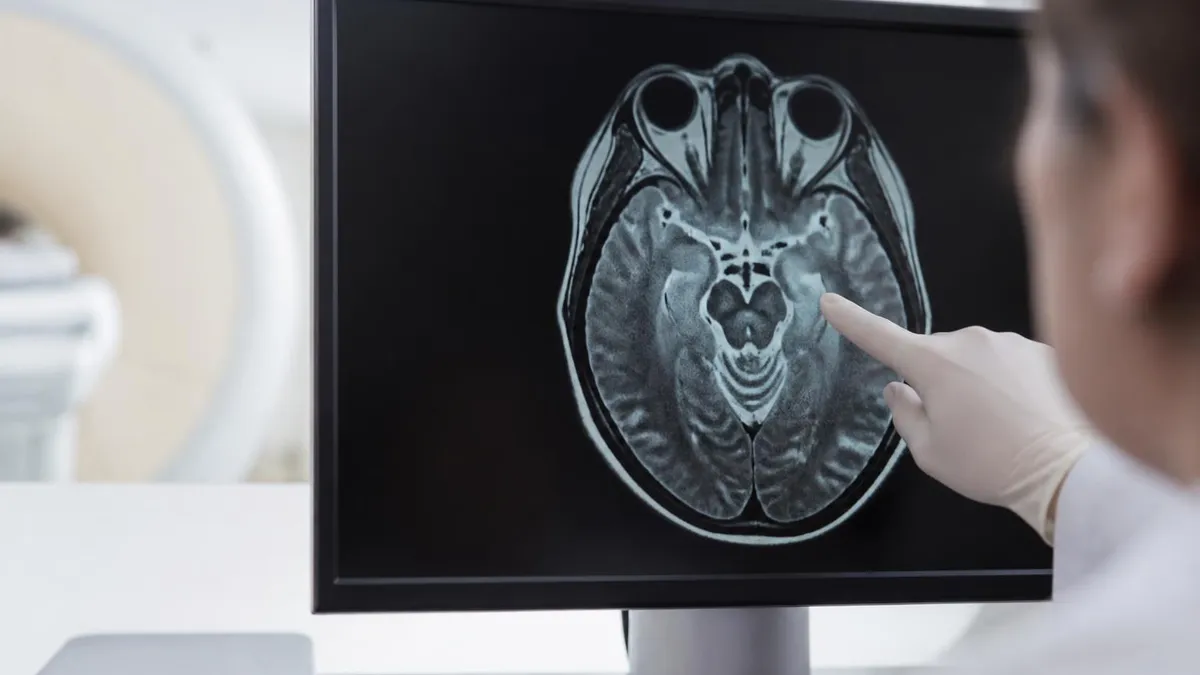
MRI Protocol for Suspected Liposarcoma
The foundational sequence. Mature fat appears bright, allowing the lipomatous component to be measured and compared against the abruptly transitioning non-lipomatous nodule, which usually appears intermediate to low signal.
Confirms macroscopic fat by signal drop on fat-suppressed images and highlights the high-signal soft-tissue component, myxoid pools, and peritumoral edema. Essential for distinguishing tissue layers within heterogeneous masses.
High b-value DWI with ADC mapping helps separate high-grade dedifferentiated tissue (restricted diffusion, low ADC) from low-grade lipomatous regions. Useful for biopsy targeting and post-treatment response assessment.
Multiphasic post-gadolinium imaging shows early avid enhancement of the non-lipomatous component, helps delineate tumor from adjacent organs, and reveals necrotic cores that should be avoided when planning percutaneous biopsy.
Whole-abdomen coverage is mandatory for retroperitoneal sarcomas. Coronal and sagittal reformats demonstrate cranio-caudal extent, organ displacement, vascular encasement, and diaphragmatic involvement that change the surgical plan.
Pathology findings in dedifferentiated liposarcoma are defined by an abrupt transition from a low-grade, well-differentiated lipogenic component to a high-grade, non-lipogenic sarcoma. The non-lipogenic component most commonly resembles undifferentiated pleomorphic sarcoma or myxofibrosarcoma, but heterologous differentiation is well documented: osteosarcomatous, chondrosarcomatous, rhabdomyosarcomatous, and even angiosarcomatous elements occur, each with its own MRI signature that astute radiologists can flag before the histology comes back.
The molecular signature is consistent and clinically important. Both the well-differentiated and dedifferentiated components carry amplification of the MDM2 and CDK4 genes on chromosome 12q13-15, which can be detected by FISH or immunohistochemistry. This molecular fingerprint distinguishes dedifferentiated liposarcoma from morphologic mimics like undifferentiated pleomorphic sarcoma, leiomyosarcoma, and inflammatory myofibroblastic tumor, and it explains the ongoing interest in MDM2 inhibitors as targeted systemic therapy in trial settings.
Histologic grading further stratifies prognosis. Tumors with high mitotic activity, extensive necrosis, and heterologous high-grade elements behave more aggressively, while low-grade dedifferentiation — sometimes called sub-typical dedifferentiation — has a more indolent course closer to well-differentiated liposarcoma. MRI helps predict grade through the proportion of non-lipomatous tissue, the degree of enhancement, restricted diffusion, and the presence of necrosis, all of which should be quantified in the structured report whenever possible.
The relationship to MRI Medical Abbreviation: What MRI Stands For and Why It Matters conventions matters at the reporting bench too. Using consistent shorthand for sequences (T1, T2 FS, STIR, DWI, ADC, DCE) helps surgical and oncology teams quickly orient themselves within complex sarcoma reports, especially when multiple readers across institutions contribute to a multidisciplinary tumor board.
Gross pathology mirrors what MRI predicts. The resected specimen typically shows a yellow, lobulated fatty mass containing one or more firm, fleshy, tan-white nodules that correspond directly to the non-lipomatous areas on imaging. Cut sections may reveal gritty calcifications or chondroid foci in tumors with heterologous differentiation, and necrotic, hemorrhagic centers in high-grade lesions — all features the radiologist should have already characterized on the pre-operative scan.
Lymph node and distant metastases are uncommon at presentation but possible, most often to the lungs, liver, and bone. The dominant biologic threat, however, is local recurrence: retroperitoneal anatomy makes truly margin-negative resection difficult, and microscopic disease left behind almost guarantees recurrence within a few years. Recognizing this on initial staging MRI shapes both the surgical conversation and the surveillance schedule.
For radiology learners, pathology correlation is the most efficient way to internalize MRI findings. Cross-referencing imaging features with the actual gross specimen photographs and microscopy slides — when available through tumor board or pathology rounds — locks in the visual library faster than reading alone. The result is faster, more confident dictation when these tumors appear on the worklist.
MRI Practice Test Questions
Prepare for the MRI - Magnetic Resonance Imaging exam with our free practice test modules. Each quiz covers key topics to help you pass on your first try.
MRI Knowledge
MRI Exam Questions covering Knowledge. Master MRI Test concepts for certification prep.
MRI Physics
Free MRI Practice Test featuring Physics. Improve your MRI Exam score with mock test prep.
MRI Anatomy and Pathology
MRI Test Prep for MRI Anatomy and Pathology. Practice MRI Quiz questions and boost your score.
MRI Anatomy and Positioning
MRI Questions and Answers on MRI Anatomy and Positioning. Free MRI practice for exam readiness.
MRI Contrast Agents
Free MRI Quiz on MRI Contrast Agents. MRI Exam prep questions with detailed explanations.
MRI Patient Care and Positioning
MRI Practice Questions for MRI Patient Care and Positioning. Build confidence for your MRI certification exam.
Dedifferentiated Liposarcoma MRI Signal Characteristics
On unenhanced T1-weighted imaging, the well-differentiated lipomatous component follows mature fat and appears uniformly bright, similar to subcutaneous adipose tissue. The dedifferentiated, non-lipomatous nodules drop to intermediate or low signal, creating the characteristic two-tissue appearance that is the single most useful diagnostic clue for this tumor on MRI examinations.
Thick septations greater than two millimeters and nodular soft-tissue elements within an otherwise fatty mass should raise immediate concern. Comparing the same region on T1 with and without fat saturation confirms whether the suspect area is true fat or a non-lipomatous nodule, which is critical for biopsy targeting and for separating dedifferentiated liposarcoma from benign lipoma or atypical lipomatous tumor.
MRI vs CT for Liposarcoma Characterization
- +Superior soft-tissue contrast that delineates fatty from non-fatty components
- +Multiplanar reformats without additional radiation exposure
- +Functional sequences (DWI, DCE) provide grade and viability information
- +Better assessment of muscle, nerve, and vascular involvement
- +No iodinated contrast required — safer in renal impairment
- +Excellent for surveillance imaging in younger patients
- −Calcifications and ossified foci are less conspicuous than on CT
- −Longer scan times can be challenging for large retroperitoneal protocols
- −Motion artifact from bowel peristalsis may degrade image quality
- −Limited availability for emergency or perioperative imaging
- −Metallic surgical clips can create signal voids in post-op scans
- −Higher cost and lower throughput than CT for staging workflows
Dedifferentiated Liposarcoma MRI Reporting Checklist
- ✓Document tumor location, maximum dimensions in three planes, and anatomic compartment.
- ✓Identify and measure the macroscopic fat component as a percentage of total tumor volume.
- ✓Describe the non-lipomatous nodule(s): signal on T1, T2, DWI/ADC, and enhancement pattern.
- ✓Note thick septations greater than 2 mm and any abrupt transitions between tissue types.
- ✓Report calcified or ossified foci that may indicate heterologous osteosarcomatous differentiation.
- ✓Assess organ displacement or invasion (kidney, pancreas, bowel, liver, psoas, diaphragm).
- ✓Evaluate vascular relationships: aorta, IVC, renal vessels, iliac vessels — encasement or invasion.
- ✓Comment on regional lymph nodes and screen lungs and liver for distant metastases.
- ✓Suggest the most appropriate biopsy target — the highest-grade non-lipomatous nodule.
- ✓Compare with any prior imaging and provide a TNM-relevant summary for tumor board.
Fat plus flesh equals dedifferentiated liposarcoma until proven otherwise
A retroperitoneal mass containing both macroscopic fat (bright on T1, suppresses with fat saturation) and an abrupt, enhancing non-lipomatous nodule is dedifferentiated liposarcoma until biopsy proves otherwise. Direct the percutaneous biopsy to the non-lipomatous component to maximize diagnostic yield and accurately grade the tumor.
The differential diagnosis for a fat-containing retroperitoneal mass is short but consequential. Well-differentiated liposarcoma (atypical lipomatous tumor) is the most important alternative: it shares the lipomatous component but lacks the abruptly transitioning, avidly enhancing non-lipomatous nodule that defines dedifferentiated liposarcoma. Recognizing the dedifferentiated focus matters because it upgrades the tumor from a locally aggressive lesion to a high-grade sarcoma with significantly higher metastatic and mortality risk.
Other fat-containing lesions to consider include angiomyolipoma, which typically arises from the kidney and contains vascular and smooth muscle components, retroperitoneal teratoma, which usually shows calcification and cystic regions in younger patients, and benign lipoma, which is homogeneous and lacks soft-tissue nodules. Each can be distinguished on careful multi-sequence MRI, but errors occur when readers do not scrutinize the entire mass for subtle non-lipomatous foci.
Among non-fat-containing mimics, leiomyosarcoma is the leading consideration in the retroperitoneum, particularly when it arises from the IVC. Unlike dedifferentiated liposarcoma, leiomyosarcoma tends to be more homogeneous, lacks a fatty component, and often demonstrates an intravascular growth pattern. Pheochromocytoma, lymphoma, and metastatic disease can also present as retroperitoneal masses, but their clinical context and imaging behavior differ enough to allow confident separation in most cases.
When the non-lipomatous component dominates and the fatty component is small or absent, the diagnosis becomes more challenging and may resemble undifferentiated pleomorphic sarcoma. In those cases, the presence of even a tiny focus of macroscopic fat — sometimes just a few millimeters — should prompt strong consideration of dedifferentiated liposarcoma. Reviewing thin-slice T1 images carefully, ideally with both in-phase and out-of-phase sequences when available, can salvage the diagnosis.
Heterologous differentiation introduces additional differential considerations. Osteosarcomatous heterologous elements produce dense ossification that can mimic primary osteosarcoma or myositis ossificans; rhabdomyosarcomatous elements may show muscle-like signal that mimics rhabdomyosarcoma; and chondrosarcomatous elements can present with chondroid matrix that resembles primary chondrosarcoma. Recognizing the fatty backbone of dedifferentiated liposarcoma anchors the correct diagnosis even when heterologous elements dominate the imaging appearance.
Inflammatory and infectious mimics deserve mention. Retroperitoneal fibrosis, IgG4-related disease, and abscesses can produce ill-defined retroperitoneal soft-tissue masses, but they lack macroscopic fat and typically demonstrate distinctive enhancement and diffusion patterns. Correlating with clinical and laboratory data — inflammatory markers, IgG4 levels, fever — usually clarifies the diagnosis and prevents unnecessary oncologic workup.
Finally, do not underestimate the value of dedicated MR protocols when the diagnosis is uncertain. Adding in-phase/out-of-phase chemical shift imaging, high b-value diffusion, and dynamic contrast enhancement transforms a non-specific report into a confident differential. When MRI remains equivocal, image-guided core biopsy of the non-lipomatous component, ideally coordinated with the surgical team, provides the definitive histologic and molecular diagnosis required for treatment planning.

Percutaneous biopsy of suspected dedifferentiated liposarcoma should always be coordinated with the operating surgeon so the needle tract can be excised en bloc at definitive resection. Uncoordinated biopsies risk tract seeding, which can compromise oncologic outcomes and complicate subsequent surgery and radiation planning.
Post-operative surveillance is arguably where MRI delivers the greatest long-term value in dedifferentiated liposarcoma management. Local recurrence rates approach 40 to 80 percent at five years, and many recurrences are subtle, presenting initially as a small, non-lipomatous nodule along the surgical bed without an obvious fatty component. Without identical sequence parameters and dedicated comparison, these recurrences are easy to miss on routine restaging studies, particularly in the post-operative retroperitoneum.
A standardized surveillance MRI protocol — axial T1, axial T2 with fat saturation, sagittal and coronal T2, diffusion-weighted imaging, and dynamic post-contrast imaging — should be used for every follow-up exam. Repeating the same protocol on the same magnet, when possible, allows side-by-side visual comparison and quantitative measurement of any new nodules along the psoas, around the renal fossa, against the iliopsoas, or deep to the abdominal wall closure.
Diffusion-weighted imaging is particularly powerful in surveillance. Recurrent tumor typically demonstrates restricted diffusion with low ADC, while post-operative fibrosis, fat necrosis, and seromas usually do not. Combined with avid early enhancement on dynamic post-contrast sequences, restricted diffusion strongly suggests recurrence and should prompt either short-interval follow-up or image-guided biopsy depending on the clinical context and prior treatment history.
The pattern of recurrence often follows surgical dissection planes, which underscores why every surveillance MRI report should explicitly describe the surgical bed, document the resection margins from the operative note, and compare with the immediate post-operative baseline study. Subtle nodularity that would be dismissed on a generic abdominal MRI becomes a high-priority finding when interpreted in the context of prior dedifferentiated liposarcoma resection. Background reading on The History of MRI: From Discovery to Modern Medicine provides useful perspective on how surveillance imaging has evolved alongside surgical and systemic therapy advances.
Distant metastases, although less common than local recurrence, do occur and are most often pulmonary. Many surveillance protocols therefore combine an MRI of the abdomen and pelvis with a low-dose chest CT, leveraging the strengths of each modality. Liver metastases, when present, are best characterized on MRI with hepatobiliary contrast agents, which improve lesion conspicuity and help differentiate metastases from benign focal lesions in the same patient.
Frequency of surveillance is tailored to histologic grade and surgical margins. Most sarcoma centers obtain cross-sectional imaging every three to six months for the first two to three years, then every six to twelve months for several more years, recognizing that recurrence beyond five years is well documented. The radiologist's structured comparison report, with measurements, ADC values, and enhancement patterns, becomes a longitudinal record that drives clinical decisions across that long surveillance window.
Communication with the multidisciplinary team is critical. Findings suggestive of recurrence should be discussed directly with the surgical oncologist and medical oncologist, ideally at a sarcoma-specific tumor board, where treatment options including re-resection, radiation, and systemic therapy can be weighed against the patient's overall condition and prior treatment history. A clear, structured radiology report is the bridge between imaging and individualized patient care.
For radiologists and trainees preparing to handle sarcoma cases independently, a few practical habits dramatically improve diagnostic accuracy. First, always read the priors. A previously reported well-differentiated liposarcoma that now shows a new non-lipomatous nodule is dedifferentiated liposarcoma until proven otherwise, even if the mass appears stable in overall size, because the biology has fundamentally changed.
Second, scrutinize every fat-containing retroperitoneal mass with thin-slice T1 and matched fat-suppressed sequences. Many missed dedifferentiated foci are small — under two centimeters — and hide within bulky lipomatous backgrounds. Routinely scrolling through the entire tumor on the same anatomic level across T1 and T1 with fat saturation makes the subtle nodules pop, particularly when paired with high b-value DWI.
Third, embrace structured reporting. Templates that explicitly prompt for fat percentage, non-lipomatous component characteristics, vascular relationships, organ involvement, and metastatic survey reduce omissions and keep referrers happy. Pair the structured report with a one-line impression that names the most likely diagnosis, the suggested biopsy target, and the next recommended step in management.
Fourth, build a personal teaching file. Save anonymized examples of classic dedifferentiated liposarcoma, well-differentiated liposarcoma, and the major mimics, along with the corresponding pathology reports when accessible. Reviewing them quarterly maintains pattern recognition, and walking trainees through them solidifies the concepts in your own mind through the protégé effect.
Fifth, use practice questions strategically. Spaced retrieval is one of the most evidence-supported study techniques, and short quizzes after each reading session reinforce long-term memory more efficiently than rereading alone. The free quizzes linked in this article are calibrated to ARRT advanced-level content and make excellent review tools for both residents and credentialed MRI technologists. Reviewing visual references like the ones in Knee MRI Images: A Complete Guide to Reading, Understanding, and Interpreting Knee Scans reinforces general pattern recognition skills that transfer directly to sarcoma imaging.
Sixth, attend tumor board whenever possible. Hearing surgeons, pathologists, and oncologists discuss the same case from different angles deepens your understanding of how imaging findings translate to surgical decisions, adjuvant therapy choices, and prognosis. Few learning experiences match the density of insight available in a well-run multidisciplinary sarcoma conference.
Finally, calibrate expectations honestly with referring teams. Dedifferentiated liposarcoma is a serious diagnosis with a real risk of local recurrence and a non-trivial risk of metastatic spread. Clear, confident imaging interpretation paired with empathetic communication helps surgeons set expectations with patients, helps oncologists time systemic therapy decisions, and ultimately helps patients understand and engage with their treatment journey.
MRI Questions and Answers

What Is an MRI Test? How Magnetic Resonance Imaging Scans Diagnose Disease in 2026

MRI Medical Abbreviation: What MRI Stands For and Why It Matters

The History of MRI: From Discovery to Modern Medicine
Knee MRI Images: A Complete Guide to Reading, Understanding, and Interpreting Knee Scans
Noise of MRI Machine: Why MRI Scanners Are So Loud and What to Expect
About the Author

Medical Laboratory Scientist & Clinical Certification Expert
Johns Hopkins UniversityDr. Sandra Kim holds a PhD in Clinical Laboratory Science from Johns Hopkins University and is certified as a Medical Technologist (MT) and Medical Laboratory Scientist (MLS) through ASCP. With 16 years of clinical laboratory experience spanning hematology, microbiology, and molecular diagnostics, she prepares candidates for ASCP board exams, MLT, MLS, and specialist certification tests.
Join the Discussion
Connect with other students preparing for this exam. Share tips, ask questions, and get advice from people who have been there.
View discussion (8 replies)