
Modic Changes MRI: A Complete Guide to Vertebral Endplate Signal Changes, Types, and Clinical Significance
Modic changes MRI guide covering Type 1, 2, and 3 vertebral endplate signal patterns, 🎯 sequences, clinical meaning, and imaging pitfalls.

Modic changes MRI findings are among the most clinically relevant vertebral endplate signal abnormalities a technologist or radiologist will encounter on lumbar spine imaging. First described by Dr. Michael Modic in 1988, these subchondral bone marrow signal alterations adjacent to degenerated intervertebral discs have become a cornerstone of degenerative spine reporting. For MRI technologists, recognizing the appearance of Modic Type 1, Type 2, and Type 3 changes on T1 and T2 weighted sequences is essential to producing diagnostic studies that guide back pain management.
Modic changes appear on roughly 18 to 58 percent of lumbar spine MRI examinations performed for low back pain, with prevalence rising sharply after age 50. They represent a continuum of vertebral marrow response to chronic mechanical stress, biochemical irritation, and possibly low-grade infection. Each type carries different signal characteristics, prognostic implications, and treatment considerations. A misclassified or missed Modic change can directly impact whether a patient is offered conservative therapy, an epidural injection, or surgical fusion.
This article walks through the imaging hallmarks of every Modic type, the optimal MRI protocol for capturing them, the underlying histopathology that explains the signal patterns, and the differential diagnoses that can mimic these changes. Whether you are a registry candidate preparing for the ARRT MRI exam or a working tech sharpening your interpretation eye, mastering Modic changes will improve the quality of every lumbar spine study you produce.
The reason Modic changes matter so much clinically is their well-documented association with chronic low back pain. Type 1 changes in particular show a stronger correlation with axial pain than herniated discs or facet arthropathy alone. Surgeons planning lumbar fusion frequently use the presence and type of Modic change to predict outcomes, since patients with Type 1 changes at the surgical level often respond better to fusion than those with Type 2 changes. This makes accurate sequence acquisition and signal characterization clinically actionable.
From a technical standpoint, identifying Modic changes requires high-quality T1-weighted and T2-weighted sagittal sequences with adequate signal-to-noise, appropriate slice thickness of 3 to 4 mm, and a field of view that captures the entire lumbar spine. STIR or fat-suppressed T2 sequences add tremendous value, especially when distinguishing Type 1 edematous changes from Type 2 fatty replacement. Without these complementary sequences, a Type 1 change can be easily mistaken for benign degeneration.
Beyond the lumbar spine, Modic changes occur in the cervical and thoracic regions as well, though they are less frequently discussed because the clinical correlation with neck pain is weaker. Still, the same classification system applies, and the same MRI sequences are used. Technologists scanning any segment of the spine should be comfortable recognizing the three types and understanding how their appearance evolves over months and years as one type transitions into another along the natural history of disc degeneration.
Finally, Modic changes intersect with several hot-button research areas including the controversial role of Cutibacterium acnes in chronic back pain, the use of antibiotics for Type 1 changes, and the emerging biologic therapies aimed at modulating endplate inflammation. Staying current on these topics positions imaging professionals to participate meaningfully in multidisciplinary spine care conversations.
If you want more targeted practice, the totally open mri near me page covers the same material with additional questions and explanations.
Modic Changes by the Numbers

The Three Modic Types
Bone marrow edema and inflammation. Appears hypointense on T1-weighted and hyperintense on T2-weighted sequences. Represents acute or subacute endplate disruption with vascular granulation tissue and fibrovascular replacement of normal marrow.
Fatty replacement of subchondral marrow. Hyperintense on both T1 and T2-weighted images, suppresses on STIR or fat-saturated sequences. Reflects a more chronic, stable phase with yellow marrow conversion replacing the inflamed tissue.
Subchondral bony sclerosis. Hypointense on both T1 and T2-weighted sequences due to dense reactive bone. Represents the end stage of the degenerative cascade with woven and trabecular bone replacing marrow elements.
Type 1/2 and Type 2/3 mixed patterns occur frequently and represent transitional phases. Mixed Type 1/2 lesions have both edema and fat signal, while Type 2/3 lesions show fat with focal sclerotic regions of low signal.
Understanding the pathophysiology behind Modic changes helps technologists appreciate why certain sequences are essential and why signal patterns evolve over time. The vertebral endplate is a thin layer of hyaline cartilage and subchondral bone that separates the intervertebral disc from the underlying vertebral body marrow. When the disc degenerates, microscopic fissures and biochemical changes propagate into the endplate, triggering a cascade of marrow responses that manifest as Modic changes on MRI.
In Modic Type 1, histopathology reveals disruption of the cartilaginous endplate with ingrowth of vascular granulation tissue into the subchondral bone. Edema fluid accumulates, and inflammatory cytokines such as TNF-alpha and interleukin-6 are present in improved concentrations. This explains the low T1 signal from increased water content and the high T2 and STIR signal from the same edema. Patients with Type 1 changes often experience more inflammatory-pattern back pain that worsens with prolonged rest.
Type 2 represents a more stable, chronic state where the inflammatory response has subsided and the marrow undergoes fatty conversion. The hematopoietic red marrow is replaced by yellow adipose marrow, which produces the characteristic high signal on T1-weighted images. Because fat suppresses on STIR and fat-saturated sequences, this differentiation becomes diagnostic. Type 2 changes are often considered the burnt-out phase of the degenerative endplate process.
Type 3 changes are the least common, appearing as densely sclerotic subchondral bone. Histologically, the marrow space is replaced by thickened trabeculae and woven bone with minimal cellular elements remaining. This explains the uniformly low signal on both T1 and T2 weighted sequences. On a corresponding CT or plain radiograph, these regions appear strikingly hyperdense, which can help confirm the MRI finding when the diagnosis is uncertain.
The transition between types is not linear and not universal. Some Type 1 changes resolve completely with no progression to Type 2. Others convert to Type 2 over 12 to 36 months, and a minority eventually develop Type 3 sclerosis after many years. Mixed patterns are common during transitions, and longitudinal MRI studies have documented Type 2 lesions reverting to Type 1 when new mechanical stress is introduced, such as after adjacent-level surgery.
A particularly interesting and controversial area of research is the possible role of low-virulence anaerobic bacteria, especially Cutibacterium acnes, in driving persistent Type 1 changes. Some studies have shown bacterial DNA in disc material removed from patients with Type 1 changes and chronic back pain. While the antibiotic-treatment paradigm remains debated, this hypothesis has shifted how some clinicians approach Type 1 lesions associated with disabling pain.
Mechanical factors also play a major role. Increased axial loading, instability, and adjacent-segment stress all accelerate endplate disruption. This is why Modic changes are most common at L4-L5 and L5-S1, the levels with the greatest mechanical demand. Obesity, occupational lifting, and smoking are well-documented risk factors that influence both prevalence and progression of all three Modic types.
MRI Practice Test Questions
Prepare for the MRI - Magnetic Resonance Imaging exam with our free practice test modules. Each quiz covers key topics to help you pass on your first try.
MRI Knowledge
MRI Exam Questions covering Knowledge. Master MRI Test concepts for certification prep.
MRI Physics
Free MRI Practice Test featuring Physics. Improve your MRI Exam score with mock test prep.
MRI Anatomy and Pathology
MRI Test Prep for MRI Anatomy and Pathology. Practice MRI Quiz questions and boost your score.
MRI Anatomy and Positioning
MRI Questions and Answers on MRI Anatomy and Positioning. Free MRI practice for exam readiness.
MRI Contrast Agents
Free MRI Quiz on MRI Contrast Agents. MRI Exam prep questions with detailed explanations.
MRI Patient Care and Positioning
MRI Practice Questions for MRI Patient Care and Positioning. Build confidence for your MRI certification exam.
MRI Sequences for Modic Changes
The T1-weighted sagittal sequence is the foundational image for identifying and classifying Modic changes. On T1, normal vertebral body marrow appears intermediate to slightly hyperintense due to its fat content. Type 1 changes appear distinctly hypointense, Type 2 appears hyperintense matching or exceeding marrow brightness, and Type 3 appears hypointense due to sclerosis.
Optimal T1 acquisition uses a fast spin echo sequence with TR around 500-700 ms, TE 10-15 ms, 3-4 mm slice thickness, and a field of view of 28-32 cm to cover the lumbar spine fully. Adequate signal-to-noise is critical because subtle Type 1 hypointensity can be missed on noisy images. Always verify endplate sharpness and the absence of motion artifact before sending the study.

Strengths and Limitations of the Modic Classification
- +Reproducible across radiologists with good inter-observer agreement
- +Directly tied to specific histopathologic findings
- +Helps predict response to lumbar fusion surgery
- +Correlates with chronic axial low back pain
- +Easy to identify with standard T1 and T2 sequences
- +Useful for tracking degenerative progression over time
- +Provides actionable information for treatment planning
- −Mixed types can be difficult to classify consistently
- −Prevalence in asymptomatic individuals limits specificity
- −Does not predict response to all interventions
- −Requires both T1 and T2 sequences for accurate typing
- −Subtle Type 1 changes can be missed on noisy images
- −Inter-rater agreement decreases for small lesions
- −Classification does not address lesion size or location
Pros and Cons at a Glance
| Pros | Cons |
|---|---|
| Reproducible across radiologists with good inter-observer agreement | Mixed types can be difficult to classify consistently |
| Directly tied to specific histopathologic findings | Prevalence in asymptomatic individuals limits specificity |
| Helps predict response to lumbar fusion surgery | Does not predict response to all interventions |
| Correlates with chronic axial low back pain | Inter-rater agreement decreases for small lesions |
| Useful for tracking degenerative progression over time | Classification does not address lesion size or location |
Modic Changes MRI Imaging Checklist
- ✓Acquire sagittal T1-weighted FSE with 3-4 mm slice thickness
- ✓Include sagittal T2-weighted with fluid-sensitive contrast
- ✓Add STIR or fat-saturated T2 to differentiate edema from fat
- ✓Cover entire lumbar spine from T12 to S1 in field of view
- ✓Verify endplate definition is sharp on all sequences
- ✓Check for motion artifact that can mimic signal change
- ✓Note signal pattern on each sequence at every endplate
- ✓Document level, side, and percentage of endplate involved
- ✓Correlate findings with disc degeneration at the same level
- ✓Compare with any prior MRI to assess Modic type evolution
Always include a STIR sequence
STIR or fat-saturated T2 is the single most useful add-on sequence for evaluating Modic changes. It unambiguously separates Type 1 edema from Type 2 fatty conversion, which directly affects clinical management. Skipping it can lead to misclassification and inappropriate referral patterns.
Several pathologies can mimic Modic changes on MRI, and recognizing these differentials is critical to avoid misdiagnosis. The most important imitator of Modic Type 1 is vertebral discitis-osteomyelitis. Both show low T1 and high T2 signal in the subchondral bone, but discitis typically involves the disc itself with high T2 signal and loss of the intranuclear cleft, often with paravertebral soft tissue extension or epidural enhancement after gadolinium administration.
The endplate appearance offers another clue. In Modic Type 1, the endplate cortex remains intact and well-defined. In discitis, the endplate is irregular, eroded, or destroyed. Post-contrast imaging is particularly helpful: Modic Type 1 typically shows mild diffuse enhancement, while discitis demonstrates intense, sometimes ring-like enhancement with rim enhancement of paraspinal abscesses if present. Improved inflammatory markers in the clinical context strongly favor infection.
Spondyloarthropathy, particularly ankylosing spondylitis, can also mimic Type 1 changes at the corners of the vertebral bodies in the form of Romanus lesions. These early shiny corner lesions reflect inflammatory enthesitis and show similar T1 hypointensity with T2 hyperintensity. The distribution at the corners rather than diffusely across the endplate, combined with sacroiliac joint involvement, points toward inflammatory rather than degenerative etiology.
Hemangiomas can resemble Modic Type 2 changes because both are hyperintense on T1 and T2. However, hemangiomas typically occupy the central vertebral body rather than the subchondral endplate region and show a characteristic corduroy or polka-dot pattern on axial imaging. Fat suppression behaves differently as well, with hemangiomas containing both fat and water components rather than the uniform fat signal seen in Type 2 changes.
Metastatic disease and multiple myeloma must always be considered, particularly when signal changes are extensive or atypically distributed. Most metastases are low on T1 and high on T2 or STIR, but they tend to be focal, well-circumscribed, and centered in the vertebral body marrow rather than aligned along the endplate adjacent to a degenerated disc. Multiple lesions and a known oncologic history shift suspicion strongly toward malignancy.
Schmorl nodes are intraosseous disc herniations that protrude into the vertebral body through a focal endplate defect. The surrounding marrow can demonstrate Type 1-like edema acutely or Type 2-like fatty changes chronically. The key differentiator is the visible disc material extending into the vertebral body, often surrounded by a thin sclerotic rim on radiographs.
Finally, post-traumatic and post-surgical changes can mimic any Modic type depending on chronicity. Recent vertebral fractures, kyphoplasty cement, or fusion hardware all produce signal changes that need to be correlated with surgical history. A thorough review of the requisition, prior imaging, and clinical history prevents many of these diagnostic pitfalls before they ever reach the radiologist.

Modic Type 1 changes can closely mimic infectious discitis-osteomyelitis on T1 and T2 sequences. Always evaluate endplate integrity, disc signal, paravertebral soft tissues, and post-contrast enhancement patterns. When in doubt, recommend contrast-enhanced imaging and correlate with inflammatory markers.
The clinical significance of Modic changes extends well beyond their imaging appearance. Multiple population studies have established a strong association between Modic Type 1 changes and chronic low back pain, with odds ratios ranging from 2 to 4 compared to patients without Modic changes. Type 2 changes show a weaker but still significant correlation, while Type 3 changes are not strongly linked to active pain symptoms.
For surgical planning, Modic changes carry substantial weight. Patients with isolated Type 1 changes at a single level often respond favorably to lumbar interbody fusion, with success rates exceeding 70 percent in some series. Conversely, patients with extensive multilevel Type 2 changes may have less predictable outcomes because the burnt-out fatty marrow represents an already adapted state. Surgeons routinely review the MRI Modic findings before recommending fusion versus disc replacement.
Non-surgical management has also evolved around Modic typing. Intradiscal corticosteroid injections have shown benefit in some patients with Type 1 changes, presumably by reducing the inflammatory cytokine load. Basivertebral nerve ablation, an FDA-approved minimally invasive procedure, specifically targets pain pathways in patients with Type 1 or Type 2 Modic changes and has demonstrated meaningful improvements in pain and function in randomized trials.
The antibiotic hypothesis remains controversial but actively studied. Randomized trials of long-course antibiotics in patients with Modic Type 1 changes and chronic low back pain have shown mixed results. Some studies report meaningful pain reduction, while others find minimal benefit beyond placebo. Until larger trials clarify the role of bacterial infection, antibiotic therapy is not routinely recommended outside specialized centers and research protocols.
From a prognostic standpoint, Type 1 changes are more dynamic and unpredictable than Type 2 or Type 3 lesions. Some Type 1 changes resolve spontaneously over 12 to 24 months, others convert to Type 2, and a minority persist for years. Tracking changes on serial MRI provides valuable information about the natural history of degenerative disease and the response to interventions. When you compare studies, you will appreciate why the history of MRI matters: only modern high-field systems reliably depict these subtle longitudinal changes.
Patient counseling is another area where Modic findings matter. Educating patients that Modic changes are extremely common and not always painful helps avoid catastrophizing imaging results. At the same time, identifying a Type 1 change in a patient with severe disabling pain validates their symptoms and opens specific therapeutic doors that might otherwise remain closed. Effective communication of findings supports shared decision-making between patient and clinician.
For technologists pursuing advanced credentialing, the registry exam frequently includes questions about Modic typing, recognizing the signal patterns, and matching them to histopathology. Understanding these concepts deeply rather than memorizing them superficially pays dividends both on the exam and in daily practice. The ability to flag a Modic change for the radiologist, ensure the right sequences are acquired, and recognize when additional imaging like contrast or CT might be helpful improves the technologist from a button-pusher to a diagnostic partner.
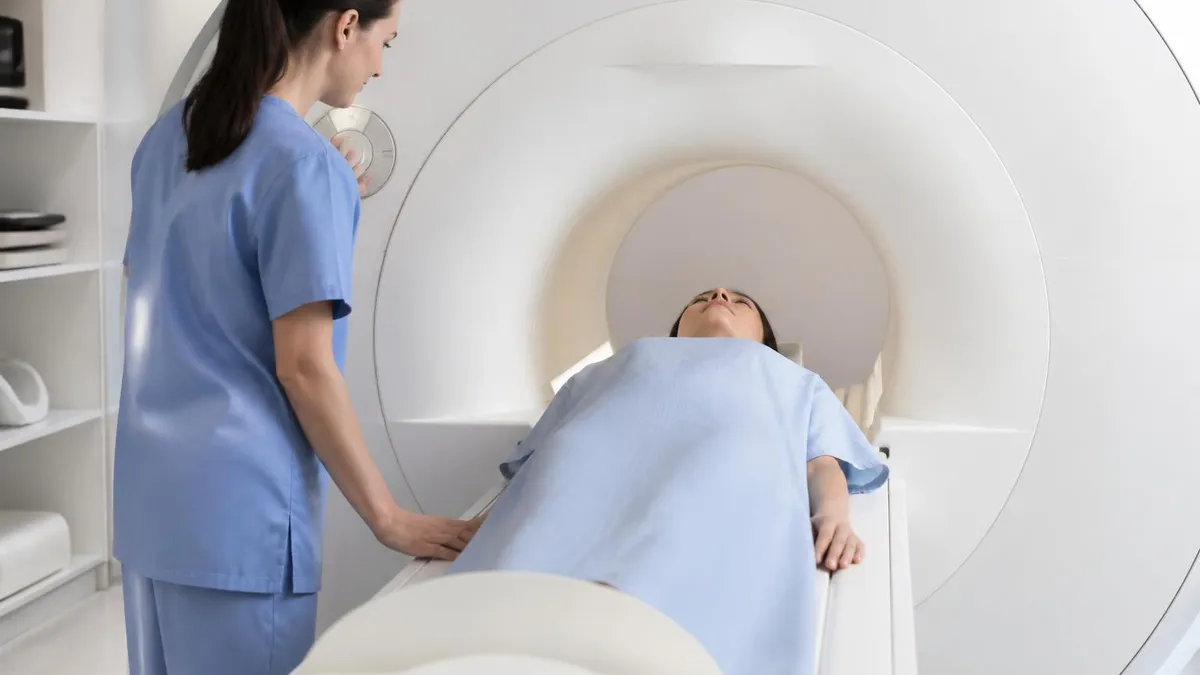
Practical tips for capturing optimal Modic changes MRI studies begin with patient positioning and coil selection. Position the patient supine with knees gently flexed over a bolster to reduce lumbar lordosis and minimize motion. Use a dedicated spine array coil with the patient centered over the lumbosacral junction. Confirm the patient is comfortable and warm, as shivering or restlessness will degrade the long T1 and T2 sequences needed for accurate signal characterization.
Protocol design should always include sagittal T1, sagittal T2, sagittal STIR or fat-saturated T2, and axial T2 at minimum. Slice thickness should be 3 to 4 mm with a 10 percent gap. Field of view should comfortably include T12 through the sacrum. Use a phase encoding direction of head-to-foot on sagittals to push wrap artifact away from the spine. Reduce TR on T1 if the protocol is running long, but never sacrifice signal-to-noise on the fluid-sensitive sequence.
Communicate with the radiologist about findings as you scan. If you notice a suspicious endplate signal pattern that looks like Type 1 edema in the setting of fever or improved inflammatory markers from the clinical history, suggest adding post-contrast T1 with fat saturation before the patient leaves the table. This proactive approach can save the patient a return visit and accelerate diagnosis of discitis or other inflammatory processes that mimic Modic changes.
For follow-up studies tracking the evolution of Modic changes, consistency in protocol matters more than any single parameter. Use the same slice thickness, same TR-TE values, same field of view, and same coil setup as the prior exam whenever possible. This makes side-by-side comparison meaningful and allows the radiologist to confidently call progression, regression, or stability without confounding variables introduced by protocol drift.
Pay attention to artifacts that can mimic Modic signal patterns. Truncation artifact at the endplate can create a thin band of altered signal. Chemical shift artifact can falsely create a dark line at the fat-water interface. Motion can blur the endplate and obscure subtle Type 1 changes. Recognize these artifacts and repeat sequences if necessary rather than letting them through to interpretation, where they may be misread as pathology.
Documentation in the technologist worksheet should note any patient-specific issues such as scoliosis, hardware, prior surgery, or implants that might affect interpretation. If the patient reports a recent infection, IV drug use, or fever, flag this for the radiologist explicitly. These clinical details transform an ambiguous Type 1 versus discitis question into a confident diagnosis when paired with the imaging findings.
Finally, invest in continued education around degenerative spine imaging. Modic changes are just one of many endplate and marrow abnormalities encountered routinely. Familiarity with Pfirrmann grading of disc degeneration, Pfaffenrath classification of Schmorl nodes, and the spectrum of subchondral marrow changes will round out your diagnostic toolkit and make every spine study you perform more clinically valuable for the patient and care team.
Sample MRI - Magnetic Resonance Imaging Practice Questions
Try these questions from our free MRI - Magnetic Resonance Imaging practice tests. The correct answer and an explanation follow each question.
Provide more coverage area without sacrificing signal-to-noise ratio by using numerous coils and receivers.
- A. Vertical
- B. Quadrature
- C. Phased array
- D. Helmholtz pair
Answer: C. Phased array
Phased array coils consist of multiple small, independent receiver coils, each with its own receiver channel. This innovative design allows for a larger field of view (coverage area) without sacrificing the high signal-to-noise ratio (SNR) typically associated with smaller coils. The signals from individual coils are then combined to form a comprehensive and high-quality image.
A patient is claustrophobic and anxious before their MRI. Which non-pharmacological intervention is most appropriate first?
- A. Refuse the exam and reschedule
- B. Explain the procedure, offer a patient communication system, and consider feet-first entry
- C. Immediately administer IV sedation
- D. Use a stronger magnetic field to shorten scan time
Answer: B. Explain the procedure, offer a patient communication system, and consider feet-first entry
Thorough patient education, reassurance, mirror/prism glasses, music headphones, and entering the bore feet-first can significantly reduce claustrophobia before pharmacological intervention.
The apparent diffusion coefficient (ADC) map is calculated to eliminate which confounding effect in DWI?
- A. T2 shine-through
- B. T1 recovery
- C. Gibbs ringing
- D. Chemical shift misregistration
Answer: A. T2 shine-through
ADC maps remove T2 shine-through by computing the diffusion coefficient from multiple b-values, isolating true diffusion restriction from long-T2 tissue signal.
The corpus callosum is best evaluated on which MRI plane for assessing callosal agenesis?
- A. Axial
- B. Coronal
- C. Sagittal
- D. Oblique
Answer: C. Sagittal
The sagittal midline plane provides the best single view of the entire corpus callosum from genu to splenium for assessing agenesis or dysgenesis.
Take the full MRI - Magnetic Resonance Imaging practice test
MRI Questions and Answers

MRI Medical Abbreviation: What MRI Stands For and Why It Matters

The History of MRI: From Discovery to Modern Medicine

Knee MRI Images: A Complete Guide to Reading, Understanding, and Interpreting Knee Scans

Noise of MRI Machine: Why MRI Scanners Are So Loud and What to Expect
MRI Alternatives: When CT, Ultrasound, X-Ray, and PET Make More Sense Than an MRI
About the Author

Medical Laboratory Scientist & Clinical Certification Expert
Johns Hopkins UniversityDr. Sandra Kim holds a PhD in Clinical Laboratory Science from Johns Hopkins University and is certified as a Medical Technologist (MT) and Medical Laboratory Scientist (MLS) through ASCP. With 16 years of clinical laboratory experience spanning hematology, microbiology, and molecular diagnostics, she prepares candidates for ASCP board exams, MLT, MLS, and specialist certification tests.
Join the Discussion
Connect with other students preparing for this exam. Share tips, ask questions, and get advice from people who have been there.
View discussion (8 replies)