
Abnormal Brain MRI ICD-10 Codes: A Complete Guide to Diagnosis Coding, Documentation, and Clinical Interpretation
🟢 Abnormal brain MRI ICD-10 codes explained — R90.0, R90.89, G93.89 and more. Complete guide for radiologists, coders, and clinicians.
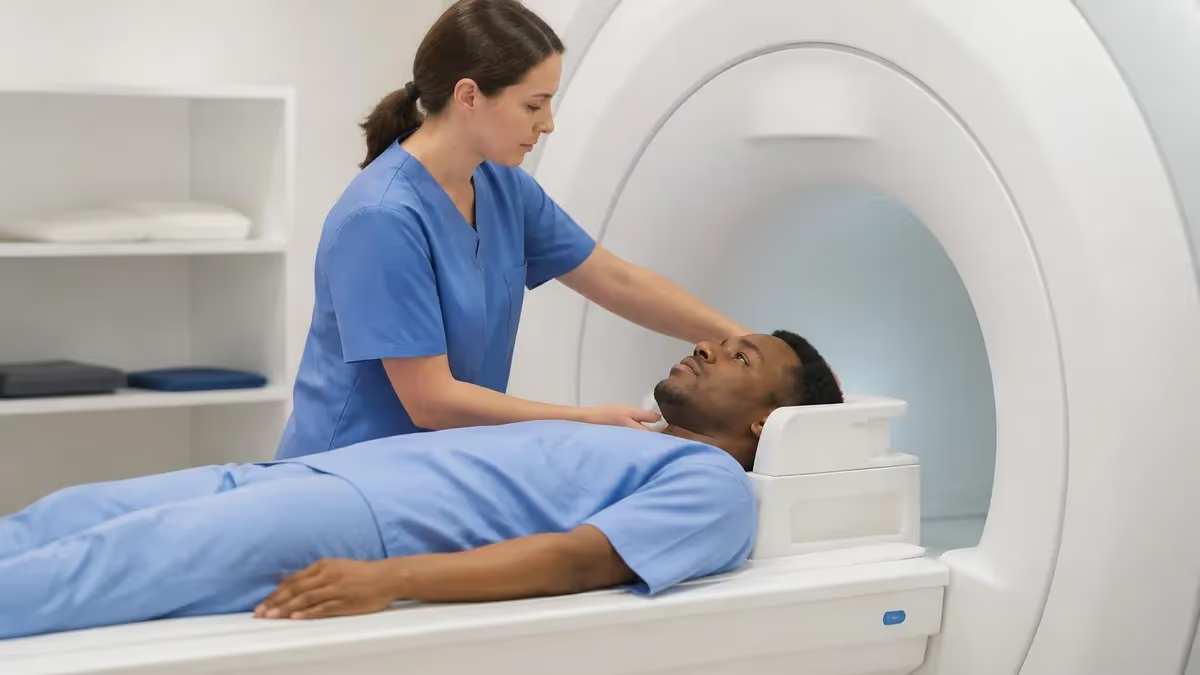
When a radiologist signs out a study with unexpected findings, the abnormal brain mri icd 10 code attached to that report becomes the gateway to reimbursement, follow-up imaging, specialist referrals, and the entire downstream clinical narrative. The International Classification of Diseases, Tenth Revision, Clinical Modification (ICD-10-CM) provides several codes that capture nonspecific abnormalities, structural lesions, vascular changes, and signal abnormalities revealed on magnetic resonance imaging of the brain. Choosing the correct code is not a clerical afterthought — it shapes how payers, primary care physicians, and neurologists understand what was actually found.
The most commonly used catch-all code is R90.0 (Intracranial space-occupying lesion found on diagnostic imaging of central nervous system), followed by R90.89 (Other abnormal findings on diagnostic imaging of central nervous system). These R-codes live in Chapter 18 of ICD-10-CM, which covers symptoms, signs, and abnormal clinical and laboratory findings not elsewhere classified. They exist precisely because radiology often identifies abnormalities before a definitive disease label can be assigned by a clinician.
However, abnormal brain mri icd 10 coding goes far beyond R-codes. Once the radiologist describes a specific lesion — a meningioma, multiple sclerosis plaques, an old lacunar infarct, white matter hyperintensities consistent with small vessel disease, or a developmental venous anomaly — the coder must shift toward a more specific diagnostic code in Chapters 6 (Diseases of the Nervous System) or 9 (Diseases of the Circulatory System). The transition from R90.0 to D32.0 or G35 reflects diagnostic certainty, not just radiologic curiosity.
For technologists, radiology residents, and registry candidates, understanding how these codes map to imaging findings is increasingly important. Insurance prior authorization, repeat imaging justification, and even the wording you choose in technologist notes can influence the final code. A scan documented as 'follow-up of incidental finding' versus 'follow-up of suspected glioma' generates entirely different billing pathways, even if the underlying images look identical. You can review the MRI medical abbreviation glossary to align your terminology with what coders expect to see.
The U.S. Centers for Medicare and Medicaid Services (CMS) updates ICD-10-CM annually on October 1, and the 2026 code set retains all the major brain MRI codes from prior years while sharpening guidance on combination coding for stroke sequelae and dementia subtypes. Outpatient imaging centers routinely deal with denied claims because of missing fifth or sixth characters, vague terms like 'changes' or 'findings,' or codes that conflict with the ordering provider's stated indication.
This guide walks through the full ecosystem of abnormal brain MRI ICD-10 codes — when to use R90.0 versus a more specific neurological code, how to document incidental findings, what payers expect for medical necessity, how to handle stroke and small vessel disease findings, and how the coding interacts with CPT codes 70551, 70552, and 70553. By the end, you will be able to read a radiology report, identify the dominant abnormality, and select an ICD-10 code that survives audit and supports appropriate downstream care.
Whether you are a coding specialist, a neuroradiologist signing high-volume worklists, a primary care physician trying to interpret what came back from the outpatient imaging center, or a registry-bound MRI technologist studying for boards, the principles below apply equally. Accurate coding starts with accurate scanning, accurate dictation, and a shared vocabulary between the reading room and the billing office.
Abnormal Brain MRI ICD-10 by the Numbers
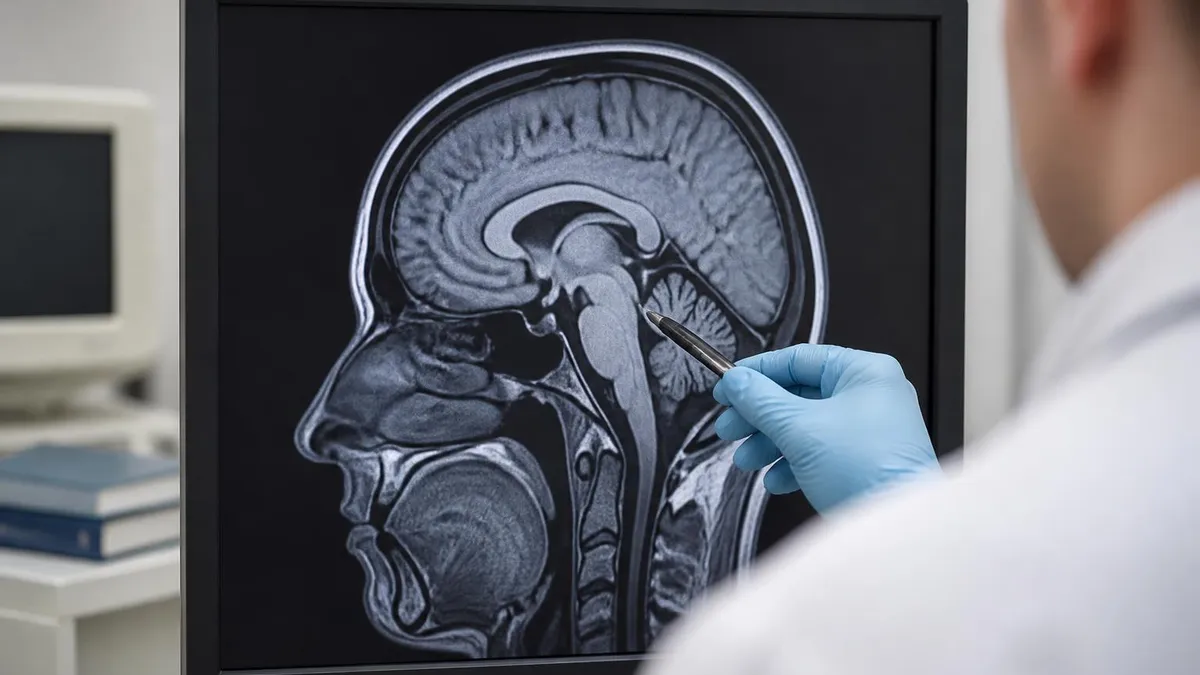
Top ICD-10 Codes Used for Abnormal Brain MRI Findings
Used when imaging identifies a mass, lesion, or focal area suspicious for tumor or other space-occupying process before a tissue diagnosis is established. Common on initial MRI reports describing meningiomas, gliomas, or unknown masses awaiting biopsy.
The default code for nonspecific findings — white matter hyperintensities, T2 signal changes, mild atrophy, or unexplained abnormalities that do not yet meet criteria for a defined disease. Highly useful for incidental, equivocal, or follow-up imaging.
Applied when the radiologist or clinician describes a brain disorder that does not fit a more specific diagnosis but is clearly pathologic. Often paired with encephalomalacia, gliosis, or post-treatment changes that have a known etiology.
Selected when small vessel ischemic disease, chronic microvascular changes, or unspecified cerebrovascular changes dominate the report. Useful when the radiologist describes 'changes consistent with chronic small vessel disease' without further qualifiers.
Used on follow-up imaging when the abnormality has resolved or is stable. Z86.73 covers personal history of TIA and cerebral infarction without residual deficits. Pair with current findings code when imaging shows old changes only.
The distinction between R90.0 and R90.89 trips up even experienced coders. R90.0 is specifically reserved for an intracranial space-occupying lesion — a mass effect, a discrete lesion with volume, something that physically takes up room inside the skull. A 1.2 cm enhancing extra-axial mass abutting the falx, a hyperintense lesion in the right frontal lobe with surrounding edema, a colloid cyst at the foramen of Monro — all of these warrant R90.0 because they describe an actual occupying lesion identified on imaging before histology is known.
R90.89 is the broader, less alarming bucket. It captures abnormal findings that are not space-occupying: scattered T2/FLAIR hyperintensities consistent with chronic small vessel ischemic disease, mild generalized cerebral volume loss, an empty sella, an arachnoid cyst that is unchanged and clinically irrelevant, or focal gliosis without mass effect. Coders should reach for R90.89 when the radiologist uses terms like 'signal abnormality,' 'changes,' 'foci,' or 'minor findings' rather than 'mass' or 'lesion.'
An important nuance: R90.89 was previously coded as R90.8 in earlier ICD-10 iterations. The fifth character was added to allow expansion, but R90.89 is now the active subcode. Submitting R90.8 without the fifth character will result in a clean denial because it is not a billable code at that level of specificity. Always verify your code against the current ICD-10-CM tabular list — the 2026 update did not change R90.89 but added clarifying instructional notes about combination coding with G-codes when both a finding and a known disorder are documented.
The relationship between abnormal brain mri icd 10 codes and clinical diagnoses is sequential. Initial imaging shows a finding → R90.0 or R90.89 is appropriate. The patient sees a neurologist, additional testing is performed, and a definitive diagnosis is reached → the coder shifts to the specific code (e.g., D32.0 for benign meningioma, G35 for multiple sclerosis, I63.9 for unspecified cerebral infarction). The R-code becomes redundant once a more specific diagnosis exists on the encounter.
However, for the radiology encounter itself, the radiologist often uses both. If the ordering provider's indication includes 'evaluate for tumor' and the imaging confirms an enhancing mass not yet biopsied, the radiology report can be coded with R90.0 plus the symptom code that prompted imaging (such as R51.9 for headache or G44.1 for vascular headache). This dual coding pattern reflects the encounter accurately for medical necessity review. A useful starting reference for understanding imaging modality choice is the MRI alternatives overview, which clarifies when MRI versus CT is the appropriate first-line study.
Documentation pitfalls are frequent. A radiologist writes 'findings concerning for demyelinating disease' but the patient has not yet been diagnosed with MS. The correct code is R90.89 (or potentially G37.9 if the radiologist explicitly states a demyelinating disorder is present), not G35. Coding G35 prematurely creates a problem-list entry that can affect insurance underwriting, life insurance applications, and the patient's medical record for years. Conservative coding — finding-based rather than disease-based — is almost always safer until a treating clinician confirms.
One more consideration: laterality and location. ICD-10 does not provide laterality codes for the brain in the R90 series (unlike, say, breast or kidney coding). The abnormality's location is captured in the radiology narrative, not in the ICD-10 code itself. This means a left frontal lesion and a right occipital lesion both receive R90.0 if they are space-occupying. Coders should not invent location modifiers; the descriptive detail belongs in the report.
MRI Practice Test Questions
Prepare for the MRI - Magnetic Resonance Imaging exam with our free practice test modules. Each quiz covers key topics to help you pass on your first try.
MRI Knowledge
MRI Exam Questions covering Knowledge. Master MRI Test concepts for certification prep.
MRI Physics
Free MRI Practice Test featuring Physics. Improve your MRI Exam score with mock test prep.
MRI Anatomy and Pathology
MRI Test Prep for MRI Anatomy and Pathology. Practice MRI Quiz questions and boost your score.
MRI Anatomy and Positioning
MRI Questions and Answers on MRI Anatomy and Positioning. Free MRI practice for exam readiness.
MRI Contrast Agents
Free MRI Quiz on MRI Contrast Agents. MRI Exam prep questions with detailed explanations.
MRI Patient Care and Positioning
MRI Practice Questions for MRI Patient Care and Positioning. Build confidence for your MRI certification exam.
Abnormal Brain MRI ICD-10 by Finding Category
Vascular findings on brain MRI range from acute infarcts to chronic small vessel ischemic disease. Acute or subacute infarcts demonstrated on diffusion-weighted imaging are coded with I63 codes — I63.9 for unspecified cerebral infarction, or more specific subcodes when the vessel territory is known. Old lacunar infarcts without current deficit are coded as Z86.73 (personal history of TIA and cerebral infarction without residual deficits) plus the current imaging finding.
Chronic microvascular ischemic changes — those scattered FLAIR hyperintensities radiologists describe as 'consistent with small vessel disease' — typically receive I67.9 (cerebrovascular disease, unspecified) or R90.89 depending on documentation. Microhemorrhages on susceptibility-weighted imaging may suggest cerebral amyloid angiopathy (I68.0) or hypertensive microangiopathy, but unless the diagnosis is explicitly stated by a clinician, R90.89 remains the safer code.
Coding with R90.0/R90.89 vs Specific Disease Codes
- +R-codes accurately reflect diagnostic uncertainty before tissue confirmation
- +Avoids prematurely labeling patients with serious diagnoses that affect insurance
- +Supports medical necessity for follow-up imaging without locking in a disease
- +Compatible with most payer prior-authorization templates for diagnostic MRI
- +Simplifies coding when the radiologist describes findings, not diagnoses
- +Reduces audit risk by matching radiology dictation verbatim
- −May trigger additional payer review for repeat imaging if used repeatedly
- −Less specific codes can yield lower reimbursement for downstream specialist visits
- −Some payers require disease-specific codes for advanced sequences like MR spectroscopy
- −Can confuse problem-list maintenance if not updated after diagnosis is established
- −Does not capture laterality or location, which must live in the narrative
- −Misuse of R90.0 for non-space-occupying findings is a common denial reason
Pros and Cons at a Glance
| Pros | Cons |
|---|---|
| R-codes accurately reflect diagnostic uncertainty before tissue confirmation | May trigger additional payer review for repeat imaging if used repeatedly |
| Avoids prematurely labeling patients with serious diagnoses that affect insurance | Less specific codes can yield lower reimbursement for downstream specialist visits |
| Supports medical necessity for follow-up imaging without locking in a disease | Some payers require disease-specific codes for advanced sequences like MR spectroscopy |
| Compatible with most payer prior-authorization templates for diagnostic MRI | Can confuse problem-list maintenance if not updated after diagnosis is established |
| Simplifies coding when the radiologist describes findings, not diagnoses | Does not capture laterality or location, which must live in the narrative |
Documentation Checklist for Abnormal Brain MRI ICD-10 Coding
- ✓Verify the ordering provider's indication is captured verbatim on the requisition
- ✓Confirm the radiology report explicitly states whether findings are space-occupying
- ✓Use R90.0 only when a discrete lesion with mass is described, not vague signal change
- ✓Default to R90.89 for white matter changes, atrophy, or incidental signal abnormalities
- ✓Pair the abnormal finding code with the symptom code that prompted imaging
- ✓Avoid coding a definitive disease (e.g., G35) without clinician confirmation
- ✓Check the fifth and sixth characters — R90.8 alone is not billable; use R90.89
- ✓Update problem-list codes once pathology or specialist confirms a diagnosis
- ✓Document medical necessity for follow-up MRI with both the prior finding and current indication
- ✓Cross-reference CPT code (70551, 70552, or 70553) with the appropriate ICD-10 finding
- ✓Review payer LCD policies for brain MRI prior authorization requirements annually
- ✓Educate technologists to flag dictation ambiguity before the report is finalized
R90.89 is the safe default for uncertain findings
When in doubt, R90.89 is almost always defensible. It accurately reflects that something abnormal was identified without committing to a diagnosis the radiologist cannot establish from imaging alone. The radiologist's job is to describe; the clinician's job is to diagnose; the coder's job is to translate what was documented — not to leap ahead of either party.
Reimbursement for brain MRI hinges on three pillars: the CPT code (70551 without contrast, 70552 with contrast, 70553 without and with contrast), the ICD-10 diagnosis code(s) supporting medical necessity, and the documentation that links the indication to the finding. Medicare and most commercial payers publish Local Coverage Determinations (LCDs) that list which ICD-10 codes support medical necessity for each CPT. R90.0 and R90.89 are nearly universally accepted, but they alone do not always satisfy prior authorization for repeat imaging.
For the initial diagnostic MRI, the dominant ICD-10 is usually a symptom code (R51.9 headache, R42 dizziness, R56.9 seizure unspecified, R20.2 paresthesia) plus the radiology finding code if abnormal. The symptom code justifies why imaging was ordered; the finding code documents what was discovered. Payers want to see both. A claim submitted with only R90.0 and no symptom code risks denial because there is no documented reason the patient was scanned in the first place.
Follow-up imaging carries different requirements. Most LCDs require either a stable established diagnosis (such as D32.0 for known meningioma) or documented new or worsening symptoms. Simply repeating an MRI 'to follow' R90.89 from six months ago without new symptoms is often denied. The radiologist's recommendation for follow-up in the prior report is helpful but not always sufficient — the ordering provider must document medical necessity independently in the current encounter.
Contrast administration adds another layer. CPT 70552 and 70553 require justification for gadolinium use, typically a suspicion of tumor, infection, demyelinating disease, or vascular malformation. R90.0 supports contrast use because a space-occupying lesion warrants characterization. R90.89 alone may not — the ordering provider must articulate why contrast is needed. With the heightened awareness around gadolinium retention, payers increasingly scrutinize contrast claims, especially for repeat exams.
The CPT-ICD-10 pairing also drives RVU calculation and downstream specialty referrals. A patient coded with R90.0 is much more likely to be referred to neurosurgery; one coded with R90.89 typically goes to neurology or back to primary care. The code shapes the clinical pathway. This is why educating ordering providers about the difference between 'lesion' and 'finding' in their consult notes matters — it influences which specialty owns the workup. A historical perspective on imaging modality evolution can be found in the history of MRI, which contextualizes how today's coding system evolved.
Out-of-pocket cost varies widely. Medicare reimbursement for 70551 in 2025 averaged around $290 in non-facility settings; commercial payers often pay $450 to $800 for the same code. Contrast-enhanced studies (70552, 70553) command higher reimbursement, typically $600 to $1,200 and $900 to $1,800 respectively. Patient responsibility under high-deductible plans can reach $2,000 to $3,500 before deductible. Accurate coding ensures the patient is billed correctly and the facility is reimbursed appropriately.
Audit risk concentrates around three areas: upcoding R90.89 to a specific disease code without documentation, using R90.0 for non-space-occupying findings, and bundling repeat brain MRIs without new clinical justification. Internal audits should sample 5-10% of brain MRI claims monthly, focusing on radiology report language versus assigned code. Discrepancies should trigger coder education, not just claim corrections.
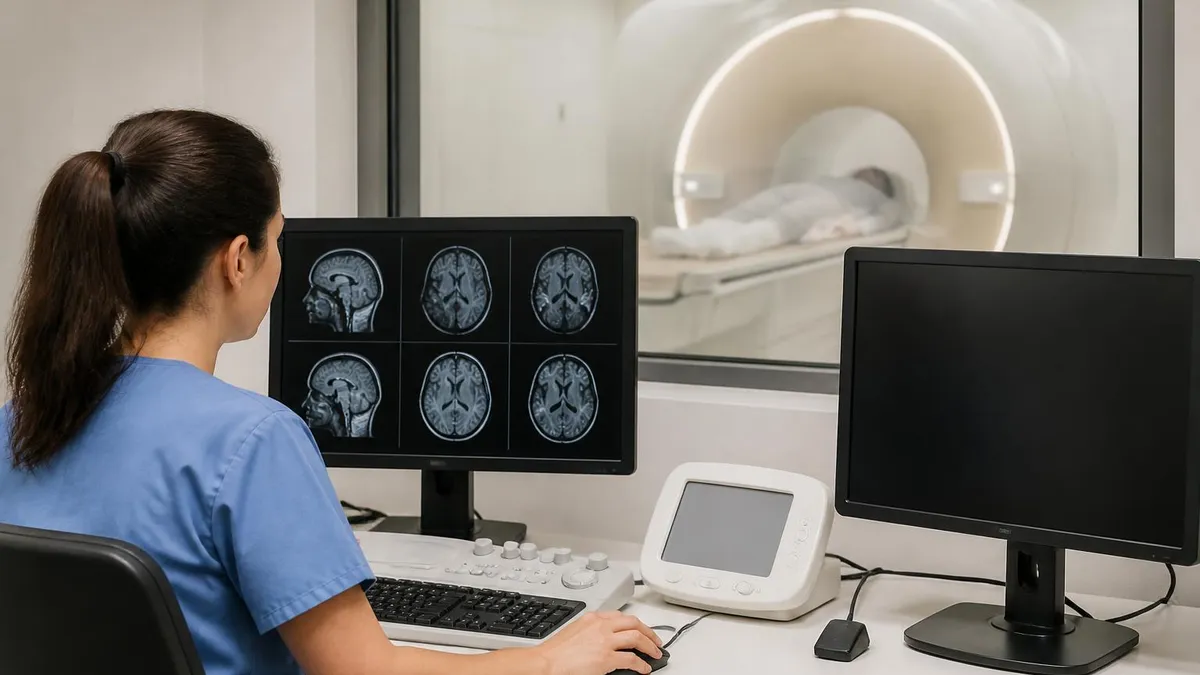
A radiology report stating 'findings could represent demyelinating disease — clinical correlation recommended' is NOT a diagnosis of multiple sclerosis. Coding G35 in this scenario is a common audit failure. Use R90.89 until a neurologist confirms the diagnosis per established clinical criteria. The same caution applies to glioma, dementia, and Parkinson's disease — radiology suggests; clinicians diagnose.
The most common abnormal brain mri icd 10 coding errors fall into predictable patterns. The first is the 'specificity creep' — coders selecting a more specific disease code than the radiology report supports, usually because the clinician's history hinted at a diagnosis. If the radiology dictation does not establish the diagnosis, the coder cannot assign that diagnosis code based on the imaging encounter alone. The clinician's office can code the disease in a separate encounter; the imaging facility codes what was found.
The second error is the opposite — under-coding by sticking with R90.89 when the report clearly establishes a more specific condition. If the radiologist writes 'extra-axial mass with dural tail consistent with meningioma,' the appropriate code is D32.0 once histology confirms, but R90.0 is appropriate at the imaging encounter. If the radiologist confidently writes 'imaging features diagnostic of meningioma' without histologic confirmation, many coders still default to D32.0 with payer acceptance, but R90.0 remains defensible. Internal policy should standardize this choice.
Third, coders sometimes miss combination coding requirements. For example, a patient with a prior stroke who undergoes follow-up MRI showing chronic infarct deserves both Z86.73 (personal history of cerebral infarction without residual deficits) and the current imaging finding. If residual neurologic deficit exists, the appropriate I69 sequela code applies instead. The 2026 ICD-10-CM guidelines reinforce that I69 sequela codes can be used at any point after the acute event, as long as the documentation supports the residual condition.
Fourth, technologists and front-office staff sometimes truncate or alter the ordering indication, which propagates downstream coding errors. If the order says 'rule out tumor' and the technologist's worksheet says 'headache,' the coder is left guessing. Training intake staff to preserve the original order language verbatim is one of the highest-use improvements an imaging center can make. Many denials trace back to this single point of failure. For reference on imaging anatomy that supports more accurate dictation, see the knee MRI images guide for non-CNS pattern recognition that applies the same documentation principles.
Fifth, payers occasionally update their LCDs mid-year, removing or restricting ICD-10 codes that previously supported medical necessity. Compliance teams should subscribe to MAC (Medicare Administrative Contractor) bulletins for their region. A code that worked in January may not work in July, and claims submitted with the now-restricted code will be denied retroactively. Annual coder recertification through AHIMA or AAPC also helps catch these changes early.
Sixth, the interaction between abnormal brain MRI findings and Z-codes is frequently mishandled. Z01.89 (encounter for other specified special examinations) is sometimes used for screening MRI of the brain, but commercial payers rarely cover true screening MRI in asymptomatic patients. The order must reflect a symptom, sign, or established indication — otherwise the claim is genuinely non-covered, regardless of which Z-code is appended.
Finally, technologist documentation of MRI safety screening, contrast administration, and patient symptoms during the scan can influence coding. A claustrophobic patient who requires sedation may add CPT 99152 with a separate ICD-10 code (F40.240 for claustrophobia). A patient who experienced a contrast reaction needs documentation supporting any future limitation. These ancillary codes complete the picture and reduce the chance of claim rework. Familiarity with the broader scanner experience — including the MRI machine noise environment — helps technologists document patient factors that may justify additional coding.
For practical workflow, start every brain MRI coding decision by reading the impression section of the report first, not the findings section. The impression is the radiologist's summary judgment and should be the primary driver of the ICD-10 code. The findings section provides supporting detail but often contains incidental notes that do not warrant codes (a tiny pineal cyst, a few scattered T2 foci in an elderly patient with otherwise normal imaging). Code the headline, not every footnote.
Build a coding cheat sheet specific to your imaging center's case mix. A neurology-heavy outpatient center will see far more R90.89, G35 (after confirmation), and I67.9 than a trauma-heavy ED feed, which will skew toward S06.x codes for intracranial injury sequelae. Customizing reference tools to the work that actually crosses your desk reduces lookup time and improves consistency. Coders who memorize the top 20 codes for their setting handle 80% of work without referencing the tabular list.
Use structured radiology templates whenever possible. Modern voice recognition systems can integrate ICD-10 suggestions into the report-signing workflow, prompting radiologists to confirm or modify the code at signoff. This 'code-at-source' approach is more accurate than retrospective coder review because the radiologist is closest to the imaging interpretation. Studies from RSNA have shown 20-30% reductions in coding errors when radiologists actively participate in code assignment rather than leaving it entirely to billing staff.
For follow-up patients, always pull the prior report before coding the current study. The continuity tells the story: a stable D32.0 meningioma followed for five years should stay D32.0; a newly enlarging lesion may need re-coding to a malignant code (D43.0 for uncertain behavior, or C71.x if confirmed malignant). Annual surveillance imaging carries different medical necessity thresholds than new symptomatic imaging, and the ICD-10 must match.
Stay current on payer-specific quirks. Some Medicare Advantage plans require very specific code combinations for advanced sequences like MR spectroscopy (CPT 76390) or functional MRI (CPT 70554/70555). A claim with the right brain MRI ICD-10 but wrong supporting code for the advanced sequence will partial-pay or deny. Quarterly review of the top denied claims is the fastest way to identify these patterns and update internal coding rules.
For technologists studying for the ARRT MRI registry or extending their knowledge, understanding how scan protocols map to coded indications builds clinical judgment. Knowing that a 'tumor protocol' MRI includes pre- and post-contrast T1, FLAIR, DWI, SWI, and often MR spectroscopy helps the technologist anticipate which sequences must be completed for the study to support the suspected diagnosis. Incomplete protocols lead to non-diagnostic studies, repeat scans, and coding rework — all of which are avoidable with strong technique.
Finally, build relationships across the workflow. Coders who understand imaging, technologists who understand coding, and radiologists who appreciate both create a high-functioning department. Quarterly cross-training sessions where coders observe scans and technologists shadow coders pay dividends in claim integrity, reimbursement velocity, and inter-departmental respect. The patient ultimately benefits because the care pathway — from order to scan to report to bill to specialist referral — runs smoothly without administrative friction.
Sample MRI - Magnetic Resonance Imaging Practice Questions
Try these questions from our free MRI - Magnetic Resonance Imaging practice tests. The correct answer and an explanation follow each question.
Which section of the ARRT MRI content specifications covers pulse sequence selection and acquisition parameter optimization?
- A. Physics and Instrumentation
- B. Patient Care and Education
- C. Image Production
- D. Procedures
Answer: C. Image Production
Image Production covers acquisition parameters, pulse sequences, and image quality optimization.
The term 'T1 mapping' in cardiac MRI using gadolinium is used to quantify which clinically important tissue property?
- A. Myocardial perfusion rate
- B. Extracellular volume fraction (ECV) as a marker of fibrosis
- C. Ejection fraction
- D. Coronary artery stenosis grade
Answer: B. Extracellular volume fraction (ECV) as a marker of fibrosis
Pre- and post-contrast T1 mapping allows calculation of the extracellular volume (ECV), which is an established quantitative biomarker of diffuse myocardial fibrosis.
The gradient subsystem's primary goal is to
- A. Everything mentioned
- B. Choose the plane of slices.
- C. Encode the MR signal spatially
- D. Choose the imaging plane.
Answer: A. Everything mentioned
The gradient subsystem is crucial for multiple functions in MRI. It generates varying magnetic fields that enable precise slice selection by altering the Larmor frequency across the patient. Additionally, these gradients spatially encode the MR signal by creating frequency and phase shifts, which are essential for reconstructing a detailed image. Therefore, all listed options are primary goals of the gradient subsystem.
The placement of the slice is established by the
- A. The RF pulse's transmit frequency
- B. phase difference
- C. Radiofrequency coil's transmit frequency
- D. frequency of the RF pulse received
Answer: A. The RF pulse's transmit frequency
The placement of the slice in MRI is precisely established by the transmit frequency of the RF pulse. When a magnetic field gradient is applied, protons at different locations precess at different frequencies. By selecting a specific RF transmit frequency, only protons resonating at that exact frequency within the gradient field will be excited, thereby defining the slice's position.
Take the full MRI - Magnetic Resonance Imaging practice test
MRI Questions and Answers
MRI Medical Abbreviation: What MRI Stands For and Why It Matters
The History of MRI: From Discovery to Modern Medicine
Knee MRI Images: A Complete Guide to Reading, Understanding, and Interpreting Knee Scans
Noise of MRI Machine: Why MRI Scanners Are So Loud and What to Expect
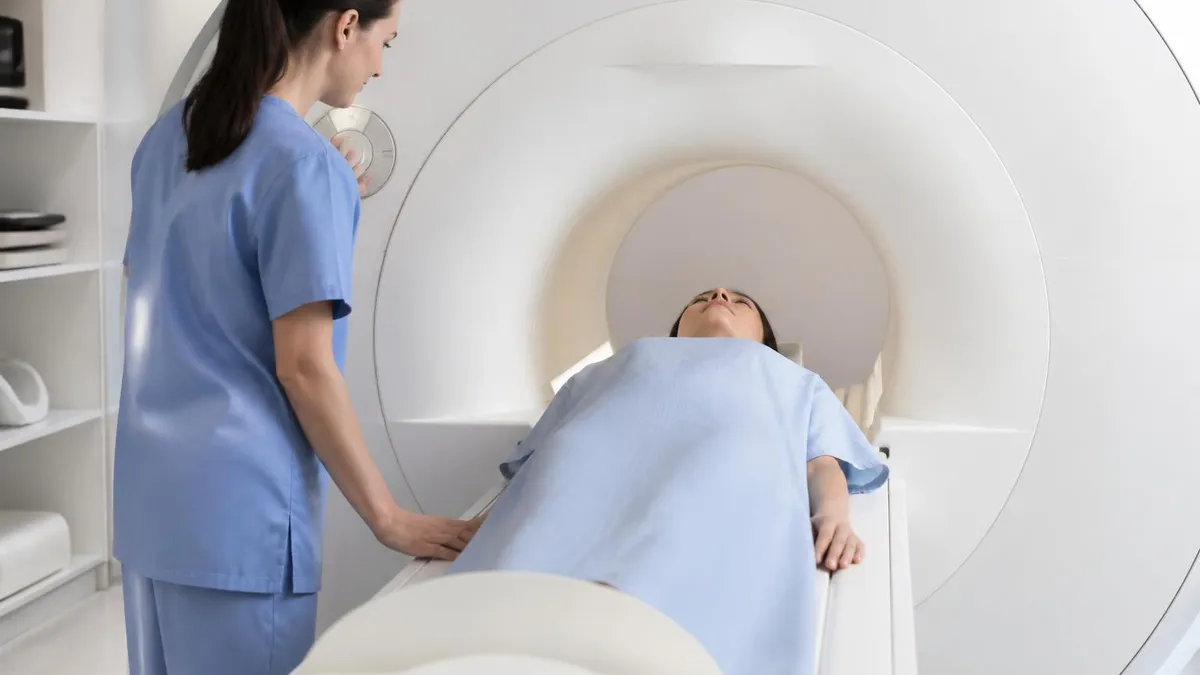
MRI Alternatives: When CT, Ultrasound, X-Ray, and PET Make More Sense Than an MRI
About the Author

Medical Laboratory Scientist & Clinical Certification Expert
Johns Hopkins UniversityDr. Sandra Kim holds a PhD in Clinical Laboratory Science from Johns Hopkins University and is certified as a Medical Technologist (MT) and Medical Laboratory Scientist (MLS) through ASCP. With 16 years of clinical laboratory experience spanning hematology, microbiology, and molecular diagnostics, she prepares candidates for ASCP board exams, MLT, MLS, and specialist certification tests.
Join the Discussion
Connect with other students preparing for this exam. Share tips, ask questions, and get advice from people who have been there.
View discussion (8 replies)