
How to Take the Montreal Cognitive Assessment: Complete Guide to the MoCA Exam
Learn exactly how to take the Montreal Cognitive Assessment 🧠: what to bring, how the MoCA is administered, scoring, and how to prepare.

If a doctor, neurologist, or memory clinic has told you it's time to schedule a MoCA, the first question most people have is simple: how do you actually take the Montreal Cognitive Assessment? The test itself only takes about ten minutes, but knowing what happens before, during, and after the appointment makes a real difference in how comfortable — and how accurately represented — you or your loved one will be on test day.
The MoCA is a short, paper-based cognitive screening tool that clinicians use to check memory, attention, language, and visuospatial skills. It isn't an IQ test, and it isn't something you study for the way you'd study for an exam. But understanding the structure ahead of time genuinely helps, because a lot of low scores come not from cognitive impairment but from simple unfamiliarity with the task format — nerves, unclear instructions, or a rushed environment.
This guide walks through exactly how the assessment is administered, what each section asks you to do, how you can take the Montreal Cognitive Assessment at home versus in a clinic, and what happens with your results afterward. Whether you're the patient, a family caregiver, or a clinician preparing a patient, this covers the whole process from start to finish.
MoCA Test-Day Basics
Most people take the MoCA in a clinical setting — a neurologist's office, a primary care visit, a memory clinic, or as part of a pre-surgical cognitive baseline. A trained examiner sits across from you, one on one, in a quiet room with no distractions, since background noise or interruptions can genuinely affect attention-based items like the trail-making task or digit span.
The examiner reads the instructions exactly as written on the official MoCA form, without paraphrasing or offering hints, because even small wording changes can shift how easy or hard a task feels. This standardization is what makes the test comparable across different patients and different clinics.
You'll be given a pencil and asked to complete several written tasks directly on the test form, while other items — like word recall or verbal fluency — are answered out loud. The examiner records your responses and times certain sections, particularly the trail-making and clock-drawing tasks, since speed and accuracy both factor into scoring on some items.
It's worth knowing going in that the examiner is required to remain neutral throughout — no smiling, frowning, or verbal cues about whether an answer is right or wrong. That can feel a little clinical if you don't expect it, but it's a standard part of keeping the MoCA cognitive test consistent from one administration to the next.
The setting itself matters more than most people expect. A busy waiting room right before the appointment, a television playing in the background, or a phone buzzing on the table can all quietly chip away at your attention score before the test even starts. Most clinics now ask front-desk staff to route MoCA patients straight into a private exam room rather than having them wait in a shared area immediately beforehand, precisely because that transition affects performance.
You may also be tested by different types of professionals depending on why the assessment was ordered. A neurologist might administer it as part of a broader workup for memory complaints, while a surgical team might order it as a routine pre-operative baseline, and a geriatrician might use it during a annual wellness visit. The test itself doesn't change based on who orders it — only the reason it was requested does.
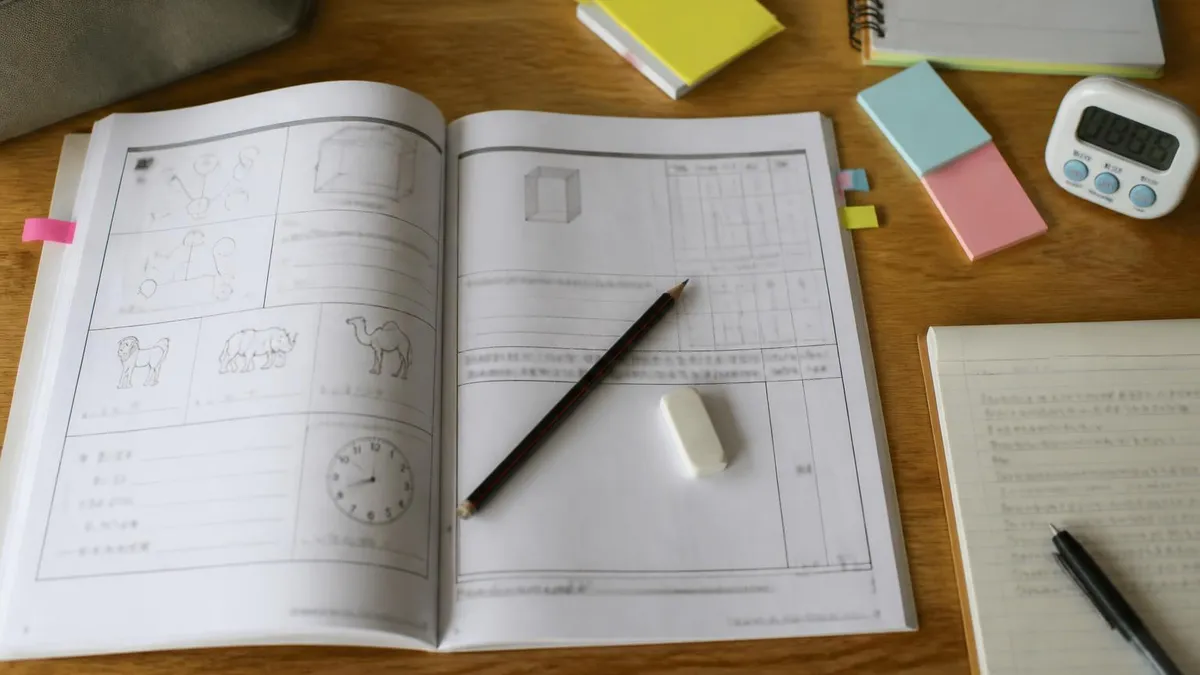
You don't need to study for the MoCA the way you would for a school exam, but a little preparation removes unnecessary friction on test day. Bring glasses or hearing aids if you normally use them, since several tasks depend on clearly seeing shapes and clock numbers or clearly hearing spoken words and instructions.
Get a good night's sleep beforehand if possible, and try to schedule the appointment for a time of day when you're typically more alert — many clinics will accommodate a morning slot for patients who report feeling sharper earlier in the day. Fatigue and drowsiness are common, correctable causes of an artificially low score.
Tell the examiner in advance about any physical limitations — a tremor that affects handwriting, limited vision in one eye, or a hearing difference — so they can note it alongside your results. Scores are always interpreted in context, and a documented physical factor helps a clinician avoid over-reading a low score on the drawing or writing tasks as a memory or reasoning problem.
There's genuinely nothing to memorize beforehand. Reviewing sample questions can reduce anxiety by making the format feel familiar, which is different from trying to memorize specific answers — the actual test content changes slightly between versions, so rehearsing exact responses won't help and isn't the point.
If English isn't your first language, ask ahead of time whether a validated translated version is available and whether an interpreter or bilingual examiner can be scheduled. Taking the test in a language you're less comfortable in can lower scores on the language and fluency items in a way that has nothing to do with actual cognitive ability, so this is worth raising during scheduling rather than discovering on the day of the appointment.
It also helps to eat a normal meal beforehand and avoid excessive caffeine or alcohol the night before, since both can affect attention and short-term memory in ways that are unrelated to your baseline cognitive function. Clinics don't typically require fasting for the MoCA, so there's no need to skip breakfast the way you might for a blood draw.
What Each Section Actually Asks You to Do
You'll connect numbers and letters in an alternating trail-making task, copy a 3-D cube drawing, and draw a clock face showing a specific time — usually ten past eleven. This section checks planning, visual organization, and fine motor coordination together.
Plan on roughly ten to fifteen minutes for the assessment itself, though clinics often build in extra time before and after for check-in, explaining the process, and discussing results, so the full appointment might run closer to thirty minutes to an hour.
There's no break in the middle — the MoCA is designed to be administered in one continuous sitting so that fatigue and attention stay comparable across different patients. If you need a moment, it's fine to say so, but most people find the pace comfortable since each task only takes a minute or two.
The examiner won't tell you your score during the test, and typically won't confirm whether individual answers were correct as you go, since that feedback could change how you approach later items. That neutral pacing is normal and isn't a sign that anything is wrong.
Some patients find the pace of certain timed tasks — like the trail-making test or the serial-sevens subtraction — a bit stressful in the moment, but the examiner isn't judging speed alone. Most items credit a correct final answer even if it takes a few extra seconds, and the time limits are generous enough that a calm, methodical approach usually works better than rushing.
If you make a mistake partway through a task, it's fine to correct yourself out loud — examiners are trained to note self-corrections, and in several sections a corrected answer still counts in your favor. Don't assume one stumble means the whole section is lost; keep working through it the way you would any other timed activity.

Test-Day Checklist
Several tasks depend on clear vision and hearing, so bring anything you normally use for daily reading or conversation.
Fatigue is a common, correctable cause of a low score, so aim for your normal sleep routine the night before.
Tell the examiner about tremors, vision issues, or hearing loss so results can be interpreted in the right context.
Reduces rushed, stressful starts that can affect attention and concentration items right from the beginning.
If English isn't your first language, ask whether a validated translated form or interpreter can be arranged.
The MoCA is scored out of 30 points total, with an extra point added for patients who have 12 years of formal education or fewer, to help offset any educational disadvantage on certain items. A score of 26 or above is generally treated as within the normal range, though clinicians look at the whole picture rather than a single number.
Your examiner or ordering physician will typically review the results with you at the same visit or a scheduled follow-up, explaining which domains — memory, attention, language, visuospatial skills — scored lower and what that might mean in context. A single MoCA score is never used alone to diagnose a condition like dementia or mild cognitive impairment; it's a screening tool that flags whether a fuller neuropsychological evaluation is worth pursuing.
If your score is lower than expected, ask your provider whether factors like fatigue, anxiety, hearing, vision, or a language barrier during testing could have played a role, and whether a repeat test or referral for further evaluation makes sense. Many people take the MoCA more than once over months or years as part of ongoing monitoring, so a single result is really just one data point in a longer picture.
Results are usually recorded directly in your medical chart alongside the date, the version of the form used, and any relevant conditions noted by the examiner. If you switch providers or see a specialist later, ask for a copy of your MoCA results so the new provider has a baseline to compare against, rather than starting from zero on your next assessment.
In some cases, particularly when a first MoCA score sits right at the borderline, a physician will recommend retesting after a set interval — often three to six months — rather than jumping straight to more intensive testing. This gives a clearer picture of whether a score reflects a stable baseline, a temporary dip from an unrelated factor like illness or medication changes, or an actual trend worth investigating further.
Knowing what to expect turns the Montreal Cognitive Assessment from an intimidating unknown into a short, manageable appointment. The format is standardized on purpose — the same ten-minute structure whether you're being tested at a neurologist's office, a geriatric clinic, or as part of a pre-surgical work-up — so once you understand the sections, you understand what nearly every version of the test will ask of you.
If a loved one is the one being tested, the most useful thing you can do is help them arrive rested, with their glasses or hearing aids in hand, and without extra stress about the outcome. A calm, prepared test-taker almost always performs closer to their true cognitive baseline than a rushed, anxious one.
Once you've been through the process once, later MoCA visits tend to feel far more routine, since the structure doesn't change between administrations — only the specific words, numbers, and drawing prompt do, to prevent memorization from affecting repeat testing. If you'd like a deeper look at how MoCA scoring actually works domain by domain, or want to compare the full MoCA test before your next appointment, both are worth reading alongside this guide.
Taking the MoCA in 2026
Most memory clinics and primary care offices still administer the MoCA in person, one on one, following the official standardized script. A small but growing number of telehealth programs offer a remote, examiner-guided version over video for follow-up screenings, but the in-person format remains the default for a first-time or diagnostic assessment.
Officially, the diagnostic MoCA is meant to be administered by a trained clinician, in person or over a supervised video call — not taken independently as a self-scored home test. That said, practice versions and sample questions modeled on the real format are widely available for familiarization, and using them beforehand is a legitimate way to reduce anxiety and understand the task types.
Just keep the distinction clear: a self-administered practice run can help you feel prepared, but it isn't a substitute for the scored, examiner-led version your doctor uses to make clinical decisions. If you're a caregiver looking to gauge whether a loved one might be experiencing changes, informal observation and a conversation with their physician is a better next step than trying to self-score an informal version at home.
Telehealth-based MoCA administration has grown since it was formally validated for remote use, and many clinics now offer it as an option for follow-up screenings, particularly for patients who live far from a specialist or have mobility limitations. The video version still requires a live, trained examiner walking through the same standardized script — it simply moves the same process onto a screen rather than removing the examiner entirely.
One thing to watch for with any "free MoCA test" found online is whether it's clearly labeled as a practice or educational tool versus something claiming to give a diagnostic result. No online quiz, regardless of how closely it mirrors the real form, can replace a clinician's trained observation of how you approach each task — things like hesitation, self-correction, and handedness all factor into a proper clinical interpretation that a self-scored web page simply can't capture.
A few avoidable mistakes account for a surprising share of lower-than-expected MoCA scores. Rushing through the clock-drawing task without reading the exact instruction — a specific time, drawn on a blank circle with all twelve numbers placed correctly — is one of the most common, since the item scores planning and spatial organization as much as drawing ability. Take the extra few seconds to confirm you understood the exact time requested before you start drawing.
Another frequent slip happens on the delayed recall section: patients sometimes try to rehearse the five words silently throughout the rest of the test instead of staying focused on each new task as it comes. Splitting attention that way often hurts performance on the intervening tasks without meaningfully improving recall later, since the delayed-recall item is designed to test genuine memory consolidation, not short-term rehearsal.
Anxiety itself is one of the biggest score-suppressing factors clinicians see, especially in patients who've heard family members talk about a MoCA or MMSE in the context of a dementia diagnosis and walk in already fearing the worst. Reminding yourself — or a loved one — that this is a routine screening tool used for many reasons besides memory concerns, including pre-surgical baselines and general wellness visits, can genuinely lower the anxiety that otherwise chips away at attention-heavy items.
Finally, some patients try to answer too quickly on the serial-sevens subtraction task and lose track of the running total partway through. Slowing down and saying each number out loud as you calculate it, rather than trying to do the whole sequence silently, tends to produce more accurate results without taking meaningfully longer.
In-Person vs. Telehealth MoCA: Pros and Cons
- +In-person testing lets the examiner directly observe handedness, hesitation, and fine motor control during drawing tasks
- +Telehealth MoCA reduces travel burden for patients with mobility limitations or those in rural areas
- +Both formats use the same standardized script, so results are comparable between visits
- +In-person visits make it easier to bring a family member into the waiting room for support
- +Remote administration can shorten wait times for a follow-up screening
- −Telehealth requires a stable internet connection and a quiet, private space at home
- −Some visuospatial items are harder for an examiner to verify precisely over video
- −In-person visits require travel and time off for the patient or caregiver
- −Not every clinic currently offers a validated remote MoCA option
- −Technical issues during a video call can interrupt the standardized pacing of certain timed tasks
Before You Leave for Your Appointment
- ✓Bring your glasses and/or hearing aids
- ✓Bring a list of current medications if this is a first visit
- ✓Get a normal night's sleep beforehand
- ✓Arrive 10-15 minutes early to reduce rushing
- ✓Mention any tremor, vision, or hearing issues to the examiner
- ✓Bring a family member if you'd like support in the waiting room
- ✓Eat a normal meal and skip excess caffeine or alcohol the night before
- ✓Ask ahead about a translated version if English isn't your first language
- ✓Bring your insurance card and photo ID for check-in
How to Take the MoCA: Questions and Answers

Montreal Cognitive Assessment (MoCA): Scoring, Domains & Use

MoCA Cut Off Scores: Understanding the Montreal Cognitive Assessment Cutoff

Montreal Cognitive Assessment Printable: Complete Guide to the MoCA Practice Test

MoCA Test vs MMSE: Key Differences, Scoring, and Which Cognitive Assessment to Use

Montreal Cognitive Assessment Online Test 2026: Free Questions & Answers
About the Author

Educational Psychologist & Academic Test Preparation Expert
Columbia University Teachers CollegeDr. Lisa Patel holds a Doctorate in Education from Columbia University Teachers College and has spent 17 years researching standardized test design and academic assessment. She has developed preparation programs for SAT, ACT, GRE, LSAT, UCAT, and numerous professional licensing exams, helping students of all backgrounds achieve their target scores.
Join the Discussion
Connect with other students preparing for this exam. Share tips, ask questions, and get advice from people who have been there.
View discussion (8 replies)