

MES Practice Test
Updated October 2026Facts verified Oct 31, 2026 against American Council on Exercise
The American Council on Exercise (ACE) Medical Exercise Specialist (MES) certification equips fitness with the knowledge and skills necessary to work with individuals facing medical challenges or chronic health conditions. Certified Medical Exercise Specialists bridge the gap between fitness and healthcare, providing safe, evidence-based exercise programs for clients managing conditions such as arthritis, heart disease, diabetes, and more. Practice with the free MES - ACE Medical Exercise Specialist practice test on PracticeTestGeeks (9 questions with answer explanations).
Test-takers preparing for eju will find our EJU practice test 2026 invaluable for mastering the content and format before exam day.
The MES has 150 questions, takes about 3 hours and costs $499[1][2] (American Council on Exercise, verified Oct 24, 2026).
- The ACE Medical Exercise Specialist exam has 150 multiple-choice questions, of which 125 are scored and 25 are unscored experimental items.[1]
- Candidates have three hours to complete the 150-question ACE Medical Exercise Specialist exam, unless given special time accommodations.[1]
- The ACE Medical Exercise Specialist exam is passed with a scaled score of at least 500 on a 200–800 scale.[1]
- The ACE Medical Exercise Specialist (CMES) exam costs $499 for a first attempt, for computer-based testing in the U.S./Canada and internationally.[2]
- The ACE Medical Exercise Specialist (CMES) exam retake costs $249.[2]
- Candidates who fail an ACE certification exam, including the Medical Exercise Specialist exam, can retake it at a discounted fee for one year after the initial exam date; after that the full first-time fee applies.[1]
- The ACE Medical Exercise Specialist certification is valid for two years and must be renewed through continuing education.[1]
- ACE-certified professionals must complete at least 20 hours (2.0 CECs) of ACE-approved continuing education every two years to renew.[1]
- The ACE Medical Exercise Specialist exam is taken at a Meazure Learning proctored test site or at home through live remote proctoring (ProctorU).[2]
Numbers in brackets link to the official sources listed under Sources & last verified. Dates that have passed are removed automatically.
MES Exam at a Glance
| Item | Detail | Source · Verified |
|---|---|---|
| Number of questions | 150 questions (125 scored, 25 experimental)[1] | acewebcontent.azureedge.net · Oct 24, 2026 |
| Time limit | 3 hours[1] | acewebcontent.azureedge.net · Oct 24, 2026 |
| Passing score | 500 on a 200–800 scale[1] | acewebcontent.azureedge.net · Oct 24, 2026 |
| Exam fee | $499 first attempt[2] | American Council on Exercise · Oct 24, 2026 |
| Retake fee | $249 per retake[2] | American Council on Exercise · Oct 24, 2026 |
| Retake policy | Discounted retake for 1 year[1] | acewebcontent.azureedge.net · Oct 24, 2026 |
| Validity | 2 years[1] | acewebcontent.azureedge.net · Oct 24, 2026 |
| Renewal | 20 hours (2.0 CECs) every 2 years[1] | acewebcontent.azureedge.net · Oct 24, 2026 |
| Delivery | Test center or live remote proctoring[2] | American Council on Exercise · Oct 24, 2026 |
| Score release | Immediately on submission[2] | American Council on Exercise · Oct 24, 2026 |
According to American Council on Exercise, “All ACE Certification Exams are comprised of 150 multiple-choice questions, with 125 scored and 25 experimental questions.”[1]
MES content outline and where to practise each area
The content areas below are copied from the official MES content outline published by American Council on Exercise, with the share of the exam each area carries. The right-hand column shows which of our practice sets covers it.
| Official content area | Weight | Practice on this site |
|---|---|---|
| ASSESSMENTS[3] | 26% | MES Health & Risk Assessment Strategies Practise screening a client's health history, choosing suitable tests, and deciding when a finding means a referral rather than a program. |
| COMMUNICATION AND BEHAVIOR CHANGE[3] | 23% | MES Communication & Behavior Change Techni... Practise matching a behavior change technique, such as self-monitoring, to the client's situation and readiness. |
| PROFESSIONAL CONDUCT & RISK MANAGEMENT[3] | 18% | MES Professional Practice, Ethics & Legal ... Practise scope of practice, documentation, communication with healthcare providers and what to do when a client's condition changes. |
| PROGRAM DESIGN, IMPLEMENTATION, & MODIFICATION[3] | 33% | MES Program Design & Implementation Practise building and adjusting exercise programs for specific conditions, including limits, precautions and progression. |
MES Practice Test Questions
Prepare for the MES - ACE Medical Exercise Specialist exam with our free practice test modules. Each quiz covers key topics to help you pass on your first try.
MES Communication & Behavior Change Techni...
MES Exam Questions covering Communication & Behavior Change Techniques. Master MES Test concepts for certification prep.
MES Health & Risk Assessment Strategies
Free MES Practice Test featuring Health & Risk Assessment Strategies. Improve your MES Exam score with mock test prep.
MES Post-Rehabilitation Exercise Programming
MES Mock Exam on Post-Rehabilitation Exercise Programming. MES Study Guide questions to pass on your first try.
MES Program Design & Implementation
MES Test Prep for Program Design & Implementation. Practice MES Quiz questions and boost your score.
MES Anatomy & Physiology for Special Popul...
MES Questions and Answers on Anatomy & Physiology for Special Populations. Free MES practice for exam readiness.
MES Chronic Disease Management & Exercise ...
MES Mock Test covering Chronic Disease Management & Exercise Prescription. Online MES Test practice with instant feedback.
MES Emergency Procedures, Safety & Profess...
Free MES Quiz on Emergency Procedures, Safety & Professional Practice. MES Exam prep questions with detailed explanations.
MES Exercise Physiology & Fitness Testing
MES Practice Questions for Exercise Physiology & Fitness Testing. Build confidence for your MES certification exam.
MES Functional Movement Assessment & Corre...
MES Test Online for Functional Movement Assessment & Corrective Exercise. Free practice with instant results and feedback.
MES Functional Movement & Mobility Assessment
MES Study Material on Functional Movement & Mobility Assessment. Prepare effectively with real exam-style questions.
MES Musculoskeletal Conditions & Special P...
Free MES Test covering Musculoskeletal Conditions & Special Populations. Practice and track your MES exam readiness.
MES Nutrition, Lifestyle & Weight Management
MES Exam Questions covering Nutrition, Lifestyle & Weight Management. Master MES Test concepts for certification prep.
MES Pathophysiology & Chronic Disease Mana...
Free MES Practice Test featuring Pathophysiology & Chronic Disease Management. Improve your MES Exam score with mock test prep.
Worked examples: how to reason through MES questions
These are practice questions written for this site, not questions from the real exam. Each explanation shows why the right answer is right and why the others are wrong.
Example 1
Question: Which nervous system complication of long-standing diabetes most affects exercise prescription for the feet?
- Autonomic neuropathy
- Retinopathy
- Peripheral neuropathy
- Nephropathy
Answer: C. Peripheral neuropathy
Explanation:
The correct answer is peripheral neuropathy. It damages the nerves that carry sensation from the feet, so a client may not feel a blister, a pressure point or a small injury while exercising. That is why footwear checks, foot inspection and lower-impact choices matter in the program.
Autonomic neuropathy is also a nerve complication, but it affects involuntary functions such as heart rate and blood pressure responses, not foot sensation. Retinopathy affects the eyes and changes safety and positioning decisions. Nephropathy affects the kidneys and shapes intensity and fluid considerations.
Rule to remember: read the question for the body part and the symptom, then pick the complication that acts on that exact system.
Example 2
Question: Which test measures thoracic spine rotation range of motion using a seated position to isolate the thorax?
- Seated trunk rotation with a dowel
- Straight-leg raise
- Hip internal rotation ROM test
- Shoulder reach test
Answer: A. Seated trunk rotation with a dowel
Explanation:
The correct answer is seated trunk rotation with a dowel. Sitting fixes the pelvis and hips, and the dowel across the chest gives a clear reference, so any rotation you see comes from the thoracic spine instead of from the hips or lower back.
The straight-leg raise checks hamstring length and nerve tension in the leg, not thoracic motion. The hip internal rotation test looks at the hip joint. The shoulder reach test looks at shoulder mobility.
Rule to remember: a good mobility test isolates one joint or region by blocking the movement of its neighbors, so ask which joints a test stabilizes and which one it leaves free.
Example 3
Question: What is self-monitoring in behavior change?
- Trainer observation only.
- Client tracking of behaviors.
- Ignoring progress.
- Random journaling.
Answer: B. Client tracking of behaviors.
Explanation:
The correct answer is client tracking of behaviors. In self-monitoring the client records what they actually do, such as meals, sessions or symptoms, which builds awareness and gives both people real data to adjust the plan.
Trainer observation only is wrong because the client is the one doing the recording, and the trainer watching does not build the client's own awareness. Ignoring progress is the opposite of monitoring. Random journaling is wrong because self-monitoring is deliberate and tied to a specific behavior or goal, not unstructured writing.
Rule to remember: self-monitoring is client-led, specific and repeated, and the specialist uses the record to guide the next step.
How to use these practice tests
Start with the official candidate handbook and the content outline from the American Council on Exercise, so you know what each area covers. Then take one of our practice sets cold, without notes, and mark every miss.
Sort your misses by official content area. If most of them fall in one area, begin there. Use the matching practice set, then reread the related textbook or course material instead of only repeating questions. Write a short note for each miss: what the question asked, why the right answer fits, and what made the wrong option tempting.
- Take a set cold and record your misses.
- Study the area where misses cluster, using official material.
- Retake the same set after a few days and check that the reasoning, not the answer letter, is what you remember.
- Move to the next area and repeat.
In the last days before the exam, practise sitting through long blocks of questions so that the 3-hour time limit feels familiar. Our questions are not real exam questions, so treat your results as a guide to weak topics, not as a prediction of your scaled score against the passing point of 500.
Free MES - ACE Medical Exercise Specialist Study Tools
Interactive MES - ACE Medical Exercise Specialist resources on PracticeTestGeeks, free to start:
- MES - ACE Medical Exercise Specialist flashcards — review key terms and concepts card by card
- MES - ACE Medical Exercise Specialist study guide — topic-by-topic overview of what the exam covers
- MES - ACE Medical Exercise Specialist cheat sheet — one-page printable summary for last-minute review
Key Takeaways
Free Medical Exercise Specialist Practice Test Online
- The ACE Medical Exercise Specialist (MES) certification is designed for fitness professionals who want to work with clients managing chronic health conditions.
- The certification requires a relevant fitness or health background, CPR/AED certification, and experience working with special populations.
- Preparing for the MES exam involves studying the ACE manual, practicing with sample questions, and using online study resources.
- Certified MES professionals are highly valued in both fitness and healthcare settings, and the certification can significantly enhance career prospects.
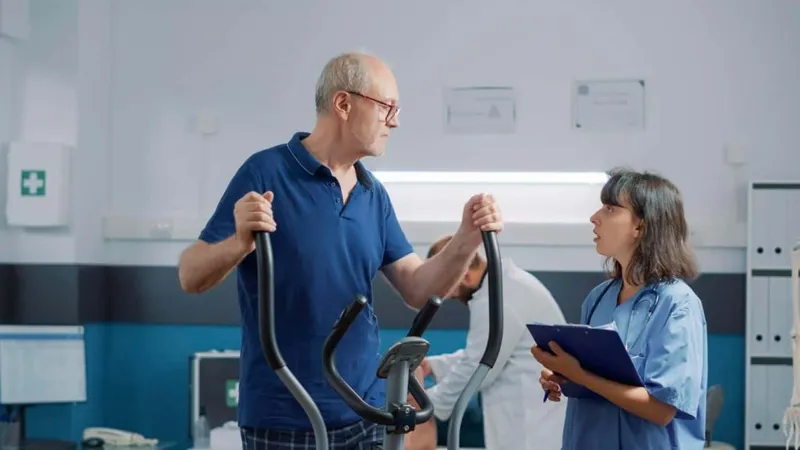
Medical Exercise Specialist Jobs: Career Opportunities and Work Environments
As the importance of preventative health and chronic disease management grows, demand for medical exercise specialists is on the rise. This role allows fitness professionals to make a meaningful impact in a variety of settings.
- Job Settings: Medical exercise specialists can work in hospitals, physical therapy clinics, wellness centers, rehabilitation facilities, or in private practice.
- Growing Demand: The emphasis on holistic and preventative healthcare has increased demand for professionals skilled in exercise and medical support, making this an attractive and growing career option.
- Client Impact: Specialists have the opportunity to significantly improve the lives of their clients by helping them manage pain, reduce symptoms, and enhance their overall quality of life.
ACE Medical Exercise Specialist Certification: Requirements and Benefits
The ACE Medical Exercise Specialist certification is highly regarded within the fitness and healthcare industries, offering professionals a path to work with clients who have unique medical needs.
Certification Requirements:
- Prerequisites: To qualify for the MES certification, candidates must hold a current NCCA-accredited certification in fitness or a relevant degree in exercise science, physical therapy, or a related field.
- CPR and AED Certification: Candidates must also have a valid CPR/AED certification prior to taking the exam.
- Experience: ACE recommends that candidates have a minimum of 500 hours of work experience with clients who have medical needs.
Benefits of Certification:
- Enhanced Skills: The MES certification provides advanced training in exercise science, focusing on special populations.
- Industry Recognition: The ACE MES certification is widely recognized and respected, distinguishing certified specialists from other fitness professionals.
- Career Advancement: Certified MES professionals can command higher salaries, pursue more specialized roles, and gain access to broader career opportunities within medical and fitness fields.
Studying for the ACE Medical Exercise Specialist Certification Exam
Preparing for the ACE Medical Exercise Specialist exam requires a solid understanding of the MES curriculum, which covers exercise physiology, biomechanics, client assessment, program design, and special population needs. Here are some resources and strategies for effective preparation:
- ACE Medical Exercise Specialist Manual PDF: The official manual is an essential study resource, containing all core materials and providing in-depth coverage of exam content. Candidates can access this manual directly from ACE’s website.
- Practice Exams and Sample Questions: ACE provides practice tests and sample questions that mimic the exam format. These are invaluable for understanding the question style and assessing readiness.
- Additional Study Guides and Online Courses: Many candidates also benefit from supplementary study guides and online courses available on the ACE platform or other credible sources, which reinforce knowledge in specific areas.
Navigating the ACE Medical Exercise Specialist Manual PDF
The ACE Medical Exercise Specialist Manual is the foundation of the MES curriculum, providing comprehensive information that candidates need to succeed. This manual is available in PDF format and covers essential topics such as:
- Exercise Physiology and Anatomy: Understanding human anatomy and physiology is crucial for designing safe exercise programs, especially for individuals with medical conditions.
- Medical and Pathophysiological Considerations: The manual covers various chronic conditions, their symptoms, and the ways exercise can help manage them.
- Client Assessment and Exercise Planning: Detailed guidelines on assessing client needs and limitations, designing appropriate exercise regimens, and adjusting plans based on progress or setbacks.

ACE Medical Exercise Specialist Certification Review: What Do Professionals Say?
The ACE MES certification is highly rated among fitness professionals, who value its depth and the opportunities it offers for career growth. Here’s what professionals often highlight:
- Comprehensive Curriculum: The ACE MES curriculum is thorough, covering both theoretical and practical aspects of exercise for medical conditions.
- Real-World Application: Certified MES professionals report that the training is directly applicable to real-life client interactions, preparing them well for complex client needs.
- Career Impact: Many certified specialists note an increase in client referrals and positive health outcomes, as they are more capable of working with special populations effectively.
Conclusion
The ACE Medical Exercise Specialist certification offers fitness professionals a unique opportunity to specialize in a meaningful field, supporting individuals with chronic health conditions through exercise. By bridging the gap between fitness and healthcare, certified MES professionals can make a lasting difference in the lives of their clients, improving their quality of life and overall well-being. With demand for this expertise on the rise, obtaining the MES certification is an investment in both professional growth and positive client outcomes.
FAQs
What is the ACE Medical Exercise Specialist certification?
The ACE MES certification is a professional credential that enables fitness professionals to work with clients who have medical conditions or chronic health issues, offering specialized exercise programs to help them improve health and quality of life.
How long does it take to become an ACE-certified Medical Exercise Specialist?
Preparation times vary, but most candidates study for several months before sitting for the exam to ensure comprehensive understanding of the material.
What is covered in the ACE Medical Exercise Specialist Manual PDF?
The ACE MES manual includes essential information on anatomy, medical conditions, client assessments, and exercise program design, all of which are necessary for certification.
Where can ACE-certified Medical Exercise Specialists find employment?
Certified MES professionals can work in hospitals, rehabilitation centers, wellness clinics, and fitness centers, or even start their own private practice.
This guide offers a complete overview of the ACE MES certification, providing the information you need to pursue a rewarding career as a medical exercise specialist.
- +Validates your knowledge and skills objectively
- +Increases job market competitiveness
- +Provides structured learning goals
- +Networking opportunities with other certified professionals
- −Study materials can be expensive
- −Exam anxiety can affect performance
- −Requires dedicated preparation time
- −Retake fees apply if you don't pass
Pros and Cons at a Glance
| Pros | Cons |
|---|---|
| Validates your knowledge and skills objectively | Study materials can be expensive |
| Increases job market competitiveness | Exam anxiety can affect performance |
| Provides structured learning goals | Requires dedicated preparation time |
| Networking opportunities with other certified professionals | Retake fees apply if you don't pass |
Sample MES - ACE Medical Exercise Specialist Practice Questions
Try these questions from our free MES - ACE Medical Exercise Specialist practice tests. The correct answer and an explanation follow each question.
What does the talk test identify in relation to exercise intensity?
- A. Maximum heart rate
- B. Approximate ventilatory threshold
- C. Maximal aerobic power
- D. Anaerobic peak power
Answer: B. Approximate ventilatory threshold
The talk test identifies the ventilatory threshold because hyperventilation at this intensity makes comfortable conversation difficult.
Which contraindication is considered an ABSOLUTE contraindication to exercise testing and vigorous exercise participation?
- A. Well-controlled type 2 diabetes
- B. Unstable angina or uncontrolled resting systolic BP above 200 mmHg
- C. Mild exercise-induced hypertension
- D. History of any previous myocardial infarction
Answer: B. Unstable angina or uncontrolled resting systolic BP above 200 mmHg
Unstable angina and severely uncontrolled hypertension are absolute contraindications because exercise in these conditions poses an immediate risk of serious cardiac events.
Which term describes the oxygen deficit repaid after exercise to restore the body to its pre-exercise state?
- A. Steady-state VO₂
- B. Excess post-exercise oxygen consumption (EPOC)
- C. Anaerobic capacity
- D. Respiratory exchange ratio
Answer: B. Excess post-exercise oxygen consumption (EPOC)
EPOC (excess post-exercise oxygen consumption) represents the elevated oxygen uptake after exercise used to restore phosphocreatine, clear lactate, and normalize temperature.
What is the most important pre-exercise precaution for a client with type 1 diabetes beginning an exercise program?
- A. Increasing insulin dose immediately before exercise
- B. Monitoring blood glucose and having fast-acting carbohydrates available
- C. Exercising only in a fasted state
- D. Avoiding all exercise above moderate intensity
Answer: B. Monitoring blood glucose and having fast-acting carbohydrates available
Blood glucose monitoring before, during, and after exercise — along with access to fast-acting carbohydrates — is essential to prevent exercise-induced hypoglycemia in type 1 diabetes.
Take the full MES - ACE Medical Exercise Specialist practice test
(MES) ACE Medical Exercise Specialist Questions and Answers
Sources & last verified
- acewebcontent.azureedge.net — number of questions, time limit, passing score, retake policy (official source). “All ACE Certification Exams are comprised of 150 multiple-choice questions, with 125 scored and 25 experimental questions.” Verified Oct 24, 2026.
- American Council on Exercise — exam fee, retake fee, delivery, score release (official source). “CMES $499” Verified Oct 24, 2026 · source checked Oct 23, 2026.
- contentcdn.eacefitness.com — other (official source). “assessments 26%” Verified Nov 1, 2026.
How we verify: editorial & fact-checking policy. Report an error: contact us.
How this page was made: written with AI tools and published by Nathan Beja, founder of Practice Test Geeks, who is responsible for its content. Exam facts are checked against the official sources listed below. Not reviewed by a subject-matter expert. Editorial policy
Sources & references
Exam facts on this page (fees, format, dates, passing scores) are checked against these official sources; the date is our last check. Editorial policy
- contentcdn.eacefitness.com — Exam information · verified Nov 2026
- acefitness.org — Test delivery, fees, retake fee, score release · verified Oct 2026
- acewebcontent.azureedge.net — Exam format, passing score, renewal, retake policy, time limit, score validity · verified Oct 2026