
MEPS Military Meaning — What MEPS Is and What to Expect 2026
❓ Boost your MEPS Military Meaning exam score with practice questions and detailed answer explanations. Track progress with instant feedback.
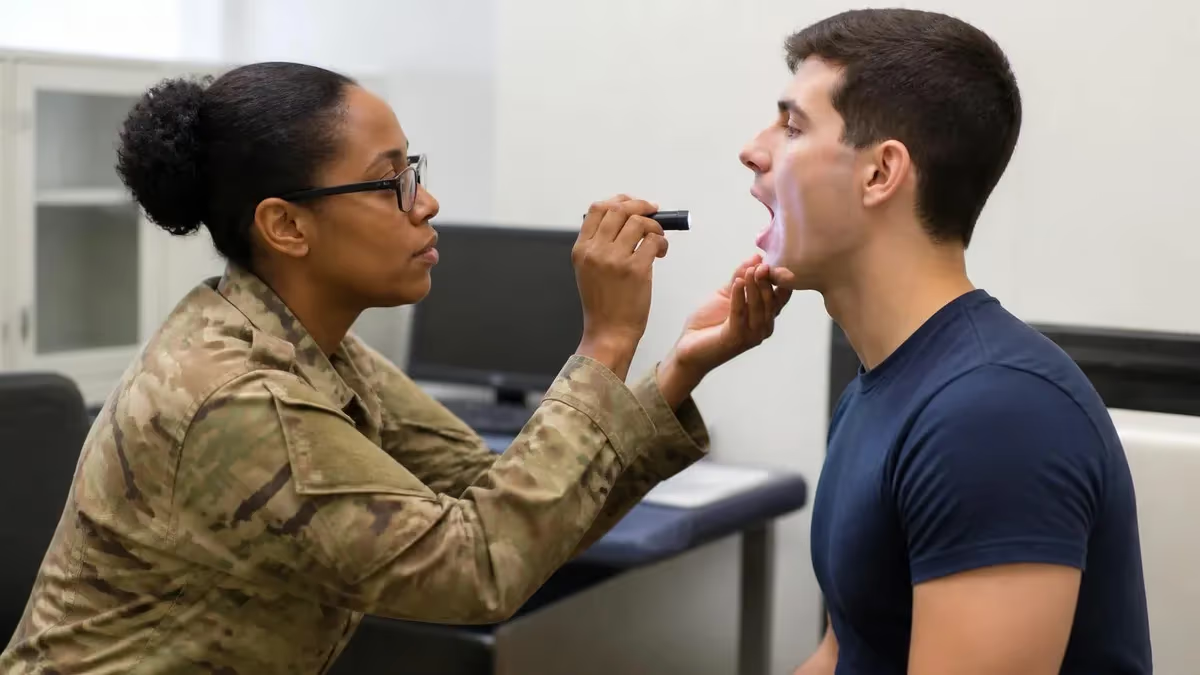
MEPS is the gateway to military service in the United States. Every individual who enlists in any branch of the U.S. Armed Forces — whether the Army, Navy, Marine Corps, Air Force, Space Force, or Coast Guard — must process through a Military Entrance Processing Station before being allowed to enlist. MEPS is not a training facility or a recruiting office.
It is a federally operated assessment and processing center staffed primarily by Department of Defense civilian employees and military personnel whose job is to determine whether an applicant is qualified for military service and, if so, to complete the administrative and legal steps needed to bring them into the military.
The term MEPS can refer to the system as a whole, the process a recruit undergoes, or the specific facility where that processing takes place. When a recruiter tells an applicant they will be going to MEPS, they mean the applicant will be traveling to their regional MEPS facility for a full day (or occasionally two days) of evaluations and paperwork. The experience at MEPS is standardized across all 65 stations and all military branches, although the specific job options and branch-specific requirements discussed during job counseling will vary depending on which service a recruit is joining.
MEPS has a dual purpose: to protect the military by ensuring that only physically and mentally qualified individuals enter service, and to protect the recruit by ensuring they understand what they are committing to before taking the Oath of Enlistment. The medical examination at MEPS is one of the most comprehensive physical screenings most Americans will ever undergo, and the standards are strict.
Medical disqualifications at MEPS are common — conditions ranging from vision and hearing impairments to prior injuries, mental health history, and prescription medication use can result in a temporary or permanent disqualification, depending on the branch and the specific waiver process.
The ASVAB (Armed Services Vocational Aptitude Battery) is also central to the MEPS experience for many applicants. Some recruits take the ASVAB at their high school or at a Military Entrance Test (MET) site before visiting MEPS, while others take it at MEPS itself. The ASVAB score determines which military occupational specialties (MOS) or rates a recruit is eligible for across the different branches.
A higher Armed Forces Qualification Test (AFQT) score — a composite derived from four ASVAB subtests — expands the range of available jobs and can influence enlistment bonuses. Understanding the ASVAB and its role in the MEPS process helps recruits prepare strategically before their MEPS appointment.
The MEPS experience is standardized but not impersonal. MEPS staff interact with hundreds of recruits each week and are accustomed to working with individuals at varying levels of preparation and anxiety. Recruits who arrive organized, well-rested, and honest about their backgrounds tend to move through the process more smoothly and make better decisions during the job counseling phase.
Talk to your recruiter before your MEPS date about what to expect for your specific branch. Gather all documents (Social Security card, birth certificate, photo ID, eyeglass prescription, medical records). Answer all medical history questions honestly — dishonesty during MEPS processing can result in discharge later in your service career, with long-term consequences for benefits.
This guide explains what MEPS stands for in military terminology, what happens at MEPS, what recruits can expect at each stage of the process, and how to prepare for a successful MEPS visit. Whether you are considering enlistment for the first time or helping a family member understand the military entry process, this overview covers the essentials of MEPS and what it means for a recruit's path to military service.
The history of MEPS reflects the military's evolving approach to standardized selection. Before the consolidation of military induction facilities, each branch maintained separate processing infrastructure, leading to duplication, inconsistent standards, and inefficiency. The current MEPS system was designed to centralize and standardize the processing function, ensuring that all branches benefit from the same medical and aptitude screening regardless of local differences. The standardization also protects recruits — the same medical standards and legal protections apply at every MEPS location, reducing the risk of disparate treatment across different geographic regions.
Understanding the difference between MEPS and basic training is important for recruits and their families. MEPS is not where military training happens — it is where the decision to enter military service is formalized. Recruits who complete MEPS and take the Oath of Enlistment are typically placed in the Delayed Entry Program (DEP), also called the Future Soldiers Program in the Army, which allows them to maintain civilian status for a period of up to 12 months before shipping to basic training. This gap period gives recruits time to prepare physically, mentally, and logistically for the transition to military life.
MEPS also plays a role beyond initial enlistment. Service members who separate from the military and wish to reenlist, individuals transferring between military branches, and some officer candidates also interact with MEPS as part of their respective processes. The facility's role as a screening and processing hub extends to any transition that requires a formal DoD assessment of a person's fitness for military service. In this sense, MEPS functions as a recurring checkpoint in a military career rather than just an entry point for first-time enlistees.
For family members accompanying a recruit to MEPS, the experience can be emotionally significant even though family participation is limited to drop-off, waiting, and the Oath of Enlistment ceremony. MEPS is generally a secure facility, and the processing areas where recruits spend most of their time are not accessible to civilian visitors. Family members who want to witness the oath ceremony should coordinate with the recruiter in advance, as attendance policies vary by station. Understanding the purpose and structure of MEPS helps family members support their recruit with realistic expectations about what the day involves and why each step matters.
Recruits who are uncertain about which military branch to pursue should speak with recruiters from multiple branches before their MEPS appointment. While the MEPS facility serves all branches equally, the branch you enlist with is determined before you arrive. Changing branches after the Oath of Enlistment is possible but significantly more complex, making the pre-MEPS period the right time to finalize that decision.
It is worth noting that MEPS does not advocate for any particular branch or enlistment decision. The facility's role is to assess and process, not to sell military service. Recruits who have questions or concerns during processing can speak with the MEPS guidance counselor or request to speak with a military inspector, an independent officer available at every MEPS who is specifically responsible for ensuring that recruits' legal rights are protected throughout the enlistment process.
Related reading: meps military meaning covers the next step in more detail.

Most recruits arrive at their MEPS facility the evening before their scheduled processing date, staying in a government-contracted hotel arranged by their recruiter. Early arrival (typically 5–6 AM) at the MEPS facility is standard, and recruits should expect a full day of activities lasting 8–12 hours. The day begins with check-in and document verification, followed by the sequence of testing and examinations that may occur in varying order depending on the specific station's procedures.
Dress and conduct at MEPS are important. Recruits are expected to dress professionally — business casual is appropriate — and to behave in a respectful, cooperative manner with all MEPS staff. Attitude and demeanor during MEPS processing are noted, particularly during the medical interview and job counseling. Recruits should answer all medical history questions honestly. Failing to disclose prior medical conditions or injuries, even minor ones, constitutes fraud and can result in discharge from service later, even if the original condition would have been waiverable.
The medical history questionnaire completed at MEPS is detailed and covers conditions from childhood onward. Common sources of concern include prior surgeries, mental health treatment or diagnoses, prescription medication use, asthma, previous injuries affecting joints, vision that requires correction beyond certain thresholds, and body weight outside military standards.
For each of these areas, MEPS physicians review documentation and apply branch-specific standards. What disqualifies a recruit for the Marine Corps may not disqualify them for the Army, and vice versa — branch standards vary. Recruits who are disqualified can often apply for a medical waiver, which is a formal request for the branch to evaluate whether the disqualifying condition is actually incompatible with military service.
After the medical examination, recruits who are medically qualified proceed to job counseling. The counselor presents the available jobs based on ASVAB scores, the recruit's interests, and the branch's current manpower needs. Available jobs and associated bonuses change frequently based on military needs, so the specific options available on the day of MEPS may differ from what a recruiter described during initial conversations. Recruits should approach job counseling with a list of preferred jobs but also with flexibility, particularly if their ASVAB scores open up a range of options.
Physical fitness going into MEPS is not officially tested during the standard processing day — the medical examination focuses on structural fitness, medical history, and physiological measurements rather than athletic performance. However, recruits who are near the borderline of height and weight standards should ensure they are within standards before their MEPS appointment, as the physical measurements at MEPS use military height and weight tables that differ from standard civilian BMI charts.
Disclosing all prior medical conditions at MEPS, including mental health treatment, is legally required. Concealing a condition that is later discovered after enlistment can result in administrative separation (discharge) under fraudulent enlistment provisions. Many conditions are waiverable — the risk of disclosure is far lower than the risk of concealment.
Taking the Oath of Enlistment at MEPS is a significant moment for recruits and their families. The ceremony is brief but formal — recruits stand before an officer and repeat the oath, which pledges to support and defend the Constitution of the United States and to obey the orders of the President and officers appointed over them. Family members who have accompanied the recruit to MEPS on the day of the oath are often permitted to witness the ceremony, creating a meaningful milestone in the enlistment process.
One aspect of MEPS that many recruits find surprising is the extent of the medical history interview. MEPS physicians and physician assistants are trained to probe for conditions that recruits may not have thought to mention — or may have hoped to avoid disclosing. Questions about childhood illnesses, asthma history, prior mental health treatment, substance use, and self-harm are all standard parts of the MEPS medical interview.
Recruits who answer dishonestly during the medical history portion create a legal liability for themselves that can result in an administrative separation (discharge) later in their service, often with negative consequences for benefits and records. Honesty, even about conditions that may require a waiver, is always the better approach.
Sleep is often disrupted the night before MEPS, especially for recruits staying in a hotel with others they have just met. The early morning wake-up and the anticipation of the day's events can make rest difficult. Recruits should make a genuine effort to sleep as much as possible, arrive at the facility well-rested, and avoid caffeinated drinks in excess before the blood pressure and heart rate measurements.
Physical preparation in the weeks before MEPS — maintaining a healthy weight within military standards, addressing known vision or hearing issues with a physician, and ensuring all medications are properly documented — reduces the chance of medical surprises on processing day.
Recruits who have already completed the ASVAB at a school or MET site and who have reviewed their scores with their recruiter will have a clearer picture of their job options before arriving at MEPS. Knowing in advance which MOS or rates you are eligible for, and which jobs align with your interests and career goals, allows you to approach job counseling at MEPS with confidence rather than making decisions under time pressure.

Before signing your MEPS enlistment contract, verify that it matches exactly what your recruiter promised — MOS or rate, enlistment bonus amount, ship date, and any special programs. The MEPS military inspector is available to help resolve discrepancies. Once signed and the oath is taken, disputes about contract terms become significantly harder to resolve.
The job counselor at MEPS works within the constraints of branch availability on that day, so flexibility remains important — but informed recruits make better decisions during the counseling session.
After completing the Oath of Enlistment, recruits receive a copy of their enlistment contract — a legally binding document that specifies their enlistment term, MOS or rate, and any bonuses or special programs they have been promised. Recruits should read this document carefully before signing and should ask questions if any aspect of the contract does not match what their recruiter described.
Disputes about enlistment terms are far easier to resolve at MEPS, before the oath is taken, than after the contract is signed and the recruit is legally in service. The MEPS staff, including the military entrance inspector, are available to clarify contract terms and resolve discrepancies before final processing is complete.
The days following a successful MEPS experience are often a mix of relief and anticipation. Recruits who have taken the oath and received their contract begin the practical preparation for basic training — physical fitness, mental readiness, and logistical planning. Your recruiter remains your primary point of contact during the DEP period and can answer questions about what to expect at basic training, how to maintain DEP status, and what happens on ship day.
Veterans who are reenlisting or returning to active duty after a break in service also process through MEPS, though their experience differs from first-time enlistees. Prior service members may have expedited processing for some components — particularly the ASVAB, which may not need to be retaken if prior scores are still valid — while their medical screening will focus on any new conditions or injuries that developed since their last period of service.
MEPS marks the official beginning of a recruit's military service journey. The weeks and months that follow may feel uncertain, but the structured transition from civilian to service member begins with this single, standardized day.
What to Bring to MEPS
- ✓Valid government-issued photo ID (driver's license or state ID) or U.S. passport
- ✓Social Security card (original, not a photocopy)
- ✓Birth certificate (certified original or certified copy)
- ✓High school diploma or transcripts, or college transcripts if applicable
- ✓Medical records for any prior surgeries, treatments, or diagnoses — bring documentation
- ✓Eyeglasses or contact lenses if you require vision correction; bring the prescription
- ✓List of all medications currently or recently used, with dosages
- ✓Any legal documents related to past arrests, charges, or civil matters
- ✓Comfortable, professional clothing — you will be in and out of examination rooms
- ✓Recruiter's contact information in case questions arise during processing

MEPS Pros and Cons
- +MEPS has a publicly available content blueprint — you know exactly what to prepare for
- +Multiple preparation pathways accommodate different schedules and budgets
- +Clear score reporting shows specific strengths and weaknesses
- +Study communities share current insights from recent test-takers
- +Retake policies allow recovery from a difficult first attempt
- −Tested content scope requires substantial preparation time
- −No single resource covers everything optimally
- −Exam-day performance can differ from practice test performance
- −Registration, prep, and retake costs accumulate significantly
- −Content changes between versions can make older materials less reliable
Pros and Cons at a Glance
| Pros | Cons |
|---|---|
| MEPS has a publicly available content blueprint — you know exactly what to prepare for | Tested content scope requires substantial preparation time |
| Multiple preparation pathways accommodate different schedules and budgets | No single resource covers everything optimally |
| Clear score reporting shows specific strengths and weaknesses | Exam-day performance can differ from practice test performance |
| Study communities share current insights from recent test-takers | Registration, prep, and retake costs accumulate significantly |
| Retake policies allow recovery from a difficult first attempt | Content changes between versions can make older materials less reliable |




Sample MEPS - Military Entrance Processing Stations Practice Questions
Try these questions from our free MEPS - Military Entrance Processing Stations practice tests. The correct answer and an explanation follow each question.
A recruit who needs a medical waiver to enlist should expect what regarding their job selection?
- A. They automatically qualify for all jobs once the waiver is approved
- B. Certain physically demanding jobs may still be off-limits even with an enlistment waiver
- C. Their job selection priority is higher than non-waiver recruits
- D. Medical waivers have no impact on job selection
Answer: B. Certain physically demanding jobs may still be off-limits even with an enlistment waiver
Even with an approved medical waiver for enlistment, some physically demanding or medically sensitive MOSs may remain unavailable depending on the nature of the medical condition.
A MEPS applicant who is disqualified due to a positive drug test and wishes to reapply should expect:
- A. Permanent lifetime ban from all military service
- B. An automatic 12-month waiting period before reapplication in most cases
- C. A 30-day waiting period with a recruiter letter of support
- D. No waiting period; they can reapply immediately with a waiver request
Answer: B. An automatic 12-month waiting period before reapplication in most cases
Most services require approximately 12 months of documented drug-free status before a disqualified applicant can apply for a waiver and reenter the MEPS process.
Which federal agency is primarily responsible for developing and maintaining the ASVAB?
- A. Department of Homeland Security
- B. Department of Defense
- C. Office of Personnel Management
- D. Department of Veterans Affairs
Answer: B. Department of Defense
The Department of Defense (DoD) develops and maintains the ASVAB as a tool for military enlistment qualification.
During the MEPS medical screening, an applicant is tested for color vision. An inability to correctly identify the patterns in the pseudoisochromatic plates (PIP test) would most likely disqualify an applicant from which type of military career field?
- A. Food service specialist.
- B. Electrician or avionics technician.
- C. Infantry or ground combat roles.
- D. Administrative and clerical roles.
Answer: B. Electrician or avionics technician.
Normal color vision is a critical requirement for many technical jobs, especially those involving electrical wiring, electronics, and aircraft systems (avionics), where components are often color-coded for safety and proper function. While some combat roles also have requirements, it is a strict prerequisite for most electrical and avionics fields.
Take the full MEPS - Military Entrance Processing Stations practice test
MEPS Questions and Answers
About the Author

Retired Military Officer & Armed Forces Test Preparation Specialist
United States Army War CollegeColonel Steven Harris (Ret.) served 28 years in the US Army, earning a Master of Arts in Military Science from the Army War College and a Bachelor of Science in Criminal Justice. He has coached thousands of military enlistment and officer candidate program applicants through the ASVAB, AFQT, AFCT, OAR, and officer selection assessment processes across all military branches.
Join the Discussion
Connect with other students preparing for this exam. Share tips, ask questions, and get advice from people who have been there.
View discussion (8 replies)