
MBLEx Study Guide: The Complete 2026 October Roadmap to Passing on Your First Attempt
Complete MBLEx study guide with content outline, weekly schedule, practice test strategy, and proven prep tips to pass the massage licensing exam. 📝
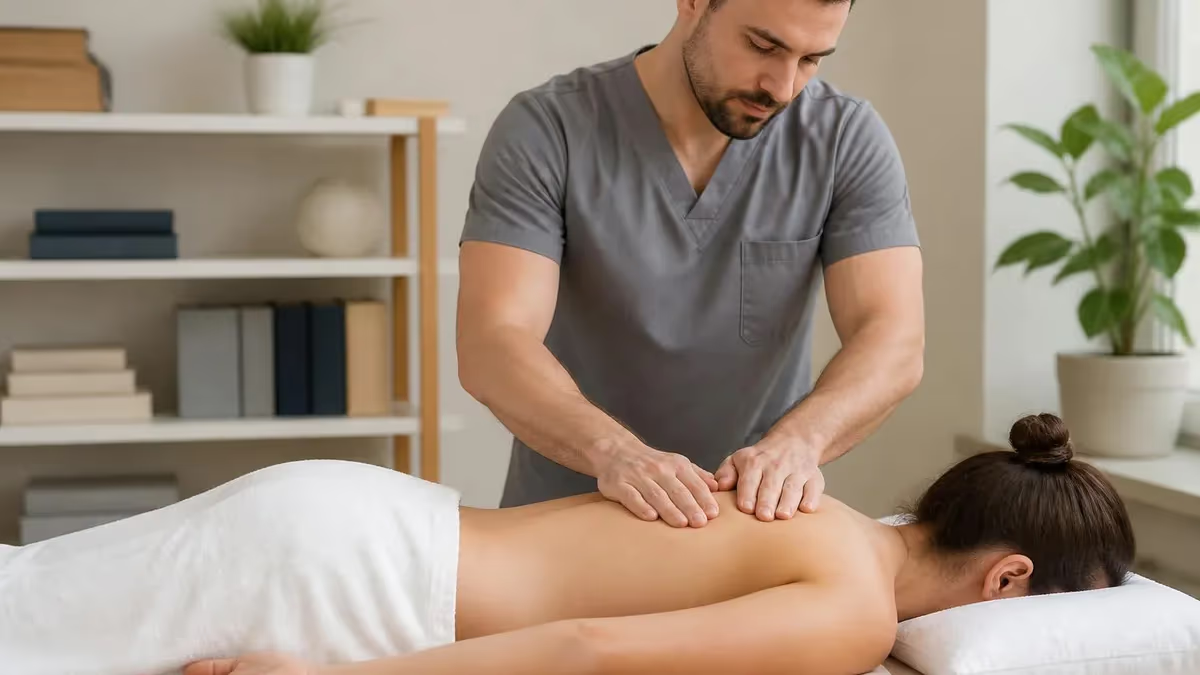
A focused mblex study guide is the difference between walking into the testing center confident and walking out frustrated. The Massage and Bodywork Licensing Examination, administered by the Federation of State Massage Therapy Boards (FSMTB), is the single credentialing hurdle between graduating massage school and earning your state license. In 2024, the overall pass rate sat at roughly 73 percent for first-time test takers and dropped sharply for retakes, which is why structured preparation matters far more than raw study hours.
This guide is designed for the candidate who wants a clear, week-by-week plan rather than a pile of disconnected PDFs. We will walk through the exam blueprint, the seven content areas, the question style you should expect, and the practice strategies that actually move scores. Whether you are testing in four weeks or four months, every section below is calibrated to help you build durable recall, not short-term cramming. You can also pair this material with a focused mblex question bank for daily drill work.
The MBLEx contains 100 multiple-choice questions delivered in 110 minutes through Pearson VUE testing centers. You will see questions on anatomy, physiology, kinesiology, pathology, contraindications, ethics, professional practice, benefits of soft tissue manipulation, client assessment, and the application of treatment. The exam is scored on a scale from 300 to 900 with a passing score of 630. There is no penalty for guessing, and you will know whether you passed before you leave the testing center.
Most candidates underestimate three things: how broad the anatomy and physiology section really is, how much weight ethics and boundaries carry, and how exhausting 110 minutes of dense reading can feel without timed practice. A strong study guide addresses all three, layering content review with timed question sets and reflection time so that gaps become visible early rather than on test day.
The plan below assumes you can dedicate eight to fifteen hours per week to focused preparation. If you are working full time, stretch the timeline to twelve weeks; if you are a recent graduate with open mornings, six to eight weeks is realistic. Either way, the core idea is the same: short daily sessions beat marathon weekend cramming, and active retrieval beats passive rereading every single time.
By the end of this guide you will have a content map for each domain, a sample weekly schedule, a checklist of must-know topics, the most common pitfalls candidates face, and a curated list of practice resources. Bookmark the page, print the checklist, and treat the timeline as a contract with yourself. Pass rates improve dramatically when candidates commit to a written plan rather than studying by mood.
One last reminder before we dive in: the MBLEx is a minimum-competency exam, not a graduate school qualifier. The board wants to know that you can practice safely and ethically on day one of licensure. Keep that lens in mind as you study, and you will spend less time chasing obscure trivia and more time mastering the high-yield material that actually appears on test day.
MBLEx Study Guide by the Numbers
Key Facts at a Glance
| Item | Value | Details |
|---|---|---|
| Multiple-choice questions | 100 | Delivered via Pearson VUE |
| Total exam time | 110 min | About 66 seconds per item |
| Minimum passing score | 630 | Scale of 300 to 900 |
| Content domains tested | 7 | Each weighted differently |

6-Week MBLEx Study Schedule
- ▸Review all 11 body systems at survey level
- ▸Memorize bones of the axial and appendicular skeleton
- ▸Complete 40 anatomy practice questions
- ▸Build flashcards for muscle origins and insertions
- ▸Study major joint actions and planes of movement
- ▸Memorize endangerment sites and absolute contraindications
- ▸Review 30 common pathologies and their indications
- ▸Complete a 50-question mixed quiz
- ▸Review physiological effects of Swedish strokes
- ▸Study circulatory, lymphatic, and nervous system responses
- ▸Compare effects across modalities
- ▸Take a 100-question timed mock exam
- ▸Practice SOAP note documentation
- ▸Drill posture and gait assessment terminology
- ▸Memorize contraindications by population
- ▸Complete two 50-question quizzes
- ▸Study scope of practice and state laws
- ▸Review dual relationships and transference
- ▸Drill HIPAA, draping, and consent scenarios
- ▸Take a full timed practice exam
- ▸Take two full-length timed mock exams
- ▸Review every missed question with rationales
- ▸Re-drill weakest two content areas
- ▸Rest and review notes the day before
The MBLEx blueprint divides the 100 questions across seven content areas with very specific weights. Anatomy and physiology accounts for 11 percent, kinesiology 12 percent, pathology, contraindications, areas of caution, and special populations 14 percent, benefits and physiological effects of techniques 15 percent, client assessment, reassessment, and treatment planning 17 percent, ethics, boundaries, laws, and regulations 16 percent, and guidelines for professional practice 15 percent. Notice that the largest single domain is client assessment, not anatomy. Many candidates over-study muscles and under-study assessment, which is a costly mistake.
Anatomy and physiology questions tend to be straightforward identification: which muscle performs which action, which artery supplies which region, which gland secretes which hormone. Focus your time on the muscular and skeletal systems first because they generate the most questions, then the cardiovascular, lymphatic, and nervous systems. A focused mblex practice test session every other day will help you spot the recurring anatomy items quickly.
Kinesiology adds movement and biomechanics on top of anatomy. Expect questions about planes of motion, joint classifications, antagonist-agonist pairs, and proprioception. Build a one-page reference sheet that lists every major joint with its primary movers and you will cover roughly 80 percent of what shows up on test day. Practice naming actions out loud while moving your own body — kinesthetic encoding is far stickier than silent rereading.
Pathology and contraindications is where safety thinking lives. The exam wants to know that you can recognize when massage is risky, when it requires modification, and when it should be declined outright. Memorize absolute contraindications such as deep vein thrombosis, uncontrolled hypertension, fever, and certain skin infections. Then layer in local contraindications and special populations such as pregnancy, elderly clients, and oncology patients.
Benefits and effects questions test whether you understand why massage works, not just how it feels. Be ready to explain mechanical, physiological, and reflexive effects of effleurage, petrissage, friction, tapotement, and vibration. Connect each stroke to specific outcomes: increased venous return, mechanical loosening of adhesions, parasympathetic activation. Generic answers like "it relaxes the body" rarely earn credit on this section.
Client assessment is the largest domain and the one most candidates underestimate. You will see scenarios about intake interviews, postural analysis, range of motion testing, SOAP notes, and treatment planning. The board wants therapists who can think through a session from greeting to discharge. Practice writing complete SOAP notes for hypothetical clients until the structure feels automatic.
Ethics and professional practice round out the blueprint. These two domains together represent 31 percent of the exam — nearly a third of your score. Topics include scope of practice, dual relationships, confidentiality, draping, informed consent, business practices, and state regulations. Many of these questions are scenario-based and test your judgment rather than rote recall, so practice case studies aloud with a study partner whenever possible.
Massage and Bodywork Licensing Examination Practice Test Questions
Prepare for the Massage and Bodywork Licensing Examination exam with our free practice test modules. Each quiz covers key topics to help you pass on your first try.
Massage and Bodywork Licensing Examination...
Massage and Bodywork Licensing Examination Exam Questions covering Massage and Bodywork Licensure Examination. Master Massage and Bodywork Licensing Examination Test concepts for certification prep.
Massage and Bodywork Licensing Examination...
Free Massage and Bodywork Licensing Examination Practice Test featuring MBLEx MCQ. Improve your Massage and Bodywork Licensing Examination Exam score with mock test prep.
Massage and Bodywork Licensing Examination...
Massage and Bodywork Licensing Examination Mock Exam on MBLEx. Massage and Bodywork Licensing Examination Study Guide questions to pass on your first try.
Massage and Bodywork Licensing Examination...
Massage and Bodywork Licensing Examination Test Prep for MBLEx Test Anatomy and Physiology. Practice Massage and Bodywork Licensing Examination Quiz questions and boost your score.
Massage and Bodywork Licensing Examination...
Massage and Bodywork Licensing Examination Questions and Answers on MBLEx Test Client Assessment and Planning. Free Massage and Bodywork Licensing Examination practice for exam readiness.
Massage and Bodywork Licensing Examination...
Massage and Bodywork Licensing Examination Mock Test covering MBLEx Test Kinesiology and Biomechanics. Online Massage and Bodywork Licensing Examination Test practice with instant feedback.
Massage and Bodywork Licensing Examination...
Free Massage and Bodywork Licensing Examination Quiz on MBLEx Test Pathology and Contraindications. Massage and Bodywork Licensing Examination Exam prep questions with detailed explanations.
Massage and Bodywork Licensing Examination...
Massage and Bodywork Licensing Examination Practice Questions for MBLEx Test Physiological Effects of Massage. Build confidence for your Massage and Bodywork Licensing Examination certification exam.
Massage and Bodywork Licensing Examination...
Massage and Bodywork Licensing Examination Test Online for MBLEx Test Professional Ethics and Laws. Free practice with instant results and feedback.
Massage and Bodywork Licensing Examination...
Massage and Bodywork Licensing Examination Study Material on Anatomy and Physiology. Prepare effectively with real exam-style questions.
Massage and Bodywork Licensing Examination...
Free Massage and Bodywork Licensing Examination Test covering FREE Massage and Bodywork Licensure Examination Questions and Answers. Practice and track your Massage and Bodywork Licensing Examination exam readiness.
Massage and Bodywork Licensing Examination...
Massage and Bodywork Licensing Examination Exam Questions covering FREE MBLEx MCQ Questions and Answers. Master Massage and Bodywork Licensing Examination Test concepts for certification prep.
Massage and Bodywork Licensing Examination...
Free Massage and Bodywork Licensing Examination Practice Test featuring FREE MBLEx Questions and Answers. Improve your Massage and Bodywork Licensing Examination Exam score with mock test prep.
Massage and Bodywork Licensing Examination...
Massage and Bodywork Licensing Examination Mock Exam on FREE MBLEx Test Anatomy and Physiology Questions and Answers. Massage and Bodywork Licensing Examination Study Guide questions to pass on your first try.
Massage and Bodywork Licensing Examination...
Massage and Bodywork Licensing Examination Test Prep for FREE MBLEx Test Client Assessment and Planning Questions and Answers. Practice Massage and Bodywork Licensing Examination Quiz questions and boost your score.
Massage and Bodywork Licensing Examination...
Massage and Bodywork Licensing Examination Questions and Answers on FREE MBLEx Test Kinesiology and Biomechanics Questions and Answers. Free Massage and Bodywork Licensing Examination practice for exam readiness.
Massage and Bodywork Licensing Examination...
Massage and Bodywork Licensing Examination Mock Test covering FREE MBLEx Test Pathology and Contraindications Questions and Answers. Online Massage and Bodywork Licensing Examination Test practice with instant feedback.
Massage and Bodywork Licensing Examination...
Free Massage and Bodywork Licensing Examination Quiz on FREE MBLEx Test Physiological Effects of Massage Questions and Answers. Massage and Bodywork Licensing Examination Exam prep questions with detailed explanations.
Massage and Bodywork Licensing Examination...
Massage and Bodywork Licensing Examination Practice Questions for FREE MBLEx Test Professional Ethics and Laws Questions and Answers. Build confidence for your Massage and Bodywork Licensing Examination certification exam.
Massage and Bodywork Licensing Examination...
Massage and Bodywork Licensing Examination Test Online for MBLEx Anatomy and Physiology Questions and Answers. Free practice with instant results and feedback.
Massage and Bodywork Licensing Examination...
Massage and Bodywork Licensing Examination Study Material on MBLEx Client Assessment and Treatment Questions and Answers. Prepare effectively with real exam-style questions.
Massage and Bodywork Licensing Examination...
Free Massage and Bodywork Licensing Examination Test covering MBLEx Ethics, Boundaries, and Laws Questions and Answers. Practice and track your Massage and Bodywork Licensing Examination exam readiness.
Massage and Bodywork Licensing Examination...
Massage and Bodywork Licensing Examination Exam Questions covering MBLEx Guidelines for Professional Practice Questions and Answers. Master Massage and Bodywork Licensing Examination Test concepts for certification prep.
Massage and Bodywork Licensing Examination...
Free Massage and Bodywork Licensing Examination Practice Test featuring MBLEx Kinesiology Questions and Answers. Improve your Massage and Bodywork Licensing Examination Exam score with mock test prep.
Massage and Bodywork Licensing Examination...
Massage and Bodywork Licensing Examination Mock Exam on MBLEx Pathology and Contraindications Questions and Answers. Massage and Bodywork Licensing Examination Study Guide questions to pass on your first try.
Massage and Bodywork Licensing Examination...
Massage and Bodywork Licensing Examination Test Prep for MBLEx Test Anatomy and Physiology Questions and Answers. Practice Massage and Bodywork Licensing Examination Quiz questions and boost your score.
Massage and Bodywork Licensing Examination...
Massage and Bodywork Licensing Examination Questions and Answers on MBLEx Test Benefits and Effects of Massage Questions and Answers. Free Massage and Bodywork Licensing Examination practice for exam readiness.
Massage and Bodywork Licensing Examination...
Massage and Bodywork Licensing Examination Mock Test covering MBLEx Test Client Assessment and Treatment Questions and Answers. Online Massage and Bodywork Licensing Examination Test practice with instant feedback.
Massage and Bodywork Licensing Examination...
Free Massage and Bodywork Licensing Examination Quiz on MBLEx Test Ethics, Boundaries, and Laws Questions and Answers. Massage and Bodywork Licensing Examination Exam prep questions with detailed explanations.
Massage and Bodywork Licensing Examination...
Massage and Bodywork Licensing Examination Practice Questions for MBLEx Test Pathology and Contraindications Questions and Answers. Build confidence for your Massage and Bodywork Licensing Examination certification exam.
Massage and Bodywork Licensing Examination...
Massage and Bodywork Licensing Examination Test Online for MBLEx Anatomy and Physiology. Free practice with instant results and feedback.
Massage and Bodywork Licensing Examination...
Massage and Bodywork Licensing Examination Study Material on MBLEx Client Assessment and Treatment. Prepare effectively with real exam-style questions.
Massage and Bodywork Licensing Examination...
Free Massage and Bodywork Licensing Examination Test covering MBLEx Ethics, Boundaries, and Laws. Practice and track your Massage and Bodywork Licensing Examination exam readiness.
Massage and Bodywork Licensing Examination...
Massage and Bodywork Licensing Examination Exam Questions covering MBLEx Guidelines for Professional Practice. Master Massage and Bodywork Licensing Examination Test concepts for certification prep.
Massage and Bodywork Licensing Examination...
Free Massage and Bodywork Licensing Examination Practice Test featuring MBLEx Kinesiology. Improve your Massage and Bodywork Licensing Examination Exam score with mock test prep.
Massage and Bodywork Licensing Examination...
Massage and Bodywork Licensing Examination Mock Exam on MBLEx Pathology and Contraindications. Massage and Bodywork Licensing Examination Study Guide questions to pass on your first try.
Massage and Bodywork Licensing Examination...
Massage and Bodywork Licensing Examination Test Prep for MBLEx Test Benefits and Effects of Massage. Practice Massage and Bodywork Licensing Examination Quiz questions and boost your score.
How to Use an MBLEx Practice Exam Effectively
Before you build a study plan, take one full-length practice exam under realistic conditions. Sit for 110 minutes without breaks, no notes, and no phone. Score the result by content area rather than just total score. A 72 percent overall might hide a 50 percent in pathology that needs urgent attention.
Use this diagnostic to assign weekly priorities. Any domain scoring below 65 percent gets primary focus, anything between 65 and 80 gets secondary review, and anything above 80 moves to maintenance mode with light weekly drills. Repeat the diagnostic at the midpoint and again one week before your real exam date.

Self-Study vs. MBLEx Tutor: Which Path Fits You?
- +Self-study costs a fraction of private tutoring and works for disciplined learners
- +Online question banks deliver thousands of items with instant rationales
- +Flexible scheduling lets you study during lunch breaks and weekends
- +Recorded video lectures can be paused, rewound, and replayed
- +Free resources cover the majority of MBLEx blueprint topics
- +Self-paced learners build stronger long-term recall through active retrieval
- +You can target weak areas without paying for material you already know
- −No accountability partner to catch sloppy study habits early
- −Difficult to identify blind spots without expert feedback
- −Easy to over-study comfortable topics and avoid uncomfortable ones
- −No structured timeline unless you build one yourself
- −Limited explanation when a written rationale does not click
- −Test anxiety strategies are harder to develop alone
- −Self-study can feel isolating during a 6 to 12 week prep cycle
MBLEx Test Prep Checklist: Two Weeks Before Exam Day
- ✓Confirm your Pearson VUE appointment time, location, and confirmation number
- ✓Print or save your ATT letter and required identification documents
- ✓Complete at least two full-length 110-minute timed practice exams
- ✓Score above 75 percent consistently across all seven content domains
- ✓Review every absolute and local contraindication from memory
- ✓Recite the 16 endangerment sites and explain why each is risky
- ✓Write three complete SOAP notes from hypothetical client scenarios
- ✓Reread your state's scope of practice and reportable conduct laws
- ✓Build a one-page cheat sheet of every concept that still feels shaky
- ✓Plan your test-day logistics including travel time, parking, and meal timing

Most failed MBLEx attempts come from under-studying ethics, not anatomy.
Candidates assume the exam is mostly anatomy because that is what feels hardest in massage school. In reality, ethics, boundaries, laws, and professional practice together account for 31 percent of the test. Devote at least one full week of focused study to these domains, including scenario-based case practice, or you will leave easy points on the table.
Memory and retention tactics separate candidates who pass on the first attempt from those who plateau and retake. The brain encodes information most efficiently through three mechanisms: spaced repetition, active retrieval, and elaborative encoding. A strong mblex test prep routine uses all three deliberately rather than relying on rereading, which feels productive but produces shallow recall. Below are the specific techniques that consistently raise scores in the final four weeks before the exam.
Spaced repetition means revisiting the same material at expanding intervals — one day, three days, one week, two weeks. Flashcard apps like Anki automate this scheduling, but a simple notecard box works equally well. Build cards for muscle origins, insertions, actions, and innervations, then for endangerment sites, contraindications, and ethical scenarios. Review the deck for 15 minutes every morning before doing anything else. Consistency beats intensity for every cognitive task.
Active retrieval means closing the book and forcing your brain to produce the answer from memory. After reading a chapter on the lymphatic system, put the textbook down and write everything you remember about lymph flow, nodes, and contraindications. Then compare your version to the source and fill the gaps. This practice is uncomfortable, which is exactly why it works — discomfort signals that real learning is taking place.
Elaborative encoding means connecting new information to things you already know. Instead of memorizing that the brachial artery runs through the medial bicipital groove, picture exactly where you would place your fingers to take a blood pressure reading. Instead of memorizing that DVT is an absolute contraindication, imagine the conversation you would have declining a session and referring out. Stories and mental images stick where dry facts evaporate.
Mnemonics earn their reputation for a reason. "SITS" for the four rotator cuff muscles, "On Old Olympus' Towering Top" for the cranial nerves, and "Some Lovers Try Positions That They Can't Handle" for the carpal bones each take 30 seconds to memorize and last for years. Build your own mnemonics for any list of three or more items you struggle to recall, and write them in a single notebook for quick weekly review.
Sleep is the unsung hero of memory consolidation. Studies repeatedly show that information reviewed within 90 minutes of sleep onset is retained significantly better than information reviewed earlier in the day. Schedule your toughest material — usually pathology or ethics scenarios — for the final study block before bed, then resist the urge to check social media or watch stimulating video. Your brain finishes the encoding while you sleep.
Finally, teach what you learn. The fastest way to discover gaps in your understanding is to explain a concept aloud to a friend, a study partner, or an imaginary client. If you cannot explain why ice is preferred over heat in the first 48 hours after acute injury, your understanding has a hole. Teaching forces clarity, surfaces assumptions, and turns passive familiarity into active mastery — exactly what the MBLEx tests.
If you do not pass, FSMTB requires a 30-day waiting period before retesting and you must pay the full $265 examination fee again. You are limited to three attempts within a 12-month period. Treat your first sitting as your only sitting by preparing thoroughly rather than testing too early.
Test-day performance is the result of months of preparation colliding with 110 minutes of focused execution. The candidates who score highest are not always the ones who studied longest — they are the ones who managed their energy, attention, and emotions through the morning of the exam. Below are the field-tested habits that consistently produce higher scores and lower regret, drawn from thousands of post-exam debriefs and FSMTB candidate feedback reports.
Sleep is the single most controllable variable on test day. Aim for seven to nine hours the night before, and protect that sleep by avoiding caffeine after 2 p.m., screens after 9 p.m., and any new material after dinner. Trying to cram one more chapter the night before nearly always backfires by elevating cortisol and fragmenting sleep. Trust your preparation, close the books at 7 p.m., and treat the evening like recovery before a marathon.
Eat a balanced breakfast at least 90 minutes before your reporting time. Aim for protein, complex carbohydrates, and a small amount of healthy fat — eggs with whole-grain toast and avocado works well. Avoid heavy sugar loads that crash blood glucose mid-exam. Hydrate with 16 to 20 ounces of water in the morning, but stop drinking 45 minutes before the exam so you are not distracted by bathroom urgency during the test.
Arrive at the Pearson VUE testing center 30 minutes early. Use the buffer time to handle check-in calmly, store personal items in your assigned locker, and use the restroom one last time. Bring two forms of identification — one must be a government-issued photo ID — and your appointment confirmation. Reading glasses, hearing aids, and approved medical items are permitted, but personal study materials are not. Leave your phone in your car if possible.
Once seated, take three slow breaths before opening the first question. The first ten minutes of any high-stakes exam are when anxiety peaks, and rushing through early questions almost always causes preventable errors. Read each item completely before looking at the answer choices. Pay attention to qualifying words like "except," "not," "always," and "best" — these single words flip the meaning of half the question stems on the exam.
Pace yourself by checking the on-screen clock at the 25, 50, and 75 question marks. You should hit those checkpoints with roughly 82, 55, and 27 minutes remaining. If you are running behind, do not panic — flag the longest scenario items for review and keep moving. A flagged question you return to in the final minutes is worth more than a perfect answer on item 73 if it costs you items 90 through 100.
If a question genuinely stumps you, eliminate clearly wrong answers first, then make your best guess and move on. There is no penalty for wrong answers, so a blank response is always worse than an educated guess. Trust your first instinct unless rereading reveals a specific reason to change. Studies show first-instinct answers are correct more often than changed answers, especially under time pressure on minimum-competency exams like the MBLEx.
Beyond the structured study plan and test-day mechanics, a handful of practical habits separate the candidates who pass comfortably from those who scrape by or fall short. These tips come from licensed therapists who have already cleared the exam and reflect what they wish they had known earlier in their prep. Read them once now, then revisit this section one week before your appointment to refresh your perspective and recalibrate your final study sprint.
Build a study environment that signals "focus" the moment you sit down. Same chair, same lighting, same playlist or silence, same water bottle. Behavioral cues are powerful — your brain begins shifting into concentration mode before you even open the first flashcard. Avoid studying on your bed or couch, where your nervous system has been conditioned to relax. A dedicated desk, even a small corner one, dramatically increases the quality of your study sessions over six to twelve weeks. The mblex exam rewards consistent daily contact more than long weekend marathons.
Join a study group of two to four people who are testing within the same eight-week window. Meet weekly for 60 to 90 minutes, take turns teaching a topic, and quiz each other on missed questions. Accountability triples completion rates, and explaining concepts aloud reveals gaps that silent review hides. If you cannot find a local group, online forums and dedicated MBLEx study servers on platforms like Discord and Reddit fill the gap effectively.
Track your practice exam scores in a simple spreadsheet. Record the date, total score, score by domain, and three notes about what felt hardest. After four to six exams, patterns emerge that no single sitting could reveal. Maybe you always lose points on pediatric and oncology contraindications, or your accuracy drops sharply after question 70. Both insights point to specific interventions — more pathology drills, or more endurance practice with full-length timed sessions.
Take genuine rest days. Continuous study without recovery degrades retention and increases burnout risk. Schedule one full day per week with zero MBLEx work — no flashcards, no quizzes, no anatomy videos. Use that day for exercise, social time, or any activity that genuinely restores you. Candidates who study seven days per week without a break consistently report lower energy and lower mock exam scores by week four than candidates who protect their rest days.
Visit your testing center in advance if possible. Drive the route, check the parking, and observe the entrance during a typical weekday. Familiarity removes one stressor from test morning. If an in-person visit is impractical, study the center's photos and reviews online so the environment feels less foreign when you walk in. Small reductions in novelty translate to measurably lower test anxiety on exam day.
Finally, remember that the MBLEx is one milestone in a long career, not a verdict on your worth as a therapist. If you do not pass on the first attempt, you join a substantial group of skilled practitioners who needed a second sitting and went on to thrive. Approach the exam with respect but not fear, lean on your preparation, and trust the work you have already done. Most candidates who follow a structured plan pass — and you can be one of them.
Sample Massage and Bodywork Licensing Examination Practice Questions
Try these questions from our free Massage and Bodywork Licensing Examination practice tests. The correct answer and an explanation follow each question.
Which rotator cuff muscle is primarily responsible for initiating the first 15–30 degrees of shoulder abduction?
- A. Subscapularis
- B. Teres minor
- C. Infraspinatus
- D. Supraspinatus
Answer: D. Supraspinatus
The supraspinatus, running through the supraspinous fossa and under the acromion, initiates abduction of the arm. The deltoid takes over as the primary abductor after the first 15–30 degrees.
A state licensing board requires massage therapists to complete continuing education hours for license renewal. What is the primary ethical reason for this requirement?
- A. To generate revenue for professional associations
- B. To ensure practitioners maintain current competency and provide safe, effective care
- C. To limit the number of active practitioners in the field
- D. To satisfy insurance company requirements for liability coverage
Answer: B. To ensure practitioners maintain current competency and provide safe, effective care
Continuing education requirements exist to uphold professional standards and protect public safety by ensuring therapists remain competent in evolving best practices.
A massage therapist overhears a colleague discussing a mutual client's health history loudly in the waiting room. What should the therapist do first?
- A. Ignore the situation as it is not their client being discussed
- B. Join the conversation to provide additional client information
- C. Privately inform the colleague that discussing client information in public areas violates confidentiality standards
- D. Report the colleague immediately to the state licensing board
Answer: C. Privately inform the colleague that discussing client information in public areas violates confidentiality standards
The first appropriate step is to address the issue directly and professionally with the colleague, as this may be an oversight they are unaware of. Maintaining a culture of confidentiality within the practice setting is an ethical responsibility shared by all practitioners.
During a client intake, a therapist asks, 'Can you describe the situations that make your shoulder pain feel worse?' What type of question is this, and what is its primary purpose?
- A. Closed-ended, to confirm specific details.
- B. Leading, to guide the client to a desired answer.
- C. Open-ended, to encourage a detailed narrative response.
- D. Dichotomous, to get a simple 'yes' or 'no' answer.
Answer: C. Open-ended, to encourage a detailed narrative response.
This is an open-ended question because it cannot be answered with a simple 'yes' or 'no' and prompts the client to provide a detailed description. The purpose is to gather comprehensive, qualitative information about the client's experience to better inform the assessment and treatment plan.
Take the full Massage and Bodywork Licensing Examination practice test
Mblex Questions and Answers



About the Author
Board Certified Massage Therapist & MBLEx Exam Specialist
Pacific College of Health and ScienceChristine Lee is a Board Certified Therapeutic Massage and Bodywork professional (BCTMB) and Licensed Massage Therapist with a Bachelor of Science in Massage Therapy from Pacific College of Health and Science. With 14 years of clinical practice and exam coaching experience, she specializes in helping massage therapy graduates pass the MBLEx, NCBTMB, and state massage therapy licensing examinations.
Join the Discussion
Connect with other students preparing for this exam. Share tips, ask questions, and get advice from people who have been there.
View discussion (6 replies)