
VA Exam Review: Complete LTO Driver's License Exam Guide for 2026 September
What is LTO? Complete VA exam review guide covering road rules, traffic signs, and practice tests. Pass the LTO exam on your first try. 🎯

A thorough va exam review is the single most important preparation step before you sit for the Land Transportation Office driver's license examination in the Philippines. The LTO — which stands for Land Transportation Office — is the government agency responsible for regulating all motor vehicles and licensing drivers across the country.
Understanding what the LTO is, what it does, and how its examinations are structured gives you a decisive advantage over applicants who walk in unprepared. This guide pulls together everything you need to know about the LTO exam, from its core topics to practical study strategies that will help you pass with confidence.
Many first-time applicants ask, "What does LTO stand for?" The full name is the Land Transportation Office, a bureau under the Department of Transportation of the Philippines. Its mandate covers vehicle registration, driver's licensing, road safety enforcement, and the accreditation of driving schools. When people refer to an "LTO exam," they mean the written theoretical test that every applicant must pass before receiving either a student permit or a non-professional or professional driver's license. The exam tests your knowledge of traffic laws, road signs, safe driving practices, and driver responsibilities.
Understanding what LTO means in a practical sense helps you focus your study energy correctly. The agency administers its tests through the License Testing and Examining Section at LTO offices nationwide. You will encounter multiple-choice questions drawn from a large question bank that covers the Land Transportation and Traffic Code, the Republic Act 4136, and related administrative issuances. Topics range from traffic signal interpretation to right-of-way rules, penalties for violations, and the physical condition requirements for licensed drivers. Every category carries equal importance, so a lopsided study plan will leave dangerous gaps.
One area that confuses many applicants is the distinction between what LTO stands for in a transportation context versus the broader use of the acronym in food service. In restaurant and quick-service contexts, "LTO" means "Limited Time Offer" — a promotional menu item available only for a short period, such as a seasonal burger topping or a special dessert flavor.
This is an entirely different meaning unrelated to the Philippine transportation agency. If you searched "what is LTO on a burger" or "what does LTO stand for in food," you arrived at the right place to learn the transportation meaning, which is what this article covers.
Preparing for the LTO exam requires consistent daily effort over at least two to three weeks. Unlike cramming for a basic quiz, the LTO written test covers a broad curriculum that demands genuine comprehension, not surface-level memorization. You must be able to identify all standard road signs, understand pavement markings, recall speed limits for different road types, and apply traffic rules to scenario-based questions. The exam also tests your awareness of the penalties associated with common violations — knowledge that is equally valuable once you are out on the road as a licensed driver.
This guide is organized to walk you through every major topic area in a logical sequence. You will find exam format details, structured study timelines, practice checklists, and tips drawn from the experiences of successful examinees. Throughout the article, you will also find free practice quiz links that mirror the actual LTO question style — using these regularly is one of the most effective preparation strategies available.
The goal is not just to help you pass the exam but to turn you into a genuinely road-ready driver who understands and respects Philippine traffic law. If you are ready to start your preparation for the lto exam, let's dive in.
LTO Exam by the Numbers

LTO Written Exam Format
| Section | Questions | Time | Weight | Notes |
|---|---|---|---|---|
| Road Signs and Pavement Markings | 10 | ~8 min | 25% | Identification and meaning of all standard signs |
| Traffic Rules and Right of Way | 10 | ~8 min | 25% | RA 4136 provisions and intersection rules |
| Driver's Duties and Responsibilities | 10 | ~7 min | 25% | Safe driving practices, speed limits, seatbelts |
| Traffic Violations and Penalties | 10 | ~7 min | 25% | Fines, penalties, and license points system |
| Total | 40 | 30 minutes | 100% |
Understanding the core subject areas tested by the LTO examination is the foundation of any effective va exam review plan. The exam draws questions from four major topic clusters: road signs and pavement markings, traffic rules and right of way, driver duties and responsibilities, and traffic violations and their corresponding penalties. Each cluster carries equal weight in the 40-item test, meaning that a candidate who neglects even one area faces a serious risk of failing. Most applicants who fail on their first attempt do so because they underestimated the penalties section or could not correctly identify less-common road signs.
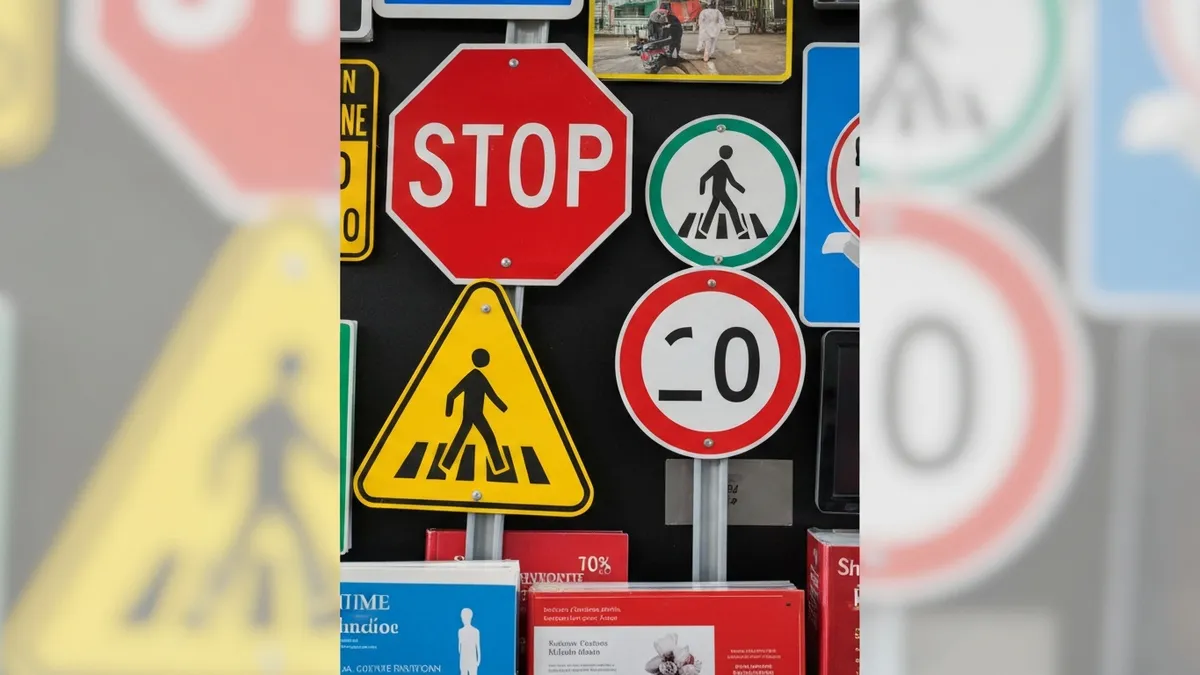
Road signs represent one of the most visual and concrete aspects of the LTO curriculum. The Philippines uses a system derived from international standards, which means signs are categorized into regulatory signs (usually circular with red borders), warning signs (usually diamond-shaped in yellow), and informational or guide signs (usually rectangular in green or blue). Regulatory signs carry the force of law — disobeying a "No Entry" sign or ignoring a "No U-Turn" marker is a traffic violation subject to fines.
The exam expects you to identify the shape, color, and meaning of each sign category, so visual flashcard practice is highly recommended.
Pavement markings are an extension of the road sign system and are equally testable. Yellow center lines, white lane dividers, double solid lines, and pedestrian crosswalk markings all communicate specific driving rules. A solid yellow line on your side of the road means no overtaking is permitted in that lane. A broken white line separating lanes means lane changes are allowed when safe. The LTO exam frequently uses scenario-based questions where you must choose the correct action given a specific pavement marking situation, making it important to understand not just what each marking looks like but what behavior it requires.
Traffic rules and right-of-way questions often trip up applicants who know the rules in theory but struggle to apply them to intersection scenarios. Right of way at uncontrolled intersections in the Philippines follows a "vehicle on the right has priority" principle, but this changes at controlled intersections, roundabouts, and when emergency vehicles are present. The exam may present situations involving multiple vehicles approaching an intersection simultaneously and ask which driver must yield. Working through scenario-based practice questions is the most reliable way to internalize these rules so that correct answers feel intuitive rather than calculated.
Driver duties and responsibilities form the ethical and legal backbone of the LTO curriculum. This section covers seatbelt use requirements under RA 8750, the Anti-Drunk and Drugged Driving Act (RA 10586), speed limits in residential, school, and highway zones, and the prohibition against using mobile phones while driving. Many of these provisions carry criminal penalties for serious violations, not just administrative fines, which underscores why genuine understanding matters. An applicant who learns these rules thoroughly is not only better prepared for the exam — they are also much safer on the road after they receive their license.
The penalties section is where many applicants lose points unnecessarily. The Land Transportation and Traffic Code specifies exact fine amounts for specific offenses, and the exam expects you to know these figures. For example, the fine for driving without a valid license is different from the fine for driving with an expired license, and both differ from penalties for driving under the influence.
The LTO also operates a demerit points system that can result in license suspension or revocation for repeat offenders. Reviewing the schedule of fines and penalties in RA 4136 and its implementing rules at least twice during your preparation is strongly advised. Check the LTO portal through the how to review nbme exams resource for the most current penalty schedule.
Integrating all four topic areas into a single coherent mental map is the ultimate goal of your study sessions. The best examinees do not see these topics as separate silos but as interconnected aspects of a unified driving system.
A road sign warning of a school zone connects directly to the reduced speed limit rule in the driver responsibilities section, which in turn connects to the penalty for speeding in a school zone in the violations section. Thinking about these connections while you study deepens your comprehension and makes it much easier to answer trick questions that blend multiple topic areas in a single scenario.
What Does LTO Stand For: Exam Topics Explained
Road signs on the LTO exam fall into three main categories: regulatory, warning, and informational. Regulatory signs — such as stop signs, speed limit markers, and no-overtaking signs — carry legal force and must be obeyed at all times. Warning signs alert drivers to upcoming hazards like sharp curves, pedestrian crossings, or slippery roads. Informational signs guide drivers toward destinations, services, and facilities. Knowing the color and shape conventions for each category allows you to infer the meaning of unfamiliar signs during the exam.
The most commonly tested road signs include the "No Entry" sign (solid red circle), the "Give Way" sign (inverted triangle), speed limit discs, and school zone warning signs. The LTO question bank frequently tests whether applicants can distinguish between signs that look similar at first glance, such as the "No U-Turn" versus "No Left Turn" sign. Flash-card drills using actual Philippine road sign images — available through the LTO's official resources — are the most efficient way to build the instant recognition the exam demands. Aim to identify every standard sign within two seconds of seeing it.

Online VA Exam Review vs. Classroom Study: Which Works Better?
- +Study at your own pace and on your own schedule without commuting to a review center
- +Access to hundreds of practice questions that mirror the actual LTO exam item format
- +Instant feedback on wrong answers helps you identify weak areas immediately
- +Free resources are widely available, reducing preparation costs to nearly zero
- +Ability to repeat specific topic drills as many times as needed until mastery is achieved
- +Progress tracking tools let you measure improvement and adjust your study plan accordingly
- −Self-directed study requires strong personal discipline that some applicants struggle to maintain
- −Online resources vary in quality and accuracy — outdated materials can teach wrong information
- −No instructor to clarify confusing concepts or answer context-specific questions in real time
- −Screen fatigue from long study sessions can reduce retention compared to printed materials
- −Mock exams online may not perfectly replicate the time pressure of the actual testing environment
- −Applicants without reliable internet access may find consistent online study difficult to sustain
LTO Exam Preparation Checklist
- ✓Download and read the full text of Republic Act 4136 (Land Transportation and Traffic Code) at least once.
- ✓Memorize all regulatory, warning, and informational road sign shapes, colors, and meanings.
- ✓Study pavement marking types and the specific driving rules each marking requires.
- ✓Review the complete schedule of traffic fines and penalties, including the LTO demerit points system.
- ✓Practice at least 200 sample questions spread across all four major topic areas before exam day.
- ✓Complete at least two full timed mock exams simulating the 40-question, 30-minute format.
- ✓Review right-of-way rules at controlled and uncontrolled intersections using scenario diagrams.
- ✓Confirm your required documents (medical certificate, application form, birth certificate) are complete.
- ✓Schedule your LTO appointment through the official LTMS portal to avoid long walk-in queues.
- ✓Arrive at the testing center at least 30 minutes early to allow time for registration and orientation.

The 75% Rule: Know It, Plan Around It
The LTO written exam requires a minimum score of 30 out of 40 questions correct — that is exactly 75%. This means you can afford to miss no more than 10 questions and still pass. Most applicants who fail miss between 11 and 15 questions, nearly always concentrated in the road signs and traffic penalties sections. Targeting these two areas with extra practice in the final three days before your exam is the single highest-impact adjustment you can make to your preparation plan.
Effective study strategies for the LTO va exam review go far beyond simply reading the traffic code once and hoping the information sticks. Research on learning retention consistently shows that active recall — testing yourself rather than passively re-reading — is the most efficient way to move information into long-term memory. For the LTO exam, this means working through practice questions daily rather than spending all your time with the reviewer text. The ideal ratio is roughly 60% active practice and 40% content review, especially in the final week before your scheduled exam date.
Spaced repetition is another technique with strong evidence behind it. Instead of cramming all your study into the two days before the exam, spread your preparation over two to three weeks, revisiting each topic multiple times with increasing intervals between sessions. On day one, you might study road signs for the first time. On day three, you briefly review the same material. On day seven, you test yourself again without looking at the reference material first. This pattern forces your brain to reconstruct the information from memory each time, which dramatically strengthens retention compared to massed practice or rereading.
Many successful LTO examinees recommend grouping related topics together for study sessions rather than jumping randomly between subjects. For example, studying speed limits and then immediately studying the penalties for speeding reinforces the connection between the rule and its consequence. Similarly, studying the "No Overtaking" sign together with the traffic rules on when overtaking is permitted creates a richer, more connected understanding than treating each topic in isolation. This clustering approach mirrors how exam questions actually work, where a single scenario often requires knowledge from multiple topic areas simultaneously.
Visual learning tools are particularly effective for the road signs portion of the LTO exam. Printing or downloading a Philippine road signs reference chart and posting it somewhere you see it every day — such as your bathroom mirror or refrigerator — allows for passive review during otherwise idle moments. This low-effort exposure reinforces the visual memory of each sign's shape and color even when you are not formally studying. Within a week, most applicants find that common signs become instantly recognizable without conscious effort, freeing cognitive bandwidth for the more conceptually demanding rules and penalties questions.
Peer study, whether in person or through online discussion groups, adds another dimension to LTO exam preparation. Explaining a rule to someone else is one of the most effective ways to identify gaps in your own understanding. If you cannot explain why a solid yellow line prohibits overtaking in plain language to a friend, you probably do not understand it well enough to apply it correctly under exam pressure.
Many applicants form small study groups in the days before their exam date, quizzing each other on penalty amounts and sign identifications. This approach also helps with motivation during a study period that can feel repetitive and isolating.
Time management during the actual exam is a skill that deserves specific practice. With 40 questions and 30 minutes available, you have an average of 45 seconds per question. Most questions can be answered in 20 to 30 seconds, which leaves buffer time for the harder scenario-based items. The recommended strategy is to answer every question you are confident about first, marking uncertain items to return to.
Never leave a question blank — the LTO exam does not penalize for wrong answers, so a guess is always better than nothing. If a question is unclear, use the process of elimination to narrow it down to two options, then choose the one that aligns most closely with the core principle of road safety. For guidance on common violations that appear in exam questions, see the detailed breakdown in the is princeton review harder than real ap exam article.
The night before your exam, avoid cramming new material. Use that evening for a light review of your most challenging areas and a full night of sleep. Fatigue significantly reduces cognitive performance, and arriving at the testing center tired will cost you far more points than any last-minute memorization session could recover. Eat a proper breakfast on exam morning, bring all required documents in an organized folder, and give yourself enough travel time to arrive relaxed and early. Mental readiness on exam day is just as important as the content knowledge you have built over the preceding weeks.
The LTO will not allow you to sit for the written examination without your complete set of requirements. These typically include a valid medical certificate from an LTO-accredited clinic, a completed application form, your original birth certificate (PSA-authenticated), and the official examination fee receipt. Requirements may vary slightly depending on whether you are applying for a student permit, a non-professional license, or a professional license. Verify the exact current list on the official LTO website or through the LTMS portal at least one week before your scheduled exam date to avoid a wasted trip.
Once you pass the LTO written examination, the road ahead involves several more steps before you hold a fully valid driver's license in your hands. For first-time applicants, passing the written exam grants a student permit, which authorizes you to practice driving under the supervision of a licensed driver for a minimum of one month.
During this student permit period, you should be actively developing your practical driving skills, ideally with the guidance of a professional driving instructor from an LTO-accredited driving school. The practical skills test that follows the student permit period is a hands-on evaluation of your ability to operate a vehicle safely in real road conditions.
The practical driving test covers vehicle inspection procedures, basic driving maneuvers such as parking and three-point turns, proper mirror use, smooth acceleration and braking, and compliance with traffic signals and signs in a live road environment.
Many applicants who pass the written exam with high scores still fail the practical test because they did not invest adequate time in actual behind-the-wheel practice. The skills tested in the practical examination are the same ones you will use every single day as a licensed driver, so genuine competence — not just the ability to complete the test route — is the appropriate goal.
After passing both the written and practical tests, you will be issued a non-professional driver's license (NPDL) if you applied for a standard license. A non-professional license authorizes you to operate a private vehicle for personal use but not for hire.
If you intend to drive a public utility vehicle, a truck, a bus, or any vehicle for commercial purposes, you will need to pursue a professional driver's license (PDL), which involves additional requirements including a more rigorous practical examination and, in some categories, a specialized vehicle test. Professional license applicants should review the full requirements through the general exam review guide covering haven life no medical exam life insurance reviews materials.
License renewal is a regular obligation for all licensed drivers in the Philippines. LTO licenses are issued with validity periods — typically five years for standard licenses — and must be renewed before the expiration date to avoid penalties. The renewal process requires a current medical certificate, payment of renewal fees, and in some cases a brief written assessment.
Many drivers are surprised to learn that allowing their license to lapse beyond one year can trigger requirements similar to a new application, including re-taking the written and practical examinations. Staying ahead of your renewal deadline is therefore important for maintaining uninterrupted driving privileges.
The LTO also operates a license suspension and revocation system for drivers who accumulate excessive demerit points or commit serious traffic violations. Under the current system, receiving 12 demerit points within a calendar year results in automatic license suspension. Repeat offenders face progressively longer suspension periods, and drivers convicted of certain serious offenses — such as hit-and-run incidents or driving under the influence resulting in injury or death — face permanent license revocation. Understanding these consequences during your exam preparation is not just useful for passing the test; it is essential context for responsible driving throughout your entire driving career.
Digital services have made many LTO transactions significantly more convenient in recent years. The Land Transportation Management System (LTMS) portal allows drivers to check their license status, view their demerit point total, schedule appointments for renewals and examinations, and access transaction histories online. Using the LTMS portal effectively reduces the need for in-person office visits and helps you stay informed about any changes to your license status. Registering on the portal before your exam appointment is advisable, as it streamlines the check-in process and ensures your records are properly linked to your application.
Community resources, including official LTO social media channels and accredited driving school networks, provide a steady stream of updates about policy changes, fee adjustments, and new examination procedures. The LTO periodically updates its question bank and may modify examination procedures in response to new traffic legislation. Staying connected to authoritative information sources ensures that your preparation is based on the most current rules rather than outdated reviewer materials that may no longer reflect active LTO policy. A combination of official sources and high-quality practice tests gives you the most complete and reliable preparation foundation available.
Practical tips from experienced LTO examinees consistently point to one strategy above all others: start your practice tests early and take them often. The LTO question bank is large, and the exam draws from it semi-randomly, which means no two exam sittings are identical.
Applicants who have completed 300 or more practice questions before their exam date typically report feeling calm and confident during the actual test, even when they encounter questions they have not seen in exactly that form before. Broad exposure to the question types and topic combinations trains your mind to recognize the underlying principle being tested, not just the specific wording of a memorized question.
Reading questions carefully is a skill that can make or break your LTO exam performance. The exam includes questions with subtle wording differences that completely change the correct answer. For example, a question asking what you should do "before" making a lane change is different from one asking what you should do "while" making a lane change.
Questions using absolute terms like "always" or "never" often signal a correct or incorrect answer choice, since traffic rules rarely have truly absolute applications. Developing a habit of reading the full question and all four answer choices before selecting an answer prevents many avoidable errors.
Managing test anxiety is a legitimate preparation challenge for many applicants. Arriving at the testing center having completed thorough preparation and adequate sleep significantly reduces anxiety, but some candidates experience exam nerves regardless of how well they prepared. If you feel anxious during the exam, use a simple grounding technique: take three slow, deep breaths before reading the first question.
Work through questions in order, skipping only those you are truly unsure about, and trust the preparation you have completed. Anxiety most often peaks in the first five minutes of the exam and diminishes as you begin answering questions correctly and build momentum.
Practice quizzes are most valuable when you treat them as diagnostic tools rather than just confidence builders. After each practice session, review every question you answered incorrectly — not just to learn the right answer but to understand why the correct answer is correct and why your chosen answer was wrong.
This targeted error analysis is far more efficient than simply retaking the same quiz repeatedly. Keeping a simple log of your mistake patterns — for example, consistently missing questions about intersection right of way — allows you to direct extra attention to your weakest areas rather than spending equal time on topics you have already mastered.
The social dimension of your LTO exam preparation should not be overlooked. Telling friends, family, or colleagues about your exam date creates a form of positive accountability that many people find motivating. It also opens the door to receiving practical driving tips from experienced drivers in your network. Long-time drivers often have real-world experience with traffic situations that bring the theoretical rules to life in memorable ways. A story from an experienced driver about why the right-of-way rule at an uncontrolled intersection matters is more memorable than the same rule stated as a dry legal provision.
The week leading up to your LTO exam should be characterized by confidence maintenance rather than panic-driven cramming. Use the first three days of that week for targeted review of your weakest topic areas, identified through your practice test logs. Days four and five should include one full timed mock exam each, followed by careful review of any errors.
The final two days before the exam should be light — perhaps 20 to 30 minutes of road sign identification practice, a brief review of the most common penalty amounts, and focus on rest and logistics preparation. This tapering approach keeps your knowledge fresh without introducing fatigue or information overload right before the test.
On the day of the exam, trust yourself. Every practice question you answered, every traffic rule you read, and every road sign you memorized is stored in your long-term memory and will be accessible when you need it. The LTO written examination is designed to be passable by any applicant who has studied the material conscientiously — it is not designed to trick or eliminate prepared candidates.
Approach each question with a calm, methodical mindset, apply the knowledge you have built, and you will be well positioned to walk out of the testing center with a passing score and the next step in your driver's licensing journey secured.
LTO Questions and Answers

LTO License Renewal Guide Philippines 2026 — Requirements and Process
LTO Traffic Violations Philippines 2026 — Fines and Penalties Guide

LTO Portal (LTMS): How to Register, Schedule Tests, and Access Online Services

What Is LTO? Complete General Exam Review and PT Final Exam Reviews Guide for 2026

LTO Professional Driver's License Guide Philippines 2026
About the Author

Educational Psychologist & Academic Test Preparation Expert
Columbia University Teachers CollegeDr. Lisa Patel holds a Doctorate in Education from Columbia University Teachers College and has spent 17 years researching standardized test design and academic assessment. She has developed preparation programs for SAT, ACT, GRE, LSAT, UCAT, and numerous professional licensing exams, helping students of all backgrounds achieve their target scores.
Join the Discussion
Connect with other students preparing for this exam. Share tips, ask questions, and get advice from people who have been there.
View discussion (8 replies)