
Upper Cape Tech LPN Program: Your Complete Guide to Enrollment, Curriculum & NCLEX Prep
Upper Cape Tech LPN program overview: admission steps, curriculum, costs, and NCLEX prep tips. 🎯 Everything you need to start your nursing career.
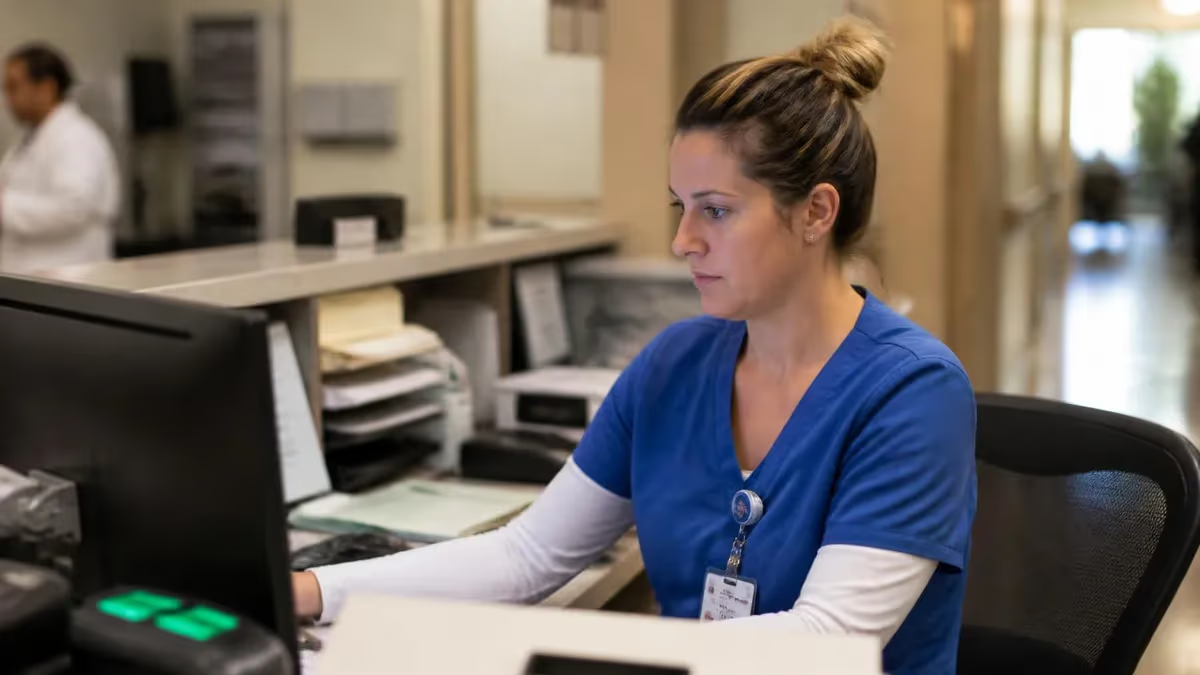
The upper cape tech lpn program is one of southeastern Massachusetts's most respected pathways into practical nursing, combining hands-on clinical training with rigorous classroom instruction at a public vocational-technical school with decades of healthcare education experience. Students who complete the program graduate prepared to sit for the NCLEX-PN licensure examination and enter a workforce that is actively hiring licensed practical nurses across hospitals, long-term care facilities, and community health settings throughout Cape Cod and beyond.
Upper Cape Tech, formally known as Upper Cape Cod Regional Technical School, is located in Bourne, Massachusetts. The school's Health Occupations department has built a reputation for producing competent, compassionate nurses who transition smoothly from the classroom to the bedside. The LPN program draws applicants from Barnstable, Plymouth, and surrounding counties who are looking for a tuition-cost-conscious alternative to four-year college nursing programs while still receiving nationally benchmarked clinical preparation.
Prospective students often wonder what sets a vocational-technical school LPN program apart from programs offered at community colleges or private career schools. The answer lies largely in the school's mission. Vocational-technical schools like Upper Cape Tech are designed specifically to connect academic content to employable, practical skills. Every unit of anatomy, pharmacology, and patient care theory is paired with lab and clinical time so students practice what they learn almost immediately, building the muscle memory and critical-thinking habits that make a difference during NCLEX exam day and beyond.
Admission to the program is competitive because enrollment is limited to ensure each student receives adequate clinical supervision. Applicants are typically evaluated on prior academic performance, prerequisite coursework, healthcare background experience such as work as a certified nursing assistant, and interviews or assessments conducted by the Health Occupations faculty. Understanding the timeline and requirements before you apply dramatically improves your chances of acceptance in the cycle you want.
The curriculum itself spans roughly twelve months of full-time study. During that time students move through foundational nursing theory, medical-surgical nursing, maternal-newborn nursing, pediatrics, mental health nursing, and gerontological nursing. Each content area is connected to clinical rotations at local partner facilities, giving students exposure to diverse patient populations and care settings. Graduates typically describe the program as demanding but significant, crediting the close faculty-student ratio for their confidence going into the workforce.
Financing the program is a key concern for most applicants. Because Upper Cape Tech is a public school, tuition rates tend to be lower than private LPN programs, but there are still application fees, supply costs, liability insurance requirements, and examination fees to budget for. Financial aid options, workforce training grants, and employer tuition reimbursement programs are all worth exploring before you enroll. The sections below break down costs, curriculum structure, pros and cons, and practical NCLEX preparation strategies to give you a complete picture of what to expect.
Whether you are a high school graduate starting your healthcare career from scratch, a working CNA ready to advance your credentials, or a career-changer attracted to the stability and meaning of nursing work, this guide covers everything you need to evaluate the program, prepare your application, and set yourself up for licensure success from your very first day of class.
Upper Cape Tech LPN Program by the Numbers
Upper Cape Tech LPN Program: Step-by-Step Timeline
Research & Prerequisite Planning
Submit Application & Assessment
Acceptance & Orientation
Year of Full-Time Study
Graduation & NCLEX Application
Pass NCLEX-PN & Enter the Workforce
Understanding the admission requirements for a vocational-technical LPN program requires more preparation than many applicants anticipate. Upper Cape Tech's Health Occupations department evaluates applicants holistically, which means academic transcripts are only part of the picture. The school looks for candidates who demonstrate genuine commitment to a healthcare career, which often means prior experience as a CNA, home health aide, or medical office employee is weighted heavily in the selection process alongside GPA and science coursework performance.
Most LPN programs in Massachusetts require applicants to hold a high school diploma or its equivalent, and Upper Cape Tech is no exception. Strong performance in biology, chemistry, and mathematics during high school or in post-secondary prerequisite coursework strengthens an application considerably. If your high school science background is several years old, many advisors recommend completing a community college anatomy or biology course within the two years before applying to demonstrate current academic capability and refresh foundational knowledge.
Background check clearance is mandatory before any student can participate in clinical rotations. Massachusetts requires a Criminal Offender Record Information (CORI) check, and some clinical partner facilities may require additional federal background screenings. Students with prior criminal convictions are strongly encouraged to consult with the Massachusetts Board of Registration in Nursing before investing in any LPN program, because licensure eligibility is determined by the Board rather than the school and can be affected by certain conviction types.
Health documentation requirements are extensive and non-negotiable. Students must provide proof of current immunizations including MMR, varicella, hepatitis B series, annual influenza vaccination, and tuberculosis screening results. Up-to-date CPR certification at the Basic Life Support (BLS) for Healthcare Providers level from the American Heart Association is also required before clinical placements begin. These requirements exist to protect both the student and vulnerable patient populations encountered during clinical training.
The application timeline matters enormously. LPN program seats are limited, and many vocational-technical schools accept applications well in advance of the program start date, sometimes more than six months ahead. Missing the application window often means waiting a full year for the next cohort. Setting calendar reminders, checking the school website frequently, and contacting the admissions office directly in the fall if you plan to apply for a fall or spring start the following year is the most reliable strategy for staying ahead of deadlines.
Financial qualification is another dimension to consider during the admission process. While Upper Cape Tech's public-school tuition structure is more affordable than private LPN programs, students still need to budget for books, uniforms, supplies, nursing equipment such as a stethoscope and blood pressure cuff, liability insurance, health screenings, and NCLEX examination fees. Some students finance their education through the Massachusetts Workforce Training Fund, MassHire career centers, or employer tuition assistance programs that will reimburse costs after licensure in exchange for a commitment to work at a sponsoring facility.
Once admitted, students should approach orientation with a mindset of organization and proactive communication. Faculty in health occupations programs at vocational-technical schools are typically experienced clinicians who appreciate students who ask clarifying questions, arrive prepared, and treat every lab and clinical session as a professional practice environment. Building positive relationships with instructors from day one creates mentorship opportunities that extend well beyond graduation, including strong letters of reference for competitive LPN positions after licensure.
LPN Program Curriculum: What You Will Study
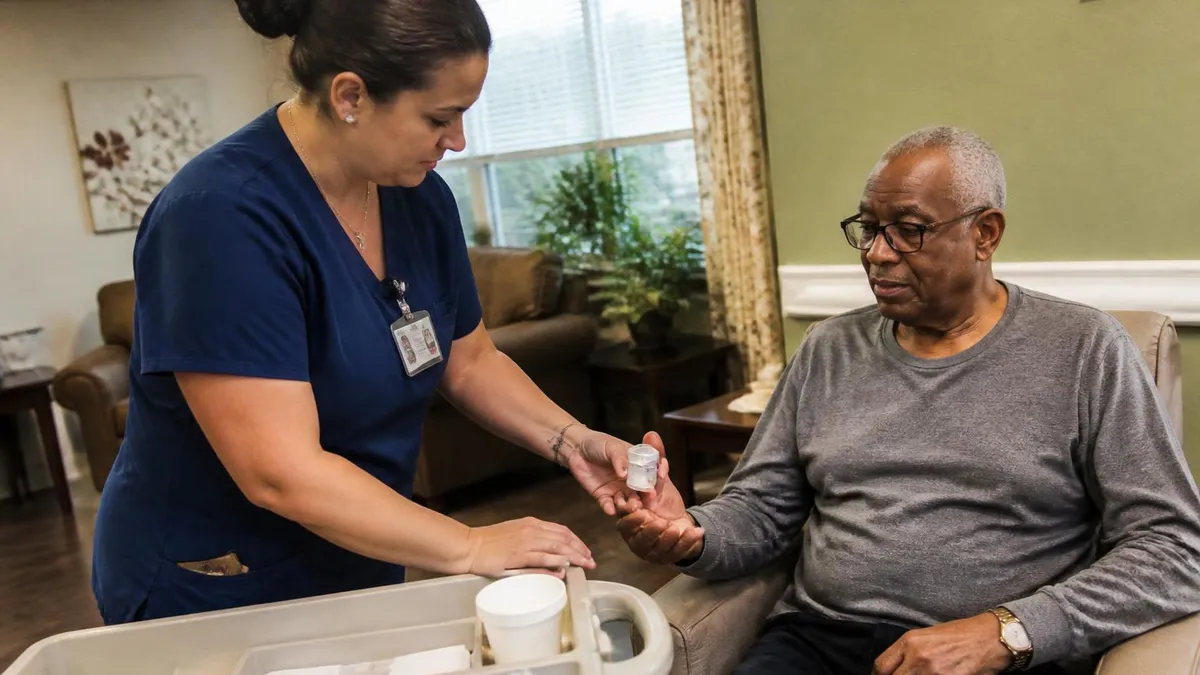
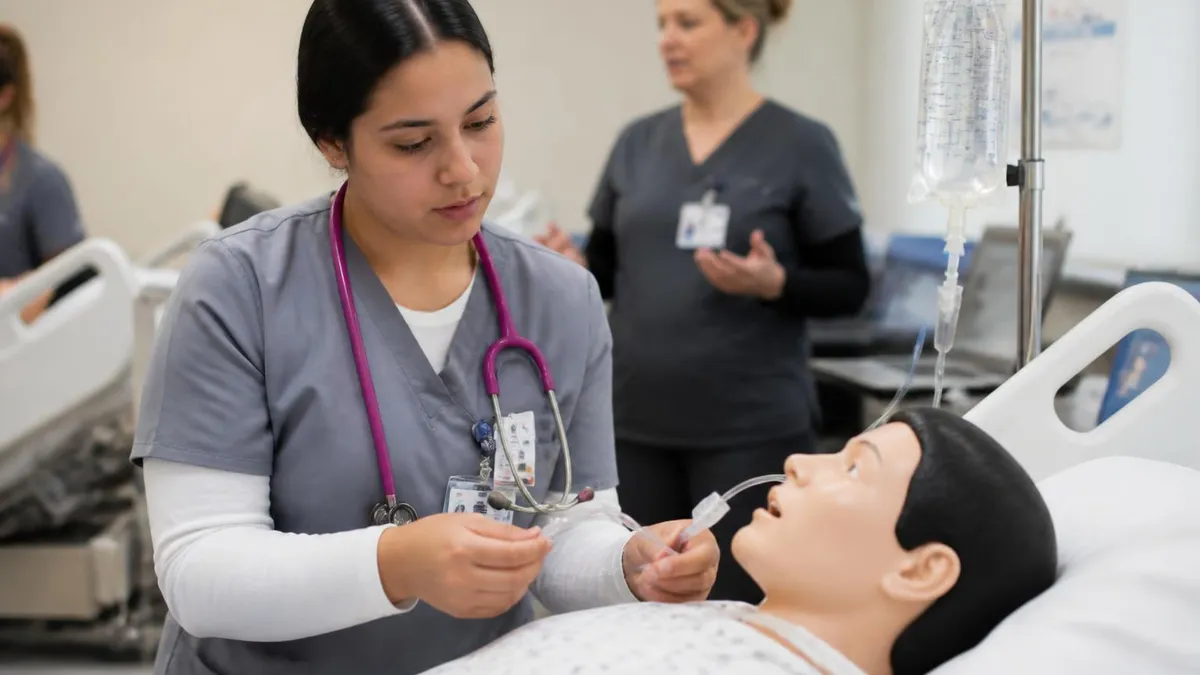
The foundational semester of any accredited LPN program covers the core principles that underpin all nursing practice. At Upper Cape Tech students learn infection control protocols, body mechanics and patient positioning, vital sign measurement and interpretation, documentation practices, and the nursing process itself. These foundational skills are practiced in a simulated lab environment using mannequins and task trainers before students ever interact with real patients, building procedural confidence and safety habits from the very first weeks of training.
Theory classes run parallel to lab sessions, covering anatomy and physiology review, introduction to pharmacology, medical terminology, and the legal and ethical framework governing practical nursing practice in Massachusetts. Students learn about the scope of practice for LPNs specifically, understanding what tasks fall within their authority and when escalation to an RN or physician is required. Mastering this boundary is essential not only for safe patient care but also for answering the significant portion of NCLEX-PN questions focused on coordinated care and delegation concepts.
Is the Upper Cape Tech LPN Program Right for You?
- +Public school tuition rates are significantly lower than private LPN career schools, reducing overall debt burden for graduates
- +Small cohort sizes mean each student receives individualized attention from experienced clinical nursing faculty
- +Strong local employer relationships create clinical placement and post-graduation job networking opportunities on Cape Cod
- +Twelve-month completion timeline allows students to enter the workforce and begin earning a professional salary faster than RN programs
- +Vocational-technical school mission ensures curriculum stays tightly aligned with actual entry-level LPN workplace competencies
- +Program prepares graduates to sit for NCLEX-PN and potentially ladder into RN programs through bridge pathways available at regional colleges
- −Limited enrollment means competitive admission and potential wait times if you miss an application cycle
- −Full-time day schedule makes it difficult to maintain current employment during the program year
- −Location in Bourne may require significant commuting time for applicants from outer Cape Cod communities
- −CNA or prior healthcare experience, while not always required, substantially improves admission odds and may disadvantage career-changers with no clinical background
- −LPN scope of practice is more restricted than RN, meaning some hospital settings are hiring fewer LPNs in favor of BSN-prepared nurses
- −Additional costs for background checks, health screenings, uniforms, equipment, and NCLEX fees add several hundred dollars beyond tuition
Pros and Cons at a Glance
| Pros | Cons |
|---|---|
| Public school tuition rates are significantly lower than private LPN career schools, reducing overall debt burden for graduates | Limited enrollment means competitive admission and potential wait times if you miss an application cycle |
| Small cohort sizes mean each student receives individualized attention from experienced clinical nursing faculty | Full-time day schedule makes it difficult to maintain current employment during the program year |
| Strong local employer relationships create clinical placement and post-graduation job networking opportunities on Cape Cod | Location in Bourne may require significant commuting time for applicants from outer Cape Cod communities |
| Twelve-month completion timeline allows students to enter the workforce and begin earning a professional salary faster than RN programs | CNA or prior healthcare experience, while not always required, substantially improves admission odds and may disadvantage career-changers with no clinical background |
| Vocational-technical school mission ensures curriculum stays tightly aligned with actual entry-level LPN workplace competencies | LPN scope of practice is more restricted than RN, meaning some hospital settings are hiring fewer LPNs in favor of BSN-prepared nurses |
| Program prepares graduates to sit for NCLEX-PN and potentially ladder into RN programs through bridge pathways available at regional colleges | Additional costs for background checks, health screenings, uniforms, equipment, and NCLEX fees add several hundred dollars beyond tuition |
NCLEX-PN Preparation Checklist for LPN Graduates
- ✓Create a structured daily study schedule at least eight to ten weeks before your scheduled NCLEX-PN test date
- ✓Complete a full-length diagnostic practice exam to identify your weakest content domains before starting targeted review
- ✓Review Next Generation NCLEX (NGN) clinical judgment question formats and practice bow-tie, trend, and matrix-type items weekly
- ✓Study pharmacology by drug class rather than individual medications, focusing on high-alert drugs like anticoagulants, insulin, and opioids
- ✓Use spaced repetition flashcards or an app for medical terminology, normal lab values, and common drug side effects
- ✓Practice answering a minimum of 50 to 75 NCLEX-style questions every single day, reviewing rationales for every question — both correct and incorrect
- ✓Schedule at least two full-length timed practice exams that simulate real computerized adaptive testing conditions
- ✓Apply NCLEX test-taking strategies such as eliminating options that assign blame, selecting the safest option, and identifying what the question is truly asking
- ✓Join a study group with fellow graduates to discuss challenging clinical scenarios and quiz each other on priority-setting questions
- ✓Submit your NCLEX-PN application to the Massachusetts Board of Registration in Nursing immediately after graduation to avoid unnecessary delays in receiving your ATT
CNA Experience Can Make or Break Your Application
Many successful Upper Cape Tech LPN applicants held active CNA certification before applying. Working as a CNA for even six to twelve months demonstrates clinical commitment, builds foundational patient care skills, and gives you concrete healthcare experiences to discuss during the admissions interview — all factors that distinguish competitive candidates from those without any hands-on healthcare background.
Understanding the full cost picture of the Upper Cape Tech LPN program is essential for financial planning before you commit to enrollment. As a Massachusetts public vocational-technical school, Upper Cape Tech charges tuition rates that are regulated and typically lower than private career schools offering equivalent LPN programs. However, prospective students should recognize that the published tuition figure is only the starting point of a multi-line budget that includes several unavoidable additional expenses spread across the enrollment year.
Application fees are generally modest, but background check processing, immunization titers if you lack childhood vaccination records, and physical examination documentation can add up to several hundred dollars before classes even begin. Some immunizations like the hepatitis B series require multiple doses spread over months, so prospective students should start that process well before the application deadline to avoid delays in clinical placement clearance once the program begins.
Supply costs include a nursing skills kit with a stethoscope, blood pressure cuff, penlight, bandage scissors, and a watch with a second hand. Program-specific uniforms or scrubs are typically required in approved colors. A reliable nursing pharmacology reference and medical dictionary are recommended. Some students purchase a tablet or laptop for digital textbooks and online resources. Budget approximately three hundred to five hundred dollars for equipment and supplies, though costs vary depending on what you already own and whether you purchase new or used items.
Liability insurance is required for clinical rotations and is typically purchased through the school as part of the program fees or arranged through a national nursing student insurance program at low annual cost. This insurance protects students during clinical activities and is non-negotiable for participation in patient care settings. The cost is generally modest, often under one hundred dollars per year, but it must be secured before the first clinical day.
NCLEX-PN examination fees add another layer of cost at the end of the program. The Pearson VUE examination fee is currently two hundred dollars payable when scheduling your test, and the Massachusetts Board of Registration in Nursing charges a separate licensure application fee. Some students also invest in commercial NCLEX prep products such as UWorld, Kaplan, or ATI, which range from one hundred to several hundred dollars depending on the subscription tier and duration. These are optional but widely considered worth the investment given the impact of first-attempt pass rates on employment timelines.
Financial assistance options deserve thorough investigation. Massachusetts residents may qualify for MassGrant financial aid if their income meets eligibility thresholds. MassHire career centers across the state administer workforce training funds that can cover vocational program tuition for eligible dislocated workers or individuals pursuing in-demand healthcare credentials. Some long-term care facilities on Cape Cod offer tuition reimbursement or scholarship programs for employees pursuing LPN certification, which is an especially attractive option for CNAs already working at a facility that hires LPNs post-graduation.
Federal financial aid, including Pell Grants and subsidized student loans, may be available to eligible students enrolled in approved programs. Completing the Free Application for Federal Student Aid (FAFSA) early in the application cycle is strongly recommended even if you are uncertain about eligibility, because some grants are awarded on a first-come, first-served basis and the paperwork processing timeline can take weeks. Consulting with the school's financial aid coordinator immediately after acceptance is the most reliable path to understanding every funding option available to you.
Creating a comprehensive budget that accounts for tuition, fees, supplies, transportation to clinical sites, potential lost income during the program year, and examination costs gives you a realistic sense of the true investment involved. Many graduates report that the financial sacrifice of twelve months of reduced or suspended full-time employment is offset quickly once they begin working as licensed LPNs and see their earning potential increase substantially compared to CNA wages, particularly in Massachusetts where LPN salaries are competitive with national averages.
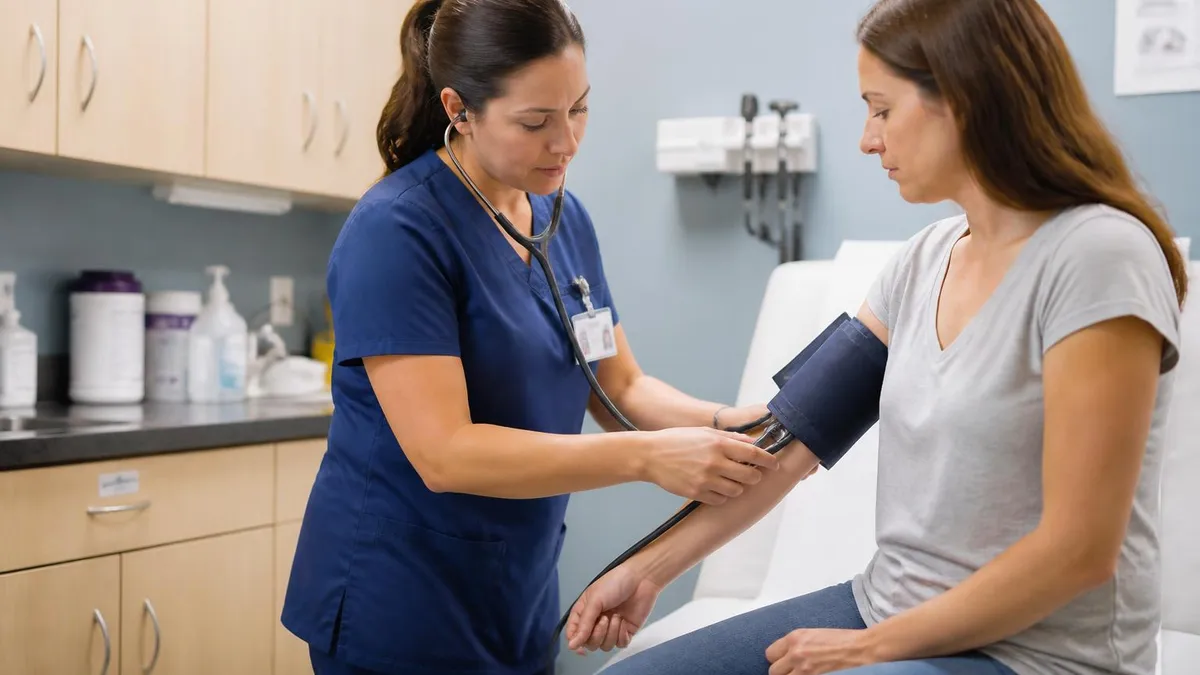
LPN program cohorts at vocational-technical schools have strictly limited enrollment, and qualified applicants who submit late applications are often placed on a waitlist or asked to reapply the following year. Contact the Upper Cape Tech Health Occupations department at least six months before the program start date to confirm the current application window and submit all required documentation well ahead of the posted deadline.
Career outcomes for graduates of the Upper Cape Tech LPN program reflect broader trends in Massachusetts healthcare employment, which consistently ranks among the strongest nursing job markets in the United States. Cape Cod's aging permanent population combined with a large seasonal influx of retirees and vacationers creates sustained year-round demand for licensed practical nurses across multiple care settings. Graduates who build local clinical relationships during their rotations frequently receive job offers before they even sit for the NCLEX-PN examination.
Long-term care facilities including skilled nursing facilities and assisted living communities are the largest employers of LPNs throughout southeastern Massachusetts. These settings offer full-time and part-time positions across all three shifts, competitive hourly wages, benefits packages, and clear pathways for advancement. LPNs working in long-term care manage complex medication regimens, perform wound care and catheter management, coordinate care with physical and occupational therapists, and serve as the primary nursing contact for residents and their families on many shifts.
Home health agencies represent another significant employment sector for Cape Cod LPN graduates. Home health LPNs provide skilled nursing visits to homebound patients, performing assessments, medication teaching, wound care, and IV therapy under physician orders and RN supervision. The work offers scheduling flexibility and the opportunity to build longitudinal relationships with patients and families that are often less available in institutional settings. Massachusetts home health agencies are actively recruiting LPNs with strong assessment skills and reliable transportation.
Physician offices, urgent care clinics, and specialty practices hire LPNs for clinical support roles involving patient intake, vital signs, medication administration, patient education, and care coordination. These positions typically offer daytime weekday schedules that appeal to LPNs with family commitments, though the hourly compensation may be somewhat lower than hospital or long-term care positions that include shift differentials. The trade-off in work-life balance makes office-based LPN positions consistently popular among experienced nurses seeking a change of pace.
Career advancement options for LPNs have expanded meaningfully in recent years. The most common pathway is enrolling in an LPN-to-RN bridge program at a community college or university after working for one to two years post-licensure. Programs such as those offered at Cape Cod Community College or Bristol Community College accept LPN licensure as credit toward RN graduation requirements, shortening the time and cost needed to earn an Associate Degree in Nursing (ADN). RN licensure dramatically expands both employment setting options and earning potential.
Specialty certifications available to LPNs include IV therapy certification, wound care certification, and certifications in specific care populations such as gerontology or rehabilitation nursing. These credentials signal advanced competence to employers and often support pay increases or advancement to charge nurse or senior clinical roles within long-term care and home health settings. Massachusetts does not require LPN IV certification by statute, but many facilities require it for LPNs who will be administering intravenous medications, so obtaining certification early in your career is a strategic professional investment.
The long-term earning trajectory for Massachusetts LPNs who pursue continuing education, specialty certifications, and leadership roles is significantly stronger than for those who remain in entry-level positions without additional credentials. Whether your goal is to build a long career as an LPN in your community, advance to RN licensure, or eventually pursue a healthcare management role, the foundation built during the Upper Cape Tech program positions you to grow in directions that align with your personal and professional aspirations over time.
Practical preparation strategies for the NCLEX-PN examination go far beyond purchasing a review book and reading through it cover to cover. The current Next Generation NCLEX format, which became standard in April 2023, introduced new question types designed to measure clinical judgment rather than simple knowledge recall. Students who study exclusively from older review materials or rely only on traditional multiple-choice practice are at a measurable disadvantage compared to those who deliberately practice the new item formats throughout their final semester and post-graduation review period.
Clinical judgment on the NCLEX-PN is evaluated using the NCSBN Clinical Judgment Measurement Model, which describes six cognitive skills: recognizing cues, analyzing cues, prioritizing hypotheses, generating solutions, taking actions, and evaluating outcomes. These skills are tested through new item formats including enhanced hot spots, highlight-the-text questions, drop-down cloze items, matrix grids, and bow-tie questions where students must identify client conditions, nursing actions, and expected outcomes simultaneously. Understanding what each format is testing and practicing it repeatedly removes the element of surprise on test day.
Time management during the examination is a skill that requires deliberate practice. The NCLEX-PN is a computerized adaptive test with a minimum of 85 questions and a maximum of 150 questions, with testing time up to five hours. The exam ends when the computer determines with statistical confidence that you are either above or below the passing standard.
Students who have never practiced under timed conditions often find themselves rushing or second-guessing answers near the end of their testing session. Building stamina through full-length timed practice exams in the weeks before your test date conditions your brain and body for the real experience.
Content priority for NCLEX-PN review should be driven by your diagnostic practice test results rather than personal preference or guesswork. Most commercial NCLEX prep platforms generate detailed performance reports by content area, client need category, and cognitive level. Students who use these reports to build structured, evidence-based study plans consistently outperform students who study in unstructured or emotion-driven ways. If pharmacology is your weakest area, devote disproportionate review time to drug classes and high-alert medications, not to content areas where you are already performing above the passing standard.
Self-care during the preparation period is a factor that nursing students frequently underestimate. Sleep deprivation impairs both memory consolidation and clinical reasoning ability, the exact skills the NCLEX-PN measures. Students who sleep fewer than seven hours per night during their review period perform measurably worse on practice examinations than those who protect their sleep even when study time feels urgent. Physical activity, adequate nutrition, and stress management practices like journaling, meditation, or spending time outdoors are not luxuries during NCLEX prep — they are performance-enhancing strategies backed by cognitive science research.
The forty-eight hours before your examination should be low-intensity review at most. Cramming new content the night before a high-stakes examination has been shown repeatedly to increase anxiety and interfere with retrieval of information you already know well.
Instead, review your personal summary notes, complete a short practice session of twenty to thirty questions to stay in test-taking mode, confirm your testing center location and check-in procedures, prepare your identification documents, and get to bed at your normal time. Arriving at the testing center rested, organized, and with realistic expectations gives you the best possible foundation for demonstrating the knowledge you have built over twelve months of dedicated study and clinical practice.
After passing the NCLEX-PN and receiving your Massachusetts LPN license, the learning does not stop. New nurses are encouraged to seek positions that offer structured orientation programs, preceptorship with experienced LPN or RN mentors, and access to continuing education resources. The first year of professional nursing practice is a critical development period during which clinical judgment, time management, and professional communication skills deepen rapidly with supported experience. Choosing an employer who invests in new graduate nurses during this transition period pays dividends in competence, confidence, and long-term career satisfaction.
Sample Certified Practical Nurse Practice Questions
Try these questions from our free Certified Practical Nurse practice tests. The correct answer and an explanation follow each question.
A client at 32 weeks gestation develops severe epigastric pain, nausea, and right upper quadrant tenderness. Lab results show elevated liver enzymes (AST 280 U/L), thrombocytopenia (platelets 85,000/mm³), and microangiopathic hemolytic anemia. The LPN recognizes this as:
- A. Acute appendicitis requiring emergency surgery
- B. Cholecystitis from pregnancy-related gallstone formation
- C. HELLP syndrome — a severe complication of preeclampsia requiring immediate escalation
- D. Normal abdominal discomfort of the third trimester
Answer: C. HELLP syndrome — a severe complication of preeclampsia requiring immediate escalation
HELLP syndrome (Hemolysis, Elevated Liver enzymes, Low Platelets) is a severe, life-threatening variant of preeclampsia requiring immediate delivery regardless of gestational age.
An LPN is caring for a client who is scheduled for a colonoscopy. The client's preparation includes a polyethylene glycol solution. The LPN should monitor the client for which potential complication related to this bowel prep?
- A. Hypertension and fluid overload.
- B. Electrolyte imbalances and dehydration.
- C. Hyperglycemia and increased urine output.
- D. Constipation and abdominal cramping.
Answer: B. Electrolyte imbalances and dehydration.
Polyethylene glycol solutions are osmotic laxatives that cause a large volume of liquid stool to clean the colon. This can lead to significant fluid and electrolyte losses, putting the client at risk for dehydration, hyponatremia, and hypokalemia. The LPN's role includes monitoring for signs of these imbalances, such as weakness, confusion, or cardiac dysrhythmias.
A client is scheduled for a colonoscopy and asks why they need to complete a bowel prep. What is the best response by the LPN?
- A. It reduces the risk of bleeding during the procedure
- B. It helps the physician see the bowel lining clearly and reduces infection risk
- C. It prevents constipation after the procedure
- D. It lowers your blood pressure so you tolerate sedation better
Answer: B. It helps the physician see the bowel lining clearly and reduces infection risk
Bowel prep clears stool from the colon to allow clear visualization and reduces the risk of contamination if bowel perforation occurs.
A client has a peripheral IV infusing. The nurse notices the infusion site is cool, pale, puffy, and non-painful. The LPN documents this as:
- A. Phlebitis grade 2
- B. Infiltration
- C. Extravasation of a vesicant
- D. Local infection
Answer: B. Infiltration
Coolness, pallor, swelling, and absence of pain at an IV site indicate infiltration — IV fluid leaking into the subcutaneous tissue from a displaced or perforated catheter.
Take the full Certified Practical Nurse practice test
LPN Questions and Answers
LPN Requirements 2026: Complete Guide to Becoming a Licensed Practical Nurse
LPN IV Certification: Complete 2026 Guide to Training, Requirements & Cost

Practical Nurse vs LPN: Are They the Same Thing?

LPN Programs in Florida: Complete 2026 Guide to Accredited Schools, Costs, Requirements & Licensure

LPN Salary Wisconsin 2026: Average Pay, Top Cities, and How to Earn More
About the Author

Registered Nurse & Healthcare Educator
Johns Hopkins University School of NursingDr. Sarah Mitchell is a board-certified registered nurse with over 15 years of clinical and academic experience. She completed her PhD in Nursing Science at Johns Hopkins University and has taught NCLEX preparation and clinical skills courses for nursing students across the United States. Her research focuses on evidence-based exam preparation strategies for healthcare certification candidates.
Join the Discussion
Connect with other students preparing for this exam. Share tips, ask questions, and get advice from people who have been there.
View discussion (7 replies)