
Practical Nurse vs LPN: Are They the Same Thing? 2026 October
Practical nurse vs LPN explained — same role, different names. Learn duties, salary, requirements & how to start your nursing career. ✅
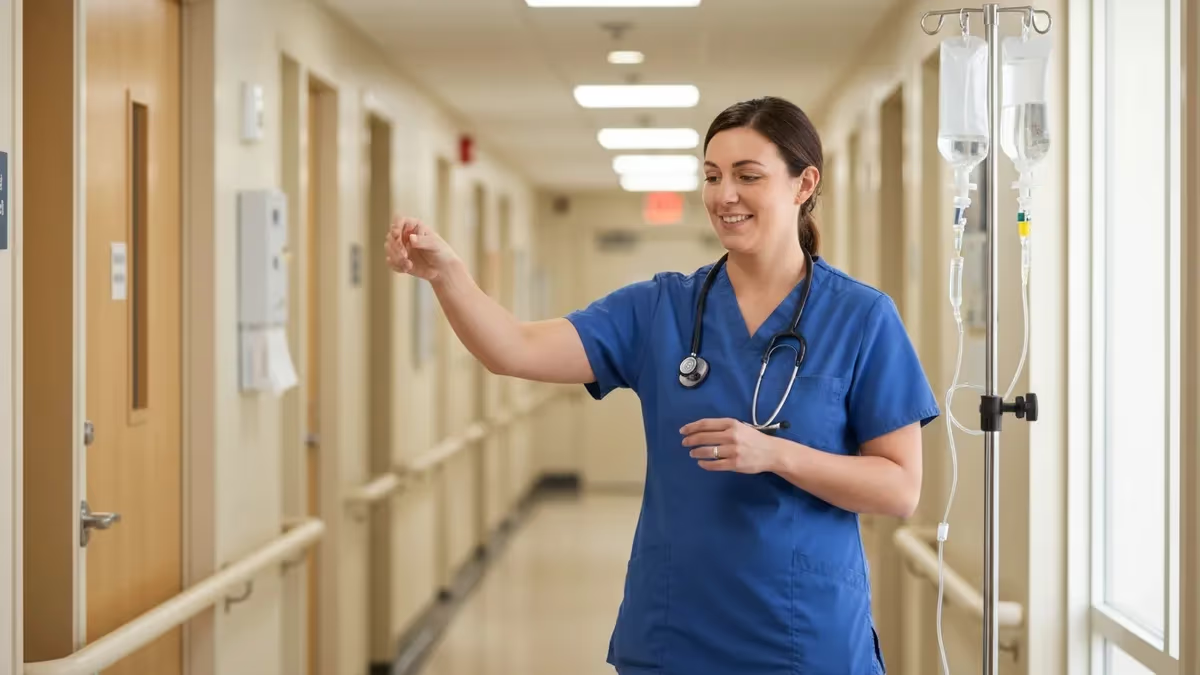
The terms practical nurse vs LPN cause confusion for nearly every student who begins researching a nursing career, yet the answer is surprisingly straightforward: they refer to the exact same role. A practical nurse and a licensed practical nurse are identical positions. The word "licensed" simply confirms that the nurse has passed the NCLEX-PN examination and holds an active state license to practice. Understanding this distinction — and why both terms exist — is the first step toward planning your career with clarity and confidence.
Historically, the title "practical nurse" emerged in the early twentieth century to describe trained nurses who provided bedside care but had not completed a full four-year degree. As state licensing boards formalized requirements throughout the 1940s and 1950s, the credential became officially known as the Licensed Practical Nurse, or LPN. In California and Texas, the equivalent credential is called a Licensed Vocational Nurse, or LVN — yet the scope of practice, the educational pathway, and the day-to-day duties remain virtually identical to those of an LPN in every other state.
Many job postings, patient-facing materials, and informal workplace conversations use the shorter term "practical nurse" as a conversational shorthand. Hospitals may post openings for "practical nurses" while technically requiring candidates to hold an active LPN license. This interchangeable usage persists in rural communities, long-term care facilities, and home health agencies where the credential has been embedded in local culture for decades. The regulatory meaning, however, is always the licensed version of the role.
For students weighing their options, the practical nurse pathway is one of the fastest routes into professional healthcare. Most LPN programs take between twelve and eighteen months to complete and are offered at community colleges, vocational schools, and hospital-based training centers across the country. The curriculum blends classroom instruction in anatomy, pharmacology, and nursing fundamentals with hands-on clinical rotations in hospitals, nursing homes, and community health settings. Graduates are eligible to sit for the NCLEX-PN immediately upon program completion.
The demand for licensed practical nurses is growing steadily. The U.S. Bureau of Labor Statistics projects employment of LPNs to increase by roughly nine percent over the next decade, driven largely by an aging population that requires more long-term care, chronic disease management, and rehabilitation services. Nursing homes, assisted living facilities, and home health agencies are the largest employers, but LPNs also work in physician offices, correctional facilities, schools, and outpatient clinics.
Salary expectations for LPNs vary significantly by state, specialty, and experience level. The national median annual wage sits near $59,000, but experienced LPNs in high-demand states like California, Alaska, and Massachusetts frequently earn more than $70,000 per year. Specialty certifications in areas such as IV therapy, gerontology, and wound care can further boost earning potential and open doors to supervisory roles within long-term care settings.
If you are ready to explore licensing requirements and understand what distinguishes the practical nurse vs lpn pathway from other nursing credentials, this guide covers everything from educational requirements and daily duties to salary benchmarks and career advancement strategies. Whether you are just beginning your research or preparing to enroll in a program, the information here will help you move forward with confidence.
Practical Nurse / LPN by the Numbers

What Is a Licensed Practical Nurse? The Role Defined
An LPN holds a state-issued license after completing an accredited practical nursing program and passing the NCLEX-PN. They provide direct patient care under the supervision of registered nurses or physicians in a wide range of healthcare settings.
The LVN title is used exclusively in California and Texas. The education, exam, duties, and scope of practice are identical to an LPN. Nurses licensed in these states who relocate can typically obtain an LPN license in another state through endorsement.
"Practical nurse" is an informal term — sometimes seen in job postings or patient communications — that refers to the same licensed role. Without licensure, the title has no legal standing. Any practicing PN must hold an active LPN or LVN license.
Students enrolled in an accredited LPN program may be called student practical nurses. They practice under direct supervision and cannot provide care independently. Upon graduation and NCLEX-PN passage, they transition to the full LPN credential.
Understanding how someone becomes a licensed practical nurse helps clarify why the terms "practical nurse" and "LPN" are used so interchangeably. The process begins with enrollment in a state-approved practical nursing program, which typically takes between twelve and eighteen months at a community college or vocational school. These programs are designed to be accessible — many accept students with only a high school diploma or GED and do not require the two-year prerequisite coursework that associate degree RN programs demand.
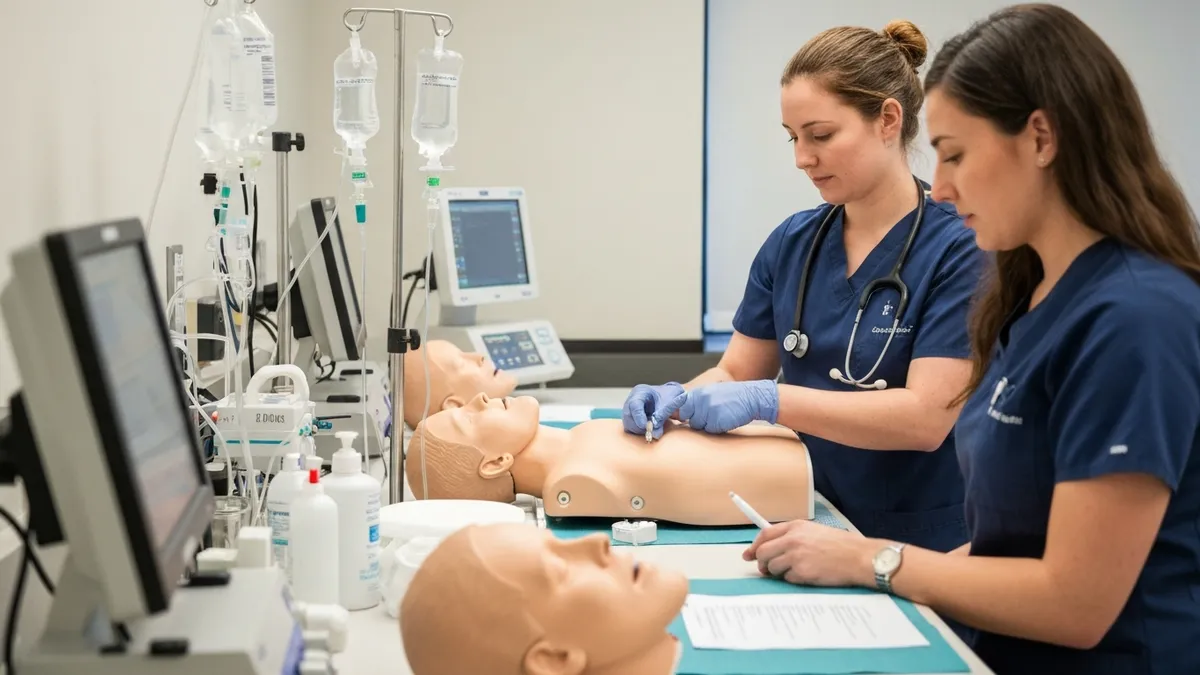
The curriculum inside an LPN program covers a broad range of clinical and theoretical content. Students study human anatomy and physiology, medical-surgical nursing, maternal-newborn care, pediatric nursing, mental health concepts, nutrition, and pharmacology. Most programs dedicate roughly one-third of total program hours to supervised clinical rotations in hospitals, long-term care facilities, and community health centers. These rotations are where students develop the hands-on competencies — vital sign monitoring, wound care, catheter insertion, medication administration — that define the practical nurse role.
Upon completing the program, graduates apply to their state board of nursing to receive an Authorization to Test (ATT). Once the ATT is issued, candidates schedule and sit for the NCLEX-PN, a computerized adaptive examination that assesses whether the candidate possesses the minimum competency required for safe, entry-level practical nursing practice. The exam uses between 85 and 145 questions, adapting in difficulty based on each candidate's responses. Most candidates complete the exam in under two hours, though the maximum allotted time is five hours.
NCLEX-PN pass rates nationally hover around 82 to 85 percent for first-time U.S.-educated candidates, which means roughly one in six candidates does not pass on the first attempt. Candidates who do not pass must wait 45 days before retesting and may need to meet additional state-specific requirements. Targeted preparation using practice questions that mirror the exam's clinical judgment framework is one of the most reliable strategies for improving first-attempt success rates.
After passing the NCLEX-PN, the state board issues an official LPN or LVN license. Most licenses require renewal every one to two years and mandate a minimum number of continuing education hours to maintain active status. Some states also require a minimum number of practice hours during each renewal period to demonstrate ongoing clinical competency. Nurses who allow their license to lapse must often complete additional steps to reinstate it, including retaking the NCLEX-PN if the lapse exceeds a certain threshold.
Compact licensure through the Nurse Licensure Compact (NLC) simplifies multi-state practice for LPNs. Nurses who hold a license in an NLC member state can practice in any other member state without obtaining a separate license in each jurisdiction. As of 2025, more than 40 states participate in the compact, making it significantly easier for LPNs to work travel nursing assignments, cross state borders for employment, or provide telehealth services across state lines.
Continuing education and specialty certifications extend the practical nurse's professional standing throughout a career. Organizations such as the National Association for Practical Nurse Education and Service (NAPNES) and the National Federation of Licensed Practical Nurses (NFLPN) offer certifications in pharmacology, gerontology, and long-term care. These credentials signal advanced competency to employers and often translate directly into higher hourly wages, more responsibility, and greater job security within competitive healthcare markets.
LPN Duties, Work Settings, and Scope of Practice
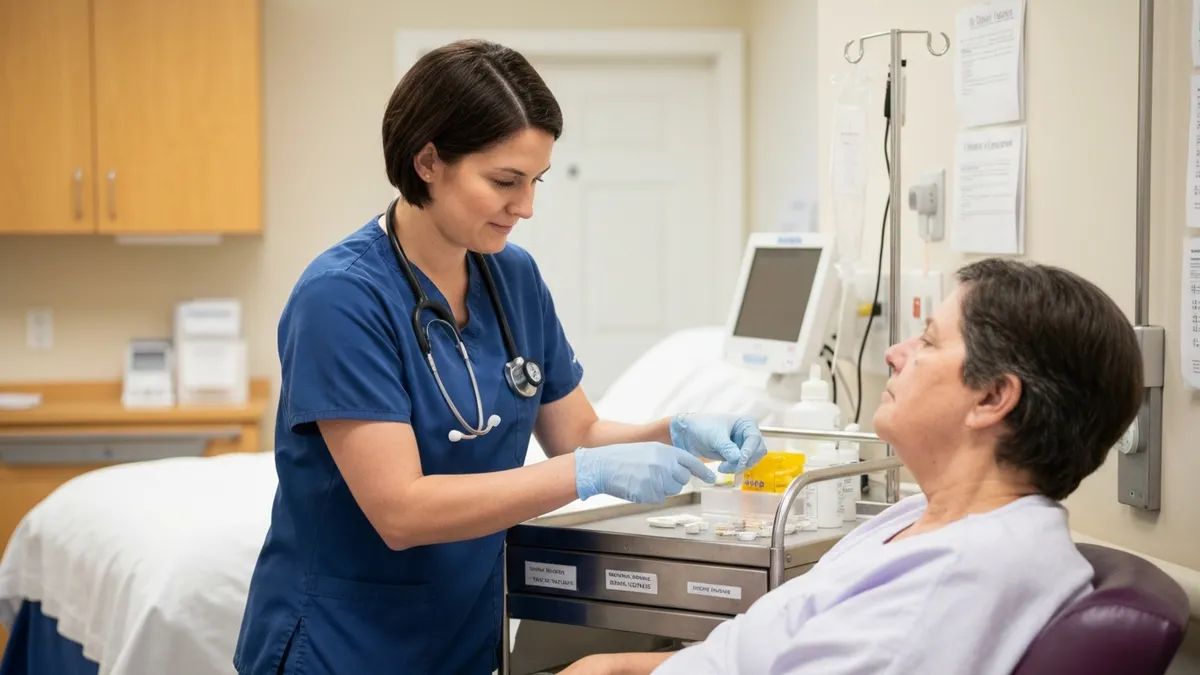
Licensed practical nurses perform a wide range of direct patient care tasks under the supervision of registered nurses or attending physicians. These duties include monitoring and recording vital signs, administering oral and injectable medications, changing wound dressings, inserting urinary catheters, collecting specimens for laboratory testing, and providing basic hygiene assistance to patients with limited mobility. LPNs are also responsible for observing patients for changes in condition and reporting those changes to the supervising RN or physician promptly.
Documentation is another critical component of the LPN role. Practical nurses maintain accurate medical records using electronic health record (EHR) systems, chart medication administration, record patient responses to treatment, and contribute to care plan updates. In long-term care and rehabilitation settings, LPNs often carry supervisory responsibility over certified nursing assistants (CNAs), directing their work, verifying completed tasks, and ensuring that resident care standards are consistently met across shifts.
Pros and Cons of Becoming a Licensed Practical Nurse
- +Shorter education path — most programs completed in 12 to 18 months
- +Lower tuition cost compared to associate or bachelor's degree RN programs
- +Strong job market with consistent demand across all 50 states
- +Meaningful, hands-on patient care from day one of employment
- +Clear bridge pathways to RN licensure through LPN-to-RN programs
- +Variety of work settings including hospitals, home health, and long-term care
- −Lower starting salary than registered nurses with the same years of experience
- −Scope of practice restrictions limit independent clinical decision-making
- −Supervision requirements can feel limiting for experienced practitioners
- −Some hospital systems prefer to hire RNs over LPNs for inpatient acute care roles
- −Continuing education and license renewal requirements add ongoing time and cost
- −Physical demands of direct patient care can lead to higher burnout rates
10 Steps to Become a Licensed Practical Nurse
- ✓Confirm you meet your state's basic eligibility requirements (high school diploma or GED, clean background check).
- ✓Research accredited LPN programs at local community colleges, vocational schools, or hospital-based training centers.
- ✓Submit your application with required transcripts, immunization records, and any prerequisite course completions.
- ✓Complete all required classroom coursework in anatomy, pharmacology, nutrition, and nursing fundamentals.
- ✓Finish supervised clinical rotations in hospitals, long-term care facilities, and community health settings.
- ✓Graduate from your NLNAC- or ACEN-accredited practical nursing program with a passing GPA.
- ✓Apply to your state board of nursing and submit fingerprints for a mandatory criminal background check.
- ✓Receive your Authorization to Test (ATT) from Pearson VUE and schedule your NCLEX-PN exam date.
- ✓Pass the NCLEX-PN examination and receive confirmation of your passing score from the testing center.
- ✓Activate your LPN license through your state board and begin applying for entry-level LPN positions.
LPN and Practical Nurse Are Legally Identical
No matter what a job posting says, any individual practicing as a "practical nurse" in a clinical setting is legally required to hold an active LPN or LVN license issued by the state board of nursing. The informal title carries no independent legal standing. Always verify your license status is current before accepting any nursing assignment, as practicing on an expired or lapsed license — even unknowingly — can result in disciplinary action.
Salary and career outlook are two of the most common reasons students choose the LPN pathway, and the financial picture is genuinely compelling for a credential that takes less than two years to earn. The U.S. Bureau of Labor Statistics reports a national median annual wage of approximately $59,000 for licensed practical nurses, with the bottom ten percent earning around $40,000 and the top ten percent exceeding $78,000 per year. On an hourly basis, that median translates to roughly $28 per hour for a standard 40-hour workweek.
Geographic location is one of the most powerful determinants of LPN salary. California consistently ranks among the highest-paying states, with a median LPN wage that routinely exceeds $65,000. Alaska, Massachusetts, Washington, and Nevada also post median wages well above the national average. By contrast, states in the South and Midwest — including Alabama, Mississippi, and Arkansas — tend to offer lower median salaries, though the lower cost of living in those regions partially offsets the wage difference.
Work setting also plays a major role in compensation. LPNs employed in home health care agencies frequently earn higher hourly rates than those in nursing homes or physician offices, partly because of the independent nature of home visits and the broader range of skills required. Government-employed LPNs — including those working in Veterans Affairs medical centers, federal prisons, and military treatment facilities — tend to receive comprehensive benefit packages alongside competitive base salaries that rival or exceed private-sector positions.
Experience and specialty certification consistently drive earnings higher throughout an LPN's career. An entry-level LPN with less than one year of experience might start at $22 to $24 per hour, while a nurse with five or more years in a specialty like wound care, oncology, or dementia care can realistically command $32 to $38 per hour in competitive markets. Completing an IV therapy certification — which many states require as a separate credential — is one of the most accessible and cost-effective ways to increase both earning potential and the range of available positions.
The long-term career trajectory for LPNs is more varied than many students initially realize. Some choose to build deep expertise within the LPN role, moving into charge nurse positions, staff development roles, or supervisory responsibilities within long-term care facilities. Others use their LPN experience as a foundation for further education, enrolling in LPN-to-RN bridge programs that grant credit for prior nursing coursework and can lead to a registered nurse license in as little as twelve additional months at some institutions.
Travel nursing is another increasingly popular option for experienced LPNs seeking higher wages and geographic flexibility. Travel LPN contracts typically pay $35 to $55 per hour in base wages, plus housing stipends that can add $1,000 to $2,000 per month in additional compensation. Agencies that place travel LPNs also commonly offer completion bonuses, health insurance, and contributions toward continuing education costs. The trade-off is that travel positions require adaptability to new work environments and shorter-term professional relationships.
Entrepreneurial LPNs also have options beyond traditional employment. Private duty nursing for high-net-worth families, geriatric care management consulting, and nursing staffing agency ownership are paths that some experienced LPNs have pursued successfully. While these require additional business acumen and often additional certification, they represent the upper end of what the practical nurse credential can unlock when combined with experience, specialized skills, and professional networking within the healthcare community.
If you plan to practice in California or Texas, you will hold the Licensed Vocational Nurse (LVN) credential rather than the LPN title. The educational requirements, NCLEX-PN exam, scope of practice, and career opportunities are essentially identical. LVNs who relocate to other states can apply for license endorsement and will receive an LPN license in their new state without retaking the exam, provided their license is in good standing.
One of the most important career decisions a licensed practical nurse faces is whether to remain at the LPN level, pursue additional certifications, or advance to registered nurse status through an LPN-to-RN bridge program. Each path has genuine merit and the right choice depends heavily on your personal financial situation, life stage, career goals, and the healthcare market in your region. There is no universally correct answer, but understanding the trade-offs clearly will help you make a decision you can commit to with confidence.
Remaining at the LPN level is a perfectly viable long-term career choice for many nurses. The scope of practice at the LPN level includes meaningful, complex patient care responsibilities, especially in long-term care settings where LPNs frequently serve as the most senior licensed clinician on a night shift. With experience and specialty certifications, LPNs can reach supervisory roles, serve as unit charge nurses, and earn wages that make a comfortable middle-class life attainable in most U.S. markets without the debt burden of additional degree programs.
LPN-to-RN bridge programs are designed to make advancement as efficient as possible. These programs grant academic credit for previously completed LPN coursework and clinical hours, meaning students do not repeat content they have already mastered. Bridge programs are available in associate degree (ADN) and bachelor's degree (BSN) formats, with ADN programs typically taking 12 to 18 additional months and BSN completion programs taking 24 to 36 months for working nurses who enroll part-time. Upon completion, graduates must pass the NCLEX-RN to obtain their registered nurse license.
The salary differential between LPN and RN is meaningful. The national median annual salary for registered nurses is approximately $81,000 — roughly $22,000 more than the LPN median. Over a 20-year career, that differential compounds to well over $400,000 in additional earnings potential, which for many nurses more than justifies the cost and time required for bridge program completion. Hospitals in particular strongly prefer or require RN credentials for most inpatient acute care positions, making RN licensure effectively mandatory for those who want to work in that environment long-term.
Specialty certifications offer a middle path — significant scope expansion and wage increases without the full commitment of an RN bridge program. IV therapy certification, for example, is available to LPNs in most states, typically requires a 40-hour course plus a supervised clinical component, and can be completed in a single weekend or across a few weeks of evening instruction. Wound care, gerontological nursing, and pharmacology certifications follow similar accessible formats and can meaningfully differentiate an LPN's resume in competitive job markets.
Mentorship and professional networking are often underestimated factors in LPN career advancement. Joining organizations like the NFLPN or state-level practical nursing associations connects working LPNs with peers, educators, and employer partners who can provide guidance on advancement opportunities, share job leads, and advocate for the profession at the legislative level. Some of the most successful career transitions — from bedside LPN to staff development coordinator or from staff nurse to nurse entrepreneur — begin with a connection made through a professional association rather than a formal education program.
For those who are still deciding whether the practical nurse pathway is right for them, the most useful first step is simply shadowing a working LPN for a shift or two. Healthcare facilities and community colleges frequently help job shadowing experiences for prospective students, and the firsthand observation of what a practical nurse actually does on a typical workday is far more informative than any brochure or website. Seeing the role in action — the pace, the patient interactions, the documentation requirements — makes the career decision more concrete and personal in a way that research alone cannot replicate.
Wherever you are in your decision-making process, practice questions remain one of the highest-value tools available for building both knowledge and exam-day confidence. Working through NCLEX-PN style questions in the content areas that appear most frequently on the exam helps you identify knowledge gaps early, builds the clinical reasoning habits that the exam tests, and reduces anxiety by making the format feel familiar before test day arrives.
Preparing effectively for the NCLEX-PN requires more than simply reviewing textbook content — it demands consistent practice with the type of application-level, clinical judgment questions that appear on the actual exam. Many candidates who struggle on test day report that they felt confident with the material in isolation but found the exam questions harder than expected because they were written in a format that required applying knowledge to unfamiliar patient scenarios rather than recalling memorized facts.
The NCLEX-PN uses the Next Generation NCLEX (NGN) clinical judgment measurement model, which assesses six cognitive skills: recognizing cues, analyzing cues, prioritizing hypotheses, generating solutions, taking actions, and evaluating outcomes. This framework means that success on the exam is less about knowing every drug interaction by heart and more about demonstrating a systematic, patient-centered decision-making process. Practice questions built around this model are significantly more effective for exam preparation than simple recall-style flashcard review.
Time management during NCLEX-PN preparation is as important as content coverage. Candidates who spread preparation over eight to twelve weeks consistently outperform those who cram in the final days before their exam date. A structured study plan that allocates specific weeks to specific content areas — week one for basic care and comfort, week two for pharmacology, week three for physiological integrity — allows for spaced repetition, which research has consistently shown to be one of the most effective learning strategies available.
Weak content areas deserve disproportionate attention during preparation. After completing a diagnostic practice quiz, candidates should identify the two or three subject areas where their accuracy rate is lowest and dedicate extra study time to those topics before the exam. Many candidates make the mistake of spending most of their preparation time on topics they already know well because it feels productive and comfortable. Effective preparation means sitting with discomfort and working hardest on the areas that are most likely to pull down an overall score.
Simulation of exam-day conditions during practice builds psychological readiness that content review alone cannot provide. This means completing timed practice sets of 30 to 60 questions without reference materials, in a quiet environment, using the same device and interface you plan to use on test day. Candidates who have repeatedly experienced the feeling of working through a long question set under time pressure are far less likely to freeze or panic when they encounter a difficult question on the actual exam.
Peer study groups can be a powerful supplement to individual practice, particularly for candidates who learn well through discussion and explanation. Explaining a concept aloud to another student — or listening to a peer explain a concept differently than your textbook did — often reveals gaps in understanding that solo review misses. Online study communities organized around NCLEX-PN preparation have grown significantly and offer a low-cost way to access peer support, share resources, and stay motivated during a preparation period that can feel isolating.
Finally, attention to physical and mental wellbeing in the weeks leading up to the NCLEX-PN exam directly affects performance. Sleep deprivation impairs working memory and decision-making — exactly the cognitive processes the exam is designed to test. Candidates who maintain consistent sleep schedules, moderate physical activity, and reasonable nutrition during preparation typically report higher confidence and lower anxiety on test day. The exam is a high-stakes moment, but it is also the culmination of months of hard work, and arriving well-rested and physically prepared gives that work the best possible chance of showing up in your score.
LPN Questions and Answers
LPN Requirements 2026: Complete Guide to Becoming a Licensed Practical Nurse
LPN IV Certification: Complete 2026 Guide to Training, Requirements & Cost
LPN Programs in Florida: Complete 2026 Guide to Accredited Schools, Costs, Requirements & Licensure

LPN Salary Wisconsin 2026: Average Pay, Top Cities, and How to Earn More
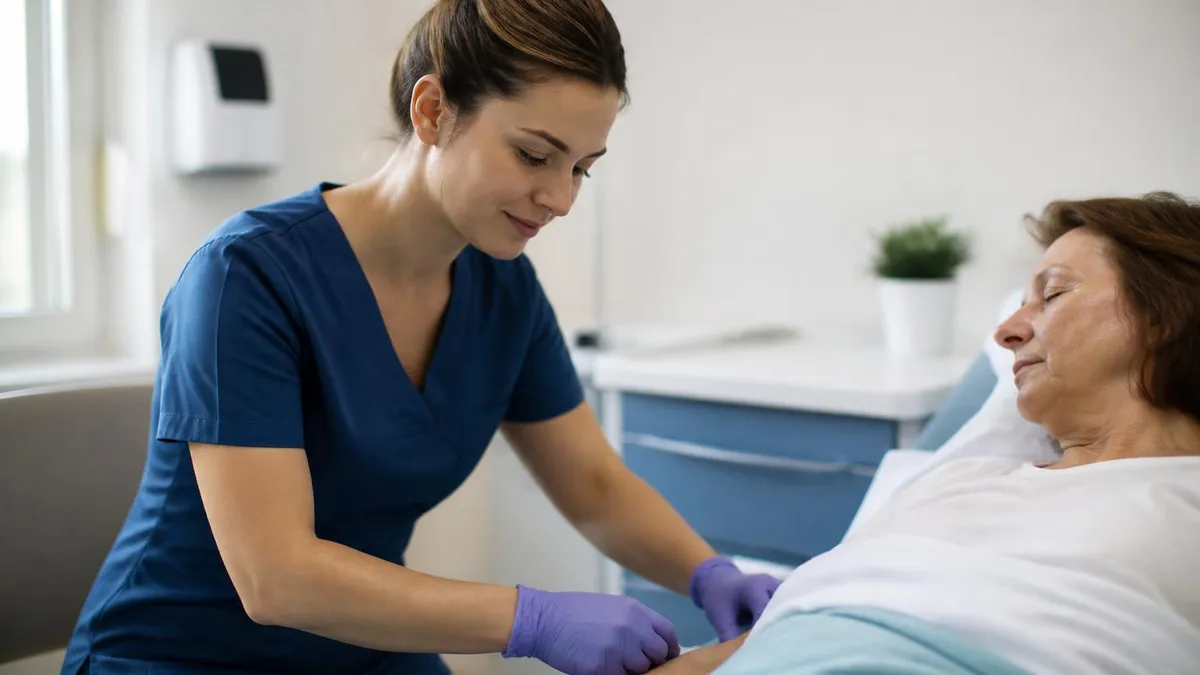
LPN Duties: Complete Guide to Daily Responsibilities and Scope of Practice
About the Author

Registered Nurse & Healthcare Educator
Johns Hopkins University School of NursingDr. Sarah Mitchell is a board-certified registered nurse with over 15 years of clinical and academic experience. She completed her PhD in Nursing Science at Johns Hopkins University and has taught NCLEX preparation and clinical skills courses for nursing students across the United States. Her research focuses on evidence-based exam preparation strategies for healthcare certification candidates.
Join the Discussion
Connect with other students preparing for this exam. Share tips, ask questions, and get advice from people who have been there.
View discussion (7 replies)