
LPN to Nurse Practitioner: Complete 2026 October Career Pathway Guide for Licensed Practical Nurses
LPN to nurse practitioner pathway explained: bridge programs, timeline, costs, salary, and step-by-step roadmap to become an NP from your LPN license. 🏆
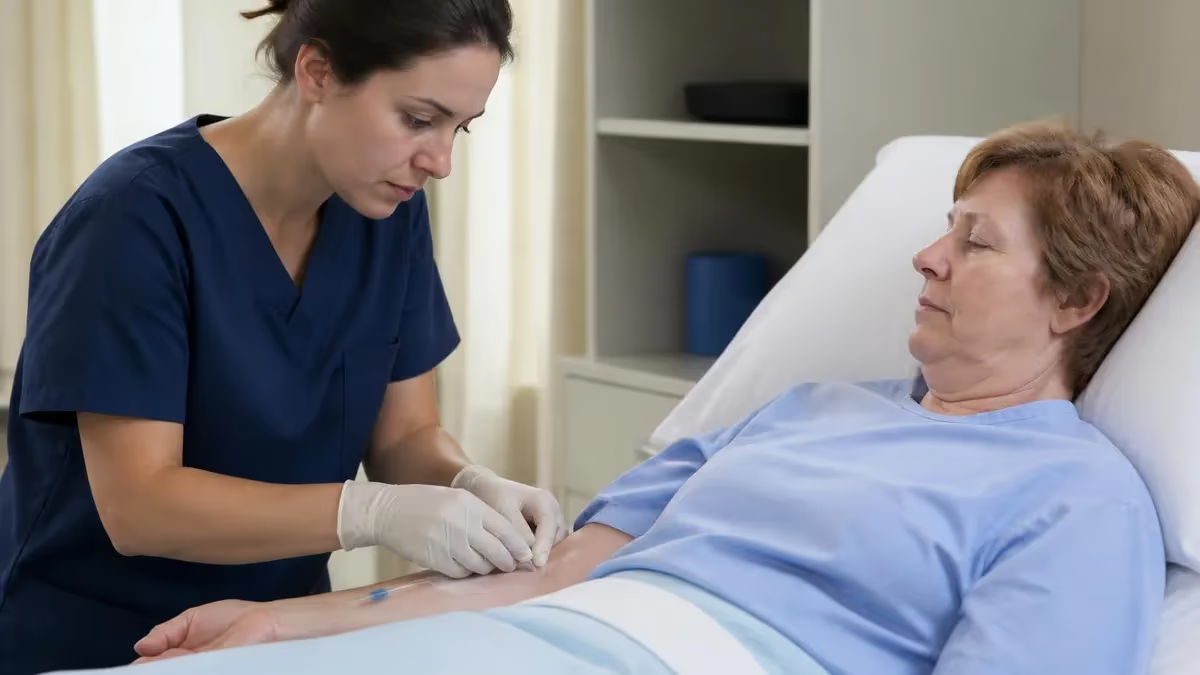
The lpn to nurse practitioner journey is one of the most ambitious yet rewarding career moves in nursing, transforming a bedside-focused Licensed Practical Nurse into an advanced practice provider who can diagnose conditions, prescribe medications, and lead patient care independently in many states. This is not a single bridge program but rather a multi-stage academic climb that typically spans five to seven years of combined education, clinical hours, and licensure milestones, depending on your starting credentials and the pace you choose.
Because there is no direct LPN-to-NP program in the United States, every LPN who wants to become a Nurse Practitioner must first bridge to a Registered Nurse role through an LPN-to-RN or LPN-to-BSN pathway, then earn a graduate degree such as a Master of Science in Nursing (MSN) or Doctor of Nursing Practice (DNP). The good news is that hundreds of accredited schools now offer accelerated bridge tracks designed specifically for working LPNs, and many employers will pay a significant portion of the tuition through tuition reimbursement programs.
The financial upside makes the long road worthwhile. Where an LPN currently earns a median annual wage of about $59,730 according to the Bureau of Labor Statistics, the median pay for Nurse Practitioners has climbed past $126,260, with experienced NPs in psychiatric mental health, acute care, and specialty surgical settings routinely clearing $150,000. Beyond pay, NPs gain full or reduced practice authority in 27 states plus DC, meaning they can open their own clinics, run telehealth practices, or specialize in underserved rural and urban populations.
This guide walks through every required step of the lpn to nurse practitioner transition, from picking the right RN bridge to selecting an NP specialty population focus such as Family (FNP), Adult-Gerontology, Pediatric, Psychiatric Mental Health, or Women's Health. We'll break down realistic timelines, total program costs after financial aid, the licensure exams you'll face (NCLEX-PN, NCLEX-RN, and a national NP certification), and the clinical hour requirements that catch many candidates by surprise late in their graduate studies.
You'll also learn about the practical trade-offs nobody talks about in school brochures, like why some students should pursue an lpn vs adn in Nursing (ADN) first while others should jump straight to a BSN, or why a DNP may be a better long-term investment than an MSN despite the extra year. We'll address the working-LPN reality of balancing 12-hour shifts with online coursework, and how to budget for the unpaid clinical practicum hours that come at the very end of your NP program.
Finally, this article includes downloadable checklists, salary tables, and study-stage planning tools that you can revisit at each milestone of your journey. If you're an LPN holding a fresh license or you've been in practice for a decade and feel ready for the next leap, the roadmap below will help you calculate the time, money, and effort required, and decide whether this advanced practice path is right for your goals, your family, and your finances.
LPN to NP Career by the Numbers
Your Step-by-Step LPN to NP Roadmap
Earn Your LPN License
Bridge to Registered Nurse
Earn Your BSN if Needed
Apply to NP Graduate School
Complete Graduate NP Coursework
Pass NP Certification & License
Choosing the right bridge program is the single most consequential decision an LPN makes on the path to becoming a Nurse Practitioner because that one choice determines your overall timeline, total cost, and how competitive you'll be when applying to graduate school. Broadly speaking, you have three legitimate routes from LPN to the RN-level credential required for NP school: the LPN-to-ADN bridge, the LPN-to-BSN bridge, or the longer two-step approach of finishing an ADN first and then completing an RN-to-BSN online while working.
The LPN-to-ADN bridge is the fastest and cheapest way to become an RN, typically lasting 12 to 18 months at a community college and costing $6,000 to $20,000 in tuition. ADN programs give credit for your existing LPN coursework, often allowing you to skip the first semester or two of nursing fundamentals. Graduates sit for the NCLEX-RN immediately and can start earning a registered nurse's salary, but they still need a BSN before applying to most NP programs, adding another 12 to 18 months of online study.
The LPN-to-BSN bridge condenses the two steps into a single 24 to 36 month program at a university or four-year college. Tuition averages $35,000 to $80,000 depending on whether the school is public, private, or online. While the upfront commitment feels heavier, you graduate ready to apply to NP school without the extra RN-to-BSN detour. BSN-prepared nurses also report stronger acceptance rates at competitive graduate programs and more flexibility to pursue research, leadership, or teaching specialties later in their careers.
A third option that has grown in popularity over the past five years is the direct-entry RN-to-MSN bridge, which accepts ADN-prepared registered nurses and combines undergraduate gap courses with graduate NP coursework into a 3-year package. This pathway shaves about 6 to 12 months off the total timeline compared with completing a separate BSN. The trade-off is intensity, since you're simultaneously closing a bachelor's degree while tackling graduate-level pathophysiology, pharmacology, and clinical hours.
Beyond program type, accreditation matters enormously. Verify that any bridge program you consider is accredited by either the Commission on Collegiate Nursing Education (CCNE) or the Accreditation Commission for Education in Nursing (ACEN). Non-accredited credits will not transfer to a regionally accredited NP program, leaving you to repeat courses you already paid for. State Board of Nursing approval is a separate requirement for licensure eligibility, so confirm both before enrolling.
Finally, factor in clinical placement support. Some bridge programs guarantee placement at affiliated hospitals while others, especially fully online schools, require you to find your own preceptor. Working LPNs who already have hospital relationships often prefer schools that allow them to complete clinicals at their current workplace, which dramatically reduces drive time and lost income. If you anticipate continuing to work during school, prioritize programs with asynchronous coursework, evening clinicals, and flexible practicum scheduling so the bridge phase doesn't burn you out before you ever reach NP school.
LPN Practice Test Questions
Prepare for the LPN - Certified Practical Nurse exam with our free practice test modules. Each quiz covers key topics to help you pass on your first try.
LPN - Certified Practical Nurse Basic Care...
LPN Exam Questions covering - Certified Practical Nurse Basic Care and Comfort. Master LPN Test concepts for certification prep.
LPN - Certified Practical Nurse Coordinate...
Free LPN Practice Test featuring - Certified Practical Nurse Coordinated Care. Improve your LPN Exam score with mock test prep.
LPN - Certified Practical Nurse Health Pro...
LPN Mock Exam on - Certified Practical Nurse Health Promotion and Maintenance. LPN Study Guide questions to pass on your first try.
LPN - Certified Practical Nurse Pharmacolo...
LPN Test Prep for - Certified Practical Nurse Pharmacological Therapies. Practice LPN Quiz questions and boost your score.
LPN - Certified Practical Nurse Physiologi...
LPN Questions and Answers on - Certified Practical Nurse Physiological Adaptation. Free LPN practice for exam readiness.
LPN - Certified Practical Nurse Psychosoci...
LPN Mock Test covering - Certified Practical Nurse Psychosocial Integrity. Online LPN Test practice with instant feedback.
LPN - Certified Practical Nurse Reduction ...
Free LPN Quiz on - Certified Practical Nurse Reduction of Risk Potential. LPN Exam prep questions with detailed explanations.
LPN - Certified Practical Nurse Safety and...
LPN Practice Questions for - Certified Practical Nurse Safety and Infection Control. Build confidence for your LPN certification exam.
LPN Ethical, Legal & Professional Standards
LPN Test Online for Ethical, Legal & Professional Standards. Free practice with instant results and feedback.
LPN Health Evaluation & Monitoring
LPN Study Material on Health Evaluation & Monitoring. Prepare effectively with real exam-style questions.
MSN vs DNP for Nurse Practitioner Preparation
The Master of Science in Nursing is currently the most common entry-level graduate degree for Nurse Practitioners, taking approximately 2 to 3 years of full-time study after a BSN. Tuition typically runs $35,000 to $80,000 total, with online state-university programs at the lower end and brand-name private schools at the top. Most MSN tracks require 500 to 700 clinical hours plus coursework in advanced pharmacology, pathophysiology, and health assessment.
An MSN remains a fully viable NP credential and is accepted by every certifying body and state Board of Nursing as of 2026. However, the AACN has long recommended transitioning the entry-level NP degree to a DNP, and several specialty bodies, including the National Organization of Nurse Practitioner Faculties, have pushed for that shift. Some MSN programs have already restructured to add a DNP capstone, while others remain a streamlined master's option for cost-conscious students.
Is the LPN-to-NP Pathway Right for You?
- +Salary jumps roughly $66,000 per year from LPN median to NP median pay
- +Nurse Practitioners enjoy 46% projected job growth through 2033, the fastest of any healthcare role
- +27 states plus DC grant full practice authority allowing NPs to open independent clinics
- +Specialty options span family practice, psychiatric mental health, pediatrics, women's health, and acute care
- +Many employers reimburse $5,000 to $15,000 annually in tuition for nurses pursuing graduate degrees
- +NPs gain prescriptive authority, including DEA-controlled substances in nearly every state
- +Remote and telehealth NP positions have expanded rapidly since 2020, offering flexible schedules
- −Total time investment is 5 to 7 years of combined education from LPN to NP licensure
- −Out-of-pocket cost ranges from $50,000 to $150,000 across bridge programs and graduate school
- −Clinical practicum hours during NP school are typically unpaid and require flexible work scheduling
- −Some NP specialties require 1 to 2 years of acute-care RN experience before applying
- −Reduced or restricted practice states limit NP autonomy and may require physician collaborative agreements
- −Balancing a working LPN or RN job with online graduate coursework can lead to burnout
- −Malpractice insurance, DEA registration, and credentialing fees add several thousand dollars annually
LPN to Nurse Practitioner Application Checklist
- ✓Verify your LPN license is active, in good standing, and unrestricted in your state of practice
- ✓Research and shortlist 3 to 5 accredited LPN-to-BSN or LPN-to-ADN bridge programs in your region
- ✓Confirm CCNE or ACEN accreditation status for every program on your shortlist
- ✓Request official transcripts from your LPN program and any prior college coursework
- ✓Take prerequisite science courses including anatomy, physiology, microbiology, and statistics
- ✓Save or secure financing for tuition, books, uniforms, and licensure exam fees totaling $20,000+
- ✓Maintain a minimum 3.0 GPA throughout the BSN program to remain competitive for NP school
- ✓Accumulate 1 to 2 years of acute-care RN experience after the NCLEX-RN before applying to graduate school
- ✓Research NP specialty populations and shadow at least 8 hours with an NP in your target focus
- ✓Prepare your goals essay, secure 3 strong recommendation letters, and submit graduate applications early
Acute-care RN experience matters more than perfect grades
Admissions committees at top NP programs consistently report that one to two years of strong bedside RN experience in a hospital setting weighs more heavily than a 4.0 GPA. Working in medical-surgical, ICU, emergency, or psychiatric units gives applicants the clinical judgment, time management, and patient assessment skills graduate faculty want to build on. If you're choosing between an extra year of work experience and rushing applications, the work experience almost always wins.
Understanding the full financial picture of the lpn to nurse practitioner pathway is essential before committing to the journey because the costs are substantial, but so is the long-term return on investment. From the moment you enroll in your first bridge program until you receive your NP license, expect to invest between $50,000 and $150,000 in tuition, books, fees, exam costs, and lost wages during unpaid clinical hours. The wide range reflects the difference between public state universities and private institutions, as well as whether you complete an ADN-then-BSN sequence or jump directly into an LPN-to-BSN program.
Breaking down the costs by stage, the LPN-to-RN bridge averages $10,000 to $30,000, the RN-to-BSN completion costs another $8,000 to $25,000 if needed, and graduate NP programs run $35,000 to $120,000. Add roughly $2,000 to $5,000 for application fees, NCLEX exam fees, certification exam fees, state licensure fees, malpractice insurance, and DEA registration. Books and clinical supplies often add another $1,500 to $3,000 across the entire educational journey.
The salary uplift, however, is dramatic and continues for the rest of your career. The Bureau of Labor Statistics reported a median annual wage of $59,730 for LPNs in 2024, while Nurse Practitioners earned a median of $126,260. That $66,530 annual difference compounds significantly over a 25 to 30 year career. Even if you took out the maximum amount of student loans, most NPs pay off their educational debt within 7 to 10 years of starting practice while still earning more than they would have as LPNs the entire time.
Federal and employer-based financial aid can substantially offset out-of-pocket costs. The HRSA Nurse Corps Loan Repayment Program forgives up to 85% of unpaid nursing education loans in exchange for 3 years of service at a critical shortage facility. The Public Service Loan Forgiveness program eliminates remaining federal student debt after 120 qualifying payments while working for a nonprofit hospital or government employer. Many large health systems offer $5,000 to $15,000 in annual tuition reimbursement, and rural healthcare grants can cover full tuition for graduates committing to underserved communities.
State-specific tuition assistance programs are another underused funding source. California's Bachelor of Science in Nursing Special Program, Texas's Nursing Innovation Grant, and New York's Nurses for Our Future Scholarship all provide thousands of dollars to nurses pursuing higher degrees. Some Medicaid expansion states also offer signing bonuses of $10,000 to $30,000 for NPs who agree to practice in primary care or psychiatric mental health for a defined contract period after graduation.
Salary varies significantly by NP specialty population. Certified Registered Nurse Anesthetists, while technically a separate APRN role, top the pay scale at over $214,000 median. Among traditional NPs, Psychiatric Mental Health Nurse Practitioners (PMHNP) command the highest salaries averaging $137,000 to $165,000. Family Nurse Practitioners, the most common specialty, average $115,000 to $130,000 depending on geography and setting. Acute care NPs working in hospitals tend to outearn primary care NPs by 10% to 15% on average.
Geography also dramatically influences earnings. California, Washington, New Jersey, Massachusetts, and Alaska consistently rank as the highest-paying states for Nurse Practitioners, with some metropolitan markets paying $150,000+ for new graduates. Lower cost-of-living states like Mississippi, Tennessee, and Oklahoma pay closer to $105,000 to $115,000 but often come with lower student-loan-to-income ratios. When calculating long-term ROI, consider both salary and the local cost of living to project realistic disposable income.

The explosive demand for online NP education has spawned dozens of low-quality programs that quietly produce graduates with high NP certification exam failure rates and poor clinical preparation. Always verify CCNE or ACEN accreditation, request first-time pass rates on the AANP or ANCC exam, and review the school's reputation with practicing NPs in your area. A program that cannot provide clear preceptor placement support or that boasts unusually short clinical hour requirements should be considered a serious red flag worth avoiding completely.
Choosing the right NP specialty population is one of the most consequential decisions of your graduate education because it determines what kinds of patients you'll treat for the rest of your career, what certification exam you'll sit for, and where you can be hired. Unlike physicians who can complete a general residency and then subspecialize, Nurse Practitioners pick a population focus before starting graduate school and remain certified in that population unless they later return for a post-master's certificate in another specialty.
The Family Nurse Practitioner (FNP) is by far the most popular specialty, accounting for roughly 65% of all certified NPs. FNPs treat patients of all ages from infants to geriatrics in primary care, urgent care, and outpatient specialty settings. This flexibility makes FNPs employable in virtually every clinical environment but also means they encounter the broadest possible scope of conditions, requiring strong generalist knowledge and the willingness to refer complex cases to specialists.
Adult-Gerontology NPs come in two flavors: Adult-Gerontology Primary Care (AGPCNP) for outpatient settings and Adult-Gerontology Acute Care (AGACNP) for hospitals, ICUs, and specialty inpatient services. The acute care track has grown rapidly as hospitals increasingly hire NPs to staff hospitalist services, ICU teams, and procedural specialties like cardiology and gastroenterology. Acute care NPs typically earn 10% to 15% more than primary care colleagues but trade outpatient lifestyle for hospital shift work.
Psychiatric Mental Health Nurse Practitioners have become one of the fastest-growing and best-paid specialties in nursing. The combination of skyrocketing demand for mental health services, severe psychiatrist shortages, and the rise of telehealth has driven PMHNP starting salaries to $130,000 to $150,000 in many markets, with experienced PMHNPs in private practice routinely earning $200,000+. The specialty requires comfort with complex pharmacology, psychotherapy training, and managing patients across the lifespan with severe and persistent mental illness.
Pediatric Nurse Practitioners (PNP) and Women's Health Nurse Practitioners (WHNP) serve narrower but deeply rewarding populations. PNPs work in pediatric primary care, children's hospitals, and pediatric subspecialties, while WHNPs focus on gynecology, prenatal care, family planning, and menopause management. Both specialties have somewhat fewer job openings than FNP roles but face less competition and offer the depth of expertise that comes from focused practice. Salaries trend slightly below FNP averages but vary widely by region. Use the lpn program cost to see how your starting LPN tuition fits into the broader NP pathway investment.
Neonatal Nurse Practitioners (NNP) represent one of the most specialized and highest-paid NP roles, working exclusively with critically ill newborns in Level III and IV NICUs. The training is intense, often requiring prior NICU RN experience, and the work is emotionally demanding, but NNP salaries routinely exceed $135,000 and the role offers tremendous clinical autonomy. Similarly, Emergency Nurse Practitioners can earn premium pay in busy emergency departments but typically need both FNP and ENP certifications to work in level I trauma centers.
When evaluating which specialty to pursue, look beyond salary tables and consider three practical factors: the patient population you genuinely enjoy working with, the work environment that fits your lifestyle (clinic hours vs. shift work), and the long-term scalability of the specialty in your geographic region. Shadowing two or three different NP specialties before committing to graduate school is the single best investment you can make, as switching specialties later requires another year of post-master's coursework and a new certification exam.
Successfully navigating the lpn to nurse practitioner pathway over five to seven years requires more than academic ability; it demands strategic planning, financial discipline, and the kind of stamina that comes from building sustainable study habits early. The LPNs who reach NP licensure on schedule almost universally share three traits: they treat education as a long-term project, they maintain consistent clinical work that reinforces learning, and they build a personal support system that survives the inevitable burnout periods that hit during graduate school.
Start by mapping out a realistic 7-year calendar that breaks your journey into 6-month checkpoints with specific goals. Months 1 through 18 cover your LPN-to-RN bridge and NCLEX-RN exam. Months 19 through 36 focus on BSN completion (if separate) and accumulating acute-care RN experience. Months 37 through 84 cover NP graduate school plus certification and licensure. Posting this calendar somewhere visible keeps the long timeline manageable by reducing it to one focused step at a time rather than an overwhelming distant goal.
Financial discipline starts before you enroll. Build a baseline emergency fund of 3 months of living expenses before starting your bridge program, because nursing programs are notorious for unexpected costs like surprise lab fees, clinical site travel, replacement scrubs, NCLEX prep courses, and sudden textbook editions. Avoid using maximum federal student loans if you can pay even 25% out of pocket, since interest accrues on graduate-level Direct PLUS loans the moment they disburse, and unsubsidized debt can balloon by tens of thousands during a 4-year DNP program.
Choose employers strategically to maximize tuition assistance and clinical learning opportunities. Large academic medical centers typically offer the most generous tuition reimbursement (often $5,000 to $15,000 annually), provide opportunities to work in specialty units that build NP-relevant experience, and frequently have established preceptor relationships that ease the clinical placement headache during NP school. Public health departments, Veterans Affairs hospitals, and Federally Qualified Health Centers also offer strong loan forgiveness pipelines through HRSA programs.
Build relationships with practicing Nurse Practitioners as early as possible in your journey. Beyond shadowing opportunities, an established NP mentor can provide critical advice on specialty selection, school choice, and clinical placement. Many NPs are happy to write recommendation letters for graduate school applications, especially when they've watched a candidate grow over months or years. Join your state nursing association, attend NP-led continuing education events, and engage with professional organizations like the American Association of Nurse Practitioners (AANP) for networking and resources.
During graduate school, treat your clinical hours like the most important job of your life because they are the bridge between academic theory and your future as an independent provider. Show up early to every clinical rotation, prepare for each patient encounter the night before, ask thoughtful questions of your preceptor, and document every procedure and unusual diagnosis you encounter in a personal clinical log. The students who get hired immediately after graduation are almost always the ones whose preceptors call them back to be the new hire when a position opens.
Finally, don't underestimate the importance of mental and physical wellness during the multi-year journey. Burnout is the leading cause of graduate nursing program attrition, and the rate climbs sharply for nurses working full-time while studying.
Schedule protected non-study time every week, maintain at least 7 hours of sleep nightly during clinical rotations, and seek therapy or peer support if anxiety or depression emerge. The end of the journey, when you sign your first NP contract, is genuinely worth the years of effort, but only if you arrive there as a healthy, engaged provider who can sustain a long advanced practice career.
Sample Certified Practical Nurse Practice Questions
Try these questions from our free Certified Practical Nurse practice tests. The correct answer and an explanation follow each question.
During a well-child visit for a 4-year-old, which vaccine should the nurse anticipate administering according to the CDC immunization schedule?
- A. Hepatitis B booster
- B. Varicella (second dose) and DTaP booster
- C. HPV series initiation
- D. Meningococcal conjugate vaccine
Answer: B. Varicella (second dose) and DTaP booster
The CDC schedule recommends the second dose of varicella vaccine and a DTaP booster at the 4–6-year well-child visit.
What is the role of a nurse in managing a patient’s pain?
- A. To observe the patient
- B. To administer medications and evaluate effectiveness
- C. To monitor vital signs
- D. To document complaints
Answer: B. To administer medications and evaluate effectiveness
A nurse's role in managing a patient's pain is active and comprehensive. It involves not only administering prescribed pain relief medications but also critically evaluating their effectiveness by continuously assessing the patient's pain levels and response to treatment. This ongoing assessment and adjustment ensure optimal pain control, enhance patient comfort, and improve overall quality of care.
A patient with a spinal cord injury at the T4 level suddenly develops a pounding headache, flushing above the injury level, and a blood pressure of 190/100 mmHg. What should the nurse do first?
- A. Administer an antihypertensive medication
- B. Place the patient in Trendelenburg position
- C. Sit the patient upright and identify the triggering stimulus
- D. Notify the physician and document the findings
Answer: C. Sit the patient upright and identify the triggering stimulus
This presentation is autonomic dysreflexia; sitting the patient upright to lower BP and immediately removing the triggering stimulus (e.g., full bladder, kinked catheter) is the first action.
A client is prescribed metoprolol succinate for hypertension. The LPN should hold the medication and notify the charge nurse if the client's apical heart rate is below:
- A. 50 bpm
- B. 55 bpm
- C. 60 bpm
- D. 70 bpm
Answer: C. 60 bpm
Beta-blockers such as metoprolol should be held if the heart rate is below 60 bpm, as the drug slows conduction and further bradycardia could be dangerous.
LPN Questions and Answers

LPN Practice Test PDF (Free Printable 2026)
Wound Care Certification for LPN: 2026 Complete Guide to WCC, CWCA & Specialty Credentials

LPN Program Cost: Complete 2026 Tuition & Fees Guide
LPN Programs Near Me 2026: Find Accredited Schools & Costs
Macomb LPN Program: Complete 2026 Guide to Specific LPN Programs, Admission Requirements, Cost & Career Outcomes
About the Author

Registered Nurse & Healthcare Educator
Johns Hopkins University School of NursingDr. Sarah Mitchell is a board-certified registered nurse with over 15 years of clinical and academic experience. She completed her PhD in Nursing Science at Johns Hopkins University and has taught NCLEX preparation and clinical skills courses for nursing students across the United States. Her research focuses on evidence-based exam preparation strategies for healthcare certification candidates.
Join the Discussion
Connect with other students preparing for this exam. Share tips, ask questions, and get advice from people who have been there.
View discussion (7 replies)