
LPN Schools in Columbus Ohio: Complete 2026 September Guide to Accredited Programs, Costs, and Career Outlook
🎓 LPN schools Columbus Ohio 2026 September: compare accredited programs, tuition, admission requirements, NCLEX-PN pass rates, and career outlook for practical nurses.
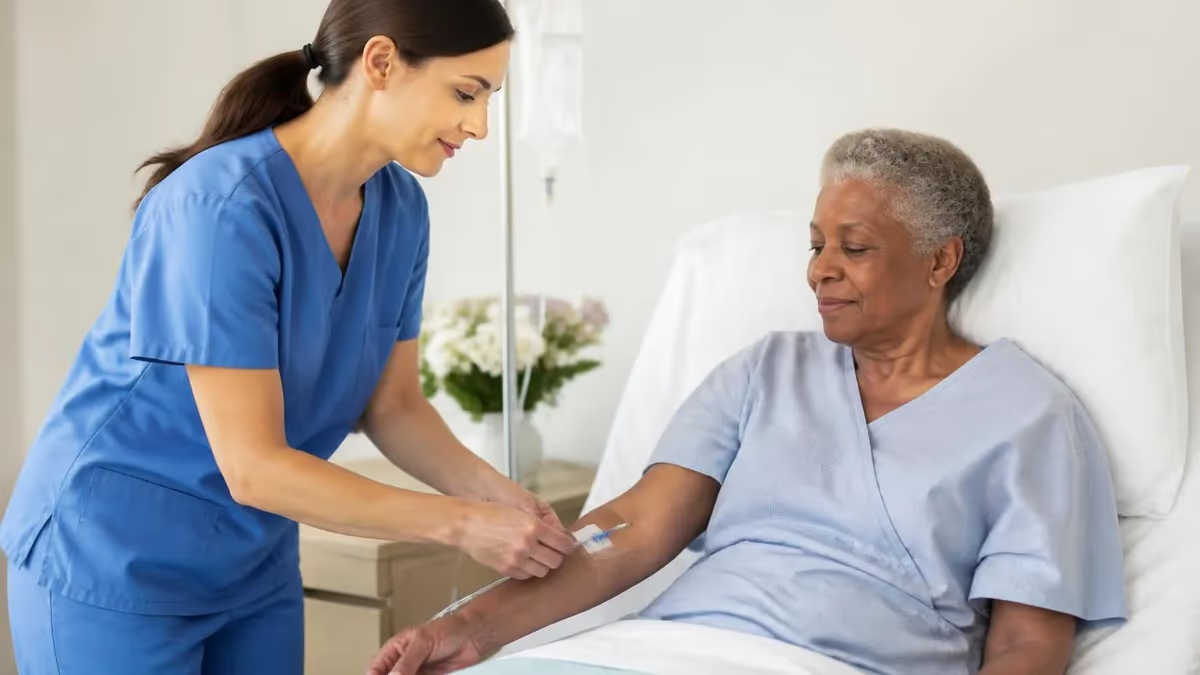
Choosing the right path into practical nursing starts with finding a program that fits your budget, schedule, and career goals, and for many Midwestern students that search begins with comparing lpn schools columbus ohio offers across the central Ohio region.
Columbus has emerged as one of the strongest LPN training markets in the Midwest thanks to its mix of state-supported career centers, community colleges, and private allied health academies. With OhioHealth, Mount Carmel, and Nationwide Children's Hospital all hiring practical nurses, graduates enter a job market that consistently posts hundreds of openings each quarter, often with sign-on bonuses for new licensees.
The Ohio Board of Nursing regulates every approved LPN program in the state, and Columbus-area schools must maintain minimum NCLEX-PN pass rates of 80 percent or higher to keep their authorization. That regulatory floor protects students from underperforming programs and means that any accredited Columbus school you attend will give you a legitimate shot at licensure. Most programs run between 12 and 18 months, with full-time and part-time tracks available so working adults, parents, and career changers can all find a workable schedule.
Tuition for practical nursing in Columbus ranges widely. Public career centers like Eastland-Fairfield and Tolles Career and Technical Center charge between $9,000 and $14,000 for the full program, including books, uniforms, and lab fees. Community college options at Columbus State and Hocking College sit in a similar range, while private institutions such as Fortis College and Hondros College of Nursing can run $20,000 to $30,000. The trade-off is usually scheduling flexibility, smaller cohorts, and more frequent start dates.
Admission requirements are remarkably consistent across the city. Expect to need a high school diploma or GED, a passing TEAS or HESI A2 entrance score, a clean background check, current CPR-BLS certification, and proof of immunizations including Hep B, MMR, varicella, and an annual flu shot. Some programs also require a drug screen and a physical exam within 90 days of orientation. Building these documents early shaves weeks off your enrollment timeline.
What sets Columbus apart from many other metropolitan training hubs is the density of clinical sites. Students rotate through long-term care facilities, rehabilitation centers, pediatric clinics, and acute-care floors, often within a 15-mile radius of campus. Strong clinical exposure translates directly into NCLEX-PN readiness and first-job confidence, two things hiring managers in Franklin, Delaware, and Fairfield counties prioritize. Programs that partner with local hospital systems also tend to feed graduates directly into employment pipelines, sometimes before the license is even printed.
If you are weighing whether the investment pays off, the short answer is yes. Columbus LPNs earn a median wage that consistently outpaces the Ohio state average, with experienced practical nurses in specialty settings clearing $55,000 to $62,000 a year. Add tuition reimbursement, evening and weekend differentials, and pathways toward an LPN-to-RN bridge, and the career math works for most students. The remainder of this guide breaks down programs, costs, eligibility, and study strategy so you can move from researching to enrolling with confidence.
Throughout this article you'll find practice resources, study schedules, and direct comparisons of Columbus schools, but the foundation is always the same: choose an accredited program, plan your finances, and start LPN programs near me research early so you can lock in a seat for the next cohort. Many Columbus schools admit only 24 to 36 students per start date, and waitlists for the most affordable public programs frequently stretch six to nine months.
Columbus LPN Training by the Numbers

Top LPN Schools in Columbus Ohio
Public two-year college offering a 12-month practical nursing certificate with day and evening tracks. Strong clinical partnerships with OhioHealth and consistently posts NCLEX-PN pass rates above 90 percent.
Private nursing-focused school with multiple Columbus locations, rolling admissions, and a 15-month curriculum. Higher tuition but smaller cohorts, weekend options, and a built-in LPN-to-RN bridge pathway.
Career-focused private school offering an accelerated 14-month LPN diploma. Day, evening, and hybrid schedules with monthly start dates. Career services include resume coaching and externship placement.
Adult workforce program with one of the lowest tuition rates in the Columbus metro area. 11-month full-time format, strong rural and suburban clinical placements, and Pell-grant eligible.
Plain City public adult education site serving western Columbus suburbs. Affordable tuition under $13,000, evening track for working adults, and high graduation-to-employment rates with Memorial Health.
Admission requirements for Columbus LPN programs are gatekeeping by design, but they are not unreasonable once you understand the rhythm of the application cycle. Almost every accredited program requires a high school diploma or GED, a minimum 2.5 cumulative GPA from your secondary or any post-secondary coursework, and proof of legal authorization to work in the United States. Some programs accept GED candidates with a composite score above 165 across the four subtests, while others require completion of a basic college English or math course.
The TEAS (Test of Essential Academic Skills) is the standard entrance exam used at Columbus State, Hondros, and most career centers. The Ohio average minimum composite score is 58, but competitive programs like Columbus State publish acceptance thresholds closer to 64. The exam covers reading, math, science, and English usage, and you can retake it after a 30-day waiting period. Investing in a TEAS prep book and practice tests for six to eight weeks before your exam is usually the difference between a single attempt and three.
Background checks and drug screening are non-negotiable. Columbus programs use BCI&I and FBI fingerprinting, and any felony conviction within the last five years can disqualify you from clinical placement, even if the school admits you. If you have a record, contact the Ohio Board of Nursing for a pre-license eligibility ruling before paying tuition. The board will issue a written determination that protects you from investing in a program you cannot complete.
Health documentation is the most time-consuming part of admission. You need a two-step PPD or QuantiFERON for tuberculosis, MMR titers or vaccination proof, varicella immunity, three Hep B doses or a signed declination after counseling, Tdap within the last 10 years, an annual influenza vaccine, and increasingly a COVID-19 vaccination or approved exemption. CPR-BLS for healthcare providers (American Heart Association version) must be current through your expected graduation date. Stack these documents early because some shots require months between doses.
Most Columbus schools also require a personal interview or essay. The interview is conversational, focused on why you want to be a practical nurse and how you handle stress, conflict, and time management. Admissions officers are looking for emotional maturity and realistic expectations, not perfect answers. Mention any healthcare exposure you have, even informal caregiving for family members, and be ready to discuss how you'll balance the program with work and home responsibilities.
For students who need a refresher before applying, the what does LPN stand for overview is a useful starting point because it clarifies scope of practice, supervision requirements, and what daily LPN work actually involves. Schools want applicants who have done their homework, and being able to articulate the difference between LPN and RN responsibilities during your interview signals seriousness.
Finally, plan your application timeline. Columbus State accepts applications on a rolling basis but admits cohorts only in autumn and spring. Hondros runs monthly cohorts but caps each at 28 students. Career centers run one or two starts per year. Submit complete applications at least 90 days before your target start date, and follow up with admissions every two weeks to confirm document receipt. Programs reject otherwise qualified candidates for missing paperwork far more often than for academic weakness.
LPN Practice Test Questions
Prepare for the LPN - Certified Practical Nurse exam with our free practice test modules. Each quiz covers key topics to help you pass on your first try.
LPN - Certified Practical Nurse Basic Care...
LPN Exam Questions covering - Certified Practical Nurse Basic Care and Comfort. Master LPN Test concepts for certification prep.
LPN - Certified Practical Nurse Coordinate...
Free LPN Practice Test featuring - Certified Practical Nurse Coordinated Care. Improve your LPN Exam score with mock test prep.
LPN - Certified Practical Nurse Health Pro...
LPN Mock Exam on - Certified Practical Nurse Health Promotion and Maintenance. LPN Study Guide questions to pass on your first try.
LPN - Certified Practical Nurse Pharmacolo...
LPN Test Prep for - Certified Practical Nurse Pharmacological Therapies. Practice LPN Quiz questions and boost your score.
LPN - Certified Practical Nurse Physiologi...
LPN Questions and Answers on - Certified Practical Nurse Physiological Adaptation. Free LPN practice for exam readiness.
LPN - Certified Practical Nurse Psychosoci...
LPN Mock Test covering - Certified Practical Nurse Psychosocial Integrity. Online LPN Test practice with instant feedback.
LPN - Certified Practical Nurse Reduction ...
Free LPN Quiz on - Certified Practical Nurse Reduction of Risk Potential. LPN Exam prep questions with detailed explanations.
LPN - Certified Practical Nurse Safety and...
LPN Practice Questions for - Certified Practical Nurse Safety and Infection Control. Build confidence for your LPN certification exam.
LPN Ethical, Legal & Professional Standards
LPN Test Online for Ethical, Legal & Professional Standards. Free practice with instant results and feedback.
LPN Health Evaluation & Monitoring
LPN Study Material on Health Evaluation & Monitoring. Prepare effectively with real exam-style questions.
LPN Tuition and Financial Aid in Columbus
Public career centers like Eastland-Fairfield, Tolles, and Delaware Area Career Center deliver the lowest sticker price in Columbus, generally between $9,500 and $14,000 for the full program including books, uniforms, and lab kits. These programs are funded partly by local property taxes, which keeps tuition affordable for Ohio residents and unlocks Pell Grant eligibility for students who qualify based on FAFSA income.
The trade-off for low tuition is rigid scheduling. Most career centers offer one autumn cohort with a single daytime track, making them difficult for full-time workers. Waitlists can run six to nine months for popular sites. If your finances allow you to wait and your daytime schedule is flexible, a public career center is almost always the best value in central Ohio.

Pros and Cons of Studying LPN in Columbus Ohio
- +Multiple accredited program options ranging from $9,500 public to $30,000 private
- +Strong job market with OhioHealth, Mount Carmel, and Nationwide Children's hiring continuously
- +High NCLEX-PN pass rates across the metro area, averaging 87 percent
- +Affordable cost of living compared to Cleveland, Cincinnati, and out-of-state cities
- +Direct LPN-to-RN bridge pathways at Columbus State and Hondros
- +Robust clinical site network within a 15-mile radius of most campuses
- −Public career center waitlists can stretch 6 to 9 months
- −Private program tuition can exceed $30,000 with limited scholarship options
- −Ohio Board of Nursing licensing fees add roughly $130 plus background check costs
- −Daytime-only schedules at some career centers exclude full-time workers
- −Highly competitive admissions at Columbus State require TEAS scores near 64
- −Clinical rotations may require driving 30 to 60 minutes to suburban facilities
Your Columbus LPN School Enrollment Checklist
- ✓Confirm high school diploma or GED with composite score above 165
- ✓Complete FAFSA at studentaid.gov before March 1 for maximum aid eligibility
- ✓Schedule and take the TEAS or HESI A2 entrance exam at least 60 days early
- ✓Submit BCI&I and FBI fingerprint background checks through an approved vendor
- ✓Gather immunization records including MMR, varicella, Hep B, Tdap, and flu
- ✓Complete a two-step PPD or QuantiFERON for tuberculosis screening
- ✓Earn current American Heart Association CPR-BLS for healthcare providers
- ✓Attend a mandatory information session at your top two program choices
- ✓Request high school and any college transcripts sent directly to admissions
- ✓Apply at least 90 days before your target cohort start date
Stack programs to protect your timeline
Apply to two or three Columbus LPN programs simultaneously. Career center waitlists are unpredictable, and a private school acceptance gives you a fallback start date. Most application fees are under $50 and the paperwork overlaps almost entirely.
The curriculum at every approved Columbus LPN program follows a framework shaped by the Ohio Board of Nursing and the National Council of State Boards of Nursing. Expect roughly 1,400 to 1,500 clock hours split between theory, skills lab, and supervised clinical practice. The theory portion covers anatomy, physiology, pharmacology, nutrition, growth and development, mental health, and the four NCLEX-PN client need categories: safe care environment, health promotion, psychosocial integrity, and physiological integrity.
Skills lab is where Columbus programs differentiate themselves. Columbus State and Hondros operate high-fidelity simulation labs with programmable manikins that breathe, bleed, and respond to medication, giving you repeated exposure to scenarios you might only see once or twice in clinicals. Smaller career centers rely on traditional task trainers and standardized patients but compensate with smaller student-to-instructor ratios that often run as low as 6 to 1 in lab sessions.
Clinical rotations begin as early as the second term and intensify through the program. Typical Columbus rotations include long-term care at facilities like Westerville Healthcare Center, rehabilitation at Dodd Hall, pediatric exposure at Nationwide Children's, medical-surgical floors at Riverside Methodist and Mount Carmel East, and a final preceptorship where you shadow a working LPN for 80 to 120 hours. Strong rotations build the muscle memory that NCLEX-PN questions test indirectly.
Medication administration is the single most heavily tested topic in practical nursing, so Columbus programs front-load pharmacology in the second or third term. You'll learn the six rights, oral and parenteral routes, sliding-scale insulin, anticoagulation safety, controlled substance documentation, and pediatric weight-based dosing. Expect weekly dosage calculation quizzes with a minimum passing score of 90 percent — fail two and most programs require remediation before allowing you to continue clinicals.
Mental health and psychosocial integrity content has expanded significantly in the past five years. Columbus students cover therapeutic communication, suicide risk assessment, substance use disorders, cognitive impairment, and culturally competent care for the diverse populations served across Franklin County. Mental health rotations may take place at Twin Valley Behavioral Healthcare or partner outpatient clinics, depending on your program's affiliations.
End-of-program preparation almost always includes a comprehensive predictor exam such as ATI, HESI, or Kaplan. These exams correlate strongly with NCLEX-PN performance, and Columbus programs use predictor scores to identify students who need additional review before the licensure exam. Many schools require a minimum predictor probability score, often 85 to 92 percent, before they will certify your graduation paperwork to the Ohio Board of Nursing.
Documentation, delegation, and prioritization are softer but equally tested skills. Columbus programs emphasize SBAR communication for shift reports, Maslow and ABC-based prioritization frameworks for NCLEX-style questions, and the five rights of delegation that LPNs use when working alongside nursing assistants. The earlier you internalize these frameworks, the smoother your transition from student to working practical nurse will feel.
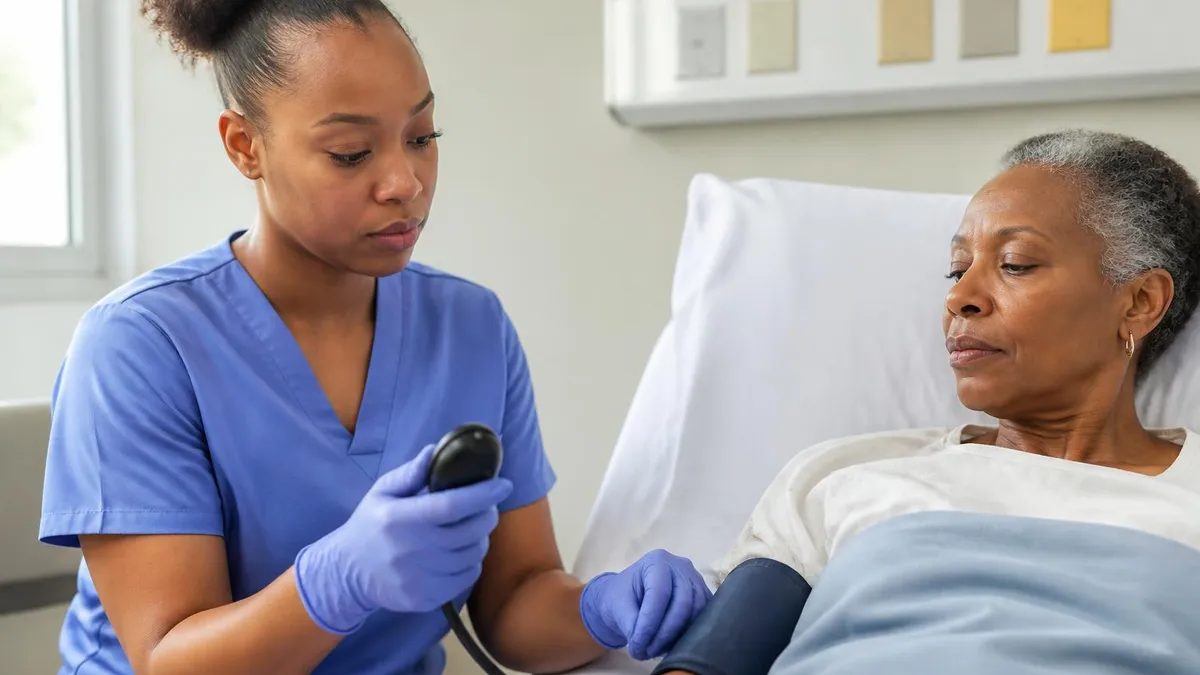
The Ohio Board of Nursing requires NCLEX-PN testing within five years of graduation. Wait too long after finishing a Columbus program and you may need additional refresher coursework. Schedule your exam within 60 days of program completion for the strongest pass-rate odds.
Once you complete a Columbus LPN program, the path to working as a licensed practical nurse runs through the NCLEX-PN exam and Ohio Board of Nursing licensure. Your school certifies your graduation to the board, you submit an application with the $75 license fee plus a $200 NCLEX-PN exam fee through Pearson VUE, and once authorization to test is issued you have 90 days to sit for the exam. Columbus has three Pearson VUE centers, with availability typically within two to three weeks of registration.
The NCLEX-PN itself uses computerized adaptive testing, meaning each question's difficulty adjusts based on your prior answers. You'll see between 85 and 150 questions, finish anywhere from 90 minutes to five hours, and receive results in 48 hours via Pearson's quick results service. Columbus program graduates pass on the first attempt at rates averaging 87 percent, with Columbus State and the top career centers consistently exceeding 92 percent.
If you do not pass on the first attempt, Ohio allows a retake after a 45-day waiting period, with no cap on total attempts within five years of graduation. Failed candidates receive a Candidate Performance Report detailing weak content areas, which becomes your roadmap for targeted review. Most Columbus programs offer free NCLEX remediation to recent graduates, so call your school before paying for an outside review course.
Job hunting in Columbus typically starts during your final clinical rotation. Long-term care facilities, particularly the Ohio Living and HCR ManorCare networks, hire aggressively and frequently offer sign-on bonuses of $3,000 to $7,500. Acute-care hospital LPN roles are scarcer than they were a decade ago but still exist in specialty areas like pediatrics, rehabilitation, and outpatient surgery centers. Clinic settings — primary care, dermatology, OBGYN, urgent care — offer predictable Monday-to-Friday schedules and are popular with parents.
Salary in Columbus tracks slightly above the Ohio state median. New graduates start between $22 and $26 per hour, with three-to-five-year LPNs earning $26 to $31 per hour, and specialty or charge LPNs reaching $33 to $36. Add evening, night, and weekend differentials of $1.50 to $4.00 per hour and the math improves quickly. Many employers also fund tuition for the LPN-to-RN bridge, which can lift annual earnings by 35 to 50 percent after two more years of school.
Continuing education is mandatory for license renewal. Ohio requires 24 contact hours of CE every two years for LPNs, including one hour on Ohio nursing law and rules and one hour on category A topics. Most Columbus employers provide free CE through internal learning systems, and resources like the LPN practice test PDF can reinforce clinical knowledge between renewal cycles.
Beyond licensure, the career ladder offers meaningful growth. Columbus LPNs commonly add IV therapy certification, blood withdrawal authorization, geriatric or hospice specialty certificates, or LTC-DON tracks that lead toward management. Each credential adds wage leverage and protects you against shifts in healthcare hiring patterns. The smartest graduates plan their first 18 months around earning at least one additional certification while exploring whether they want to stay LPN or bridge to RN.
Practical preparation for your first year at a Columbus LPN program looks less glamorous than admissions brochures suggest, but the students who plan for it consistently outperform those who improvise. Start by building a realistic weekly schedule before classes begin. A typical full-time LPN week demands 25 to 32 hours of in-person attendance plus 20 to 30 hours of independent study, reading, and skills practice. If you currently work more than 20 hours weekly, plan to reduce hours before the program starts, not after you fall behind.
Invest in three resources before your first day: a quality medical-surgical textbook (Saunders or Lippincott are the Columbus favorites), an NCLEX-PN review book even though you'll use it later, and a digital flashcard app preloaded with pharmacology and lab values. Spaced repetition with a tool like Anki or Quizlet is the single highest-ROI habit you can build in week one, because pharmacology compounds across every term and last-minute cramming reliably fails on cumulative exams.
Form a study group during orientation. Three or four classmates with complementary strengths is the sweet spot: one strong in pharmacology, one in pathophysiology, one in test strategy, one who is organized and reliable about scheduling. Columbus programs are intentionally small precisely because cohort cohesion drives outcomes. Students who study alone score lower on first-attempt NCLEX-PN and are more likely to drop out during the heavier second and third terms.
Prioritize physical and mental health from day one. LPN training is sedentary in class and exhausting on clinicals, a combination that produces back injuries, weight gain, and burnout if you let it. Plan three short workouts weekly, protect seven hours of sleep on clinical nights, and identify a counselor or campus support resource before you need one. Columbus State and most career centers offer free short-term counseling — use it without shame.
Practice questions are non-negotiable from week one. Aim for 25 to 50 NCLEX-style questions daily, even when content is still being introduced. Early questions will feel impossible; that is the point. Each one teaches you the question architecture, exposes a knowledge gap, and prepares you for the predictive exams your program will use as gatekeepers later. Track your performance in a notebook so you can spot patterns — repeated weakness in fluid and electrolytes, for example, signals you need to revisit that chapter.
Documentation skills deserve early attention. Clinical instructors fail students more often for incomplete charting than for clinical errors, because charting reflects judgment and communication. Practice writing focused SOAP and SBAR notes from your weekly readings even before clinicals begin. By the time you're charting on real patients, the structure should feel automatic and you can spend cognitive energy on observation and assessment rather than format.
Finally, manage your relationship with money. Most Columbus students underestimate ancillary costs by $1,500 to $3,000 — stethoscopes, lab coats, gas for clinical commutes, parking permits, NCLEX-PN review courses, board fees. Build a separate program fund of $2,000 to $3,000 beyond tuition, automate weekly contributions, and avoid taking on credit card debt for daily expenses. Graduating with a license and a manageable debt load gives you freedom to choose the right first job rather than the highest-bidding one.
LPN Questions and Answers

About the Author

Registered Nurse & Healthcare Educator
Johns Hopkins University School of NursingDr. Sarah Mitchell is a board-certified registered nurse with over 15 years of clinical and academic experience. She completed her PhD in Nursing Science at Johns Hopkins University and has taught NCLEX preparation and clinical skills courses for nursing students across the United States. Her research focuses on evidence-based exam preparation strategies for healthcare certification candidates.
Join the Discussion
Connect with other students preparing for this exam. Share tips, ask questions, and get advice from people who have been there.
View discussion (7 replies)