
LPN Night Classes: 2026 September Guide to Evening Programs, Schedules & Enrollment
LPN night classes let working adults earn their practical nursing license in 18-24 months. Compare schedules, costs, clinical rotations, and top programs. ✅
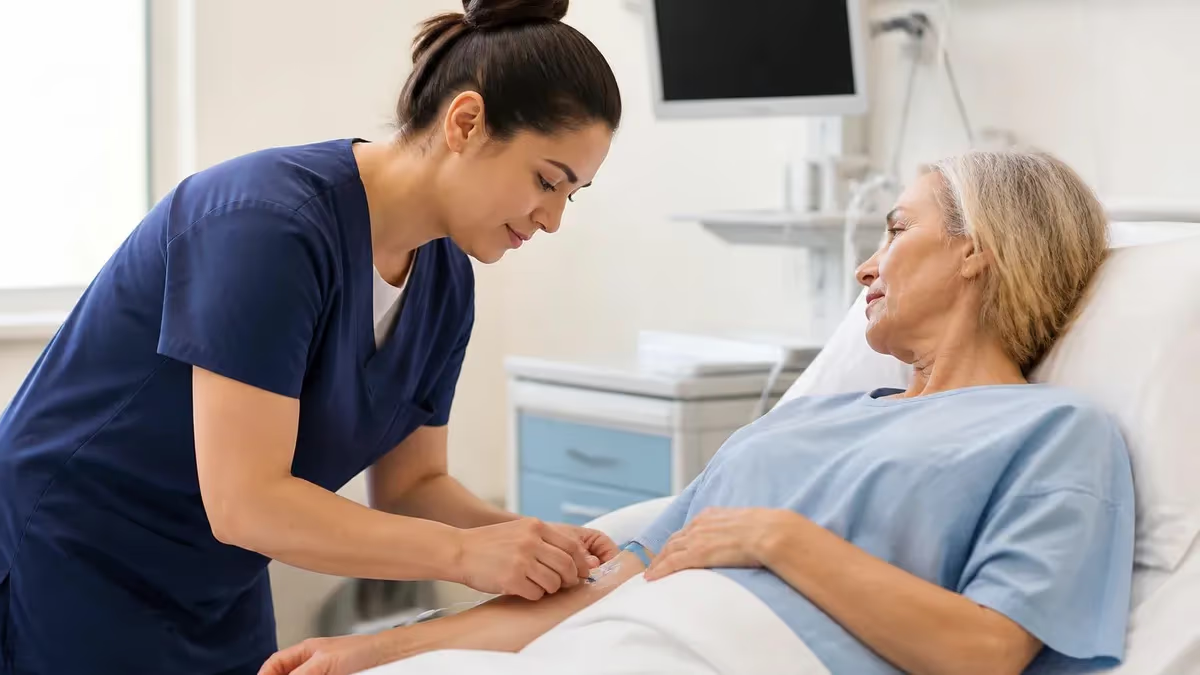
LPN night classes have become one of the fastest-growing pathways into licensed practical nursing because they let adults keep their daytime jobs, childcare arrangements, and family responsibilities intact while still earning a state-recognized credential. Most evening programs run between 5:00 PM and 10:00 PM on weekdays, occasionally adding a Saturday clinical, and they cover the exact same curriculum required by state boards of nursing as their daytime counterparts. The result is a licensure-eligible graduate who completed every theory hour, every skills lab, and every patient-care rotation, just on a schedule that respected real life.
Demand for evening practical nursing programs surged after 2020 as hospitals, long-term care facilities, and home-health agencies faced unprecedented staffing shortages. The Bureau of Labor Statistics projects 54,000 LPN openings each year through 2032, and community colleges responded by expanding part-time evening cohorts. Today you can find accredited night programs in nearly every state, from rural technical centers in Iowa to large urban schools in Texas, California, and New York. Tuition typically ranges from $5,000 at public institutions to $35,000 at private career colleges.
Choosing the right evening program is not just about start times. Accreditation, NCLEX-PN pass rates, clinical site quality, and total program length all matter more than convenience. A program that finishes in 18 months but graduates students with a 60 percent first-attempt pass rate is a worse investment than a 24-month evening program with a 92 percent pass rate. Before applying anywhere, request the school's most recent annual report from the state board of nursing, which lists pass rates publicly and is the single most predictive metric of your future success.
This guide walks through every dimension of LPN night classes for 2026: weekly schedule structure, admission prerequisites, costs and financial aid, clinical rotation logistics, NCLEX-PN preparation built into evening curricula, and the realistic time commitment outside the classroom. We also cover hybrid options that combine online theory with in-person evening labs, an arrangement that now exists at roughly 40 percent of accredited LPN programs nationwide. If you want a head start on board-style content, our LPN practice test PDF is a free resource graduates have used for years.
One important note before we dive in: not every state allows a fully part-time evening LPN pathway. States such as California, Texas, Florida, Ohio, and Pennsylvania have many evening options, while a handful of states still require predominantly daytime clinical rotations because of hospital partnership availability. We will explain how to verify approval through your state's board of nursing so you do not invest 18 months in a program whose graduates cannot sit for the NCLEX-PN exam.
Finally, evening study demands honest self-assessment. You will be working all day, attending lecture from 5 to 10 PM three or four nights a week, and still need to complete 10-15 hours of reading, care plans, and skills practice on the weekends. Students who succeed treat the program like a second full-time job for 18-24 months. Those who underestimate the workload tend to fail out in the first semester. This article will help you decide whether the trade-off is worth it for your situation in 2026.
Beyond logistics, evening programs build a unique cohort culture. Most students are in their late 20s through 50s, many are career changers from medical assisting, EMT work, or unrelated fields like retail and food service, and almost everyone is parenting or caregiving. That shared maturity tends to produce strong study groups, reliable clinical partners, and lasting professional networks that pay dividends when you start job hunting after graduation.
LPN Night Classes by the Numbers
How LPN Night Classes Are Structured
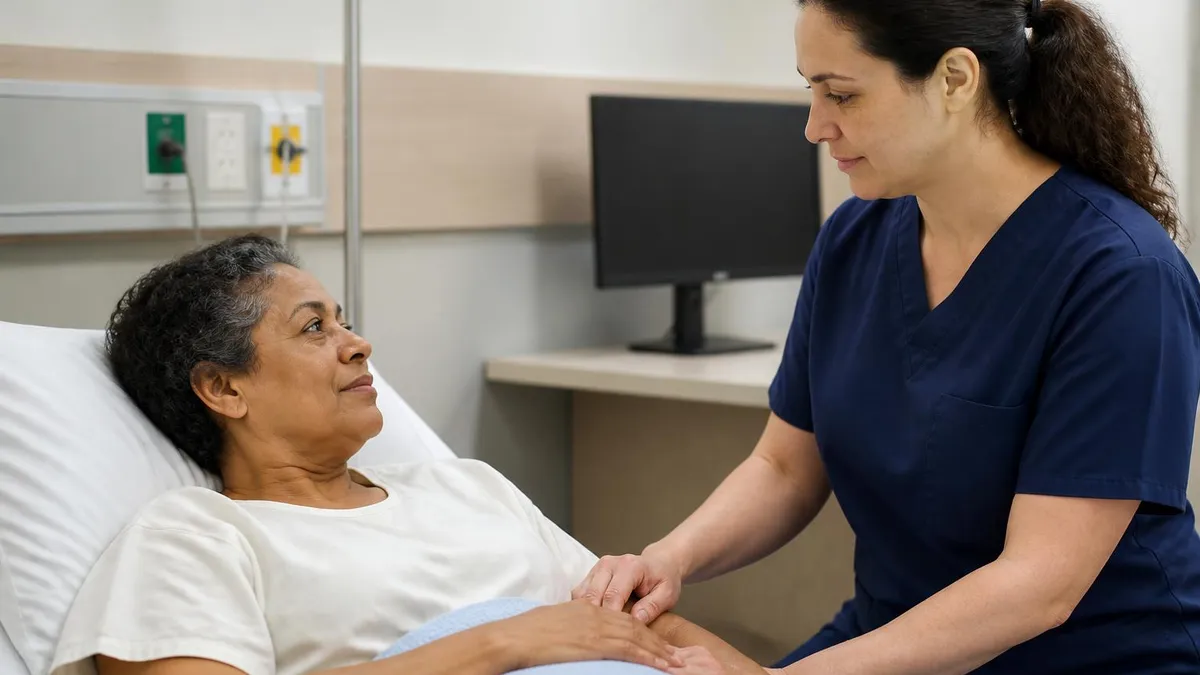
Theory courses meet Monday through Thursday, typically 5:00-10:00 PM. Subjects include anatomy and physiology, pharmacology, medical-surgical nursing, maternal-newborn, pediatrics, and mental health, sequenced across four to six semesters.
Most programs require 6-8 hours of in-person lab on Saturdays during the first two semesters. Students practice injections, sterile dressing changes, catheter insertion, and head-to-toe assessments on mannequins before touching real patients.
Once theory is complete in a subject, students rotate through hospitals, long-term care, and outpatient clinics on weekends or one weekday per week, accumulating roughly 600 supervised clinical hours total before graduation.
Programs use ATI, Kaplan, or HESI digital platforms for between-class quizzes, virtual simulations, and remediation. Expect 8-12 hours of asynchronous work per week, much of it completed during lunch breaks or early mornings.
The final 4-8 weeks pair each student one-on-one with a working LPN or RN preceptor for 120-180 hours of full-shift practice. This is where most students transition from student nurse mindset to confident new graduate.
Admission to an LPN evening program is competitive but typically less selective than RN programs. Schools want to see that you can handle the academic load on top of work and family. The single most important admission document is your transcript: most programs require a high school diploma or GED with a minimum 2.5 cumulative GPA, and prerequisite courses such as English composition, basic algebra, and introductory biology must show grades of C or better. Some schools waive prerequisites for applicants with 5+ years of recent healthcare experience as a CNA or medical assistant.
Standardized testing is the second hurdle. Approximately 70 percent of LPN programs require the TEAS (Test of Essential Academic Skills) or the HESI A2, with minimum composite scores ranging from 58 to 75 depending on competitiveness. The TEAS covers reading, math, science, and English language usage. Plan to study for six to eight weeks before testing. Most students who fail the first attempt under-prepared the science section, particularly cellular biology, chemistry basics, and human body systems. Free study guides and our LPN programs near me directory can help you compare requirements school by school.
Background checks and drug screens are universal. Hospitals that host clinical rotations contractually require negative screens for THC, opioids, amphetamines, and other controlled substances, plus a criminal background check that flags felonies, certain misdemeanors, and any history of patient abuse or fraud. A DUI from a decade ago usually will not disqualify you, but anything within the last five years should be disclosed to the program director before applying. Most boards of nursing offer a pre-application criminal history review for a small fee.
Health documentation often surprises applicants. Programs typically require proof of immunizations for hepatitis B (three-shot series), MMR, varicella, Tdap within 10 years, annual flu shot, and current COVID-19 vaccination. A two-step tuberculosis test or QuantiFERON blood test is mandatory before clinical placement. CPR certification at the Basic Life Support (BLS) level from the American Heart Association is required and must remain current throughout the program. Budget $250-$400 for all immunizations, screens, and CPR certification combined.
References and a personal essay round out most applications. Schools ask for two or three professional or academic references who can speak to your work ethic and reliability. The essay typically asks why you want to become an LPN, what you bring to the profession, and how you will manage the demands of evening study. Admissions committees read hundreds of these. Specifics about a patient, family member, or workplace experience that shaped your nursing motivation are far more memorable than generic statements about wanting to help people.
Application timing matters more than most applicants realize. Evening cohorts are smaller than daytime cohorts because clinical sites have limited evening and weekend capacity, so seats fill quickly. For a fall start, submit your complete application package by March or April. For a January start, apply by August or September. Many schools maintain waitlists, and ranking on the waitlist often depends on TEAS score, prerequisite GPA, and date of completed application, so a strong application submitted early outperforms a perfect application submitted late.
Finally, expect an in-person or video interview at competitive programs. Interviewers want to see professionalism, time management, and emotional readiness. Bring questions about evening clinical site arrangements, transportation, NCLEX pass rates, and what percentage of evening students complete the program. Their willingness to answer transparently is itself a quality signal.
LPN Practice Test Questions
Prepare for the LPN - Certified Practical Nurse exam with our free practice test modules. Each quiz covers key topics to help you pass on your first try.
LPN - Certified Practical Nurse Basic Care...
LPN Exam Questions covering - Certified Practical Nurse Basic Care and Comfort. Master LPN Test concepts for certification prep.
LPN - Certified Practical Nurse Coordinate...
Free LPN Practice Test featuring - Certified Practical Nurse Coordinated Care. Improve your LPN Exam score with mock test prep.
LPN - Certified Practical Nurse Health Pro...
LPN Mock Exam on - Certified Practical Nurse Health Promotion and Maintenance. LPN Study Guide questions to pass on your first try.
LPN - Certified Practical Nurse Pharmacolo...
LPN Test Prep for - Certified Practical Nurse Pharmacological Therapies. Practice LPN Quiz questions and boost your score.
LPN - Certified Practical Nurse Physiologi...
LPN Questions and Answers on - Certified Practical Nurse Physiological Adaptation. Free LPN practice for exam readiness.
LPN - Certified Practical Nurse Psychosoci...
LPN Mock Test covering - Certified Practical Nurse Psychosocial Integrity. Online LPN Test practice with instant feedback.
LPN - Certified Practical Nurse Reduction ...
Free LPN Quiz on - Certified Practical Nurse Reduction of Risk Potential. LPN Exam prep questions with detailed explanations.
LPN - Certified Practical Nurse Safety and...
LPN Practice Questions for - Certified Practical Nurse Safety and Infection Control. Build confidence for your LPN certification exam.
LPN Ethical, Legal & Professional Standards
LPN Test Online for Ethical, Legal & Professional Standards. Free practice with instant results and feedback.
LPN Health Evaluation & Monitoring
LPN Study Material on Health Evaluation & Monitoring. Prepare effectively with real exam-style questions.
Hybrid vs Fully In-Person LPN Night Classes
Traditional evening LPN programs meet on campus four nights per week from 5:00-10:00 PM, plus Saturday lab and rotating clinical days. Every lecture, quiz, and skills check happens face-to-face. This format works best for students who learn through direct discussion, benefit from hands-on guidance during lab, and want the structure of a fixed schedule that gets them out of the house and into student mode.
The downside is rigidity. If your child gets sick or your shift runs late, you cannot rewind a lecture. Attendance policies are strict because state boards count contact hours, so missing more than two or three classes per semester can trigger academic probation or dismissal. Budget for reliable transportation and backup childcare, and confirm parking availability and campus security for late-night dismissal before enrolling.
LPN Night Classes: Honest Pros and Cons
- +Keep your current job and health insurance throughout the program
- +Same curriculum and licensure outcome as daytime cohorts
- +Smaller class sizes often mean more instructor attention
- +Classmates are mature working adults with strong study habits
- +Evening clinical sites often hire graduates directly into open positions
- +Federal financial aid, including Pell Grants, applies just like daytime
- +Allows continuous income, reducing total student loan debt
- −18-24 month timeline is longer than 12-month daytime programs
- −Evening clinical placements may be limited to long-term care, not hospitals
- −Exhaustion after full workday makes lecture absorption harder
- −Fewer scholarship opportunities than traditional daytime programs
- −Family and social life shrinks significantly during program
- −Some states have limited evening program availability
- −Late-night campus security and parking can be concerns
LPN Night Classes Enrollment Checklist
- ✓Verify the program is approved by your state board of nursing for NCLEX-PN eligibility
- ✓Check the most recent NCLEX-PN first-time pass rate (aim for 80% or higher)
- ✓Confirm the program holds ACEN or COE accreditation for financial aid eligibility
- ✓Complete prerequisite courses (English, math, biology) with grades of C or better
- ✓Schedule and pass the TEAS or HESI A2 exam at the program's minimum score
- ✓Gather official high school and any college transcripts for application submission
- ✓Order BLS CPR certification through the American Heart Association
- ✓Complete required immunizations, two-step TB test, and annual flu shot
- ✓Pass a criminal background check and 10-panel drug screen
- ✓Submit FAFSA and apply for state grants by the program's priority deadline
- ✓Tour the campus and meet faculty during an evening information session
- ✓Arrange reliable childcare and transportation for the full 18-24 month timeline
Ask which hospitals and facilities host evening cohort clinicals
The single biggest variable between LPN night programs is clinical site quality. Programs partnered with regional hospitals expose students to acute care, IV therapy, and complex patient assessments. Programs limited to small nursing homes restrict your skill development and your post-graduation job options. Before signing enrollment paperwork, request a written list of clinical partner facilities and call the nurse manager at one of them to confirm the partnership is active and current.
Total cost of an LPN night program ranges dramatically by school type. Public community colleges and technical centers charge $5,000 to $12,000 in tuition and fees for the full program. Private career colleges and for-profit institutions charge $20,000 to $35,000, occasionally higher in major metros. On top of tuition, plan for $1,200-$2,000 in textbooks and digital learning platforms (ATI, Kaplan, HESI), $400-$700 for uniforms, stethoscope, watch, and clinical badge, and $200-$400 for the NCLEX-PN application fee plus state licensure fees. Most graduates spend $8,000-$40,000 all-in.
Federal financial aid is fully available for accredited evening programs. The FAFSA (Free Application for Federal Student Aid) is your starting point. Pell Grants provide up to $7,395 per year (2024-25 amounts) to students with demonstrated financial need and do not need to be repaid. Direct Subsidized Loans cap at $3,500-$5,500 per year depending on dependency status, with interest deferred while you are enrolled at least half-time. Direct Unsubsidized Loans fill remaining gaps. Avoid private loans until federal options are exhausted because interest rates and protections are significantly worse.
State-level grants and scholarships add meaningful funds. Many states offer workforce development grants specifically for healthcare training: examples include the New York Excelsior Scholarship, Texas TEOG, California Cal Grant C, and Tennessee Reconnect. Your state's department of labor or workforce commission website lists current programs. Most require enrollment at a public or in-state institution and a minimum credit load (typically 6+ credits per semester), which evening cohorts usually meet despite the part-time perception.
Employer tuition assistance is often the most overlooked funding stream. Hospitals, nursing homes, home-health agencies, and even some retail employers offer $2,000-$5,250 per year in tax-free tuition reimbursement for healthcare students who agree to work for them after graduation. The agreement typically requires 1-2 years of employment at standard wages. CVS, Walmart, Walgreens, Amazon, and most hospital systems run such programs. Ask your HR department for the education benefit policy before you apply to programs.
Workforce Innovation and Opportunity Act (WIOA) funds, administered through local American Job Centers, can cover full LPN tuition for displaced workers, low-income adults, and certain veterans. The application process takes 4-8 weeks and requires meeting with a career counselor who confirms LPN is on your state's in-demand occupation list (it is on virtually every state's list). WIOA funds are grants, not loans, so they never need to be repaid. This program funds thousands of LPN students annually and is dramatically underused.
Veterans have additional options. Post-9/11 GI Bill benefits cover full tuition at public institutions and up to roughly $28,000 per academic year at private institutions, plus a monthly housing allowance based on the school's zip code. VA Vocational Rehabilitation (Chapter 31) provides even more generous benefits for service-connected disabled veterans. Both programs cover books, fees, and required equipment. Contact your school's certifying official before enrolling to confirm the LPN program is approved for VA benefits, as a small number of programs are not.
Finally, do not overlook scholarships from professional associations. The National Association of Licensed Practical Nurses (NALPN), the National Black Nurses Association, the Hispanic Nurses Association, and dozens of state and regional nursing associations offer awards ranging from $500 to $5,000. The application windows typically open in January and close by April or May. Plan to apply to 8-15 scholarships each cycle, because acceptance rates are low individually but accumulate meaningfully across many applications.
A small number of for-profit schools advertise evening LPN programs that are not approved by the state board of nursing or accredited by ACEN or COE. Graduates from these programs cannot sit for the NCLEX-PN exam in most states and cannot transfer credits to other schools. Always verify approval directly on your state board of nursing website before paying any deposit. If a school refuses to provide its current pass rate or accreditation documentation in writing, walk away immediately.
Graduating from an evening LPN program is not the end of the journey, it is the qualifier to sit for the NCLEX-PN exam. The National Council Licensure Examination for Practical Nurses is a computer-adaptive test of 85 to 150 questions covering four major client need categories: safe and effective care environment, health promotion and maintenance, psychosocial integrity, and physiological integrity. Most graduates schedule the exam four to six weeks after graduation, using the gap for focused review. Test-taker resources like our wound care certification for LPN guide can help you plan post-NCLEX specialty paths once you are licensed.
Pass rates for first-time test-takers from accredited evening programs averaged 87 percent in 2024, statistically identical to daytime programs. Students who fail typically did so because they stopped studying intensely once they finished school. The NCLEX is not a final exam, it is a synthesis exam built around clinical judgment. Most successful candidates spend 4-8 weeks doing 50-100 NCLEX-style questions per day with rationales, using a commercial bank like UWorld, Kaplan, or Archer, and reviewing every missed question in depth before moving on.
Once you pass, your state board of nursing issues a license number, usually within 1-3 weeks. Some states use expedited licensure that activates within 24-48 hours of passing. You then become eligible to work as a Licensed Practical Nurse, also called a Licensed Vocational Nurse in California and Texas. The license must be renewed every two years (one year in a few states), with continuing education requirements ranging from zero hours in some states to 30 hours in others. Compact license states let you work across state lines without separate licenses, currently a significant majority of states.
Job placement after evening LPN programs is exceptionally strong in 2026. The Bureau of Labor Statistics reports the median LPN salary at $59,730 nationally, with the top 10 percent earning above $77,000. Long-term care and skilled nursing facilities hire the most new graduates because turnover is highest there, with starting wages typically $24-$30 per hour. Hospitals, home health, hospice, corrections, and outpatient clinics offer competitive alternatives at $26-$34 per hour. Evening and night shift differentials add $2-$6 per hour on top of base wages.
Many graduates use the LPN credential as a stepping stone to RN licensure through LPN-to-RN bridge programs. These programs take 12-18 months and award an Associate Degree in Nursing (ADN), qualifying graduates to sit for the NCLEX-RN. LPN experience also counts as prerequisite work history for accelerated BSN programs at universities. The LPN-to-BSN route, totaling roughly 4-5 years from start of LPN program to BSN graduation, is now one of the most common nursing career trajectories nationwide.
Specialty certifications open doors and add salary. Wound care (WCC), IV therapy, geriatric care (CDP), pharmacology, and long-term care (CLTC) certifications typically cost $300-$800 and add $1-$3 per hour to wages. Most are earned through 20-40 hour online courses plus a proctored exam. Pursue these strategically based on your work setting: wound care for long-term care nurses, IV therapy for hospital and infusion nurses, geriatric for hospice and assisted living roles.
Finally, do not underestimate the value of professional networking. Join your state's licensed practical nurse association, attend at least one regional conference per year, and stay active on professional LinkedIn. The LPN community is tight-knit, hiring managers move between facilities frequently, and most career-defining job opportunities come through referrals rather than online applications. Evening program classmates often become your most valuable lifelong network because you all built it together while everyone else was sleeping.
Surviving 18-24 months of evening LPN classes while working full-time requires deliberate strategies, not just willpower. The students who thrive treat study time like clinical shifts, scheduled, non-negotiable, and protected from interruption. Block two hour windows on weekday mornings or lunch breaks for reading and concept review, and reserve weekend mornings for case studies, care plans, and NCLEX-style practice questions. Most successful students complete 40-60 NCLEX-format questions daily starting in the second semester, treating it like daily exercise rather than a final-exam cram task.
Sleep is the most underrated success variable. Cutting nightly sleep from seven hours to five to gain study time is a false economy: memory consolidation, especially for pharmacology and pathophysiology, happens during deep sleep. Studies of nursing students consistently show that those sleeping seven or more hours nightly outperform sleep-restricted peers on exams by 10-20 percentage points. If you cannot fit everything in, cut social media and TV before you cut sleep, and accept that your house will not be perfectly clean for two years.
Build a small, committed study group. Two to four classmates who share your work ethic and reliability are worth more than a group of ten casual participants. Meet weekly, ideally on a fixed day, either in person at a library or over Zoom. Rotate teaching responsibilities: one person teaches cardiac dysrhythmias, another teaches insulin types, another teaches isolation precautions. Teaching content forces deeper understanding than passive reading and exposes gaps before they appear on exams. Most students who finish near the top of their cohort credit a strong study group.
Master your test-taking strategy early. NCLEX-PN questions are not knowledge questions, they are clinical-judgment questions designed to differentiate between two technically correct answers. Practice identifying keywords like priority, first, initial, and best, and learn the Maslow hierarchy and ABC (airway, breathing, circulation) frameworks cold. Read the question stem before the answer choices, eliminate two obviously wrong options first, then weigh the remaining two against safety, scope of practice, and what an LPN can independently do versus what requires RN or provider involvement.
Take care of your body. Standing 8-12 hours during clinical shifts on top of an office job is brutal on feet, knees, and lower back. Invest in two pairs of high-quality nursing shoes (rotate between days to let cushioning recover), compression socks for clinical days, and a refillable water bottle you actually drink from. Pack protein-rich snacks (almonds, hard-boiled eggs, jerky, Greek yogurt) for evening class so you avoid vending machine sugar crashes that wreck the 8-10 PM hours when most lecture content lands.
Communicate constantly with your support system. Spouses, partners, parents, and even teenage children need a clear picture of what you are doing and why. Post your class and clinical schedule on the family calendar. Set explicit expectations about who covers cooking, laundry, and childcare on class nights. Plan one protected family event per month, even something simple like a Sunday breakfast, so loved ones do not feel abandoned. Programs report that the leading cause of voluntary student withdrawal is not academic failure but family stress that could have been prevented with better communication upfront.
Finally, celebrate small wins. Passing a pharmacology exam, completing a difficult clinical day, mastering a sterile technique, these moments deserve recognition. The 18-24 month journey is long, and graduation feels impossibly distant during the middle semesters. Mark milestones with intentional rest, a favorite meal, or a low-key outing. The LPN graduates who look back on the program with pride are not those who suffered through it alone, they are those who built rituals of progress and gratitude along the way. That mindset carries directly into your nursing practice, where small acts of compassion compound into a meaningful career.
LPN Questions and Answers

About the Author

Registered Nurse & Healthcare Educator
Johns Hopkins University School of NursingDr. Sarah Mitchell is a board-certified registered nurse with over 15 years of clinical and academic experience. She completed her PhD in Nursing Science at Johns Hopkins University and has taught NCLEX preparation and clinical skills courses for nursing students across the United States. Her research focuses on evidence-based exam preparation strategies for healthcare certification candidates.
Join the Discussion
Connect with other students preparing for this exam. Share tips, ask questions, and get advice from people who have been there.
View discussion (7 replies)