
LPN Jobs in Boston: 2026 October Guide to Employers, Pay, and Getting Hired
🎯 Explore LPN jobs in Boston: where licensed practical nurses work, typical pay, licensing steps, and practical tips for landing your first Massachusetts role.
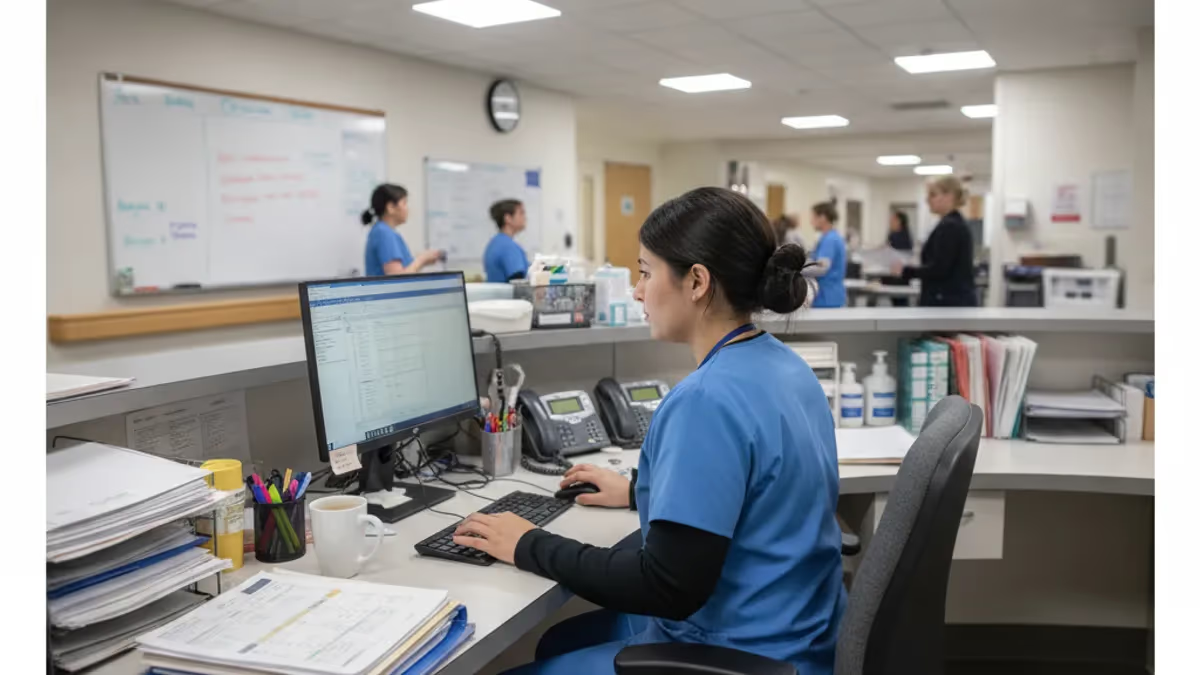
Searching for lpn jobs in Boston can feel overwhelming at first, because the city is famous for world-class hospitals, universities, and research centers, yet many of those employers lean heavily on registered nurses. The good news is that Greater Boston has a large and varied healthcare economy, and licensed practical nurses fill steady roles across long-term care, rehabilitation, home health, outpatient clinics, and correctional health. This guide shows where those openings sit and how to reach them.
A licensed practical nurse, called an LPN in most states, provides basic bedside care under the direction of a registered nurse or physician. In Massachusetts, the Board of Registration in Nursing licenses LPNs after graduates complete an approved program and pass the NCLEX-PN. Before you apply anywhere, it helps to understand the full lpn jobs boston licensing path, including education, testing, and background checks, because employers will not interview unlicensed candidates for nursing positions.
Boston is not a single job market. It is a cluster of overlapping ones: the city proper, plus Cambridge, Quincy, Brookline, Newton, Somerville, Dedham, Braintree, and dozens of smaller towns connected by the MBTA. A skilled nursing facility in Dorchester, a rehab hospital in Canton, and a community health center in Chelsea each hire LPNs differently. Learning how each setting works lets you target your resume instead of mass-applying and hoping something sticks.
Compensation also varies more than most newcomers expect. Massachusetts has some of the higher living costs in the country, and employers respond with wages that generally sit above the national LPN average. Still, a day shift at a nursing home pays differently from a night shift at a rehab hospital, and a per diem agency role pays differently again. Differentials for evenings, nights, and weekends can add thousands of dollars per year, so the base rate tells only part of the story.
Timing matters as well. Long-term care operators in the Boston area tend to hire year-round because turnover is high and staffing ratios are tight. Hospital systems post openings in waves, often tied to budget cycles and unit expansions. Home health agencies hire continuously but may require a car and a clean driving record. Knowing these rhythms helps you decide when to apply, how many applications to send, and which employers deserve a follow-up call.
You will also compete with experienced LPNs, LPN-to-RN bridge students, and travel nurses, so preparation counts. Strong clinical fundamentals, a polished resume, and a clear story about why you want a specific setting set candidates apart. Reviewing core nursing content such as basic care and comfort, infection control, and documentation also helps in interviews, where managers frequently ask scenario questions about patient safety, delegation, and communication with RNs and families.
This article walks through the main employers, pay expectations, licensing steps, pros and cons, and a practical checklist for your search. It is written for U.S. readers, whether you are a new graduate in Massachusetts, a nurse moving from another state, or a certified nursing assistant planning your next move. By the end, you should know exactly where to look, what to expect, and how to build momentum toward a first offer.
Boston LPN Careers by the Numbers

Where LPNs Work in Boston
The largest source of LPN openings in Greater Boston. Nursing homes and rehabilitation centers rely on LPNs for medication passes, wound care, treatments, and charge nurse duties on many units, with day, evening, and night shifts available.
Rehab hospitals and subacute units treat patients recovering from stroke, surgery, or injury. LPNs assist with mobility, monitoring, medications, and documentation, working closely with therapists and RNs in a structured team environment.
Primary care offices, specialty practices, and community health centers hire LPNs for vitals, injections, patient education, and triage support. Hours are often weekday daytime, which appeals to nurses wanting predictable schedules.
Agencies send LPNs to visit patients at home for wound care, medication management, and routine assessments under RN supervision. Driving between visits is common, and the work rewards independence and strong time management.
Jails, group homes, schools, dialysis centers, and behavioral health programs also employ LPNs. These roles can offer unusual schedules, steady hours, and a chance to build niche skills that stand out on a resume.
Pay is one of the first questions new nurses ask, and Boston generally rewards LPNs better than many parts of the country. Federal labor statistics place Massachusetts LPN averages well above the national figure, often landing in the upper five figures to low seventies annually, depending on the data year and region. Treat any single number as a rough guide, because your actual hourly rate depends on setting, shift, experience, and whether you are paid by the hour or per visit.
Shift differentials can change your total earnings significantly. Many Boston-area employers add a premium for evenings, nights, weekends, and holidays, sometimes a few dollars per hour. An LPN earning a base rate in the mid-thirties per hour who works regular night shifts may take home thousands more per year than a day-shift peer. When comparing offers, ask for the base rate, each differential, overtime rules, and any sign-on or retention bonus in writing.
Per diem and agency work offer another route. Per diem LPNs choose shifts as needed and usually earn a higher hourly rate in exchange for fewer or no benefits. Staffing agencies serving Boston facilities advertise attractive rates, especially during shortages, but assignments can be cancelled with little notice. New graduates often benefit from a first permanent job to build skills, mentorship, and benefits before moving into flexible work later in their careers.
Benefits matter as much as wages. Large employers commonly provide health insurance, retirement matching, paid time off, and tuition assistance. Tuition help is especially valuable in Boston because several colleges offer LPN-to-RN and bridge pathways, and some employers will reimburse a portion of tuition each year. A job paying slightly less but covering coursework can produce a bigger lifetime payoff than a higher hourly rate with no education support.
Demand is supported by demographics. Massachusetts has a growing population of older adults, and older patients need more chronic disease management, rehabilitation, and long-term care, which are exactly the areas where LPNs are concentrated. Facilities also face turnover and retirements, so many remain in near-constant hiring mode. That does not guarantee your ideal job will appear on your timeline, but it does mean persistent applicants generally find opportunities.
Cost of living deserves honest attention. Rent in Boston, Cambridge, and nearby suburbs can consume a large share of an LPN paycheck. Many nurses live in communities such as Quincy, Malden, Revere, Brockton, or Lowell and commute by commuter rail or car. When you evaluate an offer, calculate commute time, parking costs, and transit passes alongside salary, since a slightly lower wage near home may leave more usable income and energy.
Finally, remember that pay grows with skills. LPNs who earn IV certification where permitted, wound care training, gerontology experience, or supervisory responsibility often move into higher-paying roles, such as unit charge nurse or clinical coordinator. Keep a running list of competencies and accomplishments, including patient satisfaction feedback and attendance record. That documentation gives you leverage during annual reviews and makes it easier to negotiate when a better opportunity appears.
LPN Jobs in Boston by Care Setting
Long-term care is where most new LPNs in Boston get their start. Nursing homes and rehab centers need nurses who can administer medications, perform treatments, monitor chronic conditions, and supervise certified nursing assistants. A typical LPN may care for twenty or more residents on a shift, so organization and prioritization are essential. Facilities often provide orientation with an experienced preceptor, which helps beginners gain confidence quickly.
The tradeoff is workload. Staffing can be tight, documentation is heavy, and families expect frequent updates. However, you learn fast, and employers value reliable nurses who show up and communicate well. Many LPNs spend a year or two here, then move to clinics, home health, or hospital-affiliated rehab units with a strong foundation in assessment, medication safety, and time management.
Is Working as an LPN in Boston Worth It?
- +Wages that typically exceed the national LPN average
- +Large, varied employer base across hospitals, clinics, and long-term care
- +Strong demand tied to an aging population
- +Tuition assistance and LPN-to-RN bridge programs nearby
- +Many schedule options, including per diem and part time
- +Access to excellent mentors and teaching institutions
- −High rent and cost of living across the metro area
- −Commutes and parking can be expensive and stressful
- −Some hospitals prioritize registered nurses over LPNs
- −Long-term care workloads can be heavy and fast paced
- −Competition from experienced nurses and travel staff
- −Winter weather can complicate home health and shift travel
Your LPN Jobs in Boston Search Checklist
- ✓Confirm your Massachusetts LPN license is active and verified online.
- ✓Update your resume with clinical rotations, skills, and certifications.
- ✓Create profiles on major hospital and long-term care career sites.
- ✓Set job alerts for LPN, practical nurse, and charge nurse titles.
- ✓Apply to at least five employers across two different care settings.
- ✓Prepare answers for scenario questions about safety and delegation.
- ✓Gather three professional references, including a clinical instructor.
- ✓Compare base pay, differentials, benefits, and tuition assistance in writing.
- ✓Map your commute by car and MBTA before accepting an offer.
- ✓Follow up politely within one week of every interview.
Apply Where LPNs Are Actually Hired
Read job postings carefully. Many Boston hospital listings say nurse and mean registered nurse. Search with the exact title licensed practical nurse, and prioritize skilled nursing, rehab, clinics, and home health, where LPN openings are most common. Targeted applications beat volume.
To work as an LPN in Boston, you need a Massachusetts license, and the path is clear. First, complete a state-approved practical nursing program, which commonly takes about a year to eighteen months of full-time study. Programs combine classroom learning with supervised clinical hours in hospitals, nursing homes, and community settings. Graduates should confirm that their school is approved by the state, since unapproved programs can block eligibility for licensure.
Next, apply to the Massachusetts Board of Registration in Nursing and register for the NCLEX-PN through the national testing process. You will pay licensing and testing fees, submit transcripts, and complete required background screening. Fees and procedures change, so verify the current details on official state and testing websites rather than relying on older blog posts. Processing times vary, so apply as soon as you are eligible.
The NCLEX-PN is a computer adaptive exam that measures whether you can practice safely at an entry level. Questions cover patient care management, safety and infection control, health promotion, psychosocial integrity, basic care and comfort, pharmacological therapies, risk reduction, and physiological adaptation. Because the test adapts to your answers, steady practice with scenario-based questions is more helpful than memorizing isolated facts, and rationales teach you the reasoning that the exam rewards.
Nurses moving from another state can usually apply for licensure by endorsement if their original license is in good standing and meets Massachusetts standards. Massachusetts is not currently a member of the Nurse Licensure Compact for most purposes, so a multistate license from another state typically does not authorize practice here without a Massachusetts license. Check the Board's current guidance before accepting a job offer, and allow extra time for verification of your credentials.
Employers also run background checks, and Massachusetts requires CORI screening for many healthcare positions. Expect to provide fingerprints in some situations, along with proof of identity, immunizations, tuberculosis screening, and basic life support certification. Many hospitals and long-term care employers require a current CPR or BLS card from the American Heart Association. Gathering these documents early prevents delays between your offer and your first day of work.
Once licensed, keep your credential in good standing by completing renewal requirements on schedule. Massachusetts nurses renew periodically, and employers monitor expiration dates closely. Document continuing education, maintain accurate contact information with the Board, and respond promptly to any notices. A lapse can force you off the schedule, delay pay, and create complications on your record, so set calendar reminders well before your renewal date arrives.
If you are still deciding on a program, compare tuition, NCLEX-PN pass rates, clinical placements, class schedules, and job placement support. Visit campuses, speak with recent graduates, and ask which employers partner with the school. Schools with strong local relationships often connect students with clinical sites that later hire them, giving you a head start on lpn jobs in Boston before you even sit for the licensing exam.
Graduating from a program does not authorize you to practice as an LPN. You must hold an active Massachusetts license first. Working under a title you are not licensed for can jeopardize your eligibility, so confirm your license status before accepting any nursing assignment.
Getting hired is easier when your application tells a focused story. Start with a one-page resume that lists your license number, program, clinical rotations, certifications, and measurable accomplishments. Instead of writing that you cared for patients, write that you managed medication passes for twenty residents during a clinical rotation. Specific numbers show scale and responsibility, and hiring managers skim quickly, so clear formatting and plain language help your resume survive the first screening.
Interviews for LPN jobs in Boston typically include behavioral and scenario questions. You may be asked how you would handle a resident who refuses medication, what you would do if you noticed a change in a patient's breathing, or how you would delegate tasks to a nursing assistant. Use a simple structure: describe the situation, your action, and the result. Emphasize patient safety, communication, and knowing when to escalate to the RN.
Networking works better than many applicants expect. Clinical instructors, preceptors, classmates, and former coworkers often know about openings before they are posted. Attend job fairs hosted by colleges and healthcare employers, join local nursing associations, and connect with recruiters on professional networks. A brief, polite message asking about openings and the best way to apply can open doors that online portals keep closed.
Consider the long game as well. Many LPNs in Massachusetts eventually pursue an LPN-to-RN bridge program, which can raise earning potential and widen the range of employers, especially hospitals. Some employers offer tuition reimbursement, flexible scheduling, or paid study time. If becoming an RN is your goal, ask about those benefits during interviews, and choose a first job that supports further education instead of one that makes classes impossible.
Specialization offers another route. Gerontology, wound care, diabetes education support, dialysis, and behavioral health all create niches where experience is valued. Pursue additional certifications that your employer supports, and volunteer for projects such as infection prevention, medication safety committees, or quality improvement. Visible contributions strengthen your reputation, and a strong reputation leads to charge roles, preceptor assignments, and better offers without needing to start your search from scratch.
Be realistic about your first year. You may begin on evenings or nights, work weekends, or accept a position that is not your dream setting. That is normal. Treat the first role as paid training, and focus on building skills, reliability, and relationships. After twelve months of solid performance, you will have far more leverage to request a schedule change, a transfer, or a higher rate somewhere else.
Finally, protect your well-being. Nursing is physically and emotionally demanding, and Boston winters and commutes add stress. Build routines for sleep, nutrition, exercise, and time away from work. Use employee assistance programs if they are offered, and lean on peers when shifts are hard. Nurses who sustain themselves tend to stay in the profession longer, and longevity is what turns a first job into a rewarding career.
Practical preparation separates candidates who land offers quickly from those who wait months. Begin four to six weeks before you expect to apply by organizing documents: license verification, resume, references, immunization records, BLS card, and a short list of target employers. Keep them in one folder so you can respond within hours when a recruiter calls. Speed matters in a market where facilities often interview and extend offers within a few days.
Research each employer before applying. Read their mission statements, unit descriptions, patient populations, and recent news. Check state inspection reports for nursing homes, which are publicly available, and read staff reviews with a critical eye. Ask in interviews about nurse-to-patient ratios, orientation length, preceptor support, and turnover. Thoughtful questions signal professionalism and help you avoid settings where burnout is likely to arrive within your first few months.
Review core clinical knowledge until it feels automatic. Interviewers sometimes test basics such as vital sign ranges, signs of infection, pressure injury prevention, fall precautions, medication rights, and when to notify an RN. Practicing basic care and comfort questions strengthens recall and speeds your decision-making on the floor. Short daily study sessions of twenty to thirty minutes are more effective than long, infrequent cram sessions before an interview.
Prepare for logistics too. Decide whether you can work nights, weekends, or rotating shifts, and know your minimum acceptable pay. If an employer offers a rate below your target, negotiate respectfully by citing your skills, availability, and market data. Even small increases compound over years. If a facility will not move on pay, ask about sign-on bonuses, shift differentials, schedule flexibility, or tuition support as alternatives.
On interview day, arrive ten to fifteen minutes early, dress professionally, and bring printed copies of your resume and references. Test your commute in advance, particularly if you rely on the MBTA, where delays are common. Greet everyone politely, since receptionists and unit staff often share impressions with managers. Send a short thank-you email within twenty-four hours, mentioning one specific topic from your conversation to stay memorable.
After an offer, read it carefully. Confirm your title, unit, shift, start date, pay rate, differentials, overtime policy, benefits eligibility date, and any probationary period. Ask when your health insurance begins, because some employers require a waiting period. If something differs from what you discussed verbally, request a corrected written offer. Accept only when you are comfortable, and give a prompt answer so the employer can plan.
Once hired, set yourself up for success. Take notes during orientation, ask questions without embarrassment, and request feedback in the first thirty, sixty, and ninety days. Learn the electronic health record system thoroughly, and double-check medication orders every time. Reliable habits in your first quarter shape how supervisors see you for years, and a strong early reputation is the best foundation for the next step in your Boston nursing career.
LPN Questions and Answers

LPN Requirements 2026: Complete Guide to Becoming a Licensed Practical Nurse

LPN Programs in CT: Complete 2026 Guide to Connecticut Practical Nursing Schools
LPN Hospital Jobs: Complete 2026 Guide to Working as an LPN in a Hospital Setting
LPN Salary Ohio: Average Pay, Hourly Rate, and Top Cities in 2026

LPN Salary Wisconsin 2026: Average Pay, Top Cities, and How to Earn More
About the Author

Registered Nurse & Healthcare Educator
Johns Hopkins University School of NursingDr. Sarah Mitchell is a board-certified registered nurse with over 15 years of clinical and academic experience. She completed her PhD in Nursing Science at Johns Hopkins University and has taught NCLEX preparation and clinical skills courses for nursing students across the United States. Her research focuses on evidence-based exam preparation strategies for healthcare certification candidates.
Join the Discussion
Connect with other students preparing for this exam. Share tips, ask questions, and get advice from people who have been there.
View discussion (7 replies)