
Hybrid LPN Programs in GA: Complete 2026 October Guide to Online-Hybrid Practical Nursing Schools in Georgia
Hybrid LPN programs in GA combine online theory with in-person clinicals. 📝 Compare costs, timelines, accreditation, and NCLEX-PN prep for 2026 October.
Hybrid LPN programs in GA have exploded in popularity since 2024, offering Georgia residents a practical pathway into licensed practical nursing without sacrificing family or work commitments. These blended-format programs deliver theoretical coursework online while reserving in-person sessions for skills labs, simulation, and supervised clinicals. For working adults in Atlanta, Savannah, Augusta, Macon, and rural counties, hybrid delivery has become the dominant model, with the Georgia Board of Nursing approving more than a dozen blended LPN tracks across technical colleges and private nursing schools statewide.
The appeal is straightforward. Traditional brick-and-mortar LPN programs require 30 to 40 hours of weekly campus attendance for 12 to 18 months, which is impossible for many caregivers, parents, or full-time employees transitioning from medical assisting or CNA roles. Hybrid formats compress on-campus time to roughly 8 to 16 hours per week while maintaining the rigorous 1,500-clock-hour minimum that Georgia regulators demand for licensure eligibility under O.C.G.A. § 43-26-32.
However, hybrid does not mean easy. Students still complete the full NCLEX-PN content blueprint, including pharmacology, medical-surgical nursing, maternal-child health, mental health, and clinical decision-making. Asynchronous lectures, proctored online exams, virtual simulations through platforms like Shadow Health or vSim, and mandatory in-person check-offs combine to produce graduates who pass the NCLEX-PN at rates comparable to traditional cohorts, typically between 84 and 92 percent for Georgia hybrid programs reporting 2024 data.
Cost matters too. Georgia hybrid LPN tuition ranges from approximately $4,200 at Technical College System of Georgia (TCSG) campuses to roughly $24,500 at private accelerated providers. HOPE Grant and HOPE Career Grant funding can eliminate tuition entirely at qualifying TCSG schools, which is why many applicants start their search with a comprehensive review of LPN program cost structures before committing to a delivery format. Understanding what is bundled, what is extra, and what aid applies makes a meaningful difference.
This guide explains everything a Georgia applicant needs to know in 2026, including how hybrid delivery actually works week to week, which colleges offer Board-approved blended tracks, what entrance requirements look like, how clinical placement is handled across metro and rural service areas, and how to maximize your chances of completing the program and passing the NCLEX-PN on the first attempt. We will also flag scams and unaccredited providers that have proliferated since pandemic-era online learning normalized distance education.
By the end, you will be able to evaluate any hybrid LPN program in Georgia using the same criteria nursing-program directors and Georgia Board of Nursing site visitors apply, so you can enroll with confidence and avoid the costly mistake of choosing a program that cannot deliver licensure eligibility. Whether you are a CNA in Columbus, a medical assistant in Athens, or a career-changer in Marietta, the right hybrid pathway can have you sitting for the NCLEX-PN within 12 to 18 months.
Free Certified Practical Nurse Study Tools
Interactive Certified Practical Nurse resources on PracticeTestGeeks, free to start:
- Certified Practical Nurse practice test — 550+ questions with instant scoring and answer explanations
- Certified Practical Nurse flashcards — review key terms and concepts card by card
- Certified Practical Nurse study guide — topic-by-topic overview of what the exam covers
- Certified Practical Nurse cheat sheet — one-page printable summary for last-minute review
Hybrid LPN Programs in Georgia by the Numbers
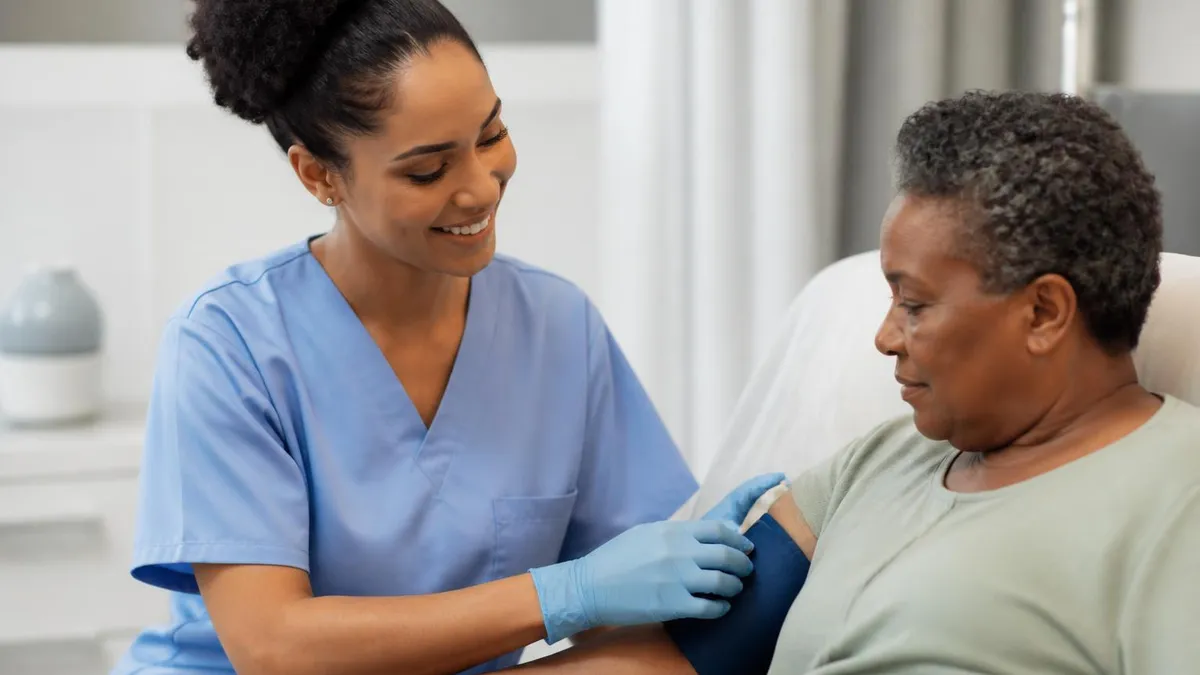
How Hybrid LPN Programs in GA Are Structured
Recorded lectures, interactive modules, textbook readings, and proctored online quizzes covering pharmacology, med-surg, maternal-child, mental health, and fundamentals. Typically 20-25 hours per week of self-paced study.
Live Zoom case conferences, NCLEX-PN review, and faculty office hours scheduled weekly. Attendance is mandatory and tracked. Most Georgia programs run 2-4 hours of synchronous sessions per week.
Hands-on practice with IV insertion, catheterization, medication administration, wound care, and tracheostomy care. Required check-offs ensure psychomotor competency before clinical placement begins.
Supervised practice at hospitals, long-term care facilities, rehab centers, and physician offices across Georgia. Minimum 600 clinical hours distributed across medical-surgical, geriatric, pediatric, and mental health settings.
Manikin-based scenarios at the college simulation center, plus virtual platforms like Shadow Health. Simulation can substitute up to 25% of traditional clinical hours under Georgia Board rules established in 2023.
Several Georgia institutions now operate Board-approved hybrid LPN tracks, each with distinct strengths. The Technical College System of Georgia leads the market, with hybrid or blended Practical Nursing diploma programs available at Athens Technical College, Central Georgia Technical College, Chattahoochee Technical College, Columbus Technical College, Lanier Technical College, Ogeechee Technical College, Southeastern Technical College, and Wiregrass Georgia Technical College. Each of these uses Brightspace or Blackboard as the learning management system and reserves Friday plus alternating weekends for in-person skills and clinical work.
Athens Technical College runs one of the longest-established hybrid PN tracks, with cohorts admitted each January and August. Coursework spans four semesters totaling 47 credit hours, and tuition before HOPE funding is roughly $4,700. Pass rates have consistently exceeded 90 percent. Central Georgia Tech offers a similar structure across its Macon, Warner Robins, and Milledgeville campuses, allowing students to attend skills labs at the closest location while completing theory online with a unified faculty team.
Private providers fill the gap where TCSG seats are limited. Gwinnett Institute, Brookhaven College of Nursing, and Brightwood College have offered accelerated hybrid LPN options, with completion possible in 11 to 14 months. Tuition runs $18,000 to $26,000, but these programs typically accept students year-round and offer evening clinical placements. Always verify current Board approval status at the Georgia Secretary of State Professional Licensing Boards website before enrolling, since program approvals are renewed on a cycle.
Geography matters enormously. Hybrid does not mean clinical-free, so applicants in rural Georgia counties need to confirm that an affiliated clinical site exists within reasonable driving distance. Programs like Wiregrass Tech serve south Georgia, with rotations at Tift Regional Medical Center and Coffee Regional Medical Center. Ogeechee Tech covers Statesboro, Vidalia, and Sylvania. If you live more than 90 minutes from any approved site, the hybrid model may not work despite the online flexibility.
For applicants exploring all delivery formats simultaneously, comparing hybrid and traditional offerings using a comprehensive list of LPN programs near me helps clarify which schools accept your prerequisite credits, when their next cohort starts, and whether they offer the part-time hybrid track many adult learners need. Some colleges, like Columbus Technical, offer both day and evening hybrid options for the same diploma.
Out-of-state applicants and military spouses should know that Georgia participates in the Nurse Licensure Compact, meaning a Georgia-issued LPN license is recognized across more than 40 states. This portability makes a Georgia hybrid program attractive to families on PCS orders from Fort Moore, Fort Stewart, Hunter Army Airfield, or Robins Air Force Base, where spouses can complete training and immediately practice nationwide upon licensure.
One critical caveat: the Georgia Board of Nursing requires that at least 50 percent of clinical hours be conducted in-person with direct faculty supervision, even in hybrid programs. Schools that advertise 100 percent online LPN programs cannot legally produce Georgia-licensable graduates. Watch for misleading marketing that conflates pre-nursing prerequisites (which can be 100 percent online) with the LPN diploma itself, which absolutely cannot.
LPN Practice Test Questions
Prepare for the LPN - Certified Practical Nurse exam with our free practice test modules. Each quiz covers key topics to help you pass on your first try.
LPN - Certified Practical Nurse Basic Care...
LPN Exam Questions covering - Certified Practical Nurse Basic Care and Comfort. Master LPN Test concepts for certification prep.
LPN - Certified Practical Nurse Coordinate...
Free LPN Practice Test featuring - Certified Practical Nurse Coordinated Care. Improve your LPN Exam score with mock test prep.
LPN - Certified Practical Nurse Health Pro...
LPN Mock Exam on - Certified Practical Nurse Health Promotion and Maintenance. LPN Study Guide questions to pass on your first try.
LPN - Certified Practical Nurse Pharmacolo...
LPN Test Prep for - Certified Practical Nurse Pharmacological Therapies. Practice LPN Quiz questions and boost your score.
LPN - Certified Practical Nurse Physiologi...
LPN Questions and Answers on - Certified Practical Nurse Physiological Adaptation. Free LPN practice for exam readiness.
LPN - Certified Practical Nurse Psychosoci...
LPN Mock Test covering - Certified Practical Nurse Psychosocial Integrity. Online LPN Test practice with instant feedback.
LPN - Certified Practical Nurse Reduction ...
Free LPN Quiz on - Certified Practical Nurse Reduction of Risk Potential. LPN Exam prep questions with detailed explanations.
LPN - Certified Practical Nurse Safety and...
LPN Practice Questions for - Certified Practical Nurse Safety and Infection Control. Build confidence for your LPN certification exam.
LPN Ethical, Legal & Professional Standards
LPN Test Online for Ethical, Legal & Professional Standards. Free practice with instant results and feedback.
LPN Health Evaluation & Monitoring
LPN Study Material on Health Evaluation & Monitoring. Prepare effectively with real exam-style questions.
Online vs In-Person Components of Hybrid LPN Programs
The online portion of a hybrid LPN program in Georgia handles approximately 60 to 70 percent of total learning hours. Students access recorded video lectures, interactive case studies, electronic textbooks via VitalSource or RedShelf, and adaptive quizzing platforms like ATI or Kaplan integrated directly into the LMS. Modules cover anatomy and physiology, microbiology, pharmacology, nutrition, growth and development, and the four NCLEX-PN content areas.
Proctored exams are conducted through services like Honorlock, ProctorU, or Respondus Monitor, which use webcam and screen recording to verify identity and prevent cheating. Most programs require students to maintain a minimum 78 percent average across all theory exams to remain in good standing. Falling below threshold typically triggers mandatory tutoring, remediation modules, and a faculty intervention conference before further progression.
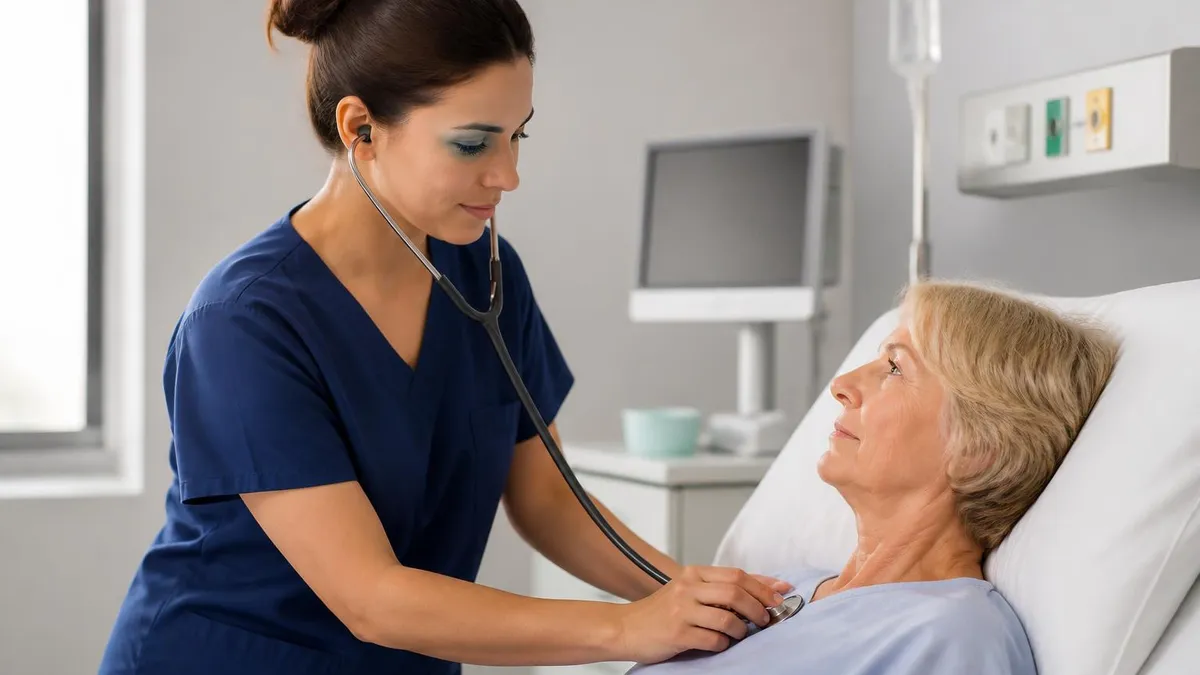
Is a Hybrid LPN Program Right for You?
- +Maintain full or part-time employment while completing nursing school
- +Reduced commute saves time and gas money across the 12-18 month program
- +Asynchronous lectures let you study during evenings, weekends, or naps
- +Same accreditation and NCLEX-PN eligibility as fully on-campus programs
- +HOPE Grant and federal financial aid still apply to TCSG hybrid tracks
- +Self-paced module access supports diverse learning styles and ESL students
- +Strong technology skills transfer directly to modern EHR-based nursing practice
- −Requires reliable high-speed internet and a recent laptop or desktop
- −Strong self-discipline is essential since no instructor is watching daily
- −Mandatory weekend clinicals can still conflict with family responsibilities
- −Less informal peer support compared to daily in-person cohort experiences
- −Proctored exam software can be glitchy and stressful for first-time users
- −Limited Board-approved hybrid seats mean competitive admissions cycles
- −Rural students may face long drives to skills labs and clinical sites
Pros and Cons at a Glance
| Pros | Cons |
|---|---|
| Maintain full or part-time employment while completing nursing school | Requires reliable high-speed internet and a recent laptop or desktop |
| Asynchronous lectures let you study during evenings, weekends, or naps | Strong self-discipline is essential since no instructor is watching daily |
| Same accreditation and NCLEX-PN eligibility as fully on-campus programs | Mandatory weekend clinicals can still conflict with family responsibilities |
| HOPE Grant and federal financial aid still apply to TCSG hybrid tracks | Less informal peer support compared to daily in-person cohort experiences |
| Self-paced module access supports diverse learning styles and ESL students | Proctored exam software can be glitchy and stressful for first-time users |
| Strong technology skills transfer directly to modern EHR-based nursing practice | Limited Board-approved hybrid seats mean competitive admissions cycles |
Hybrid LPN Programs in GA Admission Checklist
- ✓High school diploma or GED with official transcripts on file
- ✓Minimum 2.5 cumulative GPA in prerequisite coursework
- ✓Passing TEAS or HESI A2 entrance exam score, typically 60% or higher
- ✓Completed anatomy and physiology, English composition, and college algebra
- ✓Current BLS/CPR certification from American Heart Association
- ✓Negative criminal background check through GAPS or equivalent vendor
- ✓10-panel urine drug screen completed within 30 days of program start
- ✓Up-to-date immunizations including MMR, varicella, hepatitis B, Tdap, flu, and COVID
- ✓Two-step PPD or QuantiFERON Gold tuberculosis screening
- ✓Active health insurance coverage maintained throughout entire program
- ✓Documented computer access with webcam, microphone, and reliable broadband internet
- ✓Signed program technology agreement and academic integrity policy acknowledgment
Georgia HOPE Career Grant Covers 100% of LPN Tuition at TCSG Schools
Practical Nursing is designated as a HOPE Career Grant high-demand field in Georgia. Eligible students at any Technical College System of Georgia campus can receive tuition coverage in addition to the standard HOPE Grant, often resulting in zero out-of-pocket tuition costs. Combined with Pell Grants for fees, books, and uniforms, many TCSG hybrid LPN students graduate with no education debt whatsoever, dramatically improving their financial position relative to private-school graduates carrying $20,000+ in loans.
Total cost of a hybrid LPN program in Georgia varies enormously based on the institution. At a Technical College System of Georgia campus, tuition for the full 47 to 50 credit-hour diploma runs approximately $4,200 to $4,800 before any aid. Add roughly $1,200 in mandatory fees covering technology access, lab supplies, ATI testing packages, and Brightspace licensing. Books and digital resources add another $900 to $1,500. Uniforms, stethoscope, blood pressure cuff, watch, and shoes typically total $400 to $600 depending on brand preferences.
Beyond tuition, students must budget for background checks (around $85), drug screening ($45 to $75), CPR certification ($70 to $110), immunization documentation or vaccines if not already current ($150 to $400), and the Georgia LPN application and NCLEX-PN exam fees, which together total approximately $360 at the time of graduation. Clinical-site parking, gas for rotations sometimes 60 miles each way, scrubs, and replacement supplies push realistic all-in cost to roughly $8,000 even at the cheapest TCSG hybrid program.
Private accelerated hybrid programs charge dramatically more. Tuition alone at Gwinnett Institute, Brookhaven, or comparable providers ranges from $18,500 to $26,000 for the same diploma credential, primarily because federal accreditation through ACEN or NLN CNEA carries higher operational costs and these schools cannot access HOPE funding. Federal Pell Grants up to $7,395 annually for the 2025-2026 award year help, as do Direct Subsidized and Unsubsidized loans, but most private-school graduates finish with $12,000 to $20,000 in debt.
Financing options matter strategically. HOPE Grant covers most tuition at TCSG campuses if you maintain a 2.0 GPA, while HOPE Career Grant adds full coverage for nursing students specifically. Pell Grant eligibility depends on Expected Family Contribution calculated through FAFSA, with maximum awards going to lower-income households. Workforce Innovation and Opportunity Act funding is available to dislocated workers through Georgia Department of Labor career centers, and many Georgia hospitals including Wellstar and Northeast Georgia Health System offer tuition reimbursement contracts.
Employer tuition reimbursement deserves special attention. If you currently work as a CNA, medical assistant, or unit clerk at a hospital or nursing home, ask human resources about education benefits before enrolling. Many systems pay $2,500 to $5,250 annually in tax-free education assistance under IRC Section 127, and some Georgia long-term care facilities will cover full tuition in exchange for a two-year post-graduation employment commitment, effectively making your hybrid program free.
Hidden costs surprise many first-time nursing students. NCLEX-PN review courses like UWorld, Archer, or Kaplan add $200 to $600 if your program does not include them. Clinical site travel can run $1,200 in fuel over 18 months. Childcare during weekend clinicals adds up quickly, often $300 to $800 monthly depending on the number and ages of children. Build a complete financial plan before signing enrollment documents so you do not run out of money mid-program and have to withdraw.
Finally, watch for predatory pricing. Some unaccredited online providers charge $15,000 for what is essentially a CNA-plus-medication-aide program that does not qualify for Georgia LPN licensure. If a program cannot show you a current Georgia Board of Nursing approval letter and ACEN, NLN CNEA, or COE accreditation documentation, do not enroll regardless of marketing claims. Verify every credential independently through official state and accreditor websites.
No legitimate LPN program in Georgia can be completed 100 percent online. The Georgia Board of Nursing mandates a minimum of 750 in-person clinical hours and skills lab competency check-offs for licensure eligibility. Any provider claiming otherwise is selling a non-licensable credential. Always verify program approval directly at the Georgia Board of Nursing website before paying any tuition or signing enrollment contracts, and demand to see the school's current ACEN, NLN CNEA, or COE accreditation certificate.
Clinical placement is the single most important operational factor in any hybrid LPN program. Georgia Board rules require 750 hours of supervised clinical practice across medical-surgical, geriatric, pediatric, obstetric, and behavioral health settings. Schools maintain affiliation agreements with hospitals, skilled nursing facilities, rehab centers, physician practices, and community health agencies, but the depth and quality of these partnerships varies dramatically. Ask any prospective program for a written list of current clinical sites and the rotation schedule.
NCLEX-PN preparation is woven throughout every Georgia hybrid program. Schools typically use ATI Comprehensive Predictor or HESI Exit Exam as a benchmarking tool, requiring a minimum predicted probability of passing, often 85 percent, before issuing the Authorization to Test paperwork that enables you to register with Pearson VUE. Students who fall below threshold complete remediation modules, additional practice questions, and sometimes a structured live NCLEX review before retesting on the predictor exam.
Practice question volume drives first-attempt success. Research published by NCSBN consistently shows that students who complete 2,500 or more practice questions before sitting for NCLEX-PN pass at rates 12 to 15 percent higher than students completing fewer than 1,000. Hybrid programs build this volume into the curriculum through ATI quizzes after every module, but supplementing with free resources accelerates learning. Many students appreciate downloading a full lpn practice test for offline study during clinical breaks.
Simulation expands clinical exposure cost-effectively. Georgia Board rules adopted in 2023 allow up to 25 percent of required clinical hours to be replaced with high-fidelity simulation, provided faculty are certified in simulation pedagogy and use validated debriefing methods. This rule benefits hybrid students enormously because simulation can be scheduled on Saturdays at the home campus rather than requiring travel to distant clinical partners. Quality simulation produces measurable learning gains identical to traditional clinical hours in most studies.
Capstone experiences cap most Georgia hybrid LPN programs. In the final semester, students complete a 120 to 180-hour preceptorship at a single facility, working alongside one experienced LPN or RN for the duration. This immersion strengthens clinical decision-making, builds professional networks, and frequently leads directly to job offers upon graduation. Many Georgia long-term care facilities and hospitals actively recruit from their preceptorship pool, sometimes offering signing bonuses of $2,500 to $7,500 for new graduates committing to two-year contracts.
Specialty certifications can begin during your final semester. While most certifications require post-licensure experience, some foundational credentials like IV therapy, dementia care, or basic wound assessment can be earned during the LPN program. Pursuing a credential such as a wound care certification adds resume value and signals career commitment to employers; many graduates plan to pursue advanced credentials within their first year of practice through pathways outlined in resources covering options like certified wound care lpn.
NCLEX-PN registration is the final hurdle. After graduation, Georgia LPN candidates submit a license application to the Georgia Board of Nursing along with a $40 application fee, then register separately with Pearson VUE for the NCLEX-PN exam at $200. Background check fees add roughly $50. Most graduates receive their Authorization to Test within 7 to 14 business days and schedule the exam within 30 days. First-time pass rates for Georgia hybrid programs run 84 to 92 percent, comparable to traditional programs.
Success in a hybrid LPN program depends as much on logistics and mindset as on academic ability. Start by creating a dedicated study space at home with reliable lighting, a comfortable chair, and minimal distractions. Many students invest in a second monitor so they can view lecture videos on one screen while taking notes on the other. Noise-canceling headphones are inexpensive and dramatically improve focus during dense pharmacology or pathophysiology modules where every detail matters.
Time blocking transforms outcomes. Map your week into 30-minute blocks and assign each block a specific purpose: lectures, reading, practice questions, skills review, family time, exercise, sleep. Treat scheduled study time exactly like a clinical shift; do not skip it because something more interesting arose. Students who maintain a written schedule consistently outperform those who study reactively whenever they feel motivated, because motivation is unreliable but routine is durable across the full 18-month timeline.
Form a virtual study group within your cohort during the first two weeks. Three to five classmates meeting weekly via Zoom or Discord to review difficult content, quiz each other, and process clinical experiences create accountability and social support that hybrid students otherwise miss. Peer teaching reinforces your own learning while building professional relationships that often last decades into cna to lpn bridge programs. Many successful hybrid graduates report that their study group was the single biggest contributor to passing the NCLEX-PN.
Master your testing platforms early. Honorlock, Respondus, ProctorU, ATI, HESI, and the Pearson VUE testing center each have unique interfaces, navigation quirks, and rules. Spending 30 minutes per platform during orientation prevents technical disasters during high-stakes exams. Always run system checks 24 hours before any proctored exam, restart your computer, close unnecessary applications, and have a backup plan ready, such as a friend's laptop, in case your primary device fails mid-exam.
Practice clinical skills outside the lab. Buy an inexpensive IV training arm from Amazon for $40, practice nasogastric tube insertion on a pillow, demonstrate sterile gloving to family members until you can do it perfectly with eyes closed. Muscle memory developed at home transfers directly to lab check-offs and clinical performance. Many programs allow students to borrow equipment between sessions; take advantage of every opportunity to handle real supplies because confidence on test day correlates strongly with hands-on repetition.
Take care of your body and mind throughout the program. Sleep deprivation cripples retention, and chronic stress damages performance more than students realize. Aim for seven to eight hours of sleep nightly even during exam weeks; cramming on four hours of sleep produces lower scores than studying less but sleeping more. Eat real food, exercise three times weekly, and use student counseling services if anxiety or depression interferes with progress. Mental health is not a luxury in nursing school; it is a prerequisite.
Finally, begin NCLEX-PN prep on day one rather than waiting for graduation. Subscribe to a question bank like UWorld, Archer, or Kaplan during your first semester and answer 25 questions daily on whatever content you are currently studying. By graduation you will have completed 4,000 to 5,000 questions and developed the test-taking stamina, critical-thinking patterns, and content recall that the NCLEX-PN demands. This single habit, more than any other, predicts first-attempt pass rates for hybrid program graduates across Georgia.
Sample Certified Practical Nurse Practice Questions
Try these questions from our free Certified Practical Nurse practice tests. The correct answer and an explanation follow each question.
Which assessment finding in a newborn at 24 hours of life requires immediate nursing intervention?
- A. Respiratory rate of 48 breaths/min
- B. Axillary temperature of 97.2°F (36.2°C)
- C. Blood glucose of 38 mg/dL
- D. Heart rate of 148 beats/min
Answer: C. Blood glucose of 38 mg/dL
A blood glucose below 40–45 mg/dL in a neonate indicates hypoglycemia and requires immediate feeding or IV dextrose.
A patient receiving IV potassium chloride reports burning at the IV site. What is the priority nursing action?
- A. Stop the infusion and remove the IV
- B. Slow the infusion rate
- C. Apply a warm compress over the site
- D. Dilute the solution further
Answer: B. Slow the infusion rate
Slowing the infusion rate reduces the burning sensation; potassium is irritating to veins and must never be given as an IV push.
The LPN is caring for a 2-year-old child in a mist tent. Which nursing action is most important?
- A. Keep the tent temperature warmer than the room for comfort
- B. Change the child's clothing and bed linens frequently to prevent hypothermia
- C. Ensure the tent remains fully sealed at all times to maintain humidity
- D. Encourage the child to sleep in the tent without parental presence
Answer: B. Change the child's clothing and bed linens frequently to prevent hypothermia
Mist tents create a cool, moist environment that can cause hypothermia in young children. Frequent changes of wet clothing and linens are essential to maintain temperature.
A child with sickle cell disease is admitted in vaso-occlusive crisis. What is the priority nursing intervention?
- A. Apply warm compresses to painful areas
- B. Restrict fluids to prevent edema
- C. Administer pain medication as ordered and encourage oral hydration
- D. Position the child in Trendelenburg
Answer: C. Administer pain medication as ordered and encourage oral hydration
Pain management and hydration are the cornerstones of vaso-occlusive crisis care to relieve sickling and restore perfusion.
LPN Questions and Answers

Join the Discussion
Connect with other students preparing for this exam. Share tips, ask questions, and get advice from people who have been there.
View discussion (7 replies)