
CNA to LPN Programs: Complete 2026 October Bridge Pathway Guide
CNA to LPN programs explained: 🎓 bridge pathway costs, timelines, requirements, and salary jump. Complete 2026 October guide for advancing your nursing career.
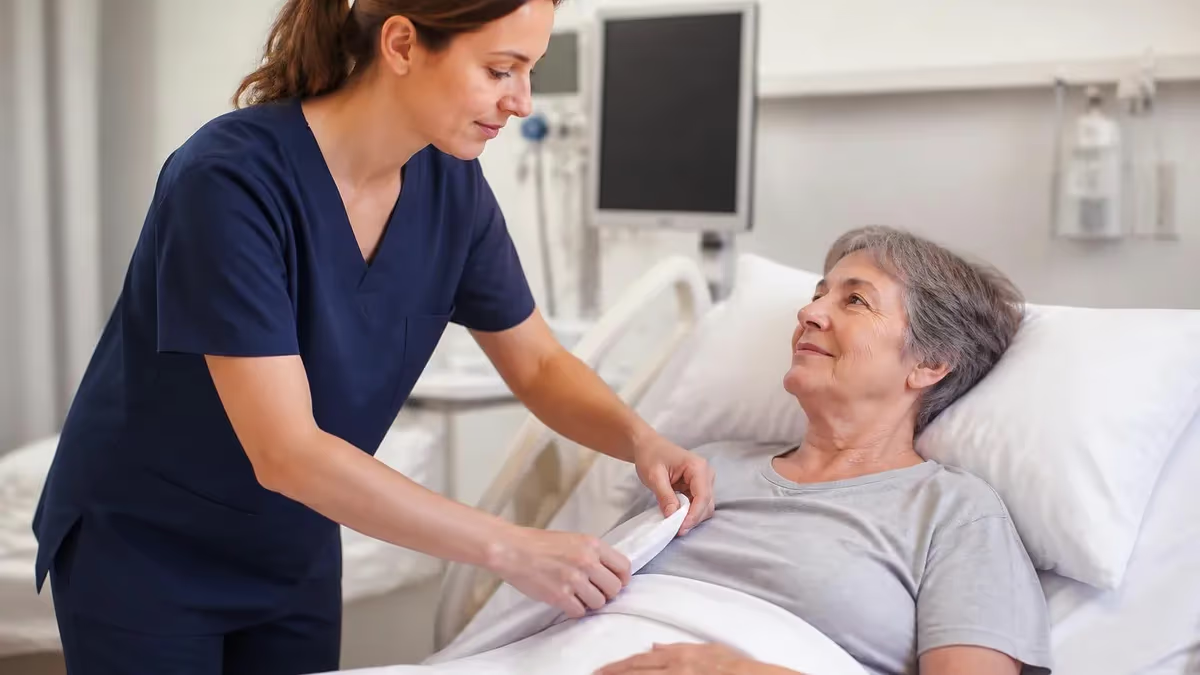
CNA to LPN programs offer certified nursing assistants a structured bridge pathway into licensed practical nursing, often shaving months off the traditional route. If you have spent a year or more turning patients, taking vital signs, and assisting with activities of daily living, you already understand the rhythm of bedside care. These bridge programs translate your hands-on experience into formal credit, advanced clinical skills, and a state-recognized license that dramatically expands your scope of practice and earning potential.
The transition from nursing assistant to practical nurse is one of the most common upward moves in healthcare, and demand is climbing as the U.S. Bureau of Labor Statistics projects roughly five percent growth for LPNs through 2032. Hospitals, long-term care centers, rehab facilities, and home health agencies all rely on LPNs to administer medications, perform sterile dressing changes, monitor IV sites, and supervise CNAs. That promotion changes your daily role from task-based assistance to active clinical decision-making within an RN-led care plan.
Most bridge programs run between 11 and 18 months, blending classroom theory with supervised clinical rotations in medical-surgical, maternal, pediatric, geriatric, and psychiatric settings. Tuition ranges from about $4,000 at community colleges to $30,000 at private career institutes, with many programs accepting financial aid, employer tuition reimbursement, or workforce grants. Several states even fund accelerated CNA-to-LPN tracks through their departments of labor to address the ongoing shortage of licensed bedside nurses.
Before you enroll, you will want to confirm that your prospective school holds approval from your state Board of Nursing and ideally accreditation from the Accreditation Commission for Education in Nursing (ACEN). Without that approval, you cannot sit for the NCLEX-PN exam, which is the mandatory licensure test administered by Pearson VUE. Graduating from an unapproved school is the most expensive mistake a CNA can make on the bridge journey, so verification through your state board website is essential before signing any enrollment agreement.
This guide breaks down everything a working CNA needs to evaluate the bridge pathway honestly: admission prerequisites, course content, clinical hour requirements, NCLEX-PN preparation, costs, financial aid, expected salary jumps, online versus campus formats, and the long-term career ladder toward RN if you eventually want to climb further. We will also cover red flags, scholarship opportunities, and what employers actually look for when hiring newly licensed LPNs in 2026.
Whether you currently work in a skilled nursing facility, a hospital float pool, or a home health agency, the bridge programs described here are designed to fit around employment schedules through evening, weekend, and hybrid online formats. With realistic planning, dedicated study habits, and consistent clinical performance, most CNAs complete the transition within 12 to 15 months and step into LPN roles earning $20,000 to $25,000 more annually than their previous nursing assistant pay.
By the end of this article, you will have a clear roadmap for choosing the right program, paying for it without crushing debt, passing the NCLEX-PN on your first attempt, and negotiating a competitive starting salary as a newly licensed practical nurse. Use the table of contents to jump to the section most relevant to where you are in your decision-making process right now.
CNA to LPN Bridge Programs by the Numbers

Bridge Program Admission Requirements
Most schools require a current state-issued CNA license with no disciplinary actions. Some accept Medication Aide (CMA) or Home Health Aide certifications as equivalent. Plan to submit your certification number for verification with the state nurse aide registry.
Programs typically expect six months to one year of documented patient-care hours as a CNA. A signed employer verification letter is standard. This experience grants advanced standing, allowing you to skip fundamentals coursework already mastered on the job.
A high school diploma or GED is mandatory. Many programs add prerequisite courses in anatomy, English composition, basic math, and medical terminology with a minimum grade of C. TEAS or HESI entrance exam scores are commonly required.
Expect a criminal background check, drug screen, TB test, MMR titers, hepatitis B series, flu vaccine, and CPR-BLS certification. Any positive findings must be cleared through the state board before clinical placement begins.
Submit official transcripts, two professional references (one from a nurse supervisor preferred), a personal statement explaining your motivation, and a non-refundable application fee usually between $35 and $100. Interviews are common at competitive schools.
The curriculum inside a CNA-to-LPN bridge program is intentionally compressed because schools assume you already know how to safely transfer patients, perform peri-care, document intake and output, and recognize early warning signs of decline. Instead of repeating these basics, the bridge dives straight into advanced anatomy and physiology, pathophysiology, microbiology, pharmacology, mental health nursing, and complex medical-surgical care across all major body systems and life stages.
Pharmacology is often the most demanding component for former CNAs. You will learn drug classifications, mechanisms of action, therapeutic ranges, dosage calculations using ratio-proportion and dimensional analysis, safe administration through oral, subcutaneous, intramuscular, intradermal, and IV piggyback routes, and the legal scope-of-practice rules that govern LPN medication delivery in your state. Expect math competency tests requiring 90 percent accuracy before clinical drug rounds begin.
Clinical rotations typically demand between 400 and 700 supervised hours, broken into specialty blocks. You will rotate through medical-surgical floors, long-term care, obstetrics, pediatrics, mental health, and community or home health settings. Each rotation includes pre-clinical paperwork, daily care plans, post-conference reflections, and instructor-led skills check-offs covering sterile technique, Foley insertion, NG tube care, tracheostomy suctioning, and wound dressings.
Bridge programs also embed leadership and delegation content because LPNs supervise CNAs in most settings. You will study the five rights of delegation, conflict resolution, charting standards including SOAP and SBAR communication, HIPAA compliance, and the Nurse Practice Act in your state. These topics appear heavily on the NCLEX-PN, particularly under the Coordinated Care category, which represents roughly 18 percent of the licensure exam blueprint.
Simulation labs have become a defining feature of modern LPN education. High-fidelity manikins like SimMan and Noelle simulate cardiac arrest, postpartum hemorrhage, seizures, hypoglycemia, and anaphylaxis. Instructors record your performance, debrief you on missed cues, and require remediation when critical thinking gaps appear. Many states now allow up to 25 percent of clinical hours to be replaced with high-quality simulation thanks to the landmark NCSBN National Simulation Study published in 2014.
Most bridge curricula end with a dedicated NCLEX-PN review course, sometimes called a capstone or transition course. Expect content review, computer-adaptive practice tests through Kaplan, ATI, or HESI, and a predictor exam used to clear you for graduation. Schools with strong first-time pass rates require students to score above a benchmark, often 850 on HESI or Level 3 on ATI, before signing the Authorization to Test paperwork sent to your state Board of Nursing.
Studying alongside actual NCLEX-PN questions throughout the program dramatically improves retention. Many successful candidates download a free LPN practice test PDF early in their bridge program and complete 25 questions every evening to build stamina and pattern recognition long before their final exam date arrives.
LPN Practice Test Questions
Prepare for the LPN - Certified Practical Nurse exam with our free practice test modules. Each quiz covers key topics to help you pass on your first try.
LPN - Certified Practical Nurse Basic Care...
LPN Exam Questions covering - Certified Practical Nurse Basic Care and Comfort. Master LPN Test concepts for certification prep.
LPN - Certified Practical Nurse Coordinate...
Free LPN Practice Test featuring - Certified Practical Nurse Coordinated Care. Improve your LPN Exam score with mock test prep.
LPN - Certified Practical Nurse Health Pro...
LPN Mock Exam on - Certified Practical Nurse Health Promotion and Maintenance. LPN Study Guide questions to pass on your first try.
LPN - Certified Practical Nurse Pharmacolo...
LPN Test Prep for - Certified Practical Nurse Pharmacological Therapies. Practice LPN Quiz questions and boost your score.
LPN - Certified Practical Nurse Physiologi...
LPN Questions and Answers on - Certified Practical Nurse Physiological Adaptation. Free LPN practice for exam readiness.
LPN - Certified Practical Nurse Psychosoci...
LPN Mock Test covering - Certified Practical Nurse Psychosocial Integrity. Online LPN Test practice with instant feedback.
LPN - Certified Practical Nurse Reduction ...
Free LPN Quiz on - Certified Practical Nurse Reduction of Risk Potential. LPN Exam prep questions with detailed explanations.
LPN - Certified Practical Nurse Safety and...
LPN Practice Questions for - Certified Practical Nurse Safety and Infection Control. Build confidence for your LPN certification exam.
LPN Ethical, Legal & Professional Standards
LPN Test Online for Ethical, Legal & Professional Standards. Free practice with instant results and feedback.
LPN Health Evaluation & Monitoring
LPN Study Material on Health Evaluation & Monitoring. Prepare effectively with real exam-style questions.
Online vs Campus CNA to LPN Programs
Truly 100 percent online LPN bridge programs are rare because state boards mandate hands-on clinical hours that cannot be simulated remotely. What does exist is a fully online didactic portion, where lectures, quizzes, and discussion boards are delivered asynchronously through Canvas, Blackboard, or Moodle. You log in around your CNA shift schedule, watch recorded faculty lessons, and complete weekly assignments at your own pace within firm deadlines.
Clinical hours and skills labs still require in-person attendance at affiliated hospitals or community partner sites near your home. Reputable online schools partner with regional clinical placement coordinators to arrange these rotations within driving distance. Watch out for any program advertising zero in-person requirements, since graduates of such programs are usually denied NCLEX-PN authorization by every U.S. state Board of Nursing without exception.

Is a CNA to LPN Bridge Program Worth It?
- +Annual salary jump averaging $23,000 over CNA pay nationwide
- +Expanded scope including medication administration and IV therapy
- +Shorter completion time than starting a traditional LPN program
- +Eligible for LPN-to-RN bridge programs after as little as one year of experience
- +Employer tuition reimbursement is common at nursing homes and hospitals
- +Higher demand and more shift flexibility across more healthcare settings
- +Stronger career stability with licensed status protected by state law
- −Tuition can reach $25,000 to $30,000 at private career schools
- −Reduced work hours during clinical rotations strain household income
- −NCLEX-PN exam fee plus state license fee add another $500 to $600
- −Programs are academically rigorous, especially pharmacology calculations
- −Failed courses often require waiting a full semester to repeat
- −Some states limit LPN scope, capping long-term earning potential
- −Background check or drug screen findings can disqualify you mid-program
Pros and Cons at a Glance
| Pros | Cons |
|---|---|
| Expanded scope including medication administration and IV therapy | Reduced work hours during clinical rotations strain household income |
| Shorter completion time than starting a traditional LPN program | Programs are academically rigorous, especially pharmacology calculations |
| Eligible for LPN-to-RN bridge programs after as little as one year of experience | Failed courses often require waiting a full semester to repeat |
| Employer tuition reimbursement is common at nursing homes and hospitals | Some states limit LPN scope, capping long-term earning potential |
| Higher demand and more shift flexibility across more healthcare settings | Background check or drug screen findings can disqualify you mid-program |
CNA to LPN Program Application Checklist
- ✓Verify the program is approved by your state Board of Nursing.
- ✓Confirm ACEN accreditation or NLN CNEA accreditation status.
- ✓Renew your CNA certification and ensure registry status is active.
- ✓Gather six months of documented patient-care hours from your employer.
- ✓Complete all prerequisite courses with a grade of C or higher.
- ✓Schedule and pass the TEAS or HESI A2 entrance exam.
- ✓Order official high school and college transcripts to be sent directly.
- ✓Obtain two professional reference letters, one from a licensed nurse.
- ✓Schedule physical exam, TB test, immunization titers, and drug screen.
- ✓Submit a state and federal background check through approved vendor.
- ✓Draft a one-page personal statement explaining your nursing goals.
- ✓Apply for FAFSA, scholarships, and employer tuition assistance early.
Ask your current employer before paying out of pocket
Roughly 60 percent of skilled nursing facilities and 80 percent of hospital systems offer some form of LPN tuition assistance to CNAs already on staff. Programs like Genesis HealthCare, Genesis ScholarPath, HCA Healthcare Scholars, and the Ascension Career Pathways fund up to $20,000 toward bridge education in exchange for a one- or two-year post-licensure service commitment, dramatically reducing your personal financial risk.
Understanding the full cost of a CNA-to-LPN program requires looking beyond the sticker price. Community college bridge programs typically charge between $4,000 and $9,000 in tuition for the entire program, while private career colleges and proprietary nursing schools often run $18,000 to $32,000. The price gap rarely correlates with NCLEX-PN pass rate quality, so verify pass-rate data on your state Board of Nursing website before assuming expensive equals better preparation.
Hidden fees can add up quickly and surprise unprepared students. Expect to budget another $800 to $2,500 for scrubs, stethoscope, blood pressure cuff, pen light, watch with second hand, bandage scissors, lab kits, simulation supplies, electronic textbooks, ATI or HESI testing packages, malpractice insurance, parking permits, criminal background checks, drug screens, immunization updates, CPR certification, and uniform shoes that meet clinical site dress codes.
NCLEX-PN testing itself costs $200 paid directly to Pearson VUE, plus a state license application fee usually between $100 and $250 depending on jurisdiction. California, Texas, and Florida charge on the higher end. Some states also require fingerprinting by an approved vendor like IdentoGO, adding roughly $50. Total post-graduation licensure expenses commonly land between $400 and $600 before you ever receive your first LPN paycheck.
Financial aid options for CNAs are broader than many realize. Federal Pell Grants provide up to $7,395 per academic year for low-income students through FAFSA, and federal direct subsidized loans cover any remaining tuition. State workforce development grants, including Workforce Innovation and Opportunity Act (WIOA) funding, often cover the entire bridge program for displaced workers, low-income adults, and veterans returning to the civilian workforce in healthcare careers.
Scholarships specifically for CNAs pursuing the LPN credential exist through the Foundation of the National Student Nurses Association, the AfterCollege-AACN Scholarship, the Tylenol Future Care Scholarship, and many hospital system foundations. Awards typically range from $1,000 to $5,000 and require a short essay plus proof of CNA employment. Apply to several smaller scholarships rather than betting on one large award, since acceptance rates are higher than most applicants realize.
Cost comparisons should always include opportunity cost. While enrolled, your CNA work hours often drop from 40 to 20 per week during clinical rotations, costing roughly $12,000 to $18,000 in foregone wages. Factor this into your total investment alongside tuition. Many CNAs choose programs offering night and weekend cohorts specifically to maintain full-time income while attending school, which can offset the opportunity-cost loss almost entirely. Compare published tuition with the broader LPN program cost figures across the country to confirm your school sits within reasonable market ranges.
Finally, remember that LPN salaries quickly recoup education costs. With the median annual wage at $59,730 and many regions paying over $65,000, even a $25,000 program is typically paid off within two to three years of working full time, especially when factoring overtime, shift differentials, weekend pay, and signing bonuses commonly offered at long-term care facilities desperate for licensed staff in 2026 markets nationwide.
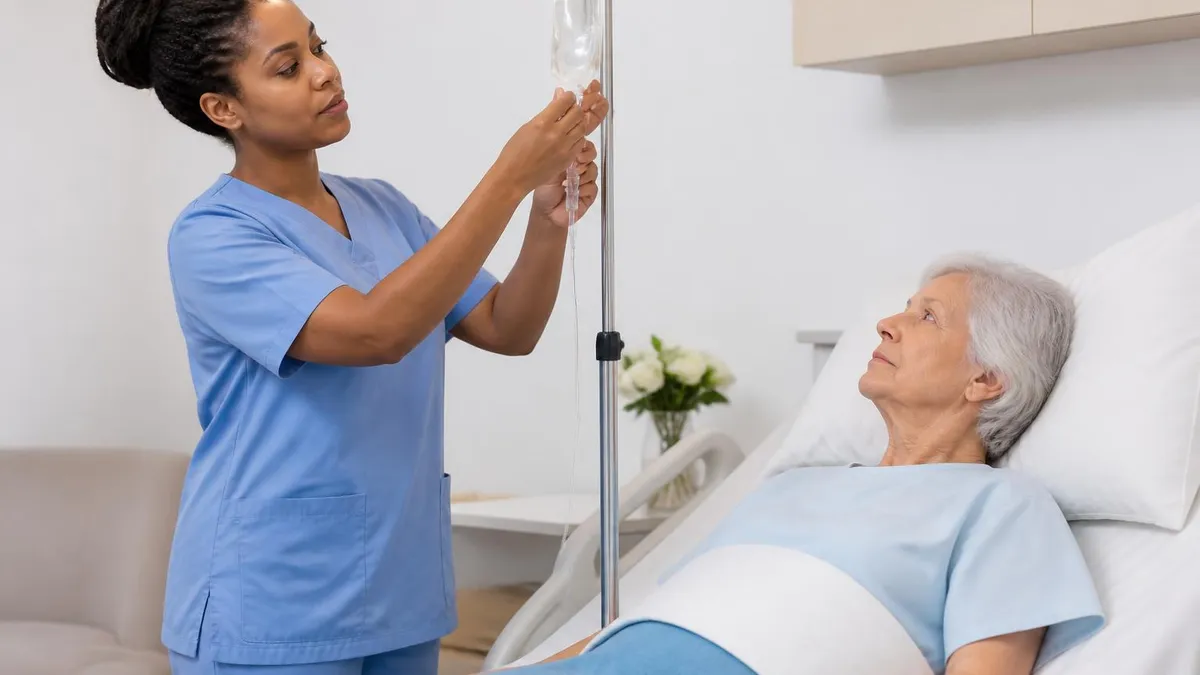
Several online schools market CNA-to-LPN programs without actual state Board of Nursing approval, meaning graduates cannot sit for the NCLEX-PN exam. Always confirm program status directly on your state board website, not on the school marketing page. If the board lists a school as conditional, probationary, or unapproved, walk away immediately. This single verification step prevents the most catastrophic financial mistake CNAs make during the bridge transition.
The salary jump from CNA to LPN is the single largest career boost most nursing assistants will ever experience. According to the latest Bureau of Labor Statistics data, CNAs earned a median annual wage of about $38,200 in May 2024, while LPNs earned a median of $59,730 the same year. That $21,500 gap widens further in high-cost regions like the Northeast and Pacific West, where LPNs routinely clear $70,000 with overtime and shift differentials.
Geographic location heavily influences earnings. Top-paying states for LPNs include California ($72,800 median), Washington ($69,700), Massachusetts ($68,500), Alaska ($67,900), and Oregon ($66,200). Lower-cost states like Mississippi, Alabama, and West Virginia pay closer to the $48,000 to $52,000 range. Even within a single state, metropolitan areas pay 15 to 25 percent more than rural communities, so research target markets carefully before committing to a region.
Specialty certifications further accelerate LPN earnings. Wound care, IV therapy, long-term care management, gerontology, and hospice nursing certifications routinely add $3,000 to $8,000 in annual base pay, plus access to specialty unit positions. Many newly licensed LPNs pursue a wound care certification for LPN within the first two years on the job because demand for skin integrity specialists is exploding alongside the aging population in skilled nursing facilities nationwide.
Setting choice also affects pay. Hospitals tend to pay LPNs the highest hourly rates but are reducing the number of LPN positions in favor of all-RN staffing models. Long-term care, home health, hospice, correctional nursing, and outpatient clinics now employ the majority of new LPN graduates, each with different schedules, patient ratios, and overtime opportunities. Correctional nursing in particular offers pay premiums of 20 to 35 percent due to working conditions and lower applicant pools nationwide.
Career advancement does not stop at LPN. Most licensed practical nurses who enjoy clinical work eventually pursue LPN-to-RN bridge programs, which take 12 to 24 additional months and qualify graduates for ADN or BSN licensure with significantly broader scope, supervisory authority, and earning potential approaching $90,000 median nationally. Many hospitals fund this advancement through dedicated career-ladder tuition assistance programs available exclusively to existing LPN staff.
Demand projections remain solid through 2032. The BLS forecasts roughly 54,000 LPN job openings each year, driven by retirements, increased chronic disease management, and the ongoing shift of medical care from hospitals to outpatient and home settings. Aging baby boomers will require expanded long-term care support, creating sustained hiring pressure especially for LPNs willing to specialize in geriatrics, wound care, IV therapy, or dementia and behavioral health management within memory-care communities.
The intangible career benefits matter too. LPNs report higher job satisfaction than CNAs in multiple workforce surveys, citing greater autonomy, more meaningful patient relationships, and stronger professional identity. You will sign off on care plans, administer medications, perform sterile procedures, supervise CNAs, and contribute to interdisciplinary rounds. These responsibilities transform daily work from task completion into clinical leadership within your scope of practice every single shift.
Success in a CNA-to-LPN program is mostly about consistency, not intelligence. Block out two to three hours of daily study time from day one rather than cramming before exams. Use the Pomodoro technique, study with audio review podcasts during your CNA commute, and quiz yourself with flashcards on pharmacology drug classes, lab values, electrolyte imbalances, and developmental milestones. Compound learning beats marathon weekend sessions every single time.
Form a small study group of three or four classmates within the first two weeks. Each member takes responsibility for teaching one weekly topic, which forces deeper mastery than passive reading ever produces. Meet weekly via Zoom or in a campus library room, and use the Feynman technique: explain each concept aloud as if teaching it to a brand-new CNA. If you stumble, you have identified your weak spot and the area to drill next.
Practice questions are the single most important study habit. Aim for 75 to 100 NCLEX-PN style questions every week beginning in your first semester, not just before final exams. Review every rationale, including the rationales for incorrect choices, since the NCLEX rewards understanding why distractors are wrong as much as why the keyed answer is right. Treat each question as a mini-lesson rather than as a pass-or-fail grading event.
Clinical performance depends on showing up prepared. Review the patient chart the night before clinical, look up unfamiliar medications and conditions, and bring a small clinical pocket guide with normal lab values, drug calculation formulas, and Erikson developmental stages. Instructors notice prepared students immediately and write substantially stronger references later when you apply for your first LPN job at the same facility.
Stress management cannot be optional. Burnout sidelines an estimated 15 percent of bridge students each year. Protect sleep above all else, since memory consolidation requires seven to eight uninterrupted hours nightly. Stay physically active with at least 30 minutes of walking, yoga, or strength training most days. Maintain at least one non-nursing social outlet so your identity does not collapse into program stress and clinical fatigue between semesters.
Prepare for the NCLEX-PN strategically during your final term. Schedule the exam four to eight weeks after graduation when content remains fresh but you have had time for targeted review. Take a comprehensive prep course like Kaplan, ATI Capstone, or UWorld, complete at least 2,000 practice questions, and finish two full computer-adaptive simulations within the final two weeks. Aim for a 65 percent or higher accuracy rate before scheduling your real exam appointment.
On exam day, arrive 30 minutes early, bring two forms of identification, and trust your preparation. The computer-adaptive format may shut off as early as 85 questions or run to the full 150, and neither outcome predicts pass or fail. Read each question twice, identify the key word like priority or first, and apply Maslow, ABCs, or the nursing process to break ties between two strong distractor options that appear equally correct at first glance.
Sample Certified Practical Nurse Practice Questions
Try these questions from our free Certified Practical Nurse practice tests. The correct answer and an explanation follow each question.
The LPN is caring for a patient in Buck's traction for a hip fracture. Which action is correct?
- A. Remove the weights when repositioning the patient
- B. Keep the weights hanging freely at all times
- C. Apply the traction boot over bare skin without padding
- D. Position the affected leg in external rotation
Answer: B. Keep the weights hanging freely at all times
Traction weights must hang freely and continuously to maintain proper alignment and therapeutic effect.
A client receiving IV fluid therapy has an intake of 2,800 mL and urine output of 800 mL over the past 8 hours. The LPN should:
- A. Increase IV fluid rate to match the high output
- B. Notify the charge nurse of positive fluid balance of 2,000 mL and assess for signs of fluid overload
- C. Document as normal — 2,800 mL intake is within expected range for an 8-hour shift
- D. Restrict oral fluids only and continue IV therapy as ordered
Answer: B. Notify the charge nurse of positive fluid balance of 2,000 mL and assess for signs of fluid overload
A 2,000 mL positive fluid balance in 8 hours is significant. With adequate urine output of only 800 mL, fluid retention is likely occurring, requiring assessment for fluid overload and provider notification.
A patient reports pain of 7/10 and requests repositioning before analgesics. What is the LPN's best initial action?
- A. Reposition the patient and reassess pain after 15 minutes
- B. Administer the prescribed analgesic first, then reposition
- C. Notify the charge nurse before taking any action
- D. Document that the patient refused medication
Answer: A. Reposition the patient and reassess pain after 15 minutes
Non-pharmacological comfort measures like repositioning should be attempted first when requested, and pain reassessment follows to evaluate effectiveness.
A client with coronary artery disease is experiencing chest pain at rest rated 7/10. The LPN's first action should be:
- A. Administer PRN nitroglycerin sublingually
- B. Notify the charge nurse immediately
- C. Obtain a 12-lead ECG
- D. Assess vital signs and oxygen saturation
Answer: D. Assess vital signs and oxygen saturation
The first nursing action when a client reports chest pain is a rapid assessment: vital signs, oxygen saturation, and pain characteristics to determine the urgency and inform the team.
LPN Questions and Answers

About the Author

Registered Nurse & Healthcare Educator
Johns Hopkins University School of NursingDr. Sarah Mitchell is a board-certified registered nurse with over 15 years of clinical and academic experience. She completed her PhD in Nursing Science at Johns Hopkins University and has taught NCLEX preparation and clinical skills courses for nursing students across the United States. Her research focuses on evidence-based exam preparation strategies for healthcare certification candidates.
Join the Discussion
Connect with other students preparing for this exam. Share tips, ask questions, and get advice from people who have been there.
View discussion (7 replies)