
All Law Enforcement Jobs: Complete Career Guide to Federal, State, and Local Policing Roles
🟢 Explore all law enforcement jobs across federal, state, and local agencies. Salaries, requirements, training, and career paths for 2026 October candidates.

Exploring all law enforcement jobs in the United States reveals a remarkably diverse career landscape spanning more than 18,000 federal, state, tribal, and municipal agencies. From street patrol officers in small towns to special agents working counterterrorism cases for the FBI, the profession employs roughly 800,000 sworn personnel and another 350,000 civilian support staff. Each January, communities pause to mark law enforcement appreciation day by honoring officers who serve in patrol cars, courthouses, federal buildings, and undercover assignments across all fifty states.
The path into policing is no longer one-size-fits-all. Candidates can pursue municipal patrol, county sheriff deputy roles, state trooper commissions, or specialized federal positions that require advanced degrees and security clearances. Some agencies recruit straight from high school graduates with strong physical fitness, while others demand four-year degrees, foreign language skills, accounting expertise, or military intelligence backgrounds before they will even schedule an interview with a hiring panel.
Compensation varies dramatically depending on jurisdiction, rank, specialty, and overtime opportunity. A rookie deputy in rural Alabama might earn $42,000 with full benefits, while a senior detective in San Jose, Honolulu, or Seattle can clear $180,000 annually including premium pay. Federal special agents typically start near GS-10 step one, around $63,000 base, with locality adjustments pushing total compensation into six figures within three to four years of academy graduation and field training assignments.
Beyond pay, applicants weigh schedule flexibility, retirement formulas, take-home vehicles, tuition assistance, and the cultural fit of the department they want to join. A twenty-three-year-old who dreams of riding horseback patrol along the Rio Grande as a Border Patrol agent will face very different daily realities than a forensic accountant joining the IRS Criminal Investigation Division to dismantle international money laundering rings operating through cryptocurrency exchanges and offshore shell companies.
This guide walks through every major category of law enforcement employment, including federal agencies, state police organizations, county sheriffs, municipal departments, tribal police, transit authorities, campus public safety, and specialized investigative units. We cover salary ranges, hiring timelines, academy requirements, disqualifiers, and the realistic chances of moving from a uniformed entry role into plainclothes investigations, SWAT, K-9, or executive command positions over a twenty-five to thirty-year career.
You will also find practical preparation advice for written entrance examinations, oral boards, polygraph interviews, psychological screenings, and the physical agility tests that wash out nearly forty percent of applicants before they ever wear a badge. Understanding the structure of the hiring process, the disqualifiers most commonly cited, and the documents you need to gather will dramatically improve your chances of receiving a conditional job offer in the increasingly competitive 2026 recruiting cycle.
Whether you are a college sophomore considering criminal justice, a military veteran transitioning into civilian service, or a mid-career professional drawn to public safety, this resource maps the realistic options, honest tradeoffs, and proven preparation strategies to help you identify the right agency and pass the screening process the first time you apply.
Law Enforcement Jobs by the Numbers

Major Categories of Law Enforcement Employment
More than 65 federal agencies employ sworn officers, including the FBI, DEA, ATF, U.S. Marshals, Secret Service, Border Patrol, and Homeland Security Investigations. Most require a bachelor's degree, age 21-37 at hire, and successful completion of training at federal centers.
All fifty states maintain state-level enforcement, with troopers handling interstate traffic, criminal interdiction, and rural patrol. Iconic units include the Texas Rangers and California Highway Patrol. Most state agencies offer paid academies lasting 22 to 30 weeks plus take-home patrol cars.
Sheriff offices serve roughly 3,000 counties, providing patrol, court security, civil process, and jail operations. Deputies often work rotating shifts and rural geographies, with promotion paths into investigations, K-9, marine patrol, aviation, or specialized warrant fugitive units.
City police make up the largest share of all law enforcement jobs, from NYPD with 36,000 officers to small village departments with five staff members. Municipal work emphasizes community policing, response to 911 calls, and neighborhood relationships.
Tribal police, transit authority officers, park rangers, postal inspectors, capitol police, university public safety, and federal protective service offer focused careers with unique jurisdictions. Many hire laterally from other agencies and offer specialized training stipends.
Federal law enforcement careers attract candidates who want broad jurisdiction, complex investigations, and the resources of the U.S. government behind their cases. The most recognized texas rangers law enforcement heritage actually traces back to state-level traditions, but the federal system today includes the FBI, DEA, ATF, U.S. Marshals, Secret Service, and dozens of agency-specific investigators within the IRS, Postal Service, State Department, and inspector general offices across nearly every cabinet-level department in Washington.
The Federal Bureau of Investigation remains the most competitive entry point, receiving more than 30,000 special agent applications annually and selecting fewer than 900 candidates. Required qualifications include a bachelor's degree from an accredited institution, three years of full-time professional work experience, and one of five entry programs covering accounting, computer science, language, law, or diversified experience. The FBI Academy at Quantico runs 18 to 20 weeks and emphasizes firearms, defensive tactics, and case management fundamentals.
The Drug Enforcement Administration focuses on narcotics trafficking, diversion investigations, and international cartel disruption. DEA special agents complete an 18-week residential academy at the agency facility in Quantico and routinely work overseas postings in Mexico, Colombia, Thailand, and Afghanistan. The agency prioritizes candidates with foreign language fluency, military intelligence experience, or prior service in pharmacy regulation and chemistry-related industries that intersect with controlled substance investigations and diversion programs.
Customs and Border Protection, the nation's largest federal enforcement workforce, employs more than 60,000 personnel including Border Patrol agents, CBP officers at ports of entry, and Air and Marine Operations crews. Border Patrol agents complete training at the federal academy in Artesia, New Mexico, and rotate through Spanish language instruction, terrain navigation, and immigration law modules over a roughly six-month residential program before reporting to their first sector duty station along the southern or northern border.
Homeland Security Investigations handles transnational crime including human trafficking, child exploitation, cyber intrusion, and trade fraud. HSI special agents wield broader investigative authority than many other federal components because they enforce more than 400 federal statutes. The agency recruits heavily from prior military, federal civilian, and state and local backgrounds, with a hiring preference for candidates who hold cybersecurity certifications, financial fraud experience, or fluency in Mandarin, Arabic, Russian, or Spanish.
The U.S. Marshals Service, the oldest federal enforcement agency, handles fugitive apprehension, witness security, judicial protection, and prisoner transportation. Deputy Marshals work closely with local task forces through fugitive operations divisions in every federal district. The agency offers strong promotion potential into senior inspector roles and the Special Operations Group, an elite tactical unit that deploys nationwide for high-risk arrests, courthouse security details, and national special security events including political conventions.
Inspector General offices and small federal components round out federal opportunities, including IRS Criminal Investigation, Postal Inspection Service, Diplomatic Security, Capitol Police, Park Police, Bureau of Prisons, and Air Marshal Service. These agencies often have less name recognition but offer substantial mission variety, faster hiring timelines, and equivalent federal benefits, retirement formulas, and law enforcement availability pay supplements that boost base salaries by 25 percent.

Law Enforcement Practice Test Questions
Prepare for the Law Enforcement exam with our free practice test modules. Each quiz covers key topics to help you pass on your first try.
Law Enforcement Criminal Investigation Fun...
Law Enforcement Exam Questions covering Criminal Investigation Fundamentals. Master Law Enforcement Test concepts for certification prep.
Law Enforcement Criminal Law and Procedure
Free Law Enforcement Practice Test featuring Criminal Law and Procedure. Improve your Law Enforcement Exam score with mock test prep.
Law Enforcement Patrol Operations and Tactics
Law Enforcement Mock Exam on Patrol Operations and Tactics. Law Enforcement Study Guide questions to pass on your first try.
Law Enforcement Professional Conduct and E...
Law Enforcement Test Prep for Professional Conduct and Ethics. Practice Law Enforcement Quiz questions and boost your score.
Law Enforcement Traffic Law and Enforcement
Law Enforcement Questions and Answers on Traffic Law and Enforcement. Free Law Enforcement practice for exam readiness.
Law Enforcement Use of Force Principles
Law Enforcement Mock Test covering Use of Force Principles. Online Law Enforcement Test practice with instant feedback.
Law Enforcement Community Policing and Ethics
Free Law Enforcement Quiz on Community Policing and Ethics. Law Enforcement Exam prep questions with detailed explanations.
Law Enforcement Constitutional and Case Law
Law Enforcement Practice Questions for Constitutional and Case Law. Build confidence for your Law Enforcement certification exam.
Law Enforcement Emergency Response and Cri...
Law Enforcement Test Online for Emergency Response and Crisis Management. Free practice with instant results and feedback.
Law Enforcement Evidence Collection and Cr...
Law Enforcement Study Material on Evidence Collection and Crime Scene Management. Prepare effectively with real exam-style questions.
Law Enforcement Patrol and Investigation D...
Free Law Enforcement Test covering Patrol and Investigation Duties. Practice and track your Law Enforcement exam readiness.
Law Enforcement Practice Test
Law Enforcement Exam Questions covering Practice Test. Master Law Enforcement Test concepts for certification prep.
Federal Law Enforcement Training Centers and Academies
The Federal Law Enforcement Training Center in Glynco, Georgia, trains officers from more than 90 federal agencies on a sprawling 1,600-acre campus. Programs range from the 12-week Criminal Investigator Training Program to specialized modules in firearms, tactical driving, and digital forensics. Graduates report directly to agency-specific advanced academies before reporting to field assignments around the country.
Glynco runs continuous classes year-round and houses more than 2,500 trainees at peak capacity. Subjects covered include federal criminal procedure, search and seizure case law, surveillance fundamentals, defensive tactics, and report writing. The facility includes mock courtrooms, indoor and outdoor firing ranges, driver training tracks, and a fully simulated city block used for high-stress scenario practice during graded performance exercises.
Federal vs. Local Law Enforcement: Which Path Fits You?
- +Federal positions offer broader jurisdiction and complex multi-jurisdictional investigations
- +Federal retirement formula vests at 20 years with mandatory retirement at age 57
- +Local agencies hire faster, often within 4-6 months, and rarely require relocation
- +Municipal officers see immediate community impact through daily patrol contacts
- +Federal availability pay adds 25 percent to base salary for criminal investigators
- +State and county agencies often offer take-home vehicles and shorter commutes
- −Federal hiring can take 12-18 months including background, polygraph, and medical
- −Federal agents are subject to nationwide transfers and may relocate every few years
- −Local agencies pay less than federal in most metropolitan markets
- −Small departments may have limited promotion paths and specialty assignments
- −Federal background investigations are more invasive and disqualify more candidates
- −Local officers face higher direct exposure to violent calls and traffic enforcement risks
Pros and Cons at a Glance
| Pros | Cons |
|---|---|
| Federal positions offer broader jurisdiction and complex multi-jurisdictional investigations | Federal agents are subject to nationwide transfers and may relocate every few years |
| Municipal officers see immediate community impact through daily patrol contacts | Local agencies pay less than federal in most metropolitan markets |
| State and county agencies often offer take-home vehicles and shorter commutes | Small departments may have limited promotion paths and specialty assignments |

Law Enforcement Application Checklist: Documents and Steps
- ✓Obtain certified copies of your birth certificate, Social Security card, and high school diploma
- ✓Request official transcripts from every college, university, or trade school you attended
- ✓Compile a complete employment history covering at least the past ten years with addresses
- ✓Gather residence history for every address you have lived at since age 18
- ✓List three to five personal references not related to you by blood or marriage
- ✓Collect military DD-214 forms, separation papers, and any commendations or awards earned
- ✓Document all traffic citations, arrests, and court appearances regardless of outcome
- ✓Prepare a financial history including debts, bankruptcies, and credit report copies
- ✓Schedule and pass a vision exam, hearing test, and physical agility assessment in advance
- ✓Register for the written entrance exam and study with practice question banks weekly
- ✓Complete the polygraph pre-interview questionnaire with full candor about prior conduct
- ✓Submit fingerprints, photographs, and signed releases for the background investigation phase
Honesty during the polygraph and background phase matters more than perfection
Background investigators expect imperfect histories. The single fastest way to fail any law enforcement hiring process is to lie or omit information on the personal history statement. Agencies disqualify roughly three times more applicants for dishonesty than for the underlying conduct they tried to hide. Disclose everything fully and let investigators weigh context.
State and local agencies employ the vast majority of sworn officers in the United States, with municipal police departments alone accounting for more than 460,000 positions. State troopers, county deputies, and city police officers handle the patrol, traffic enforcement, investigations, and emergency response that most Americans associate with policing. The alabama law enforcement agency consolidated multiple state departments into a single command structure in 2015, illustrating a broader trend of state-level reorganization across the south and midwest over the past decade.
State police organizations vary widely in mission scope. Some, like the Pennsylvania State Police and Michigan State Police, function as full-service agencies handling rural patrol, criminal investigations, and forensic services for jurisdictions without their own resources. Others, like the California Highway Patrol, focus primarily on traffic safety and freeway enforcement while leaving general criminal investigations to county sheriffs and municipal departments. Texas Department of Public Safety operates the legendary Texas Rangers as an elite investigative division within its broader command.
County sheriff offices perform a unique constitutional role in most states, with elected sheriffs running departments that handle court security, civil process service, jail operations, and patrol of unincorporated areas. Larger sheriff offices like Los Angeles County, Cook County Illinois, and Harris County Texas operate forces exceeding 5,000 sworn deputies with helicopter aviation units, mounted patrol, marine enforcement, and specialized homicide and narcotics divisions that rival the largest municipal police departments in size and capability.
Municipal departments range from one-officer rural villages to massive urban forces. NYPD employs roughly 36,000 sworn officers across 77 precincts. Chicago Police Department employs 12,000. Los Angeles Police Department employs 9,000. At the other end, small towns may have a chief and two patrol officers covering 24-hour shifts through mutual aid agreements with neighboring departments and state police troops. Career trajectories differ dramatically based on department size and surrounding jurisdictional structure.
Tribal law enforcement deserves particular attention because tribal police, BIA officers, and tribal investigative agencies handle complex jurisdictional questions across more than 570 federally recognized tribes. Cross-deputation agreements allow tribal officers to enforce federal, state, and tribal law on reservations, while major crimes committed by Native Americans on tribal land typically fall under FBI investigative jurisdiction. The Navajo Nation Department of Public Safety operates one of the largest tribal forces with over 200 sworn officers.
Transit, port, airport, and university police forces offer specialized careers focused on defined geographies. The Port Authority Police Department of New York and New Jersey employs more than 1,800 officers across bridges, tunnels, airports, and the World Trade Center campus. Amtrak Police, BART Police, and the various university public safety departments at large state universities and Ivy League schools offer competitive salaries, defined patrol areas, and frequent opportunities to work special details for sporting events and presidential visits.
State-level investigative bureaus like the Georgia Bureau of Investigation, Florida Department of Law Enforcement, and California Bureau of Investigation function as state-level FBI equivalents. They handle public corruption, computer crimes, homicide assistance to local agencies, and intelligence operations. These bureaus typically hire experienced officers laterally rather than recruiting entry-level candidates, making them attractive promotion targets for deputies and municipal officers seeking investigative specialization without entering the federal system entirely.
Recent felony convictions, domestic violence convictions of any kind, illegal drug use within timeframes that vary by agency, falsification on applications, and serious credit problems are the most common automatic disqualifiers. Marijuana use timeframes have loosened substantially in 2024 and 2025, with many agencies now accepting applicants who used as recently as one year before applying. Review specific agency policies before assuming you are ineligible.
Salaries and benefits across all law enforcement jobs vary by jurisdiction, specialty, and rank. The Bureau of Labor Statistics reported a median annual wage of $72,280 for police and detectives in 2024, but this number conceals enormous geographic variation. Officers in San Jose, San Francisco, and Seattle routinely earn six figures within five years, while small-town departments in Mississippi, West Virginia, and Arkansas pay starting salaries in the mid-thirties. The fbi law enforcement dayton neighborhood partnerships demonstrate how federal funding can supplement local department pay through grant programs that incentivize officers to live in the communities they serve.
Federal special agents enter on the GS pay scale at GS-7 or GS-10 depending on agency and education, with locality adjustments based on duty station. Criminal investigators receive law enforcement availability pay, a 25 percent supplement above base salary that compensates for irregular hours and on-call duties. A first-year FBI special agent in the New York field office earns roughly $79,000 base plus $19,750 in availability pay, plus locality, totaling approximately $116,000 in annual compensation including all premium components combined.
Promotion potential matters as much as starting salary. Sergeant promotions typically require three to five years of patrol experience plus a written examination and assessment center evaluation. Lieutenant promotions require additional years and often a college degree. Captain, deputy chief, and chief positions usually require advanced degrees and significant administrative experience. The promotion process is competitive at every level, with multiple candidates vying for limited openings in most departments throughout the year.
Retirement benefits represent one of the strongest financial advantages of law enforcement careers. Most state and local pension systems allow officers to retire after 20 to 25 years with 50 to 75 percent of final salary, often supplemented by deferred compensation plans, social security, and post-retirement employment opportunities. The federal Civil Service Retirement System provides similar benefits with mandatory retirement at age 57 for most law enforcement officers, including a generous annuity supplement until social security begins.
Specialty assignments offer pay premiums, professional development, and resume building for future promotion. K-9 handlers earn additional pay for vehicle maintenance and animal care duties at home. SWAT operators receive call-out pay and training stipends. Detective bureau assignments often include investigative pay differentials. Aviation, marine, and motorcycle units offer unique work environments alongside specialty premiums. These assignments are typically competitive and require strong patrol performance and clean disciplinary records before officers can even apply for openings.
Benefits beyond salary include comprehensive health insurance, dental and vision coverage, life insurance, disability coverage, tuition reimbursement, and equipment allowances. Many agencies offer take-home vehicles, allowing officers to commute in patrol cars and respond directly from home to emergencies. Wellness programs increasingly include peer support, chaplain services, mental health counseling, and physical fitness facilities. Family medical leave, paid parental leave, and military leave protections apply broadly across federal and most state and local agencies in 2026.
Lateral hiring programs allow experienced officers to move between agencies with reduced training requirements and starting salary recognition for prior service. A patrol officer with seven years at one department can often join a neighboring department at the equivalent step, skipping the full academy through a lateral certification process. This mobility is especially common in metropolitan areas with multiple competing departments and within state systems that recognize academy training across local jurisdictions through reciprocity agreements.
Standing out in a competitive law enforcement applicant pool requires preparation across written examinations, physical fitness, oral interviews, and the increasingly important psychological and background phases. The most successful candidates approach the process like a year-long preparation campaign rather than a single application submission. Most agencies receive five to fifteen applications for every opening, and the strongest candidates consistently demonstrate both the technical knowledge tested on the written exam and the interpersonal maturity needed to handle complex calls for service in their first year of patrol after academy graduation.
Written examinations vary by agency but typically test reading comprehension, situational judgment, basic mathematics, memory recall, and grammar. Practice question banks specific to your target agency are the most efficient preparation tool. Many candidates underestimate the situational judgment portion, where multiple answer choices appear technically correct but only one aligns with departmental policy and constitutional standards. Practice scoring rubrics from study guides help calibrate your thinking before exam day arrives at the testing center.
Physical agility tests vary widely in format. Some agencies use Cooper Standards measuring push-ups, sit-ups, and 1.5-mile run times scored against age and gender norms. Others use job-related obstacle courses with wall climbs, dummy drags, and dry fire exercises. The Physical Ability Test used by many east coast departments combines running, stair climbing, and equipment carry under timed conditions. Train specifically for your target test format rather than generalized fitness alone, because event mechanics and pacing strategy heavily influence pass-fail outcomes.
Oral board interviews assess communication skills, ethical reasoning, and motivation. Panels typically include sworn supervisors and sometimes community members or civilian human resources personnel. Common questions probe why you want to be an officer, how you would handle ethical dilemmas, and what life experiences prepared you for the role. Strong answers use the STAR method, structuring responses around Situation, Task, Action, and Result with concrete examples from your work history, military service, volunteer activities, or athletic experiences.
Psychological evaluations combine standardized instruments like the MMPI-3 and CPI with a clinical interview by a licensed police psychologist. The evaluation screens for impulsivity, anger management problems, substance use vulnerability, and other risk factors that predict career problems. Answer questions honestly and consistently across the test instruments. Trying to game personality tests typically produces inconsistent profiles that flag candidates for additional scrutiny and often result in deferral or disqualification by the evaluating psychologist.
Polygraph examinations remain controversial but are required by most federal agencies and many state and local departments. The polygraph itself measures physiological responses, but the real value to investigators comes from the pre-test interview where candidates often disclose information they omitted from earlier paperwork. Approach the polygraph with complete honesty, having already disclosed everything in your personal history statement. Surprises during polygraph almost always result in disqualification, regardless of underlying severity of the disclosed information.
Finally, treat the entire hiring process as an ongoing interview. Recruiters, background investigators, range instructors, and academy staff all communicate with each other about candidate behavior. A rude interaction with a records clerk, a poorly written email, or social media posts that surface during background checks can sink an otherwise strong application. Maintain professional composure throughout every contact with the agency from initial application through your first day reporting to your assigned field training officer at the start of your formal career.
Sample Law Enforcement Practice Questions
Try these questions from our free Law Enforcement practice tests. The correct answer and an explanation follow each question.
Under the law enforcement code of ethics, an officer's fundamental duty is to:
- A. Maximize citations issued
- B. Serve the community and protect lives and property
- C. Protect departmental reputation above all
- D. Support fellow officers unconditionally
Answer: B. Serve the community and protect lives and property
The code of ethics centers on serving the community and safeguarding lives, property, and rights.
Cultural competency in community policing primarily helps officers to:
- A. Avoid all minority neighborhoods
- B. Understand and respect diverse communities they serve
- C. Enforce uniform standards without context
- D. Reduce the need for training
Answer: B. Understand and respect diverse communities they serve
Cultural competency helps officers understand and respectfully serve diverse communities.
Discretion in policing should be guided by:
- A. Personal mood and bias
- B. Law, policy, and fairness
- C. Quota expectations
- D. Public popularity
Answer: B. Law, policy, and fairness
Proper discretion is exercised within legal and policy boundaries and applied impartially.
An officer is offered a free meal at a local restaurant where they are a regular patron while on duty. Accepting the meal would be an example of which type of ethical issue?
- A. Procedural Injustice
- B. A Gratuity
- C. Noble Cause Corruption
- D. Discretionary Abuse
Answer: B. A Gratuity
A gratuity is something of value given to an officer because of their position, without a specific expectation of a service in return. While it may seem harmless, accepting gratuities can create a public perception of favoritism or special treatment for certain businesses, and may lead to a slippery slope of more serious ethical compromises. It is not procedural injustice, noble cause corruption (which involves breaking rules for a supposedly good end), or an abuse of discretion (which relates to official decision-making).
Law Enforcement Questions and Answers
Law Enforcement Exam Questions Video Answers: Police Test Prep Guide

Law Enforcement in Spanish: Bilingual Officer Careers, Pay, and Essential Phrases

Law Enforcement Discretion: Officer Decision-Making Guide

Law Enforcement Memorial Guide
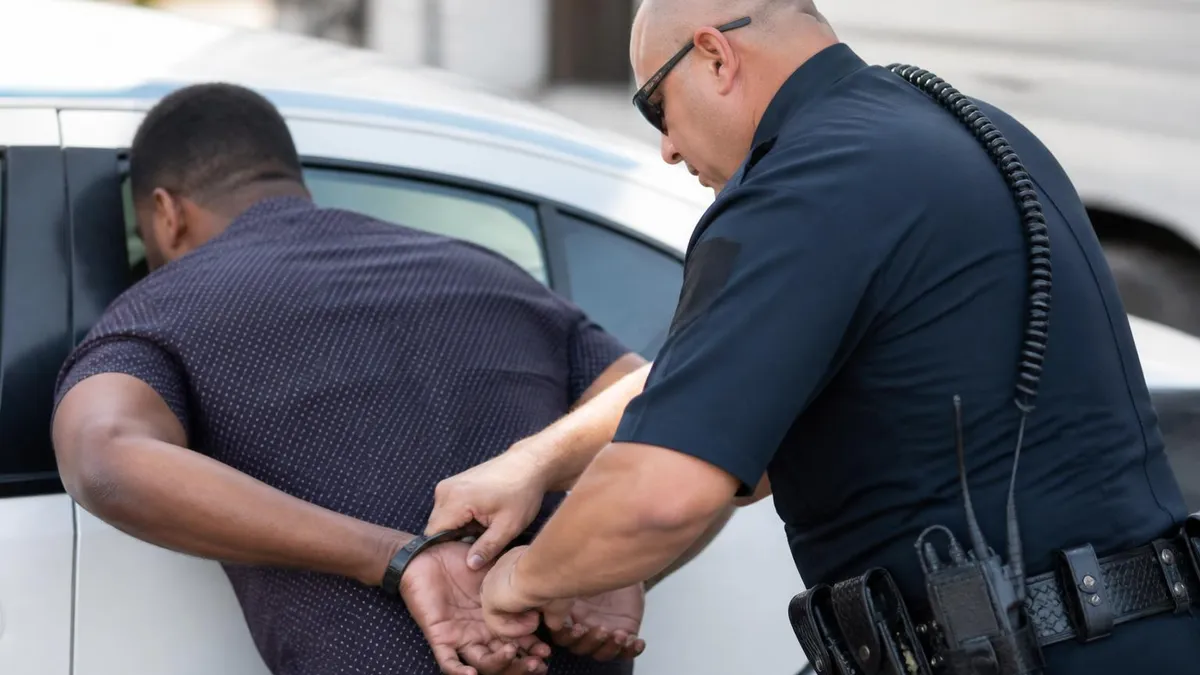
Indiana Law Enforcement Academy (ILEA): Application, Basic Course, Training, and Career Path for Officers
About the Author

Educational Psychologist & Academic Test Preparation Expert
Columbia University Teachers CollegeDr. Lisa Patel holds a Doctorate in Education from Columbia University Teachers College and has spent 17 years researching standardized test design and academic assessment. She has developed preparation programs for SAT, ACT, GRE, LSAT, UCAT, and numerous professional licensing exams, helping students of all backgrounds achieve their target scores.
Join the Discussion
Connect with other students preparing for this exam. Share tips, ask questions, and get advice from people who have been there.
View discussion (5 replies)