
Law Enforcement Discretion: Officer Decision-Making Guide 2026 September
📚 Law enforcement discretion explained: how officers decide to stop, cite, arrest, or warn. Levels, limits, examples, SCOTUS cases, and reform.

Law Enforcement Discretion: How Officers Decide What to Do
Law enforcement discretion is the authority an officer has to decide whether, when, and how to enforce a law in a specific situation. Two officers can witness the exact same act and reach different reasonable conclusions. One issues a warning. The other writes a ticket. Neither is automatically wrong.
This judgment-based latitude sits at the center of modern policing. It shapes nearly every public encounter from a routine traffic stop to a mental health welfare check. Some agencies grant officers wide room to choose. Others lock them into mandatory responses. Both models exist in the United States.
Discretion is not the same thing as prosecutorial charging discretion or a judge's sentencing power. Those happen later in the system. Officer discretion is the front-line filter. It decides which cases enter the legal pipeline at all.
Studies suggest a large share of enforceable violations never become arrests because officers chose another response. That selectivity is intentional. Police could not function if every minor infraction triggered a full booking. The math simply does not work for any agency in the country.
This guide explains where discretion comes from, the four levels officers move through during any incident, and what limits the authority. It also covers how recent reform efforts try to reduce bias while keeping useful judgment in place.
If you are studying for the entrance exam, our law enforcement officer guide covers the testing process step by step. For a broader scope of the field, see our law enforcement definition overview. Candidates planning a path into the academy should also review law enforcement requirements before applying.
Police agencies cannot enforce every law to the letter. There is no jurisdiction in the United States where that is even theoretically possible. Departments have finite officers, finite jail beds, and finite court time. Discretion is how that scarcity meets reality.
A reasonable, well-trained exercise of judgment is what separates a professional officer from a citation machine. Done poorly, it becomes the gap where bias and inconsistency live. Done well, it preserves community trust. The training, the policies, and the body cameras all exist to push agencies toward the second outcome.
What Is Officer Discretion?
Police discretion is the legal authority for an officer to choose among several lawful responses to an observed event. The officer may stop or pass by, arrest or release, charge with a misdemeanor or a felony, use force or de-escalate. Discretion exists because no law book can predict every situation, and because rigid enforcement of every rule would consume more resources than any government has. Modern departments train officers to use discretion with consistency, written policy guardrails, and supervisor review.
5 Factors That Shape Officer Discretion
- Low severity: Warning likely (jaywalking, 5 mph over)
- High severity: Arrest mandatory (felony, DUI)
- No immediate threat: Discretion is wide
- Active threat: Discretion narrows fast
- Cooperative: Warning or citation more likely
- Hostile or evasive: Arrest more likely
- Mandatory arrest: Domestic violence in many states
- Officer choice: Most minor infractions
- Diversion exists: Mental health, drug treatment, youth referral
- No alternative: Arrest or release only

The Four Levels of Discretion in a Single Encounter
Every police contact moves through up to four decision points. Each one is a chance for the officer to exercise judgment. Understanding the sequence helps citizens know what is happening and helps candidates learn what their badge actually controls.
Level 1: Stop or No Stop
The first decision is whether to act on what the officer observes. A speeding car passes. A person sleeps on a bench. A group lingers outside a closed store. The officer can engage or keep driving.
Reasonable suspicion is the legal floor for an investigatory stop, and probable cause is the floor for an arrest. Below those thresholds, no contact is permitted. Above them, the choice is still the officer's. Many minor violations are intentionally ignored because pursuing them would tie up resources better spent elsewhere.
Level 2: Arrest, Cite, Warn, or Release
Once a stop happens, the officer chooses the outcome. A warning ends the encounter with documentation only. A citation requires a court appearance or fine. A custodial arrest sends the person to booking.
For the same speeding violation, a courteous driver with a clean record might leave with a warning, while a driver doing twenty over with prior tickets receives a citation. Both outcomes are lawful. Department culture and supervisor expectations strongly influence which is more common.
Level 3: Charge Selection
When an arrest happens, the officer chooses the charges that go on the booking sheet. A theft might be filed as a misdemeanor or a felony depending on dollar amount, prior history, and officer reading of intent. An assault can be aggravated or simple.
The officer's narrative shapes how the prosecutor sees the case. Charge selection is one of the least visible but most consequential pieces of discretion because it sets the floor for sentencing later in the process.
Level 4: Use of Force
If physical resistance happens, the officer chooses where to enter the force continuum. Verbal commands, soft hands, hard hands, less-lethal tools, and lethal force form a graduated scale. Modern agencies require de-escalation before force when feasible.
The legal standard from Graham v Connor demands objective reasonableness judged from the officer's perspective at the moment of action. State laws like California AB 392 add another layer that requires force to be necessary, not just reasonable. Both standards now coexist in many jurisdictions.
Why These Four Levels Matter
Each level represents a checkpoint where the officer's choice has lasting consequences. A warning at Level 2 keeps a person out of court. A felony charge at Level 3 changes someone's life forever. A force decision at Level 4 can end a life.
Reform-minded agencies now require officers to articulate their reasoning at each level on body camera and in their reports. This articulation is not just a paperwork burden. It is the audit trail that lets supervisors spot bias, train new officers, and defend the agency in litigation later.
Types of Police Discretion
Enforcement discretion covers whether to act on an observed violation. Procedural discretion covers how to investigate (whom to interview first, whether to search consent areas, how to document). Service discretion covers how to respond to citizen calls that are not strictly criminal (noise complaints, civil disputes, welfare checks). Use-of-force discretion covers where the officer enters the force continuum. Diversion discretion covers whether to route the subject to court or to an alternative program such as mental health or drug treatment.
Discretion by the Numbers

What Limits Discretion: Six Real Boundaries
Officers do not get to do whatever they want. Six layers of restriction shape every discretionary call, and each layer carries real consequences when crossed. Understanding these limits is just as important for candidates as understanding the authority itself.
Department Policy and General Orders
Every modern agency publishes a thick general orders manual. These cover pursuit policy, force, search procedures, off-duty conduct, and dozens of other situations. An officer who violates policy can face suspension or termination even if the underlying act was legal. Policy is often stricter than law. Many agencies prohibit shooting at moving vehicles even when state law would technically permit it.
State and Federal Statutes
Statutory law sets the outer boundary. An officer cannot arrest without probable cause. An officer cannot detain longer than the time needed to investigate the original suspicion. Violations expose the officer to civil suit and the agency to consent decree. Federal civil rights statutes give plaintiffs a direct path into federal court when constitutional violations occur on duty.
Constitutional Protections
The Fourth Amendment governs searches and seizures. The Fifth covers self-incrimination and due process. The Sixth covers right to counsel. The Eighth bars excessive force as cruel and unusual punishment in certain settings. SCOTUS decisions like Terry v Ohio, Mapp v Ohio, Miranda v Arizona, and Graham v Connor have built the framework that every academy cadet memorizes. Constitutional error is the most common reason cases get thrown out at suppression hearings.
Supervisor Oversight and Body Cameras
Sergeants review reports. Lieutenants approve force packages. Body camera footage gets pulled randomly for compliance audits. The presence of video has measurably changed officer behavior at the margin, especially in agencies that pair cameras with strong supervisory review. The law enforcement academy spends weeks on policy compliance so new officers know where the lines are before they hit the street. For state-level structures, see california law enforcement and florida department of law enforcement.
Discretion: Pros and Cons
- +Allows officers to apply common sense to unique situations
- +Conserves limited department resources for higher-priority calls
- +Lets officers issue warnings when arrest would be excessive
- +Supports community-oriented policing and trust building
- +Permits diversion to mental health or treatment over jail
- +Lets officers triage by severity rather than mechanical enforcement
- −Creates risk of inconsistent enforcement across race and class lines
- −Studies show discretionary stops show racial disparities in many jurisdictions
- −Accountability gaps when supervisors do not review discretionary outcomes
- −Can mask implicit bias under cover of officer judgment
- −Professional courtesy abuse (officers letting officers off)
- −Hard to measure or audit without comprehensive data tracking
Pros and Cons at a Glance
| Pros | Cons |
|---|---|
| Allows officers to apply common sense to unique situations | Creates risk of inconsistent enforcement across race and class lines |
| Conserves limited department resources for higher-priority calls | Studies show discretionary stops show racial disparities in many jurisdictions |
| Lets officers issue warnings when arrest would be excessive | Accountability gaps when supervisors do not review discretionary outcomes |
| Supports community-oriented policing and trust building | Can mask implicit bias under cover of officer judgment |
| Permits diversion to mental health or treatment over jail | Professional courtesy abuse (officers letting officers off) |
| Lets officers triage by severity rather than mechanical enforcement | Hard to measure or audit without comprehensive data tracking |
Key SCOTUS Cases on Police Discretion
1968 — Terry v Ohio
1985 — Tennessee v Garner
1989 — Graham v Connor
2014 — Riley v California
2019 — California AB 392

Officer Decision Tree for a Routine Stop
- ✓Confirm reasonable suspicion or probable cause before initiating contact
- ✓Identify yourself and state the reason for the stop within 30 seconds
- ✓Run plate and license through dispatch before approach when possible
- ✓Assess subject demeanor and any signs of impairment, weapons, or distress
- ✓Decide warning, citation, arrest, or release based on severity and history
- ✓Document the rationale in your report and on body camera narration
- ✓If force used, articulate severity, threat, resistance, and de-escalation attempts
- ✓Submit report for supervisor review within the shift
Multiple studies including DOJ pattern-or-practice investigations in Ferguson, Chicago, and Baltimore found that discretionary stops, searches, and force decisions correlated with race in ways that could not be explained by underlying crime rates. Discretion done without data tracking can mask implicit bias under a veneer of officer judgment. Modern reform pairs discretion with mandatory traffic stop data collection, annual disparity reports, and body camera review. Officers who use discretion well welcome these tools because they protect the officer as much as the public.
When Discretion Goes Wrong: Cases That Changed Policing
High-profile failures of officer judgment have driven nearly every major policing reform of the last forty years. Each incident exposed a gap in either policy, training, or accountability. Each one led to changes that current candidates are tested on.
Rodney King (1991)
The videotaped beating of Rodney King after a freeway chase in Los Angeles showed multiple officers using prolonged force on a subject who was not actively resisting. The acquittal of the officers triggered the 1992 Los Angeles riots.
The case pushed the federal government toward consent decree authority over troubled departments. Use-of-force training fundamentally changed in the years that followed. New emphasis went onto documenting every strike and articulating necessity in reports.
Sandra Bland (2015)
A Texas traffic stop for failure to signal escalated into a confrontation, arrest, and a jail death three days later. The body and dash cam footage showed the officer escalating discretionary authority at every step.
The case drove changes in traffic stop training, including required de-escalation language and explicit guidance that minor infractions should rarely become custodial arrests. Texas passed the Sandra Bland Act in 2017 limiting jail booking for fine-only offenses.
George Floyd (2020)
The death of George Floyd under the knee of a Minneapolis officer during a counterfeit-bill call produced the largest wave of policing reform in modern US history. Force policies were rewritten across hundreds of agencies in 2020 and 2021.
Mandatory intervention duties were added, requiring fellow officers to stop excessive force. Choke holds and knee-on-neck restraints were banned in many jurisdictions. Many departments now require explicit de-escalation documentation when an arrest involves force at all.
Why These Cases Matter for Discretion
Each case showed an officer making a series of small discretionary choices that, taken together, produced a catastrophic outcome. The legal authority for each individual step was often present. The judgment to use that authority was not.
This is the heart of the discretion debate. Authority without judgment is dangerous. Judgment without accountability is dangerous. Modern policing tries to require both at once, which is harder than it sounds in any policy manual.
Officers who want to understand the legal background should study law enforcement 10 codes for radio communication and law enforcement uniforms for identification standards. Both areas carry their own smaller discretionary elements that academy cadets learn early on.
Modern Reform Outcomes
How Discretion Differs by Setting and What Comes Next
Discretion does not look the same in every agency or in every situation. The same officer might use discretion very differently working a rural night shift than working a downtown protest detail. Setting shapes choice in measurable ways.
Rural vs Urban Agencies
Rural agencies often grant officers more discretion because supervisors are physically far away and resources are scarce. A deputy thirty miles from the nearest jail makes different choices than a city officer two blocks from booking. Distance matters more than policy in those settings.
Urban agencies tend toward stricter supervisory review because the volume of contacts is higher and so is the political scrutiny. Body camera audits happen more often. Internal Affairs reviews are more visible. Discretion still exists, but it is exercised under closer watch.
Federal vs Local Officers
Federal agencies operate under tighter prosecutorial guidelines and have less front-line discretion than state or local officers. FBI, DEA, and ATF agents typically work cases that prosecutors approved in advance. Their discretion is more about investigative tactics than charging choices.
State and local officers, by contrast, often make charging decisions on the street. Specialized state-level work such as the south carolina law enforcement division has its own discretion frameworks that differ from patrol work in important ways.
Language and Bilingual Policing
Bilingual policing also affects how discretion operates because language barriers can disguise consent issues or create misunderstandings about commands. A subject who does not speak English fluently may not understand the difference between detention and arrest.
Our law enforcement in spanish guide covers how officers should handle these situations under modern policy. Many large agencies now provide bilingual response protocols and on-call interpreter lines.
The Future of Discretion
Predictive analytics, body cameras, and real-time supervisor monitoring through CAD systems are slowly narrowing the space where discretion operates without oversight. Some critics argue this strips officers of needed judgment. Others argue it finally creates the accountability that has been missing for decades.
The reality is somewhere in between. Discretion will remain a core feature of policing because no rule book can anticipate every situation. The question is how to keep useful judgment while removing the bias and inconsistency that have damaged public trust over the last fifty years.
Officers planning a career path can review pay, benefits, and training options in our law enforcement degree guide. Education changes the kind of discretion an officer can apply in complex situations, especially around mental health and crisis response.
Training and Discretion Education
Modern academies treat discretion as a teachable skill, not an innate trait. Cadets work through scenario-based simulations using role players and instructors who grade not just the outcome but the reasoning. The cadet who ends the simulation peacefully but cannot articulate why is marked down.
Continuing education matters just as much. Most states require annual training hours that include ethics, bias recognition, de-escalation, and case law updates. The legal landscape changes every term that the Supreme Court sits, and discretion has to follow.
Field training officers shape new hires even more than academy instructors. A rookie partnered with an FTO who uses discretion thoughtfully learns the craft by watching. A rookie partnered with one who cuts corners learns the wrong lessons fast. Agencies that take FTO selection seriously see better outcomes years down the line.
Community Oversight Mechanisms
Civilian Review Boards now operate in over 150 US cities. These boards review discretionary decisions, especially around stops, searches, and force, and recommend policy changes to the department. Some have subpoena power. Others operate as advisory bodies only.
Practical Takeaway
Discretion is not optional. Every officer uses it every shift. The professional question is whether that judgment is trained, supervised, documented, and reviewed by people with real authority to act on what they find.
Candidates who understand the four levels, the six limits, and the major SCOTUS cases will pass the exam and step into the role with realistic expectations. Officers who already wear the badge can use this framework to articulate their decisions clearly on body camera and in their reports.
Law Enforcement Questions and Answers
Related Law Enforcement Articles

Law Enforcement Definition: What It Means, Who Does It, and How It Works

Law Enforcement Academy: Complete Guide to Police Academy Training, Length, Cost, and POST Certification

Law Enforcement Requirements: How to Qualify to Become a Police Officer

Law Enforcement 10 Codes: Complete Police Radio Code List (10-1 to 10-100)
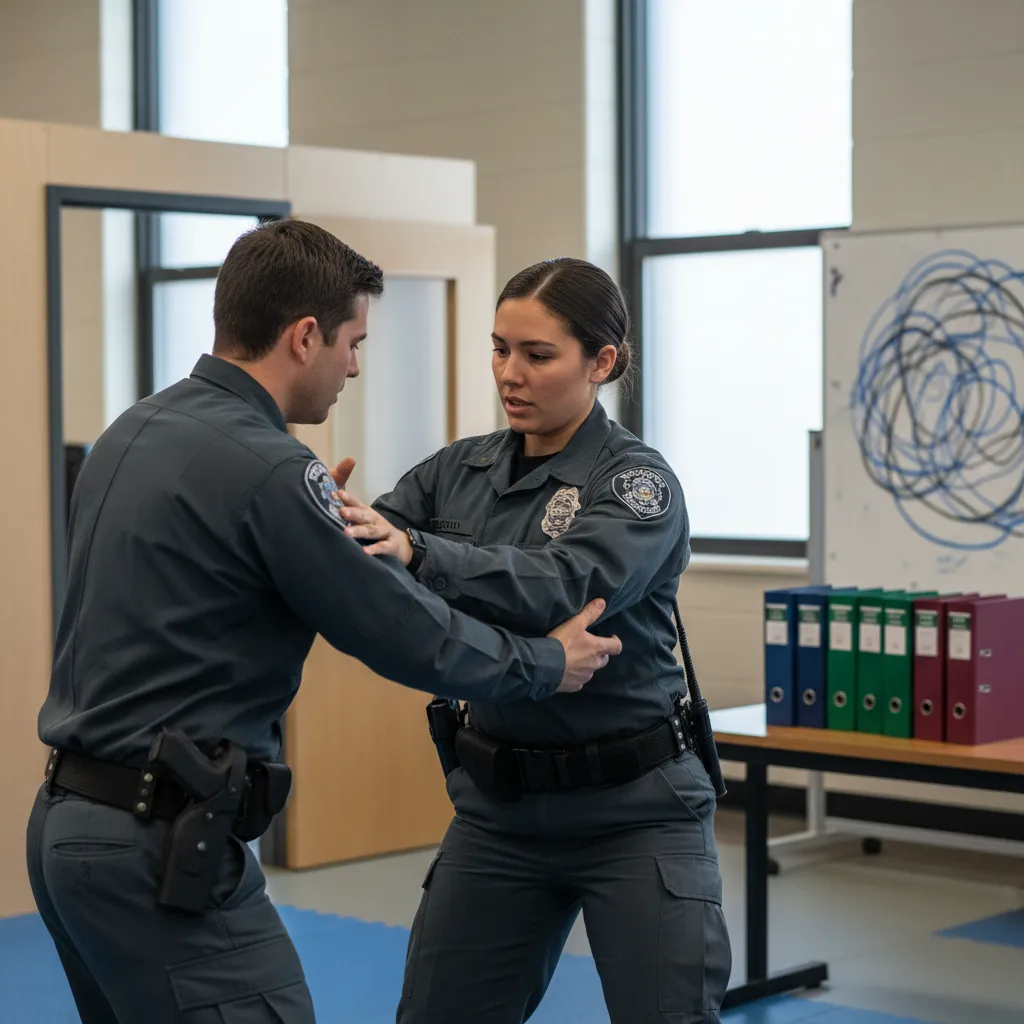
How to Pass the Law Enforcement Exam: Proven Study Guide & Tips
About the Author

Educational Psychologist & Academic Test Preparation Expert
Columbia University Teachers CollegeDr. Lisa Patel holds a Doctorate in Education from Columbia University Teachers College and has spent 17 years researching standardized test design and academic assessment. She has developed preparation programs for SAT, ACT, GRE, LSAT, UCAT, and numerous professional licensing exams, helping students of all backgrounds achieve their target scores.
Join the Discussion
Connect with other students preparing for this exam. Share tips, ask questions, and get advice from people who have been there.
View discussion (5 replies)