
LAPD Van Nuys Station: Complete Guide to the San Fernando Valley's Busiest Police Hub
Complete guide to the Los Angeles Police Department Van Nuys Station — hours, services, jurisdiction, careers, salary, and how to file reports. 🏆
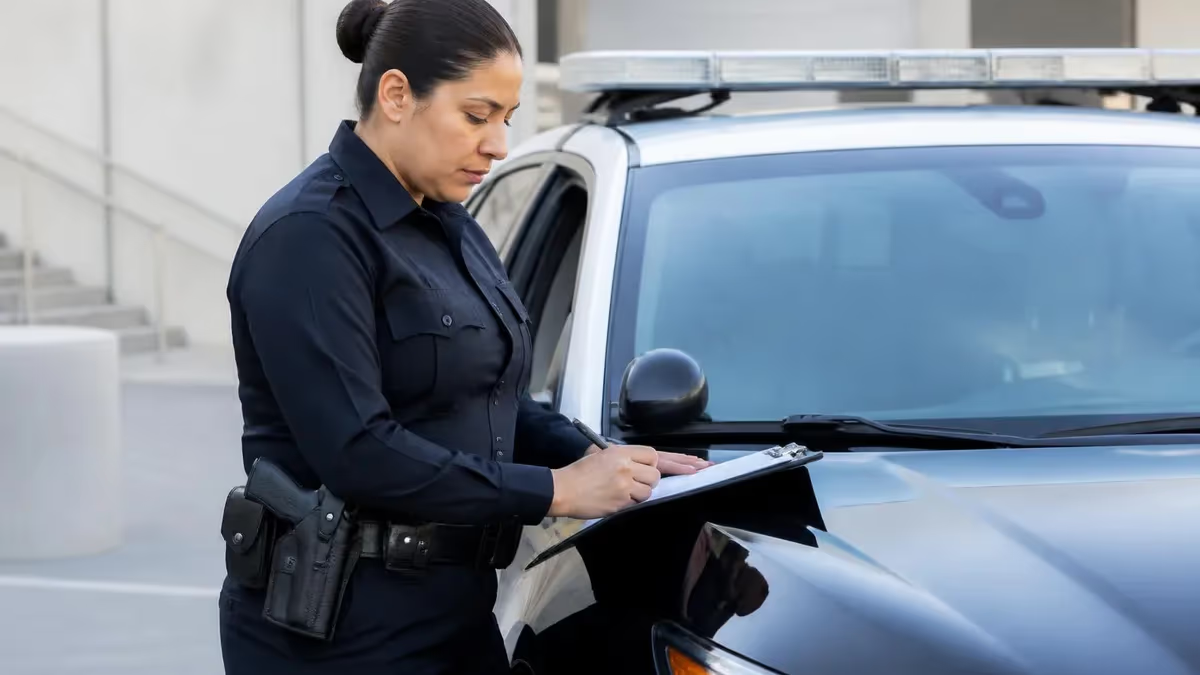
The Los Angeles Police Department Van Nuys Station sits at the geographic and operational heart of the San Fernando Valley, serving as one of the most active community policing hubs in the entire LAPD system. Located at 6240 Sylmar Avenue in Van Nuys, the station covers a diverse 30-square-mile jurisdiction that includes Van Nuys proper, Lake Balboa, parts of Sherman Oaks, Valley Glen, and surrounding neighborhoods. With a population approaching 325,000 residents, the area generates a steady stream of service calls, investigations, and community outreach activities that keep officers busy around the clock.
Originally established in 1926, the Van Nuys Station has grown alongside the Valley itself, evolving from a small substation handling rural complaints into a fully modern command center with specialized detective units, gang enforcement teams, and dedicated traffic divisions. The current facility opened in 1989 and includes a public lobby, holding cells, evidence storage, roll-call rooms, and a community meeting space that hosts Neighborhood Watch gatherings, citizen academies, and youth outreach programs throughout the year. Officers here respond to roughly 90,000 calls for service annually.
For residents and visitors alike, understanding how Van Nuys Station operates can make a real difference when you need help. Whether you're filing a report after a car break-in, attending a community meeting, applying for a concealed carry permit interview, or simply trying to track down a property release, knowing the right phone number, division, and hours can save hours of frustration. The station serves as the front door to LAPD services in the Valley and connects residents to investigators, watch commanders, and specialized units who handle everything from burglary follow-ups to homicide investigations.
This guide covers everything you need to know about the Van Nuys Station, from its physical address and hours to the specific divisions housed inside, the jurisdiction it patrols, and the careers available for those interested in joining its ranks. We'll also break down recent lapd news developments affecting the Valley, salary expectations for officers assigned to this division, and how the station fits into LAPD's broader Operations-Valley Bureau structure. Whether you're a longtime Valley resident or a prospective recruit, this resource will give you a clear picture of how policing works in Van Nuys.
The station is part of LAPD's Operations-Valley Bureau, one of four geographic bureaus that divide the city. Van Nuys works closely with neighboring Foothill, North Hollywood, West Valley, Mission, Topanga, and Devonshire stations to share resources, coordinate gang suppression efforts, and respond to major incidents that cross divisional boundaries. This cooperative model means that during large events, mutual aid is built into daily operations rather than being an exception, and supervisors at Van Nuys regularly coordinate with Valley Bureau command staff for staffing and tactical decisions.
Community policing remains a defining feature of Van Nuys Station's identity. The Senior Lead Officer program assigns dedicated officers to specific neighborhoods within the division, building long-term relationships with residents, business owners, school administrators, and faith leaders. These SLOs hold regular community meetings, respond to quality-of-life concerns, and serve as the connective tissue between the patrol division and the people it serves. Their work has become essential for trust-building, especially as the Valley continues to grow more diverse linguistically and culturally with each passing year.
Whether you're researching the station for a school project, planning a community meeting, preparing to file a report, or considering a career with LAPD, the information ahead is designed to help you navigate every aspect of Van Nuys Station with confidence. Bookmark this guide for future reference — phone numbers, jurisdictional boundaries, and division contacts are all collected in one place for easy access whenever you need them.
Van Nuys Station by the Numbers

Station Facilities & Divisions Inside Van Nuys
The largest unit at the station, responsible for 24/7 uniformed response to calls for service, traffic stops, and proactive enforcement across all neighborhoods within the Van Nuys area.
Houses specialized investigators handling burglary, robbery, auto theft, sexual assault, juvenile crimes, and homicide cases. Detectives work case files and conduct follow-up interviews with victims and witnesses.
Targets active street gangs operating in the Valley through intelligence gathering, suppression operations, and parole compliance checks. Works closely with the District Attorney's hardcore gang prosecution unit.
Dedicated officers assigned to specific neighborhoods who build community partnerships, attend Neighborhood Watch meetings, and resolve persistent quality-of-life issues like graffiti, abandoned vehicles, and noise complaints.
Coordinates citizen academies, ride-along programs, youth outreach, and bilingual community events. Serves as the public-facing gateway for residents seeking information or wanting to volunteer.
The Van Nuys Station jurisdiction stretches across some of the most demographically diverse neighborhoods in Los Angeles, covering roughly 30 square miles bounded by Roscoe Boulevard to the north, the 405 Freeway to the west, the Ventura Freeway to the south, and Coldwater Canyon to the east. Within this footprint sit Van Nuys proper, Lake Balboa, portions of Sherman Oaks north of Ventura Boulevard, Valley Glen, and parts of Panorama City. The area includes both dense apartment corridors and quiet single-family neighborhoods, creating a varied patrol environment.
Officers assigned to Van Nuys work out of a station near Van Nuys Civic Center, which also houses the courthouse, city services, and the Valley Government Center. This concentration of municipal facilities means patrol cars are frequently dispatched to courtroom security concerns, protests at city offices, and high-profile civil matters. The proximity to the courthouse also makes Van Nuys a logistical hub for prisoner transport, evidence processing, and detective interviews with subjects already in custody for unrelated matters from across the Valley.
Major thoroughfares like Sepulveda Boulevard, Van Nuys Boulevard, Victory Boulevard, and Roscoe Boulevard form the commercial spine of the area and generate a significant share of traffic enforcement activity. The division operates dedicated traffic units focused on DUI checkpoints, street racing suppression, and pedestrian safety operations near schools and senior centers. Van Nuys Boulevard itself has been a focus of cruising enforcement and weekend deployments, especially during summer months when informal car meets draw crowds and create public safety concerns for surrounding businesses.
The station also covers Van Nuys Airport, a general aviation facility that handles corporate jets, charter operations, and flight schools. While airport operations are primarily federal responsibility, perimeter security, trespassing calls, and incidents involving travelers fall to LAPD patrol officers. Coordination with airport security and the FAA is routine, and Van Nuys officers maintain familiarity with airport-specific procedures including hangar break-in protocols and runway incursion responses, which require quick, well-trained intervention by ground-level personnel.
Lake Balboa, with its 27-acre lake and surrounding parkland, presents its own patrol challenges including park curfew enforcement, vehicle break-ins in lot areas, and seasonal events that draw large crowds. The cherry blossom bloom each spring attracts thousands of visitors and requires dedicated traffic and crowd management. Officers also maintain a presence at the Sepulveda Basin Recreation Area, which sees periodic spikes in property crime and occasionally serves as a staging area for larger community events that need coordination with park rangers and city services.
The lapd headquarters downtown sets policy for all divisions including Van Nuys, but day-to-day decisions about deployment, staffing, and tactical responses are made at the station level by the area commanding officer and watch commanders. This decentralized model allows Van Nuys leadership to tailor enforcement strategies to local conditions rather than applying a one-size-fits-all approach, which matters significantly in a division as varied as the Valley with its mix of commercial corridors, residential pockets, industrial zones, and recreational spaces all requiring different policing approaches.
Understanding the jurisdiction boundaries matters because calls for service are routed to the station that covers the incident location, not the caller's home address. Residents living near divisional borders sometimes find that incidents just down the street fall under a neighboring station like West Valley, North Hollywood, or Mission. When in doubt, dial 911 for emergencies or 877-275-5273 for non-emergency dispatch — the operator will route your call to the appropriate station and ensure officers respond from the correct division without delay or confusion.

LAPD Practice Test Questions
Prepare for the LAPD - Los Angeles Police Department exam with our free practice test modules. Each quiz covers key topics to help you pass on your first try.
LAPD - Los Angeles Police Department Backg...
Free LAPD Practice Test featuring - Los Angeles Police Department Background Investigation Standards. Improve your LAPD Exam score with mock test prep.
LAPD - Los Angeles Police Department Basic...
LAPD Mock Exam on - Los Angeles Police Department Basic Police Terminology. LAPD Study Guide questions to pass on your first try.
LAPD - Los Angeles Police Department Depar...
LAPD Test Prep for - Los Angeles Police Department Department Interview Procedures. Practice LAPD Quiz questions and boost your score.
LAPD - Los Angeles Police Department Logic...
LAPD Questions and Answers on - Los Angeles Police Department Logical and Deductive Reasoning. Free LAPD practice for exam readiness.
LAPD - Los Angeles Police Department Obser...
LAPD Mock Test covering - Los Angeles Police Department Observation and Memory Recall. Online LAPD Test practice with instant feedback.
LAPD - Los Angeles Police Department Physi...
Free LAPD Quiz on - Los Angeles Police Department Physical Fitness Qualifier. LAPD Exam prep questions with detailed explanations.
LAPD - Los Angeles Police Department Readi...
LAPD Practice Questions for - Los Angeles Police Department Reading Comprehension Skills. Build confidence for your LAPD certification exam.
LAPD - Los Angeles Police Department Situa...
LAPD Test Online for - Los Angeles Police Department Situational Judgment and Ethics. Free practice with instant results and feedback.
Services, Reports & Contact Information
The Van Nuys Station front desk is open 24 hours a day, 7 days a week, allowing residents to walk in and file reports at any time. Common report types include vandalism, lost property, stolen vehicles, identity theft, and minor traffic collisions where no injuries occurred. For incidents in progress or any emergency, always dial 911 rather than walking in, since dispatched officers will arrive faster than walk-in processing.
Many low-priority reports can also be filed online through LAPD's Community Online Reporting System, which saves a trip to the station and lets you upload photos and supporting documents. After submitting, you'll receive a temporary report number and a confirmed DR number once an officer reviews your submission. Online reports are ideal for theft under $950, lost property, and vandalism without suspect information that doesn't require a physical scene response.
Working at Van Nuys Station: Pros and Cons
- +High call volume builds experience quickly for new officers
- +Diverse jurisdiction exposes officers to all types of incidents
- +Proximity to courthouse simplifies court appearances and follow-ups
- +Established community programs offer rewarding outreach opportunities
- +Strong mutual aid relationships with neighboring Valley divisions
- +Specialized detective units provide career advancement paths
- +Modern facility with updated training and roll-call spaces
- −Heavy call load can lead to officer burnout without proper rotation
- −Traffic congestion slows response times during peak commute hours
- −Gang activity in certain pockets requires constant intelligence updates
- −Limited parking for visitors and community meeting attendees
- −High-profile media presence near courthouse adds public scrutiny
- −Diverse linguistic needs strain bilingual staffing resources

What to Bring When Visiting Van Nuys Station
- ✓Valid government-issued photo ID such as a driver's license, passport, or state ID card
- ✓Any case number or DR number related to your visit or follow-up appointment
- ✓Property release authorization form if picking up evidence or recovered items
- ✓Insurance documents and vehicle registration if reporting an auto incident
- ✓Photos or video evidence on a USB drive or phone to share with officers
- ✓Written timeline of events for complex reports involving multiple incidents
- ✓Contact information for witnesses who can corroborate your statement
- ✓Cash or check for any applicable fees such as fingerprinting or copy requests
- ✓Patience for potential wait times, especially during shift changes around 6 AM and 6 PM
- ✓Reading material since high-priority calls may delay non-emergency front desk service
Call Ahead Before You Drive Over
The Van Nuys Station handles roughly 90,000 calls per year, which means walk-in wait times can vary dramatically. Before driving over for a property release, fingerprinting appointment, or detective meeting, call (818) 374-9500 to confirm the staff you need is on duty. This single phone call can save you hours of waiting and a wasted trip during a shift transition.
Careers at LAPD Van Nuys Station follow the same rank structure as the rest of the department, beginning with Police Officer I after academy graduation and advancing through Police Officer II, Police Officer III, Sergeant I and II, Lieutenant I and II, Captain, Commander, Deputy Chief, and finally Chief of Police. New recruits assigned to Van Nuys typically begin in patrol, riding with a training officer during their probation period and gaining exposure to the full range of incidents that occur across the Valley including traffic stops, domestic disturbances, and felony in-progress calls.
Starting salary for an LAPD Police Officer I is approximately $86,000 per year as of 2026, with step increases bringing total compensation including overtime and pension contributions to over $130,000 within five years of service. Officers assigned to specialized units like detectives, gang enforcement, or motor units may earn additional pay through bonuses, certifications, and overtime opportunities. The full lapd salary schedule is published annually and reflects negotiated pay increases tied to the city's contract with the Los Angeles Police Protective League.
Beyond base pay, Van Nuys officers receive a robust benefits package including medical, dental, and vision coverage, generous vacation accrual, a defined-benefit pension administered by LAFPP, and tuition reimbursement for officers pursuing degrees while working. Many officers complete bachelor's or master's degrees through partner universities offering law enforcement-friendly schedules and discounted rates. These educational benefits often translate into promotional advantages during competitive sergeant and lieutenant exams that emphasize written communication and analytical thinking.
Promotional opportunities at Van Nuys are competitive given the station's high visibility and steady workload. Officers seeking detective assignments typically need at least five years of patrol experience and strong performance evaluations, plus successful completion of the detective certification process. Specialized assignments like Air Support, K-9, SWAT, and the Mounted Unit require additional testing, interviews, and often a multi-year commitment after selection. Many Van Nuys officers use their patrol time as a stepping stone into these specialized careers within the larger department.
The path to becoming an LAPD officer assigned to Van Nuys begins with the standard hiring process: written exam, physical abilities test, background investigation, polygraph, psychological evaluation, and medical screening. The full process typically takes six to twelve months from application to academy entry. Recruits then complete six months of academy training at the Elysian Park facility downtown before being assigned to a field training program at their first division, which may or may not be Van Nuys depending on departmental staffing needs.
Officer wellness is a growing focus at Van Nuys Station, with the department recognizing that the cumulative stress of police work requires active intervention. The station has peer support officers trained to assist colleagues dealing with traumatic incidents, family issues, or career challenges. Behavioral health resources are confidential and available 24/7 through the department's Behavioral Science Services unit. Annual physical and psychological wellness checks are part of normal duty for officers in high-call divisions like Van Nuys where exposure to critical incidents is statistically higher than quieter assignments.
For those considering a career with LAPD, Van Nuys offers a fast-paced introduction to urban policing within a supportive command structure. New officers can expect to handle the full range of duties from minor traffic stops to felony arrests, often within a single shift. The station's mentorship culture, combined with the diverse jurisdiction and proximity to specialized resources, makes it one of the most popular assignments for officers building a long-term LAPD career across multiple divisions and ranks.
Always dial 911 for crimes in progress, medical emergencies, or any situation involving immediate danger to life or property. For non-emergency reports such as past-tense vandalism, lost property, or quality-of-life concerns, call (877) 275-5273 or visit the station's front desk. Misusing 911 for non-emergencies delays response to genuine crises and can result in citations.
Van Nuys Station is supported by some of LAPD's most respected specialized units, several of which operate citywide but maintain close working relationships with Valley divisions. The Metropolitan Division provides tactical support including SWAT, K-9, mounted patrol, and the Crime Response Team, and frequently deploys to Van Nuys for high-risk warrant service, barricaded suspect situations, and major narcotics operations. These deployments are coordinated through the area commanding officer and Valley Bureau leadership.
The LAPD SWAT team, headquartered in Metropolitan Division, is widely considered one of the most elite tactical units in American policing, with a history dating back to its founding in 1967. SWAT operators train constantly and are called out for hostage rescues, high-risk warrants involving armed suspects, dignitary protection details, and any incident requiring specialized weapons or tactics. When SWAT deploys to Van Nuys, station personnel typically establish outer perimeter security and provide intelligence support while tactical operators handle the inner perimeter and entry team responsibilities.
Air Support Division provides helicopter coverage for the Valley with units operating out of Hooper Heliport downtown and Air-12 routinely overflying Van Nuys during pursuit, perimeter, and search operations. The familiar sound of LAPD helicopters is part of daily life in the Valley, and pilots maintain direct radio contact with ground units to guide officers to fleeing suspects, locate missing persons, and provide aerial reconnaissance. Air Support is particularly valuable in the Valley's grid-pattern street network where suspects can quickly disappear into residential areas without overhead tracking.
Officers across LAPD use the lapd phonetic alphabet for radio communications, ensuring that names, license plates, and addresses are transmitted clearly over busy frequencies. This standardized communication is essential at Van Nuys where high call volumes can flood the dispatch channel during peak hours, and where misheard letters could send officers to wrong locations or misidentify suspect vehicles during active pursuits. Mastery of these communication standards is part of academy training and reinforced throughout an officer's career.
The station's detective bureau handles thousands of cases annually, ranging from routine burglary investigations to complex homicide and sexual assault cases. Detectives work assigned case tables and rotate through on-call duty for callouts that occur outside business hours. Major cases may be handled jointly with citywide units like Robbery-Homicide Division (RHD) or specialized task forces working organized crime, human trafficking, or financial fraud spanning multiple divisions and jurisdictions across Southern California's interconnected metropolitan region.
K-9 units assigned to the Valley provide tracking, narcotics detection, and explosive detection support to Van Nuys and neighboring stations. Handlers and their dogs train continuously and respond to callouts for suspect tracking after foot pursuits, building searches following burglary alarms, and pre-event sweeps for major gatherings. The relationship between handler and dog is built over years of partnership, and successful K-9 deployments often result in suspect apprehensions that would otherwise require lengthy ground searches with multiple officers tied up for hours.
Finally, the Van Nuys Area Office of Operations works closely with the Mayor's office, City Council representatives, and Neighborhood Councils to align police priorities with community needs. Quarterly meetings allow residents to hear directly from command staff about crime trends, deployment changes, and ongoing initiatives. This transparent communication has been credited with maintaining strong community trust even during difficult national conversations about policing, and it remains a model that other divisions have adopted to strengthen their own community-police relationships across the city.
If you're planning to interact with Van Nuys Station as a community member, a few practical tips will make your experience smoother. First, save the station's direct phone number — (818) 374-9500 — in your phone alongside the citywide non-emergency line at (877) 275-5273. Having both numbers handy means you can choose the most appropriate option based on whether you need station-specific information or general LAPD dispatch assistance for an incident in another division.
Second, take advantage of online reporting whenever possible. The LAPD Community Online Reporting System handles many low-priority report types including minor theft, vandalism, lost property, and identity theft without requiring a station visit or officer response. Online reports are reviewed by a sworn officer within 24-48 hours and result in a formal DR number suitable for insurance claims, employer notifications, or follow-up requests. This system saves both your time and frees officers to respond to higher-priority incidents.
Third, get to know your Senior Lead Officer. Every neighborhood within Van Nuys division has an assigned SLO who serves as a long-term point of contact for non-emergency concerns. SLOs respond to email, attend community meetings, and can often resolve persistent issues like chronic graffiti, abandoned vehicles, illegal dumping, and recurring noise complaints through targeted enforcement and coordination with city services. Finding your SLO's contact info on the LAPD website takes about two minutes and pays dividends for years.
Fourth, consider attending a Community Police Academy or signing up for a ride-along. These programs offer a behind-the-scenes look at how officers actually work and create real connections between residents and the people who patrol their streets. Graduates of community academies often become Neighborhood Watch leaders, volunteer with the station's various outreach programs, and serve as informal ambassadors between LAPD and their neighbors during community discussions about public safety priorities and concerns.
Fifth, follow Van Nuys Station's social media accounts for real-time updates on traffic closures, community events, missing persons appeals, and crime alerts affecting your area. These accounts also share recruitment information, upcoming public meetings, and recognition of officers and community members who've contributed to public safety. Social media has become a primary communication channel between the station and the public it serves, especially for time-sensitive information that benefits from rapid distribution to as wide an audience as possible.
Sixth, if you're considering an LAPD career, start preparing now. The hiring process is rigorous, and candidates who begin physical fitness training, study for the written exam, and clean up their financial and social media presence well in advance have significantly higher success rates than those who apply without preparation. Practice exams, mock interviews, and study guides specifically designed for LAPD's written test are widely available and dramatically improve scores on the first attempt at the entry-level examination.
Finally, remember that Van Nuys Station is your station. The officers, detectives, and support staff who work there are public servants accountable to the residents of the Valley. Engage with them, participate in community programs, file reports when crimes occur, and provide feedback through official channels when something goes well or could be improved. A strong police-community partnership requires effort from both sides, and Van Nuys has built a foundation that residents and officers continue to strengthen year after year through ongoing collaboration and trust.
LAPD Questions and Answers

LAPD Cars: Complete Guide to Los Angeles Police Department Vehicles, Fleet History, and Modern Patrol Units
LAPD Practice Test Video Answers

LAPD Scanner: How to Listen to Los Angeles Police Radio in 2026

LAPD Police Officer: Complete Career Guide to Duties, Salary, Ranks, and Daily Life on the Force

LAPD Police Department Phone Number: Complete Contact Directory and How to Reach Every Division
About the Author

Law Enforcement Trainer & Civil Service Exam Specialist
John Jay College of Criminal JusticeMarcus B. Thompson earned his Master of Arts in Criminal Justice from John Jay College of Criminal Justice and served 12 years as a law enforcement officer before transitioning to full-time academy instruction. He is a POST-certified instructor who has prepared candidates for police entrance exams, firefighter assessments, and civil service examinations across dozens of agencies.
Join the Discussion
Connect with other students preparing for this exam. Share tips, ask questions, and get advice from people who have been there.
View discussion (9 replies)