
LAPD Officer Shooting: What the Public Needs to Know About Use-of-Force Incidents
LAPD officer shooting incidents explained — policies, investigations, transparency reports & what it means for recruits. ✅ Full guide.

When an LAPD officer shooting makes lapd news, the public is flooded with competing narratives, partial information, and urgent questions about accountability. Understanding how the Los Angeles Police Department responds to, investigates, and reports on officer-involved shootings (OIS) is essential for residents, aspiring recruits, and civic advocates alike. The LAPD is one of the largest municipal police agencies in the United States, policing a city of nearly four million people, and its use-of-force policies are among the most scrutinized in the country. Each incident triggers a layered institutional response designed to balance officer safety with community trust.
Officer-involved shootings are not uniform events. They range from incidents in which an officer fires at an armed suspect who opened fire first, to tragic cases involving individuals in mental health crises. The LAPD tracks every discharge of a firearm by a sworn officer, whether or not anyone is injured or killed.
This data feeds into the department's annual Use of Force Report, which is publicly available and covers trends going back decades. Knowing how to read that data — and what questions to ask — is the first step toward informed citizenship in a city as complex as Los Angeles.
For candidates who want to join the LAPD, understanding the department's use-of-force framework is not optional. It appears on background investigation questionnaires, comes up in oral panel interviews, and is baked into recruit training at the academy. The department wants officers who understand that deadly force is a last resort, governed by state law, departmental policy, and constitutional standards simultaneously. Candidates who walk into the process without that foundation are at a disadvantage before their first question is answered.
The legal framework governing an LAPD officer shooting has evolved significantly over the past decade. California's AB 392, signed into law in 2019, raised the state standard for lethal force from "reasonable" to "necessary," making California one of the strictest states in the nation on this issue. The LAPD updated its own Manual Section 556 to align with the new statute. Officers are now trained to consider all reasonable alternatives before firing, and de-escalation is explicitly required whenever tactically feasible. This shift has influenced training curricula, equipment procurement, and the way supervisors evaluate critical incidents.
Public transparency has improved markedly since the passage of SB 1421 in 2019, which requires California law enforcement agencies to release records related to officer-involved shootings, serious uses of force, and sustained findings of dishonesty or sexual assault. The LAPD now posts Critical Incident Videos (CIVs) and Chief's Reports online, typically within 45 days of a major incident. These disclosures include body-worn camera footage, radio transmissions, and a preliminary narrative. While critics argue the timeline is still too slow, the practice represents a fundamental change from the department's historically opaque approach to OIS disclosure.
The lapd swatting of communities — meaning the over-deployment of tactical resources in lower-income neighborhoods — has long been a parallel concern alongside OIS data. Advocates point out that OIS incidents are not randomly distributed across the city; they cluster in specific divisions and correlate with policing intensity, mental health infrastructure gaps, and socioeconomic stress. Understanding these patterns matters both for public policy and for candidates who want to serve with an awareness of the systemic forces shaping the calls they will eventually answer as sworn officers.
This guide walks through everything you need to know about LAPD officer-involved shootings: the investigative process, the oversight bodies, salary and career context, the role of the LAPD chief in critical incidents, and how aspiring officers can prepare themselves for questions about use of force during the hiring process. Whether you are a resident seeking accountability or a candidate preparing for the background investigation, the information here will give you a grounded, accurate foundation.
LAPD Officer Shooting Incidents by the Numbers

How LAPD Investigates an Officer-Involved Shooting
Scene Preservation & Initial Response
Force Investigation Division Review
Use-of-Force Review Board
Police Commission Oversight
Public Disclosure & Community Briefing
District Attorney Review
LAPD salary is a critical piece of context for understanding who becomes an LAPD officer and what they are asked to risk on the job. Entry-level Police Officers I start at approximately $63,000 per year during their probationary academy period, with the base rate climbing to around $68,000 upon graduation and assignment to a division.
By the time an officer reaches the Police Officer III rank — the senior patrol classification — annual base pay can reach $100,000 or more, before overtime, specialty pay, and incentive bonuses are factored in. Los Angeles is an expensive city, and the department has worked with the Los Angeles City Council to make compensation competitive with surrounding agencies to reduce attrition.
Beyond base salary, the total compensation picture includes lapd raja jackson discussions that have shaped pension negotiations in recent years. Officers enrolled in the Los Angeles City Employees' Retirement System (LACERS) or the Fire and Police Pension system receive defined-benefit retirement packages that vest after 20 years of service, with the potential for a pension equal to 50 to 90 percent of final salary depending on tier and years served. These retirement benefits are a major factor in why officers tend to stay with LAPD rather than transfer to suburban departments once they invest in the city's system.
The compensation structure also includes specialty assignment pay for officers in high-risk or high-skill roles. SWAT operators, for example, receive additional compensation reflecting the demands of their assignment. Detectives assigned to the Robbery-Homicide Division, the Major Crimes Division, or FID itself earn supplemental pay that can add several thousand dollars annually to their base. Officers fluent in a second language may receive bilingual bonus pay, a meaningful supplement in a city as linguistically diverse as Los Angeles, where over 200 languages are spoken across 503 square miles of jurisdiction.
Understanding the salary progression is important for candidates because it contextualizes the commitment the department expects in return. The hiring process is lengthy — often 12 to 18 months from initial application to academy graduation — and the academy itself is a 6-month residential program that demands physical, academic, and psychological endurance. Officers who complete training and survive their two-year probationary period are investing in a career that can span 25 to 30 years. That long career arc means that officers will encounter use-of-force situations, and their preparation for those moments begins during the hiring process, not in the field.
Many candidates underestimate how thoroughly the department investigates financial history during the background process. Officers who are in serious debt, have defaulted on loans, or have unresolved tax issues may be seen as higher risk for corruption or bribery. The LAPD background investigators review credit reports, bank statements, and tax returns going back several years. Candidates who proactively address financial issues before applying — paying down debt, resolving collection accounts, filing amended returns — consistently report better outcomes than those who hope problems go unnoticed or will be overlooked given other strengths.
The physical demands of the job deserve direct acknowledgment in any salary discussion. Officers responding to an LAPD officer shooting are exposed to immediate lethal hazard, but the cumulative physical toll of patrol work — shift work, vehicle accidents, physical altercations, and the physiological effects of chronic stress — also extract a price over a career.
The department's medical benefits, which include vision, dental, and mental health coverage, are designed to address these occupational health realities. In recent years, LAPD has expanded its peer support and mental health resources specifically because research shows that officers exposed to traumatic critical incidents have significantly elevated rates of PTSD, depression, and alcohol misuse compared to the general population.
For candidates who are serious about joining the department, tracking LAPD news coverage of officer compensation negotiations gives a real-time window into how the city values its police workforce. Collective bargaining between the Los Angeles Police Protective League and the City of Los Angeles determines salary adjustments, uniform allowances, overtime structures, and the funding of officer wellness programs. Following those negotiations — and understanding the political dynamics at play — reveals more about the lived reality of LAPD employment than any brochure the department publishes on its recruiting website.
LAPD SWAT, Gear, and Tactical Response to Shootings
LAPD SWAT — formally the Special Weapons and Tactics platoon under the Metropolitan Division — is deployed in officer shooting scenarios that involve barricaded suspects, hostage situations, or active shooters where standard patrol response is insufficient. The team consists of roughly 70 full-time operators organized into four squads, each capable of independent deployment. SWAT responds to approximately 350 calls per year in Los Angeles, making it one of the busiest tactical units in any American city. Officers assigned to SWAT are drawn from experienced patrol ranks and undergo a rigorous selection pipeline that tests physical fitness, marksmanship, and decision-making under stress.
During an officer-involved shooting where a suspect remains at large, armed, or barricaded, SWAT assumes tactical command of the incident perimeter. Their protocol prioritizes containment and negotiation before any tactical entry, consistent with AB 392's requirement that lethal force be truly necessary. The unit carries specialized lapd gear including ballistic shields, less-lethal munitions, crisis negotiation equipment, and armored vehicles. After a shooting, SWAT operators involved in any use of force are subject to the same FID review process as any other sworn officer, with no special exemption for tactical assignments.

Transparency in LAPD Officer Shooting Investigations: Strengths and Gaps
- +Critical Incident Videos are released publicly within 45 days, providing body-cam footage and officer narratives to residents
- +The Los Angeles Police Commission conducts independent civilian review separate from the Chief's administrative determination
- +SB 1421 mandates release of records in OIS cases, sustained dishonesty findings, and serious use-of-force incidents
- +FID operates independently from the involved officer's chain of command, reducing supervisory pressure on investigators
- +Community engagement briefings in affected divisions give residents a direct channel to ask questions after major incidents
- +The LAPD annual Use of Force Report disaggregates data by race, division, and force type, enabling trend analysis over time
- −The 45-day release window is still seen by advocates as too slow for communities experiencing acute tension after a shooting
- −Officers retain the right to review body-cam footage before providing a formal statement, which critics say advantages the officer's account
- −The DA criminal review is entirely separate and can take years, leaving accountability questions unresolved for victims' families
- −Administrative findings of policy violation do not automatically result in termination, and arbitrators frequently reinstate fired officers
- −Comparative data across LAPD divisions reveals persistent racial disparities in OIS rates that departmental reports acknowledge but do not fully explain
- −Negotiated settlements in civil lawsuits are paid from the city general fund without direct financial consequences for the involved officers
Pros and Cons at a Glance
| Pros | Cons |
|---|---|
| The Los Angeles Police Commission conducts independent civilian review separate from the Chief's administrative determination | Officers retain the right to review body-cam footage before providing a formal statement, which critics say advantages the officer's account |
| FID operates independently from the involved officer's chain of command, reducing supervisory pressure on investigators | The DA criminal review is entirely separate and can take years, leaving accountability questions unresolved for victims' families |
| Community engagement briefings in affected divisions give residents a direct channel to ask questions after major incidents | Administrative findings of policy violation do not automatically result in termination, and arbitrators frequently reinstate fired officers |
| The LAPD annual Use of Force Report disaggregates data by race, division, and force type, enabling trend analysis over time | Comparative data across LAPD divisions reveals persistent racial disparities in OIS rates that departmental reports acknowledge but do not fully explain |
LAPD Candidate Use-of-Force Knowledge Checklist
- ✓Learn the text and legal standard of California AB 392 and how it changed the definition of permissible lethal force
- ✓Memorize LAPD Manual Section 556 governing use-of-force policy and the de-escalation requirement
- ✓Understand the three levels of LAPD use-of-force classification and what review process each triggers
- ✓Know the role of the Force Investigation Division and how it differs from the officer's own chain of command
- ✓Be able to explain the Police Commission's five-member civilian composition and how its OIS review works
- ✓Study at least three real LAPD Critical Incident Video releases to understand how the department presents OIS findings publicly
- ✓Practice explaining a hypothetical use-of-force scenario using the necessity standard required by AB 392
- ✓Review the LAPD annual Use of Force Report for the most recent three years to discuss trends and data in your oral interview
- ✓Understand the difference between an administrative (policy) finding and a criminal (DA) determination in officer shooting cases
- ✓Be ready to discuss de-escalation tactics and when lethal force transitions from avoidable to legally necessary under California law
The Interview Panel Will Ask About Use of Force
Every LAPD oral board includes at least one scenario involving a use-of-force decision. Candidates who answer by citing the necessity standard from AB 392, mentioning de-escalation requirements, and acknowledging the role of supervision and review consistently outscore candidates who give vague answers about "protecting the public." Preparation on this specific topic is one of the highest-return investments you can make before your interview date.
The LAPD lapd ranks structure shapes who responds to, supervises, and reviews an officer-involved shooting at every level of the department. At the bottom of the sworn hierarchy sit Police Officers I through III, the patrol officers most likely to be involved in a field shooting. Above them, Detectives (I through III) investigate crimes including post-OIS crime scenes.
Senior Lead Officers (SLOs) serve as community liaisons and are typically not first responders to violent incidents. Sergeants I and II supervise patrol and detective operations and are the first command-level responders to any OIS scene, responsible for securing the area and notifying the watch commander.
Above the sergeant level, Lieutenants I and II serve as watch commanders and divisional operations officers. A Lieutenant II typically holds the watch commander role at a patrol division station and is immediately notified when any officer-involved shooting occurs within their watch. Captains I through III run divisions and are the senior operational leaders for most of the city's 21 geographic patrol areas.
When a shooting occurs in their division, the Captain coordinates with FID, communicates with community stakeholders, and reports up to the Deputy Chief level. The department has four bureau-level Deputy Chiefs overseeing the geographic bureaus — Central, South, West, and Valley — each of whom coordinates OIS response across multiple divisions.
The lapd chief of police sits at the apex of the sworn hierarchy and plays a constitutionally significant role in the OIS review process. The Chief issues the final administrative determination on every officer-involved shooting that proceeds through the full review pipeline.
Importantly, the Police Commission can disagree with the Chief's finding, and if the Commission finds the use of force out of policy when the Chief found it in policy, that disagreement is public record. The Chief cannot simply override the Commission's civilian finding. This structural tension between the Chief and the Commission is by design — it prevents any single authority from controlling the accountability narrative after a deadly force incident.
The lapd headquarters at 100 West 1st Street in downtown Los Angeles houses the Office of the Chief, the Board of Police Commissioners, and the Inspector General's office, all of which play roles in OIS oversight. The headquarters complex also houses key specialized units including FID, the Internal Affairs Group, and the Risk Management Division. Geographically, headquarters sits within LAPD's Central Bureau, but it functions as the administrative nerve center for the entire department. Major OIS press conferences and community briefings are typically held at or near headquarters when the incident has citywide significance or involves allegations of serious misconduct.
The LAPD Inspector General (IG) is an independent auditor appointed by and reporting to the Police Commission. The IG's office reviews OIS investigations for systemic issues, pattern-and-practice concerns, and the adequacy of FID's investigative work.
Unlike FID, which investigates individual incidents, the IG looks for trends — divisions with elevated OIS rates, training deficiencies that show up repeatedly in reviewed cases, or policy gaps that leave officers undertrained for predictable scenarios. IG audits have historically driven some of the most significant reforms in LAPD use-of-force policy, including the expansion of de-escalation training after the 2018 audit identified gaps in the prior curriculum.
Understanding the rank structure is also essential for candidates because the oral board panel typically includes officers at the Sergeant or Lieutenant level, and sometimes a civilian HR representative or background investigator. Knowing who you are speaking to — and addressing them appropriately — signals professional maturity.
Candidates who confuse the roles of a Sergeant and a Lieutenant, or who do not know that Detectives are a separate classification rather than a rank above Patrol Officer, can inadvertently signal that they have not done their homework. The LAPD is an organization that takes its internal hierarchy seriously, and demonstrating fluency with that structure is a low-cost way to distinguish yourself in a competitive hiring process.
The department's rank structure also determines the career trajectory for officers who are involved in shootings and survive the review process with an in-policy finding. Officers do not face automatic promotion blocks simply because they were involved in an OIS. However, officers who accumulate multiple out-of-policy findings, even without criminal prosecution, may find their promotional prospects affected when Promotion Review Boards weigh their overall record. Conversely, officers who demonstrate exceptional judgment during high-stress incidents — including deadly force encounters — can build a record that supports competitive promotion applications to Sergeant and above.
If you have ever been involved in or witnessed a shooting — as a victim, witness, or participant — you must disclose it fully during the LAPD background investigation. Investigators cross-reference police reports, court records, and social media. Omissions or inconsistencies about violent incidents in your past are treated as dishonesty, which is typically a disqualifying finding. A disclosed incident with context is recoverable; a discovered concealment is not.
The LAPD lapd online report system and the broader digital infrastructure the department uses for public communication have transformed how OIS incidents reach the public. In earlier decades, residents had to attend Police Commission meetings or file Public Records Act requests to obtain basic information about shooting incidents.
Today, the LAPD's website hosts a dedicated Critical Incident page where CIVs, Chief's Reports, and supporting documents are posted as they become available. The transparency is imperfect — cases still under active DA review or civil litigation may have restricted information — but the shift toward proactive digital disclosure represents a structural change in the department's relationship with public information.
The LAPD lapd police report process for officer-involved shootings follows a specialized documentation chain that differs from ordinary crime reports. A Level 3 use-of-force incident — defined as any incident involving a firearm discharge by an officer, whether or not injury results — triggers a mandatory FID notification and the preparation of a Use of Force Report by the supervising sergeant.
This report captures the immediate sequence of events, the identity of involved officers, witness information, and the condition of any injured parties. It is a foundational document in the administrative review chain, but it is distinct from the criminal investigation report prepared by FID detectives, which follows a separate chain of custody and disclosure timeline.
Filing an lapd uniform violation complaint or a use-of-force complaint as a civilian is a protected right in California. Residents can file complaints with the LAPD directly, with the Office of the Inspector General, or with the Police Commission. Complaints are tracked and analyzed for patterns; a cluster of complaints in a single division or against a specific officer triggers enhanced supervisory review. Under SB 1421, sustained complaint records are now subject to disclosure, meaning that the public can access information about officers who have been found to have committed misconduct, including unjustified use of force, after an independent investigation.
The role of the lapd chief of police in shaping the culture around use-of-force incidents extends far beyond the formal review process. The Chief sets the tone for how the department talks about OIS incidents internally and externally. Chiefs who emphasize accountability and transparency create environments where officers feel supported in making difficult decisions while understanding that those decisions will be rigorously reviewed.
Chiefs who circle the wagons after controversial shootings create cultures where officers may feel protected in the short term but face greater community hostility and legal exposure over time. The tenure and leadership philosophy of each Chief therefore has direct, measurable effects on OIS rates, review outcomes, and public trust.
Community relations after an officer-involved shooting require sustained effort that goes beyond a single press conference or CIV release. LAPD's Community Relationship Division, working in coordination with individual division Senior Lead Officers, manages ongoing engagement with neighborhoods affected by serious incidents.
This includes attending town halls, participating in faith community dialogues, and ensuring that families of those involved in OIS incidents have a designated point of contact within the department. Critics argue this engagement is sometimes performative, while supporters note that divisions with strong SLO relationships show measurably faster community recovery after high-profile incidents than divisions where community trust was already fractured before the shooting occurred.
For candidates preparing for the lapd department interview, the oral board is the single most consequential step in the hiring process after the background investigation. Panels typically pose three to five scenario questions, at least one of which will involve a use-of-force decision or an ethical dilemma involving another officer's conduct.
The best responses demonstrate awareness of the legal standard, acknowledgment of supervisory notification requirements, concern for injured parties, and a commitment to honest reporting regardless of the outcome. Candidates who frame their answers entirely around "protecting themselves" rather than balancing officer safety with constitutional obligations tend to score lower on the department's structured interview rubric.
Preparation for the oral board should include mock interview practice with someone who can push back on vague answers and demand specificity. Knowing that AB 392 requires force to be "necessary" rather than "reasonable" is one thing; being able to explain what that means in a scenario where a suspect is fleeing with a weapon but no longer posing an immediate threat is another.
The officers who score highest on oral boards consistently demonstrate that they have internalized the ethical and legal framework, not just memorized it. That internalization is what the department is trying to identify, because it is what predicts good decision-making in the field when there is no supervisor present and the situation is evolving in real time.
Practical preparation for the LAPD hiring process in the context of officer-involved shooting awareness begins with building your reading habit around departmental transparency documents. The LAPD posts its annual Use of Force Report, all issued Critical Incident Videos, Chief's Reports, and Inspector General audits on its official website.
Reading at least the most recent three years of these documents before your oral board gives you the ability to speak concretely about recent incidents and departmental trends rather than relying on general statements about use-of-force policy. Panels respond well to candidates who demonstrate that they follow LAPD news actively and can situate their understanding of policy in the context of real events the department has navigated.
Physical preparation matters as much as intellectual preparation. The LAPD Police Officer Physical Abilities Test (POPAT) is administered early in the hiring pipeline, and candidates who fail it are disqualified without any credit for their academic or interview performance.
The test includes a 99-yard obstacle course, a 165-pound body drag, a six-foot chain-link fence climb, a six-foot solid wall climb, and a 500-yard run — all completed within a specified time limit. Officers who respond to shooting incidents must be able to run, take cover, drag injured parties, and scale obstacles under stress. The physical test is a proxy for that operational reality, not an arbitrary bureaucratic hurdle.
Written exam preparation should include serious attention to lapd phonetic alphabet fluency, lapd ranks and organizational structure, basic law covering use of force, search and seizure, and the constitutional amendments that govern police conduct (particularly the Fourth and Fourteenth Amendments). The written exam tests reading comprehension, logical reasoning, and memory recall — skills that directly reflect the demands of police report writing and field decision-making. Candidates who use PTG practice exams consistently report entering their actual written test with greater confidence and achieving scores that clear the competitive threshold for movement to the background investigation phase.
The background investigation is the longest and most invasive phase of the hiring process. Investigators contact every employer you have listed for the past ten years, every reference you provide, every neighbor at addresses where you have lived, and sometimes people you did not list but who appear in records.
They review your financial history, your social media presence going back years, your criminal record (including juvenile records in some cases), and your driving history. Incidents involving violence, weapons, or dishonesty receive heightened scrutiny. The best strategy is radical transparency combined with thoughtful contextualization: disclose everything, and be ready to explain what you learned from any adverse incident in your past.
Mental health and psychological fitness are evaluated through a formal psychological examination conducted by a licensed psychologist contracted by the LAPD. This exam includes standardized psychological inventories (including the MMPI-2 and the IPI) as well as a structured clinical interview. The psychologist is looking for indicators of poor impulse control, excessive aggression, dishonesty, or mental health conditions that would impair an officer's ability to handle high-stress incidents including shootings. Candidates who present as psychologically rigid, unwilling to acknowledge limitations, or excessively authoritarian tend to score poorly even if they perform well on the written exam and physical test.
Mentorship from a current or retired LAPD officer is one of the highest-value preparation resources available. Officers who have been through the hiring process and have responded to OIS incidents can describe the experiential reality of the job in ways that no study guide or brochure can replicate. Many officers are willing to speak with candidates through the LAPD's recruiting events, which are held regularly at the Ahmanson Recruit Training Center and at community events across Los Angeles.
Attending these events, asking substantive questions, and building genuine relationships with officers in the field demonstrates the kind of initiative that the department values in candidates — and provides you with a realistic picture of the career you are pursuing before you commit to the process.
Finally, practice answering use-of-force scenario questions out loud, not just in your head. The gap between knowing the answer and being able to articulate it clearly under the pressure of an oral board panel is larger than most candidates anticipate. Record yourself answering common scenarios, review the playback, and identify moments where your reasoning became unclear or your language vague.
The officers on your panel have heard hundreds of oral board responses; they recognize hedging, they notice when candidates parrot policy without demonstrating genuine understanding, and they value candidates who can be direct and specific even when the scenario is genuinely ambiguous. Preparation that includes realistic simulation of the interview environment produces measurably better outcomes than preparation that stays on paper.
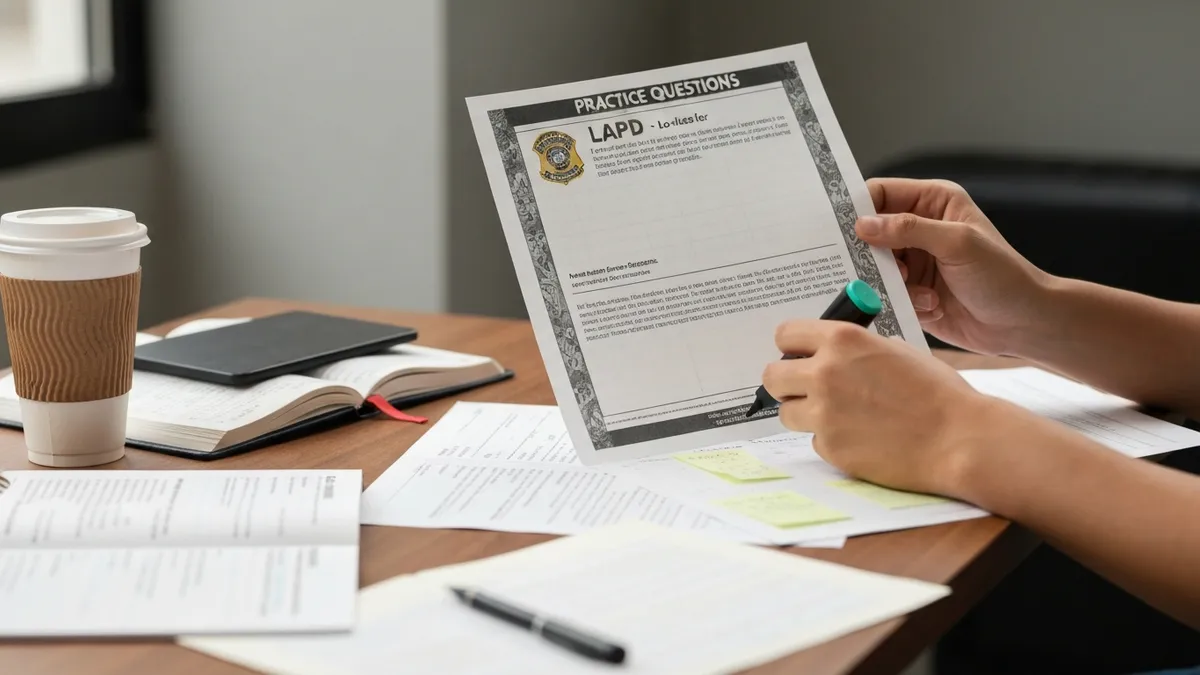
Sample Los Angeles Police Department Practice Questions
Try these questions from our free Los Angeles Police Department practice tests. The correct answer and an explanation follow each question.
An off-duty LAPD officer is asked by a close friend about a police incident that occurred in their neighborhood. The friend is asking for details that have not been released to the public. How should the officer respond?
- A. Provide general, non-critical details to satisfy the friend's curiosity without revealing too much.
- B. Access the police report to give the friend the most accurate information available.
- C. Share the information but ask the friend to keep it strictly confidential.
- D. State that they cannot discuss details of an official police matter, as the information is confidential.
Answer: D. State that they cannot discuss details of an official police matter, as the information is confidential.
All official files, documents, records, and information held by the LAPD are considered confidential. Employees are prohibited from disclosing such information except as required in the performance of their official duties. Sharing non-public information, even with a friend, is a violation of this policy and can lead to disciplinary action.
Read the following: 'Officers must complete Form 15-A within 24 hours of any use-of-force incident. Supervisors must review and sign the form within 48 hours of submission.' If an officer uses force at 6:00 PM on Monday, by when must the supervisor sign the form?
- A. Tuesday at 6:00 PM
- B. Wednesday at 6:00 PM
- C. Thursday at 6:00 PM
- D. Wednesday at 6:00 AM
Answer: B. Wednesday at 6:00 PM
The officer must submit by Tuesday 6:00 PM, and the supervisor has 48 hours from submission, making the deadline Wednesday at 6:00 PM.
An LAPD officer observes an individual in a high-crime area late at night, peering into parked car windows and trying door handles. This observation gives the officer grounds to detain and question the individual. What level of proof has the officer's observation established?
- A. Conclusive Evidence
- B. Probable Cause
- C. A Mere Hunch
- D. Reasonable Suspicion
Answer: D. Reasonable Suspicion
The officer has specific and articulable facts that suggest criminal activity may be occurring. This is the definition of Reasonable Suspicion, which is the legal standard required for an officer to conduct a temporary investigative stop (a "Terry stop"). It is a lower standard than Probable Cause, which is required for an arrest.
An officer observes: 'Whenever it rains, traffic incidents on the 101 increase.' There are no increased traffic incidents today. What is the most logical conclusion?
- A. It is raining today
- B. It is not raining today
- C. The 101 freeway is closed
- D. Traffic data is unavailable
Answer: B. It is not raining today
If rain caused incidents and there are no extra incidents, rain has not occurred — contrapositive reasoning.
LAPD Questions and Answers
Los Angeles Police Department Rank Structure: Insignia & Promotion Path

LAPD Pension: Complete Guide to Benefits, Retirement Tiers, and What Officers Actually Earn

What Is LAPD? A Complete Guide to the Los Angeles Police Department
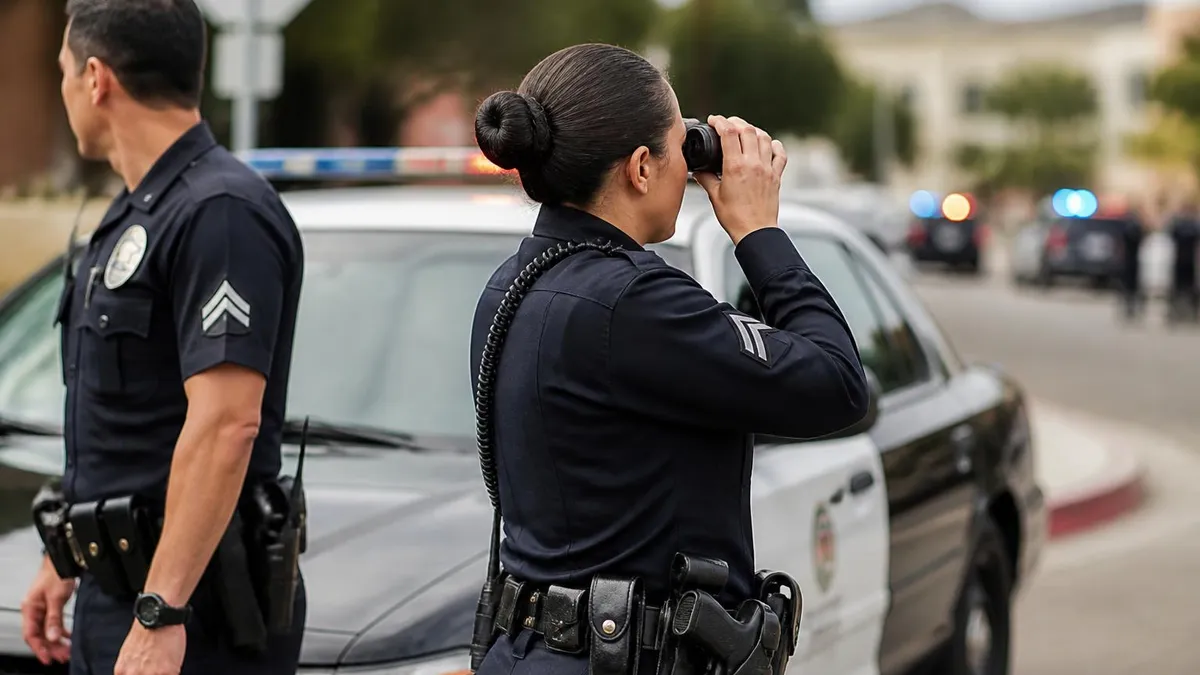
LAPD Metro Division: Inside LA's Elite Tactical Unit — SWAT, Gear, Ranks, and What You Need to Know

LAPD K9 Unit: How Police Dogs Serve the Los Angeles Police Department
About the Author
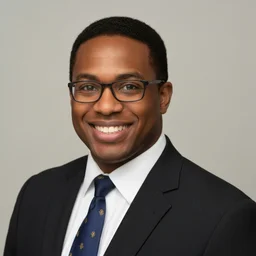
Law Enforcement Trainer & Civil Service Exam Specialist
John Jay College of Criminal JusticeMarcus B. Thompson earned his Master of Arts in Criminal Justice from John Jay College of Criminal Justice and served 12 years as a law enforcement officer before transitioning to full-time academy instruction. He is a POST-certified instructor who has prepared candidates for police entrance exams, firefighter assessments, and civil service examinations across dozens of agencies.
Join the Discussion
Connect with other students preparing for this exam. Share tips, ask questions, and get advice from people who have been there.
View discussion (9 replies)