

IST Practice Test
Updated October 2026Facts verified Oct 29, 2026 against Pacific Gas and Electric Company
In today’s job market, employers look for people with the right mix of skills. The Industrial Skills Test (IST) is a tool to check if you’re a good fit for jobs in manufacturing, engineering, and construction. Practice with the free IST - Industrial Skills practice test on PracticeTestGeeks (7 questions with answer explanations).
This test checks your mechanical thinking, spatial skills, and hands-on abilities. It helps employers find people who can do well in these demanding fields.
- The Mechanical Principles section of the Industrial Skills Test consists of 36 items.[1]
- The Reading Comprehension section of the Industrial Skills Test consists of 25 items.[1]
- The Mechanical Principles section of the Industrial Skills Test is timed at 20 minutes.[1]
- The Reading Comprehension section of the Industrial Skills Test is timed at 30 minutes.[1]
- Candidates taking pre-employment tests at PG&E must wait a minimum of 90 calendar days before making another test attempt.[2]
- The PG&E Industrial Skills Test is administered online by invitation, and candidates are permitted to have only scratch paper and pencil/pen during the test.[2]
- The Industrial Skills Test is required by PG&E invitation for applicants being considered for physical positions.[1]
Numbers in brackets link to the official sources listed under Sources & last verified. Dates that have passed are removed automatically.
IST Exam at a Glance
| Item | Detail | Source · Verified |
|---|---|---|
| Number of questions (Mechanical Principles) | 36 items[1] | Pacific Gas and Electric Company · Oct 27, 2026 |
| Number of questions (Reading Comprehension) | 25 items[1] | Pacific Gas and Electric Company · Oct 27, 2026 |
| Number of questions (Working with Numbers, Charts and Graphs) | 25 items[1] | Pacific Gas and Electric Company · Oct 27, 2026 |
| Time limit (Mechanical Principles) | 20 minutes[1] | Pacific Gas and Electric Company · Oct 27, 2026 |
| Time limit (Reading Comprehension) | 30 minutes[1] | Pacific Gas and Electric Company · Oct 27, 2026 |
| Time limit (Working with Numbers, Charts and Graphs) | 30 minutes[1] | Pacific Gas and Electric Company · Oct 27, 2026 |
| Retake policy | Retest after 90 calendar days[2] | Pacific Gas and Electric Company · Oct 27, 2026 |
| Delivery | Online by invitation; scratch paper and pencil/pen only[2] | Pacific Gas and Electric Company · Oct 27, 2026 |
| Eligibility | By PG&E invitation for physical-job applicants[1] | Pacific Gas and Electric Company · Oct 27, 2026 |
| Testing window | 5 calendar days upon receiving invitation email[2] | Pacific Gas and Electric Company · Oct 27, 2026 |
What changed for IST in 2026
- Oct 27, 2026: Delivery changed to Online by invitation; scratch paper and pencil/pen only (previously Online by invitation; scratch paper and pen/pencil only).[2]
- Oct 27, 2026: Testing window changed to 5 calendar days upon receiving invitation email (previously 5 calendar days after the invitation email).[2]
According to Pacific Gas and Electric Company, “This 36-item test measures the understanding of basic physical and mechanical concepts.”[1]
IST content outline and where to practise each area
The content areas below are copied from the official IST content outline published by Pacific Gas and Electric Company. The right-hand column shows which of our practice sets covers it.
| Official content area | Practice on this site |
|---|---|
| Mechanical Principles[1] | IST Mechanical Aptitude Practise basic physical and mechanical ideas such as levers, pulleys, gears and forces until you can explain each answer, not just pick it. |
| Reading Comprehension[1] | IST Reading Comprehension Practise reading short workplace passages and choosing only the answer the text directly supports. |
| Working with Numbers, Charts and Graphs[1] | IST Applied Mathematics Practise reading table headings, axis labels and units before you calculate, then check that your answer fits the data shown. |
IST Practice Test Questions
Prepare for the IST - Industrial Skills Test exam with our free practice test modules. Each quiz covers key topics to help you pass on your first try.
IST Mechanical Aptitude
IST Exam Questions covering Mechanical Aptitude. Master IST Test concepts for certification prep.
IST Reading Comprehension
Free IST Practice Test featuring Reading Comprehension. Improve your IST Exam score with mock test prep.
IST Spatial Reasoning
IST Mock Exam on Spatial Reasoning. IST Study Guide questions to pass on your first try.
IST Applied Mathematics
IST Test Prep for Applied Mathematics. Practice IST Quiz questions and boost your score.
IST Blueprint Reading and Technical Drawings
IST Questions and Answers on Blueprint Reading and Technical Drawings. Free IST practice for exam readiness.
IST Electrical and Electronic Knowledge
IST Mock Test covering Electrical and Electronic Knowledge. Online IST Test practice with instant feedback.
IST Industrial Problem Solving
IST Practice Questions for Industrial Problem Solving. Build confidence for your IST certification exam.
Worked examples: how to reason through IST questions
These are practice questions written for this site, not questions from the real exam. Each explanation shows why the right answer is right and why the others are wrong.
Example 1
Question: The passage suggests that using safety gear in industrial settings is important because:
- It enhances productivity
- It is required by law
- It is part of employee training programs
- It reduces the risk of injury
Answer: D. It reduces the risk of injury
Explanation:
D is correct. Safety gear such as hard hats, safety glasses, gloves and steel-toed boots puts a barrier between the worker and a hazard. Its main purpose is to lower the chance and the severity of injury. A is wrong because better productivity may follow, but it is not why the gear is worn. B sounds plausible, but the question asks what the passage suggests, and a legal requirement only counts if the text says so. C describes how workers learn about the gear, not why it matters. Rule to remember: on reading items, choose the answer the passage supports most directly, not one that is merely true in general.
Example 2
Question: Which property of a lubricant describes its resistance to flow?
- Flash point
- Viscosity
- Pour point
- Specific gravity
Answer: B. Viscosity
Explanation:
B is correct. Viscosity is a lubricant's resistance to flow. A thick, high-viscosity oil flows slowly and a thin one flows easily, and viscosity is usually the first property checked when matching an oil to a machine. A is wrong because flash point is the temperature at which the oil gives off enough vapor to ignite briefly. C is wrong because pour point is the lowest temperature at which the oil will still pour. It is linked to flow in the cold, but it is a temperature, not a measure of resistance. D is wrong because specific gravity compares the oil's density with water's. Rule to remember: viscosity means thickness, which means resistance to flow.
Example 3
Question: When is it appropriate to use a Type II hard hat?
- When working in high-heat environments
- When lateral impact protection is needed in addition to top protection
- When electrical insulation is the primary concern
- When working in confined spaces only
Answer: B. When lateral impact protection is needed in addition to top protection
Explanation:
B is correct. A hard hat's Type rating describes which direction of impact it protects against. A Type II hat protects against blows to the side as well as the top. You choose it where side impacts are possible, such as near swinging loads or moving equipment. A is wrong because the Type rating does not describe heat resistance. C is wrong because electrical protection is covered by a separate Class rating, not by the Type. D is wrong because Type II is not limited to confined spaces. It applies wherever side impacts are a hazard. Rule to remember: Type describes the direction of impact protection, and Class describes electrical protection.
How to use these practice tests
Start with PG&E's official IST preparation guide so you know what each test looks like. Then use our sets to build accuracy and speed on the same skills.
- Take a baseline. Do one set each from IST Mechanical Aptitude, IST Reading Comprehension and IST Applied Mathematics, without notes. Note which areas cost you the most points and the most time.
- Fix weak concepts. For mechanical items, read each explanation until you could explain the answer aloud. For reading, find the line in the passage that supports your choice. For numbers, read titles, labels and units before you calculate.
- Practise under the real limits. Time yourself: 36 mechanical items in 20 minutes, and 25 items in 30 minutes for each of the other tests. Use only scratch paper and a pencil, as you will on test day.
- Add workplace context. IST Tool and Equipment Usage and IST Workplace Safety and OSHA give you practice with industrial vocabulary that can show up in passages.
- Plan around the window. You get only 5 calendar days after the invitation arrives. Do most of your preparation early and keep those days for a short review and a quiet place to test.
Free IST - Industrial Skills Test Study Tools
Interactive IST - Industrial Skills Test resources on PracticeTestGeeks, free to start:
- IST - Industrial Skills Test flashcards — review key terms and concepts card by card
- IST - Industrial Skills Test study guide — topic-by-topic overview of what the exam covers
- IST - Industrial Skills Test cheat sheet — one-page printable summary for last-minute review
Key Takeaways
Free IST Practice Test Online
- The Industrial Skills Test (IST) is a comprehensive assessment tool for evaluating technical, mechanical, and spatial abilities.
- The IST is widely used by employers in the manufacturing, engineering, and construction industries to identify candidates with the right practical skills and cognitive abilities.
- The test measures an individual’s mechanical reasoning, spatial visualization, and hands-on proficiency, providing a reliable indicator of their workplace readiness.
- Performing well on the IST can help job seekers demonstrate their suitability for roles that require a unique blend of technical aptitude and problem-solving skills.
- Preparing for the IST can help candidates showcase their strengths and stand out in a competitive job market.
What is the IST Test?
Understanding the Industrial Skills Test (IST) Test
The Industrial Skills Test (IST) is a detailed test that checks how well someone can do industrial and technical tasks. It looks at skills like mechanical reasoning, spatial visualization, and technical comprehension. Companies use the IST to find people who have the right skills and problem-solving abilities for industrial and technical jobs.
The IST Test is a well-known tool that checks if someone is good at industrial and technical work. It tests skills such as:
- Understanding and applying mechanical principles
- Visualizing and interpreting spatial relationships
- Understanding technical information and concepts
- Showing problem-solving and critical thinking skills
This test gives employers important information about a candidate’s skills and readiness for the job.
Why is the IST Test Important?
The IST Test is key in hiring for industrial and technical jobs. Companies use the test to see if a candidate has the right skills and abilities for the job.
This test gives a clear view of a candidate’s skills, helping employers make the best hiring choices. By using the IST Test, companies can build a skilled team ready for the challenges of the industrial and technical fields.
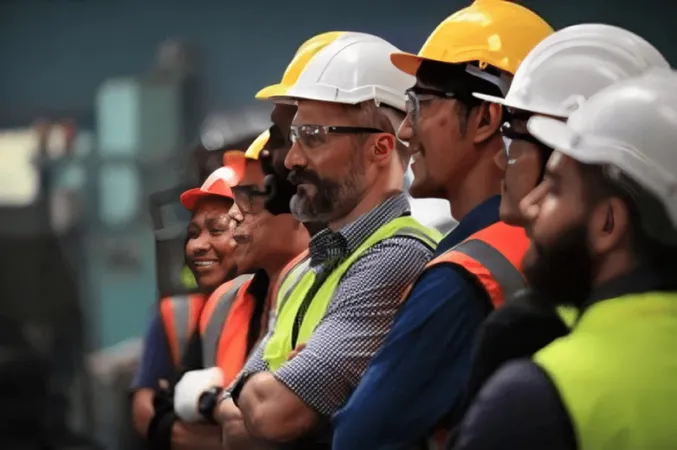
Key Components of the Industrial Skills Test
The industrial skills test (IST) is a detailed check-up. It looks at how well someone fits into industrial and technical jobs. It has several parts that together give employers a full view of a candidate’s skills.
The mechanical reasoning part is a big deal. It tests how well a candidate knows basic mechanical stuff. It also checks their skill in solving problems with their hands.
Then, there’s the spatial visualization test. This part sees if someone can picture objects in their mind. It’s key for jobs that need understanding technical drawings or complex systems.
The technical comprehension part tests how well a candidate gets science and engineering ideas. It looks at their skill in applying this knowledge to real situations. It also checks their problem-solving skills in tech areas.
Lastly, the IST has a hands-on practical skills evaluation. This part looks at how well someone can do specific tasks. It checks their use of tools and their hand skills. It shows if they’re ready for the physical parts of industrial jobs.
With these main parts, the industrial skills test (IST) gives employers a full view of a candidate’s skills. This helps in picking the right people for industrial and technical jobs.
| Key Components of the Industrial Skills Test (IST) | Purpose |
|---|---|
| Mechanical Reasoning | Assess understanding of mechanical principles and ability to solve practical, hands-on problems |
| Spatial Visualization | Evaluate capacity to mentally manipulate and interpret two- and three-dimensional objects |
| Technical Comprehension | Measure understanding of scientific and engineering concepts, and ability to apply technical knowledge |
| Hands-on Practical Skills Evaluation | Assess manual dexterity, craftsmanship, and readiness for the physical demands of industrial roles |

IST: Pros and Cons
- +IST exam preparation strengthens your knowledge across all domains
- +Passing the exam proves competency to employers and clients
- +Study materials and practice tests are widely available
- +Exam-based credentials are portable across states and employers
- +Clear exam objectives help focus your study plan effectively
- −Exam anxiety can affect performance — practice tests help reduce it
- −Registration fees are non-refundable if you miss your test date
- −Limited retake opportunities may apply with waiting periods
- −Exam content updates periodically — use current study materials
- −Testing center availability may require advance scheduling
Sample IST - Industrial Skills Test Practice Questions
Try these questions from our free IST - Industrial Skills Test practice tests. The correct answer and an explanation follow each question.
What does the acronym 'PPE' stand for in an industrial workplace?
- A. Personal Protective Equipment
- B. Preventive Plant Evaluation
- C. Primary Process Efficiency
- D. Plant Protection Equipment
Answer: A. Personal Protective Equipment
PPE stands for Personal Protective Equipment, which includes items like gloves, helmets, and safety glasses.
What is the correct sequence for a basic problem-solving process in an industrial setting?
- A. Fix → Identify → Analyze → Verify
- B. Identify → Analyze → Fix → Verify
- C. Analyze → Identify → Verify → Fix
- D. Verify → Fix → Identify → Analyze
Answer: B. Identify → Analyze → Fix → Verify
The standard problem-solving sequence is: Identify the problem, Analyze root causes, Fix the issue, then Verify the fix worked.
What is the purpose of a control chart in industrial quality control?
- A. To set production quotas for each shift
- B. To monitor process variation over time and detect trends
- C. To schedule preventive maintenance activities
- D. To track inventory levels of raw materials
Answer: B. To monitor process variation over time and detect trends
Control charts display process data over time, helping identify trends, shifts, or out-of-control conditions before defects occur.
According to the passage, what is the primary function of a conveyor belt in an industrial setting?
- A. To increase employee productivity
- B. To transport materials from one location to another
- C. To reduce the need for manual labor
- D. To improve safety standards
Answer: B. To transport materials from one location to another
Conveyor belts are fundamental components in industrial settings, designed specifically for the efficient and continuous movement of goods, products, or raw materials. Their primary role is to automate the transportation process, moving items along a fixed path within a facility. This function streamlines operations and reduces the need for manual carrying.
IST Questions and Answers

Sources & last verified
- Pacific Gas and Electric Company — number of questions, time limit, eligibility, other (official source). “This 36-item test measures the understanding of basic physical and mechanical concepts.” Verified Oct 29, 2026 · source checked Oct 26, 2026.
- Pacific Gas and Electric Company — retake policy, delivery, testing window (official source). “The second attempt must be no earlier than 90 calendar days after the first attempt.” Verified Oct 27, 2026 · source checked Oct 26, 2026.
How we verify: editorial & fact-checking policy. Report an error: contact us.
How this page was made: written with AI tools and published by Nathan Beja, founder of Practice Test Geeks, who is responsible for its content. Exam facts are checked against the official sources listed below. Not reviewed by a subject-matter expert. Editorial policy
Sources & references
Exam facts on this page (fees, format, dates, passing scores) are checked against these official sources; the date is our last check. Editorial policy
- pge.com — Eligibility, exam format, time limit, test delivery, retake policy, test dates · verified Oct 2026