
Do I Have to Sign in Front of a Notary? Complete Guide for Indiana 2026 October
Do I have to sign in front of a notary? ✅ Learn Indiana's rules, when personal appearance is required, and what happens if you sign beforehand.

Do I have to sign in front of a notary? This is one of the most common questions people ask when they encounter a document that requires notarization. The short answer is: yes, in nearly all circumstances, you must sign the document in the physical presence of the notary public at the time of notarization. Indiana law, like most states, requires that the signer personally appear before the notary, sign or acknowledge the signature, and prove their identity — all during the same notarial act. Skipping any of these steps can render the notarization legally invalid.
Many people assume they can sign a document ahead of time and simply show up to get a notary stamp. This is a widespread misconception that causes unnecessary headaches, delays, and even legal complications. When a notary public certifies a document, they are certifying far more than just the existence of a signature — they are certifying that the signer appeared before them, that the signer was identified, that the signer appeared to be of sound mind, and that the act was performed freely and voluntarily without coercion.
Indiana's notary laws are codified under Indiana Code Title 33, Article 42, and they are explicit about the requirement for personal appearance. Whether you are signing a deed, a power of attorney, an affidavit, or any other notarized instrument, Indiana law mandates that the principal signer physically appear before the notary at the time the notarial act is performed. Remote online notarization is the one notable exception, which Indiana now permits under specific conditions and with approved platforms.
Understanding when and why you must sign in front of notary is essential knowledge not only for signers but also for notaries themselves. A notary who performs a notarial act without the signer's personal appearance is committing notarial misconduct, which can result in commission revocation, civil liability, and even criminal penalties in egregious cases. The integrity of the notarial system depends entirely on the notary's firsthand verification that the right person signed the right document at the right time.
There are nuances worth understanding. For an acknowledgment — the most common notarial act — the signer does not necessarily have to sign the document in front of the notary if they have already signed it, as long as they appear before the notary and acknowledge that they did in fact sign it. This is a technical but important distinction. For a jurat, however, the signer must physically sign the document in the notary's presence because the notary is certifying that the oath or affirmation was administered before the signature was affixed.
The distinction between an acknowledgment and a jurat matters enormously in practice. Acknowledgments are used for real estate documents, contracts, and powers of attorney. Jurats are used for affidavits, depositions, and sworn statements. Knowing which type of notarization your document requires will tell you exactly what you need to do when you appear before a notary. If you walk in with a pre-signed document for a jurat, the notary cannot legally complete the notarization — you will need to sign a fresh copy in their presence.
This guide will walk you through everything you need to know about signing requirements, personal appearance rules, the difference between acknowledgments and jurats, what remote online notarization means for Indiana residents, and how to avoid the most common mistakes signers make. Whether you are a first-time signer or a notary public preparing for the Indiana notary exam, mastering this topic is fundamental to understanding the notarial process.
Indiana Notary Signing Requirements by the Numbers

Indiana Personal Appearance Requirements for Notarization
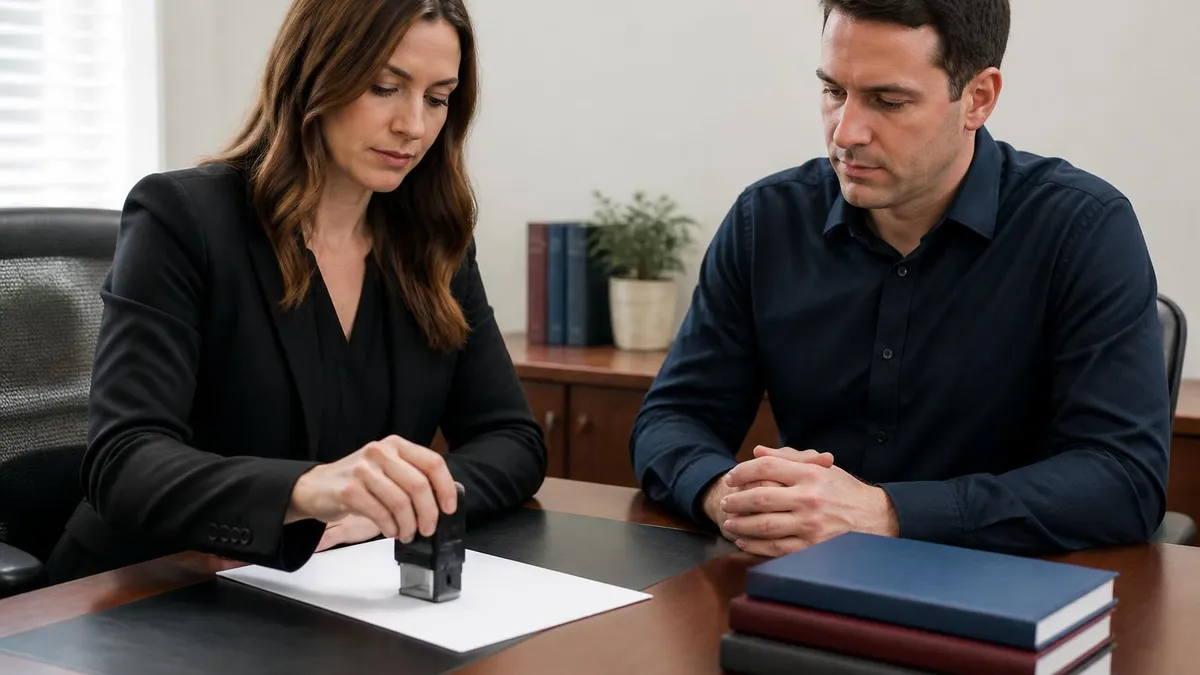
Indiana law requires the signer to be in the same physical location as the notary. The notary must be able to see, hear, and interact with the signer directly. This means appearing in the same room, not via phone or video call for traditional notarizations.
The signer must present satisfactory evidence of identity during the notarial act. Acceptable forms include a state-issued driver's license, U.S. passport, or other government-issued photo ID. Expired IDs are generally not acceptable under Indiana notary standards.
The notary must observe that the signer appears to be of sound mind, understands the nature of the document, and is acting voluntarily. If a signer appears confused, coerced, or incapacitated, the notary must refuse to proceed — regardless of any prior arrangements.
Indiana notaries are required to maintain a journal of notarial acts. The entry must be made at the time of the act, recording the date, type of notarization, document description, signer's name, and how identity was verified. Pre-signing complicates accurate journaling.
The notary completes and signs the notarial certificate only after the signer has appeared and the act has been performed. Pre-completing a notarial certificate before the signer appears is a form of notarial misconduct that can invalidate the document and expose the notary to penalties.
Understanding the difference between an acknowledgment and a jurat is the most important distinction when answering whether you have to sign in front of a notary. These two notarial acts have different signing requirements, and confusing them is a very common mistake. An acknowledgment is a notarial act in which a signer appears before the notary and declares — or acknowledges — that they signed a document. The key feature of an acknowledgment is that the signing may have happened before the notarial act itself, as long as the signer appears and confirms the signature is theirs.
When you bring a pre-signed document to a notary for an acknowledgment, the notary will ask you to confirm the signature on the document is yours and that you signed it voluntarily. You are essentially saying, under penalty of perjury in some contexts, that the signature already on the document belongs to you and was made of your own free will. The notary then completes the acknowledgment certificate, stamps and signs it, and the document is notarized. Real estate deeds, power of attorney forms, and grant deeds are examples of documents commonly notarized by acknowledgment.
A jurat is fundamentally different. With a jurat, the notary administers an oath or affirmation to the signer, and the signer then signs the document in the notary's presence. The jurat certificate says something to the effect of: subscribed and sworn before me on this date.
Because the notary is certifying that the oath was administered before the signature, the signing must occur at the moment of the notarial act — not before. If a signer hands a notary a pre-signed affidavit and asks for a jurat, the notary must refuse and ask the signer to sign a fresh copy of the document after the oath is administered.
Affidavits, depositions, sworn statements, and certain court documents require jurats. If you are unsure which type of notarization your document requires, the best approach is to read the notarial certificate language already printed on the document. If it includes words like subscribed and sworn or affirmed before me, it requires a jurat. If it includes words like acknowledged before me or personally appeared and acknowledged, it is an acknowledgment. When in doubt, ask the requesting institution or the notary themselves.
Indiana notaries must be proficient in distinguishing between these two acts and using the correct certificate wording for each. A notary who performs a jurat when the document requires an acknowledgment — or vice versa — has committed a notarial error that may need to be corrected with a corrective affidavit or by re-doing the notarization. Some institutions, such as banks and mortgage lenders, are particularly strict about certificate wording and will reject documents that use the wrong notarial language.
Beyond acknowledgments and jurats, Indiana notaries can also perform oaths and affirmations without signatures, copy certifications, and signature witnessing. Each of these acts has its own specific requirements under Indiana law. Copy certifications require the notary to compare the copy to the original document and certify that it is a true and correct copy. Signature witnessing requires the signer to sign in the notary's presence, similar to a jurat but without an oath. Understanding all these variations is essential preparation for the Indiana notary exam and for professional notary practice.
One additional nuance to understand is the difference between a subscribing witness and a credible witness. A subscribing witness is someone who watches the principal signer sign a document and then appears before the notary to verify that fact. A credible witness is someone who personally knows the principal signer and vouches for their identity when the signer cannot produce a satisfactory identification document. Indiana's notary law allows credible witnesses in limited circumstances, but it does not eliminate the requirement for the principal signer to personally appear before the notary in most standard notarization scenarios.
When You Can Sign Beforehand vs. When You Cannot
For an acknowledgment, you may sign the document before appearing before the notary — but you must still appear in person to acknowledge the signature as your own. The notary will ask you to confirm the signature, verify your identity, and complete the acknowledgment certificate at that time. Real estate deeds, contracts, and powers of attorney are typically notarized by acknowledgment, making pre-signing technically acceptable for these documents.
However, many notaries prefer that signers sign in their presence even for acknowledgments, as it reduces confusion and ensures a cleaner notarial record. If you have already signed a document and arrive at the notary's office, simply inform the notary that you signed it beforehand. The notary will confirm your identity, ask you to acknowledge the signature, and proceed with the notarial certificate. Never try to re-sign over an existing signature or leave blank lines unsigned until the appointment.

Signing in Front of a Notary: Benefits and Limitations
- +Provides legally valid proof that the signer personally appeared and acknowledged the document
- +Protects signers from fraud by requiring identity verification at the time of signing
- +Ensures the notary can observe that the signer is acting freely without coercion or duress
- +Creates a contemporaneous journal record that can serve as evidence in legal disputes
- +Satisfies requirements for recordable real estate documents, court filings, and federal forms
- +Allows the notary to refuse a visibly confused or incapacitated signer, protecting vulnerable individuals
- −Requires scheduling an in-person appointment which can be inconvenient and time-consuming
- −May require travel to a notary's office, bank, or courthouse during business hours
- −Pre-signed documents may need to be re-done for jurats, causing delays
- −Notary fees apply for each notarial act, adding cost to document processing
- −Remote signers in different states or countries face logistical challenges coordinating notarization
- −Some documents require multiple signers to all appear simultaneously, complicating scheduling
Pros and Cons at a Glance
| Pros | Cons |
|---|---|
| Provides legally valid proof that the signer personally appeared and acknowledged the document | Requires scheduling an in-person appointment which can be inconvenient and time-consuming |
| Protects signers from fraud by requiring identity verification at the time of signing | May require travel to a notary's office, bank, or courthouse during business hours |
| Ensures the notary can observe that the signer is acting freely without coercion or duress | Pre-signed documents may need to be re-done for jurats, causing delays |
| Creates a contemporaneous journal record that can serve as evidence in legal disputes | Notary fees apply for each notarial act, adding cost to document processing |
| Satisfies requirements for recordable real estate documents, court filings, and federal forms | Remote signers in different states or countries face logistical challenges coordinating notarization |
| Allows the notary to refuse a visibly confused or incapacitated signer, protecting vulnerable individuals | Some documents require multiple signers to all appear simultaneously, complicating scheduling |
Notarization Checklist: What to Bring and Do at Your Appointment
- ✓Bring a valid, unexpired government-issued photo ID such as a driver's license or U.S. passport.
- ✓Know whether your document requires an acknowledgment or a jurat before your appointment.
- ✓For jurats, bring an unsigned copy of the document — do not sign it ahead of time.
- ✓For acknowledgments, you may pre-sign but be ready to acknowledge the signature verbally.
- ✓Bring the complete, fully filled-out document — notaries do not notarize blank or incomplete forms.
- ✓Arrive at the appointment ready to present yourself and answer identity verification questions.
- ✓Do not bring a document that someone else has signed for you — notaries must verify the signer's identity.
- ✓If signing on behalf of a company or trust, bring authorizing documentation such as corporate resolution.
- ✓Do not alter or correct the document after the notarization has been completed.
- ✓Keep a copy of the notarized document for your own records in case the original is lost or disputed.
The Golden Rule: Acknowledgment vs. Jurat
For an acknowledgment, pre-signing is allowed — you still must appear before the notary and verbally confirm the signature is yours. For a jurat, you must sign in the notary's presence after taking an oath or affirmation. When in doubt, bring an unsigned copy to your notary appointment and let the notary guide you through the correct procedure.
Remote online notarization has transformed the landscape of notarial practice in Indiana, and it is worth understanding in detail how the personal appearance requirement applies in this context. Indiana enacted its RON law in 2019, making it one of the earlier states to formally authorize this practice. Under Indiana's framework, an approved remote online notary can perform notarial acts using two-way audio-visual communication technology, provided that both the notary and the signer can see and hear each other in real time throughout the entire session.
The personal appearance requirement is not waived under RON — it is simply satisfied through technology. Indiana law specifies that an individual may appear before a notary public by means of communication technology for the purposes of a remote notarial act. This means the signer must be present on screen, must respond to identity verification challenges, and must sign the document using the platform's electronic signature tools during the live session. The notary must be satisfied with the signer's identity before completing the notarial certificate.
Identity verification for RON in Indiana requires the use of either knowledge-based authentication (KBA) or credential analysis, or a combination of both. KBA involves asking the signer a series of questions about their personal history drawn from public records — the kind of questions only the real person would be likely to answer correctly. Credential analysis involves the RON platform scanning and verifying the signer's government-issued ID using optical character recognition and anti-fraud detection technology. Both methods must meet standards established by the Indiana Secretary of State.
Indiana RON notaries must use an approved technology platform that has been vetted for compliance with state requirements. These platforms create a complete electronic record of each session, including a video recording of the audio-visual communication, an electronic copy of the signed document, and an electronic journal entry. These records must be retained for a specified period — generally ten years — and must be accessible to the Secretary of State upon request. The electronic notarial certificate must include the notary's electronic seal and digital signature.
One practical limitation of RON in Indiana is that not all documents can be electronically notarized for recording purposes. While Indiana's RON law broadly permits electronic notarization, individual county recorders and accepting institutions may have their own requirements or limitations regarding electronic documents. Before relying on RON for a high-stakes document like a real estate deed, it is advisable to confirm with the county recorder and any involved title company or lender that they will accept an electronically notarized document.
For Indiana notary exam candidates, RON is increasingly tested as part of the exam curriculum. Understanding the technical requirements, the identity verification standards, the required records, and the limitations of RON is important for passing the exam and for competent professional practice. The Secretary of State's office provides guidance on RON requirements, and several approved RON platforms offer training materials for notaries who wish to add remote notarization to their practice.
It is also worth noting that RON performed in Indiana is governed by Indiana law, even if the signer is located in another state. Conversely, if an Indiana resident needs a document notarized by a notary in another state, the laws of that notary's state will govern the notarial act. Interstate document acceptance can become complicated, particularly for real estate transactions involving property in one state where the signer is in another. Consulting with a real estate attorney or title professional can help navigate these scenarios effectively.

Asking a notary to pre-complete a notarial certificate, backdate an acknowledgment, or notarize a document without the signer's actual appearance is a request for notarial fraud. A notary who complies may face commission revocation, civil liability, and criminal charges. Signers who knowingly participate in such fraud may face charges of fraud or forgery under Indiana law. Always insist on a properly conducted notarial act — there are no legitimate shortcuts.
The consequences of improper signing — or improper notarization — can be severe, both for the signer and for the notary public. Understanding what can go wrong is just as important as knowing the correct procedure. A document that was notarized without the signer's proper appearance is legally voidable, meaning it may be challenged and set aside by a court if the defective notarization is discovered. For high-stakes documents like real estate deeds or powers of attorney, this can have catastrophic consequences, including clouded title, voided property transfers, and financial losses that take years and significant legal expense to untangle.
From the notary's perspective, performing a notarial act without proper personal appearance — sometimes called a drive-by notarization or a loose certificate notarization — is a serious violation of Indiana's notary law. A notary who completes a certificate without the signer appearing in person, or who allows a third party to present another person's document and signs it on their behalf, is committing notarial misconduct. Indiana's Secretary of State has the authority to revoke, suspend, or refuse to renew the commission of a notary who engages in misconduct.
In addition to administrative consequences, a notary who performs improper notarizations may face civil liability. If a client suffers financial harm because a defective notarization caused a document to be invalidated or a fraud to go undetected, the notary may be sued for damages. This is precisely why Indiana requires notaries to obtain a $5,000 surety bond — to provide a source of compensation for parties injured by notarial misconduct. However, this bond covers the public, not the notary; a notary who causes losses may ultimately be required to reimburse the bond company through indemnification.
Criminal liability is also possible in extreme cases. A notary who knowingly participates in a scheme to defraud — for instance, notarizing a forged signature on a deed transfer or helping to falsify a sworn statement — may be charged with fraud, forgery, or accessory to fraud under Indiana criminal statutes. These are serious felony charges that can result in imprisonment and permanent loss of the ability to serve as a notary public. The notarial seal is a symbol of public trust, and its misuse is treated with corresponding seriousness by law enforcement and the courts.
For signers, presenting a forged signature for notarization or misrepresenting one's identity to a notary is also a criminal act. Indiana law makes it a crime to make a false statement to a notary or to use a false identity for the purpose of obtaining a notarization. Submitting a fraudulently notarized document to a government agency, court, or financial institution compounds the criminal exposure. These statutes exist because notarized documents are given improved legal status — they are presumed to be authentic and properly executed, which makes fraudulent notarizations a particularly powerful tool for wrongdoers.
From a practical standpoint, the most common consequence of improper signing that ordinary people encounter is simply a rejected document. Banks, title companies, government agencies, and courts routinely scrutinize notarial certificates. A certificate that was completed before the signer appeared, that is missing required information, or that uses incorrect certificate language will be rejected. This means delays, additional fees for a corrected notarization, and sometimes missed deadlines. For real estate closings, loan signings, or court filing deadlines, a rejected notarization can have significant financial and legal repercussions.
Staying informed about Indiana notary requirements is the best defense against these problems. Whether you are a signer who needs a document notarized or a notary public serving the public, understanding the rules around personal appearance, certificate completion, and the differences between notarial acts will help you avoid errors and protect yourself legally. Resources like the Indiana Secretary of State's notary handbook, continuing education courses, and practice exams are invaluable for staying current on best practices and legal requirements.
Preparing for your notary appointment — whether as a signer or as a notary candidate studying for the Indiana exam — requires attention to practical details that are easy to overlook. One of the most valuable things any signer can do before their appointment is read the notarial certificate language already printed on their document.
This one step tells you everything you need to know: whether you need to pre-sign or not, what the notary will be certifying, and whether the certificate is already completed (a red flag) or blank (the correct state for the document to be in when you arrive).
For notary exam candidates, the personal appearance and signing requirements are among the most heavily tested topics. Indiana's notary exam covers the differences between acknowledgments, jurats, oaths, affirmations, copy certifications, and signature witnessing. You should be able to identify the correct notarial act from a document description, know what certificate language corresponds to each act, and understand the specific signing requirements for each. Practice tests are one of the most effective ways to solidify this knowledge, because they force you to apply rules to realistic scenarios rather than simply memorizing definitions.
When preparing documents for notarization, organization matters. Bring your complete, fully executed document — meaning all pages are present, all blanks are filled in (except where the notary completes information), and no alterations have been made with correction fluid or illegible cross-outs. Notaries are permitted to refuse to notarize documents that appear altered, incomplete, or suspicious. Presenting a clean, complete document makes the notary's job easier and reduces the chance of refusal or delay.
If you are a notary public, developing a consistent pre-appointment checklist for your clients is excellent practice. Informing signers in advance about what ID to bring, whether to pre-sign, and what to expect during the appointment reduces errors and makes sessions more efficient. Many professional notaries provide a brief intake form that collects the document type, the notarial act required, and the signer's contact information before the appointment. This allows the notary to prepare the correct certificate wording and journal entry format in advance.
For mobile notaries — a growing segment of Indiana's notary profession — managing client expectations about signing requirements is particularly important. Mobile notaries often serve clients at home, at hospitals, or at care facilities, where signers may be elderly, ill, or legally represented by family members acting under power of attorney. In these settings, the notary must be especially vigilant about confirming that the signer has the legal capacity to sign and is acting voluntarily. If the signer cannot communicate clearly, the notary must decline to proceed and recommend that the client consult an attorney about alternatives.
Indiana notaries renew their commissions every four years, and the renewal process is an excellent opportunity to refresh knowledge about current requirements, including any legislative changes to signing rules, RON procedures, or fee schedules. The Indiana Secretary of State's website publishes updates to notary law, and professional organizations like the National Notary Association offer continuing education resources specifically for Indiana notaries. Staying current is not just a professional obligation — it is a practical safeguard against inadvertently performing notarizations that no longer comply with current law.
Finally, when in doubt about any aspect of a notarization — whether a signer's identity is satisfactory, whether a document is complete, whether a particular act is authorized — the safest course of action is always to decline and refer the signer to a qualified attorney or to contact the Secretary of State's office for guidance. A refusal to notarize protects both the notary and the public. The notary's role is not to help every transaction but to serve as an impartial witness who applies the law correctly and maintains the integrity of the notarial process.
Sample IN Notary - Indiana Notary Exam Practice Questions
Try these questions from our free IN Notary - Indiana Notary Exam practice tests. The correct answer and an explanation follow each question.
A signer communicates only through sign language, using an interpreter. May an Indiana notary proceed with the notarization?
- A. No, the signer must be able to communicate directly with the notary without assistance
- B. Yes, as long as the notary can communicate with the signer through the interpreter and verify understanding and willingness
- C. No, sign language interpreters are not recognized under Indiana notary law
- D. Yes, but the interpreter must also be notarized
Answer: B. Yes, as long as the notary can communicate with the signer through the interpreter and verify understanding and willingness
Indiana notaries may proceed when a signer uses a sign language interpreter, as long as the notary can effectively communicate with the signer and verify their understanding and willingness.
A signer with a cognitive disability is accompanied by a caregiver who reads the document to them. The signer indicates they understand and want to sign. May the Indiana notary proceed?
- A. No, cognitive disabilities always prevent valid document execution
- B. Yes, if the notary can reasonably determine the signer understands the nature of the document and is signing voluntarily
- C. No, a power of attorney must be used for signers with cognitive disabilities
- D. Yes, but the caregiver must also sign as a guarantor
Answer: B. Yes, if the notary can reasonably determine the signer understands the nature of the document and is signing voluntarily
Having a cognitive disability does not automatically disqualify a person from signing documents. If the notary can reasonably determine the signer understands and consents, they may proceed.
A repeat client pressures an Indiana notary, saying 'You've always done this for me before — just sign it without making me appear in person.' What must the notary do?
- A. Accommodate the trusted client as a professional courtesy since identity is already established
- B. Require the client to appear in person, regardless of past interactions or client pressure
- C. Allow an exception if the client provides a copy of their ID via email instead
- D. Ask a colleague to vouch for the client's identity in lieu of personal appearance
Answer: B. Require the client to appear in person, regardless of past interactions or client pressure
Indiana law requires the signer to personally appear before the notary at the time of notarization. This requirement exists to verify identity, assess willingness, and detect incapacity — none of which can be done remotely. Prior dealings do not create an exception.
A client presents a power of attorney document to an Indiana notary and asks, "Can you please explain what rights I am giving away with this document before I sign it?" Which of the following is the most professionally responsible response from the notary?
- A. "I am prohibited from providing legal advice or explaining the document. I can only notarize your signature if you are signing willingly."
- B. "This document allows your agent to handle all your financial affairs. Are you sure you want to proceed?"
- C. "Let me read it over quickly to summarize the main points for you."
- D. "You should rephrase section three to better protect your interests."
Answer: A. "I am prohibited from providing legal advice or explaining the document. I can only notarize your signature if you are signing willingly."
A notary public who is not a licensed attorney is strictly prohibited from engaging in the unauthorized practice of law. Explaining the legal effects of a document, offering opinions, or giving advice on its content constitutes the practice of law. The notary's role is to verify identity, witness the signing, and complete the notarial certificate.
IN Notary Questions and Answers

Notary Public Fees by State: How Much Does a Notary Public Charge in California and Beyond

Notary Public Application by State: Complete Guide 2026

INBiz IN Gov Notary: Your Complete Guide to Indiana's Notary Portal

IN Notary Practice Test PDF (Free Printable 2026)
How to Become a Notary in Massachusetts
About the Author

Educational Psychologist & Academic Test Preparation Expert
Columbia University Teachers CollegeDr. Lisa Patel holds a Doctorate in Education from Columbia University Teachers College and has spent 17 years researching standardized test design and academic assessment. She has developed preparation programs for SAT, ACT, GRE, LSAT, UCAT, and numerous professional licensing exams, helping students of all backgrounds achieve their target scores.