
HVAC Tools: Complete Equipment Guide for Technicians 2026 September
A complete guide to essential HVAC tools: 🗨️ refrigerant gauges, vacuum pumps, multimeters, leak detectors, and more. Build the right kit from day one.
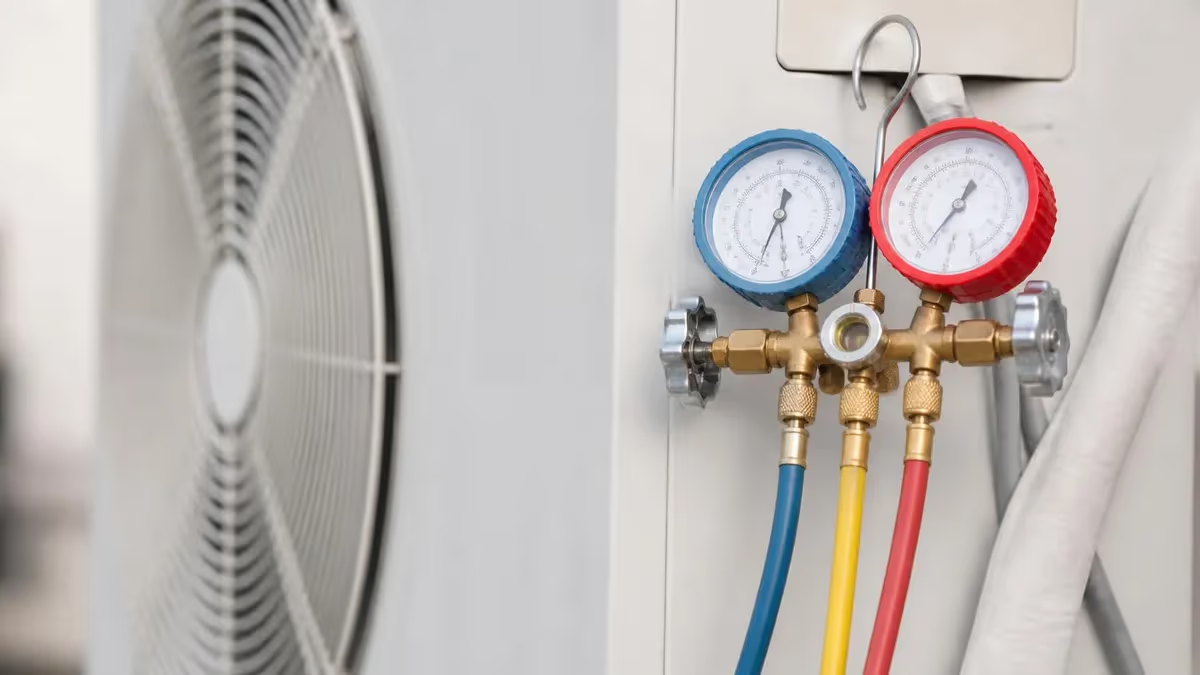
Every HVAC technician lives and dies by the quality of their tools. You can know every refrigerant circuit by heart and still waste an hour on a service call because you're fighting with a cheap manifold gauge that won't hold vacuum. The right hvac tools don't just make the job easier — they make it possible to do it safely, accurately, and without creating new problems while fixing the original one.
HVAC work is unusually broad as trades go. On any given day you might be brazing copper line sets, measuring airflow with an anemometer, diagnosing a bad capacitor with a multimeter, and pulling a system into deep vacuum before charging with refrigerant. That breadth means you'll carry a wider variety of tools than most tradespeople. It also means you can't afford gaps in your kit — showing up to a no-cooling call without a clamp meter is like showing up to a plumbing job without a wrench.
This guide covers the full range of essential HVAC tools organized by category: hand tools, refrigerant handling equipment, electrical and diagnostic instruments, and safety gear. Within each category, we'll identify what to prioritize when buying, what separates quality tools from cheap substitutes, and how a working technician actually uses these items in the field. Whether you're equipping yourself for an hvac tools apprenticeship or building out a fully stocked service truck after years in the industry, you'll find actionable guidance for every stage of your career.
One thing worth saying upfront: buy the best tool you can afford in categories that affect measurement accuracy and safety. A cheap screwdriver is fine. A cheap manifold gauge that reads pressures incorrectly will cause you to overcharge systems, which destroys compressors and generates expensive callbacks. The financial logic almost always favors quality in the tools that touch refrigerant and electricity. For everything else, mid-tier tools from reputable manufacturers usually offer the right balance of durability and cost.
Tool organization matters as much as tool selection once your kit grows. A disorganized van means you're hunting for the torque wrench while a customer watches. Most experienced technicians use a dedicated tool bag or cart system with consistent placement for every item — flaring tools always in the same pouch, micron gauge always clipped to the same hook.
HVAC Tool Budget Guide
That discipline looks professional and saves real time across a full week of service calls. Start building that organization habit from your first day with your first set of hand tools, and it becomes second nature before your kit is fully assembled.
Budgeting for your tool kit requires a longer view than most new technicians take. If you buy a $120 manifold gauge set instead of a $500 digital analyzer, you save $380 now. But if you spend 10 extra minutes per charging job calculating superheat by hand, that $380 is gone after roughly 25 jobs — not counting the charging errors that lead to warranty claims. The ROI on quality measurement tools is real and fast. Build a prioritized list, buy the highest-impact items first, and add specialty tools over your first two years as different job types come up.
The tools you carry also signal your professional level to customers and employers. A technician who pulls out a Bluetooth digital manifold and a calibrated micron gauge looks fundamentally different from one working with a basic analog set and no vacuum measurement beyond the pump's scale. That impression matters during customer interactions and during job interviews at shops that pay better rates. Your tool kit is a visible representation of your standards and your commitment to doing the work correctly.
Renting specialized tools you use rarely is a legitimate strategy for keeping startup costs manageable. Recovery machines, large vacuum pumps for commercial systems, and refrigerant analyzers for less common refrigerant types can all be rented from HVAC supply houses on a per-job basis. As those job types become regular parts of your workload, that's when purchasing makes financial sense. The rental option lets you do the work professionally without buying equipment that might sit unused for months between specific commercial or industrial calls.
Insurance coverage for your tool kit is worth the premium. High-hvac company local seo services tools represent $2,000–$6,000 or more for a fully equipped service technician, and standard auto policies typically don't cover tools stolen from a work vehicle. Dedicated inland marine insurance for tools and equipment is relatively inexpensive and covers theft, accidental damage, and loss whether the tools are in your van, on a job site, or in temporary storage. Don't wait until after a theft to find out your homeowner's policy doesn't cover commercial tools.
Every new HVAC technician needs these before the first job site: manifold gauge set (digital preferred), refrigerant scale, vacuum pump (2-stage, 6 CFM minimum), digital micron gauge, HVAC-rated multimeter (CAT III 600V), clamp meter, pipe cutter, rotary flaring tool, swage set, tube bender (3/8" and 1/2"), adjustable wrenches, Schrader valve core tool, and nitrogen regulator with gauge. Budget $800–$1,400 for quality versions. In refrigerant handling tools especially, cheap alternatives create safety risks and inaccurate readings.
HVAC Tool Categories
Pipe cutters, flaring tools, swaging tools, tube benders, manifold wrenches, duct knives, and sheet metal snips. These form the mechanical backbone of installation and service work.
Manifold gauge sets, digital manifold analyzers, refrigerant scales, vacuum pumps, recovery machines, and cylinder carts. Required for any system involving refrigerant handling under EPA Section 608.
Digital multimeters, clamp meters, temperature probes, combustion analyzers, CO detectors, anemometers, and psychrometers. These tools turn invisible electrical and airflow problems into numbers you can act on.
Safety glasses, cut-resistant gloves, refrigerant-rated gloves, arc flash PPE, respirators for brazing and soldering, and steel-toe boots. Non-negotiable on every job.
Hand tools are where most technicians start their investment, and with good reason. These are the items you'll reach for every hour of every working day, and their quality shows up directly in the quality of your work. A professional tubing cutter from Ridgid or Imperial Eastman lasts decades with minimal maintenance. A cheap import scores the copper rather than cutting cleanly, leaving internal burrs that break off and contaminate the refrigerant circuit — which then causes a compressor failure three months later. The callback costs ten times what you saved on the cutter.
Flaring tools deserve special attention because misformed flares are one of the leading causes of refrigerant leaks on new installations. A rotary flaring tool — the barrel style that spins while applying pressure — produces a more consistent 45-degree flare than the old hammered yoke-style, particularly in tight spaces and with harder drawn copper tubing. The Imperial Eastman 37FF and Yellow Jacket 60278 are both field-proven models that produce clean flares with less effort. Spend the extra $60–$80 upfront and stop chasing flare-joint leak callbacks six months down the road.
Swaging tools expand tubing to accept a mating tube without requiring a coupling fitting, which reduces potential leak points in a system. A complete set handles 3/8", 1/2", 5/8", and 3/4" copper — the four sizes you'll encounter most on residential and light commercial equipment. Pair your swage set with a tube bender that provides smooth, kink-free bends, and your copper line sets will look like factory work. Kinked tubing restricts refrigerant flow and creates turbulence that degrades system efficiency every hour the equipment runs.
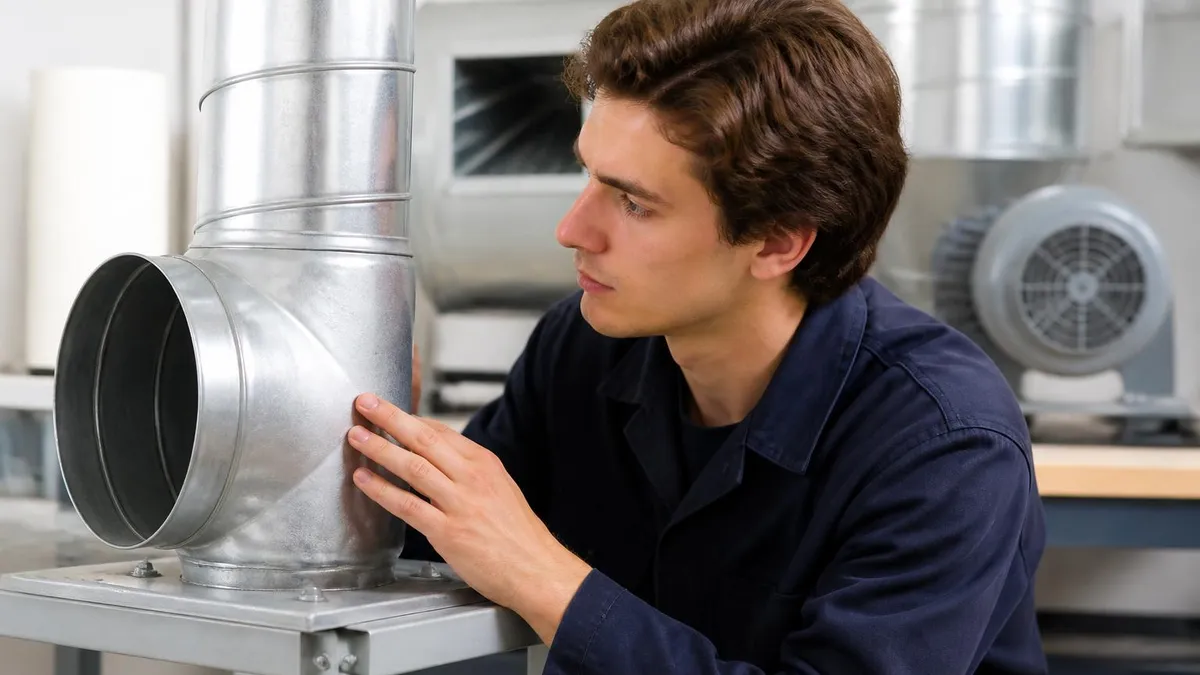
For ductwork installation, compound-action aviation snips in left, right, and straight-cut configurations handle sheet metal without hand fatigue over a long installation day. Good snips from Wiss or Malco cut cleaner and last significantly longer than hardware-store versions. A duct knife with replaceable blades handles flex duct cleanly, and a hex driver with a full assortment of self-tapping sheet metal screws rounds out the duct side of your hand tool kit.
Don't overlook your basic hand tool selection. HVAC equipment uses both SAE and metric fasteners — American-manufactured units tend toward SAE, while imported mini-split components almost always use metric. Carry combination wrench sets in both systems, plus a full set of hex keys (Allen wrenches) and Torx drivers for equipment panels. Stripped fasteners because you grabbed the wrong size are an avoidable frustration that slow down every job they occur on.
Always use dry nitrogen — never oxygen or compressed air — for pressure testing refrigerant systems. Oxygen mixed with compressor oil creates a combustion and explosion hazard under pressure. Compressed air introduces moisture that contaminates the system and accelerates compressor wear. Nitrogen is inert, dry, and the only safe pressure test medium. Use a proper nitrogen regulator with a relief valve rated for your test pressure — never flow unregulated cylinder pressure directly into a system.
Nitrogen pressure testing belongs in the hand tool category because it's a procedural step, not a diagnostic one. A nitrogen regulator with a 0-600 PSI gauge, combined with Schrader valve core tools, lets you charge a completed line set to 150–400 PSI depending on the refrigerant type to find leaks before any refrigerant touches the system.
Never pressure test with oxygen — oxygen reacts with compressor oil to create a combustion risk — and never use standard compressed air because it carries moisture that contaminates the system's interior. Nitrogen is dry, inert, and the only acceptable pressure test medium. This isn't a corner you cut because it adds 20 minutes to an install; the nitrogen test is what stands between a clean system startup and a callback for a preventable leak.
Sheet metal tools deserve a dedicated mention for technicians doing any ductwork. A quality set of hand seamers, a standing seam tool, and a basic brake make duct modifications fast and clean. If you're doing commercial work, add a Pittsburgh seam tool and snap-lock punch to your arsenal. These tools look specialized, but duct leakage is a real system performance issue — poorly fitted ductwork can account for 20–30% energy loss before refrigerant even enters the picture.
Torches and brazing equipment complete the hand tool picture for installation work. An air-acetylene torch with a good tip selection handles most residential copper brazing. For larger commercial fittings, an oxy-acetylene setup provides the higher heat needed for thick-wall copper and steel.
Silver brazing alloy (15% silver minimum) is the standard for refrigerant-grade connections — not plumbing solder, which contains flux that contaminates compressor oil. Always flow nitrogen through the lines while brazing to prevent the copper oxide scale that forms in air and breaks off into the refrigerant circuit. Use a striker, not a lighter, when igniting an open-flame torch — this isn't optional, it's a shop and OSHA safety standard.
Tools by Job Type
Installation work requires the full breadth of your kit, used in a specific sequence. Pipe cutter, flaring tool, swage set, and tube bender handle the refrigerant line set. A drill with step bits and hole saws cuts conduit penetrations and equipment mounts. A torpedo level and chalk line keep line sets and ductwork running straight.
Digital manifold analyzers have replaced analog gauge sets on most new installations because they calculate superheat and subcooling automatically. Models from Yellow Jacket, Fieldpiece, and Testo connect via Bluetooth to smartphone apps, letting you monitor pressures at the air handler without a partner at the condenser. A vacuum pump rated at 6 CFM or higher pulls the system to 500 microns or below before charging. Use a digital micron gauge for accurate depth readings.
HVAC Tool Facts
Refrigerant tools are the most regulated and most consequential part of your kit. Under EPA Section 608, technicians must be certified before purchasing or handling regulated refrigerants, and recovery equipment must meet minimum efficiency standards. A proper recovery machine — not just a set of gauges — is legally required before opening any system. Skipping this step is an EPA violation with significant fines attached, and no single service call is worth that risk to your license and livelihood.
Digital manifold analyzers have largely replaced traditional analog gauge sets in professional use, and for good reason. They store refrigerant profiles for every common type — R-410A, R-32, R-454B, R-22, and dozens more — and calculate superheat and subcooling automatically from your temperature clamps and pressure readings.
They log data to a connected app for documentation, which protects you when a customer questions the charge level you found or left. Yellow Jacket TITAN, Fieldpiece SM480V, and Testo 550i are the most popular among working technicians. If you're still calculating superheat by hand from an analog gauge, you're spending several minutes per charging job that you don't need to, and you're introducing calculation error at the same time.
A refrigerant scale that reads to 0.1 oz accuracy is non-negotiable for precise charging. Mini-split and heat pump manufacturers specify refrigerant charge in ounces for a given lineset length, and being off by even a pound reduces measured efficiency and accelerates compressor wear over thousands of run hours. The Robinair TIF9010A and Yellow Jacket 68802 are both field-proven scales that maintain calibration over years of daily use. Weigh the refrigerant going in, not just the cylinder weight — you need to know exactly what entered the system, not how much was in the cylinder when you started.
Building your hvac tools knowledge alongside your technical training creates a compounding advantage. The instruments you learn to operate in hvac tools programs are the same ones you'll carry for the length of your career, and understanding what the readings actually mean — not just how to take them — is what separates fast, accurate diagnosticians from technicians who guess and recheck. Your EPA 608 exam and your state hvac tools licensing assessments both involve instrument competency questions, so treat your tool training as exam preparation and field preparation simultaneously.

EPA Section 608 requires certification before purchasing refrigerants above 2 lbs or opening any refrigerant system. Using a recovery machine that doesn't meet minimum recovery efficiency standards is a federal violation. A2L refrigerants (R-32, R-454B) require equipment specifically rated for mildly flammable refrigerants — not all existing recovery machines qualify. Check your equipment ratings before servicing newer systems using these lower-GWP alternatives.
Electrical tools are where many newer technicians underinvest, and it shows. A $25 hardware-store multimeter typically lacks the surge protection, input protection fuse, and measurement accuracy that HVAC work demands. Fluke, Klein, and UEI all make meters in the $80–$150 range that are genuinely rated for field conditions. The Fluke 117 and Klein MM400 are the most common in HVAC vans — both provide True RMS measurement, which matters when you're reading waveforms from variable-speed compressors and inverter-driven motors. These non-sinusoidal signals read incorrectly on a basic average-responding meter, potentially causing you to pass equipment that's actually drawing abnormal amperage.
Safety tools complete the picture and are non-negotiable in ways that hand tools and diagnostic instruments aren't. Refrigerant burns skin at temperatures below -40°F. Arc flash from a 240V compressor circuit can cause severe injury faster than a circuit breaker can respond. Cut-resistant gloves for sheet metal work, cryogenic gloves for refrigerant cylinders, safety glasses on every job, and steel-toe boots that meet ASTM standards protect you from the real hazards of the trade. The technicians who skip these aren't tougher or faster — they're just accumulating risk that eventually collects its debt.
Maintenance of your tools matters as much as the initial purchase. Vacuum pump oil goes milky and loses its ability to achieve low micron levels after heavy use or moisture exposure — change it after every 20 hours of pumping, and always after recovering refrigerant into the system. Calibrate your digital scale annually against a known weight. Keep flaring tool rollers clean and lightly oiled. A well-maintained $300 vacuum pump outperforms a neglected $600 one every time, and the discipline of caring for your tools reflects the same discipline that keeps HVAC systems running reliably.
As refrigerants continue transitioning — R-410A is being phased down in favor of lower-GWP alternatives like R-32 and R-454B — your tools need to keep pace. Some manifold gauges require firmware updates or new hose sets to handle the higher operating pressures of next-generation refrigerants. Recovery machines certified for A2L flammable refrigerants are now increasingly necessary as R-32 and R-454B systems enter the installed base. Staying current with your tool kit isn't a one-time event; it's an ongoing commitment that parallels the refrigerant and equipment changes the industry continues to undergo.
Keeping calibration records for your measurement instruments is a practice that separates professional technicians from those who just own the tools. A manifold gauge that's drifted 5 PSI from accurate is worse than useless — it's actively misleading you on every service call. Most digital manifold manufacturers offer annual calibration services, and some HVAC supply houses provide on-site calibration checks. Log your calibration dates in a simple spreadsheet and set a reminder every 12 months. The cost is small relative to the accuracy you're depending on for every charging and diagnostic decision you make throughout the year.
Essential HVAC Tool Checklist
- ✓Digital manifold gauge set (Bluetooth, 4-valve)
- ✓2-stage vacuum pump, 6 CFM minimum
- ✓Digital micron gauge
- ✓Refrigerant recovery machine
- ✓Refrigerant scale (0.1 oz accuracy)
- ✓Digital multimeter CAT III 600V (Fluke 117 or Klein MM400)
- ✓Clamp meter 600A AC/DC
- ✓Rotary flaring tool (3/8" to 3/4")
- ✓Swaging tool set
- ✓3/8" and 1/2" tube benders
- ✓Tubing cutter, mini and standard
- ✓Nitrogen regulator with 0-600 PSI gauge
- ✓Electronic refrigerant leak detector (infrared preferred)
- ✓UV leak detection kit with UV light
- ✓Anemometer for airflow measurement
- ✓Safety glasses, cut-resistant gloves, steel-toe boots
Quality Tools vs. Budget Tools
- +Accurate readings — especially critical for manifold gauges and multimeters where errors cause equipment damage
- +Longer service life; quality HVAC tools routinely outlast a 20-year career with normal maintenance
- +Manufacturer support, calibration services, and replacement parts for all major brands
- +Fewer callbacks caused by tool-related errors on installation and refrigerant charging jobs
- +Professional presentation that builds customer confidence during residential service calls
- −Higher upfront cost; quality digital manifold analyzer runs $400–$700 vs. $80 for a basic analog set
- −Some specialty diagnostic tools sit unused for weeks, making them hard to justify before regular need emerges
- −Premium brand names can be overhyped; mid-tier tools like CPS and Robinair often match top-tier performance
- −Tool theft from service vehicles is a real financial risk, particularly for expensive diagnostic instruments
HVAC Questions and Answers
About the Author

NATE Certified HVAC Technician & Licensing Exam Trainer
Universal Technical InstituteMike Johnson is a NATE-certified HVAC technician and EPA 608 universal-certified refrigerant handler with a Bachelor of Science in HVAC/R Technology. He has 19 years of commercial and residential HVAC installation and service experience and specializes in preparing technicians for NATE certification, EPA 608, A2L refrigerant safety, and state HVAC contractor licensing examinations.