
HVAC Technician Job Description: Salary, Requirements, and Career Path
HVAC technician job description salary requirements explained. Learn duties, pay, certifications, and career paths. ✅ Full 2026 September guide.
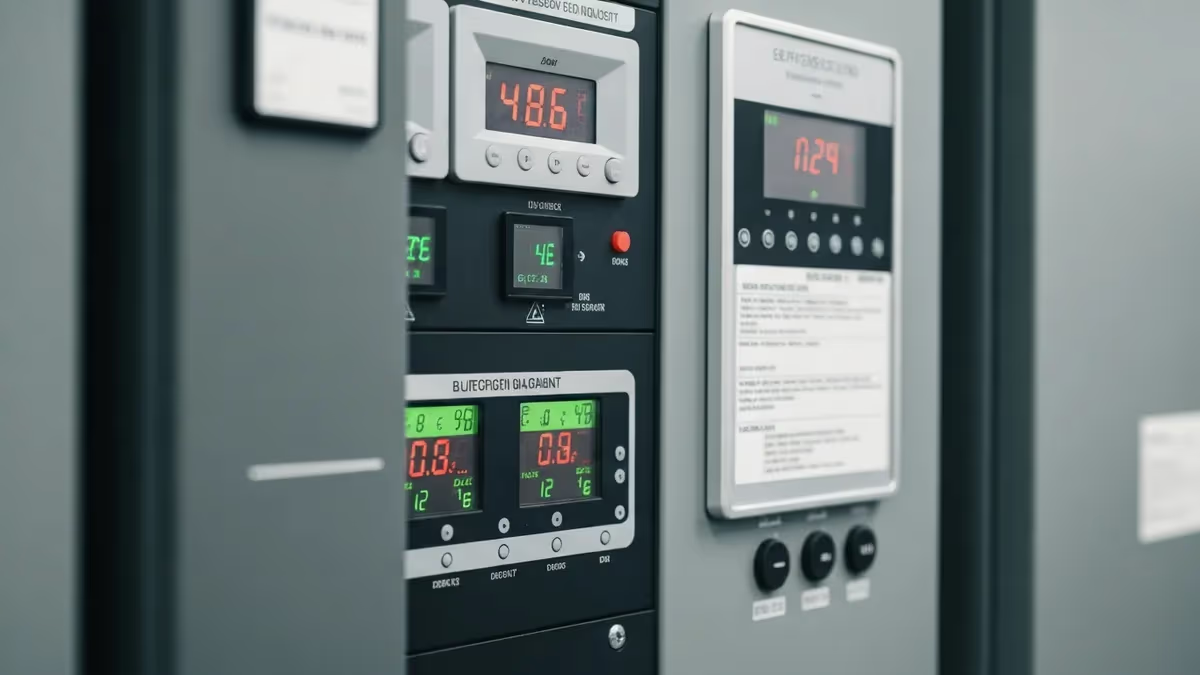
Understanding the full hvac technician job description salary requirements is the first step toward building a stable, well-paying trade career in 2026. HVAC technicians install, maintain, and repair heating, ventilation, air conditioning, and refrigeration systems in homes, commercial buildings, hospitals, data centers, and industrial plants. The role blends hands-on mechanical skill with electronics troubleshooting, refrigerant handling, and customer communication — making it one of the most multifaceted skilled trades available to workers today.
According to the Bureau of Labor Statistics, the median annual wage for HVAC technicians in the United States reached approximately $61,000 in 2024, with top earners in high-cost metros or specialized commercial roles clearing well over $90,000 per year. Entry-level technicians typically start between $38,000 and $48,000 depending on region, employer type, and whether they completed a formal apprenticeship or a vocational school program. Overtime pay, on-call premiums, and performance bonuses can add thousands more to annual take-home earnings.
The job market for HVAC professionals remains exceptionally strong. The BLS projects employment growth of roughly 9 percent through 2032, adding tens of thousands of new positions nationwide. Demand is driven by aging infrastructure requiring replacement, stricter building-efficiency codes mandating upgrades, the rapid expansion of climate-controlled data centers, and growing consumer awareness of indoor air quality. Every new commercial construction project — office building, hospital wing, or apartment complex — requires certified HVAC technicians from rough-in to final commissioning.
Employers typically expect candidates to hold at minimum a high school diploma or GED, completion of a vocational HVAC program or apprenticeship, and an EPA Section 608 refrigerant certification. Many employers now also prefer or require state licensing, manufacturer-specific certifications from brands like Carrier, Trane, or Lennox, and NATE (North American Technician Excellence) credentials. Soft skills matter too: the ability to read blueprints, communicate findings to non-technical homeowners, and manage service calls efficiently all appear regularly on employer job postings.
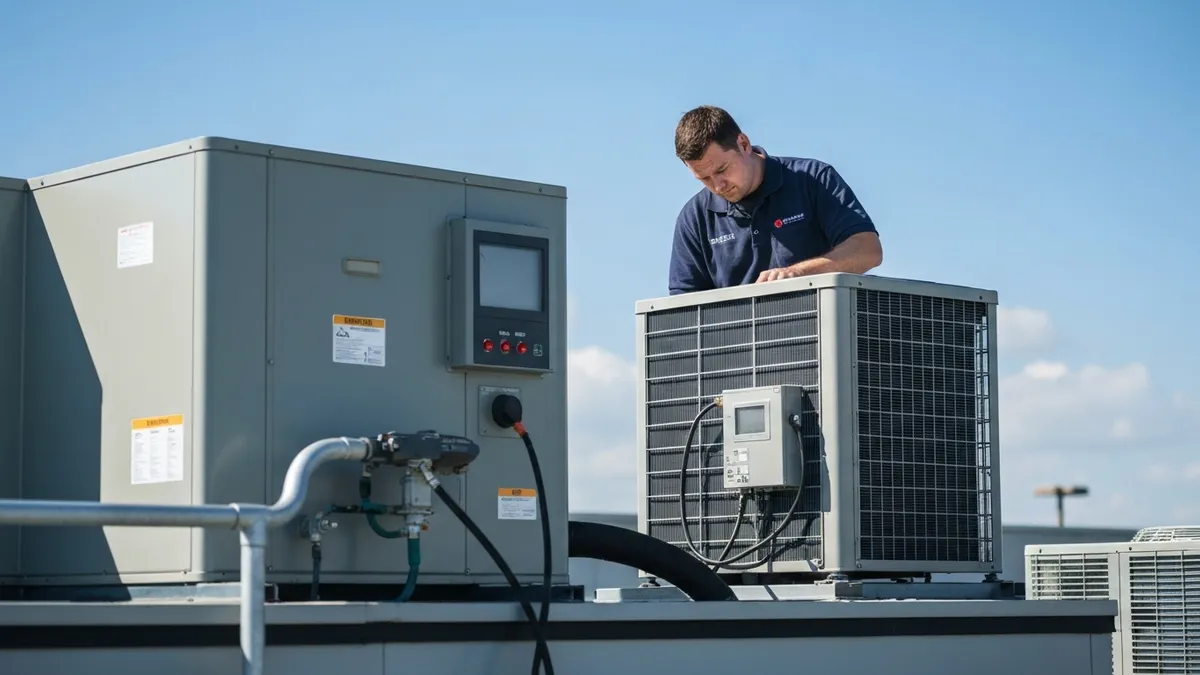
If you are researching what an hvac technician job description actually looks like in daily practice, you will find that no two workdays are identical. A residential service technician might start the morning diagnosing a failed capacitor on a homeowner's split system, spend midday performing a seasonal tune-up on a rooftop package unit, and finish the afternoon quoting a ductless mini-split installation for a home addition. Commercial technicians face even greater variety, handling chillers, cooling towers, building automation systems, and large air-handling units across multiple floors.
Career advancement in HVAC is genuinely accessible with the right combination of certifications, experience, and continuing education. Many journeyman technicians move into supervisory or foreman roles within five to eight years. Others specialize in controls, medical-grade environments (hospitals and laboratories), industrial refrigeration, or energy auditing. Some transition into estimating, project management, or sales engineering, where the combination of field knowledge and communication skills commands salaries well into six figures without continuous physical labor.
This guide covers every dimension of the HVAC technician role: core duties by specialty, education and licensing requirements, salary benchmarks by state and experience level, the pros and cons of the career, and actionable steps to break into the field or advance within it. Whether you are considering HVAC as a first career, a second-act trade, or simply want to understand what employers expect before applying, the information here will give you a complete, accurate picture of what the job demands and what it can offer in return.
HVAC Technician Career by the Numbers

Core Duties and Daily Responsibilities
Technicians install new heating and cooling equipment following blueprints and manufacturer specifications. Tasks include mounting equipment, running refrigerant lines, connecting electrical wiring, commissioning systems, and verifying airflow and temperature performance before handoff to the customer.
Seasonal preventive maintenance keeps systems running efficiently and prevents costly breakdowns. Technicians clean coils, check refrigerant charge, inspect electrical connections, lubricate moving parts, test safety controls, and document findings in service reports for the client.
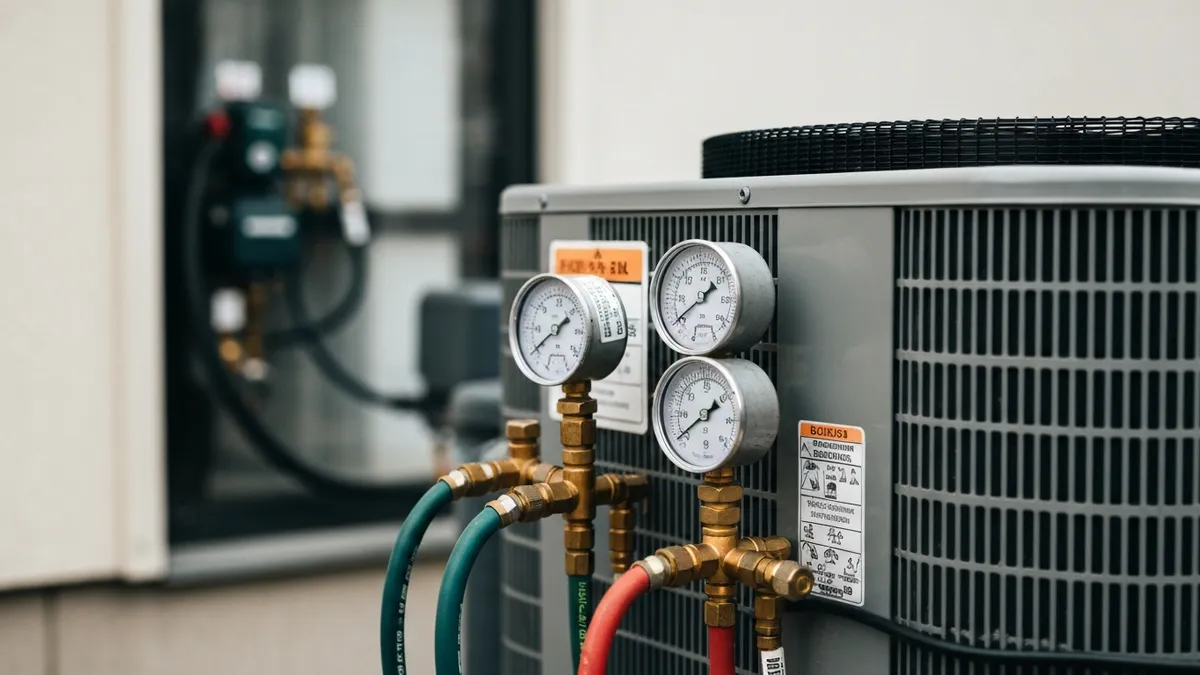
Troubleshooting failed or underperforming systems is the most technically demanding part of the job. Technicians use manifold gauges, multimeters, and refrigerant analyzers to identify root causes ranging from failed capacitors to refrigerant leaks, compressor failures, or clogged heat exchangers.
Modern commercial HVAC relies on building automation systems (BAS) and programmable thermostats. Technicians configure, calibrate, and troubleshoot these controls, ensuring setpoints, schedules, and safety limits are correctly programmed and communicating with the broader building management platform.
Service technicians must explain technical findings in plain language, present repair vs. replacement options with honest cost assessments, and obtain approvals before proceeding. Strong communication skills directly affect customer retention, reviews, and technician tip earnings on residential calls.
Education and licensing requirements for HVAC technicians vary by state, but most employers and state licensing boards share a common baseline. At minimum, candidates need a high school diploma or GED, completion of a recognized HVAC training program, and the federally mandated EPA Section 608 certification, which is required by law for any technician who purchases, handles, or recovers regulated refrigerants. Without Section 608, a technician cannot legally service air conditioners, heat pumps, or refrigeration equipment that contains CFC, HCFC, or HFC refrigerants.
Formal HVAC training typically comes through one of two pathways: a vocational or trade school program lasting six months to two years, or a registered apprenticeship program lasting three to five years. Trade school programs are faster and often cost between $5,000 and $20,000 in tuition, while apprenticeships are typically paid — apprentices earn wages while training — and result in journeyman status upon completion. Both paths are legitimate, and neither is universally superior; your best choice depends on your financial situation, learning style, and local employer preferences.
NATE certification (North American Technician Excellence) is the most widely recognized voluntary credential in the industry. Passing a NATE exam in a specific specialty — residential air conditioning, commercial refrigeration, heat pumps, or gas heating, for example — signals to employers that your knowledge has been independently verified beyond minimum state licensing standards. Many employers offer pay bumps of $1 to $3 per hour for NATE-certified technicians, and some residential and commercial service companies require NATE as a condition of employment at the journeyman level.
State contractor licensing is a separate requirement from EPA certification and NATE. Most states require HVAC contractors (the business entity) to hold a license, and some states additionally require individual technicians to pass a state licensing exam before working independently. States with technician-level license requirements include California, Florida, Texas, Louisiana, and others. Requirements typically include a minimum number of verifiable work hours, passing a written trade and business law exam, and in some cases posting a surety bond or proving general liability insurance coverage.
Manufacturer certifications add another layer of specialization and earning potential. Companies like Carrier, Trane, Lennox, Daikin, and Mitsubishi Electric offer factory training programs that certify technicians to service their proprietary product lines. Factory-authorized service dealers are often required to maintain a minimum number of certified technicians on staff, which makes these credentials valuable for both the technician and their employer. Manufacturer certs also grant access to technical support hotlines, expedited warranty parts ordering, and exclusive service agreements that generate steady recurring revenue.
Refrigerant transition knowledge is becoming increasingly important as the industry moves away from R-22 and R-410A toward lower-global-warming-potential refrigerants like R-32, R-454B, and R-290. Understanding the differences in handling procedures, pressure characteristics, and equipment compatibility for next-generation refrigerants is fast becoming a differentiator for technicians seeking commercial and industrial roles. Many training programs and industry associations now offer specific courses on A2L refrigerant handling, which requires updated tools, procedures, and safety practices compared to legacy refrigerants.
Continuing education is not just a licensing renewal formality — it is a genuine career investment. The HVAC industry evolves rapidly, with new efficiency standards, smart-home integration requirements, variable-speed compressor technology, and heat pump adoption all reshaping what technicians need to know. Technicians who invest in ongoing training through manufacturer seminars, ACCA (Air Conditioning Contractors of America) courses, or community college continuing education programs consistently outpace their peers in both earning potential and job security over a full career span.
HVAC Technician Salary by Specialty and Region
Residential HVAC technicians earn a median salary of approximately $55,000 to $65,000 per year in most U.S. markets. Entry-level residential techs with one to three years of experience typically earn between $38,000 and $50,000. Experienced technicians at established service companies can earn $70,000 or more, especially when commission structures reward upselling maintenance agreements, indoor air quality add-ons, or system replacements during service calls. Top residential service technicians in high-cost-of-living areas like California, New York, or Washington state regularly exceed $85,000 annually.
High-volume residential service companies often pay via a combination of hourly base wages plus performance pay tied to call completion rates, customer satisfaction scores, and accessory sales. Technicians who master consultative sales — presenting customers with clear options and honest recommendations — can earn significantly more than base wage alone. Residential roles also tend to offer more predictable hours than commercial positions, though emergency on-call rotations during peak summer and winter seasons add overtime earnings for those who want them.
Is an HVAC Career Right for You?
- +Strong, growing job market with projected 9% employment growth through 2032
- +No four-year college degree required — trade school or apprenticeship opens the door
- +Median salary of $61,000 with top earners exceeding $90,000 annually
- +Diverse daily work across residential, commercial, and industrial environments
- +Clear advancement path from helper to journeyman to foreman or contractor
- +Essential trade with recession-resistant demand — people always need heating and cooling
- −Physically demanding work involving heavy lifting, crawling in tight spaces, and working in extreme temperatures
- −On-call and emergency service rotations disrupt evenings, weekends, and holidays
- −Initial training and certification costs can reach $15,000 or more without apprenticeship
- −Working on rooftops, in attics, and near electrical systems carries inherent safety risks
- −Refrigerant and technology changes require continuous retraining throughout a career
- −Entry-level wages can be modest — $18 to $22 per hour — before experience builds value
What Employers Look For When Hiring HVAC Technicians
- ✓Hold a valid EPA Section 608 certification covering the refrigerant types used at the employer's job sites
- ✓Complete an accredited HVAC vocational program or a registered apprenticeship of three or more years
- ✓Obtain applicable state or local HVAC technician or contractor license before applying for independent-tech roles
- ✓Demonstrate hands-on experience with at least one major equipment brand through employer references or documented service records
- ✓Earn NATE certification in your primary specialty (residential AC, commercial refrigeration, heat pumps, or gas heating)
- ✓Maintain a clean driving record and valid driver's license — most field positions require a company service vehicle
- ✓Show proficiency with diagnostic tools: manifold gauge sets, digital multimeters, combustion analyzers, and refrigerant leak detectors
- ✓Read and interpret wiring diagrams, equipment manuals, and mechanical blueprints accurately without supervision
- ✓Demonstrate professional customer communication skills, including the ability to explain repairs and present options clearly
- ✓Stay current with A2L refrigerant handling procedures and next-generation equipment as the industry phases out R-410A
NATE Certification Can Add $2–$3/Hour to Your Base Pay
A North American Technician Excellence (NATE) certification in your primary specialty is one of the highest-return investments an HVAC technician can make. Most employers offer a direct pay differential for NATE-certified technicians, and service companies that hold manufacturer dealer agreements often require NATE as a staffing condition. Earning just one NATE specialty certification can add $4,000 to $6,000 to your annual income while making you significantly more attractive to top employers.
Career advancement in HVAC follows several well-defined tracks, and understanding them early helps you make strategic decisions about which certifications to pursue and which employers to target. The most common path runs from helper or apprentice to journeyman technician, then to lead technician or field supervisor, and eventually to service manager, estimator, or business owner. Each step up typically requires a combination of additional years of experience, demonstrated technical leadership, and often a more senior license category at the state level.
Specialization is one of the most powerful levers for increasing earning potential without moving into management. A technician who develops deep expertise in commercial chiller systems, for example, becomes highly sought after by mechanical contractors, building owners, and facility management companies who cannot afford downtime on mission-critical cooling equipment. Similarly, technicians who master building automation systems programming — writing sequences of operations for BACnet or Modbus controllers — can command consulting rates that far exceed standard service labor rates.
The growing field of energy efficiency and green building creates significant new opportunities for HVAC technicians who pursue additional credentials. The Building Performance Institute (BPI) offers certifications in building analyst and envelope specialist roles. LEED accreditation, while not an HVAC-specific credential, signals to commercial clients that a technician understands integrated building system performance. Technicians with these credentials often transition into energy auditing, commissioning, or retro-commissioning roles that combine field knowledge with analytical and reporting skills.
Moving into project management or estimating is a common transition for experienced technicians who want to reduce physical strain while leveraging their accumulated technical knowledge. HVAC estimators price new construction mechanical contracts by reviewing blueprints, calculating equipment loads, and sourcing materials from wholesale suppliers. Project managers coordinate installation crews, manage subcontractor relationships, and ensure jobs are completed on schedule and within budget. Both roles typically pay $70,000 to $95,000, with senior project managers at large mechanical contractors earning well into six figures.
Entrepreneurship is another well-traveled path in HVAC. Many experienced technicians eventually start their own service companies, particularly in residential and light commercial markets where startup costs are relatively low compared to the earning potential. A solo technician with a service van, proper licensing, insurance, and a strong local reputation can realistically generate $150,000 to $250,000 or more in annual revenue, though net income depends on overhead management, pricing discipline, and the ability to market and retain customers. Scaling beyond solo operation requires hiring and training additional technicians, which introduces management complexity but also dramatically increases revenue ceiling.
Union membership is another dimension of career development worth understanding. In major metro areas, HVAC technicians who join Local unions affiliated with UA (United Association of Plumbers and Pipefitters) or SMART (Sheet Metal, Air, Rail and Transportation Workers) access structured apprenticeship programs, defined pay scales, health insurance, pension benefits, and strong job placement networks on commercial construction projects. Union journeyman wages in cities like New York, Chicago, San Francisco, and Boston regularly exceed $45 to $55 per hour in base wages, with total compensation packages worth $80 to $100 per hour when fringes are included.
The technology transformation underway in HVAC also creates career paths that didn't exist a decade ago. Connected HVAC systems, IoT-enabled sensors, predictive maintenance platforms, and AI-assisted fault detection are changing how large commercial facilities are managed. Technicians who combine traditional mechanical skills with data literacy — understanding how to interpret sensor dashboards, configure remote monitoring platforms, and act on predictive alerts — are positioned to become the highest-value contributors in a commercial facility management team. Pursuing training in building automation, energy management systems, and even basic programming logic positions a technician for these emerging hybrid roles.
The EPA's AIM Act mandates a phase-down of HFC refrigerants including R-410A, with new equipment manufactured after January 1, 2025, required to use lower-GWP alternatives. Technicians who have not yet trained on A2L refrigerants like R-32 and R-454B should prioritize this training immediately. Equipment using these next-generation refrigerants requires updated recovery machines, leak detectors, and handling procedures — gaps in this knowledge will increasingly limit employability on new equipment service calls.
Breaking into the HVAC industry requires a deliberate plan, especially if you are starting without any prior trade experience. The single most important first step is choosing between a trade school program and an apprenticeship, and that decision should be based primarily on whether you need income immediately during training. Apprenticeships are earn-while-you-learn programs that pay real wages from day one — typically starting at 40 to 50 percent of journeyman scale and increasing each year. Trade school programs are faster but require upfront tuition and do not pay wages during the educational period.
Research local employers before you commit to a training path. Talk to HVAC companies in your area — residential service companies, commercial mechanical contractors, refrigeration specialists — and ask what credentials they prefer and whether they sponsor apprentices. Some companies will pay for your EPA Section 608 exam, NATE testing fees, or continuing education courses in exchange for a commitment to work for them for a defined period after training. Understanding the local labor market before investing in a specific training path ensures your credentials will be valued where you intend to work.
Your EPA Section 608 certification is non-negotiable and should be obtained as early as possible in your training. The exam covers refrigerant regulations, ozone depletion, global warming potential, refrigerant recovery procedures, and safety. Study materials are widely available from ESCO Institute, ACCA, and independent test prep publishers. Most candidates who study diligently for two to four weeks pass on their first attempt. The certification has no expiration date, making it a one-time investment that provides career-long value from the moment you obtain it.
Building your tool kit is a practical step that new technicians often underestimate. Employers typically provide large shared diagnostic equipment like recovery machines and vacuum pumps, but most expect technicians to own their own hand tools, digital multimeter, manifold gauge set (or digital manifold), and safety equipment. Budget roughly $800 to $2,000 for a solid starter set of personal tools — quality brands like Klein, Milwaukee, Fieldpiece, and Ritchie Yellow Jacket are industry standards that will last a full career with proper care. Many employers also offer tool allowances or tool purchase programs that reduce this upfront cost.
Networking matters more in the trades than many new technicians realize. Joining a local ACCA chapter, attending industry trade shows like AHR Expo, and connecting with other technicians through online communities (HVAC-Talk, Reddit's r/HVAC, and Facebook trade groups) accelerates learning and opens job referral channels that job boards cannot match. Industry events often feature manufacturer training sessions, code update seminars, and business development workshops that double as professional development and networking opportunities. Many journeyman-level job offers in HVAC are filled through personal referrals before positions are ever publicly posted.
Preparing for technical interviews at HVAC companies requires you to demonstrate both book knowledge and practical problem-solving ability. Interviewers frequently ask candidates to walk through how they would diagnose a system with low suction pressure, explain the refrigeration cycle, describe how they would safely handle a refrigerant leak, or read a simple ladder diagram. Practicing these explanations out loud — not just reviewing them mentally — builds the fluency needed to answer confidently under pressure. Use practice tests and quiz tools to reinforce your diagnostic reasoning and identify knowledge gaps before the interview.
Finally, approach your early career years as an intensive learning period rather than a destination. Seek employers who expose you to multiple system types rather than companies that will have you changing filters and cleaning coils on the same equipment day after day. Broad early exposure builds the diagnostic foundation that makes a technician genuinely valuable — and genuinely paid — within five to seven years.
Request to shadow senior technicians on complex calls, ask questions freely, and volunteer for the difficult jobs that less curious colleagues avoid. The technicians who build the strongest careers in HVAC are almost universally those who treated their first five years as graduate school, not just a paycheck.
Practical preparation is the bridge between knowing what HVAC technicians do and actually performing the work at a professional level. One of the most underutilized preparation tools available to aspiring and early-career technicians is structured practice testing on the specific topics that appear on certification exams, employer skills assessments, and state licensing tests. Regular practice with realistic questions on refrigeration theory, electrical circuits, load calculations, and code compliance builds both knowledge and test-taking confidence simultaneously.
Refrigeration fundamentals — the vapor compression cycle, superheat and subcooling calculations, pressure-temperature relationships, and refrigerant properties — underpin almost every diagnostic task an HVAC technician performs. Many technicians who struggle in the field have gaps in these foundational concepts that make it harder to interpret gauge readings, set refrigerant charge accurately, or understand why a system behaves abnormally. Filling these gaps through deliberate study, not just on-the-job experience, accelerates competence dramatically and separates technicians who troubleshoot systematically from those who replace parts and hope for the best.
Electrical knowledge is the second critical foundation. HVAC systems are deeply electrical — every safety switch, contactor, capacitor, transformer, control board, and variable-frequency drive must be understood both theoretically and practically. A technician who can read a ladder diagram and trace a control circuit to a fault with a multimeter in hand is exponentially more valuable than one who relies on swapping components until the problem resolves. Investing time in electrical theory, including Ohm's Law, series and parallel circuits, motor winding resistance, and capacitor testing procedures, pays dividends throughout an entire career.
Load calculation knowledge, while not daily territory for all service technicians, becomes critically important for those who advance into system design, replacement sales, or project management. Manual J residential load calculations and Manual D duct design are ACCA standards that determine appropriate equipment sizing and airflow distribution. Oversized equipment short-cycles, creating humidity problems and premature component wear; undersized equipment runs continuously without reaching setpoint. Technicians who understand load calculations can provide genuinely better advice to customers replacing systems and avoid the common industry practice of simply matching existing equipment size regardless of whether that size was ever appropriate.
Code fluency is another practical differentiator that separates average technicians from elite performers. The International Mechanical Code (IMC), International Fuel Gas Code (IFGC), and NFPA 70 (National Electrical Code) govern most HVAC installation work in the United States. State and local amendments further modify these base codes. A technician who knows these codes can install work that passes inspection reliably, avoid costly rework, and confidently answer customer questions about permit requirements and inspection processes. Many HVAC employers value code knowledge so highly that they test for it during the hiring process.
Safety knowledge is non-negotiable and must be internalized, not just memorized for a test. HVAC work exposes technicians to electrical shock hazards, refrigerant burns and asphyxiation risks, fall hazards on rooftops and ladders, confined space dangers in mechanical rooms and crawlspaces, and combustion risks on gas-fired equipment. OSHA 10 or OSHA 30 certification demonstrates baseline safety awareness and is increasingly required on commercial construction sites. Understanding lockout/tagout procedures, proper PPE selection, refrigerant handling safety data sheets, and fall protection equipment is both a legal requirement and a professional responsibility.
The combination of technical knowledge, practical skill, code fluency, and safety competence defines what the best HVAC employers mean when they describe their ideal hire. Use every available tool — practice tests, manufacturer training, field mentorship, trade publications like ACHR News and The News, and industry associations — to develop across all four dimensions simultaneously. Technicians who invest consistently in their own development during the first decade of their career build a foundation that supports decades of financial stability, professional respect, and genuine job satisfaction in one of America's most essential skilled trades.
HVAC Questions and Answers
FCU HVAC: The Complete Guide to Fan Coil Units, How They Work, Where They Excel, and How to Choose the Right System

Finance a New HVAC System: 2026 Loans, 0% APR, and Rebates
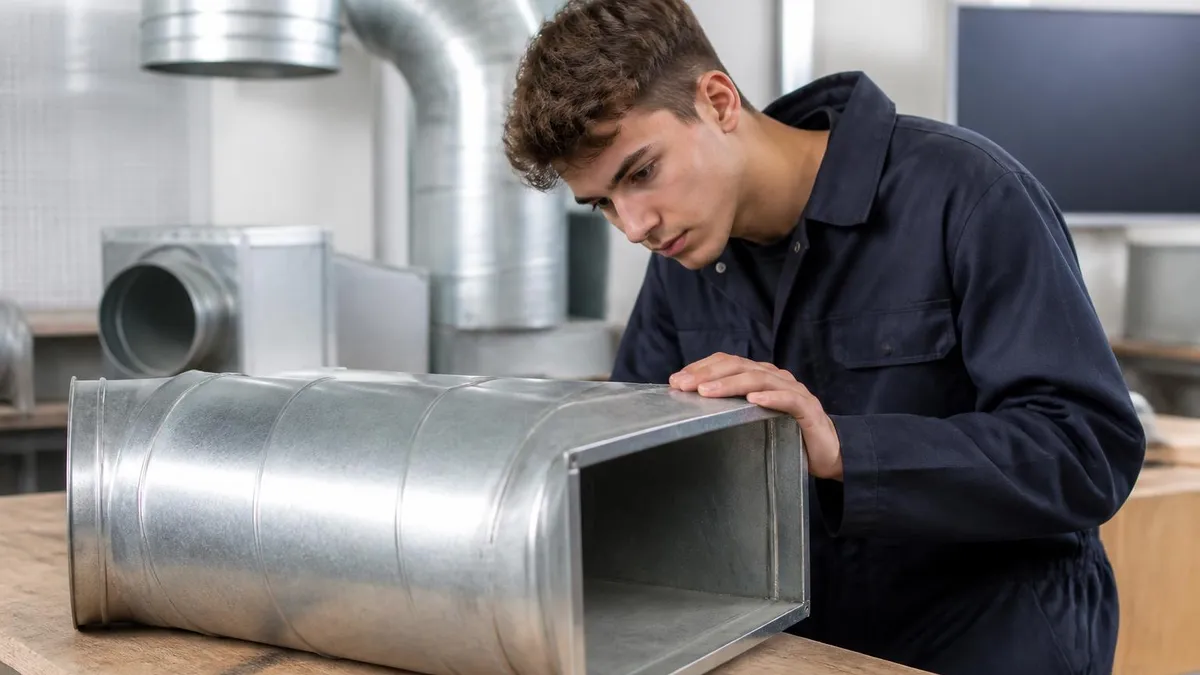
HVAC Duct Repair: Common Issues, Costs, and DIY vs Professional
HVAC School -- Programs, Costs, and Career Paths in 2026
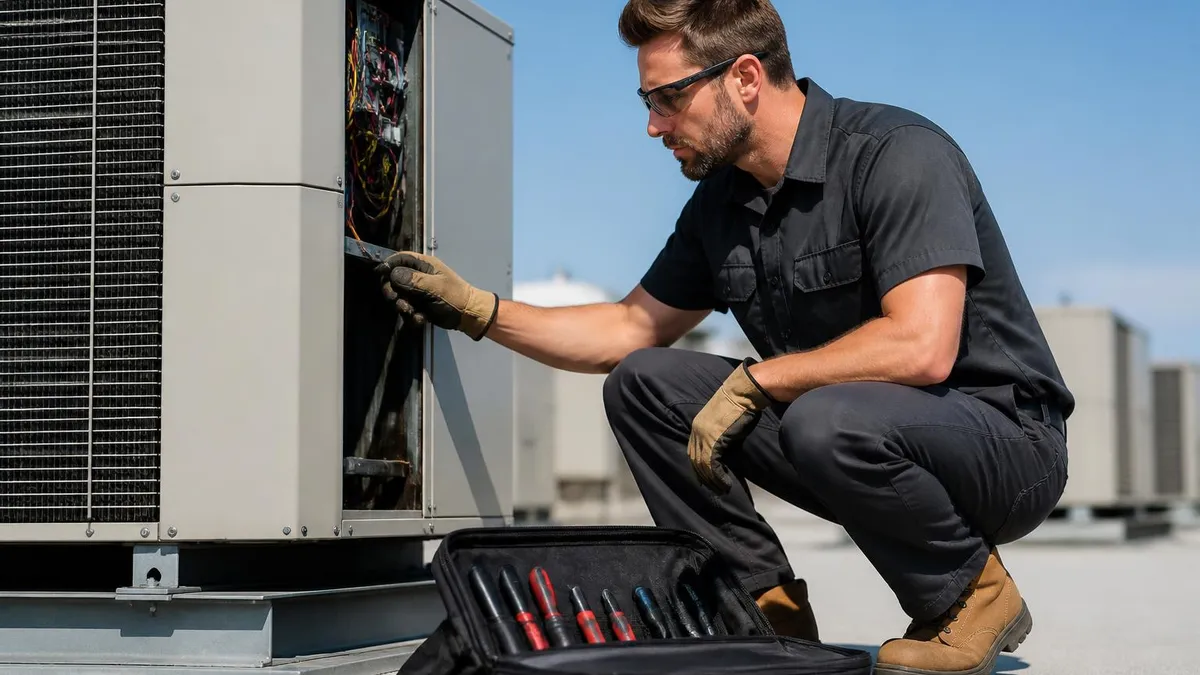
HVAC Advertising: The Complete Playbook for Generating Leads, Booking Calls, and Growing Your Heating and Cooling Business
About the Author

NATE Certified HVAC Technician & Licensing Exam Trainer
Universal Technical InstituteMike Johnson is a NATE-certified HVAC technician and EPA 608 universal-certified refrigerant handler with a Bachelor of Science in HVAC/R Technology. He has 19 years of commercial and residential HVAC installation and service experience and specializes in preparing technicians for NATE certification, EPA 608, A2L refrigerant safety, and state HVAC contractor licensing examinations.