
HVAC BMS: How Building Management Systems Control Your HVAC and Why It Matters
Learn how HVAC BMS integrates building controls, cuts energy costs, and improves comfort. Complete guide for technicians and building owners. ✅

An hvac bms — short for Building Management System — is the centralized digital brain that monitors and controls every major mechanical and electrical system inside a commercial or large residential building. Rather than operating heating, cooling, ventilation, lighting, and fire suppression as isolated islands of equipment, a BMS ties them all together under one intelligent software platform. Technicians and facility managers can view real-time data, set automated schedules, receive fault alarms, and optimize energy consumption from a single dashboard — dramatically improving both occupant comfort and operational efficiency.
In the United States, commercial buildings account for roughly 18 percent of total national energy consumption, and HVAC systems alone represent 40 to 50 percent of that building energy load. A well-configured BMS can trim HVAC energy use by 15 to 30 percent through smarter scheduling, demand-controlled ventilation, and predictive maintenance alerts. For a mid-sized office building spending $200,000 per year on energy, that translates to $30,000–$60,000 in annual savings — figures that make the capital investment in a BMS remarkably attractive and frequently qualify for utility rebates and federal tax incentives.
The roots of building management technology trace back to pneumatic control systems installed in skyscrapers during the 1960s, where compressed air signals opened and closed dampers and valves. By the 1980s, direct digital controls (DDC) replaced pneumatic panels with microprocessors, allowing far more precise setpoint management and data logging. Today's BMS platforms run on open-protocol networks such as BACnet, Modbus, and LonWorks, making it possible to integrate equipment from dozens of different manufacturers into one cohesive system without expensive proprietary lock-in.
For HVAC technicians entering the field or preparing for certification exams, understanding BMS fundamentals is increasingly non-negotiable. Modern HVAC job postings routinely list BMS familiarity as a required or strongly preferred qualification, and senior roles such as building automation technician or controls engineer can command salaries 20 to 35 percent higher than traditional HVAC field technician positions. The ability to read control sequences, configure DDC controllers, and troubleshoot network communication errors distinguishes candidates who advance quickly from those who stay on the service truck indefinitely.
A typical BMS architecture consists of three distinct layers. At the field level, sensors and actuators gather temperature, humidity, CO2, pressure, and occupancy data and physically move dampers, valves, and variable frequency drives. At the automation level, DDC controllers process that sensor data against programmed logic and issue commands to the field devices. At the management level, a supervisory workstation or cloud dashboard aggregates data from all controllers, provides visualization, generates reports, and sends alerts to operators. Understanding how information flows through these three layers is foundational to diagnosing and repairing BMS faults effectively.
Integration between the BMS and energy management software is becoming standard practice in buildings pursuing LEED certification, ENERGY STAR benchmarking, or compliance with ASHRAE Standard 90.1 energy codes. The BMS logs interval meter data, tracks weather-normalized energy intensity, and feeds that information into sustainability reporting platforms. Facility teams use this data to identify underperforming equipment before it fails, to justify capital replacement budgets to ownership, and to demonstrate regulatory compliance to inspectors. For technicians, knowing how to navigate these reporting tools adds genuine career value in an era where decarbonization goals are reshaping the built environment.
Whether you are a building owner trying to reduce utility bills, a facilities manager responsible for occupant comfort, or an HVAC technician studying for your certification exam, a solid understanding of how a BMS works will pay dividends. The sections below cover BMS architecture, integration protocols, real-world benefits, common challenges, and the skills you need to work confidently with these systems — giving you a comprehensive foundation that supports both exam success and on-the-job excellence.
HVAC BMS by the Numbers
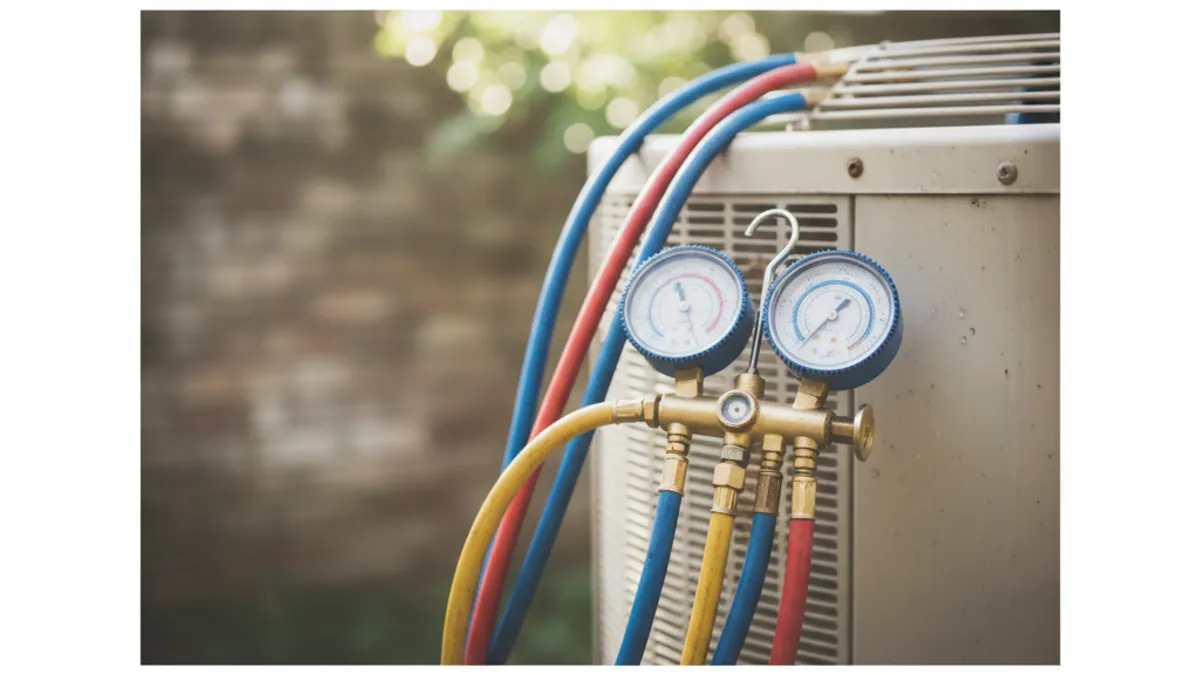
Core Components of an HVAC BMS
Temperature sensors, humidity transmitters, CO2 probes, pressure transducers, and occupancy detectors gather real-world data. Actuators — including valve positioners, damper motors, and variable frequency drives — execute the commands issued by DDC controllers.
Programmable microprocessors that run control sequences, compare sensor readings to setpoints, and output signals to actuators. Each controller handles a defined zone or piece of equipment — AHU, chiller, boiler — and communicates upstream to the supervisory layer.
The operator interface where facility staff monitor system graphics, acknowledge alarms, adjust schedules, and pull energy reports. Modern platforms offer web-based and mobile access, enabling remote management from anywhere with an internet connection.
Twisted-pair wiring, Ethernet, or wireless networks that link field devices to controllers and controllers to the workstation. Protocol choice — BACnet, Modbus, LonWorks, or MQTT — determines interoperability, data speed, and long-term maintenance complexity.
Software layer that stores time-series data from all BMS points, enabling trend analysis, fault detection diagnostics (FDD), and regulatory reporting. Increasingly cloud-hosted with machine-learning models that predict equipment failures days before they occur.
Communication protocols are the language that HVAC BMS components use to talk to each other, and choosing the right protocol is one of the most consequential decisions made during a BMS design or retrofit project. BACnet — the Building Automation and Control Networks protocol developed by ASHRAE — dominates the North American commercial market because it is an open standard ratified by ANSI and ISO.
Any controller, sensor, or workstation software claiming BACnet compliance must adhere to a defined set of object types and services, which means a facility manager can purchase a new chiller controller from one manufacturer and integrate it into a BMS workstation from a different manufacturer without custom programming or expensive middleware.
Modbus is an older serial protocol dating to 1979 that remains extremely common in industrial HVAC applications, particularly for communicating with variable frequency drives, chillers, and power meters. Its simplicity is both its greatest strength and its limitation: Modbus is fast and reliable for point-to-point connections but lacks the rich object model of BACnet, making it harder to build sophisticated alarm management or trending features on top of it. Many modern DDC controllers include both a BACnet IP port for upstream supervisory communication and a Modbus RTU port for downstream device integration — bridging the two worlds effectively.
LonWorks, developed by Echelon Corporation in the early 1990s, gained significant traction in the 1990s and early 2000s, especially in peer-to-peer control applications where controllers need to share data without relying on a central supervisory server. While new LonWorks installations are less common today, hundreds of thousands of existing buildings still operate on LonWorks networks, making the ability to read and troubleshoot LON traffic a valuable skill for service technicians working in older institutional facilities such as universities, hospitals, and government buildings.
MQTT and RESTful APIs represent the newest layer of BMS connectivity, reflecting the broader shift toward Internet of Things architectures. Edge gateways translate proprietary or legacy BMS data into MQTT messages that cloud platforms can subscribe to in real time. This approach powers advanced analytics services, digital twin software, and portfolio-level energy management dashboards that aggregate data from dozens of buildings across a campus or real estate portfolio. Technicians who understand basic networking concepts — IP addressing, firewall rules, TLS encryption — are increasingly in demand as this cloud-connected model becomes the new standard for large facility portfolios.
Cybersecurity is a growing concern as BMS systems move online. Early BMS installations often ran on isolated local area networks with no internet exposure, but cloud integration has changed the threat landscape significantly. A compromised BMS can allow attackers to manipulate building temperatures, disable critical ventilation, or use the building network as a pivot point into corporate IT infrastructure. Industry guidance from NIST and ASHRAE Guideline 36 increasingly emphasizes network segmentation, strong authentication, encrypted communications, and regular firmware patching as baseline security requirements for any internet-connected building control system.
For technicians and engineers preparing for HVAC certification exams or building automation credentials such as the Certified Automation Professional (CAP) from ISA or the Certified Energy Manager (CEM) from AEE, protocol knowledge is a tested topic that requires genuine fluency rather than surface familiarity.
Understanding how BACnet objects like Analog Input, Binary Output, and Schedule map to real-world equipment behaviors, and being able to interpret Modbus register maps, separates candidates who pass on their first attempt from those who need multiple tries. Practice exams that include controls and automation scenarios are an excellent way to solidify this knowledge before test day.
The practical takeaway is that a skilled BMS technician today must speak multiple protocol languages fluently. A single large hospital campus might run BACnet IP on its air handling units, Modbus TCP on its chiller plant, LonWorks on its room-level fan coil units, and MQTT feeds to a cloud analytics platform — all integrated under one supervisory umbrella. The ability to navigate that heterogeneous environment, diagnose communication failures, and configure new integrations is exactly the kind of competency that commands premium compensation and steady career advancement in the building automation field.
BMS Energy, Comfort, and Maintenance Benefits
A well-programmed HVAC BMS delivers energy savings through several overlapping strategies. Optimal start-stop algorithms calculate exactly when to begin pre-conditioning a building each morning based on outdoor temperature, thermal mass, and occupancy schedules — eliminating the wasteful habit of running equipment at full capacity all night. Demand-controlled ventilation uses real-time CO2 readings to reduce outdoor air intake when spaces are partially occupied, cutting the energy cost of conditioning that air by 20 to 40 percent in variable-occupancy zones like conference rooms and lobbies.
Supply air temperature reset and chilled water reset strategies further compress energy consumption by modulating system capacity to match actual load rather than designing for worst-case conditions 365 days per year. When a BMS detects that all zone thermostats have ample cooling headroom, it can raise chilled water supply temperature by 2 to 4 degrees Fahrenheit, improving chiller coefficient of performance by roughly 2 to 3 percent per degree. Across a full cooling season, these marginal improvements compound into thousands of dollars in utility savings and measurable reductions in peak demand charges.

HVAC BMS: Advantages and Limitations
- +Reduces HVAC energy consumption by 15–30% through intelligent scheduling and demand-based control
- +Centralizes monitoring of all building systems in one dashboard, reducing the labor needed for manual inspections
- +Enables predictive maintenance by flagging equipment faults before they cause costly emergency breakdowns
- +Supports sustainability reporting for LEED, ENERGY STAR, and ASHRAE 90.1 compliance
- +Improves occupant comfort through tighter temperature and air quality control compared to standalone thermostats
- +Increases property value and marketability — tenants increasingly expect BMS-controlled buildings
- −High upfront installation cost — full BMS retrofits in large buildings commonly run $500,000 to $2 million
- −Requires specialized technicians for programming, commissioning, and troubleshooting — generalist HVAC skills are insufficient
- −Cybersecurity vulnerabilities increase as BMS systems connect to corporate networks and cloud platforms
- −Proprietary legacy systems create vendor lock-in, making upgrades expensive and limiting hardware choices
- −Poorly commissioned BMS systems can actually increase energy use if control sequences are incorrectly programmed
- −Significant ongoing training investment required as software platforms, protocols, and analytics tools evolve rapidly
Pros and Cons at a Glance
| Pros | Cons |
|---|---|
| Centralizes monitoring of all building systems in one dashboard, reducing the labor needed for manual inspections | Requires specialized technicians for programming, commissioning, and troubleshooting — generalist HVAC skills are insufficient |
| Enables predictive maintenance by flagging equipment faults before they cause costly emergency breakdowns | Cybersecurity vulnerabilities increase as BMS systems connect to corporate networks and cloud platforms |
| Improves occupant comfort through tighter temperature and air quality control compared to standalone thermostats | Proprietary legacy systems create vendor lock-in, making upgrades expensive and limiting hardware choices |
| Increases property value and marketability — tenants increasingly expect BMS-controlled buildings | Poorly commissioned BMS systems can actually increase energy use if control sequences are incorrectly programmed |
HVAC BMS Implementation and Optimization Checklist
- ✓Define all control points — sensors, actuators, meters — before selecting controller hardware to avoid scope creep
- ✓Specify open protocols (BACnet IP preferred) in equipment procurement contracts to prevent vendor lock-in
- ✓Commission every control sequence against the original design intent document, not just spot-check a few zones
- ✓Enable trend logging on all critical points — supply air temperature, chilled water flow, fan speed — at minimum 15-minute intervals
- ✓Configure demand-controlled ventilation on all variable-occupancy spaces using CO2 sensors calibrated within the past 12 months
- ✓Set up automated alarm notifications with escalation paths so after-hours faults reach on-call staff within 15 minutes
- ✓Test cybersecurity controls: network segmentation, strong passwords, encrypted remote access, and firmware update schedules
- ✓Run fault detection and diagnostics rules for at least 30 days before relying on them operationally to reduce false positives
- ✓Document all setpoints, schedules, and control sequences in a commissioning report accessible to future service technicians
- ✓Schedule quarterly BMS review meetings to compare energy benchmarks, address recurring alarms, and identify optimization opportunities
BMS Commissioning Quality Determines 80% of the Savings
Studies from PNNL and LBNL consistently show that the majority of BMS energy savings — and the majority of occupant comfort problems — trace back to commissioning quality rather than hardware selection. A mid-tier controller running a well-tuned control sequence will dramatically outperform a premium controller running a factory-default sequence never adjusted for the actual building. If you take away one principle from this article, make it this: invest time in commissioning and recommissioning, not just in equipment upgrades.
Even the most sophisticated HVAC BMS installations encounter recurring challenges that frustrate facility managers and service technicians alike. Understanding these common failure patterns — and the practical strategies for resolving them — is essential knowledge for anyone working in building automation. The single most frequent source of BMS underperformance is not hardware failure or software bugs but rather stale or incorrect control sequences that were never properly tuned during initial commissioning and have never been updated since the building's original occupancy profile changed.
Consider a typical office building where a BMS was commissioned in 2015 for a tenant that occupied the space Monday through Friday, 7 AM to 6 PM. If that tenant was replaced in 2020 by a 24-hour operations center, and nobody updated the BMS occupancy schedules, the system will be over-conditioning spaces during off-hours — wasting thousands of dollars per month — while also potentially under-conditioning during periods it was never programmed to recognize as occupied.
Re-commissioning the BMS to reflect current occupancy is one of the highest-return, lowest-cost interventions available to facility operators, yet it is chronically neglected in buildings without dedicated controls staff.
Sensor drift is another pervasive problem in older BMS installations. Temperature sensors, humidity transmitters, and CO2 analyzers all drift out of calibration over time, particularly in harsh environments near air handling units where vibration, moisture, and temperature extremes accelerate sensor degradation. A temperature sensor reading 3 degrees Fahrenheit high will cause the BMS to overcool a zone continuously — increasing cooling energy consumption, causing occupant complaints about cold spaces, and potentially triggering simultaneous heating to compensate, a particularly wasteful condition called simultaneous heating and cooling that is surprisingly common in poorly maintained systems.
Network communication failures between DDC controllers and the supervisory workstation are another common pain point. When a controller loses communication with the BMS server, it typically defaults to a fail-safe mode — often running equipment continuously at a fixed output rather than modulating based on actual conditions. From an energy perspective, this fail-safe behavior can be extremely wasteful.
Technicians must be comfortable using protocol-level diagnostic tools — BACnet browsers, Modbus scanners, network packet analyzers — to identify whether communication failures stem from physical layer issues such as damaged wiring or faulty network switches, or from software configuration problems such as incorrect device instance numbers or duplicate MAC addresses on the control network.
Integration challenges arise frequently when new equipment is added to an existing BMS. A contractor installs a new rooftop unit with its own proprietary controller and assumes the facility's BMS team will handle integration, but the BMS team discovers the unit's controller speaks only a proprietary protocol with no BACnet or Modbus gateway option included in the base equipment price.
This kind of scope gap — which is extremely common in practice — can delay project completion by weeks and add significant unplanned cost. Specifying integration requirements in mechanical equipment contracts, including a mandatory requirement for BACnet IP or Modbus TCP gateway capability, prevents these situations before they become expensive change orders.
Cybersecurity incidents targeting building automation systems are increasing. In 2021, a widely reported incident at a water treatment facility in Florida illustrated how remotely accessible industrial control systems — including HVAC and BMS — can be manipulated by unauthorized users if default credentials are not changed and network segmentation is not enforced.
Commercial BMS networks face similar risks. Best practices include placing all BMS controllers on a dedicated VLAN isolated from corporate IT networks, requiring VPN authentication for all remote access sessions, disabling unused network ports and services on controllers, and implementing a formal patch management process to keep BMS firmware and software current.
For technicians preparing to work in buildings with existing BMS installations, developing a systematic troubleshooting methodology pays enormous dividends. Start by reviewing available trend data to understand the system's historical behavior before touching any setpoints or hardware. Compare current sensor readings against known-good reference measurements to identify calibration drift.
Verify control network communication health using a BACnet browser or equivalent tool before assuming a controller is faulty. Document every change made during a service visit in the BMS change log so future technicians — or your future self — can understand what was adjusted and why. This disciplined approach transforms troubleshooting from guesswork into a repeatable engineering process.
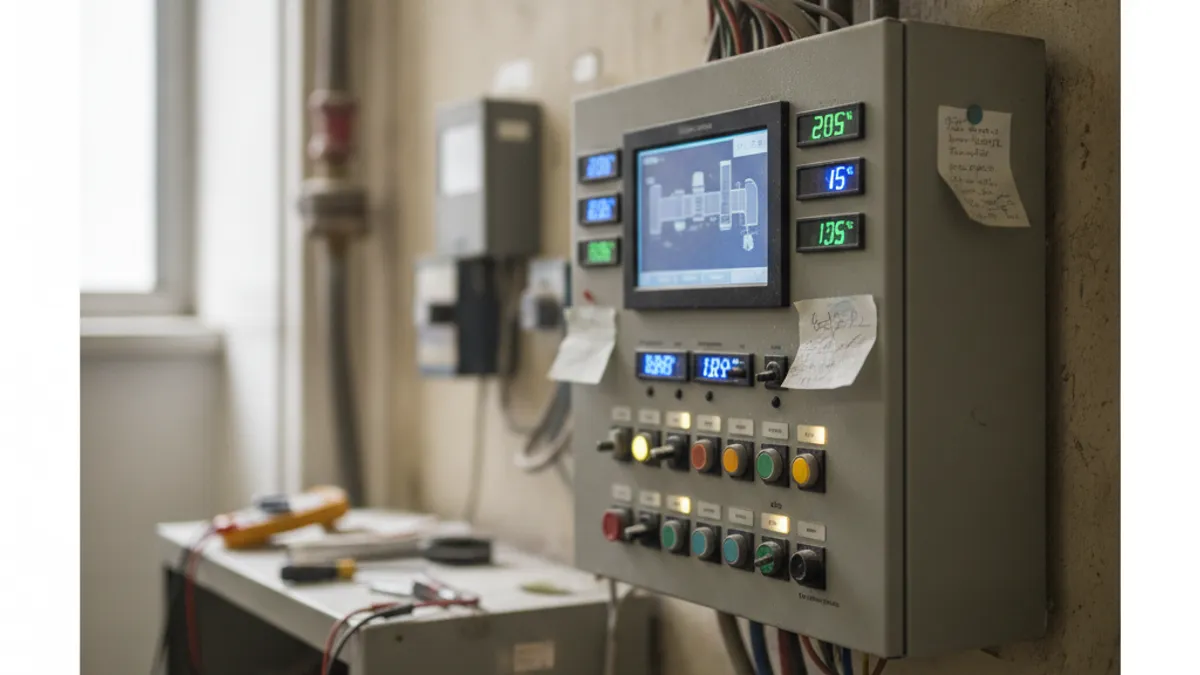
Building management systems connected to the internet without proper security controls are a known attack vector for ransomware and industrial sabotage. Never leave factory-default credentials in place on any BMS controller or workstation, always require encrypted VPN access for remote sessions, and ensure all BMS network segments are isolated from corporate IT infrastructure using a dedicated VLAN and firewall rules. Failure to take these steps can expose the building — and its occupants — to serious operational and reputational risk.
The career opportunity represented by building automation and HVAC BMS expertise is one of the best-kept secrets in the skilled trades. While the HVAC field broadly employs over 400,000 technicians in the United States according to Bureau of Labor Statistics data, the subset who possess genuine BMS programming, commissioning, and troubleshooting skills numbers in the tens of thousands — creating a persistent supply-demand imbalance that translates directly into stronger compensation, more stable employment, and greater geographic flexibility for qualified individuals.
Entry points into building automation careers typically follow one of three paths. The first is the traditional HVAC technician route: earn an EPA Section 608 certification, work as a field service technician for several years developing hands-on equipment knowledge, then pursue specialized training in controls and automation either through an employer-sponsored program, a community college building automation curriculum, or manufacturer training programs offered by companies like Siemens, Johnson Controls, Honeywell, and Schneider Electric.
This path produces technicians with deep mechanical knowledge who understand why control sequences are written the way they are — a combination that makes them exceptionally effective troubleshooters.
The second path comes from the electrical and low-voltage trades. Electricians and low-voltage technicians who are comfortable with network infrastructure, programming logic, and test equipment often find that adding HVAC-specific knowledge — understanding refrigeration cycles, psychrometrics, and air distribution fundamentals — positions them well for building automation roles that emphasize the controls and networking side of BMS work more than the mechanical side. Community college programs in building automation technology, which typically run 12 to 24 months, are well-suited to this transition.
The third path, increasingly common, comes from information technology backgrounds. As BMS systems become more cloud-connected and data-intensive, IT professionals who add HVAC and controls knowledge find their networking, cybersecurity, and data analysis skills are immediately valuable in smart building roles. Job titles like smart building analyst, BMS data engineer, and building technology manager have emerged in recent years specifically to describe this hybrid role that sits at the intersection of HVAC, IT, and data science — and these positions routinely command salaries of $80,000 to $130,000 per year in major metropolitan markets.
Certifications play an important role in demonstrating BMS competency to employers. The Building Automation and Controls Specialist (BACS) designation from BICSI, the Certified Automation Professional (CAP) from ISA, and manufacturer-specific certifications from Siemens (SBT), Johnson Controls (Metasys), and Honeywell (EBI) are all recognized credentials in the hiring market.
Some of these require documented work experience in addition to passing an exam, while others are purely knowledge-based assessments. Regardless of which certification path you pursue, practical hands-on experience commissioning and troubleshooting real BMS installations is irreplaceable — no amount of classroom study fully prepares a technician for the diagnostic creativity required in the field.
For HVAC technicians already in the field who want to expand into BMS work, a structured self-study program can be highly effective. Start by learning BACnet fundamentals using free resources from ASHRAE and the BACnet Interest Group North America (BIG-NA). Practice reading and writing Modbus registers using a free software simulator before working on live equipment.
Take an online course in ladder logic or structured text programming to understand the fundamentals of DDC controller programming. Then seek opportunities within your current employer to shadow controls technicians on commissioning and startup projects — the fastest learning happens when you can observe experienced practitioners solving real problems in real buildings.
The long-term trajectory of the HVAC BMS field points consistently toward greater integration, greater intelligence, and greater connectivity. Grid-interactive efficient buildings — GEBs, in the terminology of the US Department of Energy — represent the next frontier, where building management systems actively participate in utility demand response programs, modulating HVAC loads in real time to support grid stability during peak demand events in exchange for financial incentives.
Technicians and engineers who understand both the mechanical HVAC side and the controls and communications side of these integrated systems will be extraordinarily well-positioned as the built environment transitions toward a smarter, more energy-responsive future over the next decade and beyond.
Preparing for HVAC certification exams that include building controls and automation content requires a different study strategy than preparing for purely mechanical topics. The controls domain rewards systematic conceptual understanding over memorized formulas.
Rather than trying to memorize every BACnet object type or every Modbus function code by rote, focus first on understanding the underlying logic: why do we need standardized protocols, how does a DDC controller decide when to open a valve, what happens to a building when a sensor fails, and how does a BMS distinguish between a fault condition that requires immediate action and a minor deviation that can be logged and reviewed later?
Practice questions are one of the most effective study tools available for HVAC exam preparation, including the controls and automation content that increasingly appears in certification assessments. When working through practice questions on BMS topics, resist the temptation to simply memorize which answer is correct. Instead, work backwards from each answer to understand why the correct choice is right and why each distractor is wrong. This active reasoning process builds the flexible understanding that exam writers test with novel scenarios — not just recognition of familiar answer patterns.
Hands-on simulation is the second pillar of effective BMS exam preparation. Many community colleges, vocational programs, and HVAC employer training facilities maintain BMS lab setups where students can configure controllers, set up trend logs, create alarm notifications, and troubleshoot deliberately introduced faults in a safe environment.
If you do not have access to a formal lab, many DDC controller manufacturers offer free or low-cost software simulation environments that let you run control sequences and observe system behavior without any physical hardware. Siemens APOGEE, Johnson Controls Metasys, and Honeywell EBI all have simulation or demo modes that can be run on a standard laptop.
Time management during BMS-related exam sections deserves specific attention. Controls and automation questions often involve interpreting a schematic, a control sequence description, or a trend graph and applying that information to answer a multi-step scenario. These questions typically take longer than straightforward recall questions about refrigerant properties or psychrometric values. Budgeting your exam time appropriately — spending no more than 90 seconds per question on average and flagging complex scenario questions for return if they are consuming too much time — is a critical test-taking skill that practice exams help you develop before the high-stakes exam day.
Study groups specifically focused on building automation and controls topics can significantly accelerate learning. Working through control sequence logic with peers forces you to articulate your understanding verbally, which exposes gaps in your knowledge more effectively than solitary review. Online communities such as the ASHRAE Building Controls Working Group forums, the BACnet International discussion boards, and LinkedIn groups for building automation professionals provide access to experienced practitioners who are often willing to answer technical questions from students and early-career technicians — a resource that costs nothing but a thoughtful, well-formulated question.
One underutilized study resource is the publicly available literature from ASHRAE, LBNL, and PNNL on building controls best practices. ASHRAE Guideline 36, High-Performance Sequences of Operation for HVAC Systems, is a particularly valuable document because it represents the current engineering consensus on how HVAC systems should be controlled for maximum efficiency and comfort.
Understanding the logic behind Guideline 36 sequences — why supply air temperature reset works the way it does, why economizer control sequences include the specific lockout conditions they do — gives exam candidates a conceptual framework that makes individual facts much easier to retain and apply correctly under exam pressure.
Finally, track your practice exam performance systematically. After each practice session, record which topic areas generated the most errors and allocate your subsequent study time proportionally. Most candidates underinvest in their weak areas because reviewing familiar material feels more comfortable and productive than wrestling with difficult concepts.
A data-driven approach to study planning — treating your own performance analytics with the same rigor that a BMS applies to building energy data — will almost always produce faster improvement than unstructured review. Combine consistent practice exam work with hands-on simulation and targeted reading of authoritative technical resources, and you will be well-prepared to demonstrate genuine BMS competency on exam day and in the field.
Sample HVAC Practice Questions
Try these questions from our free HVAC practice tests. The correct answer and an explanation follow each question.
What is 'refrigerant charge' management in heat pump systems?
- A. The proper amount of refrigerant ensuring correct superheat and subcooling values, affecting both efficiency and reliability
- B. Only the charge pressure matters, not quantity
- C. Refrigerant charge only matters for cooling mode—heating mode is insensitive to charge level
- D. Charge management means only checking for leaks annually
Answer: A. The proper amount of refrigerant ensuring correct superheat and subcooling values, affecting both efficiency and reliability
Proper refrigerant charge ensures the system achieves target superheat at the evaporator outlet and subcooling at the condenser outlet—both too much and too little refrigerant dramatically reduce efficiency and can damage the compressor.
What is the role of a 'building pressure differential' control strategy in a commercial HVAC system?
- A. Controlling the pressure difference across chiller tubes
- B. Maintaining slight positive building pressure relative to outdoors to prevent infiltration of unconditioned or contaminated air
- C. Balancing pressure between floors of a high-rise
- D. Equalizing refrigerant pressure during off-cycle
Answer: B. Maintaining slight positive building pressure relative to outdoors to prevent infiltration of unconditioned or contaminated air
Slightly positive building pressure prevents unconditioned outdoor air, pollutants, and moisture from infiltrating through cracks and openings in the building envelope.
What is 'setback' or 'setup' control in HVAC energy management?
- A. Temporarily relaxing temperature setpoints during unoccupied periods to reduce heating or cooling energy
- B. Increasing airflow during peak hours to improve comfort
- C. Raising supply fan speed during unoccupied hours for air circulation
- D. Cycling the chiller off during periods of low demand
Answer: A. Temporarily relaxing temperature setpoints during unoccupied periods to reduce heating or cooling energy
Setback (heating) and setup (cooling) raise or lower thermostat setpoints when a building is unoccupied, reducing HVAC runtime and energy consumption significantly.
What does PID stand for in HVAC control systems?
- A. Pneumatic Integrated Damper
- B. Proportional-Integral-Derivative
- C. Pressure-Induced Differential
- D. Programmable Interface Device
Answer: B. Proportional-Integral-Derivative
PID control combines Proportional, Integral, and Derivative actions to minimize error, eliminate steady-state offset, and dampen rapid oscillations.
HVAC Questions and Answers
Finance a New HVAC System: 2026 Loans, 0% APR, and Rebates

HVAC Installer Duties: Complete Guide to Daily Responsibilities, Required Skills, Certifications, and Career Growth
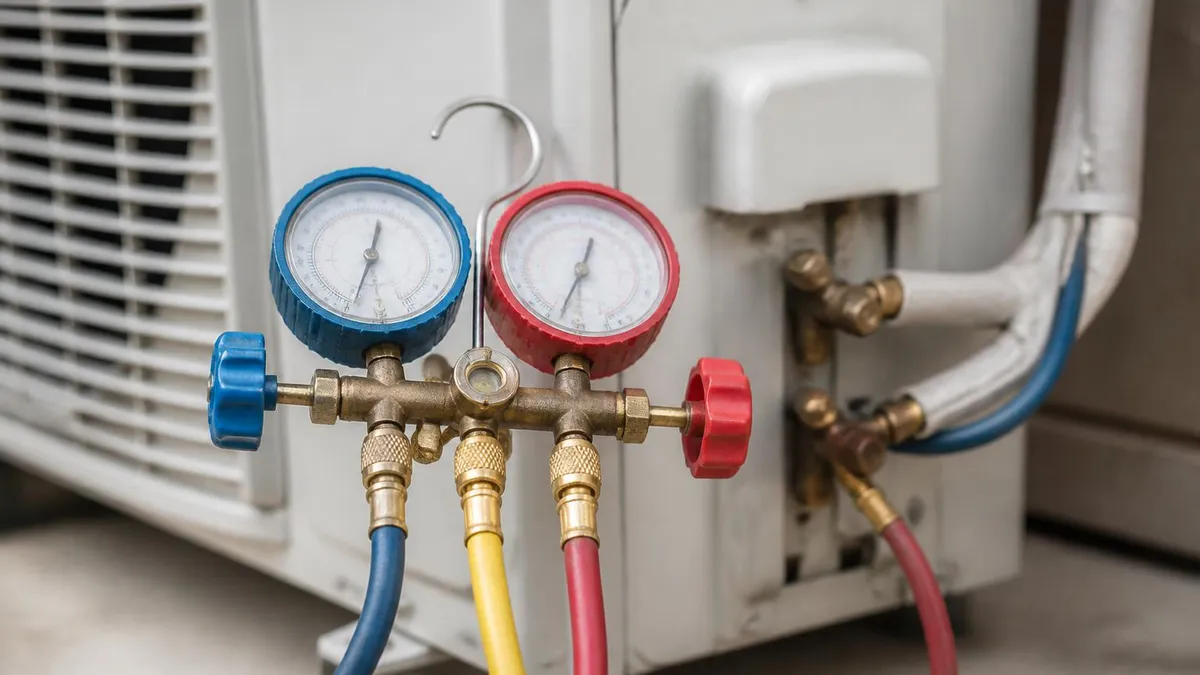
HVAC Design: The Complete Guide to Heating, Ventilation, and Air Conditioning System Planning for Homes and Commercial Buildings

HVAC Duct Repair: Common Issues, Costs, and DIY vs Professional

HVAC and Plumbing: How These Two Trades Intersect, What Technicians Need to Know, and How to Build a Career in Both
About the Author

NATE Certified HVAC Technician & Licensing Exam Trainer
Universal Technical InstituteMike Johnson is a NATE-certified HVAC technician and EPA 608 universal-certified refrigerant handler with a Bachelor of Science in HVAC/R Technology. He has 19 years of commercial and residential HVAC installation and service experience and specializes in preparing technicians for NATE certification, EPA 608, A2L refrigerant safety, and state HVAC contractor licensing examinations.