
Is HVAC a Heat Pump? What Homeowners and Students Need to Know About the Difference
💡 Is HVAC a heat pump? Learn how heat pumps fit inside HVAC systems, how they compare to furnaces and AC, and what US homeowners should know before buying.
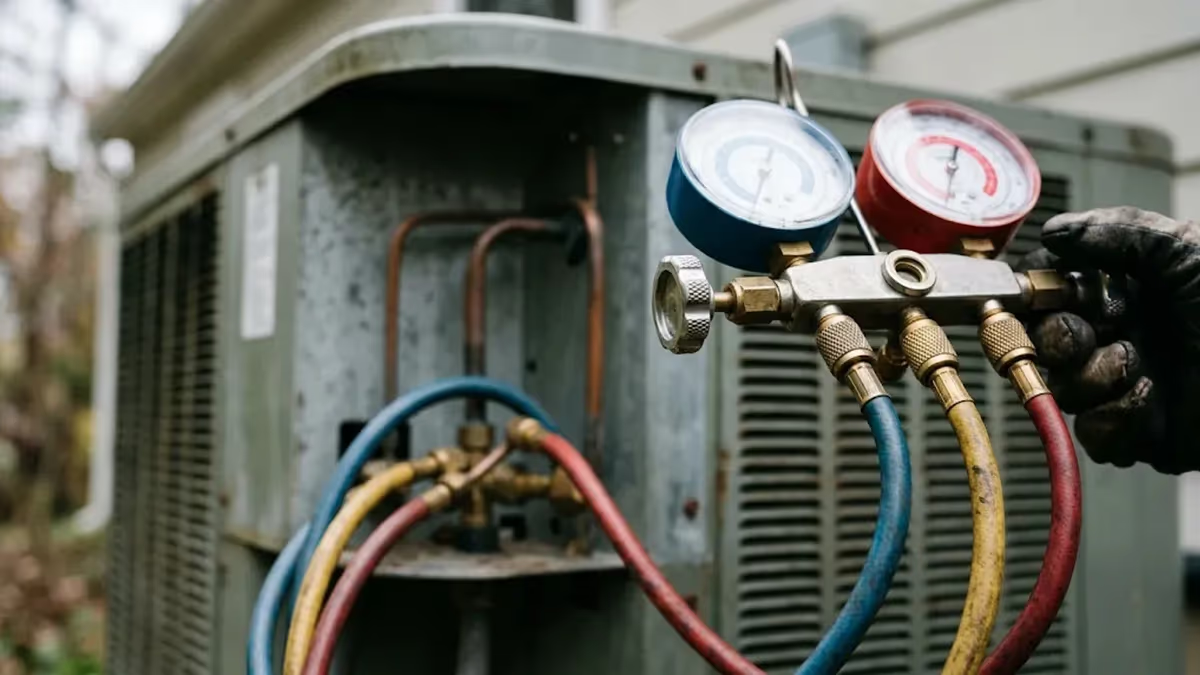
Is HVAC a heat pump? The short answer is no, but the two terms overlap in ways that confuse many homeowners. HVAC stands for heating, ventilation, and air conditioning, and it describes an entire category of equipment and the work of moving comfortable air through a building. A heat pump is one specific machine that can sit inside that category. Think of HVAC as the whole toolbox and a heat pump as one of the most versatile tools in it.
Heat pumps earn that spot because they handle two jobs at once. In summer, a heat pump pulls heat out of your house and releases it outdoors, exactly like a central air conditioner. In winter, it reverses direction and pulls heat from outdoor air into your home. Because one outdoor unit and one indoor coil can heat and cool, many contractors call a heat pump a complete HVAC system by itself, which is where the mix-up starts.
Other HVAC systems work differently. A gas furnace burns natural gas or propane to create heat, then a blower pushes warm air through ducts. A boiler heats water and sends it through radiators or in-floor tubing. A standalone air conditioner only cools. A package unit puts everything in a single cabinet on the roof or beside the home. Every one of these belongs under the HVAC label, but only a heat pump moves heat in both directions using refrigerant.
Understanding this difference matters when you shop for equipment, read a quote, or study for a trade exam. A contractor who says you need a new HVAC may mean a furnace, an air conditioner, or a heat pump, and the price gap can reach several thousand dollars. Knowing the vocabulary helps you compare bids fairly and spot sales pitches that skip details. Building solid hvac system knowledge also helps if you plan to pay for an inspection before buying a house.
This guide explains what a heat pump actually is, how it differs from furnaces and air conditioners, and where it fits in the larger HVAC picture. You will see real numbers for efficiency, cost, and lifespan, along with the climate limits that matter in the northern United States. We also cover refrigerant changes, maintenance habits, and practical shopping steps, so you can walk into a conversation with an installer knowing which questions to ask.
The guide also serves students preparing for HVAC certification or a trade school course. Terms like refrigeration cycle, reversing valve, SEER2, and HSPF2 appear on entry-level exams and in everyday service calls. Learning them in plain language first makes later technical study far easier. Along the way, we point to free practice questions so you can test yourself on air conditioning basics and code compliance topics, which often include heat pump installation requirements.
Whether you are a homeowner, landlord, apprentice, or simply curious, the goal is straightforward. By the end you will know why the question of whether HVAC is a heat pump has a two-part answer: not exactly, yet a heat pump is often the heart of a modern HVAC setup. You will also know when a heat pump makes financial sense, when a furnace still wins, and what a hybrid system can offer.
Heat Pumps and HVAC by the Numbers
HVAC Equipment Types: Where a Heat Pump Fits
The most common heat pump type. An outdoor unit and indoor air handler use refrigerant to heat and cool through ducts. It provides both functions with one system, which is why many people treat it as a complete HVAC package.
The traditional American pairing. A furnace burns natural gas or propane for heat while a separate outdoor condenser and indoor coil handle cooling. Two machines share one duct system, and each performs only one job.
A boiler heats water and circulates it through baseboard radiators, cast-iron radiators, or in-floor tubing. These systems provide quiet, even heat but need a separate cooling solution, such as mini-splits or window units.
A ductless mini-split is usually a heat pump with one outdoor unit feeding wall-mounted indoor heads. It suits additions, garages, and older homes without ducts, and each room can be controlled separately.
To understand why a heat pump counts as HVAC equipment rather than the whole of HVAC, it helps to see how it works. A heat pump does not create heat by burning fuel or heating a metal element. It moves existing heat from one place to another using a refrigerant that cycles between liquid and gas. Even cold outdoor air contains heat energy, and the refrigerant absorbs that energy and carries it indoors for distribution.
The cycle has four main parts. The compressor squeezes refrigerant gas, raising its pressure and temperature. The condenser coil releases that heat to its surroundings as the gas turns back into liquid. An expansion valve drops the pressure of the liquid, cooling it sharply. Finally, the evaporator coil lets the cold refrigerant absorb heat and boil back into gas. Then the loop repeats thousands of times per day.
The component that makes a heat pump different from a plain air conditioner is the reversing valve. In cooling mode, the indoor coil acts as the evaporator and absorbs heat from your rooms. When you switch to heating, the reversing valve flips the flow of refrigerant, so the indoor coil becomes the condenser and releases heat into your home. The refrigerant circuit is the same, but the direction changes with the season.
Efficiency is the big payoff. A furnace can approach 98 percent efficiency, but it can never exceed 100 percent because it converts fuel into heat. A heat pump delivers a coefficient of performance, or COP, commonly between 2 and 4. That means every kilowatt-hour of electricity moves two to four kilowatt-hours of heat. At a COP of 3, the system is effectively 300 percent efficient in mild weather.
Performance does drop as outdoor temperature falls, because less heat is available in the air. Around 17 to 25 degrees Fahrenheit, a standard unit may lose roughly a third of its rated capacity. Frost can also form on the outdoor coil, so the system runs a defrost cycle, briefly switching to cooling mode to melt ice. You may notice steam rising from the outdoor unit during this process, which is normal.
When the heat pump alone cannot keep up, most ducted systems include auxiliary heat. This is usually a set of electric resistance strips inside the air handler that act like a giant toaster. They work well but use far more electricity, with a COP of exactly 1. If your thermostat shows an emergency or aux heat light often, the system may be undersized, low on refrigerant, or facing extreme cold.
Modern variable-speed and inverter-driven heat pumps improve this picture. Instead of switching fully on and off, the compressor ramps up and down to match demand, holding temperatures within a degree or two and cutting energy waste. They also run quieter and dehumidify better in summer. These features explain why inverter models dominate the premium market, and why a heat pump today bears little resemblance to units sold in the 1980s.
Heat Pump vs Furnace vs Air Conditioner: Is HVAC a Heat Pump?
An air-source heat pump is the answer most people want when they ask whether HVAC is a heat pump. It provides heating and cooling from one outdoor unit and one indoor air handler. It uses electricity only, so there is no gas line, no flue, and no combustion inside the house. That simplicity lowers installation complexity in all-electric homes and removes the risk of carbon monoxide from the heating equipment itself.
The tradeoff is climate sensitivity and the electric rate where you live. In mild regions such as the Southeast, Pacific Northwest, and mid-Atlantic, a heat pump often beats gas on yearly operating cost. In very cold regions, performance depends on choosing a cold-climate model. Compare your local electricity price per kilowatt-hour against your gas price per therm before assuming savings, because those two numbers drive the result.
Is a Heat Pump the Right HVAC Choice for Your Home?
- +One system provides both heating and cooling, which reduces equipment clutter and maintenance contacts.
- +High efficiency, often 200 to 400 percent, can cut heating bills compared with electric resistance or oil.
- +No on-site combustion means no flue gases, no gas line, and lower indoor air risks.
- +Variable-speed models offer quiet operation, steady temperatures, and better summer dehumidification.
- +Fits all-electric homes and pairs well with rooftop solar and time-of-use electric rates.
- +Ductless versions serve additions and older homes without ductwork.
- −Upfront installation cost is often higher than a basic furnace and AC replacement.
- −Heating capacity falls in extreme cold unless you choose a cold-climate rated model.
- −Electric bills can rise in regions with expensive electricity and cheap natural gas.
- −Auxiliary electric strips use a lot of power when they run frequently.
- −Defrost cycles can briefly blow cooler air and may surprise new owners.
- −Installation quality matters enormously, and poor sizing or charging reduces real-world performance.
Checklist: Choosing Between a Heat Pump and Other HVAC Systems
- ✓Confirm whether your current system is a furnace, boiler, or existing heat pump.
- ✓Compare local electricity cost per kWh with gas cost per therm.
- ✓Ask installers for a Manual J load calculation, not a rule of thumb.
- ✓Check the SEER2 and HSPF2 ratings on every quote.
- ✓Ask whether the model is rated for cold-climate operation.
- ✓Inspect existing ductwork for leaks, sizing, and insulation problems.
- ✓Request details on auxiliary heat type and its estimated usage.
- ✓Verify the installer's license, insurance, and manufacturer certifications.
- ✓Look up current federal, state, and utility rebates before signing.
- ✓Get at least three written bids with equipment model numbers listed.
HVAC Is the Category, a Heat Pump Is One Machine
HVAC is the broad field covering heating, ventilation, and air conditioning, while a heat pump is a single type of equipment within it. A heat pump does both heating and cooling, so it can serve as a complete system, but furnaces, boilers, and air conditioners are HVAC too.
Cost is where most homeowners start, so here are realistic ranges. A fully installed ducted air-source heat pump in the US typically runs from about 6,000 to 14,000 dollars, depending on size, brand, region, and ductwork condition. A basic gas furnace plus central AC pairing often lands in a similar or slightly lower band. Ductless mini-splits cost roughly 3,000 to 5,000 dollars per indoor zone, so multi-room installations climb quickly.
Efficiency ratings tell you what you are buying. SEER2 measures seasonal cooling efficiency, while HSPF2 measures seasonal heating efficiency for heat pumps. These ratings replaced SEER and HSPF in 2023 under updated federal test procedures that better reflect real duct conditions. Many split-system heat pumps must now meet at least 14.3 SEER2 and 7.5 HSPF2, and premium inverter models exceed 20 SEER2 with HSPF2 above 9.
Higher ratings cost more, so check the payback. Moving from a minimum-efficiency unit to a mid-range model often saves noticeable money each year, while the jump from very good to elite often takes a decade or longer to repay. Look at annual operating cost estimates rather than ratings alone. An installer can model your home with local utility prices, which is more useful than a brochure number measured in a lab.
Lifespan is a quiet part of the cost picture. A well-maintained heat pump generally lasts 12 to 17 years, a little shorter than a furnace because the compressor works year-round rather than only in summer. A gas furnace can often run 15 to 25 years, and a boiler even longer. When comparing, divide installed cost by expected years of service, then add energy costs, to see the true annual price.
Incentives have changed often in recent years, so verify them rather than relying on old articles. Federal tax credits for efficient heat pumps have been modified by recent legislation, and some have expired or shifted in scope. State programs, utility rebates, and manufacturer promotions can still reduce the price by hundreds or thousands of dollars. Check the Database of State Incentives for Renewables and Efficiency, your utility website, and your installer before finalizing the bid.
Refrigerant is another recent cost factor. For decades, residential equipment used R-410A, but federal rules under the AIM Act are phasing down high global-warming-potential refrigerants. New systems are increasingly built around A2L refrigerants such as R-454B and R-32, which are mildly flammable and require updated installation practices. Technicians need specific training, and parts and service procedures differ, which can affect long-term repair costs and the cost of recharging older equipment.
Finally, think about operating cost across seasons. A heat pump may cost more to run on the coldest week of winter, yet much less across the other fifty weeks. Smart thermostats, setback schedules, and good insulation make a bigger difference than most people expect. A leaky attic can erase the benefit of the most efficient equipment, so improve the building envelope alongside any new system for the best total return.
A heat pump's advertised heating capacity is measured at about 47 degrees Fahrenheit. At 5 degrees, output can be far lower. Always ask for the manufacturer's capacity table at your local design temperature, and confirm that the system plus its backup heat covers your home's calculated heat loss.
Climate is the single biggest factor in deciding whether a heat pump suits your home. In places like Florida, Texas, Georgia, and California, winter lows rarely challenge a standard unit, so a heat pump is an easy call. In the Midwest and Northeast, cold-climate models designed with enhanced vapor injection or advanced inverter compressors now maintain strong output down to around negative 5 degrees Fahrenheit, and some claim operation near negative 15.
Look for certification when you shop in cold regions. The Northeast Energy Efficiency Partnerships maintain a cold-climate air-source heat pump specification and a public product list, and many state rebate programs require units to appear on it. A listed model has documented performance at 5 degrees Fahrenheit, which tells you more than a generic marketing claim. Always confirm both the outdoor unit and the matched indoor coil are on the list.
Sizing is the next critical step, and it is where many installations go wrong. A proper Manual J load calculation measures your home's heat gain and heat loss based on square footage, insulation, windows, orientation, and air leakage. Oversized heat pumps short-cycle, wasting energy and doing a poor job removing humidity. Undersized units struggle in extremes. A contractor who sizes by square feet alone, such as one ton per 500 square feet, is guessing.
Ductwork deserves equal attention. Studies by the Department of Energy have found that typical duct systems can lose 20 to 30 percent of the air they move through leaks and poor insulation, especially in attics and crawl spaces. A high-efficiency heat pump attached to leaky ducts delivers disappointing results. Sealing with mastic, insulating to proper R-value, and verifying static pressure with a manometer often improves comfort more than upgrading to a bigger outdoor unit.
The installation itself must follow code and manufacturer instructions. Refrigerant line sets need correct sizing, brazing with nitrogen flowing to prevent oxide contamination, deep vacuum below 500 microns, and a precise charge by weight or subcooling and superheat. Condensate drains need proper slope and safety switches. The outdoor unit needs clearance from walls, snow, and vegetation. Shortcuts here cause premature compressor failure and are a common source of warranty disputes.
Electrical requirements are also part of the job. A heat pump with electric auxiliary heat may need a dedicated circuit of 30 to 60 amps or more, and older homes with 100-amp panels sometimes need an upgrade. Ask the installer to check the panel capacity and local permit rules before the quote is final. Permits and inspections protect you, because they require a second set of eyes to verify code compliance.
Before you buy a home with an existing system, a professional inspection helps identify age, refrigerant type, ductwork condition, and obvious safety issues. Ask the inspector to record model and serial numbers so you can look up the manufacture date. Systems older than 12 to 15 years may be due for replacement soon, which should factor into your negotiation and budget for the first few years of ownership.
Once you have chosen a system, maintenance determines whether it reaches its full lifespan. The most important task is also the cheapest: change or clean the air filter every one to three months. A clogged filter restricts airflow, which raises energy use, freezes the evaporator coil in summer, and strains the blower motor. Mark your calendar, buy filters in bulk, and check them more often during pollen season or if you have pets.
Keep the outdoor unit clear. Leaves, grass clippings, and cottonwood fluff clog the condenser coil, while snow and ice can block airflow in winter. Maintain at least two feet of clearance around the cabinet and trim shrubs back. Gently rinse the coil with a garden hose from the inside out if it looks dirty, with the power off. Never use a pressure washer, since the aluminum fins bend easily.
Schedule professional service once a year, ideally in spring or fall before peak demand. A good technician measures refrigerant pressures, temperature split, and amperage draw, inspects electrical connections, tests the capacitor and contactor, clears the condensate drain, and verifies the reversing valve and defrost control work. Many problems cost far less to fix during a tune-up than after a mid-winter breakdown, when emergency rates and long wait times apply.
Learn the signs of trouble. Unusual grinding or squealing, ice on the refrigerant lines in summer, a unit that runs constantly but never reaches the set temperature, or aux heat running every day all deserve attention. Do not keep adding refrigerant yourself or through a quick top-off, because heat pumps are sealed systems, and low charge means a leak. A licensed technician must find and repair it, and federal law requires EPA 608 certification to handle refrigerant.
If you are studying HVAC as a career, treat the heat pump as your teaching tool. Draw the refrigeration cycle from memory in both heating and cooling modes, and label every component. Practice reading superheat and subcooling charts, then work through sample calculations. Understanding why pressures rise or fall when the reversing valve switches gives you a deeper grasp than memorizing facts, and it prepares you for the diagnostic questions on certification exams.
Build exam habits steadily. Study in short sessions of 30 to 45 minutes, review mistakes rather than just scores, and keep a notebook of formulas, such as the relationship between SEER, EER, and COP. Take timed practice tests under realistic conditions, then revisit the topics where you missed questions. Many learners find that alternating air conditioning theory with code compliance review keeps the material fresh and reveals how the two subjects connect.
Finally, stay current. Refrigerants, efficiency standards, and safety codes change every few years, and the trade rewards people who keep learning. Follow manufacturer bulletins, attend local supply house training events, and read the current edition of the mechanical code adopted in your state. Whether you are a homeowner managing a big purchase or a student entering the field, steady learning pays back every season in comfort, savings, and confidence.
HVAC Questions and Answers

HVAC Inspection Cost: What Homeowners Actually Pay and What Drives the Price

Is It OK to Run HVAC Fan Continuously? The Complete Guide to Fan Settings, Energy Costs, and System Longevity

HVAC Tubing, Components and Materials: The Complete Guide to Copper, Aluminum, and Refrigerant Line Sets

Electronic Air Filter for HVAC: The Complete Guide to Whole-House Air Purification, MERV Ratings, and Indoor Air Quality

HVAC Chiller Systems: The Complete Guide to Types, Components, Sizing, and Maintenance for Commercial Cooling
Written and edited by Nathan Beja, founder of Practice Test Geeks, with AI assistance. We have not yet matched this exam's facts to an official source, so confirm fees, dates and rules with the exam body. Editorial policy