
Bexar County HVAC Services: A Homeowner's Guide to Costs, Licensing, and Choosing a Contractor
🎯 Bexar County HVAC services guide: San Antonio cooling needs, TDLR licensing, typical costs, and how to pick a trustworthy contractor.

Bexar County HVAC services cover far more than air conditioner repair. The county, anchored by San Antonio and home to more than two million people, sits in a hot, humid climate zone where cooling equipment runs for roughly eight months a year. Summer highs average in the mid-90s, and attic temperatures can pass 140°F. That workload shapes everything homeowners buy: equipment sizing, maintenance schedules, energy bills, and which contractors are actually qualified to touch their systems.
Searching for help usually starts with a breakdown. The air handler freezes on a July afternoon, the thermostat reads 83°F indoors, and every company you call is booked for days. Understanding the local market before that moment arrives changes the outcome. You will know which services you may need, what they should cost, and what credentials to verify. This guide walks through all of it with Bexar County conditions in mind.
It also helps to see why HVAC work varies so much from place to place. Climate, housing stock, utility rates, permit rules, and licensing requirements all differ by region. A contractor who excels in Minnesota furnace work may be a poor fit for a humid Gulf-influenced cooling market. Reading about hvac services by location and pricing differences gives useful context before you compare any quotes in your own area.
Housing in Bexar County is surprisingly diverse. Central San Antonio has mid-century homes with aging ductwork, original single-pane windows, and attic systems squeezed into tight spaces. The north side and outlying suburbs such as Helotes, Schertz, and Converse have newer builds with larger footprints, two-story layouts, and multiple zones. Each housing type creates different service needs, from duct sealing and insulation upgrades to dual-system balancing and smart thermostat integration.
Cooling dominates the service calendar, but heating still matters. San Antonio winters are mild, yet a few hard freezes each year push heat pumps and gas furnaces hard, and a failed heater on a 28°F night is a genuine problem. Many local homes use heat pumps, which handle both seasons, while others pair a central air conditioner with a gas furnace. Good local contractors service both configurations and can explain which fits your home best.
Indoor air quality is the third pillar. Cedar pollen in winter, mold spores after wet spells, and Saharan dust events in summer make filtration and humidity control real concerns for Bexar County families. Humidity in particular drives comfort more than temperature alone. An oversized air conditioner that cools quickly but short-cycles leaves the house clammy at 74°F, which is why proper load calculations matter as much as equipment brand.
This article is educational and meant to help you ask better questions, not replace a site visit. We cover the main service categories, licensing and permit basics, differences across parts of the county, realistic cost ranges, a hiring checklist, and seasonal maintenance habits. We close with practical tips and practice questions if you are also studying HVAC concepts yourself. Use the table of contents to jump to any section that matches your situation.
Bexar County HVAC by the Numbers
Main Types of Bexar County HVAC Services
Replacing a worn-out air conditioner, heat pump, or furnace includes a load calculation, equipment selection, line set and duct evaluation, permit filing, and commissioning. In this climate, a proper install matters as much as the brand on the unit.
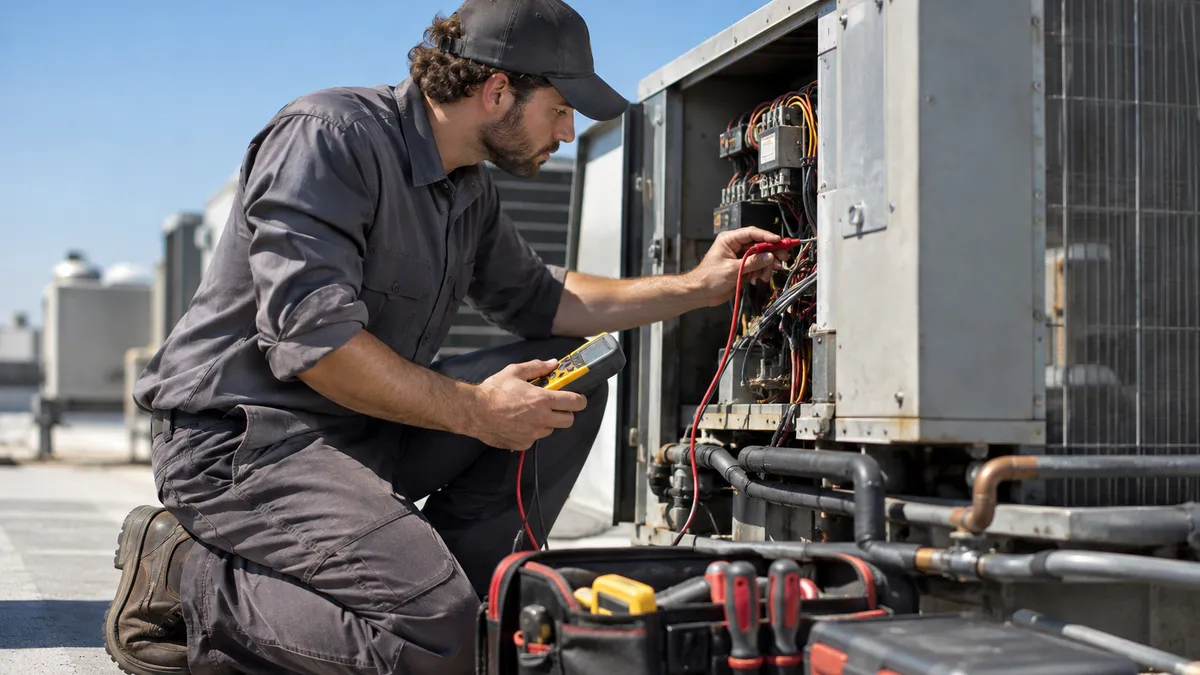
Common local repairs include failed capacitors, frozen evaporator coils, refrigerant leaks, clogged condensate drains, and blower motor failures. Summer demand is intense, so many companies offer same-day or after-hours service at premium rates.
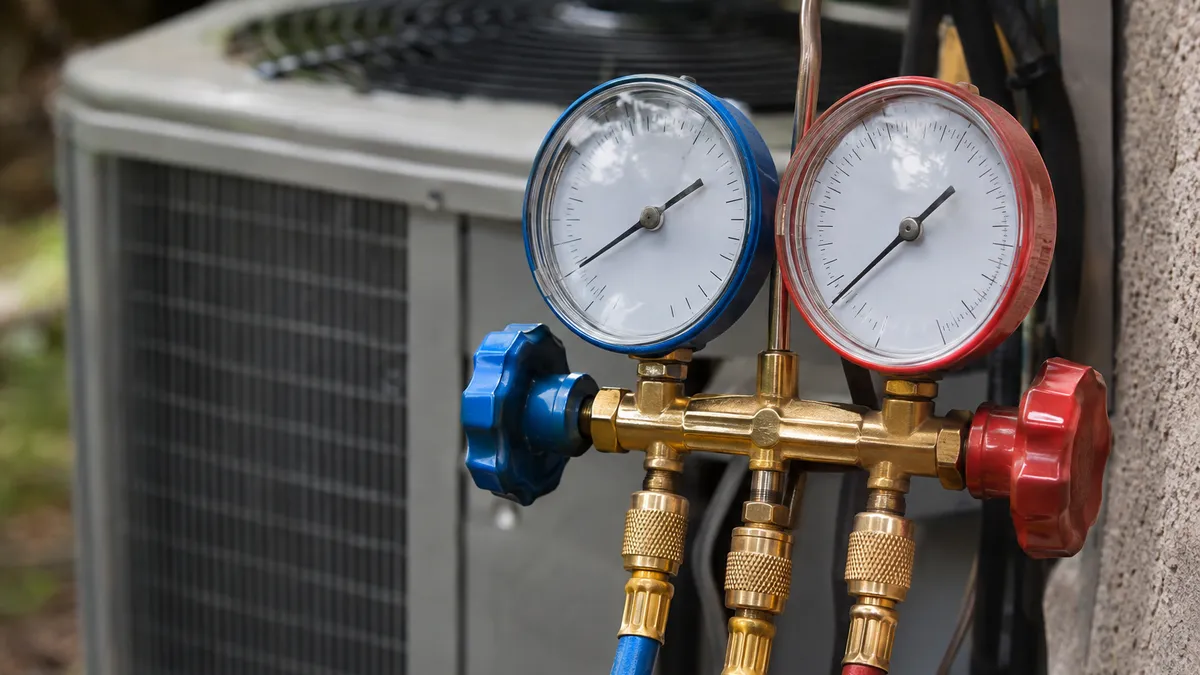
Seasonal tune-ups clean coils, test electrical components, check refrigerant pressures, and flush drain lines. Spring cooling checks and fall heating checks catch small problems before they become expensive breakdowns during peak demand.
Duct sealing, insulation upgrades, return air fixes, whole-home filtration, and dehumidification address comfort and health. Leaky attic ducts in Texas heat waste significant energy and often explain uneven room temperatures.
Texas regulates air conditioning work at the state level, not the county level. The Texas Department of Licensing and Regulation, known as TDLR, issues Air Conditioning and Refrigeration Contractor licenses. Companies must hold a license, and the technicians working under them must be registered or licensed too. Before you hire anyone in Bexar County, ask for the company license number and look it up on the TDLR website. The search takes about two minutes.
There are two main license classes. A Class A contractor can work on systems of any size, while a Class B contractor is limited to systems with a cooling capacity up to 25 tons and a heating capacity up to 1.5 million BTU per hour. Nearly every house falls well inside Class B limits, so either class is acceptable for residential work. Larger commercial buildings and rooftop packages may require Class A credentials.
Licensing also covers refrigerant handling. Federal law under the Clean Air Act requires technicians who work with refrigerants to hold EPA Section 608 certification. Venting refrigerant is illegal, and recovery equipment must be used whenever a system is opened. If a contractor offers to just top off a leaking system repeatedly without finding the leak, that is both a legal red flag and a cost trap, because the leak will keep returning.
Permits are the next piece. Replacing an air conditioner, furnace, or heat pump generally requires a mechanical permit in San Antonio and many other Bexar County municipalities, followed by an inspection. Rules differ between the City of San Antonio, incorporated suburbs, and unincorporated county areas, so confirm with your local building or development services office. Reputable contractors pull permits themselves and include the fee in the quote, which protects your warranty and resale value.
Energy and equipment standards matter as well. Federal rules set minimum efficiency for new equipment by region, and for most residential split-system air conditioners sold in the southern states the minimum is 14.3 SEER2. Texas also adopts model energy codes for new construction, affecting insulation levels, duct leakage testing, and window performance. A contractor should be able to explain how the equipment they propose meets these requirements without hand-waving.
Refrigerants are changing too. Older R-22 systems are long obsolete, and R-410A is being phased down in new equipment in favor of lower global warming potential options such as R-454B and R-32. For homeowners, the practical impact is that a repair on an older R-410A system will remain possible for years, but you should ask about refrigerant type when comparing replacement quotes so you understand future service availability and cost.
Finally, check insurance and warranty terms in writing. A legitimate Bexar County contractor carries general liability insurance and workers compensation coverage, and can provide certificates on request. Manufacturer warranties typically run five to ten years on parts, but many require professional installation and documented annual maintenance. Labor warranties vary from one year to ten. Keep copies of your invoice, permit, and registration paperwork in one folder so claims go smoothly later.
Bexar County HVAC Services Across Different Parts of the County
Older neighborhoods inside Loop 410 often have homes built between the 1940s and 1980s. These houses commonly have undersized or deteriorating ductwork, minimal attic insulation, and equipment installed in cramped closets or crawl spaces. Replacement jobs here frequently turn into duct rework, since attaching a new high-efficiency unit to leaky legacy trunk lines wastes much of the upgrade.
Service calls in these areas often involve access challenges, such as narrow attic hatches and tight clearances, which can raise labor time. Ask contractors whether they have handled similar homes before. Insulation, radiant barriers, and window shading can reduce the cooling load enough to let you choose a smaller, cheaper system, so a whole-house approach often pays back faster than equipment alone.
Local Bexar County HVAC Company or National Chain?
- +Local companies know San Antonio attic conditions, humidity issues, and typical home layouts
- +Owners are often reachable directly when something goes wrong
- +Many offer flexible scheduling and personal relationships that reward loyalty
- +Reputation depends on neighborhood word of mouth, so quality tends to be accountable
- +Pricing is often more transparent, with fewer corporate overhead markups
- +Local firms can usually show nearby references you can verify in person
- −Smaller teams may be fully booked during summer heat waves
- −Financing options and promotions may be less generous than large chains
- −Fewer technicians means after-hours coverage can be limited
- −Warranty support depends on the continued survival of a small business
- −Some smaller shops lack modern diagnostic tools or online scheduling
- −Quality varies widely, so you must verify licensing and reviews carefully
Checklist for Hiring Bexar County HVAC Services
- ✓Look up the company's TDLR license number before scheduling any visit.
- ✓Confirm technicians hold EPA Section 608 refrigerant certification.
- ✓Ask for proof of liability insurance and workers compensation coverage.
- ✓Request a written estimate that lists equipment model, SEER2, and tonnage.
- ✓Make sure the quote includes the mechanical permit and inspection.
- ✓Ask whether a load calculation was performed instead of guessing by square footage.
- ✓Compare at least three quotes from different companies.
- ✓Read recent reviews and look for patterns in complaints, not single bad days.
- ✓Get labor and parts warranty terms in writing before signing.
- ✓Take photos of your existing equipment and keep all paperwork after the job.
Sizing Beats Brand Name
An air conditioner that is too large cools quickly, shuts off early, and leaves humidity behind, which feels sticky even at a low thermostat setting. In San Antonio's humid climate, a correctly sized system from a mid-range brand usually outperforms an oversized premium unit. Insist on a Manual J load calculation.
Cost is the question most people ask first, and honest answers come with ranges. A routine seasonal tune-up in the San Antonio area typically runs from roughly $100 to $200, often cheaper through a maintenance membership. A basic diagnostic visit commonly costs $75 to $150, sometimes credited toward the repair. Simple repairs like replacing a capacitor or contactor may land between $150 and $450 depending on parts and urgency.
Bigger repairs carry bigger numbers. Replacing a blower motor can cost $500 to $1,500, and a compressor replacement can approach the price of a new system, which makes it rarely worthwhile on older equipment. Refrigerant leak repair varies widely depending on whether the leak is in a coil, a fitting, or the line set. Always ask for the leak location, the repair method, and the warranty on the fix before approving work.
Full system replacement for an average home in the county generally ranges from about $6,000 to $12,000 or more, depending on tonnage, efficiency tier, duct modifications, and whether you are replacing only the outdoor condenser or the whole split system. Two-stage and variable-speed models cost more up front but improve humidity control and comfort. Treat any quote far below the others as a warning, since shortcuts often hide in skipped permits or reused components.
Energy costs shape the long-term math. San Antonio's electricity is supplied largely by CPS Energy within the city, and cooling can account for more than half of a summer bill in many homes. Moving from an old 10 SEER unit to a modern 15 SEER2 system can cut cooling electricity use substantially, though exact savings depend on your habits, home envelope, and rates. Ask your contractor to show estimated usage rather than promising vague percentages.
Look for rebates and programs. Local utilities and federal tax credits have at various times supported high-efficiency heat pumps, insulation, and duct sealing. Programs change often, so check current offerings from CPS Energy, your retail electricity provider, and the federal government before you buy. A contractor familiar with these incentives can help document equipment ratings and installation details, which is often required for the paperwork to be approved.
Financing is common for big replacements. Many companies offer payment plans with promotional interest periods, and some lenders specialize in home improvement loans. Read the fine print about deferred interest, since missing a final payment can add back months of interest. Compare the total cost, not only the monthly payment, and consider whether a slightly higher efficiency model costs little more per month while lowering your electric bill.
Do not overlook non-equipment upgrades. Attic insulation, radiant barrier roof decking, window film, and duct sealing often cost less than a new air conditioner yet reduce cooling demand across the entire summer. In an older Bexar County home, sealing ducts and adding insulation before replacement can sometimes let you drop a half ton in capacity. That saves purchase cost, improves dehumidification, and extends the life of the new system.

Demand spikes in July and August attract door-to-door sellers and unlicensed handymen. Texas law requires licensed contractors for air conditioning work, and unlicensed repairs can void warranties and create safety hazards. Verify the TDLR license first, never pay the full amount upfront, and avoid anyone pressuring you to decide immediately.
Maintenance is the cheapest HVAC service you can buy. In Bexar County, the most useful visit is a spring cooling check performed before the heat arrives. A technician should clean the condenser coil, inspect the evaporator, measure refrigerant pressures and temperature split, test capacitors and contactors, check the blower, and flush the condensate drain. A visit in March or April costs less and is easier to schedule than a July emergency.
Condensate drains deserve special attention in this humid climate. Algae and slime build up inside the drain line, and a clog sends water into the secondary pan or onto your ceiling. Many systems include a float switch that shuts down cooling when the pan fills, which people mistake for a failed air conditioner. Pouring a cup of diluted vinegar through the line every few months, as your technician advises, helps prevent trouble.
Air filters are the simplest task you can do yourself. A one-inch pleated filter typically needs replacing every one to three months, and more often with pets, construction dust, or heavy pollen seasons. A clogged filter restricts airflow, reduces cooling capacity, and can cause the evaporator coil to freeze. Check your system's recommended MERV rating, since filters that are too restrictive can strain blowers designed for lower resistance.
Fall is the time for heating checks. Gas furnace service includes inspecting the heat exchanger, burners, flue venting, and safety switches, plus testing for carbon monoxide. Heat pump owners should check the reversing valve operation and defrost controls. Because San Antonio winters are mild, heating equipment sits idle for months, and problems like cracked igniters or dust buildup show up only when you finally turn it on during a cold snap.
Warning signs of repair needs include weak airflow, ice on the refrigerant line, hissing or bubbling sounds, burning smells, short cycling, rising electric bills, or rooms that never reach the set temperature. Do not ignore ice. Running a frozen system can flood a drain pan and damage the compressor. Turn the system off, switch the fan on to thaw the coil, and call a technician if the problem repeats.
Emergency service costs more, but it is not always necessary. If cooling fails, check the thermostat batteries, the breaker, the filter, and whether the outdoor disconnect is on. Many service calls turn out to be simple resets. If the home is dangerously hot and vulnerable occupants such as infants, seniors, or people with medical conditions are inside, move them to a cooler place and treat the situation as urgent.
Maintenance agreements can be worthwhile when they include priority scheduling, discounted repairs, and one or two annual inspections for a reasonable fee. Review what is actually covered, since some plans exclude refrigerant or major parts. For most homeowners with systems over eight years old, a plan paying for itself through one avoided emergency premium is common. Keep a log of service dates, readings, and parts replaced to support warranty claims and resale.
Start your search before you need help. Spend an evening in spring building a short list of three Bexar County companies, verifying each license on the TDLR site, and reading reviews for patterns. When the system fails in August, you will already have a vetted name and phone number. Homeowners who wait until the breakdown usually accept the first available appointment, which is how many people end up overpaying or choosing poorly.
When a technician arrives, ask them to explain the diagnosis in plain language and show you the failed part when possible. Good techs welcome questions about readings, such as static pressure, superheat, subcooling, and temperature split. You do not need to understand every number, but a contractor who can clearly describe what they measured and why it matters is far more likely to be competent and honest than one who stays vague.
Get replacement quotes in writing with line items. A solid estimate lists the brand, model numbers, SEER2 and HSPF2 ratings, tonnage, any duct or electrical work, permit fees, haul-away, warranty terms, and the payment schedule. Compare apples to apples rather than total price alone. A lower bid that excludes the permit, new pad, or line set flush may end up costing more once the omitted work is added back later.
Protect your home during installation. Ask crews to cover floors, protect attic access, and clean up debris. Take photos of existing conditions beforehand. After installation, confirm the technician measured airflow and refrigerant charge, programmed the thermostat with you, and explained filter location and maintenance. Have the permit inspection scheduled and keep the final sign-off. A system that is installed properly feels quiet, steady, and balanced in every room.
Manage your thermostat sensibly. In Texas summers, setting the temperature around 78°F when home and a few degrees higher when away balances comfort and cost. Big setbacks can force long recovery runs on the hottest afternoons. Ceiling fans help you feel cooler without lowering the thermostat, but turn them off in empty rooms. Smart thermostats can learn schedules and send alerts when runtime patterns change unexpectedly.
Plan around peak demand. Heat waves strain both utilities and contractors, so shifting laundry, dishwashing, and cooking away from the late afternoon helps the system keep up. Close blinds on west-facing windows, seal visible gaps around doors and attic access, and keep vents unblocked by furniture. These low-cost habits can reduce the load on your equipment on the exact days when a failure is most likely and most disruptive.
If you are studying HVAC as a career or preparing for an exam, local knowledge is a real advantage. Understanding load calculations, refrigerant cycles, airflow measurement, and mechanical code gives you the vocabulary to evaluate contractors, and the practice questions below reinforce those concepts. Whether you are a homeowner, an apprentice, or a future technician, steady practice builds confidence that translates directly into better decisions on real jobs.
HVAC Questions and Answers

HVAC Inspection Cost: What Homeowners Actually Pay and What Drives the Price

Is It OK to Run HVAC Fan Continuously? The Complete Guide to Fan Settings, Energy Costs, and System Longevity

HVAC Tubing, Components and Materials: The Complete Guide to Copper, Aluminum, and Refrigerant Line Sets

Electronic Air Filter for HVAC: The Complete Guide to Whole-House Air Purification, MERV Ratings, and Indoor Air Quality

HVAC Chiller Systems: The Complete Guide to Types, Components, Sizing, and Maintenance for Commercial Cooling
How this page was made: written with AI tools and published by Nathan Beja, founder of Practice Test Geeks, who is responsible for its content. We have not yet matched this exam's facts to an official source, so confirm fees, dates and rules with the exam body. Not reviewed by a subject-matter expert. Editorial policy