
HVAC Diploma Programs in Columbus GA: Your Complete Training Guide for 2026 October
🎓 HVAC diploma programs in Columbus GA — costs, timelines, top schools, and career outcomes. Start your heating and cooling career today.

If you are researching hvac diploma programs in Columbus GA, you are already ahead of most people who stumble into the trades without a plan. Columbus sits inside a growing metro corridor where construction activity, military base support contracts at Fort Moore, and residential development have pushed demand for certified HVAC technicians to record highs. Employers across Muscogee County are actively recruiting entry-level graduates, and a diploma — not an associate degree — is often the fastest credential that gets you hired with a livable wage inside twelve months.
Diploma programs differ meaningfully from certificate programs and two-year degrees. A diploma typically runs eight to twelve months of full-time instruction and covers refrigeration fundamentals, electrical theory, ductwork fabrication, heat load calculations, and EPA Section 608 certification preparation in one focused sequence. Unlike a degree program, it skips general education electives and goes straight into hands-on trade coursework. That efficiency matters when every month you spend in school is a month you are not earning a journeyman's paycheck on a commercial job site.
Columbus has a genuinely strong training ecosystem anchored by Columbus Technical College, which has placed graduates with regional contractors, school systems, and healthcare facilities for decades. Several private trade schools and online-hybrid programs have also expanded in the area post-pandemic, giving adult learners more scheduling flexibility than ever before. Whether you want to attend full-time, part-time on evenings, or blend online theory with Saturday labs, a format probably exists that fits your life right now.
Tuition for diploma-level HVAC programs in Georgia typically falls between $4,500 and $9,000 for the full credential, substantially below the cost of a two-year associate degree. Federal Pell Grants cover a meaningful share of that cost for eligible students, and Georgia's HOPE Career Grant can eliminate tuition entirely at eligible technical colleges for in-demand programs — HVAC qualifies. Understanding the financial aid landscape before you enroll can reduce your out-of-pocket cost to near zero in the best cases.
Beyond Columbus itself, employers within commuting distance in Phenix City, Auburn, and LaGrange recruit from Columbus Technical College's graduate pool. Regional employers include commercial refrigeration companies serving food distribution centers, hospital facility management teams maintaining complex chilled-water systems, and residential contractors installing high-efficiency heat pumps under Georgia Power rebate programs. This geographic reach means your diploma has market value well beyond Muscogee County borders.
This guide covers every practical dimension of pursuing an HVAC diploma in Columbus: program structures, school comparisons, costs and financial aid, the licensing pathway after graduation, and what your first year in the field typically looks like. You can also explore hvac diploma programs and fan coil unit technology as part of your broader HVAC education. Read every section before you commit to an enrollment decision — the right program choice at the start saves you months of detours later.
HVAC Diploma Programs in Columbus GA by the Numbers
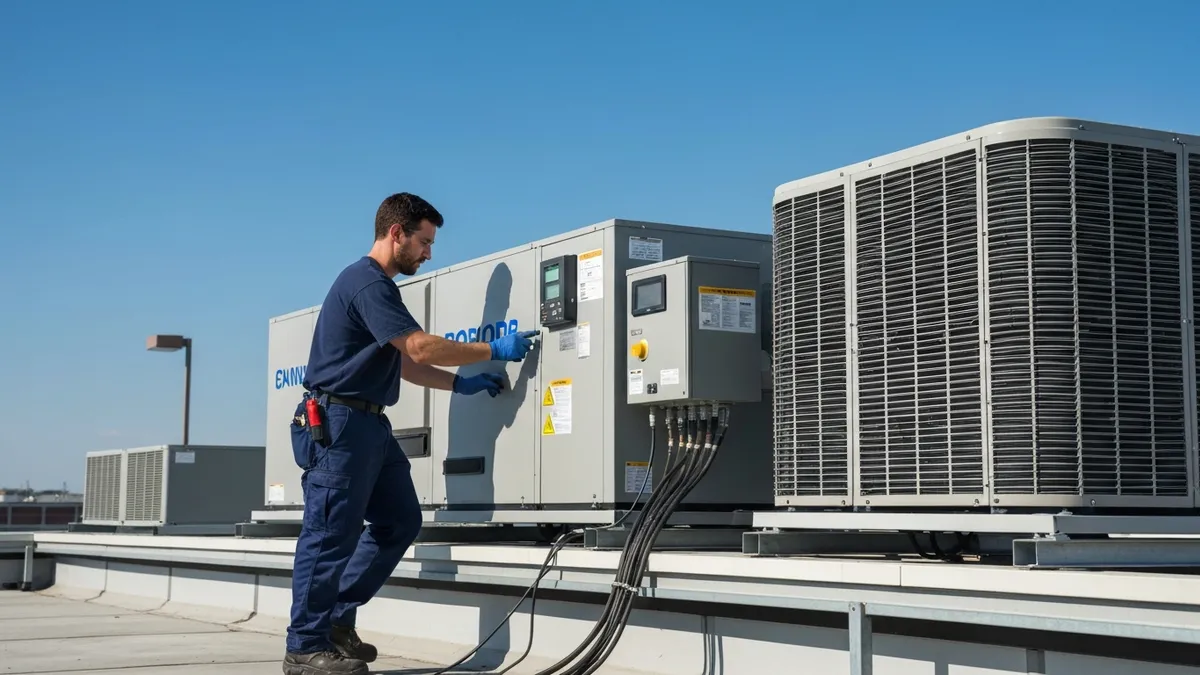
HVAC Diploma Program Structures Available in Columbus
Runs 8 to 10 months with classes five days a week. Students complete theory and lab work in a single daily block, ideal for career changers who want to enter the workforce as quickly as possible without juggling an evening schedule.
Theory delivered two or three evenings per week; Saturday lab sessions for hands-on practice. Designed for working adults who need to maintain income during training. Total duration typically extends to 12 to 14 months.
Lecture content completed asynchronously online; students attend scheduled lab intensives on campus. Maximizes scheduling flexibility while still meeting the hands-on hours required for EPA 608 and NATE certification applications.
Some Columbus employers co-enroll new hires in diploma programs under a paid apprenticeship framework. Students earn wages while completing coursework, with tuition often covered by the employer or union training fund.
Columbus Technical College remains the anchor institution for HVAC training in the region. Its Air Conditioning Technology diploma program is accredited through the Commission of the Council on Occupational Education, which matters for financial aid eligibility and employer recognition. The program runs approximately 900 clock hours and covers refrigeration systems, electrical troubleshooting, hydronic heating, building controls, and EPA Section 608 preparation. Graduates consistently report job placement within sixty days of completing the credential, partly because Columbus Tech maintains active employer advisory partnerships with local mechanical contractors.
Gwinnett Technical College and Southern Crescent Technical College both offer online-hybrid HVAC diploma options accessible to Columbus-area students who cannot relocate. These programs allow you to complete theory modules from home while scheduling lab weekends at partner campuses. The flexibility is genuine, though students need to be self-disciplined with asynchronous coursework. Both schools accept Georgia's HOPE Career Grant, which zeroes out tuition for eligible in-demand programs — and Air Conditioning Technology is consistently on that list.
Private trade schools operating in the broader Columbus-Phenix City metro also offer accelerated HVAC diploma tracks. These programs tend to run faster — sometimes as short as six months — and focus almost exclusively on employable skill-sets rather than theoretical depth. The tradeoff is cost: private school tuition often runs $8,000 to $12,000 before any aid, and not all programs qualify for federal financial aid. Always verify ACCET or COE accreditation before enrolling and paying any deposit to a private training provider.
Lincoln Tech and Universal Technical Institute have satellite arrangements in Georgia that some Columbus students access, though the nearest full campuses are in Atlanta. For students willing to commute or relocate temporarily, these national chains offer strong employer pipelines with manufacturers like Trane, Carrier, and Lennox, who sponsor graduate placement programs. The diploma you earn from a national chain carries recognition across state lines, which matters if you plan to relocate after gaining initial experience.
Community partnerships also open non-traditional pathways. Fort Moore's Transition Assistance Program connects separating soldiers with Columbus Tech's HVAC program at subsidized rates. The GI Bill covers tuition and pays a monthly housing allowance during training for eligible veterans, making the transition from military service to a civilian HVAC career financially straightforward. Veterans already familiar with military HVAC and mechanical systems often complete the diploma faster than the standard timeline because hands-on skills transfer directly.
When comparing schools, look beyond marketing materials at three concrete data points: NCCER or NATE exam pass rates for recent graduates, average time from graduation to first job offer, and whether the school has relationships with specific local employers who hire graduates by name. Columbus Technical College publishes placement outcomes annually through its institutional effectiveness reports, which you can request directly from the admissions office. Any school that cannot produce similar data should be approached with caution before you commit tuition dollars.
What You Learn in an HVAC Diploma Program
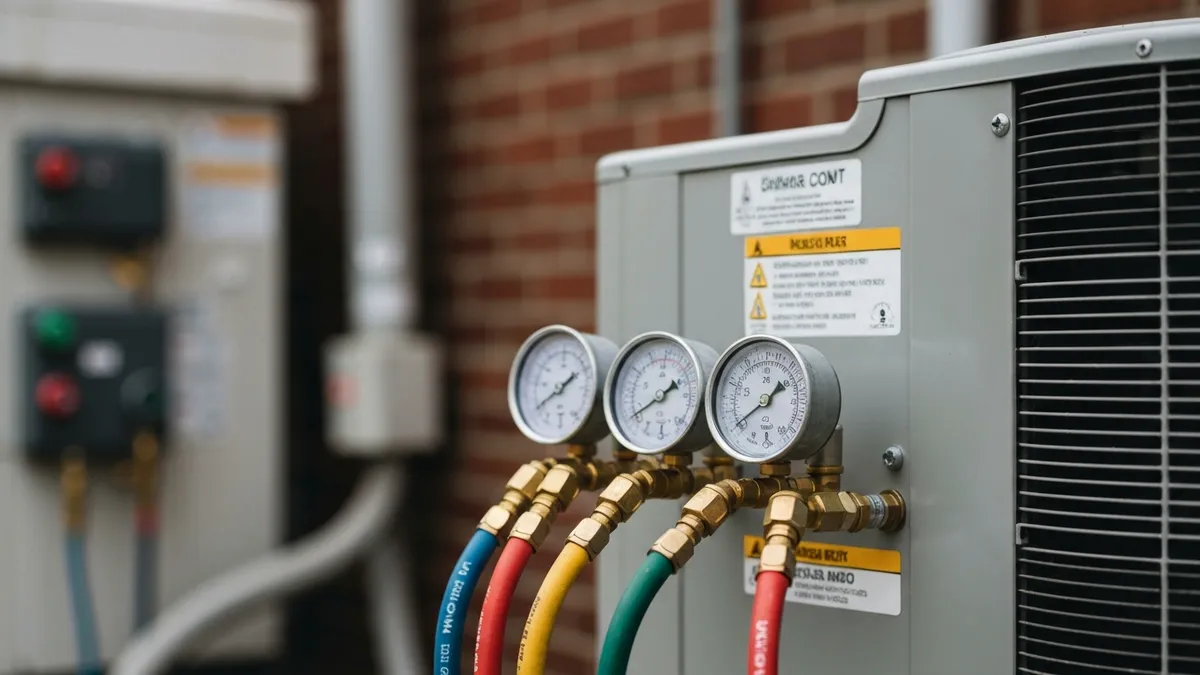
HVAC diploma programs teach the physical skills employers test on day one: recovering and recharging refrigerants safely, reading wiring diagrams and diagnosing electrical faults with a multimeter, sizing ductwork using Manual D calculations, soldering copper lines without leaks, and commissioning new equipment using manufacturer startup checklists. Students also learn to use industry-standard tools including manifold gauge sets, micron gauges, vacuum pumps, and combustion analyzers for gas furnace inspection.
Lab hours typically account for 40 to 60 percent of total program time, and this hands-on ratio is what separates a diploma from a purely online certificate. You will work on training rigs built around real residential split systems, packaged rooftop units, and heat pump configurations. By graduation, most Columbus Tech graduates have serviced equipment at multiple stages of its lifecycle — installation, commissioning, routine maintenance, and fault diagnosis — giving them a practical vocabulary that translates directly to employer expectations.
HVAC Diploma vs. Associate Degree: Which Is Right for You?
- +Enters workforce 12 to 18 months faster than a two-year associate degree track
- +Lower total tuition cost, often $4,500 to $9,000 versus $15,000+ for an A.S.
- +Georgia HOPE Career Grant can eliminate tuition for qualifying technical college diplomas
- +Curriculum is entirely trade-focused with no general education elective requirements
- +Local employer hiring pipelines are often built specifically around diploma-track graduates
- +Evening and weekend formats allow students to maintain part-time income during training
- −Less depth in engineering theory, which limits advancement into design or project management roles without additional education
- −Some large commercial employers and engineering firms require an associate degree or higher for senior technician positions
- −Private diploma programs may not qualify for federal financial aid if unaccredited by COE or ACCET
- −Fewer general education credits means the diploma does not stack as efficiently toward a future degree
- −Some state licensing boards weight associate degrees more favorably when calculating experience credit
- −Accelerated pace can be overwhelming for students who need more time to internalize electrical theory concepts
HVAC Diploma Program Enrollment Checklist
- ✓Verify the program holds COE or ACCET accreditation so federal financial aid applies
- ✓Request and review the most recent graduate placement rate from the school's institutional effectiveness report
- ✓Complete the FAFSA online at studentaid.gov to determine federal grant and loan eligibility
- ✓Apply for Georgia's HOPE Career Grant through the school's financial aid office before the term deadline
- ✓Confirm EPA 608 Universal exam preparation is included in the curriculum, not offered as an add-on
- ✓Ask whether OSHA 10 certification is embedded in the program or requires a separate fee
- ✓Tour the lab facilities and verify equipment includes residential split systems, heat pumps, and gas furnaces
- ✓Review the class schedule format (day, evening, hybrid) against your current work and family obligations
- ✓Request contact information for two or three recent graduates you can call to ask about their experience
- ✓Understand the school's tool kit requirements and whether loaner tools are available during labs
Georgia HOPE Career Grant Can Cover 100% of Tuition
Georgia residents who enroll in HVAC diploma programs at eligible technical colleges may qualify for the HOPE Career Grant, which covers full tuition for programs in high-demand fields. Air Conditioning Technology consistently appears on Georgia's eligible program list. Combine the HOPE Career Grant with a Federal Pell Grant for living expenses, and many students complete the diploma with zero out-of-pocket tuition cost — a financial outcome unavailable at most private trade schools in the state.
Understanding the true cost of an HVAC diploma in Columbus requires looking beyond the tuition sticker price. The visible cost at Columbus Technical College's HVAC diploma program is approximately $4,500 to $6,000 in tuition and fees for Georgia residents — already competitive by national standards. But after applying the HOPE Career Grant and a Federal Pell Grant (for which many trade students qualify based on income), the net cost for eligible students can drop to a few hundred dollars in lab fees and textbooks. That calculation changes the return-on-investment math dramatically.
Tool kits represent a significant additional cost that prospective students often underestimate. A professional-grade HVAC starter kit — including a manifold gauge set, multimeter, vacuum pump, refrigerant scale, and hand tools — typically runs $800 to $1,500 when purchased new. Some programs include tools in their fees; others require students to purchase independently. Ask specifically about tool requirements before enrollment so this cost does not arrive as a surprise after you have committed. Renting tools through the school library, if available, can reduce the upfront burden during training.
Living expenses during a full-time eight-to-ten-month program are often the largest real cost. At Columbus median wages, a student who leaves a $15/hour job to attend school full-time foregoes roughly $24,000 in gross income during the program. Evening and hybrid formats let students preserve most of their current income, but the tradeoff is a longer time to completion. Running both calculations — the faster full-time path versus the slower income-preserving evening path — against your specific household budget before enrolling leads to better decisions than treating it as a purely academic choice.
Return on investment for HVAC diploma holders in the Columbus metro has been strong and accelerating. Bureau of Labor Statistics data places Georgia HVAC technician median wages at approximately $52,000 at the entry level and $68,000 to $75,000 at the journeyman level with five or more years of experience. Technicians who add commercial refrigeration competency or building automation skills regularly earn above $80,000 in metropolitan Georgia markets. Against a net tuition cost that may be near zero with grants, the payback period on an HVAC diploma is often under six months of working wages.
Employer tuition reimbursement is an underused funding source in this field. Several large Columbus-area contractors — particularly those with commercial maintenance contracts at Fort Moore, Columbus Regional Health, and school district facilities — will reimburse partial or full tuition for new hires who enroll in diploma programs while working part-time. This arrangement is most common in apprenticeship-linked diploma tracks where the employer is already invested in the student's credential completion. Ask directly about reimbursement during job interviews even before you finish the program.
Scholarships specifically for HVAC students are limited but real. The HVAC Excellence scholarship, the Plumbing-Heating-Cooling Contractors National Association scholarship, and several Georgia-based trade association awards offer $500 to $2,500 annually for qualifying students. The application processes are straightforward — typically a short essay and two letters of recommendation — and competition is lower than for general academic scholarships because fewer students apply. Columbus Technical College's financial aid office maintains a current list of trade-specific scholarships that students can apply for each semester.
The broader economic picture reinforces the decision for most candidates. HVAC is consistently ranked among the ten highest-demand skilled trades through 2030 in Department of Labor projections. Georgia's population growth, driven by migration from higher-cost states, is adding residential and commercial construction at rates that directly increase demand for trained HVAC technicians. In Columbus specifically, ongoing development near Fort Moore and the medical district creates a sustained baseline of employment that makes the local market more recession-resistant than trades tied primarily to new construction cycles.
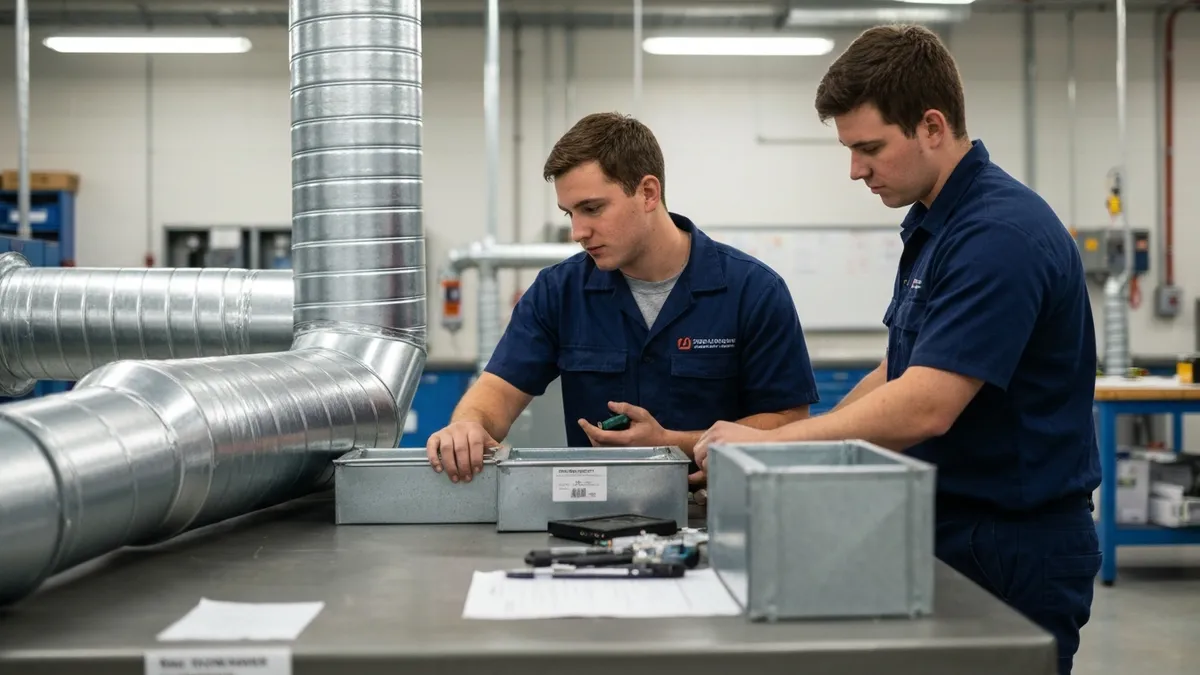
Earning an HVAC diploma is the first step — not the last — before operating independently in Georgia. The state requires documented field experience under a licensed contractor before you can sit for the Georgia Conditioned Air Contractor exam. Most candidates need two to four years of verifiable work hours depending on the license class they are pursuing. Start tracking your work hours in a log from day one on the job; accurate records are required for the license application and gaps in documentation are a common reason applications are delayed.
Career outcomes for HVAC diploma graduates in the Columbus metro are strong across multiple employment sectors. The most visible pathway is residential service — joining a local HVAC contractor that installs and maintains split systems, heat pumps, and gas furnaces in the region's large housing stock. Entry-level residential technicians in Columbus typically start between $18 and $24 per hour, with overtime during peak cooling season (May through September in west Georgia) routinely pushing total compensation above $55,000 in the first full year of employment.
Commercial HVAC is the higher-ceiling pathway and becomes accessible after two to three years of experience. Commercial technicians maintain rooftop packaged units, chilled-water systems, and variable refrigerant flow systems in office buildings, hospitals, schools, and retail centers. The diagnostic complexity of commercial systems commands higher pay — experienced commercial technicians in Columbus earn $28 to $38 per hour — and the work is typically less physically demanding than residential installation because most commercial maintenance is scheduled rather than emergency-driven.
Fort Moore creates a unique employment category in the Columbus market: government and defense contractor facilities management. HVAC technicians working on base or for contractors serving military facilities earn prevailing wages under the Davis-Bacon Act, which are frequently higher than open-market wages for comparable work. Security clearance requirements add a layer of screening, but technicians with clean backgrounds who earn their diploma and accumulate two to three years of local experience are competitive candidates for these positions, which offer federal benefits packages alongside the base wage.
The path to Georgia state licensure follows a defined sequence. After completing the diploma, graduates work under a licensed contractor and accumulate the required field experience hours. They then sit for the Georgia Conditioned Air Contractor license exam, which covers mechanical codes, load calculations, refrigeration theory, and business law. Passing the exam allows you to pull permits independently, which is required for any installation that involves permitted work. Many diploma holders pursue licensure between years three and five of their career, using the period between graduation and licensing to specialize and increase their earning potential.
Specialization after the diploma dramatically affects long-term earnings. Refrigeration specialization — maintaining commercial walk-in coolers, reach-in display cases, and process refrigeration systems — is in acute shortage in Columbus, partly because the specialty requires additional training beyond the standard diploma curriculum. Technicians who add commercial refrigeration competency through supplemental coursework or employer-sponsored training routinely command $5 to $10 per hour more than HVAC-only technicians at comparable experience levels. Building automation and controls is another high-value specialization accessible to technicians who add manufacturer-specific training (Honeywell, Johnson Controls, Siemens) after their diploma credential.
Entrepreneurship is the long-horizon path for many diploma graduates. Starting an HVAC contracting business in Georgia requires the state contractor license, a business entity registration, liability insurance, and a bond. Columbus's growing residential market creates genuine opportunity for small operators who build a reputation in a specific neighborhood or service niche — high-efficiency equipment, ductless mini-split installation, or commercial kitchen refrigeration, for example. Many successful Columbus HVAC business owners started with exactly the same diploma credential this guide describes, and used five to seven years of employment to accumulate capital, client relationships, and operational knowledge before going independent.
Staying current after the diploma matters. Refrigerant transitions — the phaseout of R-410A in favor of lower-GWP alternatives like R-32 and R-454B — are actively changing the equipment landscape, and technicians who understand the new refrigerant properties and handling requirements will be far more valuable to employers than those who do not.
NATE offers specialty exams and continuing education credits that keep your knowledge current. Manufacturers like Trane, Carrier, and Daikin offer free or low-cost online training modules for technicians who work with their equipment. Building these learning habits during the diploma program, rather than treating graduation as the endpoint, is what separates technicians who plateau from those who keep advancing.
Practical preparation before your first day of class will make the diploma program significantly easier to complete. Most HVAC programs assume no prior knowledge of refrigeration or electrical systems, but students who spend even ten hours on fundamentals before orientation are noticeably more confident during the first weeks of lab work. Free resources on YouTube — particularly channels focused on HVAC journeyman exam prep — cover refrigeration cycles, basic electrical circuits, and pressure-temperature relationships in accessible formats that complement what you will see in formal coursework.
Building mental math fluency before class starts pays dividends throughout the program. HVAC technicians use simple algebra constantly: calculating pressure drops, converting between temperature scales, sizing wire gauges for amperage loads, and computing refrigerant charge by weight. If your algebra skills are rusty, spend two to four weeks reviewing basic equation solving and unit conversion before enrollment. Khan Academy's free algebra modules cover exactly the mathematical foundation you need, and arriving at orientation with those skills already refreshed means you can focus on the new trade-specific content rather than relearning math simultaneously.
Physical preparation is genuinely important in a trade program. HVAC work involves crawling in tight attic spaces, carrying condensing units that weigh 80 to 150 pounds, working on ladders and rooftops, and staying productive in Georgia summer heat. Students who arrive at their first field lab in reasonable physical condition — able to carry 50 pounds up a ladder and work comfortably in 90-degree heat — adapt faster than those who underestimate the physical demands. This is not a barrier to entry, but it is honest information that the program itself will not necessarily volunteer before you enroll.
Networking during the program creates job opportunities before you graduate. Every instructor in an HVAC program has relationships with local contractors — attend every class, ask thoughtful questions in lab, and make yourself known as a serious student. Contractors frequently contact Columbus Technical College instructors directly when they need a reliable new hire, and the instructor's recommendation carries enormous weight in hiring decisions. The student who is consistently present, curious, and professional in labs often gets offered employment before the student with the highest test scores who never speaks up in class.
Preparing for the EPA Section 608 exam during training — not as an afterthought — sets the tone for career advancement. The Core section of the exam covers refrigerant safety, clean air act regulations, and recovery procedures that you will use every day on the job. Type II covers high-pressure refrigerants including R-410A, R-32, and R-454B systems that dominate the residential market. Treat the 608 exam preparation as primary, not supplemental — pass rates for Universal certification are higher among students who study the exam-specific content directly rather than assuming classroom instruction alone is sufficient preparation.
Financial planning during the program prevents the most common reason students drop out: running out of money midway through. Before your first class, build a specific budget that accounts for tuition, tools, transportation, and living expenses across the full program length. Identify your financial aid disbursement dates and align your bill payment schedule accordingly. If you are relying on the HOPE Career Grant, verify that your enrollment status and credit hours maintain grant eligibility each semester — dropping below half-time enrollment can suspend the grant and create an unexpected tuition bill that derails your completion.
After graduation, the first employer matters more than most new technicians realize. A company that assigns you to ride alongside experienced technicians on diverse service calls — residential tune-ups, commercial equipment failures, new construction startups — will build your competency faster than one that puts you on repetitive filter changes.
Ask specifically about mentorship structure and the variety of work assignments during your job interview. The best Columbus HVAC employers are proud of their training culture and will describe it without prompting. Choose a company that takes your development seriously from day one, and your diploma becomes the foundation for a career that continues to accelerate for decades.
HVAC Questions and Answers
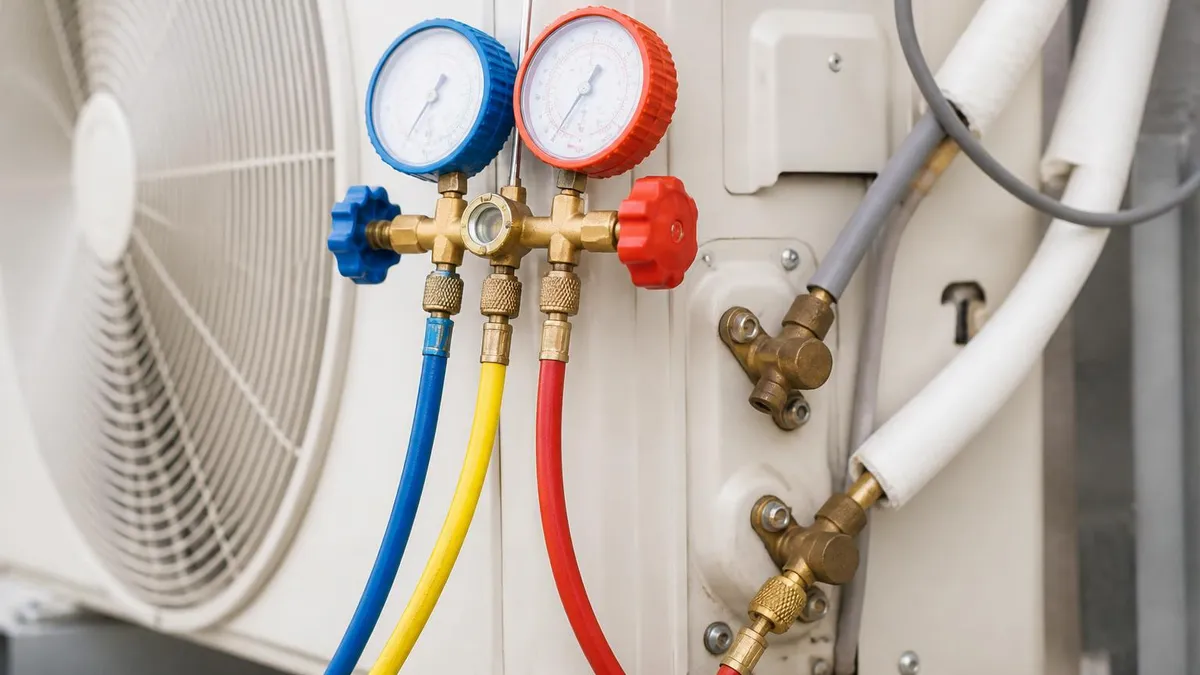
FCU HVAC: The Complete Guide to Fan Coil Units, How They Work, Where They Excel, and How to Choose the Right System

Finance a New HVAC System: 2026 Loans, 0% APR, and Rebates
HVAC Duct Repair: Common Issues, Costs, and DIY vs Professional

HVAC School -- Programs, Costs, and Career Paths in 2026
HVAC Advertising: The Complete Playbook for Generating Leads, Booking Calls, and Growing Your Heating and Cooling Business
About the Author

NATE Certified HVAC Technician & Licensing Exam Trainer
Universal Technical InstituteMike Johnson is a NATE-certified HVAC technician and EPA 608 universal-certified refrigerant handler with a Bachelor of Science in HVAC/R Technology. He has 19 years of commercial and residential HVAC installation and service experience and specializes in preparing technicians for NATE certification, EPA 608, A2L refrigerant safety, and state HVAC contractor licensing examinations.