
HVAC Dampers: Types, Installation, and Cost Guide 2026 September
HVAC dampers explained: 🎓 motorized, manual, fire, smoke, and zone types. Costs, install steps, troubleshooting, and code requirements for 2026 September.
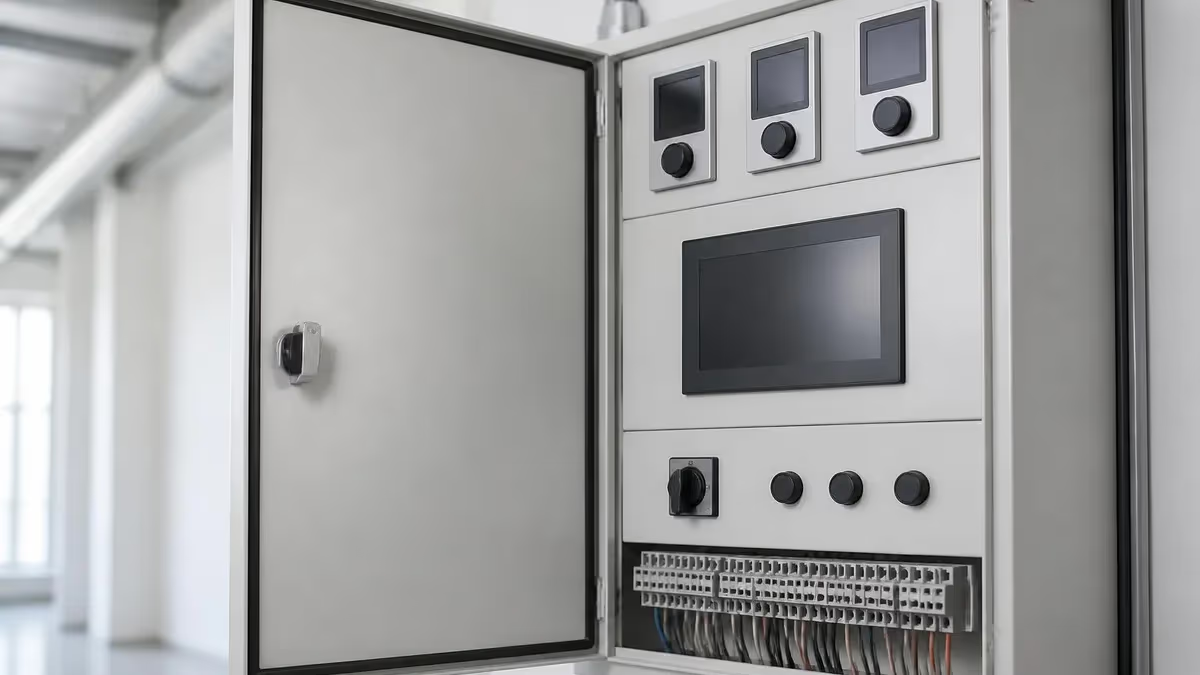
HVAC dampers are the unsung valves inside your ductwork. They open, close, and modulate to control where conditioned air goes, how much of it gets there, and whether smoke or fire can travel through the system. Think of them as the traffic lights of your air distribution network. Without dampers, you can't zone a house, balance a commercial building, or meet life-safety code at a fire-rated wall.
Every well-designed system has dozens of them. Most of them, you'll never see — they sit hidden above drop ceilings, behind grilles, and tucked into mechanical rooms where they do their work without a hint of fanfare. Pull off any access panel and you'll find blades, shafts, actuators, and linkages doing the quiet, constant work of moving air.
This guide walks you through every major damper type used in U.S. buildings in 2026, what they cost, how they get installed, and what goes wrong when they fail. Whether you own a building, run a facility, or wrench on rooftop units for a living, you'll find the answers you need here. We've kept the language plain, the numbers current, and the recommendations grounded in real installations rather than theory.
We'll cover the three big categories first — motorized, manual, fire and smoke — then break down the sub-types you'll see on commercial drawings: zone, balancing, volume control, bypass, backdraft, outdoor air, VAV, and combination fire/smoke. After that, we get into pricing, install steps, troubleshooting, and the code requirements that drive inspection schedules. By the time you finish, you'll know exactly what damper belongs where.
An HVAC damper is a valve-style plate (or set of plates) inside a duct or air pathway. It pivots on a shaft and either restricts or permits airflow. Some dampers stay fixed once balanced. Others move constantly under control from a thermostat, zone panel, or building automation system. A few critical ones sit dormant for years and then slam shut the instant a fire or smoke event triggers them. Every damper has one job: control air. The trick is matching the right kind to the right spot.
Why does this matter? Because dampers do far more than push air around. They make zoning possible, they cut your utility bills, they keep code inspectors happy, and they save lives during a fire. A modern multi-zone home can shave 10 to 30 percent off heating and cooling costs just by closing dampers to rooms nobody is using. In a commercial building with a VAV system, that number climbs to 20 to 50 percent. That's real money, and it pays back the hardware fast.
If you're already shopping for a system upgrade, dampers should be part of the conversation alongside HVAC unit types and how they integrate with your zone plan. The damper layout often dictates the duct design, not the other way around. A contractor who quotes you a system without addressing damper placement isn't thinking the job through.
Indoor air quality is another reason. Outdoor air dampers regulate how much fresh air enters the building, which is governed by ASHRAE 62.1. Economizer dampers let you cool with outside air during mild weather — free cooling, basically. And in tight modern buildings, dampers control the ventilation rates that keep CO2 levels comfortable. The push toward healthier indoor spaces post-pandemic has put more emphasis on outdoor air control than ever before. Sensors now drive damper position dynamically based on occupancy, CO2 readings, and outdoor air quality.

Damper Impact at a Glance
The Three Main Damper Categories
Motorized dampers use an electric actuator to open and close the blade on demand. Most residential units run on 24-volt control wired back to a zone panel or thermostat. Commercial gear typically uses 24V from a BAS or 120V line voltage. You'll find them everywhere modern zoning lives: economizers, VAV boxes, multi-zone homes, and rooftop units. They come in two flavors of motion. Two-position dampers snap fully open or fully closed. Modulating dampers can hold any position from zero to one hundred percent, giving you precise airflow control. Spring-return models fail safe on power loss; non-spring versions hold the last position.
Beyond those three buckets, the damper world gets specific. Once you start looking at modern HVAC drawings, you'll spot a dozen sub-types named for what they do or where they sit. Some control airflow volume. Others stop reverse flow. A few exist purely to protect the air handler when the rest of the system shuts down zones. Knowing the names helps when you're reading a submittal package or arguing with a contractor about what's on the print.
You'll also see distinctions in blade arrangement. Parallel-blade dampers have all blades rotating the same direction, which creates a more even but less precise modulation. Opposed-blade dampers have alternating blade directions, giving better control characteristics for modulating applications. Round dampers use a single blade in a circular frame and work well in branch ducts. Rectangular and square multi-blade dampers handle larger duct cross-sections. Choosing the wrong style means uneven airflow, noise, or actuator strain.
Leakage class is another spec to track. Low-leakage dampers (Class 1A) are required for outdoor air control where tight shutoff matters in winter. Higher leakage rates are acceptable for basic zoning where small bleed-through doesn't hurt anything. AMCA publishes the standard test methods for leakage and pressure drop. Reputable manufacturers publish data sheets with these numbers. Cheap no-name dampers usually don't, which is reason enough to avoid them on jobs where performance matters.
Acoustic ratings matter too on quiet-sensitive jobs like offices and bedrooms. A damper closing partway creates turbulence and noise — sometimes a low whistle, sometimes a rumble. Look for dampers with rated NC values when noise matters. Lined ductwork downstream of the damper helps absorb high frequencies. Bigger duct diameters reduce velocity and cut noise at the source. Solve acoustic problems at the damper, not just at the register.
Damper Types You'll Encounter
- Job: Routes conditioned air to specific zones on demand
- Control: Motorized, tied to zone panel
- Common Use: Multi-zone residential and light commercial
- Job: Equalizes airflow between branches and registers
- Control: Manual, set during test-and-balance
- Common Use: Every install, near every register or branch
- Job: Fine-tunes airflow at variable positions
- Control: Manual or motorized, often modulating
- Common Use: Commercial ductwork, branch trunks
- Job: Permits one-way airflow, blocks reverse
- Control: Gravity or spring-assisted, no power
- Common Use: Exhaust fans, bathroom vents, dryer ducts
- Job: Protects the air handler when most zones close
- Control: Barometric or motorized
- Common Use: Multi-zone systems with limited minimum CFM
- Job: Blocks fire spread through ductwork
- Control: Heat-activated fusible link, gravity close
- Common Use: Penetrations through fire-rated assemblies
- Job: Stops smoke migration via ducts
- Control: Electric actuator, alarm signal
- Common Use: Smoke compartments, hospitals, hotels
- Job: Controls fresh air intake into the system
- Control: Motorized, often modulating
- Common Use: Air handlers, rooftop units, economizers
- Job: Varies airflow into a zone based on demand
- Control: Modulating motorized via BAS
- Common Use: Commercial Variable Air Volume systems
Inside a motorized damper, the parts list is short but each piece matters. There's a blade (sometimes a stack of blades for parallel or opposed-blade designs), a frame that fits the duct opening, an actuator that drives the linkage, and electrical components that confirm position or fail safe on power loss. Spring-return actuators are pricier but worth it for outdoor air dampers and life-safety applications where a stuck-open damper would dump unconditioned air or let smoke pass. End switches feed back to the controller so the BAS knows the damper actually moved.
For commercial work, the actuator brand often matters more than the damper brand. Belimo dominates the industry, with Honeywell, Schneider Electric, and Distech all competing for BAS-integrated jobs. Residential motorized dampers from EWC Controls, ZoneFirst, and Honeywell are the workhorses behind most American zone systems. Compare actuator costs to your overall HVAC installation cost when you're budgeting a new job. The actuator is often the part that fails first, so spec quality here pays off.
Pay attention to torque ratings. Larger dampers need more torque to overcome blade friction and seal pressure. Belimo and Honeywell publish torque charts you can match against damper size. Under-spec the actuator and you'll get partial closure, stalling motors, and premature failures. Over-spec and you're wasting money. Sizing is a five-minute job if you have the right data, and a recurring service call if you don't.

How Zoning Systems Use Dampers
A typical residential zone system has two to eight zones, each with its own thermostat and one or more motorized dampers. When a thermostat calls for heating or cooling, the zone panel powers the corresponding dampers open and signals the air handler to start. Dampers on inactive zones stay closed. The result: only the rooms that need conditioning get it. EWC, Honeywell, ZoneFirst, and Trane all sell complete kits that bundle dampers, actuators, and a zone controller.
NFPA 80 requires annual operational testing of every fire damper in your building. That includes a drop test where the fusible link is removed (or replaced with a test link) and the damper is verified to close fully under gravity. Failure to inspect doesn't just risk lives — it's a code violation that shows up on insurance audits, building re-occupancy reviews, and AHJ inspections. Hospitals and other critical facilities may require more frequent testing. Keep written records of every inspection, including pass/fail status and corrective actions taken.
Fire dampers deserve a closer look because the consequences of getting them wrong are severe. They install at every duct penetration through a fire-rated wall, floor, or ceiling assembly. The standard activation device is a 165°F fusible link — a small metal piece that melts at a precise temperature, releasing the blade to slam closed under gravity or spring tension. When that link goes, the damper is done. You don't reset it; you replace it. Once tripped, fire dampers must be inspected, cleared of debris, fitted with a fresh link, and re-tested.
Smoke dampers operate differently. They stay open during normal HVAC operation but close electrically when the building fire alarm or duct smoke detector signals an event. After the alarm clears and the system resets, the dampers re-open on their own. Combination fire/smoke dampers do both jobs. Codes like NFPA 92 govern smoke management in larger buildings, and you'll see FSDs throughout hospitals, high-rises, and any building with smoke compartmentation. Higher-rated fusible links (212°F) exist for kitchen exhaust and other high-temp applications.
The penalty for non-compliance is real. Insurance companies routinely deny claims after a fire if dampers weren't properly inspected and documented. Local AHJs can issue stop-work orders on construction projects with missing fire dampers. Building owners can face civil liability if life-safety dampers fail during an event. Get this right the first time. Hire qualified inspectors, keep records for at least five years, and replace anything that fails a drop test. There are no shortcuts on the life-safety side of the damper world.
Damper Codes and Standards
- Scope: Fire damper installation and maintenance
- Key Requirement: Annual operational inspection
- Scope: Ductwork and air-handling system installation
- Key Requirement: Where dampers must be located
- Scope: Smoke management systems
- Key Requirement: Smoke control and damper sequencing
- Scope: Fire and smoke damper requirements in the building code
- Key Requirement: When and where to install
- Scope: Fire damper performance standard
- Key Requirement: Mandatory listing for code compliance
- Scope: Ventilation rates and outdoor air requirements
- Key Requirement: Drives outdoor air damper sizing
Damper Installation Checklist
- ✓Size the damper to match the duct cross-section — never undersize
- ✓Locate dampers upstream of takeoffs or directly at registers
- ✓Leave access for the actuator and linkage so service is possible
- ✓Don't compromise duct insulation when cutting in the frame
- ✓Secure the frame with sheet metal screws and mastic sealant
- ✓Run 24V or 120V control wiring per manufacturer specs
- ✓Calibrate fully open and fully closed blade positions before close-up
- ✓Label the damper with zone number, actuator type, and install date
Diagnosing a damper problem starts with confirming what the system actually wants the damper to do. Is the thermostat calling for that zone? Does the panel show power going to the actuator? Is the actuator running but the blade stuck? A clamp meter and a flashlight will solve 80 percent of damper complaints. The other 20 percent involves corroded shafts, snapped linkages, or fried control boards. When you find a failed actuator on an otherwise-good damper, you can usually swap just the motor for $50 to $300 without replacing the whole assembly.
Common failure modes have patterns. Outdoor air dampers seize from corrosion because they see weather. Bathroom backdraft dampers fail closed from grease and lint. Zone dampers in attics roast in summer heat and the actuator plastics get brittle. Fire dampers in commercial kitchens get gummed up with airborne grease. Match your maintenance plan to the environment each damper sits in. A damper in conditioned space might last 20 years; the same damper in a humid mechanical room might be done in seven.
Symptom-to-cause shortcuts: one zone always too warm in summer? Check that zone's damper for full open. One zone always too cold in winter? Same check. Whistling at the register? Damper is half-closed and creating velocity noise. Banging in the ducts during stage changes? Bypass damper isn't responding fast enough. Constant short cycling? Bypass is open too wide, dumping conditioned air right back to return. These shortcuts won't solve every problem, but they'll point your meter and flashlight in the right direction nine times out of ten.
Damper Troubleshooting Sequence
Confirm the call
Check power
Listen for the motor
Inspect the blade
Test manually
Replace the actuator
Recalibrate
Motorized vs. Manual Dampers
- +Motorized dampers enable true zoning and automation
- +Modulating actuators give precise airflow control
- +Compatible with smart thermostats and BAS
- +Spring-return models fail safe during power loss
- +Manual dampers are cheap and bulletproof
- +Manual dampers need zero electrical work to install
- −Motorized dampers cost 5-10x more than manual
- −Actuators eventually fail and need replacement
- −Control wiring adds installation complexity
- −Manual dampers can't respond to changing loads
- −Manual dampers offer no remote or scheduled control
- −Manual dampers in walls become hard to access later
Damper pricing in 2026 still varies wildly based on size, material, and application. A small manual balancing damper for a 6-inch round duct runs $5 to $20. A motorized 24V damper for a residential zone system lands between $50 and $300 depending on size and actuator type. Commercial motorized dampers with Belimo actuators routinely hit $150 to $800. Fire dampers range from $50 for small residential models to $500 for larger commercial units. Smoke dampers start around $200 and can exceed $1,500. Combination FSDs are the priciest, often $300 to $2,000 each.
A complete residential zone controller adds another $200 to $800 depending on capacity and brand. Installed cost almost always runs 2 to 3 times the equipment price once you factor in labor, control wiring, sheet metal modifications, and balancing. If you're already deep into commercial HVAC installation, your damper schedule is probably a five-figure line item. For homes, a four-zone retrofit with dampers, actuators, controller, and thermostats typically lands between $2,500 and $5,000 installed.
Material choices drive cost too. Galvanized steel is standard and cheapest. Aluminum is lighter and used for some duct types. Stainless steel costs significantly more but resists corrosion in coastal, industrial, or chemical environments. Fire-rated dampers require special UL-listed steel construction that carries a price premium. Don't substitute one for another to save money — you'll fail inspection or shorten the life of the damper considerably.
One more cost variable: labor rates by region. Damper retrofit in a high-cost metro like New York, Boston, or San Francisco can run double what the same work costs in the Midwest or South. Permit fees, electrician rates, and union vs. non-union shops all matter. Get three bids before you commit on any commercial damper project. Ask each contractor to itemize the equipment cost separately from labor and controls. That breakdown tells you who's padding the bid and who's giving a straight quote.
Damper Maintenance Schedule
- ✓Quarterly: visual inspection of accessible dampers and actuators
- ✓Annually: full actuator test, open and closed calibration verification
- ✓Annually: NFPA 80 fire damper drop test with documented results
- ✓Annually: smoke damper functional test using alarm trigger
- ✓Every 5-10 years: replace fusible links on fire dampers per manufacturer
- ✓Every 10-15 years: budget for actuator replacement on motorized units
- ✓After any fire event: replace tripped fire dampers and reset combo units
- ✓After any major HVAC service: re-balance manual dampers if disturbed
Smart dampers are the newest twist in the category. Brands like Flair Smart Vents, Ecovent, and Keen Home sell battery-powered registers that snap into existing floor or wall openings. They talk to a phone app over Wi-Fi or a low-power mesh. They let you set per-room temperatures without rewiring anything. Prices land between $80 and $200 per vent. Most homeowners can install them in an afternoon. They don't replace a real zone system, but they're a legit retrofit option for older homes where running 24V wire isn't practical.
Pair them with a smart thermostat and you get most of the comfort benefit of zoning without the upfront install cost. The trade-off is that smart vents close registers rather than balancing trunk lines, which can cause static pressure issues in some homes. Modern smart vent platforms monitor system static pressure to avoid forcing the air handler into trouble. If you have a variable-speed blower, the integration works even better — the system can slow down when zones close.
Compatibility is the catch. Smart vents work best with central forced-air systems that have predictable duct layouts. Mini-split installations don't need them. Hydronic systems with no ductwork can't use them. Older homes with mixed floor/ceiling registers often need a mix of smart vent sizes — measure twice before ordering. Battery life is typically two to five years depending on how often the vent moves. Replacement batteries are cheap, but you'll want to track which units are due.
For traditional jobs, decide who turns the wrench. Manual balancing dampers and smart vent retrofits are reasonable DIY projects for handy homeowners. Motorized dampers, anything tied to a thermostat or zone panel, and every fire or smoke damper should be installed by a licensed HVAC contractor. Commercial work nearly always requires a permit. hvac emergency repair mc lean equipment fails, an experienced tech with an HVAC repair guide mindset will diagnose the damper, the actuator, the controller, and the thermostat all in one visit — not three.
HVAC Dampers Questions and Answers
The bottom line on HVAC dampers: get the type right, install them where they belong, and maintain them on the schedule the code requires. Motorized dampers give you zoning, smart control, and serious energy savings. Manual dampers balance the system on day one and stay out of the way after. Fire and smoke dampers protect lives. They only earn their keep if you inspect them every year. The rule applies whether you're spec'ing a new commercial building, retrofitting a 1990s ranch, or sizing up parts in your own basement — match the damper to the job.
Your comfort, your utility bill, and your code compliance all ride on those little blades inside the ducts. The system that ignores its dampers will run loud, waste energy, and eventually fail a building inspection. The system that respects its dampers — with proper sizing, routine inspection, and qualified service — will deliver even temperatures, lower bills, and the kind of quiet operation that makes a building feel right.
Pair smart damper choices with the right equipment selection — a modern HVAC condenser matched to your zone load, properly sized ductwork, and a controller that talks to your thermostat — and you'll get a system that's quieter, cheaper to run, and far more comfortable than anything your neighbors are living with. Then put it on a maintenance schedule and stick to it. Dampers are simple devices, but ignored ones cost real money and, in the case of life-safety hardware, real lives.
About the Author

NATE Certified HVAC Technician & Licensing Exam Trainer
Universal Technical InstituteMike Johnson is a NATE-certified HVAC technician and EPA 608 universal-certified refrigerant handler with a Bachelor of Science in HVAC/R Technology. He has 19 years of commercial and residential HVAC installation and service experience and specializes in preparing technicians for NATE certification, EPA 608, A2L refrigerant safety, and state HVAC contractor licensing examinations.