
Home Inspector Jobs: Careers, Pay, Licensing, and How to Start in 2026 October
Home inspector jobs guide: pay ranges, state licensing, NHIE exam, ASHI/InterNACHI, independent vs franchise vs employee paths, startup costs, and outlook. 📚

Home inspector jobs aren't going anywhere. Every house that changes hands in the United States triggers an inspection, and roughly five to six million homes change hands each year. That's the steady drumbeat behind a profession that pays well, lets you set your own schedule, and doesn't trap you behind a desk. Whether you're eyeing a career switch, a side business, or a full independent practice, this guide breaks down what the work actually looks like, how much you can earn, and what it takes to get licensed.
You'll see three job structures (independent, franchise, salaried), real pay numbers for 2026, the NHIE exam, state licensing quirks, and a realistic startup budget. We'll also cover the day-to-day rhythm so you know what you're signing up for.
The home inspector profession draws people from a wide mix of backgrounds. Construction workers tired of swinging hammers in 95-degree heat. Real estate agents who want a related income stream. Veterans coming out of the military looking for a self-directed second act. Engineers who want to use their systems knowledge without the cubicle. None of these candidates have an obvious advantage on day one. The job rewards curiosity, methodical work, and the ability to write clearly more than any specific prior background.
The Quick Picture
A typical home inspector charges $300-$600 per inspection, completes 1-3 inspections per day, and earns $50,000-$120,000 gross as an independent solo operator. Most US states require a license, which means 60-200 hours of pre-licensing education plus passing the National Home Inspector Examination (NHIE). Startup cost runs $5,000-$15,000. Don't have a real estate background? Doesn't matter. The field rewards people who can climb a ladder, write a clean report, and build relationships with realtors.
If you want to study the test side first, the home inspector test guide walks through every section you'll encounter on the NHIE. Pair it with the home inspector practice test PDF to drill questions offline. The exam isn't designed to trick you, but it's broad: roofing, electrical, plumbing, HVAC, structure, and reporting standards all show up.

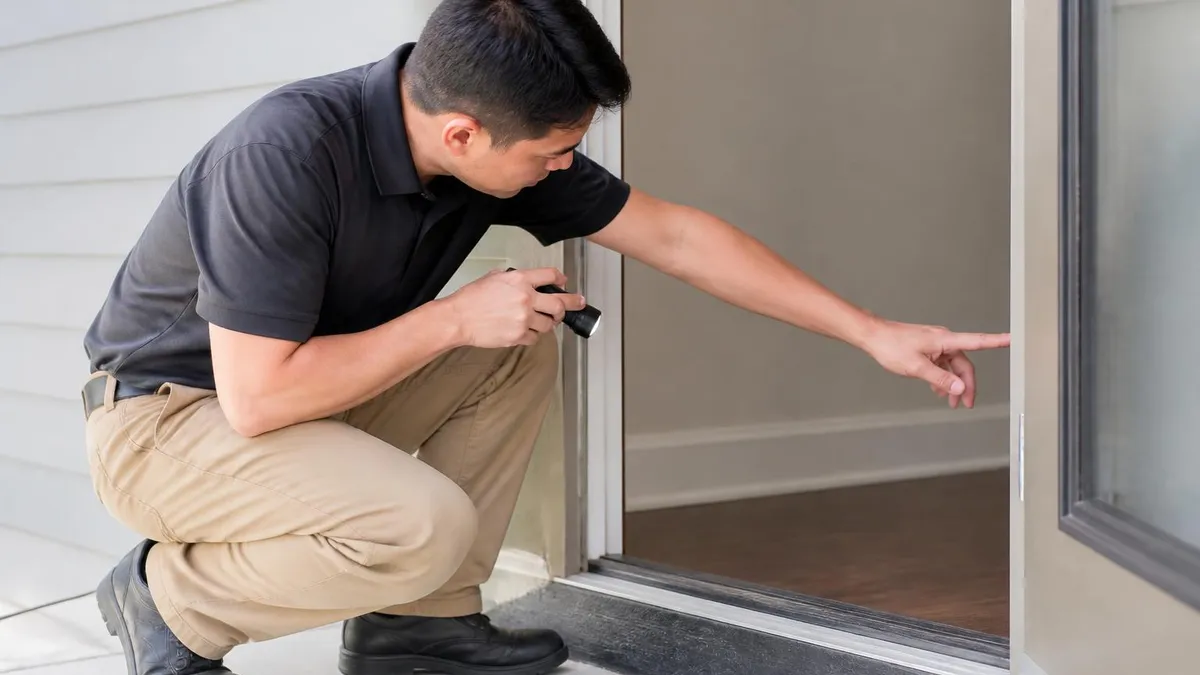
So what does a home inspector actually do? You examine a residential property (or sometimes a commercial one with extra training) and produce a written report identifying defects in major systems and components. Most jobs come from buyers who've signed a purchase contract and have a 7-10 day inspection window. A smaller slice comes from sellers who want a pre-listing inspection, and another slice comes from owners doing annual maintenance checks.
You're not a code inspector. You're not certifying the house. You're documenting what's visible and accessible at the time of inspection. That distinction matters legally and you'll repeat it to clients constantly. The standards of practice published by ASHI, InterNACHI, and most state boards explicitly limit your scope to what can be observed without dismantling, demolition, or moving heavy furniture.
The deliverable is the report. Buyers usually receive a 30-80 page PDF within 24 hours, packed with photos, captions, and a summary section that flags safety issues and major repair items. The summary is the part most people read. Make it tight, scannable, and unemotional. Save the detail for the body sections.
What Gets Inspected
- Roof: Shingles, flashing, vents, drainage, attic from inside
- Siding: Cladding, trim, paint, caulking, penetrations
- Foundation: Cracks, settlement, moisture, grading, drainage
- Decks & walkways: Connections, rot, rail height, surfaces
- HVAC: Furnace, AC, ductwork, filters, age, function
- Plumbing: Supply, drainage, water heater, fixtures, leaks
- Electrical: Panel, breakers, outlets, GFCI, grounding
- Insulation: Attic R-value, ventilation, vapor barriers
- Walls/floors/ceilings: Damage, moisture, cracks, settling
- Doors & windows: Operation, seals, glazing, hardware
- Built-in appliances: Range, dishwasher, disposal, microwave
- Stairs & railings: Rise/run, baluster spacing, handrails
- Radon: $100-$200, 48-hour test
- Sewer scope: $150-$300, camera through main line
- Termite/WDO: $75-$150, separate license in some states
- Mold/IAQ: $200-$500, lab samples
Most inspections take 2-4 hours on-site for a typical 2,000 square foot home, plus another 2-4 hours of report writing. Add drive time and you're looking at 5-8 hours per inspection door-to-door. That math caps daily capacity at one to three inspections, which is why pricing per job matters so much. Discount inspectors burn out fast.
Larger homes (3,500+ square feet), older homes (pre-1950), and homes with detached structures, pools, or extensive outbuildings push inspection time toward the upper end of that range. You should price these accordingly. Many inspectors use a square-footage tier (under 1,500 sq ft, 1,500-2,500, 2,500-3,500, 3,500+) plus age adjustments to keep pricing transparent and fair.
Home Inspector Jobs by the Numbers (2026)
How you structure the work changes everything about your income and your stress level. The three paths below all lead to the same job site, but the business model behind each is wildly different. Pick the one that matches your appetite for risk and your bank balance.
Three Ways to Work as a Home Inspector
You form an LLC, set your own rates, keep all the profit, and shoulder all the risk. This is where most inspectors end up after one to three years of experience. You handle marketing, scheduling, insurance, software, vehicle, and the inspections themselves. Gross revenue typically lands between $50,000 and $120,000, with $40,000-$90,000 net after expenses. High-volume solo inspectors who lock in steady realtor referrals can clear $150,000-$200,000+, but that's the top end and it takes years to build.
The upside? Total control. The downside? When you're sick, the business stops earning. You're also wearing every hat: salesperson, technician, accountant, customer service rep.
Now the licensing piece, because this is where new inspectors trip up. Your state's rules dictate everything: how many hours of education you need, which exam you take, what insurance you have to carry, and how often you renew. Roughly 35 states require a license to call yourself a home inspector. The rest don't, but professional association membership is still expected by clients and realtors.
Don't try to operate across state lines without checking each state's reciprocity rules. Some states recognize licenses from neighboring states with an abbreviated application. Others require you to start the licensing process from scratch. If you live near a state border and want to inspect on both sides, plan for two sets of fees, two CE schedules, and two renewal cycles.
How to Become a Home Inspector
Check your state's licensing requirements
Complete pre-licensing education
Pass the National Home Inspector Examination (NHIE)
Apply for your state license
Get business insurance (E&O + GL)
Join a professional association
Set up your business
Start inspecting
The NHIE is the big one. It's developed by the Examination Board of Professional Home Inspectors, accepted in almost every licensed state, and weighted toward systems you'll see daily: roofing, electrical, plumbing, and HVAC. Strong test prep matters because the questions are scenario-based, not memorize-and-regurgitate. The home inspector study guide bank is built specifically for this exam, and a good home inspector study guide will reinforce the standards-of-practice language you need on test day.
Plan to study 80-150 hours for the NHIE if your pre-licensing course was thorough. Schedule the exam within 30 days of finishing your coursework while the material is still fresh. Pass rates hover around 60-70% on the first attempt, so don't treat it casually. Retakes cost another $225 each, and some states cap how many attempts you get within a 12-month window.
Top Professional Associations
- Annual dues: $499
- Members: 30,000+ (largest globally)
- Training: Free online courses for members
- Best for: New inspectors needing affordable training
- Annual dues: $400
- Founded: 1976 (oldest established US association)
- Standards: ASHI Standard of Practice widely cited
- Best for: Inspectors who want strong brand credibility
- Annual dues: $400
- Size: Smaller but established
- Code of ethics: Rigorous, well-respected
- Best for: Inspectors who want a smaller, tighter community
Costs to start are lower than most trades. You're not buying a fleet of trucks or a workshop. The biggest line items are insurance, education, and a reliable vehicle. If you already drive a pickup or SUV that fits a 17-foot ladder, you're well ahead. Below is a realistic 2026 startup budget for a solo independent inspector.
Startup Cost Checklist (Solo Independent, 2026)
- ✓Pre-licensing course: $500-$2,000
- ✓NHIE exam fee: $225
- ✓State license fee: $100-$500
- ✓Errors & Omissions insurance (annual): $1,000-$3,000
- ✓General Liability insurance (annual): $300-$700
- ✓Inspection software subscription (Spectora/HomeGauge/ISN): $50-$150/month
- ✓Tools: 17-ft articulating ladder, flashlight, moisture meter, outlet tester, gas detector, CO tester ($500-$2,000)
- ✓Optional thermal imaging camera: $300-$3,000
- ✓PPE: hard hat, gloves, knee pads, respirator ($150-$300)
- ✓LLC formation and business registration: $100-$500
- ✓Website and Google Business Profile setup: $500-$2,000
- ✓Initial marketing (cards, ads, realtor outreach): $500-$3,000
- ✓Vehicle (existing pickup/SUV preferred; new $$10K+ if needed)
Insurance deserves its own moment. E&O coverage protects you when a buyer claims you missed a defect. Even with the cleanest report, you'll get accused of missing things sooner or later, and the legal defense alone can dwarf any actual settlement. Most claims resolve under $5,000, but a few drag into the tens of thousands. Don't skip this. It's the single biggest mistake new inspectors make.
Pair good insurance with a tight pre-inspection agreement. The contract should explicitly state your scope, your liability cap (usually limited to the inspection fee), and the buyer's acknowledgment that the inspection is visual and non-invasive. Have every client sign before the inspection begins. No exceptions, no "I'll send it later." Carriers like InspectorPro, OREP, and Allen Insurance specialize in home inspector E&O and can bundle GL, contract review, and pre-claim assistance into a single policy.
Some new inspectors try to save $1,500-$3,000 a year by going bare. One claim wipes out years of savings. Most state licensing boards and nearly every realtor referral source require proof of E&O. Carry it from day one, even if your state doesn't technically mandate it.
Where do the jobs come from? Realtors. Always realtors. Roughly 70-80% of a successful inspector's business arrives through agent referrals. Buyers ask their agent, "Do you know a good inspector?" and the agent names two or three. If you're not on that short list, you're invisible.
Building those relationships takes time and consistent quality. Showing up on time, sending reports the same day, communicating clearly with both agent and buyer, and never throwing a deal off the rails with overstated findings - that's how you earn the next call. Cheap inspectors who write panic-inducing reports get crossed off lists fast.
The smart move in your first six months is to identify the top 30 producing agents in your market and find genuine ways to earn 15 minutes of their time. Office presentations, sponsored continuing-education classes, lunch-and-learns, and ride-alongs all work. Don't pitch. Demonstrate. Show them a sample report, walk them through your turnaround time, and let them see how you handle a stressed-out buyer. Agents refer inspectors who make their jobs easier, not inspectors who beg for work.
Where Home Inspector Jobs Come From
- Share of business: 70-80% for established inspectors
- How to win it: Reliability, fast reports, professionalism
- Goal: 5-10 agents who call you regularly
- Channel: Google Business Profile + local SEO
- Top query: "home inspector near me"
- Investment: $200-$1,500/mo for serious local SEO
- Platforms: Porch, HomeAdvisor, Angi
- Pay model: Pay-per-lead, varies by zip
- Watch out: Lead quality varies; track your conversion rate
- Source: Buyers who later refer friends or relist
- Activation: Follow-up email, annual maintenance offer
- Ratio: Typically 5-15% of repeat business
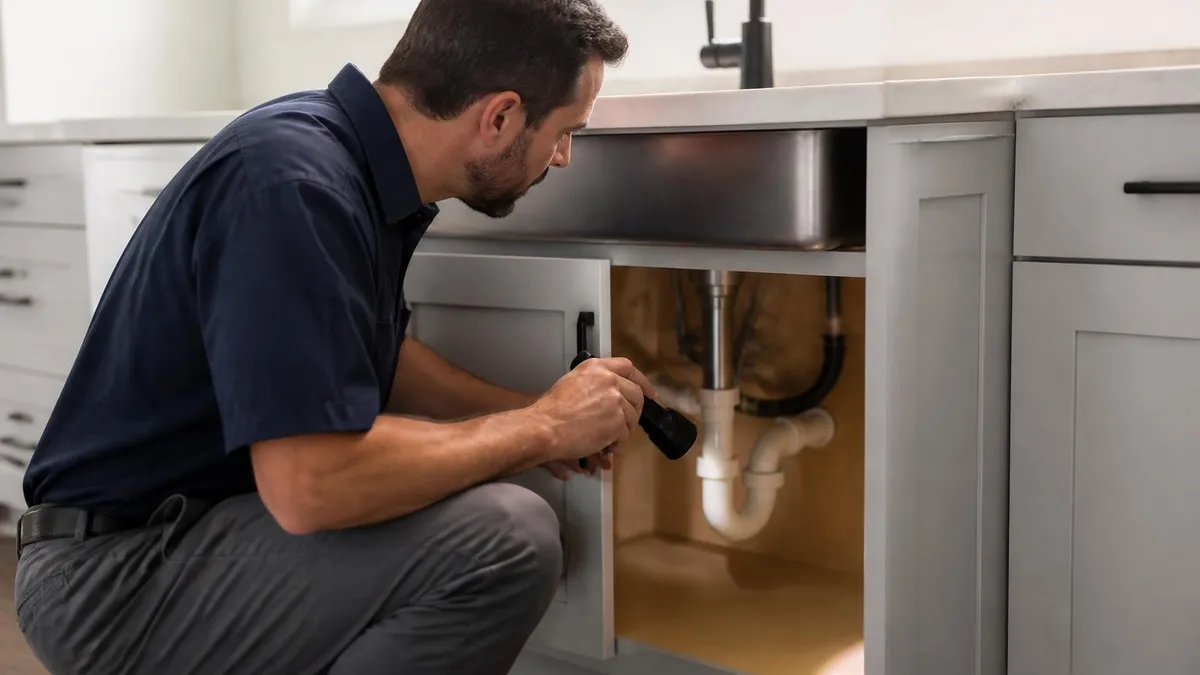
What does an actual day look like? It varies by season and market, but here's a representative weekday for a busy independent inspector running two jobs in the same metro area.
A Day in the Life
6:30 AM
8:00 AM
8:00-12:00 PM
12:00 PM
1:00-4:00 PM
4:00-7:00 PM
7:00 PM
It's a long day, but it's not a desk day. You're outside, moving, solving puzzles, and meeting new people every job. For a lot of folks coming out of construction, real estate, military, or trades, that variety is the whole appeal. Two homes in a row are almost never the same, and the problem-solving keeps the work mentally engaging long after the technical fundamentals become second nature to you.
Pay scales with experience, market, and how well you market yourself. A first-year inspector running two inspections per week at $400 each clears around $40,000 gross. Push that to four per week at $500, and you're at $100,000 gross. Add radon, sewer scope, and mold testing, and you can layer another $20,000-$40,000 on top with the same drive time. The inspectors who hit six figures aren't necessarily working harder - they're charging fairly, adding ancillary services, and protecting their schedule from low-margin discount work.
Compensation Snapshot (US, 2026)
The career has obvious upsides: independence, decent pay without a four-year degree, variety, and entry-level home inspector positions that don't require a long apprenticeship. It also has real downsides that nobody mentions in the brochure. You're climbing roofs in August heat. You're crawling through 24-inch crawlspaces with spiders. You're navigating angry sellers who think your report killed their deal. The work is physical and the liability is real.
Pros and Cons of Home Inspector Jobs
- +Be your own boss as an independent
- +Higher earning potential than many trades
- +Flexible schedule once you're established
- +Variety - different homes and challenges daily
- +Lower physical demands than most construction work
- +Strong long-term demand tied to housing turnover
- +Lower startup cost than most businesses
- +Transferable career - skills apply to insurance, code enforcement, contracting
- −Income tied to local real estate market cycles
- −Liability risk requires constant E&O insurance
- −Physical demands: roofs, attics, crawlspaces, weather
- −Marketing yourself is constant, especially first 2 years
- −Difficult clients and angry sellers come with the job
- −Continuing education required to maintain license
- −Initial $5K-$15K investment to start
- −Slow seasons (winter in many markets) hit cash flow hard
Pros and Cons at a Glance
| Pros | Cons |
|---|---|
| Be your own boss as an independent | Income tied to local real estate market cycles |
| Higher earning potential than many trades | Liability risk requires constant E&O insurance |
| Flexible schedule once you're established | Physical demands: roofs, attics, crawlspaces, weather |
| Variety - different homes and challenges daily | Difficult clients and angry sellers come with the job |
| Lower physical demands than most construction work | Continuing education required to maintain license |
| Strong long-term demand tied to housing turnover | Slow seasons (winter in many markets) hit cash flow hard |
State licensing variation is the single most confusing part of getting started. Texas wants 130 pre-licensing hours, a state-specific exam, and continuing education. Florida wants 120 hours and an exam. New York wants 140 hours. California uses a different framework entirely - no statewide license, but practitioners often pursue the residential building inspector certification through ICC instead. Colorado, Kansas, Idaho, Montana, and North Dakota don't license at all, which means anyone can hang a shingle - but realtors won't refer to inspectors who can't show association credentials.
Always start at your state's regulatory board (often the Real Estate Commission, Department of Business Regulation, or a dedicated Home Inspector Board) and follow their checklist exactly. Pre-licensing courses must be from an approved provider, not just any online program. Save every certificate, transcript, and exam receipt in a dedicated folder - you'll need them for your initial application and again at every renewal cycle for the rest of your career.
Licensing rules change frequently. Hours, fees, exam vendors, and continuing-education requirements can all shift year to year. Before you enroll in a pre-licensing course, call or email your state's home inspector regulatory body and confirm the current rules in writing. Don't rely on outdated articles or course-vendor marketing pages.
What happens after you've been doing this for five or ten years? Plenty of inspectors stay solo and just keep stacking inspections. Others specialize: commercial property inspections (CPI) pay $1,000-$5,000 per job, multi-family buildings pay similarly, and new construction phase inspections offer recurring revenue from builders. Some pivot into adjacent careers: code enforcement officer, general contractor, real estate education (teaching pre-licensing courses), insurance claims investigation, or forensic engineering with additional credentials.
The home inspector profession is a launching pad if you want it to be. The technical knowledge transfers everywhere in residential real estate.
Tips for Long-Term Success
- ✓Build relationships with 5-10 realtors who consistently refer you
- ✓Use professional inspection software - Spectora, HomeGauge, or ISN
- ✓Always send reports within 24 hours, ideally same day
- ✓Specialize over time: commercial, condos, new construction, multi-family
- ✓Add high-margin services: radon, sewer scope, mold, indoor air quality
- ✓Continuing education above the minimum - clients notice the credentials
- ✓Track every claim, complaint, and compliment to refine your process
- ✓Don't compete on price - compete on speed, clarity, and professionalism
- ✓Maintain an active Google Business Profile with weekly photos and posts
- ✓Network at local realtor association events, not just online
Common mistakes new inspectors make are predictable. They skip E&O insurance to save money, then face a $5,000 claim that closes the business. They underprice inspections to win first jobs, then can't raise rates without losing those clients. They write panic-flavored reports that scare buyers and burn realtor relationships. They don't specialize, so they're competing in a crowded general market. And they don't follow up with past clients, missing the easiest source of repeat and referral business.
The job outlook is solid. The Bureau of Labor Statistics projects 12% growth for construction and building inspectors through 2032, faster than the average occupation. Demand is strongest in growing metro areas (Sun Belt, Mountain West, Carolinas) and weakest in shrinking rural counties. Roughly 50,000 active home inspectors work in the US in 2026, and turnover is steady as older inspectors retire.
Rural markets deserve a closer look. Many inspectors avoid them because the drive times are brutal and the home count is lower. That's also why rural buyers struggle to find an inspector at all. If you're willing to travel 60-90 minutes for a job and charge a fair rural premium, you can lock down an entire county with very little competition. The same logic applies to specialty markets like log homes, manufactured homes, and rural acreage with multiple outbuildings.
Home inspection volume tracks home sales. When mortgage rates spike or the housing market cools, inspections drop 20-40% in soft quarters. Build a 3-6 month cash reserve and consider adding services (commercial, multi-family, annual maintenance inspections) that don't depend on transaction volume.
If you're seriously considering home inspector employment opportunities, the smartest first move is to shadow a working inspector for 10-25 jobs. Most experienced inspectors will let you tag along for free or a small fee. You'll learn what the report writing actually takes, see how the realtor relationship works in person, and find out whether you can stomach the physical side. After that, knock out your pre-licensing course, sit for the NHIE, and decide whether you want to launch solo, join a franchise, or take a salaried role to learn the ropes.
Whichever path you pick, the career rewards consistency more than talent. Show up on time, write clean reports, keep your insurance current, and treat realtors like the long-term partners they are. The inspections will follow. The inspectors who flame out aren't the ones who lacked technical knowledge - they're the ones who underestimated the marketing grind, the importance of clear communication, and the discipline required to send every report on the same day it was promised.
One last thing worth saying. Entry level home inspector roles are easier to land than they used to be. The demand for trained inspectors is outpacing supply in many growing metros, and franchise operations are actively recruiting. If you can pass the NHIE, get insured, and demonstrate that you can write a clean report, you'll find work. The harder question isn't whether you can break in. It's whether you'll commit to the daily reps - the ladder, the crawlspace, the report at 9 PM, the polite email to the angry seller - that turn a license into an actual career.
Sample Home Depot Assessment Practice Questions
Try these questions from our free Home Depot Assessment practice tests. The correct answer and an explanation follow each question.
An associate notices a spill in an aisle. The correct first action is to:
- A. Walk past it
- B. Stay with or mark the spill and get it cleaned promptly
- C. Wait for the next shift
- D. Tell a customer to be careful
Answer: B. Stay with or mark the spill and get it cleaned promptly
Securing and cleaning a spill quickly prevents slip-and-fall injuries.
What should you do if you witness a coworker violating a safety rule?
- A. Address it with the coworker respectfully or report it to a supervisor
- B. Ignore it if no accident has occurred yet
- C. Report it anonymously to corporate only
- D. Wait to see if it causes a problem before saying anything
Answer: A. Address it with the coworker respectfully or report it to a supervisor
Speaking up about safety violations protects everyone — Home Depot's safety culture expects associates to hold each other accountable.
A customer is unsure which paint finish to use for a high-traffic hallway. The best recommendation is:
- A. Flat finish for easy touch-ups
- B. A durable, washable finish like satin or eggshell
- C. Whatever is cheapest
- D. High-gloss only for ceilings
Answer: B. A durable, washable finish like satin or eggshell
Satin or eggshell finishes resist scuffs and clean easily, ideal for high-traffic areas.
A caller asks for installation services along with their purchase. What is the right approach?
- A. Tell them installation isn't available
- B. Explain available installation services and how to schedule them
- C. Suggest they hire their own contractor
- D. Process the purchase and ignore the install request
Answer: B. Explain available installation services and how to schedule them
Explaining installation options provides a complete, helpful solution.
Home Inspector Jobs Questions and Answers
About the Author

Educational Psychologist & Academic Test Preparation Expert
Columbia University Teachers CollegeDr. Lisa Patel holds a Doctorate in Education from Columbia University Teachers College and has spent 17 years researching standardized test design and academic assessment. She has developed preparation programs for SAT, ACT, GRE, LSAT, UCAT, and numerous professional licensing exams, helping students of all backgrounds achieve their target scores.