
Home Inspector Training: Complete Guide to Certification, Courses, and Career Path
❓ Home inspector training guide: state requirements, course options, costs, certification exams, and how to launch a home inspection career fast.

Home inspector training is the structured pathway that turns career-switchers, retired tradespeople, and ambitious first-jobbers into licensed property inspectors. A working inspector can charge $300 to $600 per inspection within their first year on the job.
The training combines classroom hours, hands-on field experience, and a credentialing exam. The exam proves you can spot a cracked heat exchanger, a backwards-wired outlet, or a roof on its last winter.
Most states require between 60 and 140 hours of approved coursework, plus parallel inspections shadowing a licensed pro. After hours and field work, you can sit for the National Home Inspector Examination (NHIE) or your state's equivalent.
Choosing the right program matters more than most people realize. A cheap, all-online course might let you pass a multiple-choice test. But it leaves gaps the first time you crawl under a 1962 ranch and find aluminum branch wiring.
The strongest programs blend video modules, live ride-alongs, mock inspections, and report-writing drills. You walk into your first paid job knowing exactly what to photograph, what to flag, and what language protects you from a lawsuit two years later.
This guide walks through every realistic option in 2026. You will see how state licensing works, what InterNACHI and ASHI offer, typical tuition ranges, the timeline from enrollment to first paying client, and the soft skills that decide whether you build a steady book or fold within eighteen months.
Home Inspector Training by the Numbers
The numbers tell a quick story. This is one of the few skilled trades where you can train for under three grand, earn close to the national median income, and own the business from day one.
But averages hide important nuance. A solo inspector in rural Tennessee may close fewer than 100 inspections a year. A Phoenix or Atlanta veteran with a thumbtack of agent referrals routinely clears 400.
Training quality, marketing skill, and report polish separate the two ends of that range. Not raw IQ, and not years of construction tape on your boots.
Roughly 31 states require a home inspector license. The rest operate as voluntary-certification markets where InterNACHI, ASHI, or NAHI credentials carry the weight.
Always check your state board first. Texas requires 154 classroom hours plus 30 supervised inspections. New York demands 140 hours and a fingerprint background check. Colorado and Wyoming let you start tomorrow with no license at all.
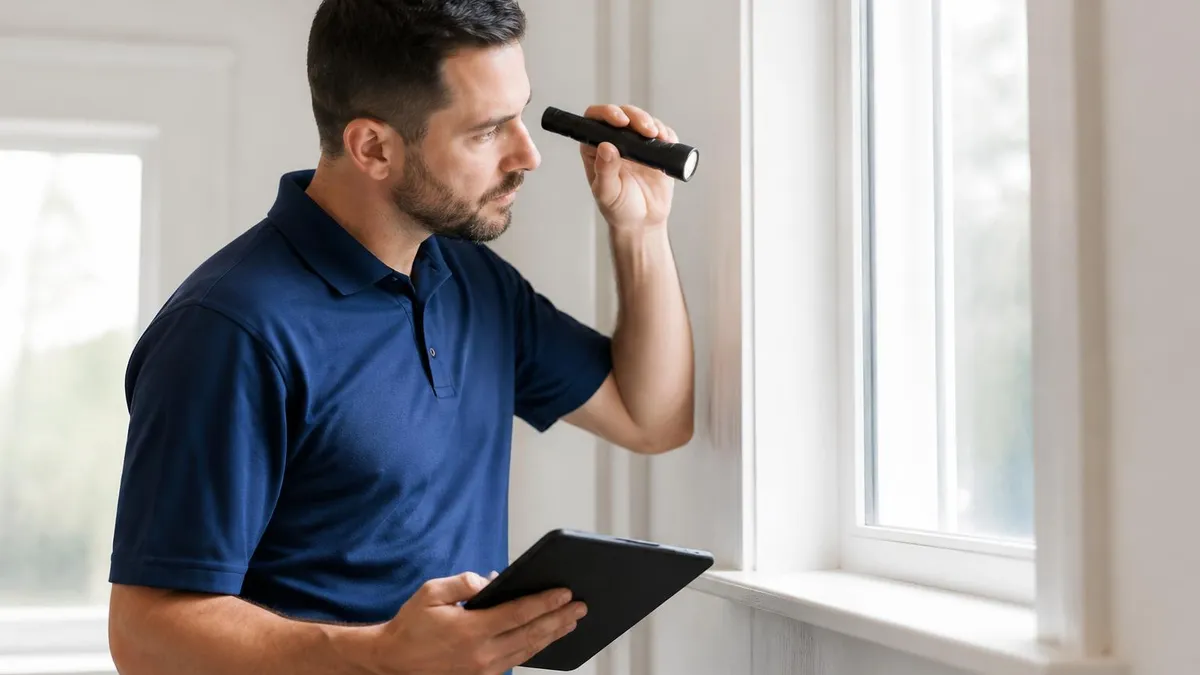
Quick Fact: Licensing Is Local
Federal law sets no national home inspector standard. Each state board decides hours, exam, insurance, and continuing-education rules.
Always download your state's licensing checklist before paying for any course. Confirm the school is on the approved-provider list. A nationally famous program is worthless if your state board does not accept its certificate.
Once you confirm what your state requires, the next big decision is delivery format. Three formats dominate the 2026 market.
The options are fully online self-paced courses, hybrid programs that mix online theory with one weekend of in-person field training, and traditional in-classroom academies that run two to four weeks straight.
Each suits a different learner, and the wrong choice almost always shows up later in field confidence rather than test scores. Self-paced online works for disciplined adults with prior trade exposure. Hybrid hits the sweet spot for most career-changers. Live classroom rewards anyone who needs instructor pressure to stay on schedule.
Below are the four pillars every credible home inspector training program covers, regardless of format. If a school skips any one of these, treat it as a red flag and look elsewhere.
Four Pillars of Home Inspector Training
Structural, roofing, exterior, electrical, plumbing, HVAC, insulation, interior, and built-in appliances. Roughly 60% of total course hours. This is the technical foundation the NHIE leans on heaviest.
InterNACHI SOP or ASHI SOP defines what you must inspect and what you can legally exclude. Misreading the SOP causes more E&O claims than missed defects.
Hands-on drills using HomeGauge, Spectora, or HIP software. Trainees produce 3 to 5 mock reports before graduation, each reviewed by a senior inspector.
Marketing, insurance, contracts, agent relationships, and ethical scenarios. Often the weakest module in cheap courses, but the difference between $40k and $120k years.
Tuition varies more than most career fields. A bare-bones online certificate runs $695 to $995. A mid-range hybrid program lands at $1,500 to $2,200. A premium in-person academy with included tools and InterNACHI membership can reach $3,500.
Add another $400 to $700 for state exam fees, fingerprinting, errors-and-omissions insurance, and your first set of inspection tools. Starter tools include a flashlight, moisture meter, outlet tester, voltage tester, ladder, and infrared thermometer.
Total launch cost for a serious solo practice lands between $3,000 and $5,500 in 2026. That is roughly one tenth of a real-estate broker's startup cost and a fifth of a CDL trucking career, with comparable earning potential.
Timeline expectations matter as much as money. Most students finish coursework in 8 to 14 weeks part-time. Then another 3 to 6 weeks of parallel inspections under a mentor before their state grants a license.
Add 30 days for the licensing application to process and you are looking at a realistic four-to-six-month runway from first tuition payment to first paying client. Anyone selling a two-week shortcut is either operating in an unlicensed state or skipping the field component that actually keeps you out of court.
Top Home Inspector Training Providers
Free online courses for paid members ($499/year). Largest inspector association with 30,000+ members. Strong on continuing education and marketing tools.
Best for self-starters who want flexible pacing and a lifetime resource library. Some state boards require additional accredited hours beyond InterNACHI's free modules.
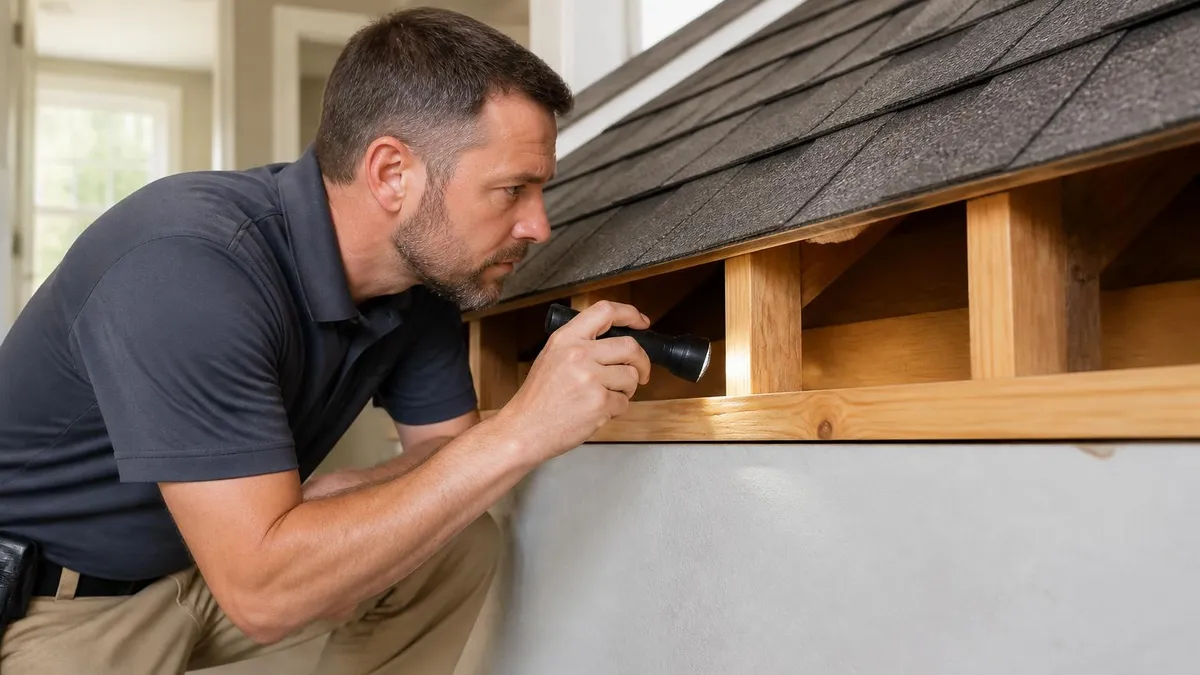
Picking a provider is partly about price and partly about how you learn. If you have ten years swinging hammers, ICA or InterNACHI online may be plenty. You already know what a properly flashed sill plate looks like.
If your last job was a desk in marketing, spend the extra money on AHIT or an in-person academy. Someone watches you crawl an attic and corrects your photo angles in real time.
Field confidence is the variable that decides whether your first ten inspections feel like a panic attack or a paid practice run. Skip it and you will know within a week.
After coursework comes the exam. The National Home Inspector Examination is the gold standard, accepted by 28 states and most private credentialing bodies. It runs 200 multiple-choice questions over four hours at a Pearson VUE testing center.
The exam costs $225 and uses a scaled scoring system where 500 is the passing line. The pass rate hovers around 65% on first attempt. That is high enough to feel achievable but low enough to humble anyone who skimped on study hours.
Do not buy a course based on cheapest tuition alone. The hidden costs that derail trainees are state-specific add-on hours, mandatory parallel inspections (some schools charge $150 per shadow), and report-software subscriptions that activate only after you pay extra.
Always request the full out-the-door price including exam prep, mentorship hours, and any required software trials before enrolling.
Once tuition is paid and study has begun, the smartest move is to build a daily routine that mimics how the NHIE actually tests.
Roughly 33% of the exam covers structural and exterior systems. 24% covers electrical and plumbing. 19% covers HVAC and insulation. The remainder covers interior, appliances, professional practice, and report writing.
Distribute study hours in those proportions and you will not waste weeks memorizing trivia that barely appears. Most successful trainees report 90 to 120 hours of dedicated exam prep on top of their formal coursework, spread over six to ten weeks.
Cramming the final week works for college finals. It does not work for a test that asks you to interpret a panel-board photo or estimate the remaining life of a 25-year-old furnace.
Practice tests are non-negotiable. The NHIE Examination Board sells official 50-question sample exams. Several third-party prep platforms offer banks of 1,000+ questions with rationales.
Aim to score 75% or higher on three consecutive full-length practice exams before scheduling the real thing. Anyone who passes practice tests at 60% but books the exam anyway is gambling $225 plus a 90-day retake delay if it goes wrong.
Home Inspector Training Checklist
- ✓Confirm your state's licensing requirements and approved-provider list
- ✓Choose a course format (online, hybrid, in-person) that matches your discipline level
- ✓Budget $3,000 to $5,500 total for tuition, exam, insurance, and starter tools
- ✓Complete required classroom or online hours and pass all module quizzes
- ✓Shadow 10 to 30 inspections with a licensed mentor in your state
- ✓Score 75%+ on three full-length NHIE practice exams before booking the real test
- ✓Schedule and pass the NHIE or state exam at a Pearson VUE center
- ✓Purchase errors-and-omissions plus general-liability insurance ($600 to $1,200/yr)
- ✓Buy reporting software (Spectora, HomeGauge, or HIP) and design a clean template
- ✓Build a simple website and join 2 to 3 local real-estate agent networking groups
With a license in hand and insurance bound, the next ninety days decide whether you build a business or quietly drift back to your old job.
Training programs that emphasize business setup, agent prospecting, and report polish at the end of the curriculum tend to produce graduates who book their tenth paid inspection within two months. Those who skipped the business module wander for six months hoping referrals appear.
Real-estate agents control roughly 80% of inspection lead flow in the first two years of a new inspector's career. So the speed at which you build that referral pipeline matters more than any technical skill you gained in school.
That is where the pros and cons of home inspector training as a career path come into focus.
The job offers something almost no other licensed trade does: low barrier to entry, low ongoing overhead, schedule control, and meaningful income from day one.
It also asks you to walk into strangers' homes, sometimes argue with sellers, and accept liability for things you cannot always see. The list below is what current inspectors say honestly about the trade-off after a few years on the job.
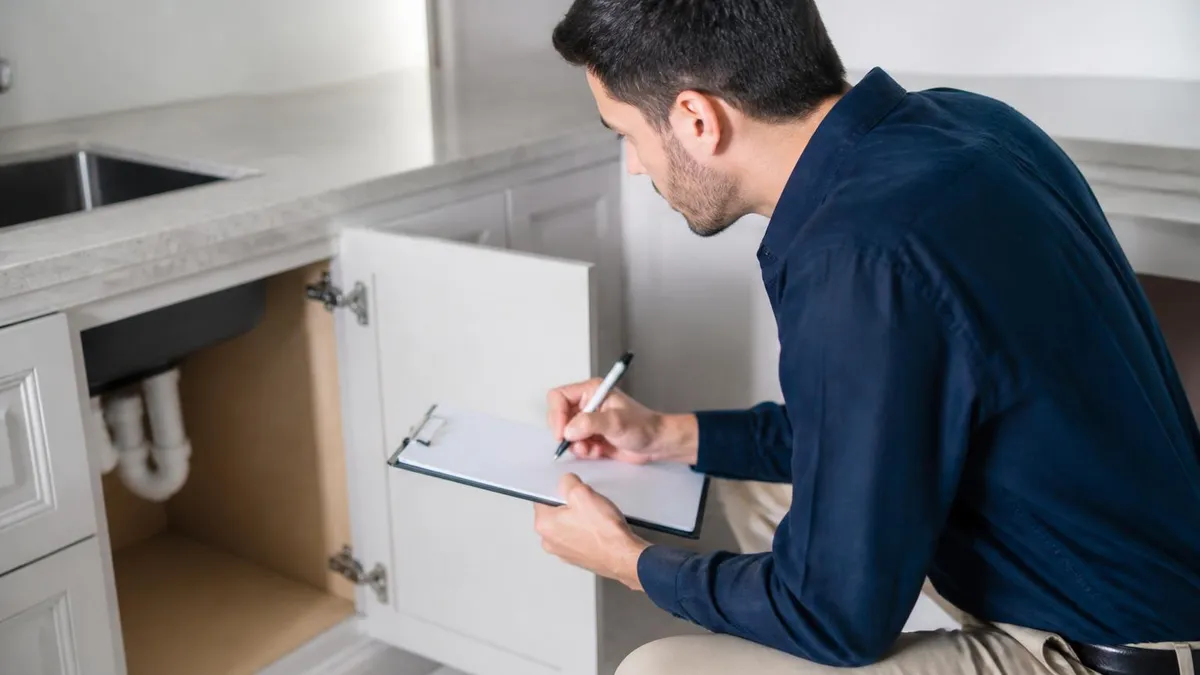
Home Inspector Pros and Cons
- +Low startup cost compared to most licensed trades or franchises
- +Schedule flexibility — most inspectors set their own hours and territory
- +Strong earning potential ($60k-$120k+ in active markets) with no degree required
- +High demand in any market with active home sales or new construction
- +Tangible, varied daily work — no two houses are alike
- −Liability exposure requires E&O insurance and careful report language
- −Physical demands: crawlspaces, attics, ladders, and weather extremes
- −Income tied to local real-estate volume — slow markets hurt fast
- −Marketing and agent-relationship building take 1-2 years to compound
- −Some states have heavy continuing-education requirements
Pros and Cons at a Glance
| Pros | Cons |
|---|---|
| Low startup cost compared to most licensed trades or franchises | Liability exposure requires E&O insurance and careful report language |
| Schedule flexibility — most inspectors set their own hours and territory | Physical demands: crawlspaces, attics, ladders, and weather extremes |
| High demand in any market with active home sales or new construction | Income tied to local real-estate volume — slow markets hurt fast |
| Tangible, varied daily work — no two houses are alike | Some states have heavy continuing-education requirements |
Anyone weighing the cons should remember they are mostly front-loaded. Year one feels heavy on marketing, light on income, and full of report-writing nights.
Year three usually looks like four to six inspections a week, a clean recurring agent list, and enough margin to hire a junior inspector or move into commercial work.
The trade rewards patience and consistency more than aggressive sales tactics. Inspectors who treat every report as a marketing document, with clear photos, calm language, and useful summaries, generate referrals the slow way.
Those who try shortcuts get burned out and quit. The math is unforgiving but fair.
Below are the questions most commonly asked by people researching home inspector training in 2026. Each answer reflects current state-board rules, current tuition ranges, and feedback from inspectors who finished training within the last 24 months.
Sample Home Depot Assessment Practice Questions
Try these questions from our free Home Depot Assessment practice tests. The correct answer and an explanation follow each question.
Where do we connect the customer who wants to know about the warranty of a product purchased at Home Depot?
- A. Retail (customer care)
- B. Services (resolutions team)
- C. EPP
- D. Gen pact
Answer: A. Retail (customer care)
General inquiries about product warranties, especially for items purchased at Home Depot, are typically handled by 'Retail (customer care).' This department is equipped to provide information on standard product warranties, store policies, and guide customers on how to pursue warranty claims. They serve as a central point of contact for various customer service needs.
Complete the sequence: 100, 90, 81, 73, ___
- A. 66
- B. 65
- C. 64
- D. 67
Answer: A. 66
The amount subtracted decreases by one each step: 10, 9, 8, 7, so 73 minus 7 equals 66.
Do you need prior experience to work at Home Depot?
- A. Yes
- B. No
Answer: B. No
Home Depot frequently hires for entry-level positions and provides comprehensive on-the-job training for new associates. They prioritize customer service skills and a willingness to learn over specific prior experience for many roles, making it accessible for individuals starting their careers or looking for a change.
A caller wants to verify their order status but can't find their order number. What should you do?
- A. Tell them you can't help without the order number
- B. Offer to look it up using their name, email, or phone on file
- C. Ask them to search their email and call back
- D. Guess at the order from memory
Answer: B. Offer to look it up using their name, email, or phone on file
Using alternate identifiers helps locate the order without the number.
Home Inspector Questions and Answers
One question that comes up constantly in trainee forums is whether prior construction experience is required. The short answer is no. Plenty of successful inspectors came out of teaching, the military, IT, or insurance adjusting. They simply put in extra hours studying systems they had never personally installed.
What matters more than trade background is mechanical curiosity. If you find yourself wondering why a furnace short-cycles, why a water heater anode rod corrodes, or why a deck ledger flashing detail varies by climate, you have the right mindset for this job.
People without that curiosity tend to memorize defects as a checklist and miss the variations that show up in real houses. Training programs cannot teach curiosity, only how to channel it productively.
Another frequent question is whether home inspection is being replaced by drone, thermal, or AI tools. The short answer is no, not in the next decade. Drones help with steep roofs and thermal cameras catch hidden moisture, but the standard of practice still requires a human walking the property and signing the report.
The technology becomes a productivity multiplier, not a replacement. Inspectors who learn to integrate a $300 thermal camera, a $500 drone, and a moisture meter into a 90-minute inspection routinely deliver better reports than competitors twice their age who refuse to update.
Specialty Certifications That Add Income
Most common add-on. NRPP or NRSB certification runs $300 to $500 plus a continuous radon monitor ($800 to $1,400). Adds $150 to $250 per inspection in radon-active regions.
Camera-based inspection of the main sewer line. Specialty camera kit runs $1,800 to $4,500. Bills at $150 to $250 standalone or as a $99 bundle add-on with a base inspection.
Air and surface sampling sent to a certified lab. Equipment is cheap ($400 starter kit) but liability is real. State rules vary widely — confirm before offering as a paid service.
Hidden moisture, insulation gaps, and electrical hotspots. Level 1 thermographer certification plus a quality camera totals $2,500 to $4,000. Premium upcharge of $75 to $150 per inspection.
Strip malls, small offices, light industrial. Requires CCPIA training ($800 to $1,500). Average ticket is 3x to 8x residential. Slower volume but higher margin per job.
Pre-drywall, final, and 11-month warranty inspections. Builder relationships drive steady volume. Often offered as a flat $150 to $300 add-on to the final closing inspection.
Continuing education is the part of home inspector training that surprises most newcomers. Almost every licensed state requires 14 to 24 hours of CE per year to maintain the license. Some require specific modules on radon, wood-destroying insects, or septic systems.
The good news is most CE is cheap or free through your professional association. InterNACHI members get unlimited online CE included with the $499 annual dues. ASHI offers regional conferences with hands-on workshops that double as networking events.
Treat CE as an investment, not a chore. The inspectors who attend two live conferences a year and complete 30+ hours of online CE consistently rank in the top quartile of their state by referral volume. Specialty certifications stack on top of the base license and open new revenue streams worth thousands per year. Choose two add-ons that match your local market within the first 12 months and your average ticket climbs without adding more inspections to your week.
The honest truth about home inspector training is that the credential is the easy part. Anyone willing to put in 100 to 200 focused study hours and follow a competent mentor through 10 to 30 real inspections can pass the exam and earn a license.
The harder part, the part schools rarely teach well, is building a reputation that turns first-time clients into repeat agent referrals. That reputation is earned one clean report, one courteous walk-through, and one honest disclosure at a time.
Inspectors who treat year one as an extension of their training tend to thrive. They keep studying after the license. They join their local InterNACHI or ASHI chapter. They actually read their state's continuing-ed materials instead of skimming them.
Those habits compound. Five years in, the inspector who treats every job as a chance to learn something new ends up running a profitable practice for decades. The one who memorized just enough to pass the exam ends up changing careers again.
If you are at the decision point right now, do three things this week. Pull up your state's home inspector licensing page and read the requirements word for word.
Schedule a 15-minute call with one currently licensed inspector in your zip code and ask what they wish they had known on day one.
And take a free home inspector practice test to feel the question style before you spend a dollar on tuition. Those three steps cost nothing and remove most of the noise from a decision that determines whether the next twelve months are a confident career launch or an expensive detour.
Home inspection rewards methodical, patient people. If that describes you, the training market in 2026 is wider, cheaper, and more flexible than it has ever been. The only thing standing between you and a license is one honest week of research.
One last consideration worth raising before you enroll is the importance of choosing a mentor whose career you actually admire. A mentor's habits become your habits during those first 10 to 30 supervised inspections. A sloppy mentor produces a sloppy graduate, regardless of how good the classroom portion was.
Ask any potential mentor three questions before agreeing to shadow them. How many inspections did you complete last year? How many claims or complaints have been filed against you in the last five years? And can I see two recent reports redacted of client details? Honest answers to all three predict the quality of your first solo year better than any course brochure.
About the Author

Educational Psychologist & Academic Test Preparation Expert
Columbia University Teachers CollegeDr. Lisa Patel holds a Doctorate in Education from Columbia University Teachers College and has spent 17 years researching standardized test design and academic assessment. She has developed preparation programs for SAT, ACT, GRE, LSAT, UCAT, and numerous professional licensing exams, helping students of all backgrounds achieve their target scores.