
Home Health Aide Training Near Me: Complete Guide to Local Programs, Certification, and Career Launch
🗨️ Find home health aide training near me with this complete guide to local HHA programs, certification steps, costs, and how to launch your career fast.

Searching for home health aide training near me is the first concrete step toward a stable, in-demand healthcare career that does not require years of college or massive student debt. Across the United States, demand for certified home health aides is projected to grow more than 20% over the next decade, driven by an aging population and a strong policy push toward aging-in-place care. Local training programs typically run between 75 and 180 hours, and many can be finished in four to twelve weeks, depending on your state and schedule.
This guide is written for adult learners who want a clear, practical answer to one question: how do I find quality hha training near me, get certified, and start working as quickly as possible without wasting money on the wrong school? We will walk through federal minimums, state-specific hours, what to look for in a program, how much training costs, what financial aid is available, and what your first few weeks on the job will actually look like.
The federal floor for home health aide training is 75 hours, set by the Centers for Medicare and Medicaid Services (CMS), and includes at least 16 hours of supervised practical training. Many states require more. New York, for example, requires 75 hours but pairs it with rigorous clinical hours, while California requires 120 hours of total training, and Alaska requires 140. Knowing your state requirement before you enroll prevents you from paying for a program that does not qualify you for the state registry.
Quality matters as much as quantity. A good local HHA program is approved by your state health department, taught by registered nurses, includes hands-on clinical practice with real patients or high-fidelity simulations, and prepares you for the state competency exam. Programs offered by community colleges, vocational schools, Red Cross chapters, and home health agencies themselves tend to be the most reliable. Be cautious of unaccredited online-only programs that promise certification in a weekend.
Cost is another critical filter. Tuition for in-person home health aide training programs near you typically ranges from free (when sponsored by an agency that hires you afterward) to about $1,500. The national median sits near $400 when you factor in textbooks, uniforms, background checks, fingerprinting, TB tests, and CPR certification. Many states allow Workforce Innovation and Opportunity Act (WIOA) funding to cover the entire tuition for eligible applicants.
Throughout this article you will find quick-look comparison tables, pros and cons of each training route, a step-by-step enrollment checklist, a sample study schedule, and free practice questions modeled on the actual competency exam. By the end, you will have the tools to choose a program, enroll with confidence, pass your certification, and walk into your first home health aide job within three to four months of starting your search.
If you are still weighing whether this career fits your life, remember this: the role rewards empathy, patience, and reliability more than any specific academic background. People from retail, food service, childcare, and even office careers transition into HHA work every year, often doubling their job satisfaction even when starting pay is modest. Let us show you exactly what local training looks like and how to pick the program that gets you certified the fastest.
Home Health Aide Training by the Numbers

Home Health Aide Training Requirements by State
All states must meet at least 75 hours of training including 16 hours of supervised practical/clinical hours. This is the floor for any Medicare/Medicaid-funded agency, and most programs match it exactly.
California requires 120 hours, Alaska 140, and Maine, Washington, and Oregon all exceed 75. If you train in a low-hour state and move, you may need supplemental hours to register in the new state.
Every state requires you to pass a written or oral test plus a hands-on skills evaluation. The skills portion typically covers 5 randomly selected tasks like vital signs, transfers, perineal care, and handwashing.
Expect a criminal background check, fingerprinting, TB test, and proof of immunizations. Some states add a drug screen. Disqualifying offenses vary, so review your state registry rules before enrolling.
After certification, federal rules require 12 hours of in-service training per year to remain active on the registry. Your employing agency usually provides this for free as part of your work hours.
The fastest way to locate quality home health aide training near you is to start with your state health department's approved program list — every state publishes one, and it is the only authoritative source. Search for your state name followed by "approved nurse aide training program list" or "home health aide registry." That single document filters out unaccredited operators and shows you only schools whose graduates can legally sit for the certification exam in your state.
After pulling the official list, narrow your choices by geography, schedule, and provider type. Community colleges typically charge the least, run the longest (8-12 weeks), and offer evening or weekend options. American Red Cross chapters offer condensed four-to-six-week programs in major metros. Home health agencies and skilled nursing facilities often run free "earn while you learn" academies in exchange for a six-to-twelve-month employment commitment after certification.
Vocational and technical high schools, often called CTE centers, are an overlooked goldmine for adult learners. Many run subsidized evening HHA courses for residents at $300-$600. Local workforce boards (American Job Centers) can also place you in fully funded training using WIOA dollars; this is one of the most underused benefits in the country. A single visit to your local center can wipe out the cost barrier entirely.
When you contact a program, ask five questions: Is the program on the state's approved list? What is the first-time pass rate on the state exam? How many clinical hours are included and where are they performed? Is job placement assistance offered? And what is the total out-of-pocket cost including books, uniforms, background check, CPR, and exam fee? Programs that hesitate to answer any of these should be crossed off.
Online HHA training has expanded since 2020, but pure online programs cannot certify you in any state because the federal rule requires supervised practical training in person. Hybrid programs that combine online coursework with weekend clinicals are legitimate and increasingly popular for working adults. Make sure the in-person clinical site is convenient — driving 90 minutes each way for hands-on labs will burn out even the most motivated student.
Pay attention to cohort size and instructor credentials. The federal rule requires the primary instructor to be a registered nurse with at least two years of experience, one of which must be in home health or long-term care. Ideal class sizes for skills labs are 8-12 students per instructor; anything beyond 20 dilutes the hands-on practice you actually need. If you are reviewing materials between classes, the hha exchange of community-made practice videos can supplement formal instruction.
Finally, request to sit in on a class before enrolling. Reputable programs welcome this. A 30-minute observation tells you more than any brochure: are students engaged, is the instructor demonstrating skills with current equipment, is the curriculum aligned with the state exam blueprint, and is the classroom clean and organized? Trust your gut. If a program feels chaotic during a sales visit, it will be chaotic when you are paying tuition.
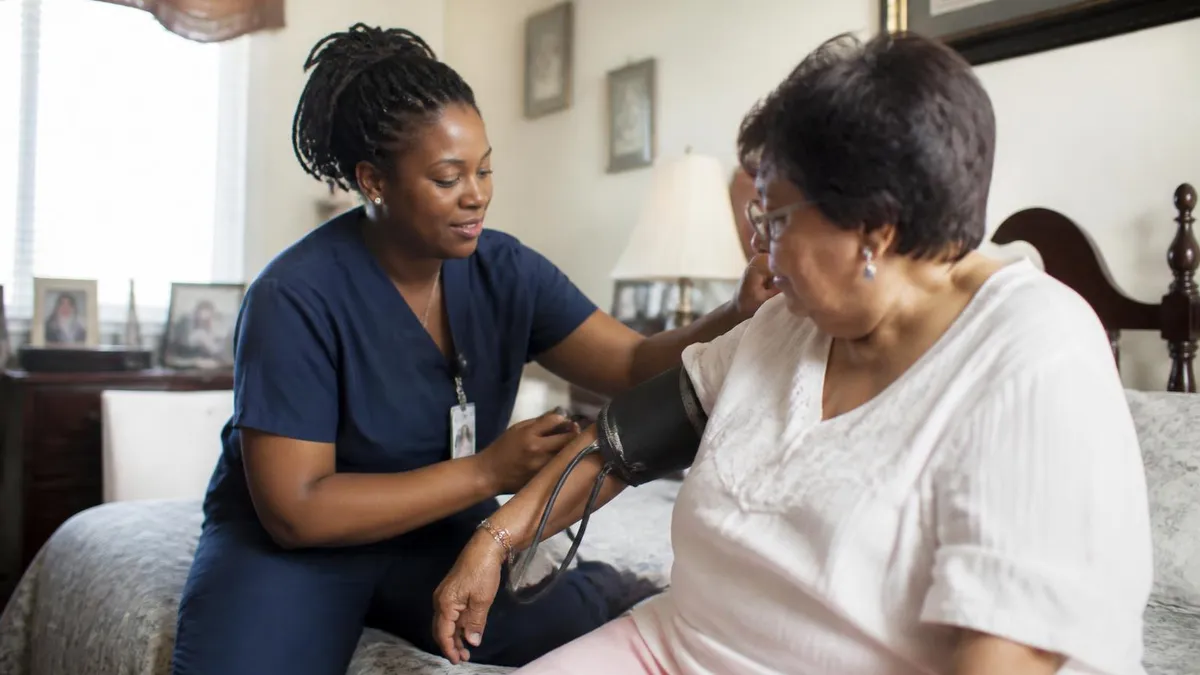
HHA Practice Test Questions
Prepare for the HHA - Home Health Aide exam with our free practice test modules. Each quiz covers key topics to help you pass on your first try.
HHA Basic Care and Comfort
HHA Exam Questions covering Basic Care and Comfort. Master HHA Test concepts for certification prep.
HHA Basic Care and Comfort Questions and A...
Free HHA Practice Test featuring Basic Care and Comfort Questions and Answers. Improve your HHA Exam score with mock test prep.
HHA Communication and Interpersonal Skills
HHA Mock Exam on Communication and Interpersonal Skills. HHA Study Guide questions to pass on your first try.
HHA Communication and Interpersonal Skills...
HHA Test Prep for Communication and Interpersonal Skills Questions and Answers. Practice HHA Quiz questions and boost your score.
HHA Infection Control and Safety
HHA Questions and Answers on Infection Control and Safety. Free HHA practice for exam readiness.
HHA Infection Control and Safety Questions...
HHA Mock Test covering Infection Control and Safety Questions and Answers. Online HHA Test practice with instant feedback.
HHA Mental and Emotional Support
Free HHA Quiz on Mental and Emotional Support. HHA Exam prep questions with detailed explanations.
HHA Mental and Emotional Support Questions...
HHA Practice Questions for Mental and Emotional Support Questions and Answers. Build confidence for your HHA certification exam.
HHA Mobility and Transfer Techniques
HHA Test Online for Mobility and Transfer Techniques. Free practice with instant results and feedback.
HHA Mobility and Transfer Techniques Quest...
HHA Study Material on Mobility and Transfer Techniques Questions and Answers. Prepare effectively with real exam-style questions.
HHA Nutrition and Hydration
Free HHA Test covering Nutrition and Hydration. Practice and track your HHA exam readiness.
HHA Nutrition and Hydration Questions and ...
HHA Exam Questions covering Nutrition and Hydration Questions and Answers. Master HHA Test concepts for certification prep.
HHA Observation and Reporting
Free HHA Practice Test featuring Observation and Reporting. Improve your HHA Exam score with mock test prep.
HHA Observation and Reporting Questions an...
HHA Mock Exam on Observation and Reporting Questions and Answers. HHA Study Guide questions to pass on your first try.
HHA Patient Rights and Ethics
HHA Test Prep for Patient Rights and Ethics. Practice HHA Quiz questions and boost your score.
HHA Patient Rights and Ethics Questions an...
HHA Questions and Answers on Patient Rights and Ethics Questions and Answers. Free HHA practice for exam readiness.
HHA Personal Care and Hygiene
HHA Mock Test covering Personal Care and Hygiene. Online HHA Test practice with instant feedback.
HHA Personal Care and Hygiene Questions an...
Free HHA Quiz on Personal Care and Hygiene Questions and Answers. HHA Exam prep questions with detailed explanations.
HHA Home Health Aide Certification Practic...
HHA Practice Questions for Home Health Aide Certification Practice Test. Build confidence for your HHA certification exam.
HHA Home Health Aide Certification Practic...
HHA Test Online for Home Health Aide Certification Practice Test #1. Free practice with instant results and feedback.
HHA Home Health Aide Certification Practic...
HHA Study Material on Home Health Aide Certification Practice Test #2. Prepare effectively with real exam-style questions.
HHA Home Health Aide Certification Practic...
Free HHA Test covering Home Health Aide Certification Practice Test #3. Practice and track your HHA exam readiness.
HHA Home Health Aide Certification Practic...
HHA Exam Questions covering Home Health Aide Certification Practice Test #4. Master HHA Test concepts for certification prep.
HHA HOME HEALTH AIDE COMPETENCY TEST
Free HHA Practice Test featuring HOME HEALTH AIDE COMPETENCY TEST. Improve your HHA Exam score with mock test prep.
HHA HOME HEALTH AIDE COMPETENCY TEST #1
HHA Mock Exam on HOME HEALTH AIDE COMPETENCY TEST #1. HHA Study Guide questions to pass on your first try.
HHA Home Health Aide Competency Test
HHA Test Prep for Home Health Aide Competency Test. Practice HHA Quiz questions and boost your score.
HHA Home Health Aide Competency Test #2
HHA Questions and Answers on Home Health Aide Competency Test #2. Free HHA practice for exam readiness.
Inside a Home Health Aide Training Program
The classroom component covers the foundation knowledge tested on the state exam: infection control, safety, body mechanics, basic nutrition, communication, observation and reporting, patient rights, and the role of the aide within a care team. Expect quizzes after each unit and a comprehensive midterm that mirrors the certification test format.
Strong programs use case studies, role-playing, and short videos rather than pure lecture. You will learn the difference between subjective and objective observations, how to document changes in condition, and what to do when a patient refuses care. About one-third of total program hours are spent in this didactic phase before you ever touch a manikin.
Local In-Person Training vs Hybrid Online HHA Programs
- +Direct hands-on practice with manikins and real patients builds true competency
- +Easier to form study groups and ask spontaneous questions
- +In-person clinical hours satisfy every state's regulatory requirement
- +Many programs are sponsored by hiring agencies, creating immediate job pipelines
- +Skills lab feedback from RN instructors prevents bad habits from forming
- +Higher first-time pass rates on the state competency exam (typically 85-92%)
- −Fixed class schedule can conflict with work, childcare, or transportation
- −Total program length often longer than self-paced online theory
- −Tuition at private schools can reach $1,200-$1,500 without funding
- −Limited program availability in rural areas may require commuting
- −Cohort start dates may force a 6-8 week wait before classes begin
- −Less flexibility to review difficult material at your own pace
Pros and Cons at a Glance
| Pros | Cons |
|---|---|
| Direct hands-on practice with manikins and real patients builds true competency | Fixed class schedule can conflict with work, childcare, or transportation |
| Easier to form study groups and ask spontaneous questions | Total program length often longer than self-paced online theory |
| In-person clinical hours satisfy every state's regulatory requirement | Limited program availability in rural areas may require commuting |
| Many programs are sponsored by hiring agencies, creating immediate job pipelines | Less flexibility to review difficult material at your own pace |
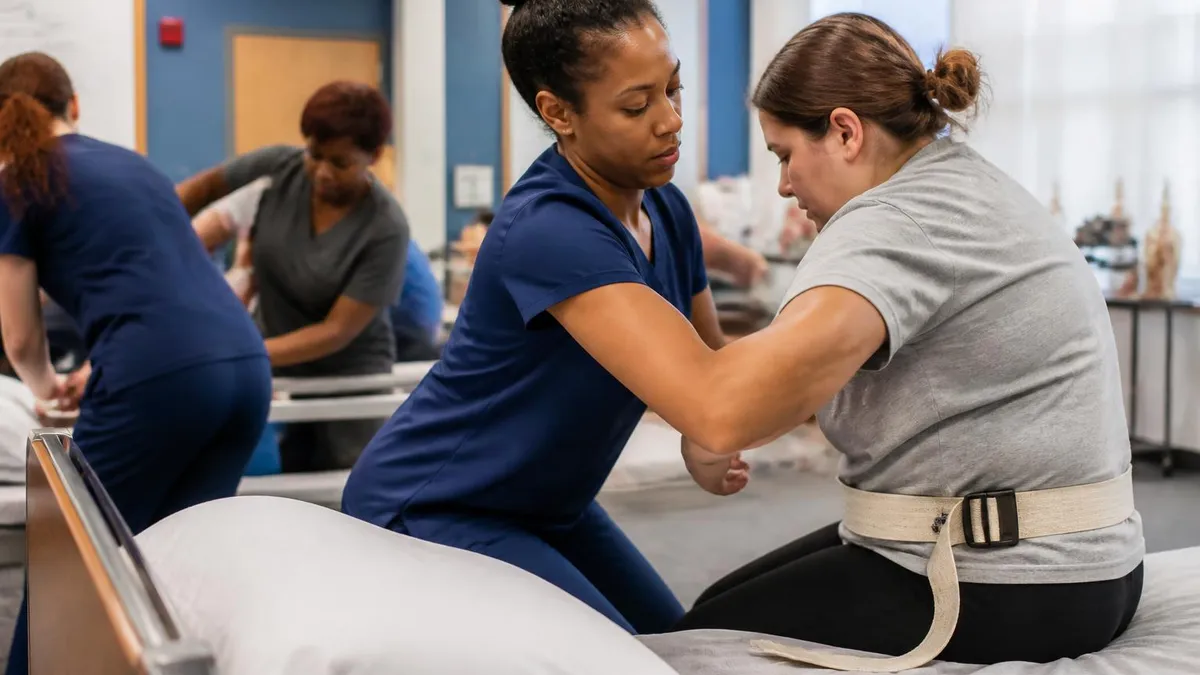
Home Health Aide Training Enrollment Checklist
- ✓Confirm your state's exact training hour requirement and find the official approved-program list
- ✓Verify you meet the minimum age (16-18 depending on state) and have a high school diploma or GED if required
- ✓Schedule and pass a TB skin test or chest X-ray within the last 12 months
- ✓Order an official copy of your immunization record (MMR, Hepatitis B, varicella, flu, COVID)
- ✓Complete a state-approved criminal background check and fingerprinting appointment
- ✓Get current Basic Life Support (BLS) or CPR/AED certification from the American Heart Association
- ✓Visit your local American Job Center to apply for WIOA tuition funding before paying out of pocket
- ✓Tour two or three programs in person and ask for first-time exam pass rates in writing
- ✓Confirm the program is approved by your state's nurse aide registry and accepts state vouchers
- ✓Register for the state competency exam during the final week of class to secure your test date
Train for free and start earning within 30 days
Major home health agencies including BAYADA, Visiting Angels, Right at Home, Interim HealthCare, and many regional Medicaid-funded providers run their own state-approved training academies. Tuition is free in exchange for a 6-12 month commitment to work for the agency after certification. You earn a stipend or hourly training pay, get hired immediately upon passing the exam, and skip the job-search phase entirely.
Cost is the single biggest reason people abandon their search for home health aide training near them, yet most learners overpay because they do not know what is actually available. Total program costs typically fall into three buckets: tuition (largest), required ancillary items (medium), and exam fees (smallest). Understanding what each bucket should cost prevents you from being upsold on packages that bundle services you can get free elsewhere.
Tuition in 2025 ranges from $0 at agency-sponsored academies up to $1,500 at private vocational schools. Community college HHA programs average $350-$700. Red Cross programs typically run $1,000-$1,300 but often include uniforms, textbooks, CPR, and exam registration in the price. State-funded WIOA dollars can zero out tuition entirely for unemployed or underemployed adults who attend a state-approved program on the eligible training provider list.
Ancillary costs catch new students off guard. Plan to spend $25-$50 on scrubs, $30 for a stethoscope and blood pressure cuff (some programs supply these), $40-$80 for the criminal background check and fingerprinting, $25-$50 for a TB test, and $60-$100 for BLS CPR certification. Some programs roll these into a single $250-$400 supply fee, which can be a fair deal or a markup depending on the school. Always ask for an itemized list.
The state competency exam itself usually costs $90-$135, paid directly to the testing vendor (Prometric, Headmaster D&S, or Pearson VUE depending on the state). If you fail one section, retake fees range from $35 to $75 per section, which is one more reason to take practice tests seriously before your test date. Some employers reimburse the exam fee after you pass and complete 30 days of work — always ask about this perk during the interview.
For financial aid, start with three sources in this order: WIOA through your local American Job Center, state TANF or SNAP Employment and Training programs, and employer-sponsored academies. Some states also fund HHA training through Medicaid HCBS workforce grants. Pell Grants do not typically apply because most HHA programs are too short to qualify, but if you bundle HHA training inside a community college certificate of completion, federal aid can sometimes cover the costs.
Veterans should check whether the program is approved for GI Bill benefits. Many state-approved HHA programs at community colleges qualify, though shorter standalone programs often do not. Reserve and National Guard members can also use tuition assistance for approved programs. Workforce development boards may layer additional support payments for childcare and transportation while you are in training, which can be the difference between finishing and dropping out.
Finally, do not forget the opportunity cost. A full-time 4-week program means roughly 160 hours unable to work elsewhere. Many learners offset this by enrolling in evening or weekend cohorts, working part-time during the day, or stacking unemployment benefits with training stipends where state rules permit. Talk to your case manager — these conversations almost always uncover money on the table.
Federal rules require every certified home health aide to complete at least 16 hours of supervised in-person practical training. Programs advertising 100% online certification cannot legally place you on any state registry, even if they hand you a printed certificate at the end. Always verify the program appears on your state health department's approved training program list before paying a single dollar of tuition.
Earning your home health aide certification is the official handoff from student to employed caregiver, and it consists of two parts in every state: a written (or oral) knowledge test and a hands-on skills evaluation. The written portion typically includes 60-90 multiple-choice questions covering the federal OBRA curriculum domains. The skills portion asks you to perform five randomly selected tasks in front of a proctor, always including handwashing and one indirect-care skill plus three direct-care skills.
Most candidates schedule their exam 7-14 days after finishing the program, while the material is fresh. Bring two forms of government ID, your program completion certificate, the candidate handbook from your state's testing vendor, and a quiet confidence built from at least 20 hours of dedicated test prep. Free practice resources, including the hha exchange login portal walkthroughs many candidates use to study, can sharpen your weak spots in the final week.
For the skills portion, the single most predictive behavior of passing is talking out loud through every step. Proctors cannot give you credit for steps they cannot observe, so name the action: "I am washing my hands for 20 seconds, lathering all surfaces, and using a paper towel to turn off the faucet." Identify the patient and explain the procedure before touching them. Ask about pain, comfort, and privacy. Most failures happen not from inability but from skipped safety steps under pressure.
Once you pass, your name is added to the state nurse aide registry, usually within 5-10 business days. From that moment, you are legally eligible to be hired by any Medicare- or Medicaid-certified home health agency, nursing facility, or hospice in your state. Most graduates have job offers within two weeks. Pay typically starts at $14-$19 per hour in 2025, with higher rates in metro areas, night shifts, weekends, and specialized cases like dementia or pediatric home care.
Your first 30 days on the job are designed around supervised shadowing. A senior aide or nurse will accompany you on your first 3-5 home visits to introduce you to clients, review care plans, and answer questions. Use this period aggressively — ask about documentation expectations, agency-specific charting software, on-call procedures, mileage reimbursement, and how to escalate concerns. The aides who thrive long-term are the ones who treat their first month as a paid extension of training.
Career advancement is real and often underrated. After 12-24 months as a home health aide, you can ladder into a Certified Medication Aide credential (in states that offer it), then into LPN through accelerated bridge programs, and ultimately RN if you choose. Many home care agencies pay 50-100% of LPN tuition for aides who commit to staying on after promotion. The HHA credential is rarely the destination; it is most often the on-ramp to a lifetime healthcare career.
One final note on retention. The home health field has a roughly 60-70% annual turnover rate nationally, which is high but creates massive opportunity for reliable, professional aides. Show up on time, communicate proactively with your scheduler, document accurately, and treat every client with dignity. Within 90 days you will likely be offered raises, preferred shifts, or supervisory tracks. The aides who become indispensable build careers, not just jobs.
With a program selected and exam date on the calendar, the final piece is a practical preparation routine that mirrors how the certification is actually scored. Plan a four-week study cadence: week one for foundational content review, week two for communication and ethics, week three for hands-on skills rehearsal with a partner, and week four for full-length practice exams under timed conditions. Aim for 8-12 hours of study per week alongside class time.
Use spaced repetition for terminology and abbreviations. Anatomical terms (proximal, distal, supine, prone, lateral), medical abbreviations (NPO, PRN, BID, TID, q4h), and infection control categories (contact, droplet, airborne) are the bread and butter of test items. Flashcards or a free app like Anki can compress hours of cramming into 15-minute daily reviews. By exam week, you should be answering 8 of every 10 practice questions correctly without rereading the choices.
For the skills test, practice with a partner playing the patient. Run through each of the 22 possible skills in alphabetical order and time yourself. Most skills should be completed in 5-8 minutes with proper safety steps. Record yourself on a phone and review the footage — students who watch their own technique catch 40% more errors than students who only mentally rehearse. Pay special attention to privacy steps, gait belt placement, and call light placement, which are common silent point-loss areas.
Manage test-day logistics tightly. Visit the testing center one or two days early so you know parking, entry doors, and check-in procedures. Lay out your ID, scrubs, watch, and program completion certificate the night before. Eat a protein-rich breakfast, hydrate moderately (you cannot leave for the bathroom mid-exam in many sites), and arrive 30 minutes early. Late arrivals are typically marked as no-shows and forfeit the full fee.
Manage your nerves with structured breathing. Box breathing (inhale 4, hold 4, exhale 4, hold 4) for 90 seconds before walking into the skills room calms your heart rate and steadies your hands during the skills demo. If you blank on a step mid-procedure, stop, take a breath, and quietly restart from the previous step. Proctors are looking for safety and correctness, not stage performance — methodical beats fast every time.
After certification, build your professional reputation immediately. Show up early to every shift, document at the end of each visit (not at the end of the week), keep your phone fully charged for agency calls, and never leave a client in unsafe conditions even if your shift technically ended. Visual learners may find that the hha login walkthrough videos used for orientation at major agencies reinforce on-the-job documentation standards you will use daily.
Finally, treat the first six months as your professional foundation. Save every paystub, in-service certificate, and positive client note. After 12 months on the registry you become eligible for many career-ladder programs, scholarships, and supervisory promotions. Aides who actively manage their careers — not just their schedules — typically earn 20-35% more by year three than peers who simply show up and do the work. Your training near you is just the start; the career is yours to build.
Sample HHA Practice Questions
Try these questions from our free HHA practice tests. The correct answer and an explanation follow each question.
Mrs. Wayne, a home health aide, leaves the home of Mr. Davis, a terminally ill client. A neighbor stops her and says, Mr. Davis is very sick, isn’t he? I hear he is near death.” What is it best for Mrs. Wayne to say?
- A. “Yes, Mr. Davis is very ill.”
- B. “How do you know Mr. Davis is so sick?”
- C. “I’m sorry, I can’t discuss Mr. Davis.”
- D. “Mr. Davis is doing as well as can be expected.”
Answer: C. “I’m sorry, I can’t discuss Mr. Davis.”
This question addresses patient confidentiality, a cornerstone of healthcare ethics and legal requirements like HIPAA. Home health aides are bound by strict rules to protect patient privacy and cannot disclose any personal health information to unauthorized individuals, even if they are neighbors or seem well-intentioned. A polite but firm refusal to discuss the client's condition is the only appropriate response to maintain confidentiality.
At the end of a home health competency training program, a trainee who fails the performance skill evaluation:
- A. Is automatically certified after completing the written portion
- B. Must complete additional training and remediation, then pass a re-evaluation before providing care independently
- C. May work with patients under minimal supervision while awaiting results
- D. Is permanently banned from working in home health
Answer: B. Must complete additional training and remediation, then pass a re-evaluation before providing care independently
Competency evaluation failure requires documented remediation and successful re-evaluation. Patient safety standards do not permit aides to practice independently until all competencies are satisfactorily demonstrated.
How many total training hours does federal law require for a home health aide in a Medicare-certified agency?
- A. 25 hours
- B. 75 hours (including at least 16 hours of supervised practical training)
- C. 120 hours
- D. 200 hours
Answer: B. 75 hours (including at least 16 hours of supervised practical training)
CMS requires a minimum of 75 hours of training for HHAs, with at least 16 hours of hands-on supervised clinical training in a laboratory or patient setting before patient contact.
How can a home health aide support a patient with a specific dietary requirement?
- A. By providing whatever food is available.
- B. By ensuring the patient follows their dietary plan and monitoring for issues
- C. By ignoring the dietary restrictions and offering regular meals.
- D. By preparing meals without considering the patient’s needs.
Answer: B. By ensuring the patient follows their dietary plan and monitoring for issues
A home health aide supports a patient with specific dietary requirements by diligently ensuring adherence to their prescribed dietary plan. This involves preparing appropriate meals, checking food labels, and monitoring for any adverse reactions or issues related to their diet. This proactive approach helps manage health conditions, prevent complications, and promote the patient's recovery and well-being.
HHA Questions and Answers
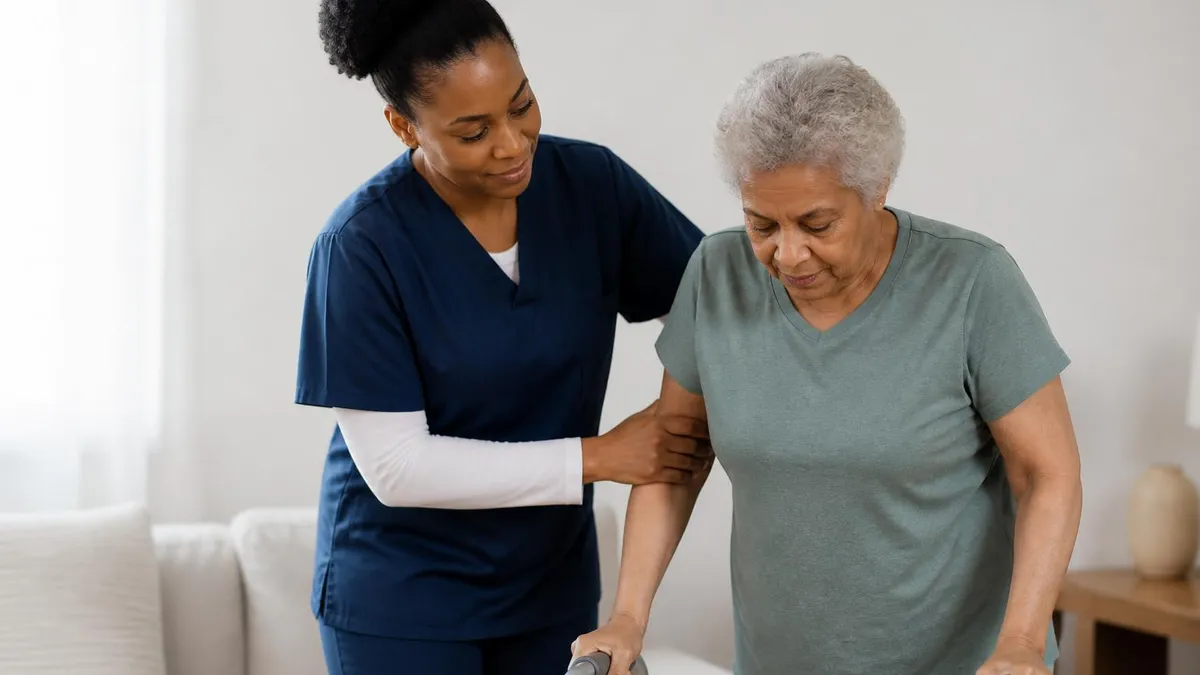
HHA Agencies Near Me: How to Find, Vet, and Choose the Right Home Health Aide Employer
HHA Practice Test Video Answers

HHA Jobs Near Me — How to Find, Train, and Start Your Career
HHA Video Questions and Answers — What You'll Actually Face
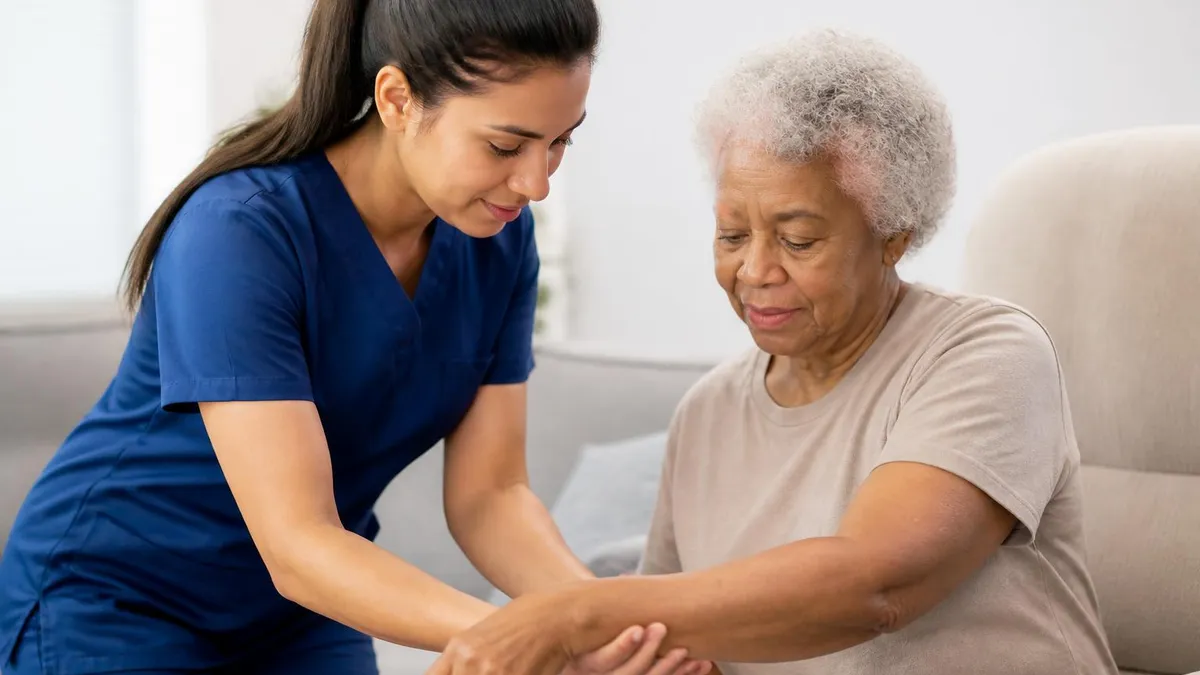
What Is a HHA? Complete Career Overview, Duties, and Path to Certification
About the Author

Registered Nurse & Healthcare Educator
Johns Hopkins University School of NursingDr. Sarah Mitchell is a board-certified registered nurse with over 15 years of clinical and academic experience. She completed her PhD in Nursing Science at Johns Hopkins University and has taught NCLEX preparation and clinical skills courses for nursing students across the United States. Her research focuses on evidence-based exam preparation strategies for healthcare certification candidates.
Join the Discussion
Connect with other students preparing for this exam. Share tips, ask questions, and get advice from people who have been there.
View discussion (8 replies)