
Home Health Aide Training: Requirements, Cost, and How to Certify 2026 October
❓ What HHA training involves, how long it takes, what it costs, state requirements, and how to get your home health aide certification.
What Is Home Health Aide Training?
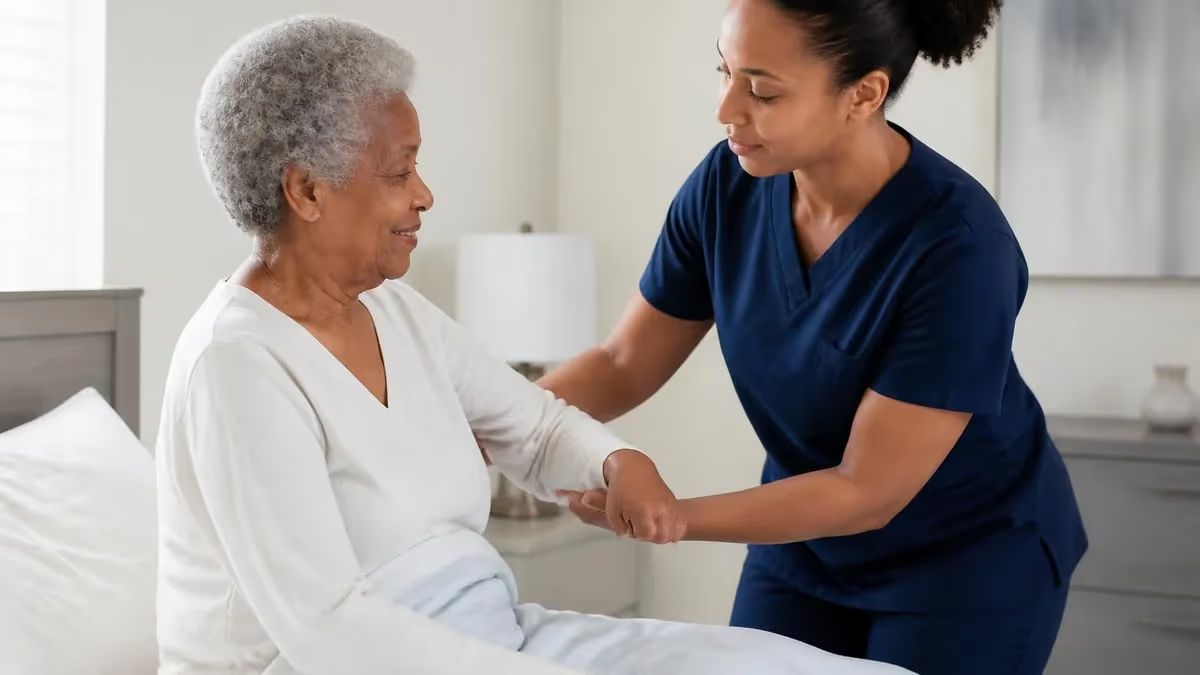
Home health aide training is the foundational education and skills preparation required before working as an HHA with clients receiving Medicare or Medicaid-funded home care services. Federal law sets a minimum standard: anyone providing hands-on personal care under a Medicare-certified home health agency must complete at least 75 hours of training, which includes a minimum of 16 hours of supervised practical (clinical) training in addition to classroom and skills instruction. This federal floor is the minimum — many states have set higher requirements.
The training covers the specific skills and knowledge that HHAs need to safely assist clients with activities of daily living (ADLs), support clients' personal hygiene and mobility, monitor and document basic health information, follow infection control procedures, and communicate effectively with the home health care team, clients, and families. It's practical, skills-focused education designed to prepare you for the realities of working with elderly, disabled, or chronically ill clients in their homes rather than in institutional settings.
Completing an approved HHA training programme leads to a competency evaluation — a written or oral exam and skills demonstration — after which you receive your hha certification online or through your state's registry. Some states manage a formal HHA registry that employers must verify before hiring; others treat HHA certification as an employer-administered process. Either way, completing the training and passing the competency evaluation is the qualifying step that makes you eligible to work as a certified home health aide in home care settings.
It's worth understanding how HHA training relates to nursing assistant (CNA) training before you choose a programme. CNA training typically requires more hours (75-150+ hours depending on state), leads to state certification through a state nursing assistant registry, and qualifies you for a wider range of employment settings including nursing homes and hospitals.
HHA training is typically shorter and more specifically focused on the home care context. Some states share or cross-reference their HHA and CNA registries — in those states, completing CNA training also satisfies HHA requirements. Check your state's specific rules to understand the relationship between CNA and HHA credentials in your area.
- Federal minimum: 75 hours total training, including at least 16 hours of supervised practical skills
- State variations: Many states require more than the federal minimum — New York requires 120 hours, for example
- Who needs it: Anyone working as an HHA under a Medicare or Medicaid-certified home health agency must meet training requirements
- Competency evaluation: Required after training — a written test and/or skills demonstration to confirm competency
- Cost range: $0 (paid employer training) to approximately $2,000 for self-funded programmes at community colleges or vocational schools
- Duration: Full-time training programmes typically complete in 2-4 weeks; part-time programmes may take 4-8 weeks
- Renewal: Most states require ongoing in-service training (typically 12 hours per year) to maintain HHA status
Steps to Become a Certified Home Health Aide
Step 1: Meet basic eligibility requirements
Step 2: Enroll in an approved HHA training programme
Step 3: Complete classroom and supervised clinical training
Step 4: Pass the competency evaluation
What HHA Training Covers
HHA training covers a defined set of skills and knowledge areas established by federal regulations and supplemented by state requirements. The core content areas are consistent across approved programmes, even if the specific hours allocated to each topic vary. Understanding what's covered helps you evaluate and compare training programmes, ask informed questions during enrollment, and know what to expect from the curriculum before you begin.
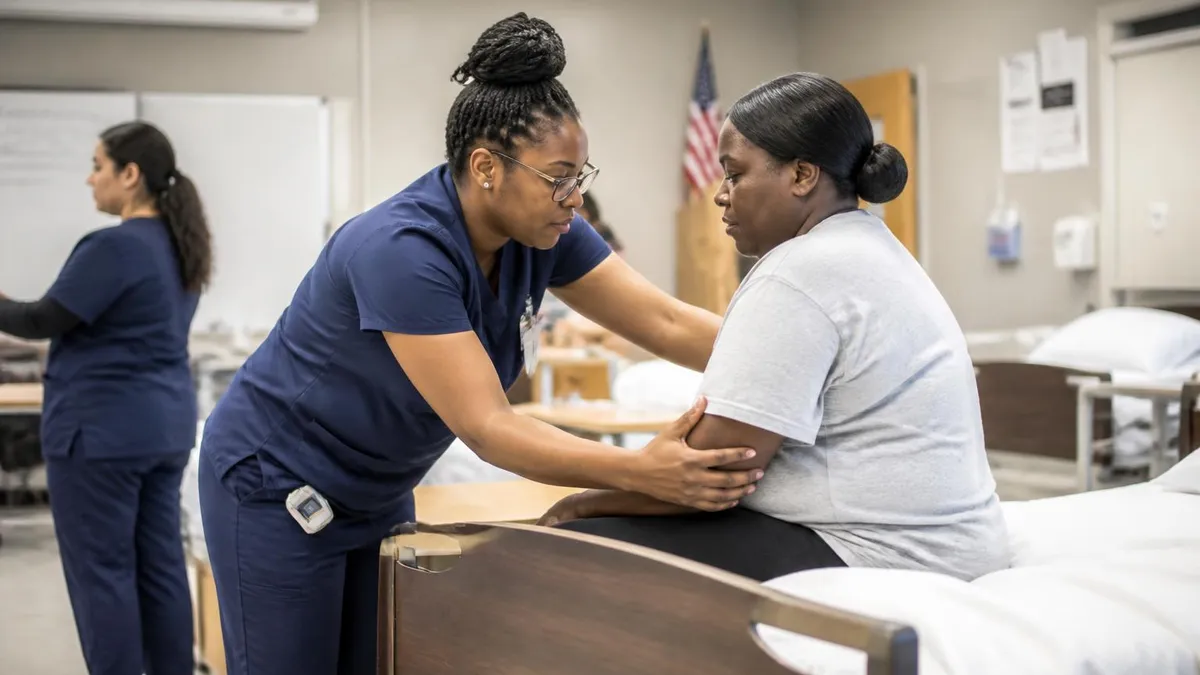
Personal care skills form the foundation of HHA training. This includes bathing, grooming, dressing, and oral hygiene assistance; proper positioning and transfers (moving a client from bed to chair, for example); ambulation assistance and proper use of mobility aids; and assistance with toileting and continence care. These are the most physically demanding and intimate aspects of HHA work, and training emphasises both the technical skill and the communication approaches that make these tasks respectful and dignified for clients.
Nutrition and meal preparation are covered in detail — proper food handling and safety, meal preparation appropriate for clients with dietary restrictions (diabetic diets, low-sodium, pureed foods), feeding assistance techniques, and documentation of food intake. Many HHA clients have chronic conditions including diabetes, heart disease, and dysphagia that require careful diet management, and the ability to safely prepare and support appropriate nutrition is a core and frequently tested competency.
Infection control is a major and non-negotiable training component, covering standard precautions, proper hand hygiene technique, PPE selection and use, safe handling of soiled linens and waste, and recognising early signs of infection in clients. The COVID-19 pandemic sharpened focus on infection control in home care settings, and updated training programmes now incorporate enhanced infectious disease protocols alongside the traditional content. Proper infection control is particularly important in home settings where clients are often immunocompromised and the controlled environment of an institutional healthcare setting isn't available.
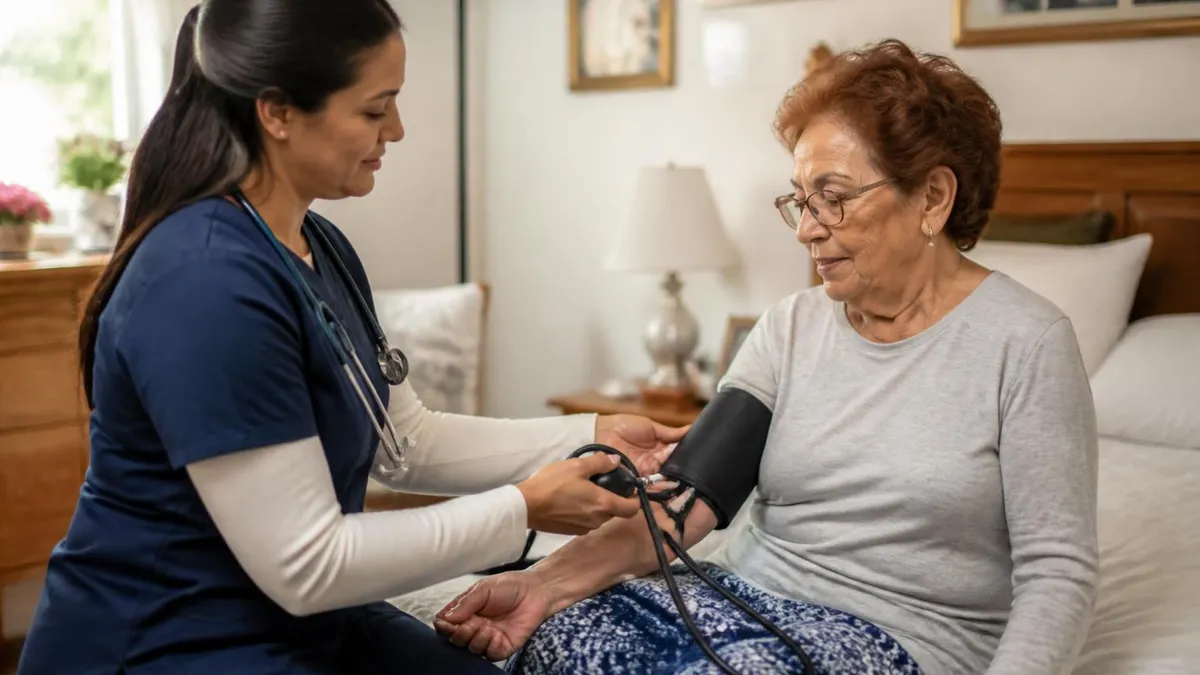
Training also covers basic health monitoring — taking and recording vital signs (temperature, pulse, respiration rate, and blood pressure), recognising abnormal readings that warrant reporting, and understanding the specific thresholds and situations that require immediate communication with the supervising nurse rather than waiting for a scheduled check-in. HHAs aren't diagnosing or treating, but they're often the first person to notice changes in a client's condition, and recognising what to report and when is critical to client safety. Training includes observation, reporting, and documentation skills that translate directly to on-the-job responsibilities.
Types of HHA Training Programmes
Many home care agencies provide HHA training directly to prospective employees. Agency training is often free or subsidised in exchange for a commitment to work for the agency after certification. The advantage is that training, competency evaluation, and employment happen in one place. The potential disadvantage is that agency-specific training may orient you toward that agency's procedures, and some agency programmes may be more rushed than independent training options.
Community colleges frequently offer HHA certificate programmes that typically run 4-8 weeks and meet or exceed state training requirements. These programmes are independent of any specific employer, giving you flexibility in where you work after certification. Community college programmes often have more comprehensive curricula than minimum-requirement programmes and may prepare you for future advancement toward CNA or LPN credentials.
For-profit vocational schools offer HHA training programmes that vary widely in quality and cost. Research the school's accreditation, approval status with your state health department, and graduate employment rates before enrolling. Some vocational programmes offer job placement assistance. Be cautious of programmes that seem unusually expensive or that can't clearly explain how their curriculum meets state requirements.
Some HHA training providers offer online or hybrid programmes where the theoretical classroom component is completed online and the required supervised clinical hours are arranged at a local site or agency. Online training is convenient for scheduling, but the clinical hours requirement cannot be waived — any legitimate programme will require in-person skills practice and supervised client contact regardless of the online delivery mode.
Paid Training vs. Self-Funded Training
Many home care agencies and home health organisations offer to pay for HHA training for candidates who commit to employment after certification. This is a significant financial benefit — training programmes that would otherwise cost $500-$2,000 are provided at no cost to the candidate.
Key considerations for employer-paid training:
- Employment commitment: Most paid training programmes require you to work for the sponsoring agency for a minimum period after certification — typically 6-12 months. Leaving early may require you to repay some or all of the training cost
- Training quality varies: Agency-paid training ranges from high-quality, comprehensive programmes to rushed minimum-requirement courses. Ask about the number of training hours, the clinical component, and how many graduates pass the competency evaluation on the first attempt
- Limited employer flexibility: You'll be committed to that specific agency for the employment period, which may limit your ability to take a better opportunity if one arises soon after certification
- Best for: Candidates who are confident about entering home care work and are comfortable with the employing agency's reputation, pay rate, and service area
State-Specific HHA Training Requirements
The federal 75-hour minimum is exactly that — a minimum. At least seventeen states currently require more training hours than the federal standard. New York has one of the most demanding state requirements at 120 hours; California requires 120 hours for personal care aides working with home care agencies; Massachusetts requires 75 hours meeting specific component requirements. If you're training in one state but plan to work in another, verify requirements for the state where you'll be employed — training completed in a lower-requirement state may not satisfy the requirements of a higher-requirement state.
The relationship between HHA and CNA credentials also varies by state. In some states, holding a CNA certification automatically satisfies HHA training requirements — meaning CNA programmes that exceed the HHA minimum are essentially dual-qualifying. In other states, HHA and CNA are separate credentials with separate training pathways. If you're considering whether to pursue HHA or CNA training, understanding the credential relationship in your target state can help you decide whether to invest in the longer CNA programme upfront rather than completing HHA training first and upgrading later.
Many states maintain HHA registries — databases of certified home health aides that employers must check before hiring. Being on your state's registry is what converts completion of training and passing the competency evaluation into a searchable professional credential. Some states share HHA registry data with their CNA registry through a combined nursing assistant registry. Find and bookmark your state's health department website to understand the registry process, how to verify your registration status, and how employers access your certification record.
Ongoing training requirements also vary by state. Federal regulations require Medicare-certified home health agencies to provide at least 12 hours of in-service training annually to HHA staff. Some states require more. These in-service training hours keep HHA skills current, cover updated care protocols and regulatory changes, and address any performance areas identified during supervising nurse visits.
Completing required annual in-service hours is generally a condition of continued employment, so factor this into your expectation of what ongoing professional development looks like in HHA work. Use resources like home health aide hha certificate guides and your agency's in-service calendar to stay current.
What to Look for in an HHA Training Programme
- ✓State approval: confirm the programme is approved or accepted by your state's health department as meeting HHA training requirements
- ✓Adequate clinical hours: look for programmes that provide more than the minimum 16 supervised clinical hours — more hands-on practice builds better skills
- ✓Pass rate on competency evaluation: ask what percentage of students pass the competency evaluation on the first attempt — a good programme should have a high first-time pass rate
- ✓Class size and instructor-to-student ratio: smaller classes allow more individual attention during skills practice, which matters for developing safe technique
- ✓Job placement assistance: some programmes have relationships with local home care agencies and can help introductions or referrals for employment after certification
- ✓Schedule flexibility: part-time and evening options matter if you're currently working or have family obligations that require a flexible training schedule
- ✓Cost transparency: a reputable programme clearly discloses all fees, including application fees, materials costs, and uniform requirements, before you enroll
HHA Training vs. CNA Training: Which to Pursue?
- +HHA training is shorter and often less expensive than CNA training — if you want to start working in home care as quickly as possible, HHA is the faster path
- +CNA certification qualifies you for a wider range of employment settings (nursing homes, hospitals, assisted living, home care) and typically carries a slightly higher wage ceiling in many markets
- +HHA training specifically prepares you for home care work — the curriculum is focused on the home setting, which is more relevant if home care is your target employment type
- +In states where CNA certification satisfies HHA requirements, pursuing CNA training directly gives you both credentials in one programme — a better return on the training investment if you have the time and budget
- −HHA certification doesn't qualify you for nursing home or hospital employment in most states — if you later want to expand into institutional care settings, you'll need CNA training as a separate step
- −CNA training requires more hours and typically costs more than HHA training — if budget or time is the constraint, HHA training is more accessible
- −Some states' HHA training requirements are so close to CNA requirements that the additional effort and cost of CNA training is minimal — check before assuming HHA is significantly easier or cheaper

Cost of HHA Training and Financial Assistance Options
The cost of HHA training varies significantly depending on how and where you train. Employer-sponsored training through a home care agency is effectively free — you pay with a commitment to work for that agency post-certification. Self-funded training at community colleges typically runs $500-$1,500 including materials, with some state community college systems pricing programmes even lower for in-district residents. Vocational school programmes vary most widely, from $800 to $2,000 or more — research carefully before enrolling in a higher-cost vocational school when community college options in your area may deliver equivalent training at lower cost.
Financial assistance is available in many states for HHA training candidates who meet income or employment eligibility criteria. Workforce development boards funded through federal Workforce Innovation and Opportunity Act (WIOA) dollars often cover training costs for unemployed or underemployed workers pursuing in-demand healthcare occupations, which typically includes HHA. Your local American Job Center (previously known as one-stop career centres) can assess your eligibility for WIOA-funded training support. Some states also have Medicaid-funded HHA training initiatives specifically designed to expand the direct care workforce — check your state's Medicaid or health department website for current programmes.
Non-profit organisations in healthcare and social services sometimes fund HHA training for community members, particularly in underserved areas where there's a workforce shortage in home care. Community foundations, local United Way chapters, and healthcare-focused philanthropic organisations are potential sources of training funding beyond government programmes. It's worth researching what's available locally before committing to out-of-pocket training costs — especially if you're transitioning from unemployment or a lower-wage career.
Tax deductions may partially offset training costs if you pay out of pocket. Work-related education expenses can sometimes be deducted as business expenses if the education maintains or improves skills required in your current line of work. Consult a qualified tax professional about whether HHA training costs qualify in your specific situation — this isn't universal, but for people already working in care-related roles who are adding HHA certification, it may apply.
HHA Training: Key Facts
Key Facts at a Glance
| Item | Value | Details |
|---|---|---|
| Federal minimum training requirement for HHAs working under Medicare-certified home health agencies — many states require 90-120 hours | 75 hours | |
| Minimum supervised practical (clinical) training hours required within the federal 75-hour total — must involve direct client care under supervision | 16 hours | |
| Typical completion timeline for HHA training — full-time programmes take 2-4 weeks; part-time evening programmes may take 4-8 weeks | 2–8 weeks | |
| Minimum annual in-service training hours required for HHA staff at Medicare-certified agencies — some states require more | 12 hours/yr |
After Training: Building a Career as an HHA
Completing HHA training and earning your certification is the starting point of a career path that can develop in several directions. Many HHAs work as employees of home care agencies on an hourly or per-visit basis; others work in home care registries that match independent contractors with clients needing care. Understanding the employment models in your area — and their implications for pay, benefits, scheduling, and legal worker status — is worth exploring before accepting your first position.
Career advancement from the HHA level typically goes through additional education. The most common path is from HHA to CNA (if those are separate credentials in your state), then from CNA to LPN (licensed practical nurse) through an accredited nursing programme, and eventually to RN (registered nurse) for those who pursue a full nursing degree. The HHA experience base — direct client care, health monitoring, communication with clinical teams — is genuine preparation for nursing education and is valued by nursing programme admissions committees as evidence of healthcare experience and motivation.
Some HHAs pursue specialisation within home care rather than transitioning to nursing. Hospice home care, paediatric home care, and private-duty care for clients with specific conditions (ventilator dependence, ALS, severe dementia) are areas where HHAs with experience and specialised training can command higher pay and build deep expertise. These specialisations often involve additional training provided by the employing agency rather than formal credentials, but the specialised experience becomes a meaningful differentiator when negotiating pay or seeking new positions. Exploring jobs for hha with specialised client populations is a practical way to increase your earning potential within the home care field.
The BLS projects 21-22% job growth for home health aides through 2033, driven by an ageing population with growing need for in-home care services. This favourable job market means that qualified, experienced HHAs generally have employment flexibility — the ability to be selective about agencies and clients, negotiate pay rates, and transition between positions if a working relationship isn't working out. Building a reputation for reliability, compassion, and clinical competence within the home care community is a long-term career asset that compounds over time.
New HHAs often underestimate how much the interpersonal skills developed during training matter on the job. The technical skills — bathing, transfers, vital signs — are learnable and become routine relatively quickly. What distinguishes effective, sought-after HHAs is the ability to communicate clearly and respectfully with clients and families, maintain professional boundaries while genuinely caring about clients' wellbeing, adapt to changing client needs, and work collaboratively with the supervising nurse and the broader care team.
Training programmes teach these skills formally, but developing them into second nature happens through experience in the field — and it's the reason that experienced HHAs with strong client relationships are genuinely valuable to the agencies and clients they serve.
Criminal background checks are required for HHA employment at Medicare and Medicaid-certified home health agencies, and many states have their own background check requirements for all home care workers regardless of funding source. The specific disqualifying offences vary by state, but typically include convictions related to abuse, neglect, exploitation, or violence. Some states also check the Nurse Aide Abuse Registry or equivalent registries before certifying or hiring HHAs. If you have a criminal record, research your state's specific requirements and disqualifying categories before investing in HHA training — it's better to understand potential eligibility barriers before training than after. Some convictions that might seem relevant may not be disqualifying in your specific state, while others may require a rehabilitation process before eligibility is granted.
Online HHA Training: What Works and What Doesn't
Online HHA training has expanded significantly, particularly following the pandemic when in-person training faced access barriers. The theoretical components of HHA training — understanding infection control principles, nutrition basics, documentation requirements, communication strategies, and health monitoring concepts — can genuinely be learned effectively through online courses. Written materials, video demonstrations, and online quizzes are well-suited to this content.
What cannot be done online is the supervised clinical component. Federal regulations require a minimum of 16 hours of supervised practical training involving actual client care under the supervision of a qualified trainer. No legitimate, federally compliant HHA training programme waives this requirement for an online equivalent. Programmes that claim to offer complete HHA certification entirely online without any in-person clinical component are either not producing federally compliant certifications or are misrepresenting their programme. Before enrolling in any online programme, confirm exactly how the clinical hours requirement is fulfilled — where, when, and with what supervision arrangement.
Hybrid programmes that deliver theoretical instruction online and arrange clinical hours at a local partner site offer the best of both formats — the scheduling flexibility of online learning for the theoretical content, combined with the essential hands-on experience of supervised clinical practice. These are increasingly available in most metro areas and many regional markets.
When evaluating a hybrid programme, the same questions apply as for any HHA training: state approval, clinical hours adequacy, first-time pass rate on competency evaluation, and total cost. Practising sample hha exam questions alongside your coursework is a reliable way to gauge your readiness for the formal competency evaluation at programme's end.
Sample HHA Practice Questions
Try these questions from our free HHA practice tests. The correct answer and an explanation follow each question.
How many total training hours does federal law require for a home health aide in a Medicare-certified agency?
- A. 25 hours
- B. 75 hours (including at least 16 hours of supervised practical training)
- C. 120 hours
- D. 200 hours
Answer: B. 75 hours (including at least 16 hours of supervised practical training)
CMS requires a minimum of 75 hours of training for HHAs, with at least 16 hours of hands-on supervised clinical training in a laboratory or patient setting before patient contact.
How can a home health aide support a patient with a specific dietary requirement?
- A. By providing whatever food is available.
- B. By ensuring the patient follows their dietary plan and monitoring for issues
- C. By ignoring the dietary restrictions and offering regular meals.
- D. By preparing meals without considering the patient’s needs.
Answer: B. By ensuring the patient follows their dietary plan and monitoring for issues
A home health aide supports a patient with specific dietary requirements by diligently ensuring adherence to their prescribed dietary plan. This involves preparing appropriate meals, checking food labels, and monitoring for any adverse reactions or issues related to their diet. This proactive approach helps manage health conditions, prevent complications, and promote the patient's recovery and well-being.
A home health aide should wash their hands with soap and water (rather than hand sanitizer) when:
- A. Before preparing a meal
- B. After caring for a patient with Clostridioides difficile (C. diff) infection
- C. After routine patient contact
- D. Before donning gloves
Answer: B. After caring for a patient with Clostridioides difficile (C. diff) infection
Alcohol-based hand sanitizers do not effectively kill C. diff spores. Soap and water physically removes spores from hands and is required after C. diff contact.
Mandatory reporting laws require home health aides to report:
- A. Only what is specified in the care plan
- B. Suspected abuse, neglect, or exploitation of patients to the appropriate state agency or supervisor
- C. Only incidents that the patient asks to be reported
- D. Financial concerns to the billing department only
Answer: B. Suspected abuse, neglect, or exploitation of patients to the appropriate state agency or supervisor
Home health aides are mandatory reporters in all US states. They must report suspected abuse, neglect, or exploitation even if they are not certain — suspicion is sufficient to trigger reporting.
Home Health Aide Training Questions and Answers
About the Author

Registered Nurse & Healthcare Educator
Johns Hopkins University School of NursingDr. Sarah Mitchell is a board-certified registered nurse with over 15 years of clinical and academic experience. She completed her PhD in Nursing Science at Johns Hopkins University and has taught NCLEX preparation and clinical skills courses for nursing students across the United States. Her research focuses on evidence-based exam preparation strategies for healthcare certification candidates.
Join the Discussion
Connect with other students preparing for this exam. Share tips, ask questions, and get advice from people who have been there.
View discussion (8 replies)