
DOT HazMat Placards: Complete Guide for Your Hazardous Materials Endorsement
Master DOT hazmat placards for your hazardous materials endorsement. Study placard rules, classes & CDL test tips. ✅ Free practice tests included.

Understanding DOT hazmat placards is one of the most critical skills you will develop while studying for your hazardous materials endorsement. These diamond-shaped signs affixed to trucks, trailers, and tank cars communicate vital safety information to emergency responders, other drivers, and the general public. The Department of Transportation requires placards on vehicles transporting materials that meet specific quantity and hazard thresholds, and knowing exactly which placard applies to which material is heavily tested on the CDL HazMat endorsement exam.
The hazardous materials endorsement is a federal add-on to your commercial driver's license that permits you to transport dangerous goods across the United States. Without this endorsement, you are legally prohibited from hauling explosives, flammable liquids, poisonous gases, radioactive substances, and dozens of other regulated materials. Earning the endorsement requires passing a state-administered knowledge test, submitting to a TSA security threat assessment, and completing ELDT-compliant theory training — all before a single placard goes on your truck.
Placards are far more than regulatory paperwork. When a tanker overturns on an interstate at two in the morning, the placard tells the first firefighter on the scene whether to approach with water, foam, or dry chemical — or whether to evacuate the neighborhood entirely. A missing or incorrect placard can cost a carrier thousands of dollars in fines and, more critically, can delay a life-saving emergency response by precious minutes. The stakes could not be higher, which is why the Federal Motor Carrier Safety Administration treats placard violations among its most serious infractions.
For CDL candidates, placard knowledge appears in multiple question formats on the hazardous materials endorsement test. You may be shown a placard image and asked to name the hazard class, given a material description and asked which placard is required, or presented with a quantity scenario and asked whether placarding is even necessary. Some states add state-specific variations, but the core DOT placard rules come from 49 CFR Part 172, Subpart F, and they are uniform across all fifty states.
This guide walks you through every placard category, the quantity thresholds that trigger placarding requirements, the special rules for mixed loads, and the procedures for displaying placards correctly on your vehicle. You will also find study strategies, practice test recommendations, and a breakdown of the common mistakes that cause candidates to fail the hazardous materials endorsement test on their first attempt. Whether you are a brand-new CDL student or an experienced driver seeking renewal, this is the reference you need.
Placard rules intersect with shipping paper requirements, emergency response guidebook procedures, and proper loading and segregation rules — all of which appear together on the endorsement exam. As you study dot hazmat placards and the broader regulatory framework, you will find that the concepts reinforce each other. A driver who truly understands why a Poison Inhalation Hazard placard looks the way it does will never confuse it with a standard Poison placard under pressure during the actual test.
Throughout this article you will find free practice quizzes, stat summaries, and structured study tools designed specifically for the CDL HazMat endorsement. Take advantage of every resource here, because the combined knowledge test and TSA background check process takes time, and the sooner you start preparing, the better your odds of passing on the very first attempt and getting on the road with your new endorsement in hand.
DOT HazMat Placards & Endorsement by the Numbers

The 9 DOT Hazard Classes and Their Placards
Orange placards with an exploding sphere symbol. Six divisions (1.1 through 1.6) based on mass explosion hazard, projection hazard, and minor hazard. Division 1.1 and 1.2 always require placarding regardless of quantity, making them Table 1 materials.
Three sub-divisions: Flammable Gas (red, flame symbol), Non-Flammable Compressed Gas (green, cylinder symbol), and Poison Gas (white with skull). Poison Gas is a Table 1 material requiring any-quantity placarding — a critical exam fact.
Red placard with a flame symbol. One of the most commonly transported hazard classes, covering gasoline, diesel, ethanol, and acetone. The Combustible Liquid placard (red, lower triangle) applies to liquids with a flash point between 100°F and 200°F.
Class 4 covers flammable solids (striped red/white), spontaneously combustible (white/red), and dangerous-when-wet (blue) materials. Class 5 covers oxidizers (yellow) and organic peroxides (yellow/red). Class 6 covers poison and infectious substances.
Radioactive materials (yellow/white with trefoil symbol) have three label categories based on radiation levels. Corrosive materials use a white placard with a test tube dripping acid. Class 9 miscellaneous hazardous materials use a striped black/white placard.
Understanding when placards are legally required is just as important as knowing which placard applies to which hazard class. The DOT divides regulated materials into two tables under 49 CFR 172.504. Table 1 materials must be placarded in any quantity — even a single package triggers the requirement. Table 2 materials require placards only when the aggregate gross weight of all hazardous materials in that class on the vehicle reaches 1,001 pounds or more. Confusing these two thresholds is one of the most common reasons candidates answer placard questions incorrectly on the hazardous materials endorsement test.
Table 1 materials include the most acutely dangerous substances: any quantity of Division 1.1, 1.2, or 1.3 explosives; Division 2.3 Poison Gas; Division 4.3 Dangerous When Wet; Division 6.1 materials that meet the Poison Inhalation Hazard (PIH) criteria; and all Class 7 Radioactive materials requiring a Yellow III label. The logic is straightforward: these materials pose such severe immediate hazards that emergency responders need warning the moment even one unit is loaded onto the vehicle. There are no quantity exemptions, no averaging rules, and no exceptions based on packaging type for Table 1 materials.
Table 2 covers the majority of hazardous materials that commercial carriers haul every day, including flammable liquids, flammable solids, oxidizers, corrosives, and standard Class 6.1 poisons. To determine whether placarding is required for a mixed load of Table 2 materials, you add the gross weight of all Table 2 classes together. If the total reaches 1,001 pounds, you must placard the vehicle. However, you do not mix Table 1 and Table 2 weights — each Table 1 class is evaluated independently on its any-quantity rule, while Table 2 materials are summed across all classes.
Poison Inhalation Hazard materials deserve special attention because they carry stricter requirements than most other Table 2 materials and include a unique placard. PIH materials — primarily anhydrous ammonia, chlorine, and similar toxic gases — require a POISON INHALATION HAZARD placard in addition to the standard class placard when they meet the definition under 49 CFR 171.8. Drivers carrying PIH materials must also carry an emergency response phone number on their shipping papers and may not park within 300 feet of a tunnel or bridge without authorization.
The rules for displaying placards on a vehicle are equally detailed. Placards must appear on all four sides of the vehicle — the front, rear, and both sides of a trailer or tank car. Each placard must be at least 250 mm (approximately 9.84 inches) on each side, be durable and weather-resistant, and remain visible and legible throughout the journey.
The placard must be affixed so that it is not obscured by any other marking, equipment, or cargo overhang. Failure to meet display specifications is a separate violation from failure to placard, and DOT inspectors can write citations for each non-compliant placard individually.
Mixed loads present one of the more complex scenarios on the CDL hazardous materials endorsement test. When a vehicle carries multiple classes of hazardous materials simultaneously, the driver may need multiple different placards. However, the DOT provides a DANGEROUS placard that can be substituted when a vehicle carries 1,001 pounds or more of two or more Table 2 classes.
The DANGEROUS placard is a white diamond with the word DANGEROUS in red and black. There is an important exception: if the load contains 5,000 pounds or more of any single Table 2 class, you must use the specific placard for that class rather than the general DANGEROUS placard.
Bulk packaging — tanks, portable tanks, and tank cars — follow slightly different placard rules than non-bulk packaging. A cargo tank or portable tank must be placarded on each end and each side, identical to other vehicles. Tank cars on railroads may use different configurations, but for CDL purposes, the highway rules apply. When a cargo tank is emptied but not cleaned or purged, it must retain its hazmat placard until it has been thoroughly cleaned or purged to remove all residue, because residual vapors and contamination still represent an active hazard to emergency responders.
Hazardous Materials Endorsement Study Guide: Key Topic Areas
The placard section of the CDL hazardous materials endorsement test typically accounts for five to eight questions. Focus your study on the difference between Table 1 and Table 2 materials, memorize which hazard classes trigger any-quantity placarding, and practice identifying placards by color, shape, and symbol. The DANGEROUS placard substitution rule and the 5,000-pound exception are frequently tested edge cases that many first-time candidates overlook entirely.
A reliable study technique is to create a two-column chart: on the left, list each hazard class and division; on the right, write the corresponding placard name, dominant color, and whether it is Table 1 or Table 2. Quiz yourself daily until you can complete the chart from memory in under five minutes. This active recall practice mirrors the pressure of the actual exam better than passive reading and will cement the information in long-term memory far more effectively.

CDL HazMat Endorsement: Career Benefits vs. Additional Responsibilities
- +Significantly higher pay rates — HazMat drivers earn 15–25% more than standard CDL drivers on average
- +Expanded job opportunities with petrochemical, chemical distribution, fuel delivery, and military contract carriers
- +Federal endorsement recognized in all 50 states, providing maximum geographic flexibility
- +Demonstrates professionalism and regulatory expertise that improves standing with carriers
- +Access to HAZWOPER and additional hazmat certifications that further increase earning potential
- +Most carriers reimburse TSA background check fees and ELDT training costs for qualified applicants
- −TSA security threat assessment required — criminal history, immigration status, or certain violations can disqualify applicants
- −Additional knowledge test of 30 questions on top of the standard CDL exam requirements
- −ELDT theory training mandatory for new CDL applicants starting February 2022 — adds time and cost
- −Endorsement must be renewed every five years with a new TSA background check and state knowledge retest
- −Stricter hours-of-service and route restrictions apply to certain hazmat shipments, limiting flexibility
- −Significantly higher personal liability exposure in the event of a spill, accident, or compliance violation
HazMat Endorsement Requirements Checklist: Everything You Need Before Test Day
- ✓Hold a valid CDL (Class A, B, or C) or be simultaneously applying for your CDL and endorsement.
- ✓Complete ELDT-approved HazMat theory training through a registered training provider if you are a new CDL applicant.
- ✓Submit fingerprints for the TSA Hazardous Materials Endorsement Threat Assessment Program (HTAP) and pay the federal processing fee.
- ✓Allow approximately 30–60 days for the TSA background check to clear before scheduling your knowledge test.
- ✓Obtain a copy of your state's CDL manual and study the HazMat section thoroughly — minimum two weeks of daily review.
- ✓Use official practice tests covering placard identification, quantity thresholds, shipping paper rules, and emergency response.
- ✓Visit your state DMV or licensing office with your TSA approval letter, existing CDL, and required identification documents.
- ✓Pay the state endorsement application fee, which ranges from $5 to $25 depending on your state.
- ✓Pass the 30-question HazMat knowledge test with a score of at least 80% (24 correct answers).
- ✓Receive your updated CDL with the 'H' endorsement code printed and begin carrying your new credentials immediately.
Table 1 vs. Table 2: The Most Tested Concept on the HazMat Endorsement Exam
In every practice exam analysis, the Table 1 any-quantity rule versus the Table 2 1,001-pound threshold appears in at least three to five questions. Candidates who cannot instantly classify a material as Table 1 or Table 2 fail on this concept alone. Before your test, be able to list all Table 1 materials from memory: Divisions 1.1, 1.2, 1.3 (Explosives), Division 2.3 (Poison Gas), Division 4.3 (Dangerous When Wet), PIH materials in Division 6.1, and Class 7 Radioactive Yellow III. Everything else defaults to Table 2.
Earning your CDL hazardous materials endorsement involves more than just passing a written test. The TSA Hazardous Materials Endorsement Threat Assessment Program — commonly called the TSA HazMat background check or HTAP — is a federal security screening requirement mandated by the USA PATRIOT Act of 2001. Every driver seeking the endorsement must submit a complete set of fingerprints, pay the federal processing fee (currently approximately $86.50 for an initial application), and clear a background investigation that checks criminal history, immigration status, and terrorist watch lists maintained by multiple federal agencies.
The TSA screening process is administered through a network of state-approved fingerprinting sites that vary by location. Some states use IDEMIA (formerly MorphoTrust) locations, others use UPS Stores or dedicated TSA enrollment centers. After submitting your fingerprints, TSA typically completes the assessment within 30 to 60 days, though processing times can extend during periods of high volume. You will receive written notification of approval or denial. If denied, you have the right to appeal through the Transportation Security Administration's appeal process, which can add months to your timeline.
Disqualifying factors under the TSA HazMat threat assessment fall into two categories: permanent disqualifiers and interim disqualifiers. Permanent disqualifiers include convictions for terrorism-related offenses, espionage, sedition, treason, murder, and a small number of other federal crimes — these cannot be waived under any circumstances. Interim disqualifiers include certain felony convictions within the past seven years (or release from prison within the past five years) and cover crimes such as unlawful possession of a firearm, distribution of controlled substances, and bribery. Interim disqualifiers may be waived through an appeal demonstrating that you do not pose a security threat.
The ELDT (Entry-Level Driver Training) requirement for HazMat endorsements took effect on February 7, 2022, and fundamentally changed how new drivers obtain the endorsement. Under 49 CFR Part 380, any driver who does not currently hold a HazMat endorsement on their CDL must complete a DOT-approved theory training program before taking the state knowledge test. This training must cover the eight mandatory curriculum areas: federal HazMat regulations, hazard communication, labeling and placarding requirements, shipping papers, emergency response information, loading and unloading, bulk packaging, and driver responsibilities during transport.
ELDT training providers must be registered in the Training Provider Registry (TPR) maintained by FMCSA. When you complete training, your provider uploads your completion certificate directly to the TPR, and your state DMV can verify it electronically — you do not need to carry a paper certificate. However, it is always wise to download and save your certificate of completion as a backup. The time required to complete ELDT HazMat theory training varies by provider, ranging from four hours of online instruction to multi-day classroom programs, and costs typically range from $50 to $200 depending on format and provider.
The CDL hazardous materials endorsement test itself consists of 30 questions in most states, and you must answer at least 24 correctly (80%) to pass. The test covers the entire HazMat section of the CDL manual, but questions are not distributed evenly across topics. Based on historical test data and state CDL manual emphasis, approximately one-third of questions cover placarding and labeling, one-quarter cover shipping papers and emergency response information, and the remaining questions are distributed across loading/segregation rules, driver responsibilities, bulk packaging, and hazmat-specific route and parking restrictions. Understanding this distribution helps you allocate your study time efficiently.
State-specific rules can add complexity to the endorsement process. Texas, for instance, administers the hazardous materials endorsement test under the Texas Department of Public Safety rather than a traditional DMV, and the Texas hazardous materials endorsement test has a reputation for including scenario-based questions that go slightly beyond the standard federal CDL manual. California requires drivers to pass the California Air Resources Board's knowledge test in addition to the standard HazMat exam for certain tank vehicle endorsements. Regardless of your state, the federal DOT placard rules from 49 CFR Part 172 form the foundation of every state's HazMat exam.

Many states will not allow you to schedule or sit for the HazMat knowledge test until TSA provides written approval of your background check. Starting the TSA fingerprinting process at least 60 days before your desired test date is strongly recommended. If your CDL is expiring or you are under a carrier hiring deadline, start even earlier — TSA processing delays during peak periods have caused applicants to miss deadlines and lose job offers while waiting for clearance.
Hazardous materials endorsement renewal is a process that catches many experienced drivers by surprise because it requires more than simply paying a renewal fee at your state DMV. Under federal regulations, the HazMat endorsement must be renewed every five years, and each renewal requires a new TSA background check — including new fingerprints — in addition to passing the state's HazMat knowledge test again.
Unlike the standard CDL renewal, which typically requires only a vision check and fee payment, the HazMat renewal is essentially a complete re-qualification process designed to ensure that neither the driver's criminal history nor the security landscape has changed in ways that would affect eligibility.
To avoid a gap in your endorsement, you should begin the renewal process at least 90 days before your current endorsement expires. The TSA fingerprinting and background check alone can consume 30 to 60 days, and you then need time to schedule and pass the state knowledge test.
Many states allow you to renew the endorsement while your current one is still active, so the new endorsement becomes effective from the expiration date of the old one without interruption. A lapse in your HazMat endorsement means your employer legally cannot assign you to HazMat loads — even for a single day — without exposing the company to federal liability.
The hazardous materials endorsement renewal knowledge test covers the same material as the initial test, and many drivers discover that they have forgotten key details about placard thresholds, shipping paper requirements, and emergency response procedures over the five years since they first studied.
The CDL manual's HazMat section should be reviewed for at least two weeks before the renewal test, and taking multiple practice tests in the days before the exam will refresh specific rule details that tend to fade from memory over time. Do not assume that driving experience is a substitute for test preparation — the written exam tests regulatory knowledge, not driving skill.
Texas hazardous materials endorsement test candidates face a particularly detail-oriented exam that is worth discussing separately. The Texas DPS HazMat section of the CDL Skills Test draws heavily from the Texas Commercial Motor Vehicle Drivers Handbook, which follows the federal CDL manual but includes state-specific formatting and occasionally unique example scenarios. Texas drivers report that placard quantity threshold questions appear frequently on their state exam, and the Poison Inhalation Hazard rules receive extra emphasis. Taking Texas-specific HazMat practice tests in addition to general CDL HazMat practice will give you the best preparation for the Texas version of the exam.
The renewal process also offers an opportunity to update your emergency response knowledge. Regulations, UN number assignments, and ERG guide pages change with each new edition of the Emergency Response Guidebook, which is published every four years. The 2024 ERG introduced updated isolation distances for several high-priority materials and reclassified some identification numbers. Drivers who have been operating on memory alone without reviewing current regulations may find that some of their knowledge is outdated by renewal time, which is another reason active study rather than reliance on experience is essential for the renewal exam.
For drivers operating in multiple states, it is important to understand that the HazMat endorsement on your CDL is issued by your state of domicile and is recognized by all other states under federal reciprocity rules. You do not need a separate endorsement for each state you drive through.
However, if you move your domicile to a different state, you must transfer your CDL — including the HazMat endorsement — to the new state within 30 days of establishing residency. The new state may require you to take a new knowledge test as part of the transfer process, even if your endorsement is current and your TSA clearance is valid.
Staying current with federal regulatory changes is an ongoing professional responsibility for any HazMat-endorsed driver. FMCSA and PHMSA publish final rules, guidance documents, and regulatory updates on their official websites, and major carrier associations distribute compliance alerts to their members. The specific placard rules, quantity thresholds, and Table 1/Table 2 classifications covered in this guide reflect the regulations in effect as of 2026, but you should always verify current requirements through the official 49 CFR text or your state's current CDL manual when making real-world compliance decisions.
Building an effective study plan for the CDL hazardous materials endorsement test requires understanding how to sequence your preparation across the major topic areas. Most candidates who pass on their first attempt spend at least two weeks studying, with daily sessions of 45 to 60 minutes focused on one topic area at a time.
The first week should cover the regulatory framework: hazard classes, DOT placard rules, Table 1 and Table 2 classifications, and the specific placards for each division. Use flashcards or a self-quiz system to test placard identification until you can recognize every placard by its color and symbol alone.
The second week of study should shift to operational procedures: shipping paper requirements and proper hazmat entry formatting, emergency response obligations, loading and segregation rules, bulk packaging handling, and driver responsibilities during transport. This week is also the right time to take full-length 30-question practice tests under timed conditions to simulate the actual exam environment. Time pressure reveals weak areas that casual reading may not expose — if you find yourself consistently slow on shipping paper questions or uncertain about PIH rules, return to the manual for those specific sections and add targeted practice.
Practice tests are the single most effective preparation tool for the hazardous materials endorsement exam, and the variety of quiz formats matters. Start with awareness-level questions that cover basic definitions and placard identification, then progress to operations-level questions that present realistic scenarios requiring you to apply multiple rules simultaneously. For example, a scenario question might describe a vehicle loaded with 800 pounds of flammable liquid and 400 pounds of corrosive material and ask whether placarding is required and which placard to use. These multi-rule scenarios are common on the actual exam and require integrated knowledge rather than simple recall.
One of the most practical study strategies is to use mnemonics for the Table 1 any-quantity materials. A popular memory device is: Explosives Divide, Gases Poison, Wet Is Dangerous, Radioactive Burns — which maps to Divisions 1.1/1.2/1.3, Division 2.3, Division 4.3, PIH in Division 6.1, and Class 7 Yellow III. Another approach is to create visual associations: the orange explosive placard looks like a warning sign because anything explosive always requires warning, reinforcing that there is no quantity threshold. Personalized mnemonics that make sense to you will outperform generic ones from a study guide.
The hazardous material endorsement practice test format at PracticeTestGeeks.com mirrors the structure of real state exams by presenting questions in randomized order with immediate feedback after each answer. This randomization is important because the real exam does not organize questions by topic — you might get a placard question, then a shipping paper question, then another placard question in a completely different context. Practicing under these scrambled conditions trains your brain to switch between regulatory frameworks quickly, which is a skill that passive reading simply cannot develop.
On the day of your test, arrive at the DMV or testing center at least 15 minutes early with your required documents: your current CDL, your TSA approval letter or documentation, any required ELDT training completion records, and your identification.
Get a good night's sleep the night before — cramming the morning of the exam is counterproductive for a test that rewards systematic regulatory knowledge over last-minute recall. Many candidates report that the questions feel easier than their practice tests, which is a sign that thorough preparation has worked. Trust your study process and read every question carefully before selecting your answer.
Finally, remember that passing the hazardous materials endorsement test is only the beginning of your HazMat career. Once you have your endorsement, consider building additional expertise in specific hazmat categories — tank vehicles, bulk commodities, or PIH materials — by seeking out specialized training and mentorship from experienced HazMat drivers. The endorsement opens the door to a significantly higher-earning and professionally rewarding segment of commercial trucking, and the drivers who advance furthest in this field combine regulatory knowledge with genuine operational expertise that no written test can fully measure.
HazMat Questions and Answers
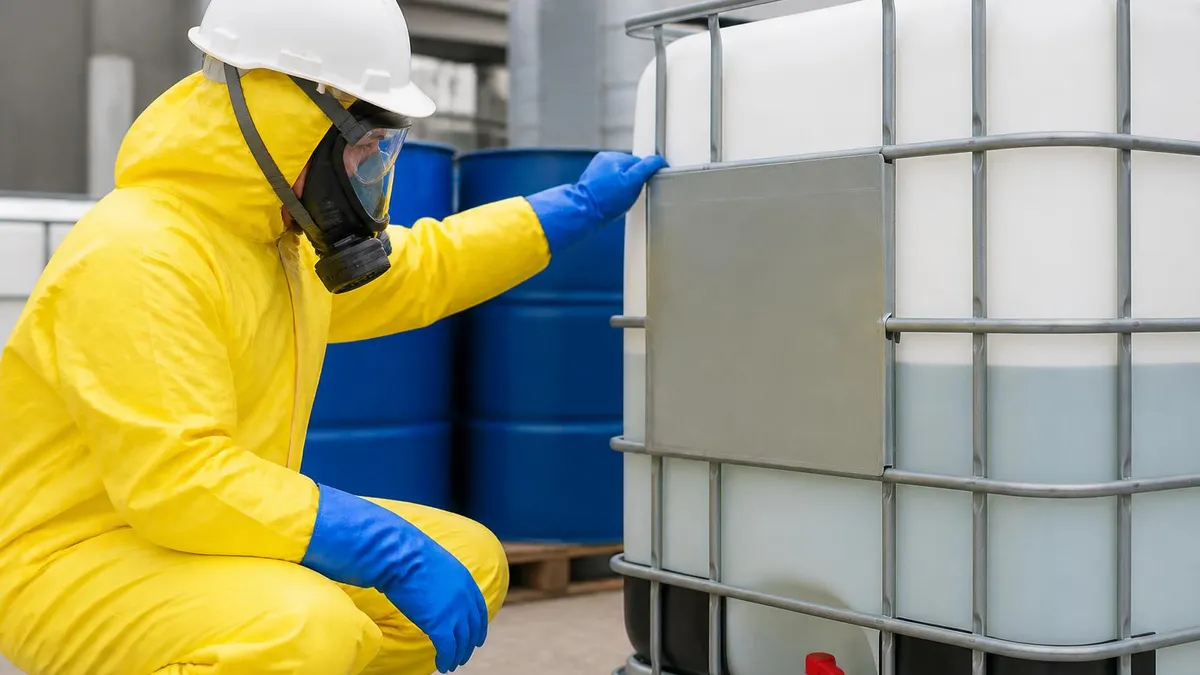
TSA HazMat Endorsement: Complete Guide to the Threat Assessment, Fingerprinting, and Approval Process
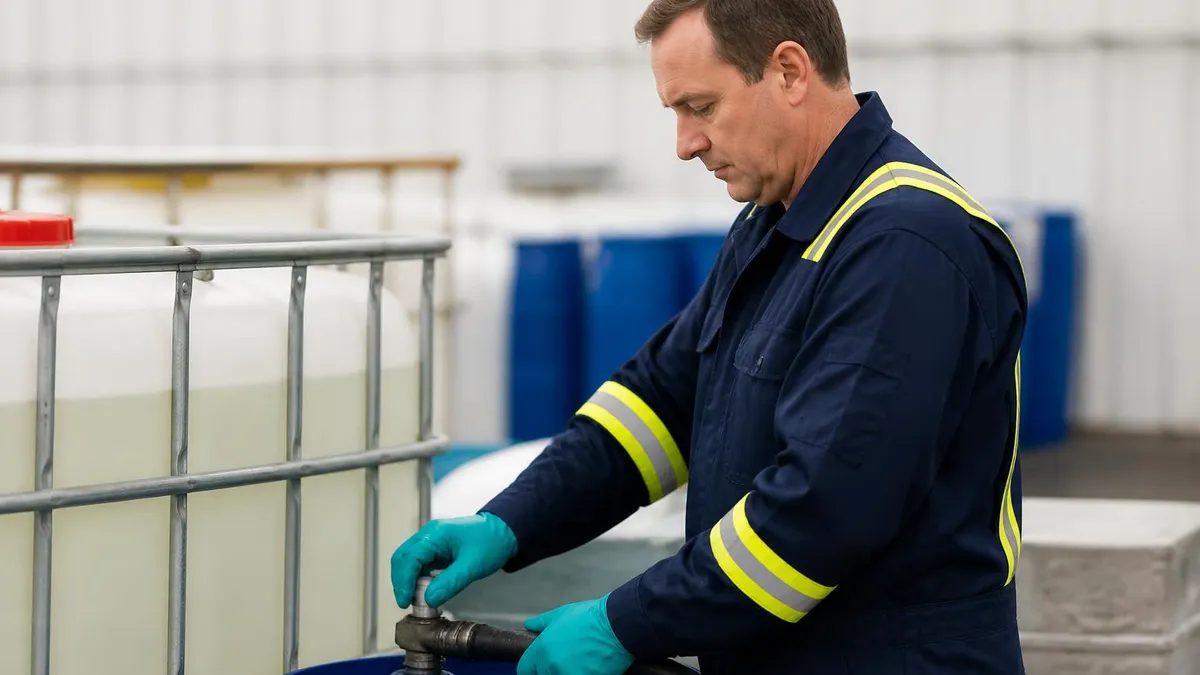
ELDT HazMat Training: Complete 2026 Federal Requirements, Theory Curriculum & Endorsement Path
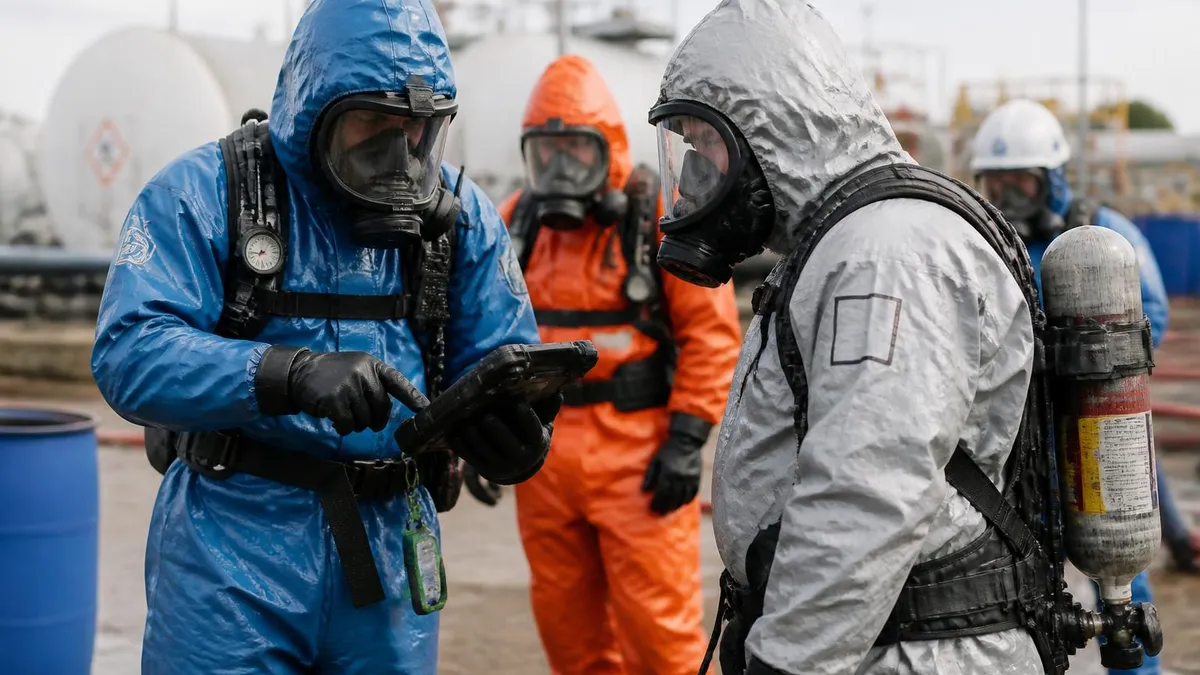
DMV HazMat Practice Test: Free Questions and Complete Study Guide for the Hazardous Materials Endorsement
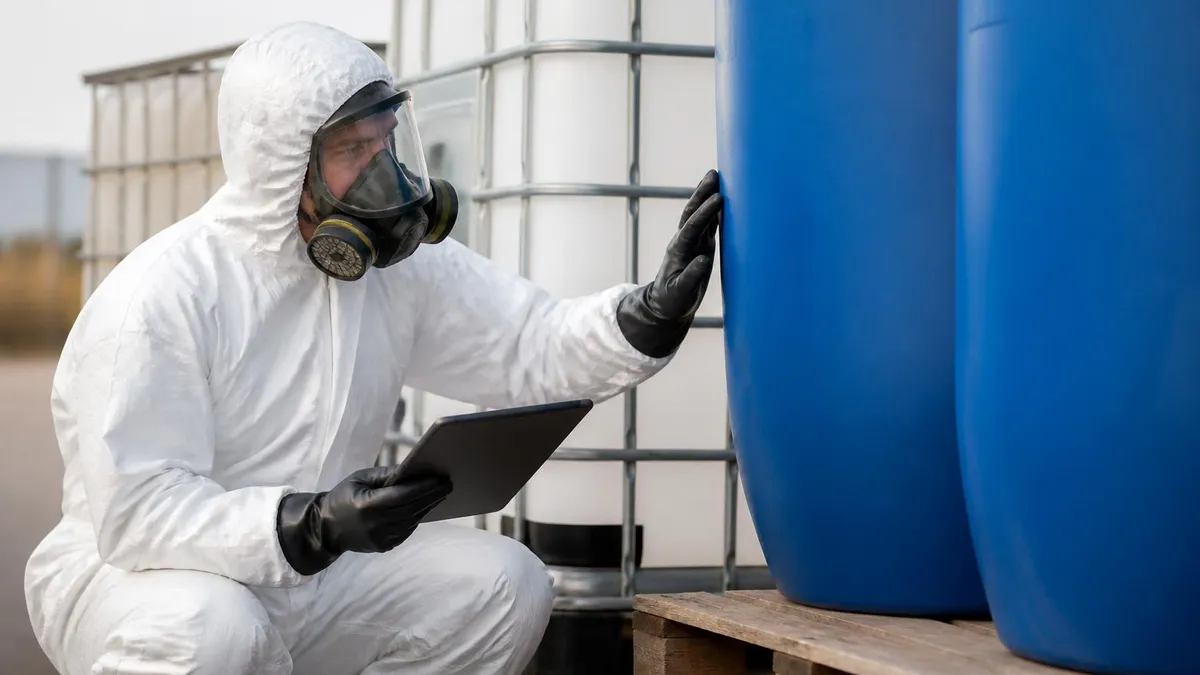
HazMat Code Meanings: Understanding UN/NA Identification Numbers for Your CDL Endorsement
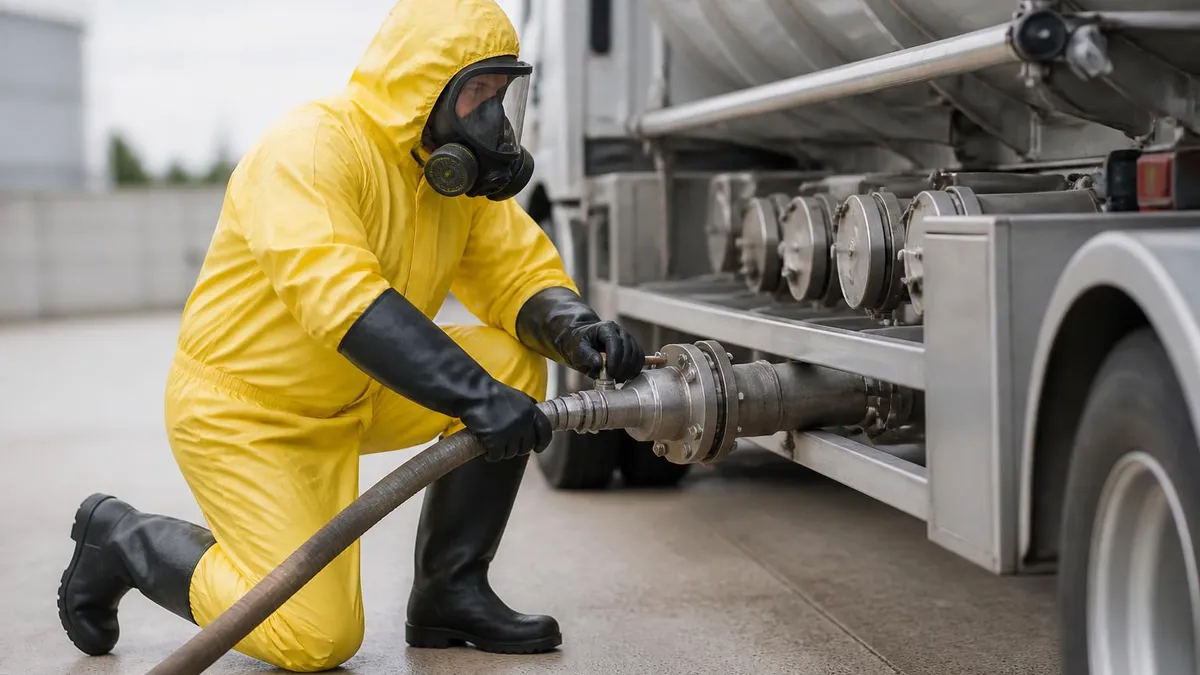
Hazmat Placards: The 9 Hazard Classes and DOT Placarding Rules
About the Author

Educational Psychologist & Academic Test Preparation Expert
Columbia University Teachers CollegeDr. Lisa Patel holds a Doctorate in Education from Columbia University Teachers College and has spent 17 years researching standardized test design and academic assessment. She has developed preparation programs for SAT, ACT, GRE, LSAT, UCAT, and numerous professional licensing exams, helping students of all backgrounds achieve their target scores.
Join the Discussion
Connect with other students preparing for this exam. Share tips, ask questions, and get advice from people who have been there.
View discussion (8 replies)