
How to Become a General Contractor in North Carolina 2026 September
Free How to Become a General Contractor in practice test with questions and answer explanations. 🟢 Prepare for the 2026 September exam with instant scoring.

How to Become a General Contractor in North Carolina
North Carolina has one of the more streamlined general contractor licensing processes in the Southeast, but it's not simple. The North Carolina Licensing Board for General Contractors (NCLBGC) controls who gets a license, and they take the process seriously. If you want to run construction projects in NC, here's exactly what you need to do.
North Carolina requires licensure for any person or business that bids or undertakes general contracting work valued at $30,000 or more. Below that threshold, no license is required — but once you're working on projects at or above $30,000, you're operating illegally without a license, which can result in injunctions, civil penalties, and criminal charges.
Types of General Contractor Licenses in NC
North Carolina issues general contractor licenses in several classifications based on the size of projects you want to handle:
Limited license — Projects up to $500,000. This is the entry-level general contractor license and what most people applying for the first time pursue.
Intermediate license — Projects up to $1,000,000.
Unlimited license — No cap on project size. This is what established general contracting businesses need to pursue large commercial projects.
Each classification has different financial requirements. The NCLBGC determines the appropriate classification based on your financial statement. You can't simply choose Unlimited — you need to demonstrate the financial capacity to support it.
Within each classification, you choose endorsements that specify what type of construction you're licensed for: Building (commercial and residential), Residential, Highway (heavy construction and highways), Public Utilities, Specialty. Most general contractors pursue the Building endorsement.
Experience Requirements
North Carolina doesn't have a rigid hour-based experience requirement like some states, but the NCLBGC does require you to demonstrate construction experience in your application. Specifically, you need to show that you — or your qualifier (the person taking the examination on behalf of a business entity) — have relevant experience in the construction field.
Experience can be demonstrated through a work history letter from a licensed contractor or employer, references from prior employers, documentation of projects you've managed or supervised, or other evidence of hands-on construction experience. The board reviews the totality of your experience when evaluating your application.
For business entities applying for a license, at least one member (the qualifier) must meet the experience and examination requirements. Individual applicants must meet them personally.
The NCLBGC Examination
All general contractor license applicants in North Carolina must pass the NCLBGC examination. The exam is administered by PSI Exams and covers:
Business and Law — North Carolina contractor law, business management, contract principles, lien laws, and general business operations. This is a separate section from the trade knowledge exam.
Trade Knowledge — Technical knowledge specific to your endorsement type. For Building endorsement applicants, this covers construction methods, materials, project management, plan reading, and building codes.
Passing score is 70% on each section. You can take sections separately and retake failing sections independently. Exam fees apply per attempt.
The Business and Law exam is taken by virtually everyone pursuing a NC general contractor license. The trade knowledge exam varies by endorsement — someone pursuing a Highway endorsement takes a different trade exam than someone pursuing Building.
Most candidates who prepare thoroughly for both sections pass within one or two attempts. The Business and Law section trips up people who know construction well but haven't studied the legal and business side. Give it real preparation time, not just a quick review.
For exam preparation resources and practice tests, the general contractor license study guide covers strategies for both the business law and trade knowledge sections.
Financial Requirements for the NC GC License
North Carolina requires proof of financial capacity as part of the licensing process. The specific financial requirements depend on which license classification you're applying for:
For a Limited license, you need to demonstrate a minimum net worth or working capital meeting NCLBGC standards. For Intermediate and Unlimited licenses, the financial requirements are proportionally higher.
You'll submit a financial statement prepared by a CPA or public accountant (the NCLBGC specifies the required format). A sole proprietor can submit a personal financial statement. A corporation or LLC submits a business financial statement.
Many first-time applicants are surprised by the financial requirements. If your financial statement doesn't meet the board's thresholds for your desired classification, you'll be licensed at a lower classification — or not licensed at all until your financial picture improves.
Tip: Be honest and accurate on your financial statement. The NCLBGC reviews these documents carefully, and a financial statement that doesn't hold up to scrutiny creates serious problems with your application. Work with a qualified accountant to prepare it correctly.
Insurance Requirements
North Carolina requires licensed general contractors to maintain general liability insurance. The minimum required coverage varies by license classification, but most GC licenses require at least $500,000 in general liability coverage.
You'll also need workers' compensation insurance if you have employees — this is required by law for employers with three or more employees in North Carolina (the threshold is lower than most states). Even if you're below the three-employee threshold, most project owners and GCs require workers' comp certificates from subs working on their jobs.
Get your insurance in place before completing your application. Your certificate of insurance needs to be submitted to the board as part of the licensing process.
The Application Process
Here's how the NC general contractor licensing process works step by step:
Step 1: Pass the exams. Register with PSI, schedule your Business and Law exam and your Trade Knowledge exam (for your endorsement), study, and pass both. Exam scores are valid for a defined period — check the NCLBGC website for current validity rules.
Step 2: Prepare your financial statement. Have a qualified accountant prepare your financial statement in the format required by the NCLBGC. This determines what classification you can apply for.
Step 3: Complete the application. Download the NCLBGC application, complete it carefully, and gather all required supporting documents — exam results, financial statement, insurance certificate, experience documentation, and any other required attachments.
Step 4: Submit and pay the fee. Send the completed application with the application fee to the NCLBGC. Review your application before submitting to catch any errors or missing items — incomplete applications are returned and delay the process.
Step 5: Wait for review and approval. The NCLBGC reviews applications at board meetings. Processing time varies but typically takes 4–8 weeks for complete, accurate applications. Applications with questions or missing items take longer.
Step 6: Receive your license. Upon approval, you'll receive your license certificate from the NCLBGC. Your license number is then public record, searchable on the NCLBGC website.
For context on how NC's requirements compare to neighboring states, the South Carolina general contractor license guide and the Georgia general contractor license guide provide useful comparison points.
Reciprocity with Other States
North Carolina has reciprocity agreements with several other states, which means if you hold an active general contractor license in a reciprocal state and meet certain conditions, you may be able to get a North Carolina license without retaking the full examination.
States with reciprocity agreements with NC include Virginia, South Carolina, Georgia, and others (verify current reciprocity status with the NCLBGC, as these agreements change). Reciprocity typically still requires you to take the North Carolina Business and Law exam — the state-specific section — even if the trade exam is waived.
Don't assume reciprocity automatically applies. Contact the NCLBGC directly to confirm the current status of any reciprocity agreement and what the process requires for your specific situation.
License Renewal and Continuing Education
North Carolina general contractor licenses must be renewed annually. The renewal period runs from December 1 through January 31 for the following year. If you miss the renewal deadline, your license lapses and you'll need to reinstate it (with additional fees) before you can legally take on licensed projects again.
North Carolina has required continuing education for license renewal. The current requirement is 8 hours of NCLBGC-approved continuing education per renewal year. Courses cover topics like building codes updates, business law changes, safety, and project management. Many courses are available online.
Keep your CE documentation organized — you don't submit it to the board automatically, but you need to be able to prove completion if audited. Mark your calendar for both the CE completion deadline and the renewal deadline.
Those looking at how NC licensure fits into broader career planning can reference the general contractor license career and salary guide for context on earnings potential and career trajectory across license classifications and states.

- +Validates your knowledge and skills objectively
- +Increases job market competitiveness
- +Provides structured learning goals
- +Networking opportunities with other certified professionals
- −Study materials can be expensive
- −Exam anxiety can affect performance
- −Requires dedicated preparation time
- −Retake fees apply if you don't pass


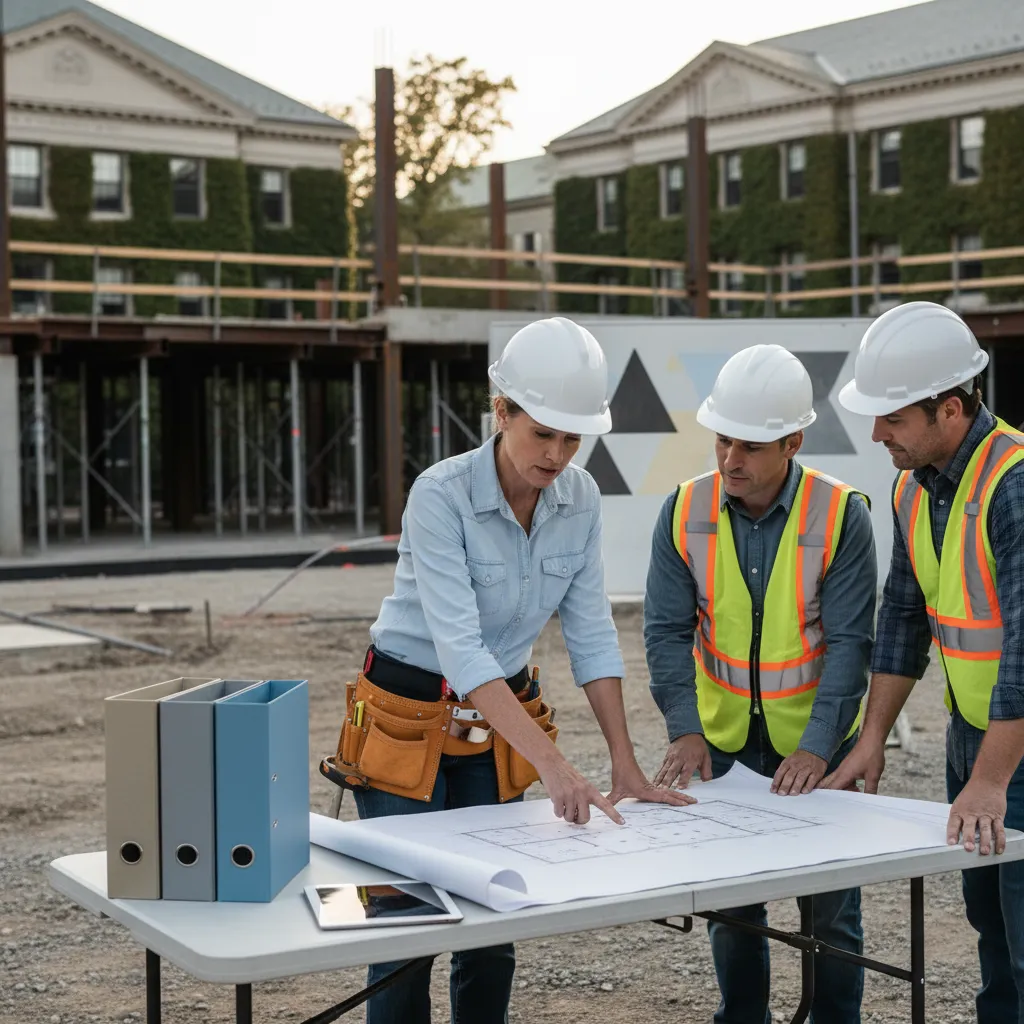
Getting Your North Carolina GC License
The path to a North Carolina general contractor license rewards preparation and organization. Get your exam prep in order early — the Business and Law section is where most candidates spend too little time, only to discover it covers NC-specific legal material they don't know well enough. Give both sections serious study time.
Work on your financial documentation in parallel with exam prep. A complete, well-documented application that arrives with accurate financials, solid experience evidence, and all required attachments moves through the board review process faster than one that generates questions.
North Carolina's construction market — particularly in the Research Triangle, Charlotte, and coastal areas — offers real opportunities for licensed contractors. Getting your license right opens doors to a wide range of residential and commercial projects.
For practice test materials covering the types of questions you'll face on the NCLBGC exam, the Arizona general contractor requirements and general contractor license requirements resources provide additional context on how licensing works across states — useful background whether you're licensing in NC only or planning to expand.
About the Author

Educational Psychologist & Academic Test Preparation Expert
Columbia University Teachers CollegeDr. Lisa Patel holds a Doctorate in Education from Columbia University Teachers College and has spent 17 years researching standardized test design and academic assessment. She has developed preparation programs for SAT, ACT, GRE, LSAT, UCAT, and numerous professional licensing exams, helping students of all backgrounds achieve their target scores.
Join the Discussion
Connect with other students preparing for this exam. Share tips, ask questions, and get advice from people who have been there.
View discussion (7 replies)