
How to Get a General Contractor License in Georgia 2026 September
Pass your How to Get a General Contractor License exam on the first attempt. 💡 Practice questions with detailed answer explanations, hints, and instant

Getting Your General Contractor License in Georgia
Georgia has a straightforward but multi-step process for obtaining a general contractor license. The state doesn't have a single universal contractor license — instead, the licensing structure depends on the type of work and the project value. Understanding which category applies to you is the first step.
For most residential and commercial construction work, Georgia contractors must be licensed at the state level through the Georgia Secretary of State's licensing board. If you're asking how to get a general contractor license in Georgia, the answer depends on whether you're going for a Residential Basic, Residential Light Commercial, or Unrestricted license — and each has different requirements.
Georgia Contractor License Types
Georgia's contractor licensing has three main residential tiers:
- Residential Basic — for single-family homes and duplexes up to $500,000 in project value
- Residential Light Commercial — for residential and light commercial projects up to $1 million
- Unrestricted — no project value limit; for contractors handling large commercial and industrial work
There's also a separate Conditioned Air category for HVAC contractors and specialty licenses for electrical, plumbing, and low-voltage work. Most general contractors pursuing residential and commercial construction target the Residential Light Commercial or Unrestricted license.
Additionally, individual Georgia counties and municipalities may require local business licenses or permits separate from the state credential. Always check with your county before starting work in a new jurisdiction.
Key Takeaway: General Contractor License certification demonstrates expertise in this field. Most candidates spend 4-8 weeks preparing with practice tests before taking the exam.
How to Obtain a General Contractor License in Georgia: Step by Step
Here's the process for the Residential and Unrestricted contractor licenses through the Georgia State Licensing Board for Residential and General Contractors:
- Verify eligibility — You must be at least 21 years old and able to demonstrate construction experience or education. The Unrestricted license requires documented experience as a project supervisor on qualifying projects.
- Complete the application — Apply through the Georgia Secretary of State's online licensing portal. You'll need to provide personal information, business information (if applicable), and documentation of your experience.
- Pass the required exam — Georgia requires you to pass the PSI contractor examination. The exam covers business and law plus trade-specific knowledge. For the Unrestricted license, you'll take both a business/law section and a building trades section.
- Provide proof of insurance — Georgia requires proof of general liability insurance. Minimums vary by license type but typically start at $300,000. Workers' compensation is required if you have employees.
- Pay the licensing fees — Application and licensing fees vary by category. Budget $100–$200 for initial application and licensing fees through the state board.
- Submit your application and wait for approval — Processing times vary. Online applications generally process faster than paper ones.
The Georgia Contractor Exam: What to Expect
The PSI contractor exam for Georgia has two parts:
- Business and Law — covers Georgia contractor law, business practices, contracts, lien laws, OSHA basics, and insurance requirements. Open-book in some jurisdictions but time-limited.
- Trade Knowledge — for the Unrestricted license, this covers structural systems, building codes (Georgia state amendments to IBC), MEP systems, and project management fundamentals.
How to get a general contractor license in Georgia efficiently comes down to this exam. Most candidates who fail do so on the trade knowledge section because they underestimate the depth of code knowledge required. The Georgia State Amendments to the IBC are fair game — not just the baseline International Building Code. Make sure your prep materials include Georgia-specific code content.
Experience Requirements
For the Residential Basic license, Georgia requires documented experience equivalent to at least one year as a project supervisor on residential construction. For the Unrestricted license, you need at least three years of qualifying experience, with at least one year as a project supervisor on commercial projects over $500,000.
Experience must be documented — you can't just claim it. You'll need reference letters, project listings with dollar values, or employer verification. Gather this documentation before you apply; missing documentation is the most common reason for application delays.

General Contractor License: Pros and Cons
- +general contractor license — growing demand for General Contractor License professionals in the job market
- +Diverse career opportunities across multiple industries
- +Competitive compensation packages including benefits
- +Clear advancement path from entry-level to senior positions
- +Transferable skills applicable to related fields
- −Entry-level positions may offer lower starting compensation
- −Field can be competitive — relevant certifications help stand out
- −Work-life balance varies by employer and specialty
- −Keeping skills current requires ongoing professional development
- −Some positions require specific licenses or background checks


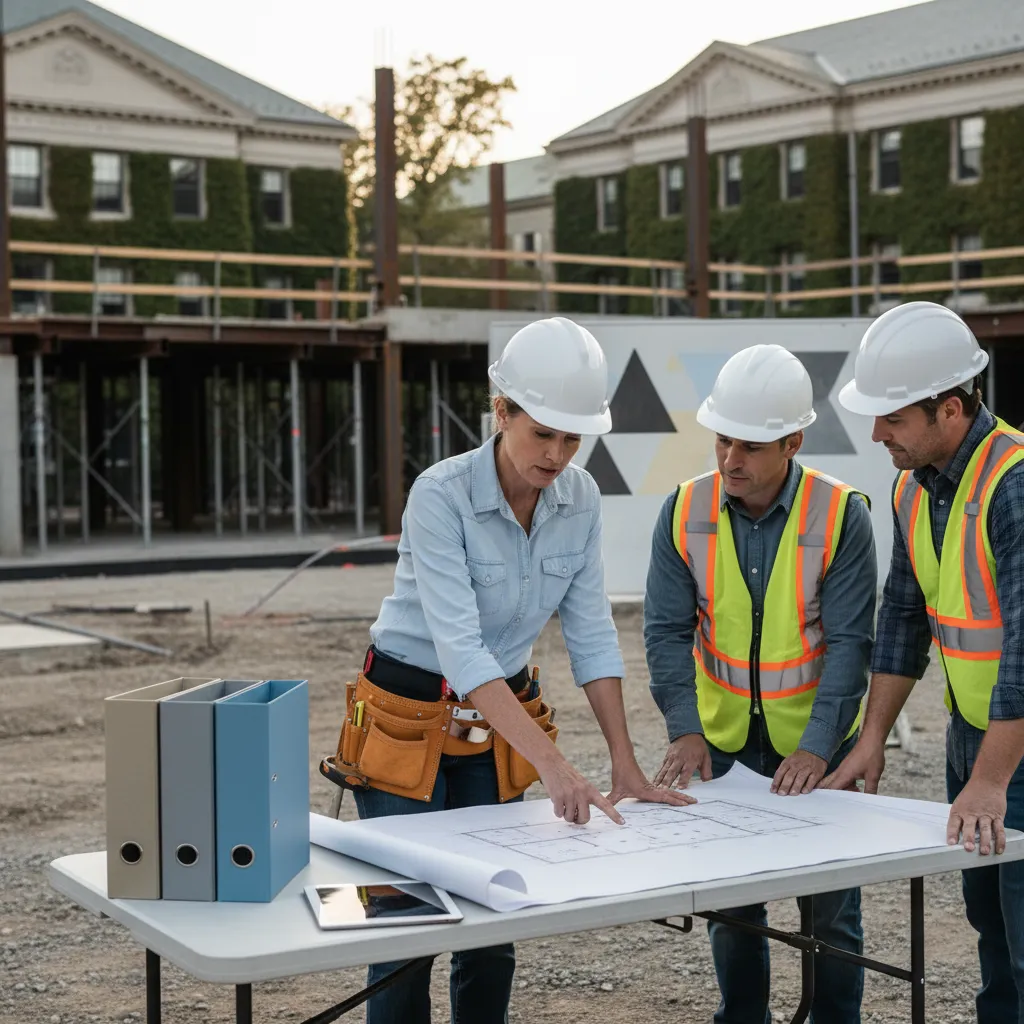
Preparing for the Georgia Contractor Exam
The PSI Business and Law exam is passed by most prepared candidates — it's learnable content about Georgia-specific contractor regulations, contract law, and business practices. The trade knowledge portion demands more preparation, especially if you haven't reviewed building codes recently.
Get a copy of the Georgia State Amendments to the IBC and the Georgia Residential Code. Know them — not every detail, but understand how they're organized and where key requirements live. The exam is open-book in some cases, but you need to be fast with your references to use that effectively under time pressure.
Practice tests are worth your time. They expose knowledge gaps before test day and help you get comfortable with how questions are phrased. Use the contractor practice tests here alongside your code study materials. Candidates who combine structured code review with practice testing consistently outperform those who only read the reference materials without testing their knowledge.
Georgia's contractor licensing process is designed to be accessible to working professionals with legitimate experience and knowledge — not a bureaucratic barrier. If you've been in construction management, you already have most of what you need. The exam formalizes that knowledge and adds the regulatory and business law context that every licensed contractor needs to operate legally and professionally in Georgia.
About the Author

Educational Psychologist & Academic Test Preparation Expert
Columbia University Teachers CollegeDr. Lisa Patel holds a Doctorate in Education from Columbia University Teachers College and has spent 17 years researching standardized test design and academic assessment. She has developed preparation programs for SAT, ACT, GRE, LSAT, UCAT, and numerous professional licensing exams, helping students of all backgrounds achieve their target scores.
Join the Discussion
Connect with other students preparing for this exam. Share tips, ask questions, and get advice from people who have been there.
View discussion (7 replies)