
GDL Meaning: What Is a Graduated Driver License and How It Works 2026 October
🏆 GDL stands for Graduated Driver License — a 3-stage system for new drivers. Learn permit rules, night restrictions, and how to advance to full licensure.

What Does GDL Stand For?
GDL stands for Graduated Driver License — sometimes written as Graduated Driver Licensing or Graduated Licensing Program, depending on the state. The core idea is simple: instead of handing a 16-year-old a full license the moment they pass a road test, the system makes them earn driving privileges over time.
That's it. That's the whole concept. You start with supervised driving, prove you can handle it, earn limited independence, and eventually graduate to full driving rights. Every U.S. state has some version of this. The specific rules — minimum ages, required hours, night-driving cutoffs — vary quite a bit, but the three-stage structure is consistent nationwide.
Before GDL laws became widespread in the 1990s and early 2000s, the U.S. teen traffic fatality rate was significantly higher. The data since has been unambiguous: states that adopted strong GDL programs cut teen fatal crash rates by 20–40%. That's not a small effect — it's one of the most evidence-backed traffic safety interventions ever implemented. Studies from the Insurance Institute for Highway Safety (IIHS) consistently show that comprehensive three-stage GDL systems outperform simpler two-stage approaches, specifically because the intermediate license stage forces exposure to unsupervised driving conditions before full privileges are granted.
If you're a new driver or the parent of one, understanding exactly what GDL means — and what each stage requires — is the first step. Skipping stages or violating restrictions can reset your progress, delay your full license, and spike your insurance premiums. It's worth knowing the rules before you're pulled over for breaking them. Many first-time permit applicants underestimate how strictly GDL violations are tracked: in most states, traffic offenses during the graduated period are flagged in the DMV system and can delay Stage 2 or Stage 3 advancement automatically, without any separate hearing or appeal.
The term GDL is also used loosely to describe the learner's permit itself — you'll hear people say "I just got my GDL" when they mean they received their permit. Technically GDL refers to the overall system, but colloquially it sometimes shorthand for the permit document. Don't let that casual usage confuse you about what each stage actually involves.
GDL by the Numbers
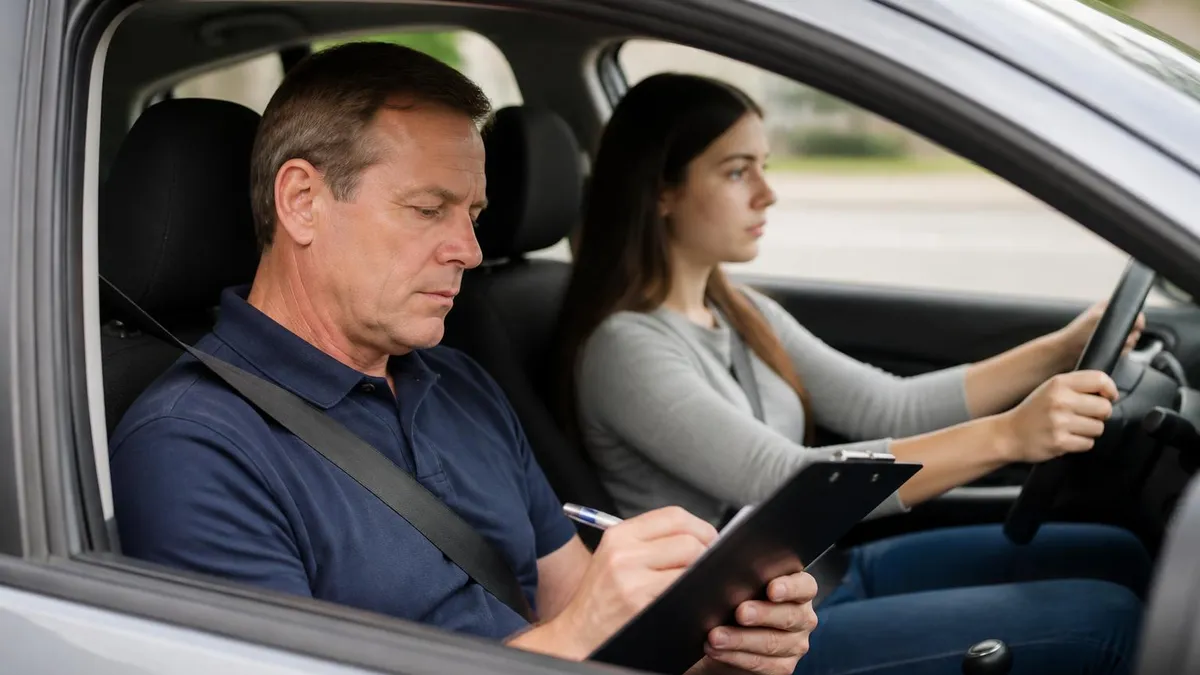
The Three Stages of GDL — What Each One Actually Requires
Teen drivers are statistically the most dangerous group on the road — not because they're reckless, but because they're inexperienced. Crash rates for 16-year-olds are roughly four times higher than those for drivers aged 20 and older, per mile driven. GDL addresses this directly by forcing experience to accumulate in controlled conditions before independence kicks in. Here's how the three stages break down, and what you actually need to do — not just the minimum — to advance through them successfully.
One thing worth noting upfront: the transition between stages isn't automatic. You have to actively apply for each advancement at your local DMV or BMV office, and you'll typically need to bring documentation showing you've completed the required hours and maintained a clean record. Some states require a separate road skills test to move from Stage 2 to Stage 3. Missing that requirement is a common delay for drivers who assume advancement happens on its own.
The Three GDL Stages
The learner's permit is the starting point. You can't drive alone — a licensed adult (usually 21 or older) must be in the front passenger seat at all times. This stage is about supervised practice: building muscle memory, developing hazard awareness, and getting comfortable behind the wheel before any independent driving happens.
- Minimum age: Ranges from 14 (some rural states) to 16 — most states set it at 15 or 15.5
- Minimum holding period: Usually 6–12 months before you can apply for Stage 2
- Required supervised hours: Typically 30–65 hours, including a mandatory number of nighttime hours (usually 10)
- Knowledge test required: Yes — road signs, traffic laws, right-of-way rules. Studying with practice questions is the most efficient prep method. A GDL practice test PDF is a good way to review the material before your appointment.
- Violations: A ticket or at-fault crash during this stage usually resets the holding period clock in most states
Why the Night Driving and Passenger Restrictions Are the Most Important Rules
These two restrictions get the most pushback from teen drivers. They also happen to be the most evidence-backed parts of the GDL system — the research supporting them is unusually strong for a traffic regulation.
On passengers: research is consistent and has been replicated across multiple countries. Each additional teenage passenger in the car roughly doubles crash risk for the teen driver at the wheel. It's not the passengers themselves — it's the social distraction, the pressure to perform, the temptation to show off.
Even a single conversation with a peer passenger measurably increases reaction times and decreases hazard awareness for new drivers in ways that adult-to-teen conversation doesn't. Keeping passenger limits tight during the early months of unsupervised driving is the single most effective restriction GDL programs include. Test your knowledge of GDL passenger rules before your provisional period starts — violations can delay your full license by months, and the rules are more specific than most new drivers expect.
On night driving: teens are disproportionately overrepresented in fatal nighttime crashes — the per-mile death rate for teen drivers between 9 PM and midnight is more than twice what it is during daytime hours. It's a combination of factors: reduced visibility in unfamiliar conditions, higher likelihood of fatigue, greater probability of encountering impaired drivers, and less overall experience managing unusual or unexpected situations.
The night restriction isn't punitive; it eliminates the highest-risk driving window until you've built more base experience during lower-risk hours. Practice the rules before your permit test with GDL permit restrictions practice questions — knowing the exact curfew hours for your state is a common knowledge-test item and one that trips up many applicants who guess instead of checking the actual rule.
Together, these two restrictions — passengers and night driving — account for the majority of the crash rate reduction that GDL programs produce. States that enforce both consistently see much larger drops in teen fatalities than states that include the restrictions on paper but enforce them weakly. If you're a parent, it's worth knowing that the enforcement responsibility often falls on you: police can't be everywhere, and the data on teen compliance with GDL restrictions suggests that parental monitoring makes a significant difference in whether restrictions are actually followed.
GDL Requirements by State — How Much They Vary
There's no federal GDL law. Every state writes its own rules, and the differences can be substantial. Minimum permit age ranges from 14 (parts of South Dakota, Montana, and a few other agricultural states with rural exceptions) to 16 in states like New Jersey. Required supervised hours range from 30 to 65. Night driving curfews range from 9 PM to midnight. The only way to know your specific state's requirements is to check your state's DMV or BMV website directly.
That said, a few state examples are useful for seeing the range:

GDL Rules in Key States
- ▸Permit at 15.5 years old
- ▸Provisional license at 16
- ▸Full license at 17.5 (or 18)
- ▸50 supervised hours required (10 must be at night)
- ▸No passengers under 20 for first 12 months
- ▸No driving 11 PM – 5 AM for first 12 months
- ▸Permit at 15 years old
- ▸Provisional (hardship) or full Class C at 16
- ▸Full unrestricted at 18
- ▸30 supervised hours required (10 at night)
- ▸No more than 1 passenger under 21 for first year
- ▸No driving midnight – 5 AM
- ▸Permit at 16 years old
- ▸Junior license at 17
- ▸Full license at 18
- ▸50 supervised hours required (15 at night)
- ▸No more than 1 passenger under 21 (some counties: 0)
- ▸No driving 9 PM – 5 AM (varies by county)
- ▸Permit at 15.5 years old
- ▸Probationary license at 16
- ▸Full license at 17
- ▸50 supervised hours required
- ▸No driving midnight – 6 AM
- ▸Passenger restrictions apply first 12 months
Cell Phones, Tickets, and What Happens When You Violate GDL Rules
Getting a ticket during your GDL period isn't just a fine. Most states treat any moving violation during Stage 1 or Stage 2 as a reset — your holding period clock restarts. Some states extend the provisional license period by 6 months per violation. Insurance surcharges kick in and can follow you for 3–5 years. In a few states, a second violation during Stage 2 requires you to restart from Stage 1 entirely.
Cell phone rules are particularly strict for GDL holders. Most states ban all handheld device use regardless of age. For drivers in Stage 1 or Stage 2, many states go further and ban hands-free use as well — the distraction research doesn't differentiate much between the two for inexperienced drivers. A cell phone ticket during the provisional period is treated as a moving violation in most states. That means clock reset, extended probationary phase, and an insurance hit. Not worth it.
The drivers permit test will cover your state's specific distraction laws. Know them before you sit down to take it. Missing distraction-related questions is one of the most common reasons people fail on the first attempt.
GDL Stage 2 Compliance Checklist
- ✓Know your state's exact night driving curfew hours (not just a rough estimate)
- ✓Know your state's passenger limit — including whether family passengers count
- ✓Understand your state's cell phone rules for provisional license holders
- ✓Log every supervised driving hour honestly — falsified logs can void your license
- ✓Keep your driving record clean — one ticket may reset your Stage 2 clock
- ✓Document any curfew exceptions (work, school) your state allows
- ✓Check whether your state requires a separate road test to advance to Stage 3
- ✓Review your insurance policy — some insurers offer discounts for clean GDL records
How to Move Through GDL Faster — Without Cutting Corners
You can't skip the clock. Most states have hard minimum holding periods regardless of how many hours you log — a 6-month minimum is 6 months, period. But you can make sure you're not adding extra time through violations or incomplete requirements. There's a meaningful difference between a driver who takes 8 months to move through Stage 2 and one who takes 14 months because of a ticket and a clock reset.
Don't rush the supervised hours. The requirement exists because inexperienced drivers need exposure to varied conditions — rain, highway driving, parallel parking, night driving, high-traffic intersections. Logging 50 hours in identical suburban errands doesn't build the same skills as 30 hours across genuinely different scenarios. Try to drive in at least five distinct condition types: daytime urban, daytime rural or highway, night driving (with your supervisor), adverse weather, and high-traffic rush-hour situations. The experience matters more than the number on your log sheet.
Avoid even minor violations. A parking ticket won't reset your clock, but a cell phone violation, a speeding ticket, or a failure-to-yield citation will — in most states. The GDL period is the wrong time to test which rules are actually enforced. They are. Prepare for your written test thoroughly using resources like GDL licensing and regulations practice questions so you know exactly what the rules are — not a rough approximation, not what you overheard someone say, but the actual rule for your state.
Don't let friends pressure you into breaking passenger restrictions. Harder than it sounds. Saying no to passengers when you're 16 and your friends are asking for a ride is socially uncomfortable. But a passenger violation extends your provisional phase, and depending on your state it could add months. It's not worth it — and frankly, the friends asking you to break the restriction aren't the ones who'll be dealing with the consequences if something goes wrong.
One more thing: keep copies of your driving logs. Some states don't require you to submit them when you apply for Stage 2, but you may be asked to produce them if there's any question about your eligibility. A simple spreadsheet or the notes app on your phone — with date, duration, conditions, and supervisor's name — is enough.

GDL Program: Pros and Cons
- +Cuts teen fatal crash rates by 20–40% in states with strong programs
- +Builds genuine experience in supervised conditions before independent driving
- +Graduated restrictions match risk exposure to skill level — logical and evidence-based
- +Night and passenger restrictions target the two highest-risk conditions for new drivers
- +Stage structure creates clear, achievable milestones that motivate compliance
- −Requirements vary dramatically by state — no national standard creates confusion
- −Restrictions can be socially difficult for teens, especially passenger limits
- −Minimum holding periods can't be shortened even for exceptionally capable drivers
- −Rural teens may face hardship since public transport alternatives don't exist everywhere
- −Violations during GDL extend the timeline disproportionately for minor infractions
Pros and Cons at a Glance
| Pros | Cons |
|---|---|
| Builds genuine experience in supervised conditions before independent driving | Requirements vary dramatically by state — no national standard creates confusion |
| Graduated restrictions match risk exposure to skill level — logical and evidence-based | Restrictions can be socially difficult for teens, especially passenger limits |
| Night and passenger restrictions target the two highest-risk conditions for new drivers | Minimum holding periods can't be shortened even for exceptionally capable drivers |
| Stage structure creates clear, achievable milestones that motivate compliance | Rural teens may face hardship since public transport alternatives don't exist everywhere |
GDL and Car Insurance — What New Drivers Need to Know
Your GDL status affects your insurance rate — a lot. Teen drivers are the highest-risk group insurers cover, and rates reflect that. Being added to a parent's policy at 16 typically increases the household premium by 50–100%, depending on the state and the insurer. It's a significant cost, and it's worth understanding what drives it and what can reduce it.
Clean GDL record = lower rate. Most insurers track your driving history from the moment you're added to a policy. A single at-fault accident or moving violation during Stage 1 or Stage 2 can lock you into a high-risk tier that persists for three to five years. Conversely, completing the GDL period with a clean record puts you in a better tier when you eventually move to your own policy.
Good student discounts apply during GDL. Most major insurers offer a 10–15% discount for drivers under 25 maintaining a B average or better. If you're in high school, this is worth applying for — it requires nothing beyond a transcript or a school certification form and it stacks with other discounts.
Driver education credit is another underused discount. Many insurers reduce premiums for teens who completed a state-approved driver's education course rather than just the minimum required supervised hours. If you did a formal driving school program, mention it when getting quotes — not all agents volunteer this discount unprompted.
The insurance situation improves at each GDL milestone. Rates typically drop when you advance from Stage 1 to Stage 2, again when you reach Stage 3, again at 18, and more significantly at 21 and 25. The GDL system's stage structure aligns almost exactly with the risk milestones that insurers use for pricing. That's not a coincidence — both systems were developed around the same crash data.
GDL Insurance Impact
The GDL Knowledge Test — What You'll Actually Be Asked
In nearly every state, getting your learner's permit requires passing a written knowledge test at your local DMV or BMV office. The test covers road signs, traffic laws, right-of-way rules, speed limits, and — relevant to GDL specifically — the state's graduated licensing restrictions. Many states now offer this test online or on a computer terminal at the DMV rather than on paper, though the content is the same.
Most knowledge tests run 20–50 questions. Passing scores typically require 80% or better. You can usually retake the test the same day or the next business day if you fail, though some states impose a waiting period after repeated failures — a reason to prepare properly the first time rather than assume you can just try again immediately.
The most common mistakes on GDL knowledge tests:
- Confusing right-of-way rules at four-way stops (multiple scenarios, not just the basic one)
- Misremembering the specific night driving curfew hours for your state
- Getting GDL passenger limits wrong — specifically whether exceptions exist for immediate family
- Road sign shapes and colors — particularly regulatory vs. warning signs
- Minimum following distance rules, especially in adverse conditions
Studying with practice questions that mirror the actual test format — not just reading the driver's handbook once — is consistently the most effective prep method. The handbook tells you the rules; practice questions show you how those rules are tested under realistic conditions. There's a meaningful difference between knowing a fact and being able to answer a multiple-choice question about it under mild test pressure. Practice questions close that gap, and they also help you identify the specific areas where your knowledge is weakest so you can focus your remaining study time effectively before your appointment.
Sample GDL - Graduated Driver License Practice Questions
Try these questions from our free GDL - Graduated Driver License practice tests. The correct answer and an explanation follow each question.
According to typical Graduated Driver License (GDL) regulations, what is the rule for a driver with a permit or probationary license regarding the use of wireless communication devices?
- A. They may use hands-free devices, but not hand-held devices.
- B. They are prohibited from using any hand-held or hands-free wireless communication device.
- C. They may use hand-held devices only when the vehicle is stopped at a traffic light.
- D. They may use any type of device as long as a supervising adult is in the front seat.
Answer: B. They are prohibited from using any hand-held or hands-free wireless communication device.
GDL laws are designed to minimize all forms of distraction for new drivers. This includes a complete ban on both hand-held and hands-free wireless devices, as the cognitive distraction from a conversation is considered just as dangerous as the physical distraction of holding a phone.
A driver with an intermediate/probationary license receives a moving violation conviction for speeding. In many GDL programs, what is a common consequence related to their license progression?
- A. All passenger and curfew restrictions are immediately lifted.
- B. The time they must hold the intermediate license is extended or reset.
- C. The driver is immediately granted a full, unrestricted license.
- D. The driver must retake only the written knowledge test.
Answer: B. The time they must hold the intermediate license is extended or reset.
GDL programs require a period of violation-free driving to advance. A conviction for a moving violation typically resets the clock or extends the time a driver must remain in the intermediate stage before being eligible for a full license.
What class and tests must a person complete to obtain their permit in the Graduated Driver License (GDL) program?
- A. Driver's Education; must pass both written and road test
- B. Defensive Driving; must pass a vision test only
- C. Driver's Ed; must pass both written and vision test
- D. Online Driving Course; must pass a practical driving test only
Answer: C. Driver's Ed; must pass both written and vision test
Explanation: To obtain a permit in the Graduated Driver License (GDL) program, a person typically needs to complete a Driver's Education course and pass both a written test and a vision test. This ensures that the individual has the necessary knowledge and visual acuity to begin practicing driving under supervision.
A driver with a GDL probationary license is convicted of violating the state's Zero Tolerance Law. Besides fines and a standard license suspension, what is a likely GDL-specific consequence?
- A. A permanent ban on driving during nighttime hours.
- B. Mandatory installation of an ignition interlock device for one month.
- C. An extension of the probationary period, delaying graduation to a full license.
- D. A requirement to retake the written knowledge test only.
Answer: C. An extension of the probationary period, delaying graduation to a full license.
Violating a major law like the Zero Tolerance Law demonstrates a lack of responsible driving behavior. As a result, GDL programs will often delay the driver's advancement to the next licensing stage, requiring them to spend more time in the probationary phase without incident.
GDL Questions and Answers
About the Author

Educational Psychologist & Academic Test Preparation Expert
Columbia University Teachers CollegeDr. Lisa Patel holds a Doctorate in Education from Columbia University Teachers College and has spent 17 years researching standardized test design and academic assessment. She has developed preparation programs for SAT, ACT, GRE, LSAT, UCAT, and numerous professional licensing exams, helping students of all backgrounds achieve their target scores.
Join the Discussion
Connect with other students preparing for this exam. Share tips, ask questions, and get advice from people who have been there.
View discussion (7 replies)