
GDL Online Course: Complete Guide to Online Driver Education Requirements
Learn how GDL online driver education works, what courses cover, and how to pass your test. 🎓 Complete guide for teen drivers.

The GDL online driver education system has transformed how teenagers across the United States prepare for independent driving. Enrolling in a gdl online course gives new drivers the flexibility to complete classroom instruction on their own schedule, often from a home computer or tablet, without sacrificing the quality of safety-focused content that state regulators require. These digital programs cover everything from traffic laws and road signs to defensive driving strategies, and most states now formally recognize online coursework as a valid substitute for in-person classroom attendance.
Understanding what a gdl online course actually entails is essential before you sign up. Programs must meet strict state standards and are typically approved by the Department of Motor Vehicles or an equivalent licensing authority. The curriculum is broken into modules that learners work through at their own pace, often with embedded videos, interactive quizzes, and knowledge checks that confirm comprehension before a student can advance. Some states require a minimum number of study hours, and the platform automatically tracks your time to ensure compliance with those legal thresholds.
Parents play an important role in the GDL online education process. Most state programs mandate that a parent or guardian co-sign an enrollment agreement, acknowledging that the teen is completing the course honestly and without outside assistance. Some platforms even include a parent-monitored final exam that must be completed in a supervised environment. This parental involvement requirement reflects the broader philosophy of the Graduated Driver License program, which treats safe driving as a family responsibility rather than purely an individual achievement.
Cost is another practical consideration when choosing an online GDL course. Prices vary widely — state-sponsored programs may be free or low-cost, while private third-party providers typically charge between $25 and $75 for the full curriculum. A few states bundle the cost of the knowledge test fee into the course price, while others treat them separately. Always verify whether the course you are considering is state-approved before purchasing, because non-approved programs will not satisfy the legal education requirement, regardless of how thorough the content may be.
One of the most significant advantages of completing a gdl online course is the convenience it provides for busy families. Teens with after-school jobs, athletic commitments, or other obligations can log in during evenings or weekends without missing a session. Unlike traditional driving schools that follow a fixed class schedule, online platforms save your progress between sessions, so a student can complete Module 3 on Tuesday and resume with Module 4 on Friday without losing any work.
The knowledge test that follows course completion is a critical gateway in the GDL process. Most states require teens to pass a written or computer-based exam at a DMV office or approved testing center before they can receive a learner's permit. The online course is specifically designed to prepare students for this exam by covering every topic area that appears on the test, from right-of-way rules and speed limits to railroad crossings and school zone regulations. Consistent engagement with course material — not just a rapid click-through — is the most reliable path to first-attempt success.
This article walks you through every dimension of online GDL education: what the courses cover, how to choose the right program, what the different stages of GDL involve, how to study effectively, and what pitfalls to avoid. Whether you are a teenager eager to earn your permit or a parent helping to guide the process, you will find detailed, actionable information that makes the entire journey less confusing and more manageable.
GDL Online Education by the Numbers

How GDL Online Courses Are Structured
Online GDL courses divide content into discrete modules — typically 6 to 12 — covering traffic laws, road signs, defensive driving, and hazard recognition. Students must complete each module and pass a short quiz before advancing to the next section.
State-approved platforms automatically log active study time to ensure students meet minimum hour requirements. Simply clicking through slides quickly will not satisfy the system; the platform detects idle sessions and pauses the clock accordingly.
Most programs conclude with a proctored or parent-supervised final exam. Passing this internal course exam is separate from the DMV knowledge test but serves as strong preparation, often covering similar question formats and subject matter.
Upon finishing all modules and passing the final assessment, the provider issues a state-recognized completion certificate. This document is required when applying for your learner's permit at the DMV and must typically be an original or verifiable digital copy.
Most states legally require a parent or guardian to verify the student's identity and agree that the coursework was completed honestly. This may involve signing a paper form, completing an online acknowledgment, or participating in the monitored final exam.
The core curriculum of any state-approved GDL online course is built around the same foundational topics you would encounter in a traditional classroom setting. Traffic laws form the backbone of the content — students learn about right-of-way rules, speed limit variations by zone, traffic signal meanings, and the specific legal obligations that apply when sharing the road with cyclists, pedestrians, and emergency vehicles. These are not abstract concepts; they are the exact rules tested on your state's DMV knowledge exam, so mastering them in the online course directly prepares you for that critical first hurdle.
Road sign recognition is another core pillar of online GDL instruction. The curriculum typically introduces all three major sign categories — regulatory signs, warning signs, and guide signs — and drills students on their shapes, colors, and meanings. Many platforms use interactive flashcard exercises or timed recognition drills to reinforce memory. This is particularly important because sign recognition questions frequently appear on state knowledge tests, and even experienced drivers are sometimes surprised by less common signs they rarely encounter in day-to-day travel.
Defensive driving principles occupy a substantial portion of online GDL course content. Students learn techniques like the two-second following distance rule, how to perform proper mirror checks, the importance of scanning intersections before entering, and how to identify and respond to driver distractions. The module typically explains the Smith System and other structured observation frameworks that professional drivers use to reduce crash risk. Understanding these concepts academically is the first step; applying them during the supervised driving phase is where they truly take root.
Impaired and distracted driving modules are mandatory components in virtually all state-approved programs. Online courses present statistics on alcohol-related crash fatalities, explain the legal blood alcohol concentration thresholds for drivers of all ages, and walk through the physical and cognitive effects of common intoxicants. Distracted driving content covers not just cell phone use but also eating, grooming, passenger interaction, and infotainment system use while driving. These modules often include video case studies that make the consequences of these behaviors vivid and memorable.
Weather and road condition awareness is another topic that online GDL programs address in considerable depth. Students learn how to adjust following distances in rain, how black ice forms and why it is so dangerous, what to do when visibility drops in fog, and how to handle a skid on a slippery surface. These scenarios require judgment that cannot be fully taught online, but understanding the underlying physics and legal guidance gives new drivers a framework they can rely on when those conditions arise in real life.
Highway and freeway driving is typically covered in its own dedicated module. Merging techniques, maintaining appropriate speeds in fast-moving traffic, understanding highway exit and entrance ramp protocols, and safely changing lanes on multi-lane roads are all addressed in detail. For many teen drivers, freeway driving is the most anxiety-inducing aspect of learning to drive, and the online course provides a low-pressure opportunity to understand the rules and expectations before actually sitting in the driver's seat at highway speeds.
By the time a student completes the full online GDL course curriculum, they will have encountered every major topic area that appears on their state's DMV knowledge test. The depth of coverage in each module ensures that students are not just memorizing answers but actually understanding why traffic laws exist and how following them prevents accidents.
This conceptual grounding is what separates a driver who passes the test from one who remains safe on the road for years afterward. Practice tests and review quizzes embedded throughout the course reinforce retention and help students identify the areas where they need more focused study before taking the official exam.
GDL Online Course Options: State, School, and Private Providers
Many states offer their own officially sponsored online driver education portals, sometimes at no cost to residents. These programs are guaranteed to meet all state curriculum requirements because they are built and maintained by the licensing authority itself. Students who complete a state-run program receive a completion certificate that is automatically linked to their DMV record in many cases, eliminating the risk of documentation errors during the permit application process.
The main drawback of state-sponsored programs is that they can feel less engaging than private alternatives, with older interface designs and less interactive content. However, they are the safest choice from a compliance standpoint. Check your state DMV website to see whether an official online course is available before turning to third-party providers — starting with the official option saves money and removes any guesswork about whether your coursework will be accepted.

GDL Online Course vs. Traditional Classroom: Pros and Cons
- +Complete coursework on your own schedule — evenings, weekends, or any free period
- +Self-paced learning allows extra time on difficult concepts without holding back a class
- +Progress is automatically saved so you can resume exactly where you left off
- +Often less expensive than in-person driving school classroom fees
- +Interactive quizzes and videos can make content more engaging than textbook reading
- +No commuting to a physical classroom saves time and transportation costs
- −Requires strong self-discipline — there is no instructor to keep you on track
- −Cannot ask questions in real time the way you can in a live classroom setting
- −Some students find screen-based learning harder to retain than face-to-face instruction
- −Technical issues such as browser incompatibility or internet outages can disrupt sessions
- −Parent supervision requirements can be difficult to schedule around busy family calendars
- −A few states still do not accept online coursework as a substitute for classroom hours
Pros and Cons at a Glance
| Pros | Cons |
|---|---|
| Complete coursework on your own schedule — evenings, weekends, or any free period | Requires strong self-discipline — there is no instructor to keep you on track |
| Self-paced learning allows extra time on difficult concepts without holding back a class | Cannot ask questions in real time the way you can in a live classroom setting |
| Progress is automatically saved so you can resume exactly where you left off | Some students find screen-based learning harder to retain than face-to-face instruction |
| Often less expensive than in-person driving school classroom fees | Technical issues such as browser incompatibility or internet outages can disrupt sessions |
| Interactive quizzes and videos can make content more engaging than textbook reading | Parent supervision requirements can be difficult to schedule around busy family calendars |
| No commuting to a physical classroom saves time and transportation costs | A few states still do not accept online coursework as a substitute for classroom hours |
GDL Online Course Completion Checklist
- ✓Confirm the online course is on your state DMV's current approved provider list before purchasing.
- ✓Gather required enrollment documents: birth certificate, Social Security number, and parent or guardian information.
- ✓Create your course account and set up a realistic weekly study schedule before starting Module 1.
- ✓Complete each module in order without skipping, as most platforms lock content until prior modules are finished.
- ✓Take every embedded quiz seriously — treat them as preparation for the real DMV knowledge test.
- ✓Log a minimum of the state-required study hours; do not attempt to rush through content artificially.
- ✓Have a parent or guardian sign all required consent forms or co-enrollment agreements.
- ✓Complete the final course exam in the required supervised or proctored environment.
- ✓Download and save your certificate of completion immediately after the course confirms your pass.
- ✓Schedule your DMV knowledge test appointment promptly — many offices have a two to four week wait.
First-Attempt Pass Rates Are Significantly Higher for Students Who Use Practice Tests
Research from multiple state DMV programs consistently shows that teen drivers who complete state-approved online courses and supplement them with practice tests pass the knowledge exam on their first attempt at rates 20 to 30 percent higher than those who rely on coursework alone. Using the free practice quizzes available on PracticeTestGeeks.com after finishing your online course is one of the single most effective steps you can take to ensure you walk out of the DMV with your learner's permit in hand.
Studying effectively for the GDL knowledge test after completing your online course requires a deliberate strategy rather than passive re-reading. The most productive approach is active recall — retrieving information from memory rather than simply reviewing it. After finishing each course module, close your study materials and try to write down the five most important points you just learned. This simple exercise forces your brain to strengthen the neural pathways that will be called upon during the actual exam, making the information far more accessible under test conditions.
Practice tests are the single most powerful supplemental study tool available to GDL candidates. A high-quality practice test mirrors the format, difficulty level, and subject distribution of your state's actual knowledge exam. When you encounter a question you answer incorrectly, resist the urge to simply note the right answer and move on. Instead, read the explanation for why that answer is correct and consider whether your original reasoning reveals a conceptual misunderstanding or merely a gap in memorized facts. Addressing the root cause of each wrong answer is far more valuable than accumulating correct answers through repetition.
Creating a targeted study plan based on your practice test performance is more efficient than reviewing all course content equally. After completing two or three full practice tests, you will have a clear picture of your strongest and weakest topic areas. Allocate the majority of your remaining study time to the categories where you are consistently missing questions — typically road signs, right-of-way rules, and speed limit regulations are the most common trouble areas for first-time test takers. Your strongest areas can be maintained with brief daily review rather than intensive re-study.
Spaced repetition is another evidence-based technique that significantly improves long-term retention. Rather than studying all at once in a single marathon session the night before your test, distribute your study over multiple shorter sessions across several days. Reviewing material 24 hours after first learning it, then again three days later, and again a week later, dramatically improves how well you retain the information in long-term memory. Most online GDL platforms support this style of learning by allowing you to revisit completed modules at any time after finishing them.
Understanding the logic behind traffic laws — not just memorizing the rules themselves — gives you a powerful tool for answering unfamiliar questions on the exam. If you know that right-of-way rules at uncontrolled intersections are designed to prevent collisions by giving priority to drivers who arrive first, you can work out the correct answer to a scenario you have never seen before. This principle-based understanding is especially useful on questions that present unusual or complex situations, because you can reason through them rather than relying on a memorized rule that does not quite fit the scenario.
Rest and physical condition on exam day matter more than most test-takers realize. Cognitive performance on recall tasks drops measurably with sleep deprivation, even moderate amounts of fatigue that do not feel significant. Plan to complete your studying at least 24 hours before your scheduled test appointment, spend the final evening doing a light review rather than intensive cramming, and get a full night of sleep. Arrive at the DMV early enough to settle in without rushing, and eat a balanced meal beforehand to maintain steady blood sugar and focus throughout the exam.
Finally, approach the DMV knowledge test with confidence built on thorough preparation rather than anxiety built on fear of failure. Many test-takers who fail their first attempt do so not because they lack the knowledge but because test anxiety causes them to second-guess correct instincts and change right answers to wrong ones. Trust the preparation you have invested in your online course and practice sessions. Read each question carefully, eliminate obviously wrong answers first, and commit to your best choice rather than overthinking. With consistent preparation, a first-attempt pass is a realistic and achievable goal for virtually every GDL candidate.
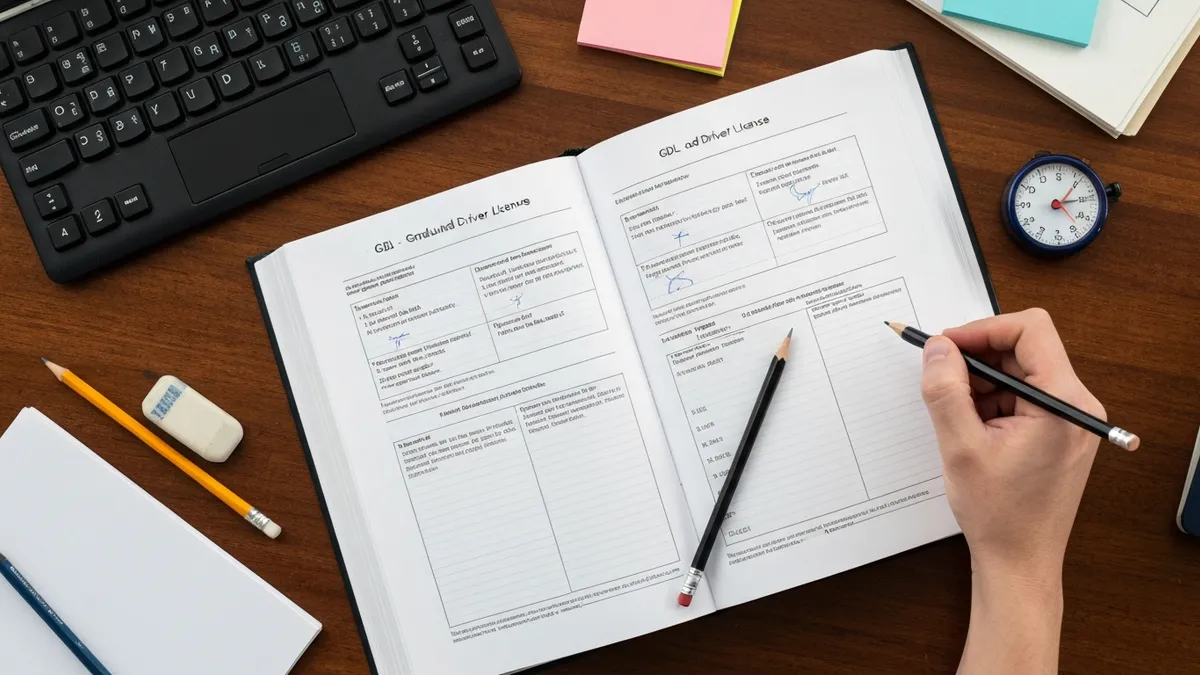
State DMV offices update their lists of approved online driver education providers periodically, and courses that were accepted last year may no longer qualify today. Before enrolling in any online GDL program, visit your state's official DMV website and confirm the specific provider name appears on the current approved list. Completing a non-approved course will not satisfy the state education requirement, and you will need to repeat the coursework in an approved program — at full cost — before you can apply for your learner's permit.
Once you have completed your online GDL course and passed your DMV knowledge test, the journey toward a full driver's license is far from over — it is just beginning. The learner's permit stage is where classroom knowledge begins to translate into real-world skill, and the transition requires a thoughtful, structured approach. Most states mandate a minimum supervised driving period ranging from six months to one full year before a permit holder becomes eligible to apply for the next GDL stage. This waiting period is not arbitrary; research consistently shows that extended supervised practice reduces crash rates among new drivers.
Supervised driving practice during the learner's permit phase should be both deliberate and progressive. Start with low-traffic environments — residential streets, parking lots, and quiet roads during off-peak hours — before gradually introducing more challenging conditions. As comfort and competence grow, add nighttime driving, highway merging, heavy urban traffic, and adverse weather conditions to the practice repertoire.
Many states require a minimum number of supervised hours, often 50 or more, and some specify that a certain portion of those hours must be completed at night. Keep a detailed driving log from day one to ensure you meet every requirement before applying for the next GDL stage.
The intermediate or provisional license stage that follows the learner's permit comes with its own set of restrictions that vary by state but commonly include nighttime driving curfews and passenger limitations. Understanding these restrictions thoroughly before progressing is essential because violations can result in fines, license suspension, and a reset of the waiting period. The GDL system is deliberately designed to introduce driving privileges incrementally, and the consequences for circumventing those restrictions are serious. Review your state's specific rules with the same care you applied to your online course materials.
Behind-the-wheel driver's education is a required or strongly recommended component in most states, separate from the online knowledge course. A certified driving instructor will spend several hours in the vehicle with your teen, providing structured feedback on specific technique issues that self-taught practice may not catch. Skills like smooth braking, proper mirror usage, lane positioning, and smooth steering inputs are areas where professional instruction often makes a significant and lasting difference. Check whether your state requires a minimum number of professional in-car instruction hours before allowing progression to the intermediate license stage.
Road tests are the final formal gateway in the GDL process before a driver earns unrestricted driving privileges. The road test evaluates practical skills — not knowledge of rules — and examiners follow a standardized scoring rubric that identifies specific errors. Common reasons for failing include improper lane changes, failure to check mirrors at appropriate intervals, rolling stops, and difficulty with parallel parking. Practicing these specific maneuvers deliberately in the weeks before your road test appointment is far more effective than general driving time, because it focuses your preparation on the exact behaviors the examiner will evaluate.
Many families find that the GDL process, while initially daunting, ultimately builds stronger and safer drivers than the previous single-test licensing system it replaced. By requiring online coursework, a supervised driving period, an intermediate license stage, and a road test, the GDL framework ensures that new drivers accumulate real experience across a wide variety of conditions before they are ever fully independent on the road. The statistical evidence supports this approach: states with stronger GDL programs consistently report lower teen crash fatality rates than states with more permissive licensing systems.
As you navigate each stage of the GDL process, remember that online resources — including the practice tests and study guides available on PracticeTestGeeks.com — are available to supplement formal instruction at every step. The combination of a completed online GDL course, consistent supervised practice, and targeted exam preparation is the most reliable formula for success in the Graduated Driver License program. Every stage you complete brings you one step closer to full driving independence, and the skills you build along the way will serve you safely for decades to come.
Practical success in the GDL online course and knowledge test preparation comes down to a handful of habits that high-performing students consistently apply. The first and most impactful habit is treating the online course as genuine instruction rather than a box to check. Students who approach each module with curiosity and real engagement — pausing to re-read confusing sections, writing down key concepts in their own words, and thinking through how rules apply to situations they have personally observed — consistently outperform students who click through as quickly as possible just to obtain the completion certificate.
Building a specific, realistic study schedule before you begin the course prevents the common problem of losing momentum halfway through the curriculum. Decide in advance how many modules you will complete per week, which days you will study, and what time of day you will sit down to work.
Logging into the platform at random times when you happen to have a few spare minutes leads to fragmented learning that is harder to retain. A regular, protected study time — even 45 minutes four evenings per week — produces far better results than irregular marathon sessions separated by days of inactivity.
Using multiple study modalities in parallel with the online course strengthens comprehension and retention. Supplement your course reading with your state's official driver's manual, which contains the authoritative source text for every rule tested on the knowledge exam. Watch YouTube videos of driving instructors explaining tricky concepts like roundabout navigation or four-way stop protocols. Practice with flashcards for road signs. The variety of formats reinforces the same concepts from multiple angles, which is one of the most effective strategies for moving information from short-term to long-term memory.
Group study sessions with peers who are also preparing for their permit exam can be surprisingly effective, as long as they remain focused. Explaining a rule or concept to someone else forces you to organize your understanding clearly and reveals gaps you did not realize existed. A small study group where participants take turns quizzing each other using practice test questions creates a low-stakes competitive environment that many learners find motivating. The social accountability of a group also makes it easier to stick to a consistent study schedule.
Parents and supervising adults can support the online learning process in several concrete ways beyond fulfilling the required co-signature obligations. Discussing the course content during family car trips — pointing out road signs and asking your teen what they mean, describing driving decisions as you make them, or reviewing a few practice test questions together before bed — creates real-world context for information that can otherwise feel abstract on a screen. This kind of casual reinforcement is particularly effective for visual and kinesthetic learners who absorb information better through observation and conversation than through reading alone.
Technical preparation for your actual DMV knowledge test appointment prevents avoidable anxiety on exam day. Know the exact location of the DMV office where you will test and how long the drive will take during typical traffic conditions. Confirm what identification documents you need to bring — a birth certificate, Social Security card, and proof of residency are commonly required in addition to your course completion certificate.
Understand whether the test is administered on a computer or on paper, and check whether your state allows a re-test on the same day if you do not pass, or whether you must wait a specified number of days before retaking it.
Confidence built on genuine preparation is the most valuable asset you can bring into the testing room. Remind yourself of the hours of coursework you completed, the practice test scores you earned, and the specific subjects you reviewed and mastered. Test anxiety tends to peak in the moments just before the exam begins and diminish once the first few questions reveal familiar material.
Trust your preparation, read carefully, and approach each question methodically. The knowledge you gained through your online GDL course is exactly what the exam tests — and it is more than enough to earn a passing score on your first attempt.
Sample GDL - Graduated Driver License Practice Questions
Try these questions from our free GDL - Graduated Driver License practice tests. The correct answer and an explanation follow each question.
Sarah, age 16, successfully completes a state-approved driver education course while holding her learner's permit. How does this typically affect her progression through the GDL system?
- A. It allows her to completely bypass the intermediate license stage.
- B. It exempts her from all nighttime driving and passenger restrictions.
- C. It may reduce the required number of supervised practice hours or the minimum permit-holding period.
- D. It guarantees she will pass her road test on the first attempt.
Answer: C. It may reduce the required number of supervised practice hours or the minimum permit-holding period.
While driver education is often mandatory, some states offer incentives for its completion, such as reducing the required number of supervised driving hours or slightly shortening the minimum time the learner's permit must be held before taking the road test. It does not allow skipping stages or restrictions.
David is 16, received his learner's permit seven months ago, has logged 50 hours of supervised driving (including 10 at night), and completed a driver education course. He has had no traffic violations. What is the most likely next step for him in a typical GDL program?
- A. He can now drive unsupervised during daylight hours.
- B. He automatically receives his full, unrestricted license.
- C. He must wait until he is 17 to proceed to the next stage.
- D. He is now eligible to take the road test for an intermediate/probationary license.
Answer: D. He is now eligible to take the road test for an intermediate/probationary license.
David has met the common minimum requirements to advance from the learner's permit stage: being at least 16, holding the permit for a minimum period (typically 6 months), and completing the required supervised driving hours. His next step is to pass the road test to obtain his intermediate license.
To advance from an intermediate license to a full, unrestricted license, a driver typically must meet several requirements. Which of the following is a standard requirement?
- A. Be at least 21 years of age.
- B. Complete an advanced defensive driving course.
- C. Hold the intermediate license for a specific period without traffic convictions.
- D. Purchase their own car insurance policy.
Answer: C. Hold the intermediate license for a specific period without traffic convictions.
A key principle of the Graduated Driver License system is progressing through stages based on safe driving performance. Before graduating to a full license, a driver must typically hold the intermediate license for a minimum period (e.g., 6 to 12 months) and maintain a clean driving record, free of at-fault accidents or moving violations.
Which of the following is a mandatory requirement for a vehicle being driven by a person with a GDL permit or probationary license in New Jersey?
- A. A 'New Driver' sign on the rear window.
- B. Keeping a driving log in the glove compartment.
- C. Displaying two red, reflective decals on the front and rear license plates.
- D. Having the car's headlights on at all times.
Answer: C. Displaying two red, reflective decals on the front and rear license plates.
Kyleigh's Law requires all drivers under 21 with a permit or probationary license to display two red, reflective decals on the top left corner of their front and rear license plates. This allows law enforcement to identify GDL drivers.
GDL Questions and Answers
GDL License: Complete Study Guide to the Graduated Driver License Program

GDL Driving Restrictions: Complete Guide to Graduated Driver License Rules

GDL Meaning: What Is a Graduated Driver License and How It Works

GDL System: Complete Guide to How Graduated Driver Licensing Works in the US

GDL Decal: What It Is, Why You Need It, and How to Display It Correctly
About the Author

Educational Psychologist & Academic Test Preparation Expert
Columbia University Teachers CollegeDr. Lisa Patel holds a Doctorate in Education from Columbia University Teachers College and has spent 17 years researching standardized test design and academic assessment. She has developed preparation programs for SAT, ACT, GRE, LSAT, UCAT, and numerous professional licensing exams, helping students of all backgrounds achieve their target scores.
Join the Discussion
Connect with other students preparing for this exam. Share tips, ask questions, and get advice from people who have been there.
View discussion (7 replies)