

FSA Practice Test
Updated November 2026Facts verified Oct 31, 2026 against Florida Department of Education
Who Takes the FSA?
Throughout their elementary and secondary education, students in Florida are obliged to complete the Florida Standards Assessments (FSA). Each time a student takes one of these examinations, they are given an Individual Score Report containing information on their performance. Build exam readiness with our free NTS practice test 2026 — 1,100+ questions for GAT, NAT, and NTS subject exams. Also explore our sat questions video answers.
The FSA assessments tests are required of all public school pupils in grades 3 to 10. Students in third grade take an FSA ELA or English language arts test (reading). Students in grades 4 to 10 take an English language arts (FSA reading and FSA writing) test, while students in grades 3 to 8 take a mathematics test (FSA math). In addition, students enrolling in algebra and geometry courses are handed End-of-Course (FSA EOC) exams in those subjects. The Florida Standards Alternate Assessment, or FSSA, is an alternative assessment for students with recognized cognitive difficulties. Regardless of how long they have been enrolled in a school in the United States, English Language Learners must take the assessment with any allowed accommodations.
Understanding FSA Assessments and What They Measure
FSA assessments evaluate student proficiency in English Language Arts and Mathematics based on Florida's B.E.S.T. standards. Each assessment uses a combination of multiple-choice, multi-select, and evidence-based questions designed to measure critical thinking rather than simple recall. Preparing with practice questions that mirror the actual FSA assessments format helps students build familiarity with the item types and time constraints they will encounter on test day.
FSA: upcoming dates and official changes
- Nov 30, 2026 – Jan 22, 2027: The 2026–27 FAST PM2 window runs November 30, 2026 through January 22, 2027.[1]
- Nov 30, 2026 – Dec 18, 2026: The winter FAST Grade 10 ELA Reading Retake window is November 30 through December 18, 2026.[3]
- Mar 29, 2027 – Apr 9, 2027: The 2026–27 B.E.S.T. Writing window for grades 4–10 is March 29 through April 9, 2027.[3]
- May 3, 2027 – May 28, 2027: The 2026–27 FAST PM3 window runs May 3 through May 28, 2027.[1]
- May 3, 2027 – May 28, 2027: The spring FAST Grade 10 ELA Reading Retake window is May 3 through May 28, 2027.[3]
- Jul 12, 2027 – Jul 16, 2027: The summer FAST Grade 3 ELA Reading and Grade 10 ELA Reading Retake window is July 12–16, 2027.[3]
- Florida's FAST assessments, which replaced the FSA, are computer adaptive and select items to meet blueprint requirements.[1]
- FAST Grades 3–10 ELA Reading sessions are 90 minutes for PM1 and PM2 and 120 minutes for PM3.[1]
- FAST Grades 3–5 Mathematics sessions are 80 minutes for PM1 and PM2 and 100 minutes for PM3.[1]
- On the Grade 10 FAST ELA Reading assessment, Level 3 (On Grade Level) corresponds to a B.E.S.T. scale score of 247–257.[1]
- On the Grade 3 FAST ELA Reading assessment, Level 2 spans scale scores 186–200 and Level 3 spans 201–212; Level 2 or higher is required for promotion.[1]
- The FSA English Language Arts Retake was offered for the final time in Spring 2024 and replaced by the FAST ELA Reading Retake.[2]
- Students must pass PM3 of the Grade 10 FAST ELA Reading assessment to graduate, with four retake opportunities per year for those who do not meet the requirement in spring.[1]
- Florida's FAST assessments (the successor to the FSA) are delivered online through the Test Delivery System with Secure Browser, with remote testing available during PM1 and PM2 only for full-time virtual school and hospital/homebound students.[1]
- Florida third graders must achieve Level 2 or higher on PM3 of the Grade 3 FAST ELA Reading assessment for promotion, and a summer opportunity is offered each year.[1]
Numbers in brackets link to the official sources listed under Sources & last verified. Dates that have passed are removed automatically.
FSA Exam at a Glance
| Item | Detail | Source · Verified |
|---|---|---|
| Number of questions | Computer adaptive[1] | Florida Department of Education · Oct 31, 2026 |
| Time limit (Grades 3–10 ELA Reading) | 90 minutes (PM1/PM2); 120 minutes (PM3)[1] | Florida Department of Education · Oct 31, 2026 |
| Time limit (Grades 3–5 Mathematics) | 80 minutes (PM1/PM2); 100 minutes (PM3)[1] | Florida Department of Education · Oct 31, 2026 |
| Time limit (Grades 6–8 Mathematics) | 100 minutes (PM1/PM2); 120 minutes (PM3)[1] | Florida Department of Education · Oct 31, 2026 |
| Passing score (Grade 10 ELA Reading) | Level 3 (On Grade Level): scale score 247–257[1] | Florida Department of Education · Oct 31, 2026 |
| Passing score (Grade 3 ELA Reading (promotion)) | Level 2 or higher: scale score 186–200 (Level 2); Level 3 starts at 201[1] | Florida Department of Education · Oct 31, 2026 |
| Retake policy (FSA ELA Retake) | Discontinued; last offered spring 2024[2] | flfast.org · Oct 31, 2026 |
| Retake policy (Grade 10 ELA Reading (graduation)) | Must pass PM3; four retake opportunities per year[1] | Florida Department of Education · Oct 31, 2026 |
| Delivery | Computer-based (Secure Browser); remote testing only for PM1/PM2 for virtual-school or hospital/homebound students[1] | Florida Department of Education · Oct 31, 2026 |
| Eligibility (Grade 3 ELA Reading (promotion)) | Level 2+ on PM3 required for promotion; summer opportunity offered[1] | Florida Department of Education · Oct 31, 2026 |
| Score release | Within 24 hours of completing the test[1] | Florida Department of Education · Oct 31, 2026 |
| Testing window (B.E.S.T. Writing (Grades 4–10)) | Mar 29–Apr 9, 2027[3] | Florida Department of Education · Oct 31, 2026 |
| Testing window (FAST PM2 (Grades 3–10 ELA Reading, Grades 3–8 Mathematics)) | Nov 30, 2026–Jan 22, 2027[1] | Florida Department of Education · Oct 31, 2026 |
| Testing window (FAST PM3 (Grades 3–10 ELA Reading, Grades 3–8 Mathematics)) | May 3–28, 2027[1] | Florida Department of Education · Oct 31, 2026 |
| Testing window (Grade 10 ELA Reading Retake (spring)) | May 3–28, 2027[3] | Florida Department of Education · Oct 31, 2026 |
| Testing window (Grade 10 ELA Reading Retake (winter)) | Nov 30–Dec 18, 2026[3] | Florida Department of Education · Oct 31, 2026 |
| Testing window (Summer Grade 3 ELA Reading and Grade 10 ELA Reading Retake) | Jul 12–16, 2027[3] | Florida Department of Education · Oct 31, 2026 |
What changed for FSA in 2026
- Oct 31, 2026: Delivery changed to Computer-based (Secure Browser); remote testing only for PM1/PM2 for virtual-school or hospital/homebound students (previously Computer-based (online, Secure Browser); remote only for PM1/PM2 virtual or homebound students).[1]
- Oct 31, 2026: Eligibility (Grade 3 ELA Reading (promotion)) changed to Level 2+ on PM3 required for promotion; summer opportunity offered (previously Level 2 or higher on PM3 required for promotion; summer retest offered).[1]
- Oct 31, 2026: Passing score (Grade 10 ELA Reading) changed to Level 3 (On Grade Level): scale score 247–257 (previously Level 3: scale score 247–257).[1]
- Oct 31, 2026: Passing score (Grade 3 ELA Reading (promotion)) changed to Level 2 or higher: scale score 186–200 (Level 2); Level 3 starts at 201 (previously Level 2: scale score 186–200 or higher).[1]
- Oct 31, 2026: Retake policy (Grade 10 ELA Reading (graduation)) changed to Must pass PM3; four retake opportunities per year (previously Pass PM3; four retakes per year).[1]
- Oct 31, 2026: Score release changed to Within 24 hours of completing the test (previously Within 24 hours).[1]
According to Florida Department of Education, “Grade 10 ELA Reading 179–229 230–246 247–257 258–270 271–308”[1]
FSA Practice Test Questions
Prepare for the FSA - Florida Standards Assessment exam with our free practice test modules. Each quiz covers key topics to help you pass on your first try.
FSA Practice Test (3rd Grade English Langu...
FSA Exam Questions covering Practice Test (3rd Grade English Language & Arts). Master FSA Test concepts for certification prep.
FSA Practice Test (3rd Grade: Math)
Free FSA Practice Test featuring Practice Test (3rd Grade: Math). Improve your FSA Exam score with mock test prep.
FSA Practice Test (4th Grade: English Lang...
FSA Mock Exam on Practice Test (4th Grade: English Language & Arts). FSA Study Guide questions to pass on your first try.
FSA Practice Test (4th Grade: Math)
FSA Test Prep for Practice Test (4th Grade: Math). Practice FSA Quiz questions and boost your score.
FSA Practice Test (5th Grade: English Lang...
FSA Questions and Answers on Practice Test (5th Grade: English Language & Arts). Free FSA practice for exam readiness.
FSA Practice Test (5th Grade: Math)
FSA Mock Test covering Practice Test (5th Grade: Math). Online FSA Test practice with instant feedback.
FSA Practice Test (6th Grade: English Lang...
Free FSA Quiz on Practice Test (6th Grade: English Language & Arts). FSA Exam prep questions with detailed explanations.
FSA Practice Test (6th Grade: Math)
FSA Practice Questions for Practice Test (6th Grade: Math). Build confidence for your FSA certification exam.
FSA Practice Test (7th Grade: English Lang...
FSA Test Online for Practice Test (7th Grade: English Language & Arts). Free practice with instant results and feedback.
FSA Practice Test (7th Grade: Math)
FSA Study Material on Practice Test (7th Grade: Math). Prepare effectively with real exam-style questions.
FSA Practice Test (8th Grade: English Lang...
Free FSA Test covering Practice Test (8th Grade: English Language & Arts). Practice and track your FSA exam readiness.
FSA Practice Test (8th Grade: Math)
FSA Exam Questions covering Practice Test (8th Grade: Math). Master FSA Test concepts for certification prep.
Worked examples: how to reason through FSA questions
These are practice questions written for this site, not questions from the real exam. Each explanation shows why the right answer is right and why the others are wrong.
Example 1
Question: Which of the following questions is accurately phrased?
- Have you seen the weather report?
- The weather report you have seen?
- Have seen you the weather report?
- You have seen the weather report?
Answer: A. Have you seen the weather report?
Explanation:
Option A, "Have you seen the weather report?", is correct. English questions that use a helping verb put that verb before the subject: the helper "Have" comes first, then "you", then "seen". That inversion is what turns a statement into a question.
Option B leaves the report at the front and has no helping verb, so it reads as a fragment. Option C puts the subject before the helper, and the verb order is broken. Option D keeps normal statement order, so it is a statement, not a question, unless the speaker raises their voice in speech.
Rule to remember: when a question uses a helping verb, put the helper before the subject. If the subject comes first with no helper, you are probably looking at a statement.
Example 2
Question: Which of the underlined words is incorrectly spelled? Our teacher was absent yesterday , so we had a substatute .
- absent
- teacher
- substatute
- yesterday
Answer: C. substatute
Explanation:
Option C, "substatute", is correct because the word is spelled "substitute". The error sits in the middle of the word, where "a" replaced "i".
Options A, B and D are all spelled correctly. "Absent" has a silent-looking middle consonant but is spelled as it sounds. "Teacher" uses the common "ea" pattern. "Yesterday" is a compound of "yester" and "day", so breaking it into parts makes it easy to check.
Rule to remember: when you hunt for a misspelling, read each word slowly, one syllable at a time, and watch the vowels in the middle. Misspellings often hide in unstressed syllables, where the sound is vague and you can easily write the wrong letter.
Example 3
Question: Shiela gave these clues to describe a number: three-digit odd numbers with a 6 in the hundreds place and a 3 in the tens place. Which number fits Shiela's description?
- 636
- 632
- 627
- 637
Answer: D. 637
Explanation:
Option D, 637, is correct. The clues say the number has a 6 in the hundreds place, a 3 in the tens place, and is odd. So it must look like 63 followed by an odd digit, and 637 ends in 7.
Option A, 636, has the right first two digits but ends in 6, which is even. Option B, 632, also ends in an even digit. Option C, 627, is odd but has a 2 in the tens place, not a 3.
Rule to remember: check each clue against each option, one clue at a time, and cross out any option that fails. Place value tells you which digit sits where, and a number is odd or even only by its last digit.
How to use these practice tests
Start with the official material. Read the Florida Department of Education fact sheet for your grade, so you know the test window, the time limit and whether your grade has a promotion or graduation requirement. Then pick the practice set that matches your grade and subject from the list on this page.
Take the first set untimed. Your aim is to see which question types slow you down, such as grammar rules, spelling, reading passages or place value. Write down each miss and the reason for it, not just the right answer.
In later sessions, work through one set at a time and review every explanation, including for questions you got right by luck. Redo missed questions a few days later to see whether the fix has held. As the test window gets closer, practise with the time limit for your grade in mind, and rehearse working on a screen, since the real test is computer-based.
Keep a short list of rules, such as helping verbs in questions or checking odd and even by the last digit. Read it before each session. Remember that our questions are written by us and are not real exam questions, so use them for skill practice and rely on official sample material for format.
ELA Score Ranges
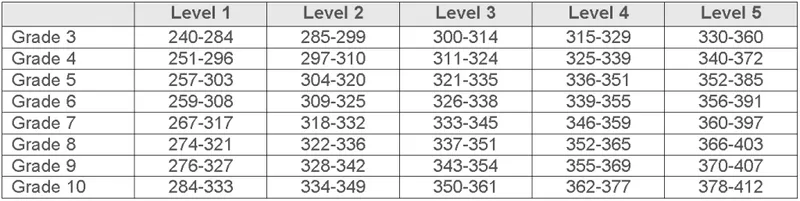
Mathematics Score Ranges
- ✓Review the official FSA exam content outline
- ✓Take a diagnostic practice test to identify weak areas
- ✓Create a study schedule (4-8 weeks recommended)
- ✓Focus on your weakest domains first
- ✓Complete at least 3 full-length practice exams
- ✓Review all incorrect answers with detailed explanations
- ✓Take a final practice test 1 week before exam day

End of Course Score Ranges


FSA Questions and Answers
The Florida Standards Assessments (FSA) are for standardized tests that are used to assess students’ understanding of educational subjects in each grade level as outlined in the Florida Standards.
Individual student success in terms of graduation preparation and school-based goals, such as what students should know at different grade levels, was measured using the FSA.
The results of the FSA Assessments are released in June.
These tests cover English Language Arts (ELA), Math, and end-of-course (EOC) courses (Algebra 1, Algebra 2, and Geometry).
Students who do not get a score will receive an incomplete grade until an EOC score becomes available.
Yes. The FSA is designed to help you prepare for post-secondary education and future professional professions.
The Florida Standards Assessments (FSA) are used to track students’ academic development.
FSA results are normally available one to three months following the exam.
Yes. You must take the FSA tests if you are a public school student in grades 3–10.
The new order permits third-graders to be moved to fourth grade even if they do not achieve a level 2 or above on the English Language Arts FSA, as provided as the district can demonstrate that the student is performing at that level. Through a good-cause exemption or other ways, the district would have to demonstrate “reliable evidence of a student’s performance.”
To view your child’s FSA score, you must login to FOCUS as the parent. Choose “My Child”. After clicking on “Test History,” expand the ELA / Math / Science (5th grade) section by clicking on the arrow.
For any of the FSA tests, a score in the level 3 category is considered a passing grade.
To pass the FSA Reading test, students should be familiar with the types of questions that will appear on the exam and the types of content that they will cover, increase the amount of reading material that they are exposed to in order to improve reading stamina, and take some of the FSA practice tests.
The Writing test is made up of a single prompt based on a variety of texts. Students are then given three pages of lined paper to compose an essay in response to the question.
No. The seven-page order states that a student’s test scores will not be used against them in the same way that they have been in the past.
Students in grades 3, 4, and 5 who take the FSA Reading test will have two 80-minute sessions to complete the exam content. Students in grades 6, 7, and 8 will have two 85-minute sessions, while students in grades 9 and 10 will have two 90-minute sessions.
It’s important to remember that failing the FSA tests does not always mean students won’t move to the next grade level in school, since the examinations serve as assessment tools.
Level 1 is Inadequate, meaning that the student will require highly likely assistance in the following grade.
Level 2 is Below Satisfactory, meaning that the student is likely need assistance in the following grade.
Level 3 is Satisfactory, meaning that the student may need additional assistance in the following grade.
Level 4 is Proficient, meaning that the student will most likely succeed in the next grade level.
Level 5 is Mastery, meaning that the student is very likely to succeed in the following grade level.
Students who are taking this FSA writing test will have 120 minutes to finish it.
Students may retake any of these examinations if they fail any of them.
For the two sessions of the FSA Reading Test, there will be a total of 56-60 test questions.
Yes. Students at charter schools, like those in district-run public schools, must take standardized state tests (such as the FSA) and meet federal academic criteria.
The FSA test can be given in private schools with voucher students, although few do. Annually, they must administer one standardized assessment test.
Here are some tips for passing the FSA writing test:
Use formal appropriate language, apply a range of mature transitions, evaluate and synthesize the texts, and don’t assume your audience knows the topic.
Those who fail the FSA can currently use specific ACT or SAT scores, whereas students who fail the math test can use PERT scores.
The English Language Arts (FSA ELA) are used to assess student achievement of the new Florida Standards in English Language Arts.
In level 3, the FSA Reading test was considered a passing score.
In Florida Standards Assessments, Level 5 is the highest score.
According to a new emergency order granted by the state of Florida, high school graduates who fail the Florida Standard Assessments may still be able to graduate.
The math sessions are distributed out across two days. Two 80-minute sessions are scheduled for Grades 3–5, while three 60-minute sessions are scheduled for Grades 6–8.
Students who earn a score of 300 to 314 on the grade 3 English Language Arts exam are classified as level 3 which is the passing score.
To pass the 10th grade FSA ELA, students must get Level 3 (350 or above).
Students must increase their understanding of fractions, particularly equal (equivalent) fractions and arranging fractions, in order to pass the FSA Math test in 4th grade.
FSA ELA begins in grade 3 and continues until grade 10. Students begin taking FSA exams in mathematics in grade 3 and continue through grade 8.
If a third-grade student in Florida fails the FSA, they will require a Good Cause Exemption to move to fourth grade. To make this happen, parents will need to work with their child’s school.
For the FSA Writing test, a score in the level 3 category is a passing score.
The state requires students in grades 3-10 to take the FSA, and scores are used for high-stakes purposes such as evaluating teachers, administrators, schools, and districts.
The Florida Standards Assessments were implemented by the Florida Department of Education.
The scores may be found at https://www.fldoe.org/accountability/assessments/k-12-student-assessment/results/ by clicking on the pages in the left navigation panel.
You may check your FSA scores by logging into Focus. Select the individual score report directly under “Test Score Reports” in the middle of the screen beneath “Messages.”
EOC assessments are not administered by FLVS. Students enrolled in FLVS courses will take their exams at their assigned school or another site determined by the district.
CXC Caribbean exam candidates often also prepare with our BECE practice test 2026 for the core academic subjects and regional education standards both Caribbean secondary certification exams assess.
Property and casualty insurance candidates often also prepare with our claims adjuster practice test for the insurance law, policy interpretation, and risk assessment fundamentals both licensing exams share.
New York State assessment candidates often also prepare with our NYS court officer exam practice test for the civil service reasoning and reading comprehension formats shared across New York state employment exams.
Transportation engineering candidates preparing for the ITE exam also develop quantitative skills with the GRE Practice Test 2026 for advanced reasoning and problem-solving.
What to Expect on the FSA Practice Test
The FSA practice test mirrors the format and question types found on the actual Florida Standards Assessments, covering English Language Arts and Mathematics for grades 3 through 10. Each practice test includes the same item types students encounter on test day, including multiple choice, multi-select, and evidence-based selected response questions. Working through a full-length FSA practice test before the official exam helps students identify weak areas in standards like LAFS and MAFS while building familiarity with the computer-based testing platform.
How to Use FSA Practice Tests Effectively
Time each practice session to match the actual FSA schedule, which allocates 80 minutes per session for ELA and 60 to 80 minutes for Mathematics depending on grade level. Review every incorrect answer against the specific Florida standard it tests, then revisit that standard before attempting another full practice round.
Understanding FSA Assessments and How They Are Scored
FSA assessments measure student achievement against the Florida Standards in English Language Arts and Mathematics, producing scale scores that fall into one of five achievement levels. Level 3 is considered satisfactory performance, while Levels 4 and 5 indicate above-grade-level mastery of the tested standards. FSA assessments also include a text-based writing component for grades 4 through 10 ELA, where students must read source texts and produce an organized, evidence-based response scored on a 10-point rubric.
FSA Score Reports and Achievement Levels
Score reports break results into reporting categories such as Key Ideas and Details or Numbers and Operations, giving students and parents a clear picture of performance by strand. Students scoring at Level 1 or Level 2 on FSA assessments are typically recommended for additional instructional support or intensive intervention courses in the following school year.
You can continue preparing with the fsa practice test, which includes answer explanations for every question.
Sources & last verified
- Florida Department of Education — number of questions, time limit, passing score, retake policy (official source). “FAST assessments are computer adaptive.” Verified Oct 31, 2026.
- flfast.org — retake policy (official source). “The Florida Standards Assessments (FSA) English Language Arts (ELA) Retake was offered for the final time in Spring 2024.” Verified Oct 31, 2026 · source checked Oct 27, 2026.
- Florida Department of Education — testing window (official source). “November 30–December 18, 2026” Verified Oct 31, 2026 · source checked Oct 19, 2026.
How we verify: editorial & fact-checking policy. Report an error: contact us.
FSA: Pros and Cons
- +fsa — fSA exam preparation strengthens your knowledge across all domains
- +Passing the exam proves competency to employers and clients
- +Study materials and practice tests are widely available
- +Exam-based credentials are portable across states and employers
- +Clear exam objectives help focus your study plan effectively
- −Exam anxiety can affect performance — practice tests help reduce it
- −Registration fees are non-refundable if you miss your test date
- −Limited retake opportunities may apply with waiting periods
- −Exam content updates periodically — use current study materials
- −Testing center availability may require advance scheduling
Pros and Cons at a Glance
| Pros | Cons |
|---|---|
| fsa — fSA exam preparation strengthens your knowledge across all domains | Exam anxiety can affect performance — practice tests help reduce it |
| Passing the exam proves competency to employers and clients | Registration fees are non-refundable if you miss your test date |
| Study materials and practice tests are widely available | Limited retake opportunities may apply with waiting periods |
| Exam-based credentials are portable across states and employers | Exam content updates periodically — use current study materials |
| Clear exam objectives help focus your study plan effectively | Testing center availability may require advance scheduling |
Sample FSA Practice Questions
Try these questions from our free FSA practice tests. The correct answer and an explanation follow each question.
Which word is correctly spelled?
- A. recommend
- B. critisize
- C. extrardinary
- D. mispell
Answer: A. recommend
These words are common signal words used in compare-and-contrast text structures. Phrases like 'different from' and 'on the other hand' highlight distinctions, while 'similar to' and 'as well as' emphasize commonalities. These terms help readers identify and analyze relationships between subjects.
The problem is also known as _______.
- A. Plot
- B. Setting
- C. Point of View
- D. Conflict
Answer: D. Conflict
In literature, the 'problem' that drives the narrative and creates tension is known as the conflict. Conflict is the struggle between opposing forces, which can be internal (character vs. self) or external (character vs. character, nature, or society). It is essential for propelling the plot forward and engaging the reader.
An author uses the phrase 'a sea of troubles.' This figurative device is:
- A. A metaphor
- B. A simile
- C. Personification
- D. Onomatopoeia
Answer: A. A metaphor
A metaphor directly compares troubles to a sea without using 'like' or 'as.'
Which of the following sentences best represents the feeling "cheerfulness"?
- A. The lilacs are purple.
- B. The lilacs danced with the gentle breezes.
- C. The lilacs are nice.
- D. The lilacs will die and loose their petals.
Answer: B. The lilacs danced with the gentle breezes.
The sentence 'The lilacs danced with the gentle breezes' uses personification, attributing human-like movement ('danced') to the flowers. This imagery, combined with 'gentle breezes,' evokes a light, joyful, and lively feeling. This personification and positive imagery best convey a sense of cheerfulness compared to the other options, which are either neutral or suggest decline.
FSA Questions and Answers
How this page was made: written with AI tools and published by Nathan Beja, founder of Practice Test Geeks, who is responsible for its content. Exam facts are checked against the official sources listed below. Not reviewed by a subject-matter expert. Editorial policy
Sources & references
Exam facts on this page (fees, format, dates, passing scores) are checked against these official sources; the date is our last check. Editorial policy
- fldoe.org — Test delivery, eligibility, exam format, passing score, retake policy, score release, test dates, time limit · verified Oct 2026
- flfast.org — Retake policy · verified Oct 2026